

British Shorthair
“The teddy bear”
 By Priya · The careful one
Published August 20, 2026Updated August 26, 202612 min read
Contents
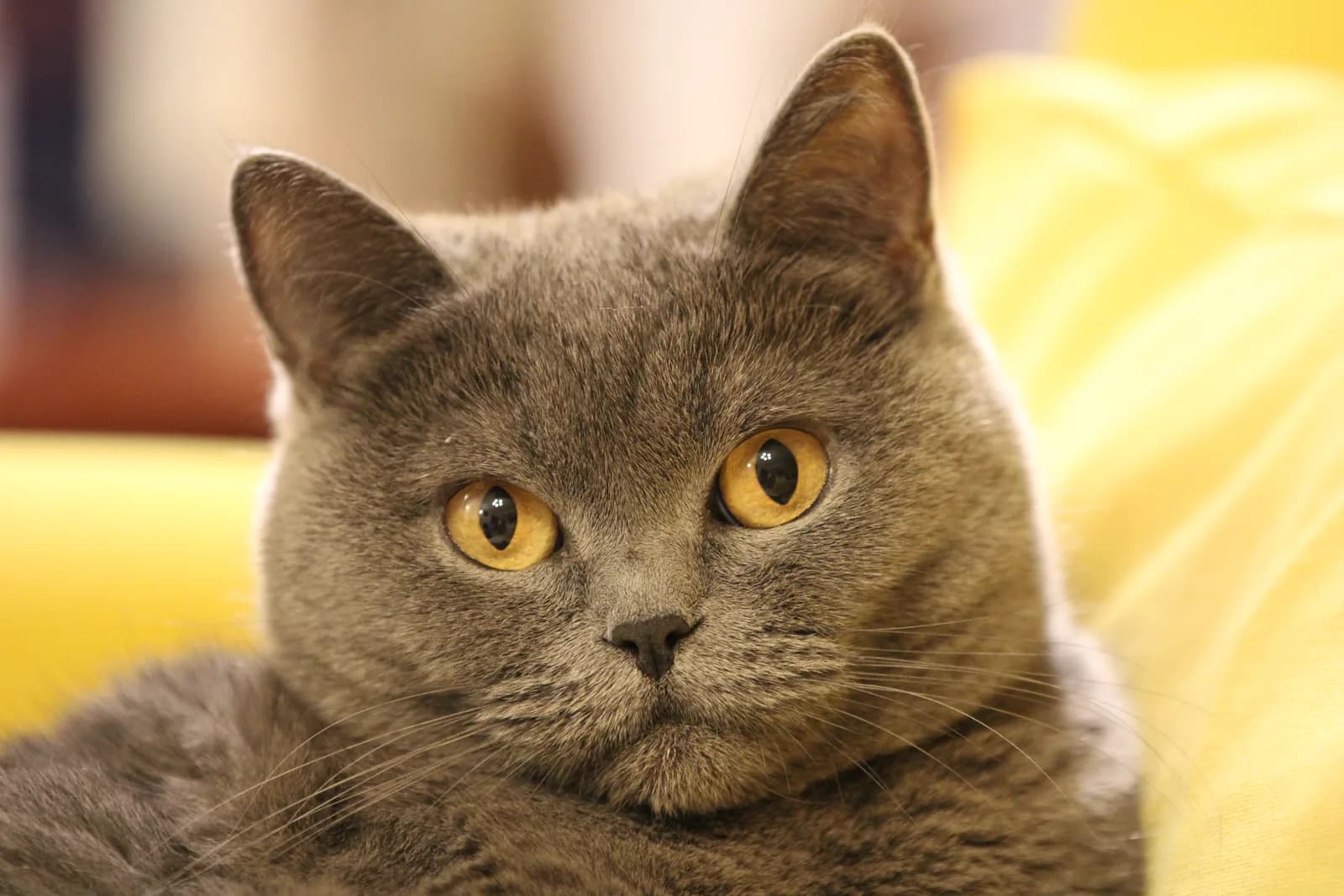
 British Shorthair photos
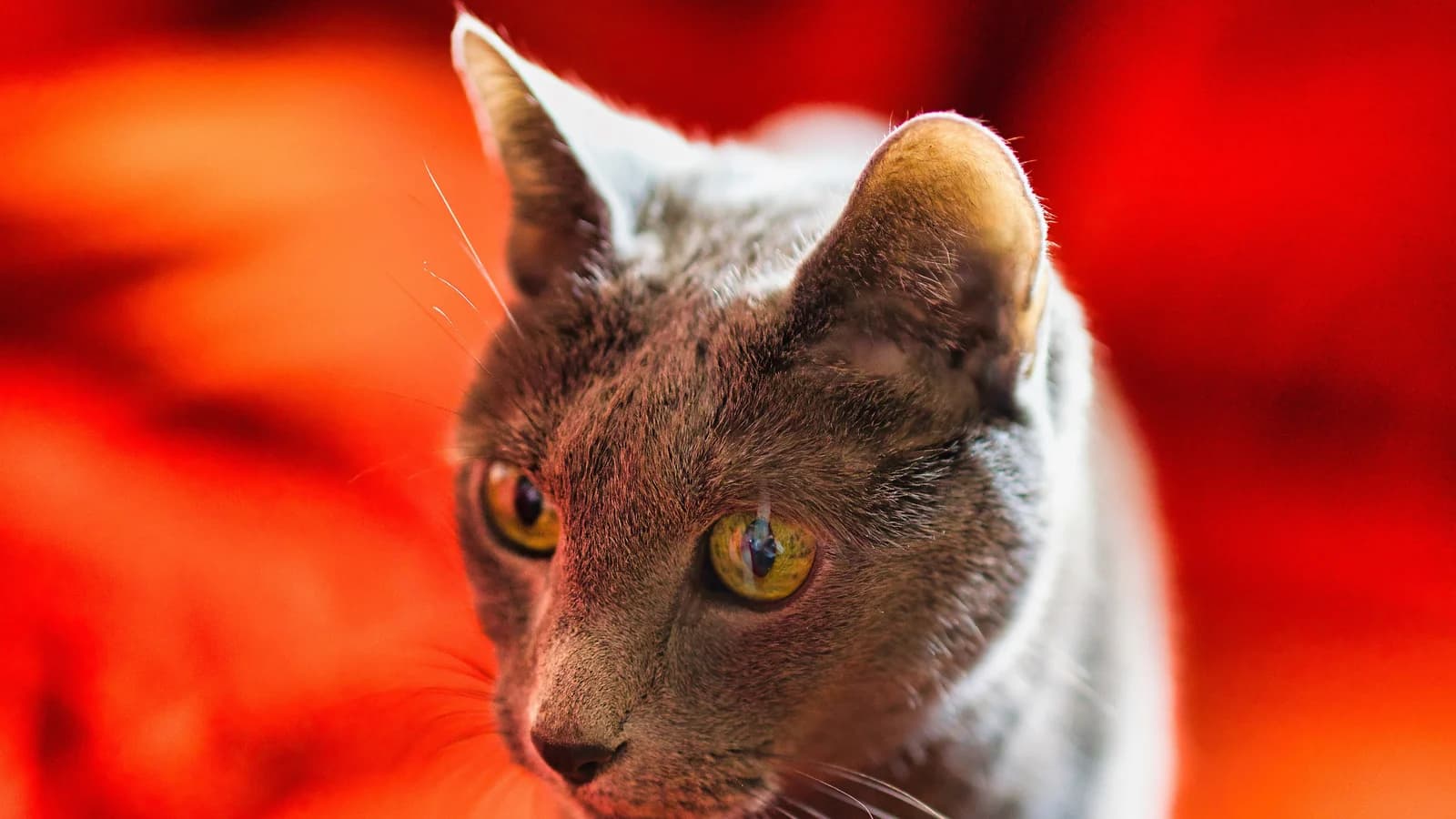
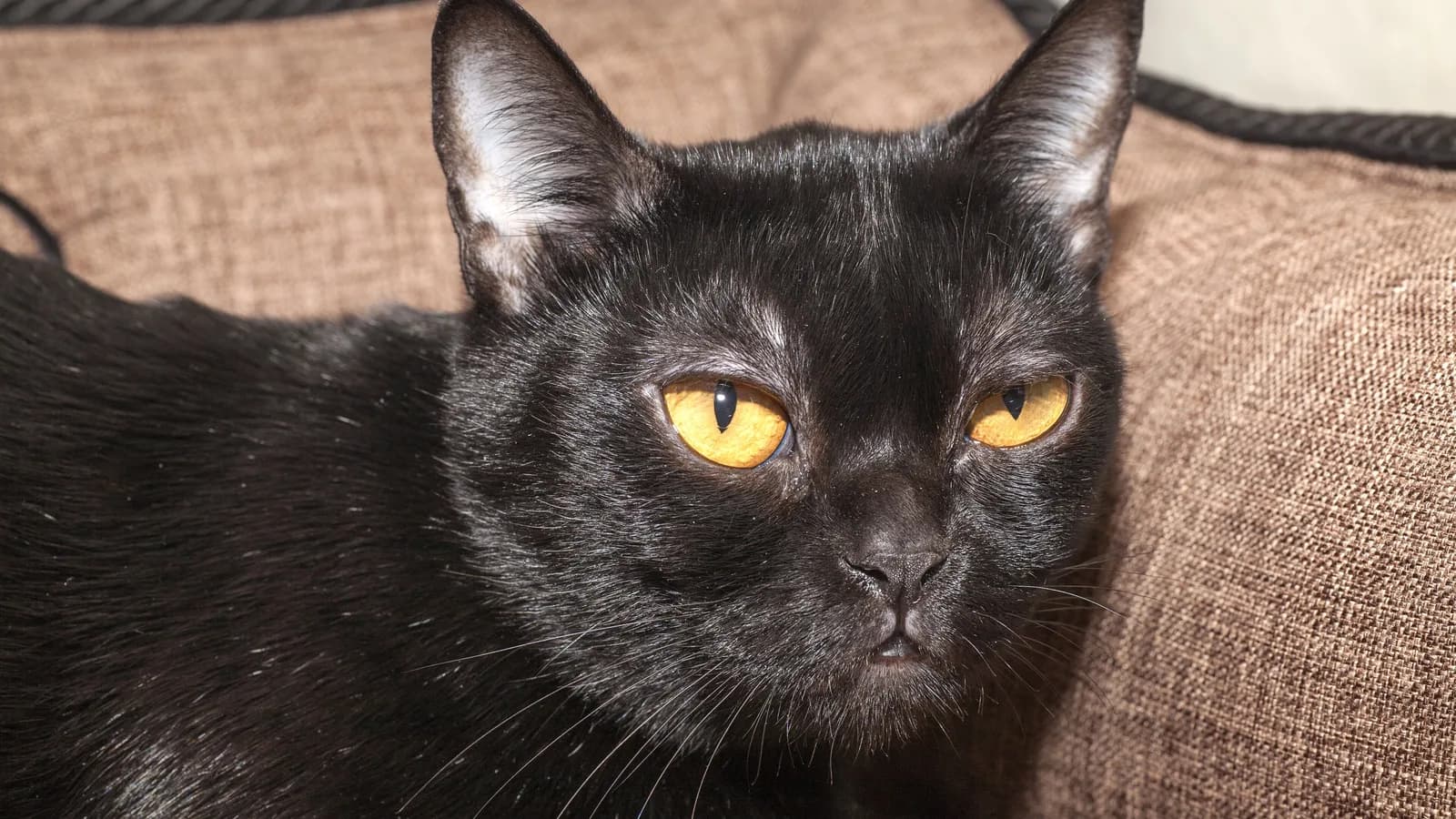
Real photos, so you can see what the breed actually looks like: coats, ear tufts, ruff and build.
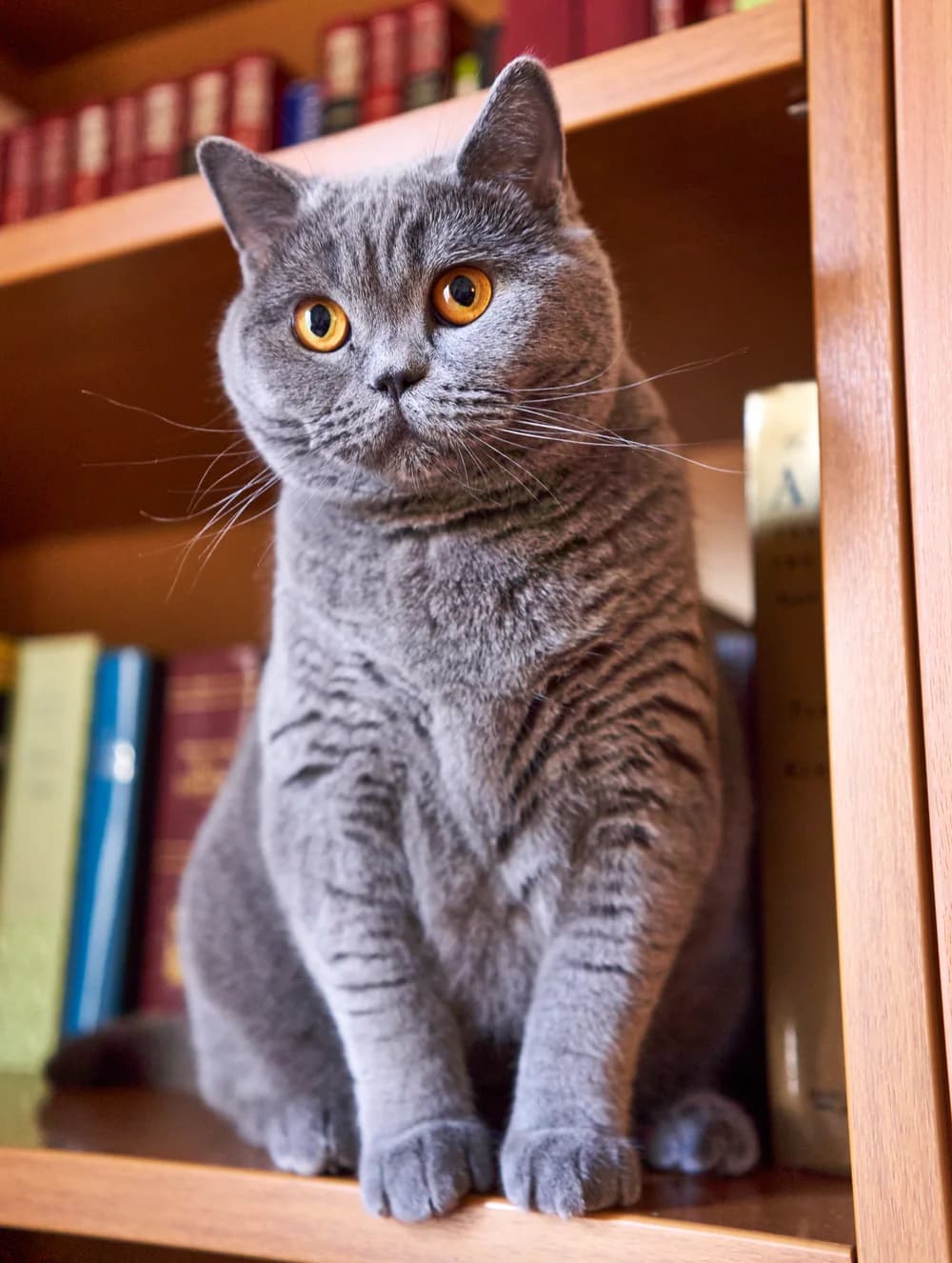
Blue British Shorthair sitting on a bookshelf, copper-orange eyes
Photo: George E. Koronaios · CC BY-SA 4.0 · via Wikimedia Commons
 Vital stats
Origin
The cat of Britain itself: developed from the country's street and farm cats by Harrison Weir, the "Father of the Cat Fancy," and shown at the first cat show in history, Crystal Palace, London, 13 July 1871 ('s own dated account). Nearly lost by the 1940s and rebuilt after the war, per GCCF's own breeding-policy history, with Persian, Russian Blue and Burmese blood, before the registries closed the breed again.
Weight
Female
8-11 lb (3.6-5 kg)
Male
10-16 lb (4.5-7.3 kg)
Life expectancy
The quoted ranges disagree three ways, and none cites a source. (echoed by PetMD and Agria) says 12-20 years, says 14-20, Purina UK says 12-17. The clean measured figure is a median age at death of 11.8 years (69 British Shorthair deaths among 4,009 in an English practice study, deaths 2009-2012). One trap our research caught: a newer UK life-table study prints "British cats, 9.58 years", but its own footnote says that row merges British Blue with the British Longhair. So we do not quote it as a British Shorthair figure. No US, Canadian or Australian measured figure exists.
Coats
Blue
Silver shaded
Golden shaded
Black
Cream
Silver tabby
sorts the breed into five families: Self (white, black, blue, lilac, chocolate, red, cream, fawn, cinnamon), Tabby (Classic, Mackerel, Spotted), Tipped (silver and golden shaded), Tortoiseshell & Bi-Colour, and Colourpointed, plus Smoke. Blue is the flagship. The US registry accepts fewer colors and no pointed cats at all. The registry word for grey is blue here too. Full map: the colors guide.
Understanding the coats (and their genetics)Size
A medium-to-large, cobby, heavy-boned cat wearing the densest short coat in the fancy (CFA: more hairs per square inch than any other breed). Males run notably bigger than females. The breed takes "a full 3-5 years to reach full maturity and development", in the words of two registries' own standards.
Popularity (CFA)
No. 7
in the CFA ranking for 2026
Did you know
's own page calls the British Shorthair "a four feet on the floor breed": famously affectionate, famously NOT a lap cat. Three organizations describe the same quirk independently, down to the UK club's "most prefer to keep four paws on the ground and be patted rather than picked up."
 Personality
 Affection3/5
 Energy1/5
 Intelligence3/5
 Friendliness3/5
 Independence5/5
 Vocal1/5
 Shedding3/5
Compatibility
 Good with children4/5
 Good with other pets4/5
 Apartment friendly5/5
Editorial ratings on our five-point scale, anchored in the registry descriptions and the measured behaviour studies cited on this profile; individual cats vary, and our members' own ratings below are the counterweight.
Still torn between this breed and another?Compare the British Shorthair trait by trait, or filter every breed by what matters to you. What our members say
What our members say
Nobody has described their British Shorthair here yet. As soon as the first profiles come in, this is where the community averages will show up: temperament, food, lifestyle.
Describe my British Shorthair Pros & cons
Strong points
- The most independence-friendly temperament ever measured: lowest activity and lowest human-contact-seeking of 19 breed groups (5,726-cat Finnish study)
- Genuinely low maintenance: weekly combing on a wash-and-wear coat
- A closed breed with real paperwork: registered ancestry means something everywhere, and the UK adds PKD and hearing-test gates
- Quiet, patient, and happy home alone: the UK breed club recommends them for working owners in as many words
Things to consider
- Obesity is the breed's measured problem: 47.7% of adults overweight in an 11,000-record Australian dataset
- HCM is real (8.5% in a 329-cat screening cohort, young median onset) and NO DNA test exists: only echocardiogram screening answers the question
- Not a cuddler by default: the four-feet-on-the-floor preference is charming until you wanted a lap cat
- The US color and registration maze (pointed cats refused, colors in transition) punishes uninformed importing
 Is a British Shorthair right for you?
Someone who wants a quiet, self-contained companion rather than a shadow. The measured lowest-contact-seeking breed suits workers, calm households and people who respect a cat that loves you from the same room. Budget for portion control from day one (the scales are the breed's real enemy). And buy only from breeders who show PKD results and heart-screening history without being asked twice.
Is the British Shorthair right for YOUR home?
Answer a few questions and we'll email you your personalized result.
Take the quiz · 2 min Getting to know the British Shorthair
Begin at the beginning of the entire cat fancy, because this breed was there. Crystal Palace, London, 13 July 1871: the first cat show in history, organized by Harrison Weir, and among its 170 exhibits the "English Shorthair cats" that became this breed ('s own dated account; the US registry's page remembers it more vaguely as "turn-of-the-century"). Weir built the British Shorthair from Britain's own street and farm cats. That is the breed's founding joke and its genuine charm: the most carefully pedigreed cat in the UK is, by ancestry, the cat that was always there.
The name took a detour worth knowing. The early cats were so uniformly blue-grey that they were first registered abroad as "British Blues," and the old name still shadows the breed ( happily calls the blue "the 'flagship' of the breed"). The whole story, and the answer to whether a British Blue is a different cat (no), lives on the British Blue page. The breed nearly vanished twice through the World Wars. It was rebuilt with Persian, Russian Blue and Burmese blood, per GCCF's own breeding-policy history, before the registries closed the book: today 's standard reads "PERMISSIBLE OUTCROSSES: None."
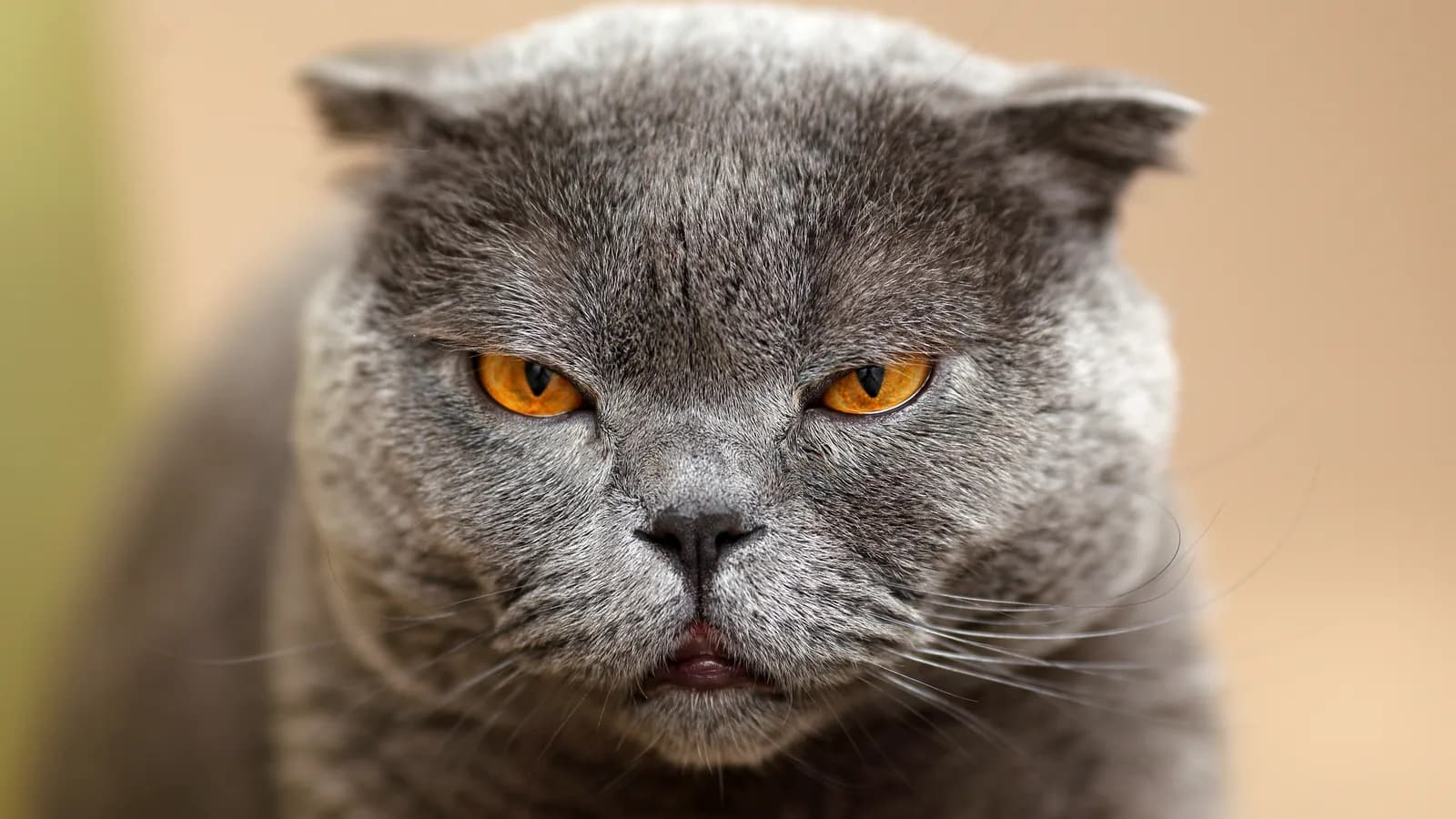
The look is the teddy bear the standards actually specify. A round head with "rounded full cheeks" ('s words), copper-orange eyes on the classic blue, a cobby, heavy-boned body, and the densest short coat in the fancy, which 's standard insists is "not double coated or woolly" whatever the blogs say. Every color family, from the flagship blue to the golden and silver shaded, the three tabby patterns and the white with its hearing-test rule, is mapped in the colors guide.
The personality is the breed's quietest superpower, and it is measured, not marketed. In the largest behaviour dataset that exists (5,726 cats, 19 breed groups, Finland), the British Shorthair scored the LOWEST activity of any group and the LOWEST tendency to seek human contact. The registry copy matches ("calm and quiet" at , "patient... a bit lazy" at ).
This is the cat for people who work: the UK breed club says exactly that, in as many words. One honest asterisk: it loves you at floor level. calls it "a four feet on the floor breed", and three organizations independently warn that being picked up is the one liberty it resents.
Health runs through three facts, each with its own page-tested discipline. is real here (8.5% positive in a 329-cat screening cohort, striking young, males far more than females), and NO DNA test exists for it in this breed. So parent echocardiograms are the only real answer a breeder can give. PKD testing is a solved problem the UK registry enforces at registration. And the breed's most measured enemy is the food bowl: 47.7% of adults overweight in an 11,000-record Australian dataset. The health section below carries the numbers with their scopes.
Buying one: four-market prices from named sellers, including the price-guide-website trap our research caught red-handed, and what registered actually means market by market, where the US pointed-cat rule and the UK's testing gates live. And if what drew you here is the sad-faced, chubby-cheeked meme cat: the cheeks are in the standard, the sadness is just resting British face.
 Health: what to watch for
A few predispositions are well documented. The good news: they can be screened for or avoided by choosing a reputable breeder and keeping an eye on the right signals.
This is information, not veterinary advice, and it cannot tell you what is wrong with your cat. Our rule is a simple one: if something is wrong with your cat, call your vet, and call an emergency clinic if it is out of hours. Nothing you read here is a reason to wait.
Hypertrophic cardiomyopathy (HCM)
Serious; screen by ultrasoundThe first fact protects buyers from a false comfort: NO DNA test for British Shorthair HCM exists, confirmed two ways (UC Davis VGL's test catalog lists HCM tests only for Maine Coon and Ragdoll; GCCF's own breed page says the same). Screening in this breed means echocardiogram, parent by parent. The measured picture: in a 329-cat Danish screening cohort, 8.5% were HCM-positive, with a median diagnosis age of just 2.7 years. Males were affected far more often than females (20.4% against 2.1%). A breeder claiming "DNA tested for HCM" on this breed is describing a test that does not exist.
Symptoms to spot
Often nothing. Labored or rapid breathing, open-mouth breathing or lethargy can appear when fluid builds; a clot can cause sudden hind-leg pain or paralysis. Open-mouth breathing or hind-leg paralysis is an emergency; the rest is a same-day vet call.
How common
8.5% HCM-positive in a 329-cat general screening cohort (Denmark, 2011), median age at diagnosis 2.7 years; males 20.4% affected against 2.1% of females.
Screening & prevention
Parents echo-screened with recent, shown results; repeat screening through breeding years per cardiology guidance.
Genetic test
None exists for this breed (VGL catalog and GCCF's page, checked independently). Echocardiography is the screening tool.
Polycystic kidney disease (PKD)
Preventable by testingThe UK registry made the ask for you. Under GCCF's policy updated 19 November 2025, active registration requires both parents' PKD test results on file (vet-verified for tests after 28 February 2025). The history, scoped honestly: the breed's post-war rebuild used Persian outcrosses (GCCF's own breeding-policy history), and one small study of four cats traced the PKD1 mutation in two of them to that ancestry. A documented route, not a breed-wide indictment. The action beats the history: ask to see both parents' PKD results, everywhere.
Symptoms to spot
Increased thirst and urination, weight loss, poor appetite in an adult cat: a vet visit, not a wait; none of these is a diagnosis.
How common
No modern breed-wide rate published; the UK testing gate exists precisely to keep it that way.
Screening & prevention
Both parents' results, in writing, before a kitten is reserved: a GCCF registration condition in the UK and best practice everywhere.
Genetic test
PKD1 DNA test (the one test UC Davis VGL lists for this breed), or ultrasound screening per your vet.
Obesity
The measured oneThe breed's best-documented health finding is the scale, not a gene. In an 11,000-record Australian first-opinion dataset, 47.7% of adult British Shorthairs were overweight, and the same study's 6,908 adult weight records (mean 5.4 kg, desexed males 5.8 kg) show where it accumulates. The measured lowest-of-19-groups activity level does the breed no favors. The lever is unglamorous and real: portion control and Body Condition Score checks from the first visit. No breed-specific calorie chart exists anywhere, so your vet's per-cat arithmetic is the honest tool.
Symptoms to spot
A vanishing waistline, ribs you can no longer feel under light pressure, less jumping. Bring it up at any routine visit.
How common
47.7% of adults overweight (VetCompass Australia, 2008-2017 records, published 2023).
Screening & prevention
Body Condition Score at every visit; weigh-ins after neutering, when the gain risk climbs in every source that addresses it.
Genetic test
Not applicable.
ALPS (autoimmune lymphoproliferative syndrome)
Rare, testable, breed-firstA piece of science this breed owns: ALPS was first characterised in British Shorthair kittens by a New Zealand research group, which then identified its causative gene, and GCCF now covers it in its testing policy. Scope stated plainly: the only published rates (around 22% carriers, 3% affected) come from three related, inbred New Zealand catteries, not any general population. A rare disease with a known test, not a lurking epidemic. Affected kittens sicken young; carriers are healthy.
Symptoms to spot
In young kittens only: rapidly swelling lymph nodes, weakness, pallor. A breeder-and-vet conversation, urgently.
How common
No general-population figure; the published rates describe three related catteries.
Screening & prevention
Relevant mainly to breeders and importers of related lines; pet buyers can simply ask whether the line has been tested.
Genetic test
Yes (the variant identified by the NZ group); covered by GCCF policy for the breed.
Blood type B (and newborn risk)
Ask before breedingBritish Shorthair appears among the breeds carrying blood type B in both US and European surveys, at rates that vary too widely between studies and countries to state one number honestly (two figures for one European country even contradict each other in our research, so we publish none). Why it matters: a type-B queen and a type-A tom can produce kittens at risk of neonatal isoerythrolysis in the first days of nursing. Breeders type before pairing. A pet owner needs the test only in a transfusion scenario, where the vet types anyway.
Symptoms to spot
None in daily life. Fading newborn kittens in a litter are an emergency vet call.
How common
Genuinely uncertain: published estimates vary too widely to state one number.
Screening & prevention
Type once before any breeding decision; keep the result with the cat's records.
Genetic test
Blood typing (serology) or CMAH genotyping via your vet.
Go deeper on health
Prevention, warning symptoms, costs and insurance: our guides, researched and sourced.
The British Shorthair also appears in
Our criteria-based guides, to compare this breed with the ones most like it.
 Grooming & living with one
Grooming
The famous plushness is cheap to keep. Weekly combing is the registries' shared baseline, stepped up at the seasonal molt, with no routine bathing. One myth to retire: the coat is NOT double coated, in 's own standard's words ("Not double coated or woolly"). It is single, extremely dense and crisp, which is why it resists matting so well.
Living together
Registries and the measured data agree on a patient, tolerant, quiet cat that coexists calmly with children and other pets, on one condition the sources repeat independently: paws stay on the floor. Being picked up and carried is the one thing three organizations separately warn this breed dislikes; teach children to pat, not lift. The two big behaviour studies disagree only on HOW low its aggression sits (least-aggressive tier vs closer to average), not on it being low.
 Food & diet
The breed's real dietary subject is the scale: 47.7% of adults measured overweight in Australia, and no breed-specific calorie chart exists anywhere. So portion control and Body Condition Score checks with your vet are the honest tools. Kitten food for the first year, then adult rations watched closely from neutering onward, when every source that addresses feeding flags the gain risk.
 Price & budget
$1,100 to 4,000
Price of a kitten from a registered breeder, in the United States
This price reflects the quality of the breeding program: parents' health tests, registry pedigree, socialization. A very low price should raise a red flag. The real cost, though, plays out over the years.
Find a verified British Shorthair breederKitten price, by market
United States
$1,100 to 4,000
United Kingdom
£1,500 to 3,300
Canada
CA$2,800 to 4,200
Australia
A$2,000 to 6,000
Each figure is that country's real market price, researched separately, not a conversion of the others. The smaller line is only there so you can gauge one against your own money: European Central Bank reference rates of 2026-09-18, refreshed daily.
The British Shorthair in the US, UK, Canada and Australia
| Measure | United States | United Kingdom | Canada | Australia |
|---|---|---|---|---|
| Pet-quality kitten (named sellers) | $1,100-4,000 (4 catteries' own cards) | £1,500-3,300 (marketplace's own estimate) | CA$2,800-4,200+ (2 catteries) | AUD 2,000-6,000+ (published tiers) |
| Main registries | TICA, CFA | GCCF + the breed club | CCA-AFC, TICA | ACF bodies, ANCATS |
| Registration rules to know | CFA refuses pointed cats as BSH; DNA gate on chocolate/lilac/pointed pedigrees | PKD results a registration gate; BAER hearing certificate for breeding whites | "ALLOWED ANCESTRY: British Shorthair & Longhair" | combined BSH/BLH standard since 2024 |
| Measured breed life expectancy | No measured figure exists | 11.8 years median age at death (England, 69 deaths) | No measured figure exists | Adult mean weight 5.4 kg measured here (6,908 records) |
Four markets, four registries, four price cards; none of these figures converts into another. Prices are August 2026 and expire with the quarter.
Work out your food budget
Type of food
Estimated monthly budget
$16
≈ 2.8 oz (79 g) per day
A ballpark figure, food only, using the same arithmetic as our portion tool (resting energy requirement × 1.2, a neutered adult). Real needs vary with age, activity level and body condition. Ask your veterinarian for advice.
 Verified British Shorthair catteriesThe registry-checked directory, plus a kitten alert near you
 Should you insure a British Shorthair?
Our sources list several predispositions in the British Shorthair: Hypertrophic cardiomyopathy (HCM), Polycystic kidney disease (PKD), Obesity, among others. A predisposition is not a foregone conclusion, and many of these cats live their whole lives without ever developing anything. It does change the nature of the follow-up, though: you monitor, sometimes for life, and it's that monitoring that weighs on a budget, more than a one-off accident.
One thing to weigh before deciding: this is a cat you will live alongside for well over a decade, and that is the span the real cost is spread across, premiums and care alike. Where a breed has a measured life expectancy that differs from the figure usually quoted, we say so in the lifespan section above rather than repeating the quoted one here.
 British Shorthair cats in our community
No British Shorthair here yet
Got one? Add a photo and yours gets to open this page.
 The vet's take
Veterinary review
Are you a vet?
Your professional read belongs here: every verified practitioner can leave a note, published once our editors have reviewed it.
Sign in and get your license number verified. We check it in the public register, we never ask for or keep a copy of your diploma, and your number is never published.
 Frequently asked questions
+Are British Shorthairs hypoallergenic?
No cat breed is, this one included: every cat produces the Fel d 1 allergen, and the famously dense coat changes your housekeeping, not the allergen. Anyone allergic should spend time with the specific cat, more than once, before committing.
+How much does a British Shorthair cost?
As of August 2026, from named sellers: $1,100 to $4,000 in the US across four catteries' own cards, £1,500 to £3,300 for registered UK kittens per the biggest marketplace's own estimate (live listings ran £100-1,500), CA$2,800 to $4,200+ at two named Ontario catteries, and AUD 2,000 to 6,000+ across one Australian cattery's published tiers. No registry publishes a price, and anonymous price-guide websites are this breed's signature trap.
+How long do British Shorthairs live?
The quoted ranges disagree three ways, none sourced: 12-20 years (TICA, echoed by PetMD and Agria), 14-20 (GCCF), 12-17 (Purina UK). The clean measured figure is a median age at death of 11.8 years, from 69 British Shorthair deaths in an English practice study. A newer study's scarier "9.58 years" row merges the breed with the British Longhair, per its own footnote, and is not a British Shorthair figure.
+When is a British Shorthair fully grown?
In the standards' own near-identical words, at CFA and GCCF both: "The breed takes a full 3-5 years to reach full maturity and development." A lanky two-year-old is on schedule.
+Why do British Shorthairs have chubby cheeks?
Because the standard asks for them: GCCF's Standard of Points wants a head that is "round with a good width between small ears, rounded full cheeks, firm chin." The teddy-bear face is the blueprint, not baby fat, though real weight gain hides in it easily: mind the scales.
+Do British Shorthairs shed?
Yes, seasonally, from the densest short coat in the fancy (CFA: "more hairs per square inch than any other breed"). The care side stays light: weekly combing, more during the molt, no routine baths. And despite the plushness, CFA's own standard says the coat is "not double coated or woolly."
+Are British Shorthairs cuddly?
Affectionate, yes; a lap cat, usually no. TICA calls it "a four feet on the floor breed," and the UK club says most "prefer to keep four paws on the ground and be patted rather than picked up." Love arrives at floor level, on the cat's schedule.
+Can British Shorthairs be left alone while I work?
Better than almost any breed, by measurement and by the UK club's own words: "wonderful cats for people who work... They do not get destructive." The largest behaviour study (5,726 cats, 19 breed groups) measured the breed lowest for activity and lowest for seeking human contact.
+Can British Shorthairs go outside?
No registry document we read mandates indoor life. The relevant facts: the lowest measured activity of any breed group (little drive to roam) and a valuable, stealable look. Many breeders contract for indoor-only homes, so ask yours, and check your local containment rules (parts of Australia require them for all cats).
+Is a British Blue the same as a British Shorthair?
Yes: British Blue is the breed's original name, kept alive by its flagship solid blue coat. Same breed, same standard, same papers. It is not a Russian Blue, which is a different breed entirely (fine-boned, green-eyed, and genuinely double-coated where the British is not).
+Are British Shorthairs friendly?
The registry portrait says calm, patient and easygoing with children and other pets, and the measured data agrees it is not an aggressive breed, with one honest caveat: the two big studies disagree on HOW low its aggression sits (least-aggressive tier in one, closer to average in the other). Not high, either way, and quiet with it.
 Community questions
Got a question this page doesn't cover? Ask it: the best ones get published here with their answer.
Sources & references
Data checked against reference sources (TICA and CFA standards, genetics laboratories, veterinary schools).
- TICA: British Shorthair breed
- TICA British Breed Group standard (PDF)
- CFA: British Shorthair
- CFA British Shorthair standard (PDF)
- GCCF: British breed page
- GCCF BSH Standard of Points (PDF)
- GCCF BSH Registration Policy (PDF)
- O'Neill et al. 2015, English longevity study
- Teng et al. 2024, VetCompass life tables (the 'British cats' footnote)
- Murphy et al. 2023, Australian VetCompass weights and obesity
- Granström et al. 2011, the 329-cat HCM screening cohort
- Salonen et al. 2019, breed behaviour study
- Mikkola et al. 2021, feline behaviour traits
- Harrison Weir 1871 show record
- UC Davis VGL: British Shorthair tests

Worth keeping a paw on
Pin this profile
To compare later, or to show someone still torn between two breeds. One click and it sits in your board.
Pin it on Pinterest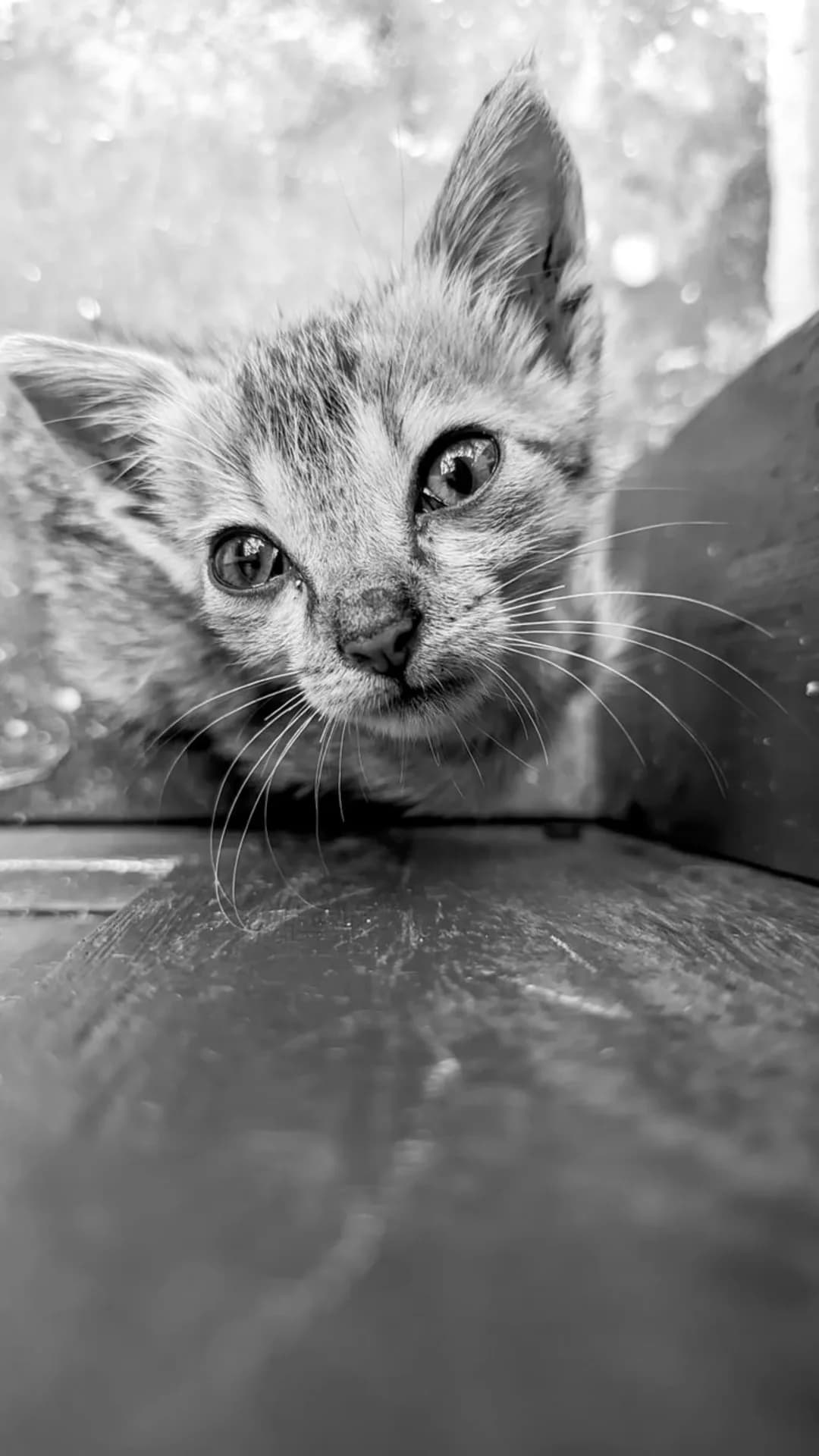
 Purr or Pass
Still deciding? Find the perfect breed for your home.
A quick quiz that factors in your lifestyle, your kids and your other pets.
Which breed fits my home?Keep exploring
The floor belongs to our members. Keep it kind, links are not allowed, and images go through moderation before anyone else sees them.