


Coat patterns
Tabby Cats: The Pattern Every Cat Secretly Carries
A tabby is not a breed. It is the cat world's default outfit: stripes, swirls, spots or ticking over a banded ground color, worn by cats and alley cats alike. And it hides the best fact in cat genetics: EVERY cat carries a tabby pattern, including the solid black one next door. You just cannot always see it.
The science here got rewritten recently, twice, by the same research group, and most tabby pages have not caught up. Here are the four patterns, the two genes, the forehead M with its legends labeled as legends, and the breeds whose standards make tabby mandatory. Every pattern and color named here is photographed on this page.
 By Nora · The storyteller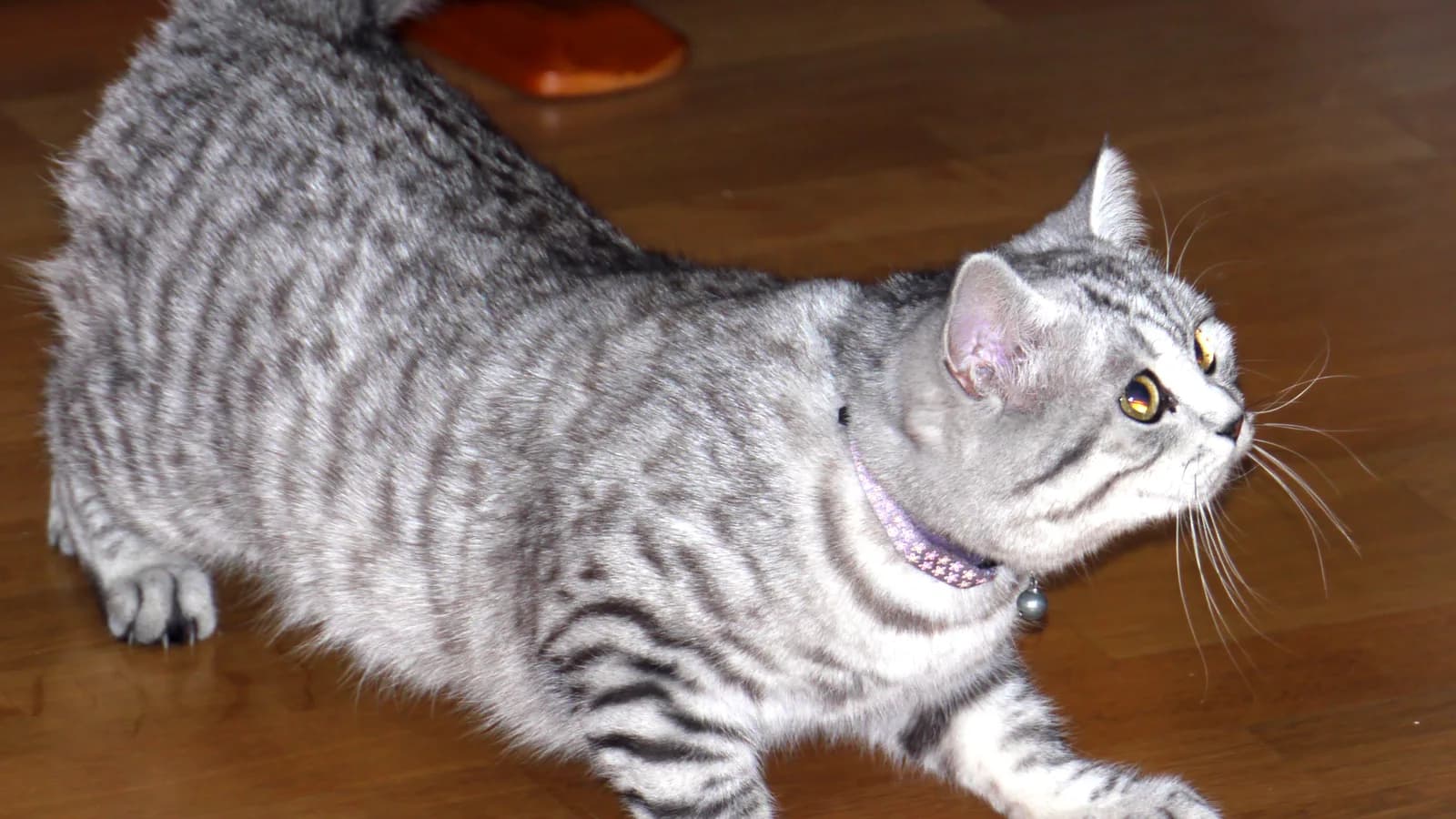
Contents
Breeds worth knowing
Tap a breed for the full profile: temperament, health, price and coat colors, all fact-checked.
What is a tabby cat?
A tabby cat is any cat wearing the tabby coat pattern: dark markings (stripes, swirls, spots or all-over ticking) over a ground of banded, sandy-looking hairs, usually with the trademark "M" between the eyes. It appears in dozens of breeds and in most of the world's non- cats. That is why "what breed is my tabby?" has no answer: the pattern carries no breed information at all.
Here is the part almost nobody tells you, straight from the genetics lab that runs the tests (UC Davis VGL): "In a cat, the tabby pattern is still present, but it is just not visible since all the hairs in the pattern and outside the pattern are a uniform color." Every cat inherits a tabby layout. A separate gene, , decides whether the ground hairs are banded so the layout shows. A solid black cat is not a non-tabby: she is a tabby wearing blackout curtains.
Is a tabby cat a breed?
No. Tabby is a coat pattern found across dozens of breeds and most mixed-breed cats worldwide. The pattern says nothing about breed, size or temperament; it says a lot about pigment genetics.
The four tabby patterns (and the torbie)
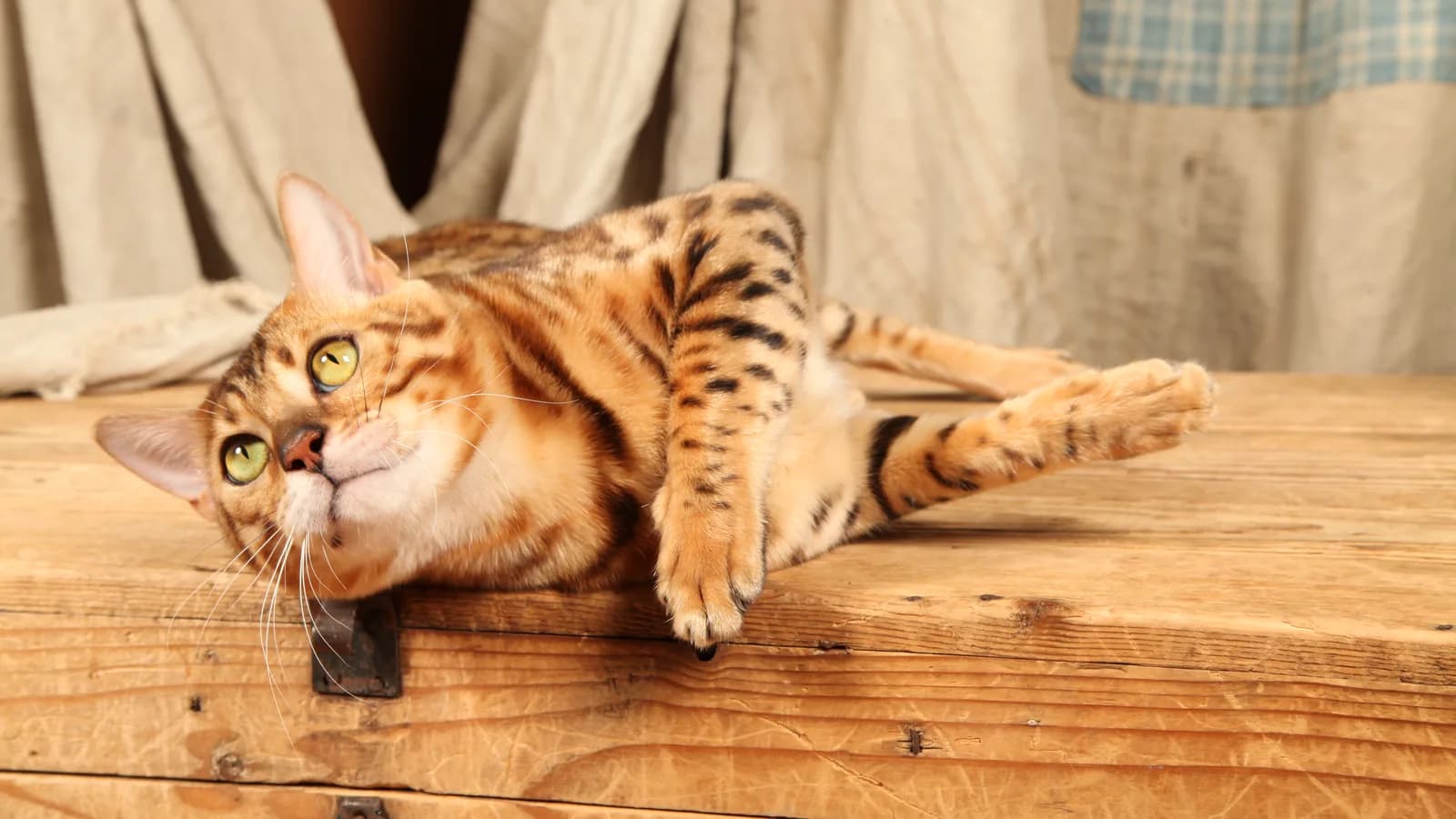
The registries name four patterns, plus a combination. 's own vocabulary, from its pattern guides: the classic (or blotched) tabby wears "elaborate swirls on the sides and butterflies over the shoulders". The mackerel wears narrow parallel stripes "like the bones of a fish". The spotted tabby's stripes "appear to be broken into spots". And the ticked tabby carries the banding on each individual hair with a nearly unmarked body, the Abyssinian's signature look. Add red patches through the sex-linked orange gene and you get the patched tabby, better known as a .
Whatever the layout, the accessories come standard. lists what all tabby patterns share: "mascara markings, leg stripes, a spine line, tail rings, an 'M' on the forehead," plus optional bracelets, butterflies and necklaces.
The sits halfway to another family entirely: any tabby pattern with red or cream patches blown across it, almost always on a female. Where the patches take over and the stripes fade out, you have crossed into tortoiseshell country.
Classic (blotched)
Swirls and bullseyes on the flanks, butterfly across the shoulders. The marble-cake tabby.
Mackerel
Narrow parallel stripes down the ribs, like a fishbone. The most common layout, and the alley cat's uniform.
Spotted
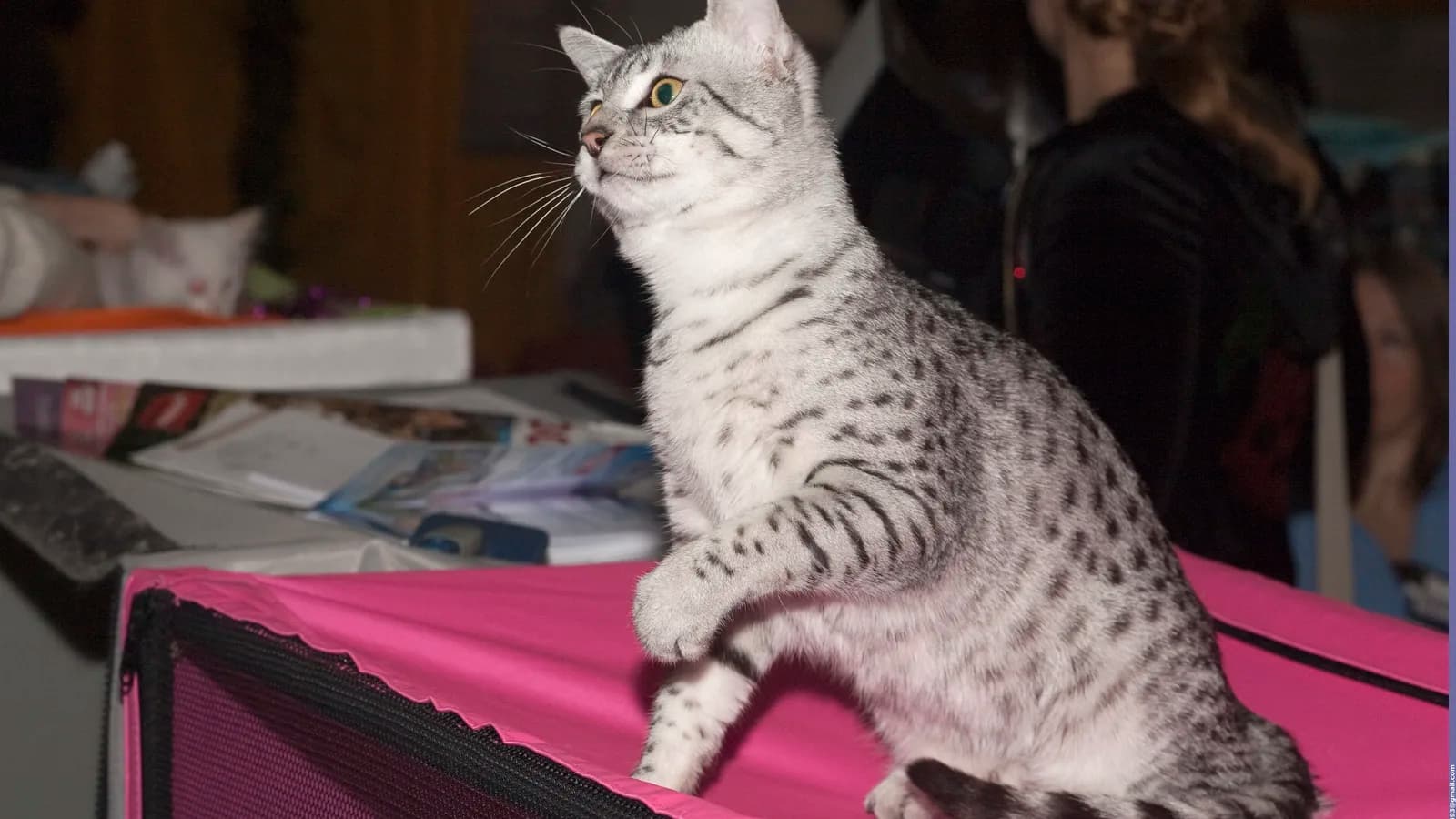
The stripes break into spots, from big rosettes to freckles. The Egyptian Mau's and Ocicat's whole identity.
Ticked
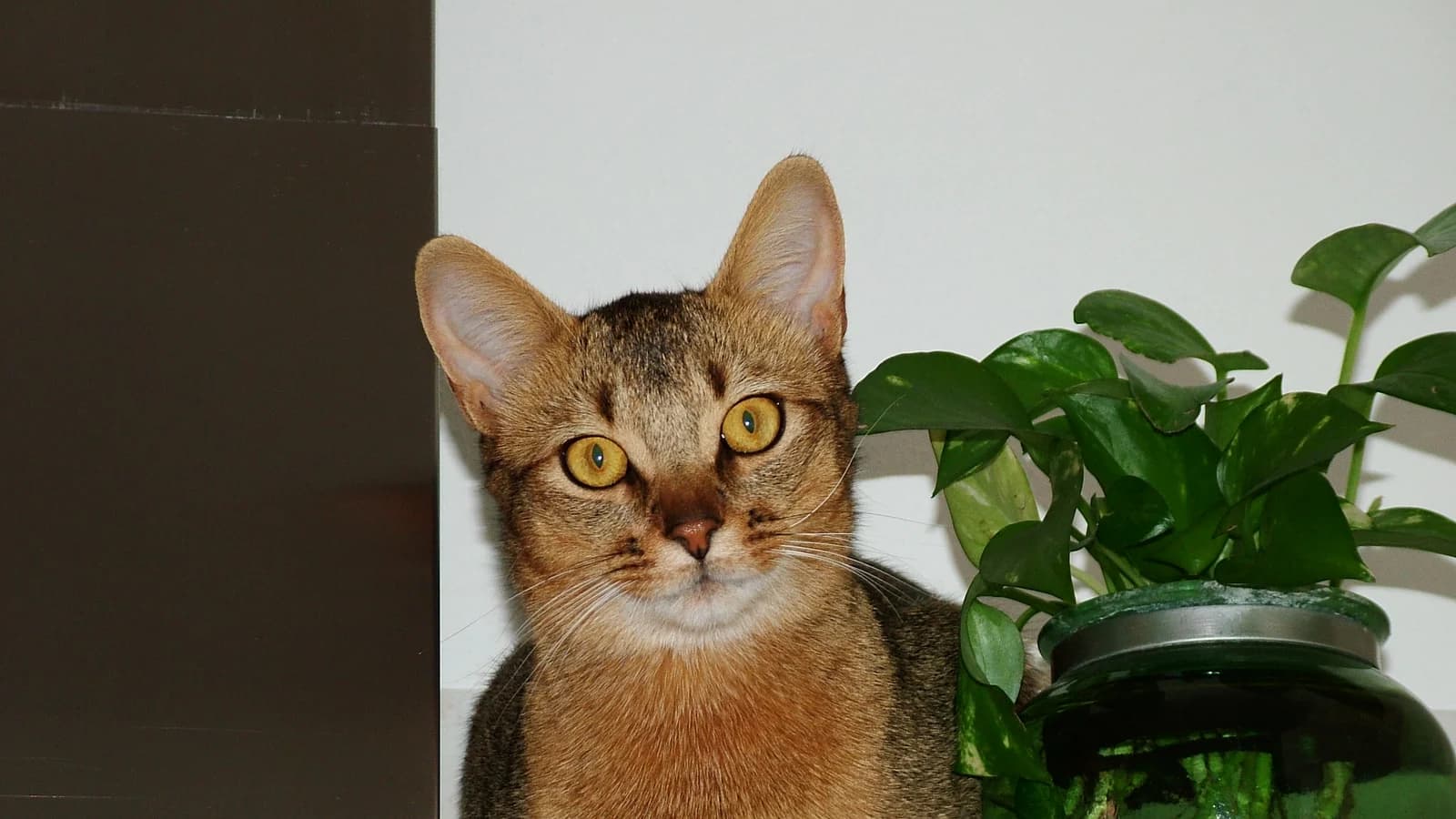
No body stripes at all: each hair is banded, the pattern lives inside the fur itself. The Abyssinian look.
Torbie (patched tabby)
Any tabby pattern plus red or cream patches from the orange gene: almost always female.
Where the name came from: silk before cats
The word did not start as a cat word at all. Per the standard etymological account (Etymonline, seconded by Merriam-Webster), "tabby" begins as Arabic attabi, then French tabis: a rich, watered silk with a wavy sheen, named for Attabiyah, the quarter of Baghdad where the cloth was first woven, itself said to be named for a prince of the Omayyad dynasty. English borrowed the fabric word in the 1630s and soon stretched it to anything with that wavy, watered look.
"Tabby cat" is attested from the 1690s, for a cat whose coat rippled like the silk; by 1774, plain "tabby" could mean the cat alone. So the stripes named a cloth district, the cloth named the look, and the look named the cat. Every tabby walks around wearing the name of a Baghdad neighborhood.
The wild original, and the medieval makeover
The is not just the most common layout; it is the original. The domestic cat's ancestor, the African wildcat Felis silvestris lybica, wears narrow mackerel striping, and ancient Egyptian art shows exactly that: the tomb-painting "cat under the chair" reproduced in the ancient-DNA study below is a mackerel tabby, not a swirled one. For most of the cat's long career beside us, stripes meant narrow and parallel.
The swirls came startlingly late. A 2017 ancient-DNA study in Nature Ecology & Evolution (Ottoni and colleagues) genotyped archaeological cat remains across Europe, Africa and southwest Asia and tracked the variant behind the classic pattern, which the paper calls "the recessive allele responsible for the blotched-tabby pattern in 80% of present-day cats." Their finding: that allele does not show up in the ancient dataset earlier than the medieval period, and only after the Middle Ages does it climb toward the frequency it has today.
So medieval Europe's cats were overwhelmingly striped, and the marble-swirled is, on the ancient-DNA evidence, a late fashion that spread with us. The same paper draws the quiet conclusion: a coat variant reaching high frequency only after the Middle Ages suggests directed breeding of cats started later than for most other domesticated animals. Cats were in no hurry to be designed.
The genetics: two genes, cracked in 2012 and 2021
For most of scientific history nobody knew what drew the stripes. The answer came in two papers from the same group. In 2012, Science published the discovery that the classic-versus-mackerel decision belongs to a gene called , working with a second signal (Edn3) in a two-stage system. Taqpep lays down a periodic pre-pattern in the developing skin; Edn3 then paints it. The team's proof reached far beyond housecats. The rare king cheetah, whose spots fuse into blotches, turned out to be a Taqpep mutant too: one mechanism running across 31 wild cat species.
The ticked pattern took until 2021. A separate gene, , was published in Nature Communications with the receipts (37 Abyssinians and 26 Singapuras carrying the variant alleles, 11 of 13 Burmese homozygous). One copy mutes the body markings to the legs and tail; two copies erase them, leaving pure ticking.
And one genuine open mystery, stated by the 2021 paper itself. Spotted breeds like the Egyptian Mau and Ocicat run on the same mackerel-type background as striped cats, and "the genetic basis of Mackerel vs. Spotting is not known." What breaks a stripe into spots is, as of today, an unanswered question. Any page telling you otherwise is ahead of the science.
+ Edn3 (2012)
Classic vs mackerel: a pre-pattern gene and its painter, discovered in Science, king cheetah included.
(2021)
The ticked pattern: one copy mutes the body markings, two copies erase them. Measured in Abyssinian, Singapura and Burmese samples.
Spots: still open
Mau and Ocicat spots ride the mackerel allele, and what turns stripes into spots is explicitly unknown. Honest science beats a tidy story.
The M on the forehead
The M is real registry vocabulary, not folklore. lists it among the markings every tabby shares, and the Egyptian Mau standard describes the "forehead barred with characteristic M and frown marks." Mechanically it is just where the facial stripes converge.
One genetics footnote, because the internet upgrades this constantly: no separate gene for the M has ever been identified. It is the same striping system meeting on a narrow forehead, nothing more.
The legends are better stories, and we pass them on as exactly that: legends with no primary source anywhere. Mary marking the tabby that warmed the infant Jesus. The Prophet Muhammad marking his beloved cat Muezza in thanks for saving him from a snake. An Egyptian tale linking the letter to "mau." Three traditions, one shared instinct that a cat that good deserved a signature.
Breeds where tabby is the law
Tabby is not a breed, but some breed standards make a specific tabby pattern mandatory, and the wording gets delightfully strict. 's Toyger standard reads "Brown Mackerel Tabby ONLY," capital letters theirs. 's Egyptian Mau standard puts it in one line: "DISQUALIFY: lack of spots." The Ocicat standard disqualifies , and solid coats outright: spots or nothing.
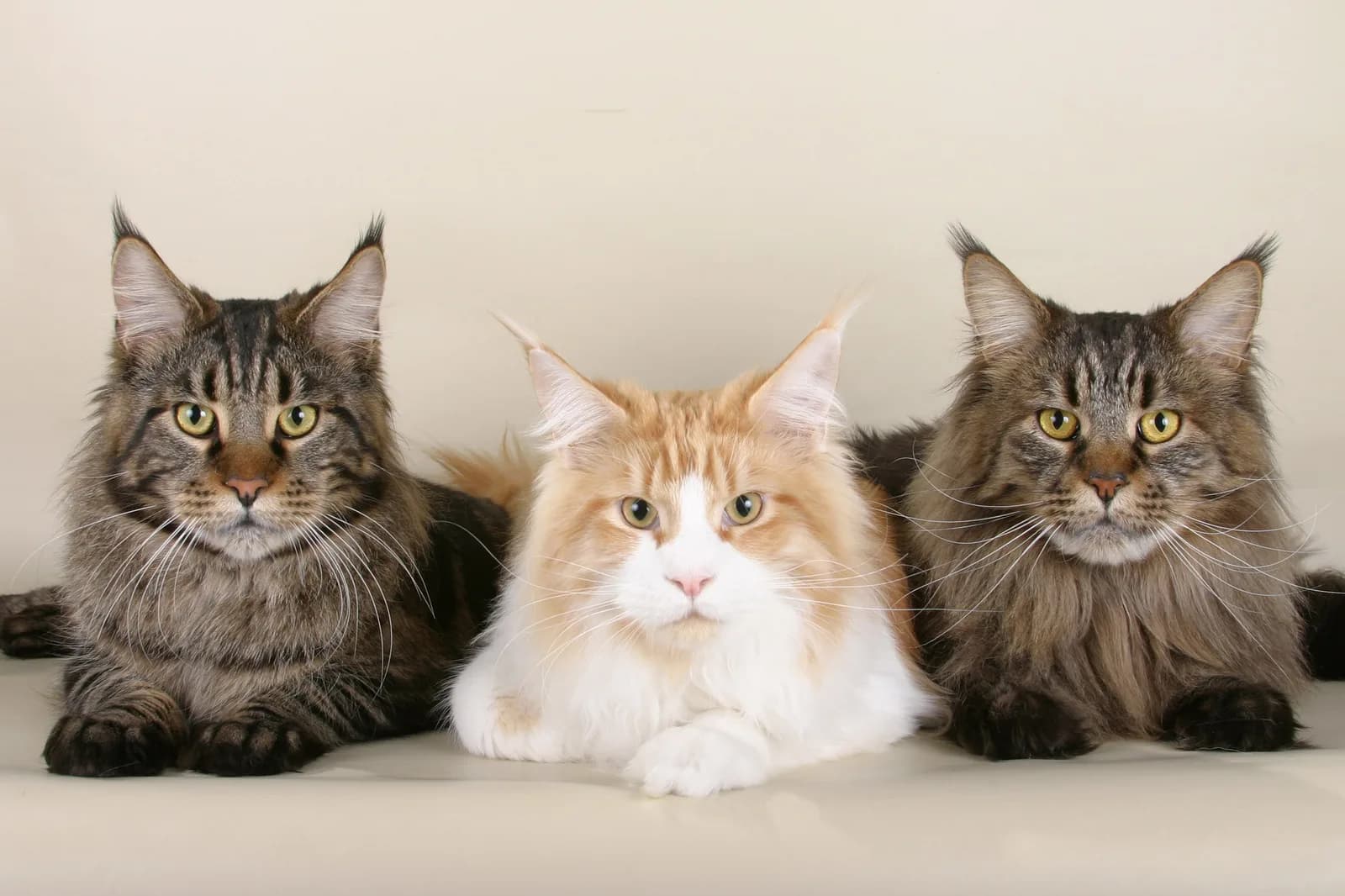
The Abyssinian, the fancy's great ticked cat, is scored down for any barring on its legs or necklaces on its chest. Pure ticking is the whole point. On the other side, our Maine Coon color guide shows what tabby looks like when a breed simply loves it without requiring it: brown is the breed's signature coat.
| Breed | The rule | The standard's own words |
|---|---|---|
| Toyger | Mackerel only | "Brown Mackerel Tabby ONLY" () |
| Egyptian Mau | Spots required | "DISQUALIFY: lack of spots" () |
| Ocicat | Spots only | Classic tabby, and solid all disqualify () |
| Abyssinian | Ticked only | Barring on legs and necklaces penalized () |
Tabby colors: brown, silver, orange, gray
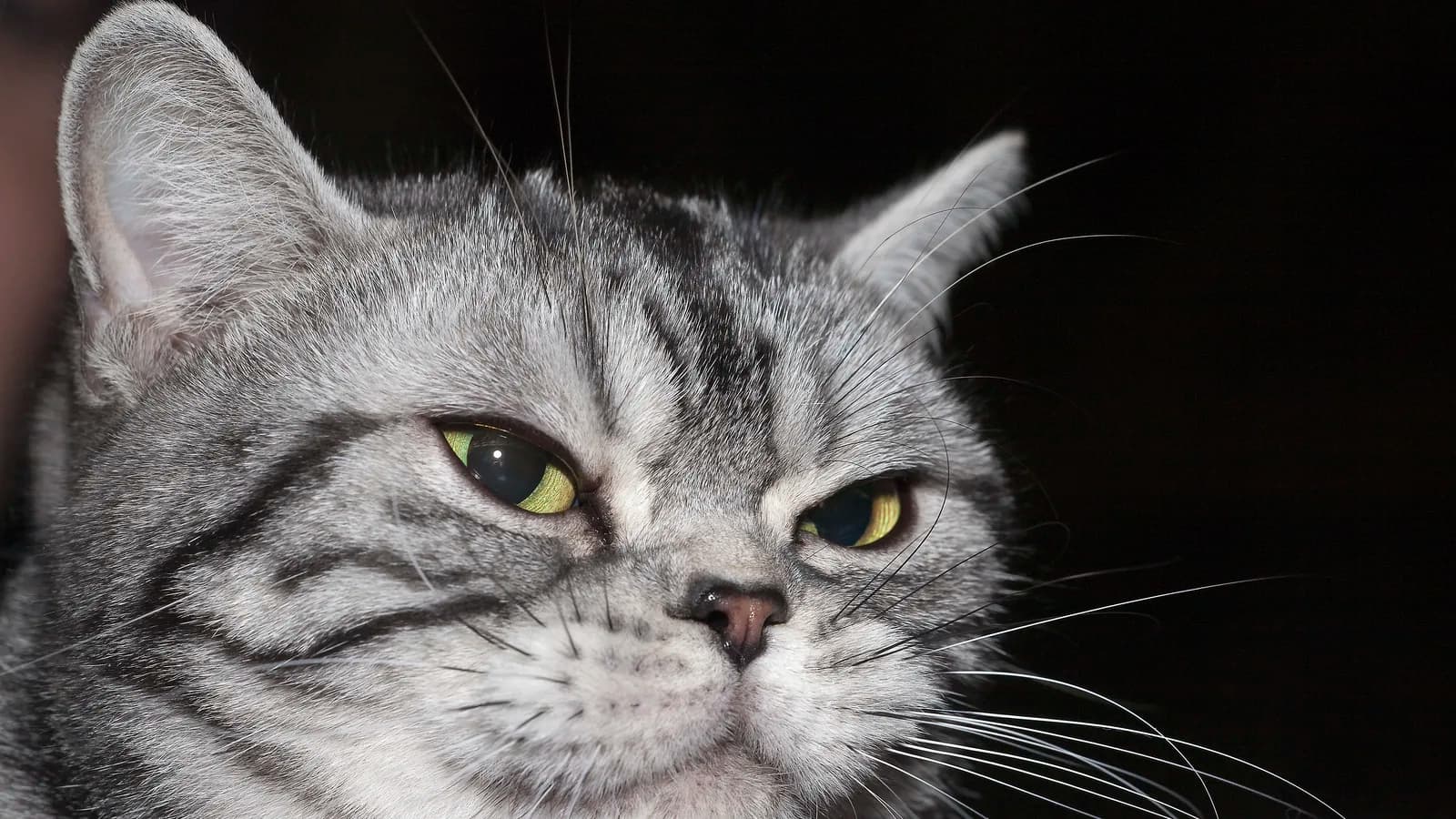
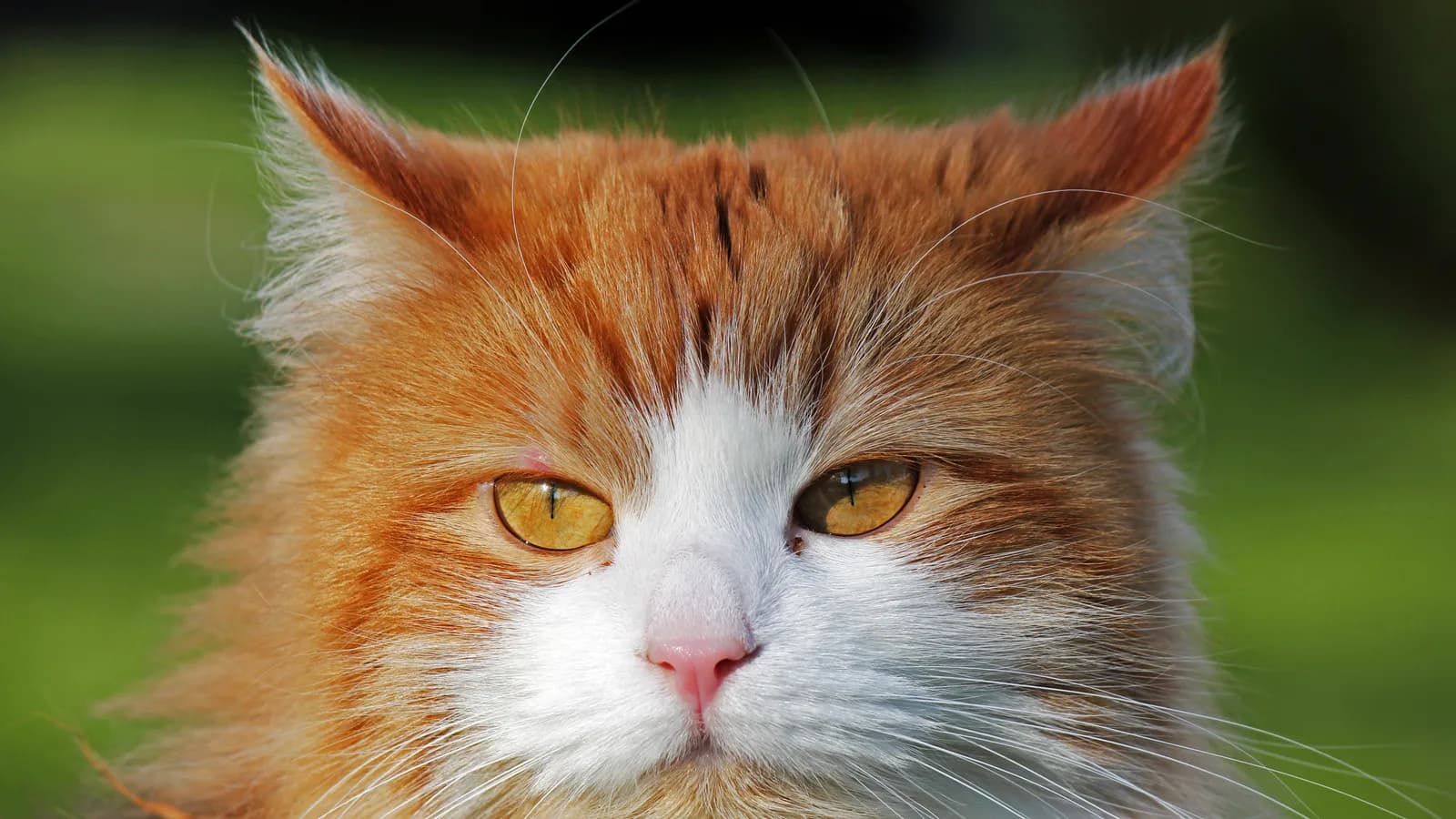
"Tabby" names the layout; the colors underneath run the whole feline palette. 's own definitions draw them sharply: a brown tabby has "a warm brown or bronze tone to his background color and black stripes"; a blue tabby wears "a creamy background color and blue stripes"; a silver tabby, "a silver-white background color with black tabby markings." The orange tabby is its own story, told on its own page: every orange cat is a tabby whether it wants to be or not.
Two naming quirks are worth owning. The everyday grey tabby, the most-searched tabby color of all, is the registries' blue tabby: dilute black stripes on that creamy ground (and if yours needs a name, our grey cat names page is built for exactly that coat). And the brown tabby is, genetically, a black tabby. says the polite version out loud: "Convention and habit mostly, but also because 'brown tabby' better describes the color."
The silver tabby's trick is described by breeders and cat-fancy geneticists as the : it lets pigment through at the tip of each hair but strips it from the shaft, so the ground reads silver-white while the markings stay black. No modern gene symbol has been pinned on it, which is worth saying plainly on a page where every other mechanism has a named gene. One expected imperfection even has a name: "tarnishing," a faint reddish cast, most often around the muzzle of random-bred silver tabbies. And white-spotted coats, the tabby in formal wear, run on yet another mechanism, mapped on our tuxedo cat page.
Tabby personality and lifespan: what is actually measured
Honest answers, because the internet is full of confident ones. On personality: the one measured study of coat color and behavior (Stelow et al. 2016, 1,432 owner surveys) did include tabby as a category. Its headline finding names tortoiseshell-family females, black-and-white and gray-and-white cats as the ones owners reported as spicier, NOT plain tabbies. There is no measured "tabby personality." The friendly-tabby reputation is a reputation.
On lifespan and size: no study anywhere measures lifespan or size by coat pattern, and none would make sense. Tabby appears in nearly every breed and every mixed-breed population, so a tabby's lifespan is her breed's or her mix's. The UK's big life-table study puts overall cat life expectancy at 11.74 years at birth. The pattern on the coat moves that number not at all.
The tabby field guide
Every coat named on this page, in one grid. Tap any photo to enlarge it; each caption names the variant, so you can hold your own cat up against the real thing.
The tabby is the cat the rest of the cats are wearing underneath: the default pattern, hidden in every solid coat, mandatory in a few proud breeds, and older than every breed there is. If a tabby runs your home, look closely at the flank and tell us which of the four layouts you find; the M, you already know about.
And once you have named the layout, it deserves an audience: the Share + button in the header takes your cat's photo into our community games. Torbies especially welcome; the judges are lenient and the competition purrs.
By Nora · The storytellerFrequently asked questions
What is a tabby cat?
Any cat wearing the tabby coat pattern: stripes, swirls, spots or ticking over banded ground hairs, usually with an M on the forehead. It is a pattern found across dozens of breeds and most mixed-breed cats, not a breed itself.
What breed is a tabby cat?
The pattern cannot tell you. Tabby appears in many breeds and in most non-pedigree cats; without papers, a tabby is a domestic shorthair or longhair wearing the world's most common coat.
Why are tabby cats called tabby?
From a fabric. "Tabby" first named a wavy, watered silk woven in the Attabiyah quarter of Baghdad, borrowed into English in the 1630s. By the 1690s a striped cat whose coat rippled like the silk was a tabby cat, and by 1774 just a tabby.
What are the types of tabby cats?
Registries name four patterns: classic (blotched swirls), mackerel (narrow parallel stripes), spotted, and ticked (banding inside each hair, no body stripes), plus the torbie, any tabby pattern with red or cream patches. Colors run separately: brown, blue/grey, silver, orange and their dilutes.
How long do tabby cats live?
As long as their breed or mix does: no study measures lifespan by coat pattern. The largest UK study puts overall cat life expectancy at 11.74 years at birth, with neutering, weight and care as the real levers.
Are tabby cats hypoallergenic?
No. Coat pattern has no effect on the Fel d 1 allergen, and no cat is truly hypoallergenic.
How big do tabby cats get?
Whatever size their breed or mix is: the pattern carries no size information. A tabby Maine Coon is huge, a tabby Devon Rex is tiny, and the stripes are innocent either way.
Are tabby cats friendly?
The friendly-tabby reputation is unmeasured: the one coat-color behavior study did not single out tabbies in its findings, in either direction. Breed lines and individual personality decide temperament; the coat does not.
What is a grey tabby?
What registries call a blue tabby: dilute black stripes on a creamy ground. Grey is the everyday word, blue is the fancy's word, and they name the same cat.
Are all tabby cats male?
No. Most tabby colors split evenly between the sexes. The exception is the orange tabby, where genetics skews the population male because orange is carried on the X chromosome.
Are tabby cats rare?
The opposite: tabby is the most common coat pattern in cats, and the ancestral one. Every wildcat ancestor of the housecat wears a tabby coat.
Why do tabby cats have an M on their forehead?
It is where the facial stripes of the pattern converge, and registries name it as standard tabby marking. No separate gene for the M has been identified. The Mary, Muhammad and Egyptian legends about it are lovely, and they are legends.
Sources & references
Data checked against reference bodies (breed registries, allergy research, veterinary schools).
- Kaelin et al. 2012, Specifying and sustaining pigmentation patterns in domestic and wild cats (Science)
- Kaelin, McGowan & Barsh 2021, Developmental genetics of color pattern establishment in cats (Nat Commun)
- Ottoni et al. 2017, The palaeogenetics of cat dispersal in the ancient world (Nat Ecol Evol): the blotched allele's medieval timeline
- UC Davis VGL: Agouti (why solid cats still carry a tabby pattern)
- CFA: Tabby Patterns (Patterns in the Domesticated Cat, part 2)
- CFA: Coat & Color Descriptions (pattern and color definitions; brown-vs-black naming)
- CFA Egyptian Mau standard (DISQUALIFY: lack of spots; the M description)
- TICA Toyger standard (Brown Mackerel Tabby ONLY)
- CFA Ocicat standard (non-spotted patterns disqualified)
- CFA Abyssinian standard (ticked coat; barring penalized)
- Etymonline: tabby (the Baghdad silk etymology)
- Sarah Hartwell, messybeast.com: Inhibitor gene, silver and gold (the silver mechanism and tarnishing)
- Stelow, Bain & Kass 2016, coat color and aggressive behaviors (J Appl Anim Welf Sci)
- Teng et al. 2024, life tables for UK companion cats (J Feline Med Surg)
This page is a starting point. Every cat is an individual: our profiles spell out the tendencies of each breed, sources included.
 Purr or Pass
Which cat breed is right for you?
Take the quiz