


Coat patterns
Tuxedo Cats: The Bicolor Pattern in a Dinner Jacket
A tuxedo cat is a black cat dressed by a very good tailor: white bib, white paws, sometimes a white chin or belly, everything else jet black. It is not a breed. And here is the detail almost no page tells you: it is not even an official pattern. We searched every registry standard behind our 66 breed dossiers, and the word "tuxedo" appears in none of them.
What the registries DO define is the bicolor family the tuxedo belongs to. The genetics behind it are one gene with a grading dial. Here is the whole story, including the famous tuxedos of history, one of whom turns out not to be a tuxedo at all.
This page now shows as well as tells: twelve labeled photographs walk the white-spotting ladder from a single white patch to a cat that is nearly all white, so you can place your own cat on it by the end.
 By Nora · The storyteller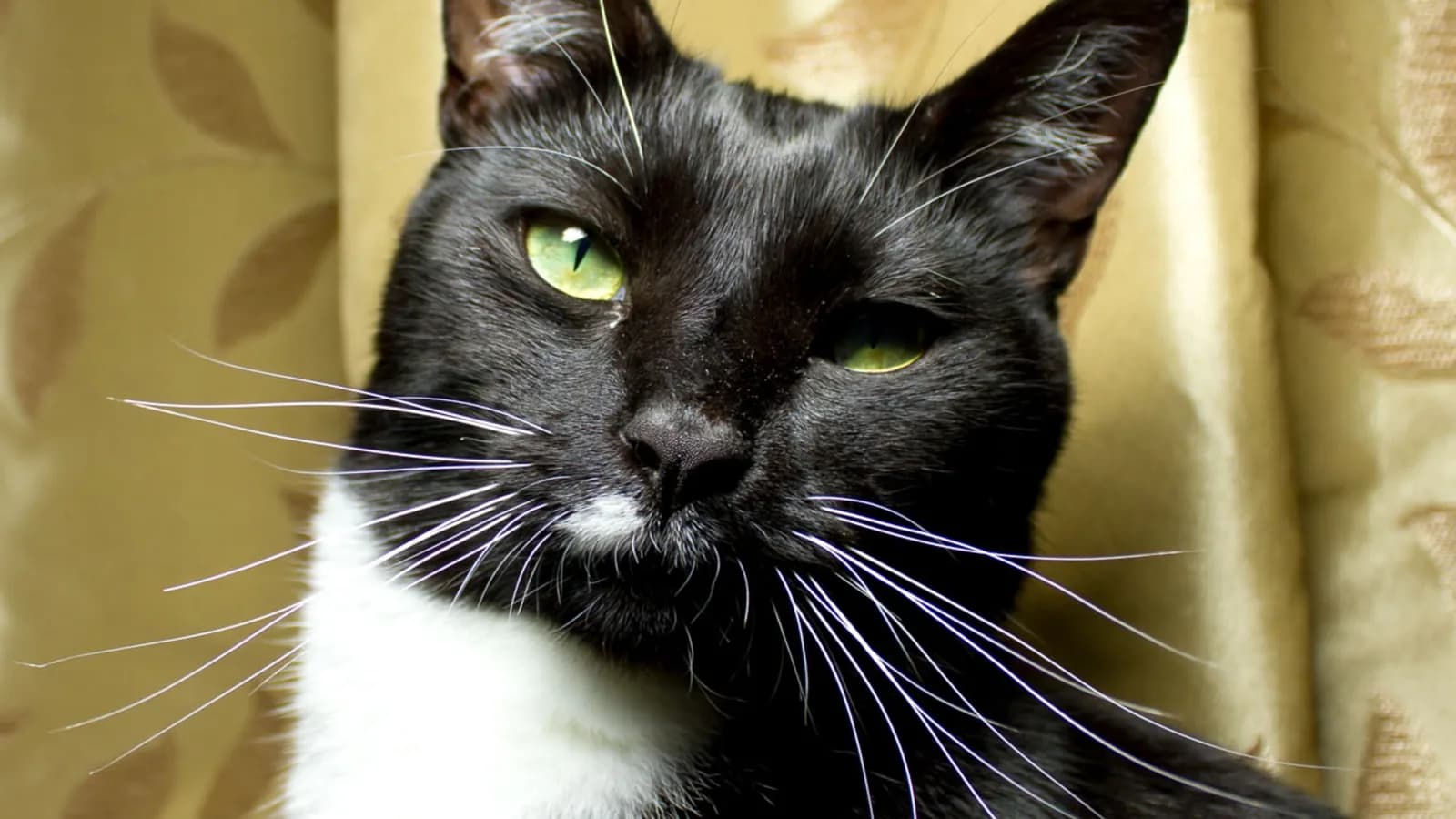
Contents
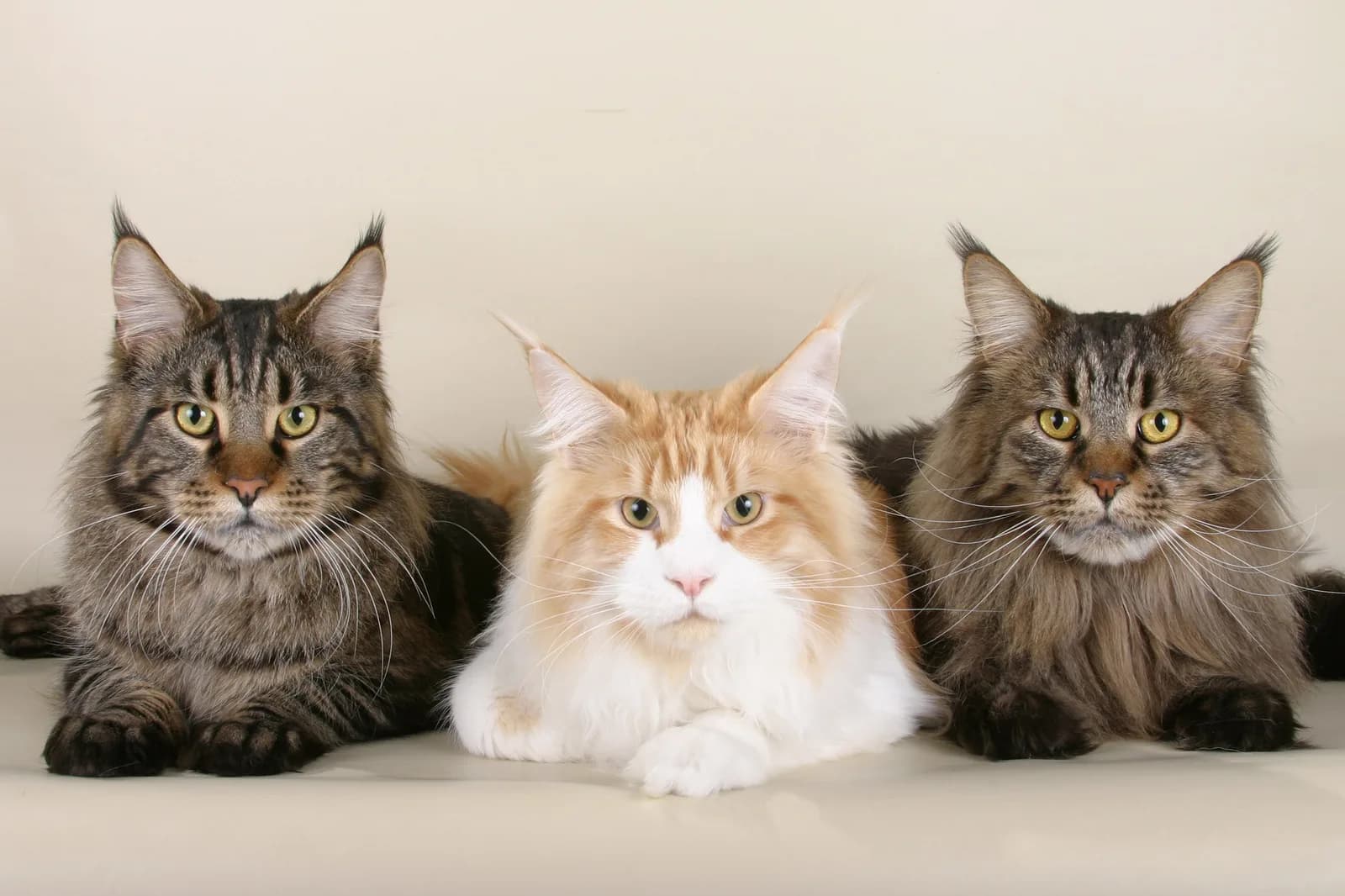
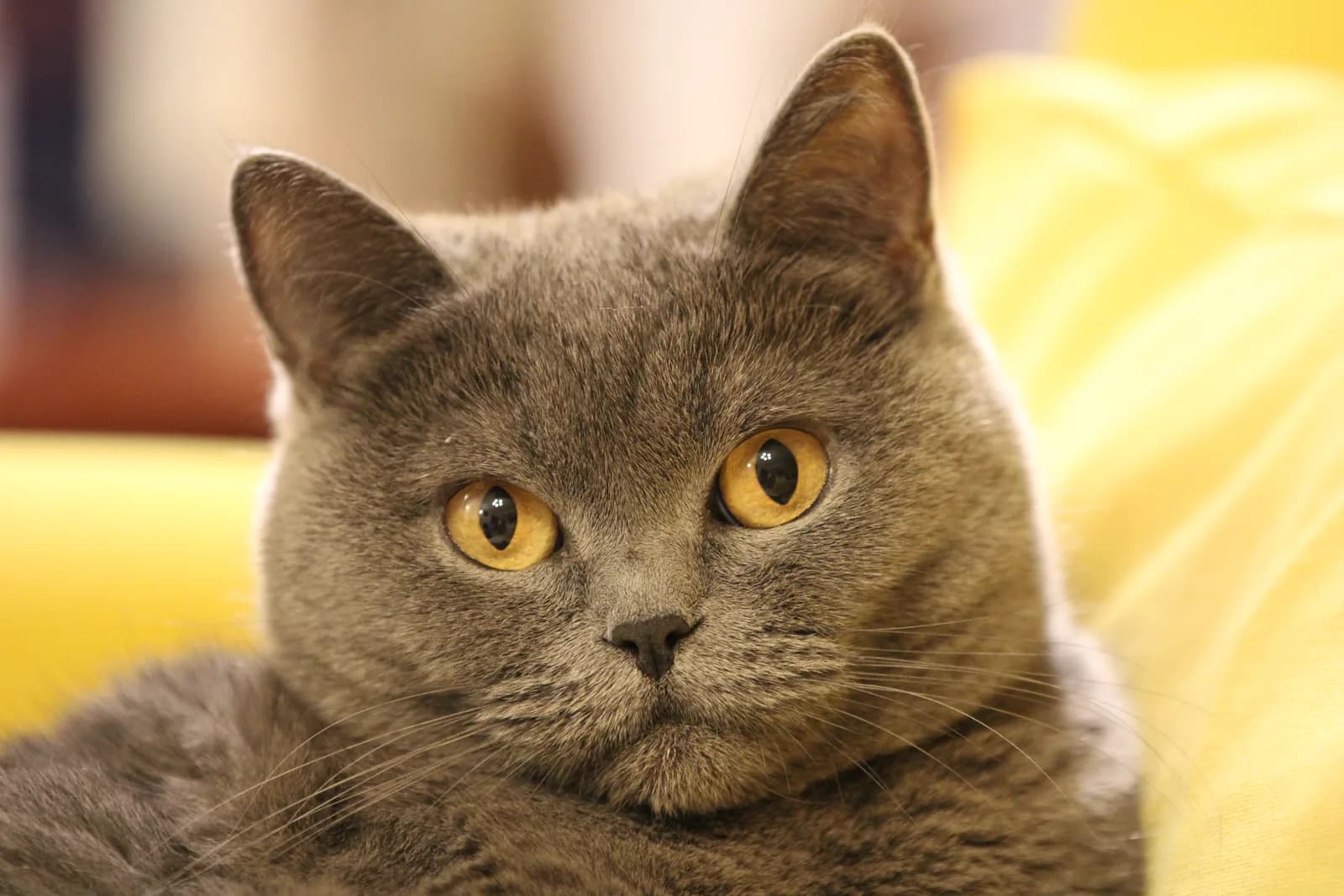
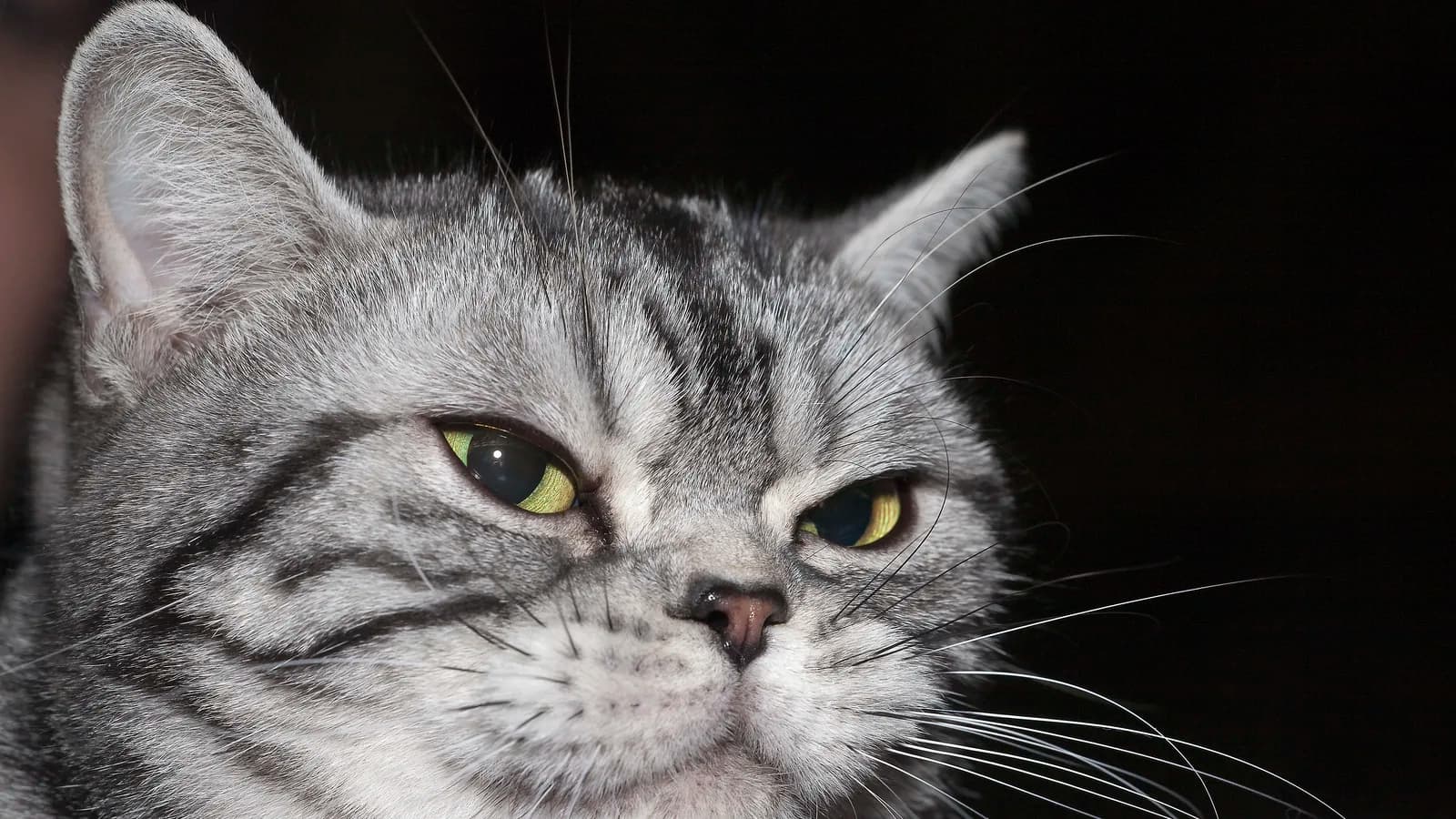
Breeds worth knowing
Tap a breed for the full profile: temperament, health, price and coat colors, all fact-checked.
What is a tuxedo cat?
"Tuxedo" is the everyday name for a black-and-white bicolor cat whose white happens to fall in the dinner-jacket places: chest, paws, sometimes chin and belly. The look is set by the white-spotting gene, an insertion in the gene that interferes with pigment cells reaching parts of the growing coat. Where the pigment cells never arrived, the fur is white. The same single allele, in different doses, gives a cat one white locket, a tuxedo bib, or a mostly white coat with a black tail.
Do not take our word for the not-a-breed part: , one of the world's largest registries, says it on its own color page. "Solid black and white cats are often referred to as Tux. That is not a breed or an official color name. Just a great nickname since the black and white color combination looks like a cat wearing a tuxedo."
Because the word is vernacular, there is no official rule for how much white makes a tuxedo. A cat with a bib and no white paws, or white whiskers thrown in, is as much a tuxedo as the textbook penguin suit. The registries grade the amount of white, not the outfit.
Is a tuxedo cat a breed?
No, and it is not an official pattern either: no registry standard uses the word tuxedo. It is the popular name for a black-and-white bicolor cat, which many breeds and countless mixed-breed cats can be.
From locket to van: the white-spotting ladder
One gene runs the whole show, and it runs it like a dial. White spotting and the all-white "" coat are two different insertions of the same feline retrovirus into the same spot in the gene: the full-length 7,125-letter insertion gives white spotting, a shorter fragment gives an all-white cat. They are distinct mutations at one address, not degrees of one another, and every grade of the tuxedo ladder below runs on the first of them.
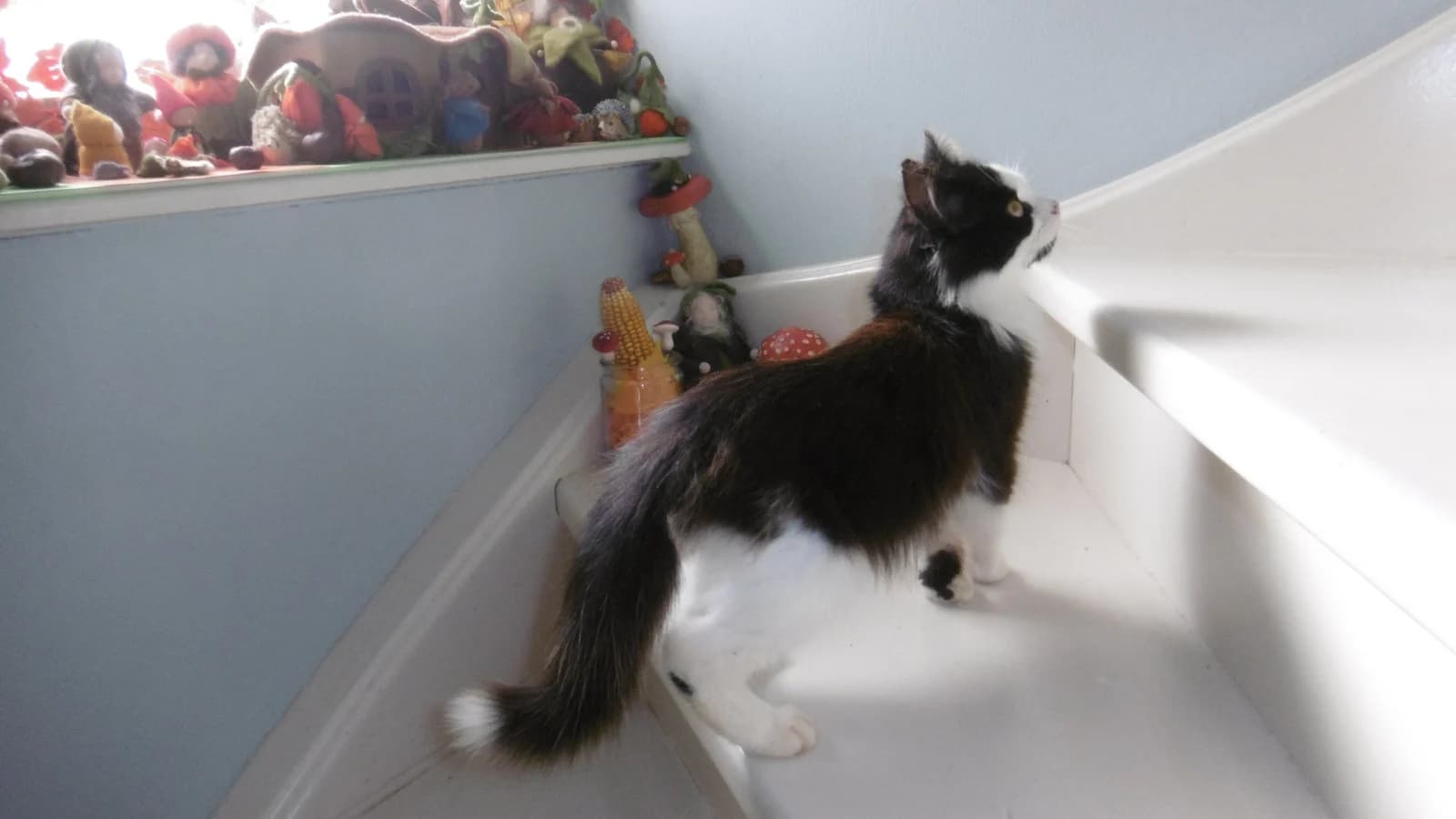
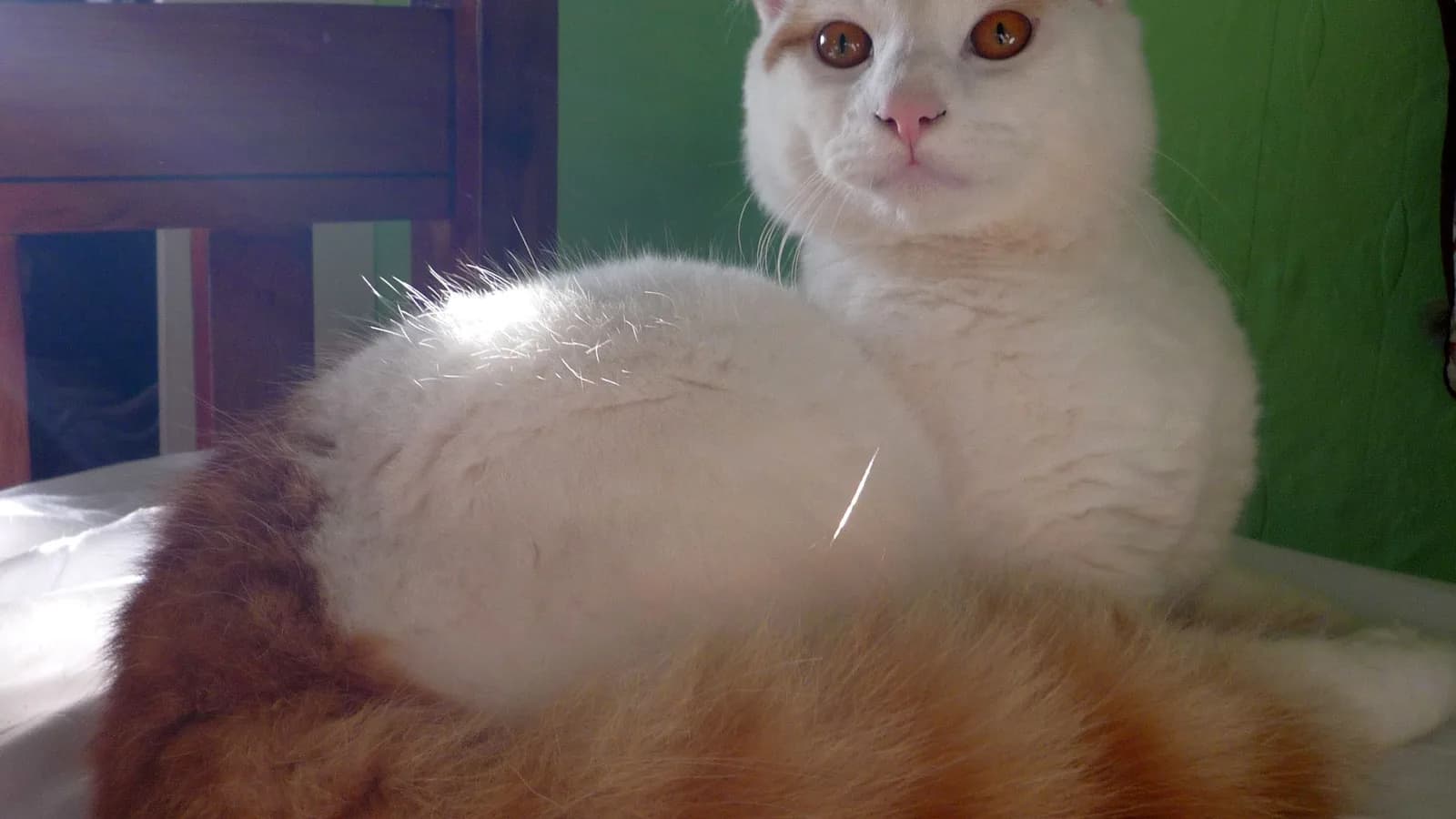
Read the ladder from the bottom. A locket is the minimal end: one small white patch on the chest or throat of an otherwise solid cat; captions a photographed example simply "The spot on his neck is called a locket." Mitted cats carry white on the paws, belly, chest and chin, and nowhere else. The tuxedo sits just above: bib, mittens, belly, chin. Push the dial further and white takes over: the cow cat (large irregular patches on a mostly white body), the harlequin, which 's British Shorthair standard defines as "at least two thirds white," and finally the van pattern, where color survives only on the head and tail.
The cat fancy also runs a numbered version of the same idea, from grade 0 (no white) to grade 10 (white has covered everything). The bands you will meet in breeder writing: under 40 percent white is low-grade, 40 to 60 percent is medium, above 60 percent is high-grade. A classic tuxedo lives in the low band, and that is as precise as anyone can honestly be, because the word tuxedo has no registry definition to pin a percentage to.
Where does tuxedo stop and harlequin start?
Nowhere official. Registries grade white in tiers with named thresholds, but tuxedo is not one of their words, so the boundary is folk convention: once white clearly outweighs black, people stop saying tuxedo.
The grading registries actually use
Where "tuxedo" is folk vocabulary, the registries publish exact scales, and they are per-breed rather than universal. 's Oriental standard draws three tiers: "Van pattern where the color is restricted to the head and tail. Harlequin pattern where the color must cover at least a quarter of the body, but not more than half. Bi-Colour pattern where the color must cover not less than half, but not more than two-thirds of the total body surface." Its British Shorthair standard, dated October 2022, tunes the same tier differently: a Harlequin there "should be at least two thirds white." Same registry, same tier names, thresholds adjusted breed by breed.
teaches a simpler three-way split on its color page: "Mitted Pattern - The white may only be on paws, belly, chest and chin. Bi-Color Pattern - White is allowed much farther up the back legs and on the face. Van Pattern - A predominantly white cat with colored patches." And it adds the fine print most pages skip: most breeds do not require any specific white layout to count as bicolor; the exceptions that DO are Birmans, Snowshoes, Ragdolls and Turkish Vans.
A classic tuxedo, mostly colored with white trim, sits in the bi-color tier: more than half black, less than two-thirds. So if you want the show-hall answer to "what is my tuxedo cat officially?", she is a black bicolour.
| Tier ('s Oriental scale) | How much color | The look |
|---|---|---|
| Bi-Colour | Half to two-thirds of the body | The tuxedo lives here: color leads, white trims |
| Harlequin | A quarter to half | Patches on a white cat |
| Van | Head and tail only | A white cat wearing a colored cap and tail |
Why the belly and the paws go white
For decades the standard explanation went like this: pigment cells are born along the embryo's spine and migrate outward and downward; in white-spotted animals they travel too slowly, run out of road, and the far suburbs of the body (belly, chest, paws, chin) never get painted. It is a tidy story, repeated everywhere. It is also, on the evidence, wrong in its central claim.
In 2016 a team led by Richard Mort filmed and modeled pigment-cell behavior in -mutant mice, the same gene locus behind cat white spotting, and published the result in Nature Communications. The affected cells "migrate normally," the paper found; what they have is "a proliferation defect." They move fine and divide too slowly. The model showed pattern coverage is "most sensitive to changes in proliferation": slow the cell division down and you reproduce the white belly spot exactly, with no slow travel involved. The genetics press summarized it the same way at the time, so this correction is not our reading alone.
Why the belly, then? Because it is the fastest-growing part of the embryo. Slow-dividing pigment cells lose a race against expanding territory, and the territory expanding fastest is the ventral side. That is why the white lands on the belly, chest and paws in cats, dogs, horses and pigs alike, and why the tuxedo's jacket always opens at the front.
A tuxedo is usually a tabby in disguise
Underneath the black, most tuxedo cats are tabbies. Every cat carries the pattern-laying machinery for tabby stripes; a separate gene, , decides whether each hair shows it. The recessive mutation locks every hair in the dark position, and the result reads as solid black even though the stripe blueprint underneath is intact. UC Davis's veterinary genetics lab documents the mechanism on its own agouti test page: solid color is a switched-off tabby, not a blank one.
So the tuxedo look is a two-gene stack: paints the base coat solid black, and white spotting lays the bib and mittens on top. The two genes sit at unrelated addresses and act independently. The visible proof walks around in daylight: on many black and tuxedo cats, especially kittens, strong sun reveals faint "ghost" striping in the black fur, the suppressed tabby showing through. Our tabby cat guide covers the pattern side of that story in full.
Are tuxedo cats usually male?
No, and the genetics say why. Unlike orange (carried on the X chromosome, which is why orange cats skew male and calicos female), the white-spotting gene sits on chromosome B1, an ordinary non-sex chromosome. Both parents pass it equally to sons and daughters. So black-and-white cats split close to even, like the general cat population. No study we found measures a sex skew in bicolors, and the mechanism predicts none.
The same applies to the tuxedo personality lore, the so-called "tuxitude." "Tuxedo cats are smarter" circulates with suspiciously exact figures attached; no study on coat pattern and intelligence exists, and even vet-reviewed pet media call the claim a myth. What DOES exist is one peer-reviewed owner survey on coat color and behavior (Stelow, Bain and Kass 2016, 1,274 cats). Its one significant black-and-white finding is narrow: owners rated black-and-white males slightly more aggressive than other males, a 2.0 average against 1.5. The authors flag the result themselves as unexpected, previously unreported, and small enough to be an artifact of how owners score. It says nothing about intelligence, charm or females, and the same caveats apply as on our tortie page: owner impressions, never replicated.
the chromosome carrying white spotting
B1
an autosome: inherited equally by males and females
expected sex split in tuxedo cats
~50/50
unlike orange (mostly male) or calico (almost all female)
on coat pattern and intelligence
0 studies
the smarter-tuxedo claim is a myth with no data behind it
Famous tuxedos, fact-checked
The tuxedo has the best press office in catdom, so we checked the names every list repeats. Socks Clinton is genuine: the Clinton Presidential Library's own page calls him "a stray tuxedo cat" adopted in Arkansas and named for his white paws. Sylvester of Looney Tunes is a fair claim: a black cat with white bib, belly and paws, drawn to the pattern, 103 golden-age cartoons and three Academy Awards to his name.
Félicette outranks them all in altitude. A black-and-white stray from the streets of Paris became the first cat in space on 18 October 1963, riding a French Véronique sounding rocket on a suborbital flight: roughly 152 km up, about 13 minutes in the air, around five of them weightless, and home alive by parachute. The space-history archives that preserve her story also record the sad half, that she was euthanized two months later so her brain could be studied, and that her bronze statue waited until 2019. One honesty note: period sources called her simply a black and white cat; "tuxedo" is the modern label, applied retroactively, and she wears it well.
Felix the Cat is the surprise. His documented design is a solid black cat whose white is facial cartooning (the big eyes, the muzzle), chosen by his animator because solid black "moves better" on silent-film backgrounds. Most tuxedo lists claim him anyway; his own design record says otherwise.
Socks Clinton
Verified tuxedo: the presidential library's own words, a stray with white paws who reached the White House.
Sylvester
Drawn as a tuxedo: black coat, white bib and paws, seventy years of chasing one canary.
Félicette
First cat in space, 1963: a Paris stray who flew 13 suborbital minutes and came back alive. The tuxedo label is retroactive; the flight is not.
Felix the Cat
NOT actually a tuxedo: his design record is a solid black cat with white facial features, and we decline to enlist him.
Living with a tuxedo: what the pattern does and does not predict
Nothing about the bib predicts health, lifespan or temperament. No study measures any of them by bicolor pattern, and a tuxedo's real profile is her breed's or her mix's. What the pattern does predict is permanence. Unlike some color-linked traits, the white-spotting layout a kitten is born with is the layout for life, down to each white toe. If you are choosing a cat and the dinner jacket matters to you, it will still fit in fifteen years.
The tuxedo field guide
The ladder in the wild: seven more black-and-white cats, each labeled with where it sits. Tap any photo to enlarge it, credits included.
The tuxedo is proof that cats do not need pedigrees to dress better than we do: one gene, worn in the exact places a tailor would have chosen. If a formally dressed cat runs your household, the Share + button in the header is how the outfit reaches us; white whiskers count double.
By Nora · The storytellerFrequently asked questions
What is a tuxedo cat?
A black-and-white bicolor cat whose white falls on the chest, paws and sometimes chin and belly, reading like formal wear. It is a popular name, not a breed and not an official registry pattern.
What breed is a tuxedo cat?
Any breed that admits black-and-white bicolor, or no breed at all: most tuxedos are mixed-breed domestic cats. The pattern itself carries no breed information.
Are tuxedo cats usually male?
No. The white-spotting gene is on an ordinary chromosome, not a sex chromosome, so tuxedo cats split roughly evenly between males and females, unlike orange cats (mostly male) or calicos (almost all female).
Are tuxedo cats smarter than other cats?
No study has ever measured intelligence by coat pattern. The claim, sometimes dressed up with fake percentages, is a myth; even vet-reviewed pet media say so plainly.
Why do tuxedo cats have white paws and bellies?
Because of developmental timing. Pigment cells in white-spotted animals move normally through the embryo but divide too slowly, and the belly is the fastest-growing region, so it is the territory they fail to cover before the coat pattern locks in. A 2016 study in Nature Communications established the mechanism, correcting the older idea that the cells simply traveled too slowly.
What is a harlequin cat?
A mostly white bicolor. GCCF's British Shorthair standard requires a harlequin to be at least two thirds white, with color in random patches; informally the look is also called a cow cat. It sits between the tuxedo's low white and the van pattern, where color survives only on the head and tail.
How long do tuxedo cats live?
As long as their breed or mix does: no study measures lifespan by coat pattern. The largest UK study puts overall cat life expectancy at 11.74 years at birth, with neutering, weight and care mattering far more than color.
Are tuxedo cats rare?
No. Black-and-white bicolor is one of the most common looks in the general cat population, and many breeds admit it. Its ubiquity is part of its charm.
How much does a tuxedo cat cost?
The price of the breed or the adoption fee it comes with. There is no separate tuxedo market and no pattern premium; a pedigree bicolor costs what that breed costs.
Can tuxedo cats be female?
Absolutely: roughly half are. The pattern is not sex-linked in either direction.
Are all black and white cats tuxedo cats?
Informally, tuxedo is reserved for the mostly black cat with white trim in the formal places. A cat with more white than black is usually called a bicolor, harlequin or van pattern instead, per the registries' white-grading scales.
Sources & references
Data checked against reference bodies (breed registries, allergy research, veterinary schools).
- David et al. 2014, KIT insertions determine white and white spotting (G3)
- Strain 2015, The Genetics of Deafness in Domestic Animals (Front Vet Sci)
- TICA breeder education: What Color is My Cat? (the Tux nickname; mitted, bi-color and van patterns; the locket)
- CFA American Shorthair standard (Bi-Color and Van Bi-Color definitions)
- GCCF Oriental breed page (the Van / Harlequin / Bi-Colour grading scale)
- GCCF British Shorthair Standard of Points, 29 Oct 2022 (the harlequin two-thirds-white definition quoted)
- GCCF British Shorthair Standard of Points 2025 (bicolor classes, current edition)
- Mort et al. 2016, reconciling mammalian pigmentation patterns with a fundamental mathematical model (Nature Communications: the proliferation-not-migration finding)
- UC Davis VGL: Agouti (why solid cats still carry a tabby pattern)
- Sarah Hartwell, messybeast.com: Bicolours - Tuxedo and Magpie Cats (the grading vocabulary)
- Clinton Presidential Library: Socks, the White House tuxedo cat
- Wikipedia: Félicette, the first cat in space (18 October 1963)
- Wikipedia: Bicolor cat (the cow-cat and harlequin percentage brackets)
- Stelow, Bain & Kass 2016, coat color and aggressive behaviors (J Appl Anim Welf Sci)
- Catster (vet-reviewed): are tuxedo cats smarter, the myth examined
This page is a starting point. Every cat is an individual: our profiles spell out the tendencies of each breed, sources included.
 Purr or Pass
Which cat breed is right for you?
Take the quiz