

Turkish Van
“The swimming cat (the nickname needs its breed name attached)”
 By Priya · The careful one
Published August 21, 2026Updated August 26, 20267 min read
Contents
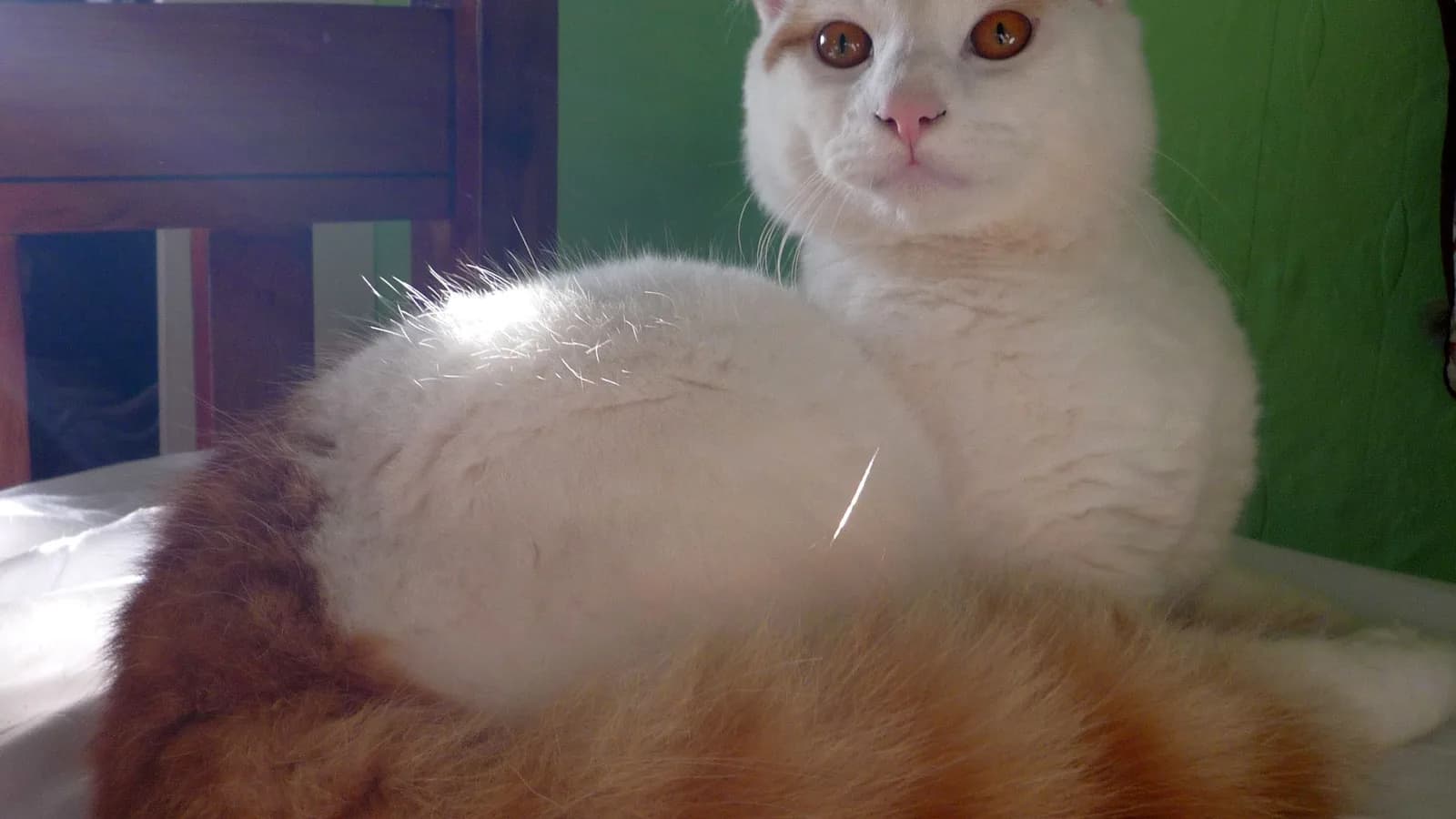
 Turkish Van photos
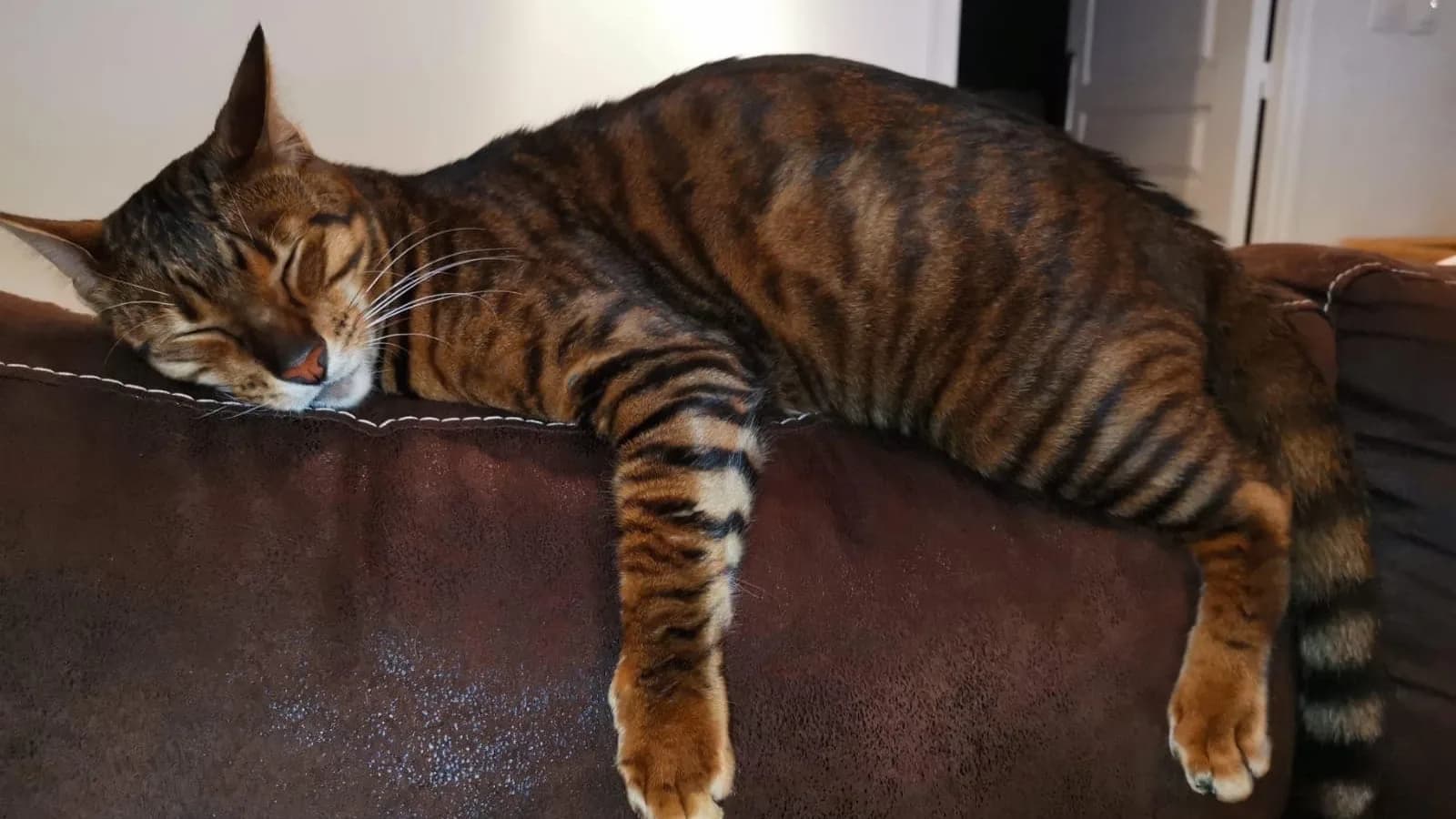
Real photos, so you can see what the breed actually looks like: coats, ear tufts, ruff and build.
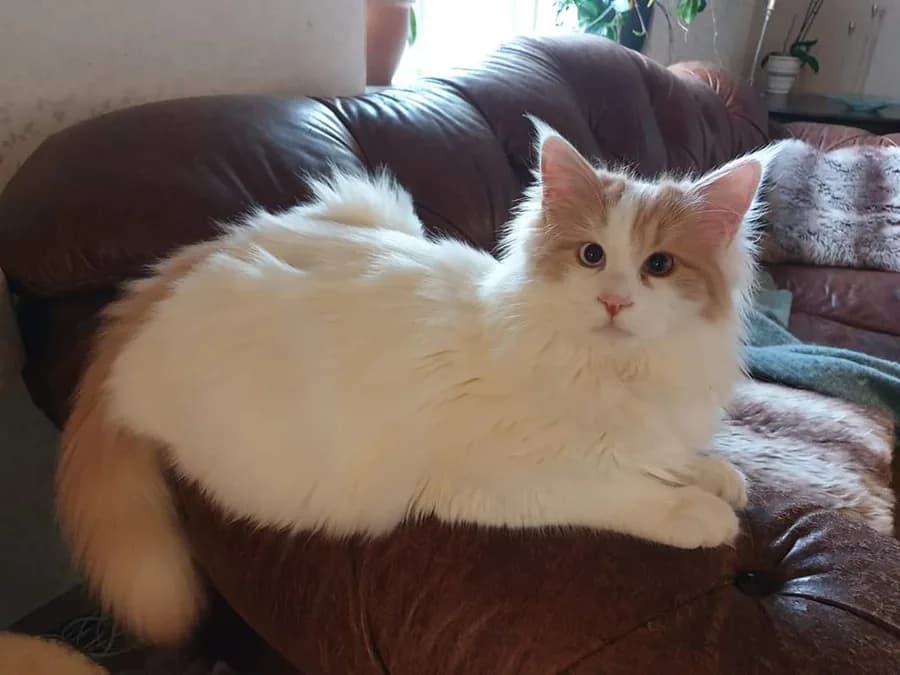
Auburn and white Turkish Van lying on a leather couch, color confined to head and tail
Photo: Louiethe27th · CC BY-SA 4.0 · via Wikimedia Commons
 Vital stats
Origin
Turkey
Eastern Turkey by name, Britain by paperwork. The Western breed was founded from cats exported from Turkey in 1955, and the corrected founding story, sourced from the breed's own accounts, is that none of the four founding cats came from the Van area itself. The famous all-white cats living at Lake Van today are a separate, conservation-managed landrace whose story our dedicated page tells.
Weight
Female
7-12 lb (3.2-5.4 kg)
Male
10-20 lb (4.5-9.1 kg)
Life expectancy
No measured, breed-isolated lifespan study exists anywhere we reached. The band spans the two registry claims, published side by side: says 13-17+ years, says 12-14. Both are commonly cited estimates; no measured study exists.
Coats
Auburn & white (the classic)
Cream & white
Black & white van
All white (Vankedisi)
White-based van pattern by definition: color confined to the head and tail on a chalk-white body, classically auburn (the founding look), with other colors accepted by since 1 June 2000. alone also permits an all-white division. The GCCF-registered all-white variant is the Turkish Vankedisi, with three eye-color classes (amber, blue, ).
Understanding the coats (and their genetics)Size
The registry range: males 10-20 lb (4.5-9.1 kg), females 7-12 lb (3.2-5.4 kg), on a full-chested, substantially muscled frame that takes three to five years to finish. The labeled reality check: measured Turkish cohorts of the related landrace population run far lighter (the Ministry of Culture's own figures are 2.9 kg females, 3.6 kg males), roughly 1.25 to 2.5 times below the Western pedigree ranges. A different population, stated every time, never blended.
Did you know
The cat named after Van and the cats living at Van are different animals. None of the four founders of the Western breed came from the Van area. The real Lake Van landrace, white and , lives on under a Turkish university's conservation program, with its own sperm bank and export controls.
 Personality
 Affection4/5
 Energy5/5
 Intelligence4/5
 Friendliness3/5
 Independence3/5
 Vocal3/5
 Shedding2/5
Compatibility
 Good with children3/5
 Good with other pets3/5
 Apartment friendly2/5
Editorial ratings on our five-point scale, anchored in the registry descriptions and the measured behaviour studies cited on this profile; individual cats vary, and our members' own ratings below are the counterweight.
Still torn between this breed and another?Compare the Turkish Van trait by trait, or filter every breed by what matters to you. What our members say
What our members say
Nobody has described their Turkish Van here yet. As soon as the first profiles come in, this is where the community averages will show up: temperament, food, lifestyle.
Describe my Turkish Van Pros & cons
Strong points
- A genuinely athletic, water-fascinated original: the fancy's swimmer, with the registry prose to match
- An easy semi-long coat: no woolly undercoat, weekly combing as the whole baseline
- Registries state no specific genetic problems are known for the breed (their own position, attributed)
- One of the fancy's great true stories, from the 1955 imports to the Lake Van conservation center
Things to consider
- Not a lap cat: three independent registry sources say it dislikes prolonged holding
- The measured data is extreme in both directions: highest of 26 groups on aggression toward humans, lowest on sociability toward other cats
- Genuinely hard to buy: two live US listings, dead cattery domains, waiting lists everywhere
- High activity needs space and interactive play: CFA's own obesity-risk framing for under-exercised Vans
 Is a Turkish Van right for you?
An active household that wants a big, athletic, independent-minded cat with strong opinions and a thing for taps. One that can offer space and real play, and will not take the dislike of being carried personally. Multi-cat households should read the measured data first. Patience with a thin breeder market is part of the price.
Is the Turkish Van right for YOUR home?
Answer a few questions and we'll email you your personalized result.
Take the quiz · 2 min Getting to know the Turkish Van
Start by splitting one name into two cats. The Turkish Van, this page's breed, is the Western founded from cats exported from Turkey in 1955, wearing the auburn-head-and-tail van pattern on a chalk-white body. The Van cat, the one in the travel photographs, is the all-white, often landrace at Lake Van: conservation-managed and export-controlled, whose real story we tell separately. The corrected founding fact, from the breed's own accounts: none of the four founding cats came from the Van area at all.
The paperwork ladder is precise. recognized the breed in 1969, opened colors beyond auburn on 1 June 2000, and gave the all-white Vankedisi championship status in 2014, complete with a mandatory hearing test before breeding registration. 's breed page dates its own championship to 1994, while CFA's own registration rules leave that field blank: we print both, attributed. Canada's registry recognizes only the Turkish Angora, the elegant compatriot everyone confuses with the Van until they see the two side by side.
The measured personality is the fancy's most extreme, in both directions. In the 26-group Finnish behaviour dataset, the Van scores highest of ALL breeds on aggression toward humans and lowest of all on sociability toward other cats, while ranking 7th on activity and play. The registries' own prose never uses the word aggressive. It says loyal, busy, water-obsessed and not fond of being carried, and all of that is true too. This is a magnificent, demanding original, not a starter cat, and we print the data rather than the brochure.
The market is honest scarcity. registered 49 kittens in all of 2024. Our US search found more dead cattery domains than live prices, and the market page itemises what actually exists, market by market. If your cat merely wears the pattern, the identification page explains why the boots-and-tail look proves nothing and papers prove everything.
 Health: what to watch for
A few predispositions are well documented. The good news: they can be screened for or avoided by choosing a reputable breeder and keeping an eye on the right signals.
This is information, not veterinary advice, and it cannot tell you what is wrong with your cat. Our rule is a simple one: if something is wrong with your cat, call your vet, and call an emergency clinic if it is out of hours. Nothing you read here is a reason to wait.
The one registry testing rule: GCCF's BAER requirement for the Vankedisi
MODERATEThe registry requirement leads: GCCF requires a BAER hearing certificate of freedom from deafness before an all-white Vankedisi may reach its Active (breeding) Register. The rule exists because solid-white coat genetics carry the documented white-cat deafness association. The ordinary van-PATTERNED coat sits on a different KIT-locus variant and is outside that file. Never read this as 'the Van cannot be deaf' or 'the Van is safe because it is a different breed from the Angora': the coat variant, not the breed name, carries the risk. Our Vankedisi page holds the full file, including the one relayed breed-adjacent figure with its source named.
Acrodermatitis enteropathica (SLC39A4): one documented litter
LOWA single case report documents this zinc-metabolism disorder in one Turkish Van litter, and one litter is the entire evidence base. This row exists so nobody upgrades a case report into a breed problem. Skin or coat changes in any kitten are a vet visit on their own merits, never a breed diagnosis.
Blood type B: the breeders' footnote
LOWTwo older Turkish studies found type B blood the majority type in the related Turkish population. That fact matters for breeders (neonatal isoerythrolysis risk when pairing types) and for transfusion safety, and a pet owner never needs to act on it outside those contexts. It is a breeding-and-veterinary planning note, not a current Western-market figure.
The registries' own position: no specific genetic problems known
LOWThe breed's registries state no breed-specific genetic problems are known. We attribute that as their position rather than an epidemiological finding, because no measured Van-specific disease cohort exists either way. The practical translation: ordinary preventive care, weight kept honest against the breed's activity needs, and a vet who sees the cat rather than the brochure.
Go deeper on health
Prevention, warning symptoms, costs and insurance: our guides, researched and sourced.
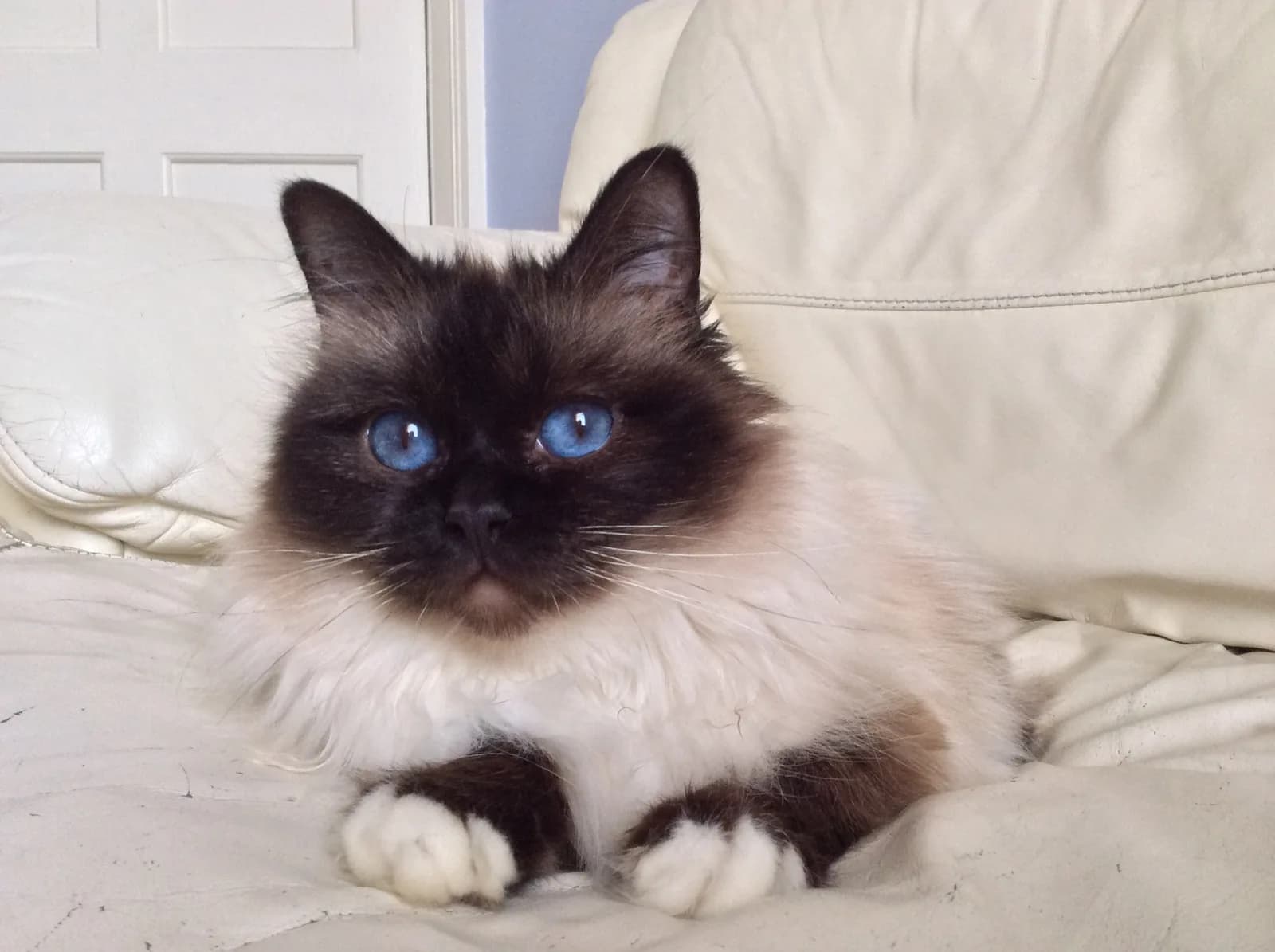
The Turkish Van also appears in
Our criteria-based guides, to compare this breed with the ones most like it.
 Grooming & living with one
Grooming
A weekly comb through the water-resistant, undercoat-free semi-long coat covers it, with more at the molts. 's and 's grooming prose is near-identical, one data point not two, and neither publishes a bathing interval.
Living together
The measured data says this is the fancy's least cat-sociable breed group, whatever the individual exceptions. The registries' get-along claims describe people and dogs specifically. With children, supervise the handling rule: this is a cat that likes company on its own terms and dislikes being carried.
 Food & diet
No special nutritional needs, in 's own words, and no breed feeding study exists. The practical file: a big, slow-maturing, highly active frame needs portioned feeding and real exercise ( frames obesity risk around insufficient space and play, not diet composition). The water fascination is a personality trait, not a hydration-risk finding.
 Price & budget
$700 to 800
Price of a kitten from a registered breeder, in the United States
This price reflects the quality of the breeding program: parents' health tests, registry pedigree, socialization. A very low price should raise a red flag. The real cost, though, plays out over the years.
Find a verified breederKitten price, by market
United States
$700 to 800
United Kingdom
£150 to 500
Canada
CA$75 to 600
Each figure is that country's real market price, researched separately, not a conversion of the others. The smaller line is only there so you can gauge one against your own money: European Central Bank reference rates of 2026-09-18, refreshed daily.
Work out your food budget
Type of food
Estimated monthly budget
$17
≈ 3.0 oz (85 g) per day
A ballpark figure, food only, using the same arithmetic as our portion tool (resting energy requirement × 1.2, a neutered adult). Real needs vary with age, activity level and body condition. Ask your veterinarian for advice.
 Verified catteriesThe registry-checked directory, plus a kitten alert near you. Filter it by breed.
 Should you insure a Turkish Van?
Our sources list several predispositions in the Turkish Van: The one registry testing rule: GCCF's BAER requirement for the Vankedisi, Acrodermatitis enteropathica (SLC39A4): one documented litter, Blood type B: the breeders' footnote, among others. A predisposition is not a foregone conclusion, and many of these cats live their whole lives without ever developing anything. It does change the nature of the follow-up, though: you monitor, sometimes for life, and it's that monitoring that weighs on a budget, more than a one-off accident.
One thing to weigh before deciding: this is a cat you will live alongside for well over a decade, and that is the span the real cost is spread across, premiums and care alike. Where a breed has a measured life expectancy that differs from the figure usually quoted, we say so in the lifespan section above rather than repeating the quoted one here.
 Turkish Van cats in our community
No Turkish Van here yet
Got one? Add a photo and yours gets to open this page.
 The vet's take

Veterinary review
Are you a vet?
Your professional read belongs here: every verified practitioner can leave a note, published once our editors have reviewed it.
Sign in and get your license number verified. We check it in the public register, we never ask for or keep a copy of your diploma, and your number is never published.
 Frequently asked questions
+Are Turkish Van cats rare?
Genuinely: FIFe registered 49 kittens in all of 2024 (rank 40 of 54 breeds), our US market search found two live listings and seven dead cattery domains, and Australia offered no live listing at all. Expect waiting lists.
+How much does a Turkish Van cost?
The live figures: US $700-800 from one marketplace (one of the two a labeled cross), UK £150-500 across five listings, Canada CA$75-600 across three ads. Australia has no live market; one uncited estimate says A$1,500-3,000. Our price page itemises everything.
+Is the Turkish Van the same as a Van cat?
No: the Van cat is the white, odd-eyed landrace at Lake Van in Turkey, conservation-managed and export-controlled; the Turkish Van is the Western pedigree breed in the auburn-and-white pattern. Our landrace page tells the real Lake Van story.
+Do Turkish Vans really swim?
Water fascination is real and registry-documented: taps, sinks, and sometimes more. The full swimming legend belongs to the Lake Van landrace and its lakeside life; the pedigree breed inherited the fascination and the nickname.
+How long do Turkish Van cats live?
No measured study exists: TICA says 13-17+ years and GCCF says 12-14, and we publish both attributed rather than averaging. The absence of data is the honest headline.
+Are Turkish Van cats aggressive?
The measured Finnish data scores the Van highest of 26 breed groups on aggression toward humans, a word its registries never use; their prose says loyal, busy, and not fond of being carried. Both are worth knowing: this is a demanding, opinionated athlete, not a starter lap cat.
+Are Turkish Vans good with other cats?
The same measured dataset scores the breed lowest of all 26 groups on sociability toward other cats, while the registries' get-along language refers to people and dogs. A multi-cat household should introduce carefully and keep expectations honest.
+Are Turkish Van cats hypoallergenic?
No cat is, and no Van-specific allergen study exists. The semi-long single coat is easy to groom; that is a housekeeping fact, not an allergy category.
+What is a Turkish Vankedisi?
The all-white variant within the registered Turkish Van breed, with three GCCF eye-color classes (amber, blue, odd-eyed) and a mandatory BAER hearing certificate before breeding registration. Our dedicated page carries the precise file.
+Are Turkish Van cats big?
Yes, by the registries: males 10-20 lb on a full-chested, muscular frame that takes three to five years to mature. The Lake Van landrace runs far lighter, one more reason never to blend the two populations' figures.
 Community questions
Got a question this page doesn't cover? Ask it: the best ones get published here with their answer.
Sources & references
Data checked against reference sources (TICA and CFA standards, genetics laboratories, veterinary schools).
- TICA: Turkish Van breed page
- TICA Turkish Van standard (PDF, April 2026)
- CFA: Turkish Van breed page
- CFA: Turkish Van article (the founding history)
- CFA Turkish Van standard (PDF)
- GCCF: Turkish Van / Turkish Vankedisi breed page
- GCCF Turkish Van Registration Policy (PDF)
- GCCF Vankedisi Registration Policy (PDF, the BAER rule)
- ACF Turkish Van standard (PDF, 2022)
- Salonen et al. 2019, breed behaviour differences (Sci Rep)
- Mikkola et al. 2021, behaviour and personality traits (the breed-separated extremes)
- David et al. 2014, KIT insertions determine white and white spotting (G3)
- iCatCare advice hub (their per-breed library, incl. the Turkish Van page, has since been retired)
- Turkey Ministry of Culture and Tourism: Van Cat (the landrace figures)

Worth keeping a paw on
Pin this profile
To compare later, or to show someone still torn between two breeds. One click and it sits in your board.
Pin it on Pinterest
 Purr or Pass
Still deciding? Find the perfect breed for your home.
A quick quiz that factors in your lifestyle, your kids and your other pets.
Which breed fits my home?Keep exploring
The floor belongs to our members. Keep it kind, links are not allowed, and images go through moderation before anyone else sees them.