

Lykoi
“The werewolf cat (also wolf cat, lycan cat): Greek 'lykos', wolf”
 By Priya · The careful one
Published August 21, 2026Updated August 26, 20269 min read
Contents
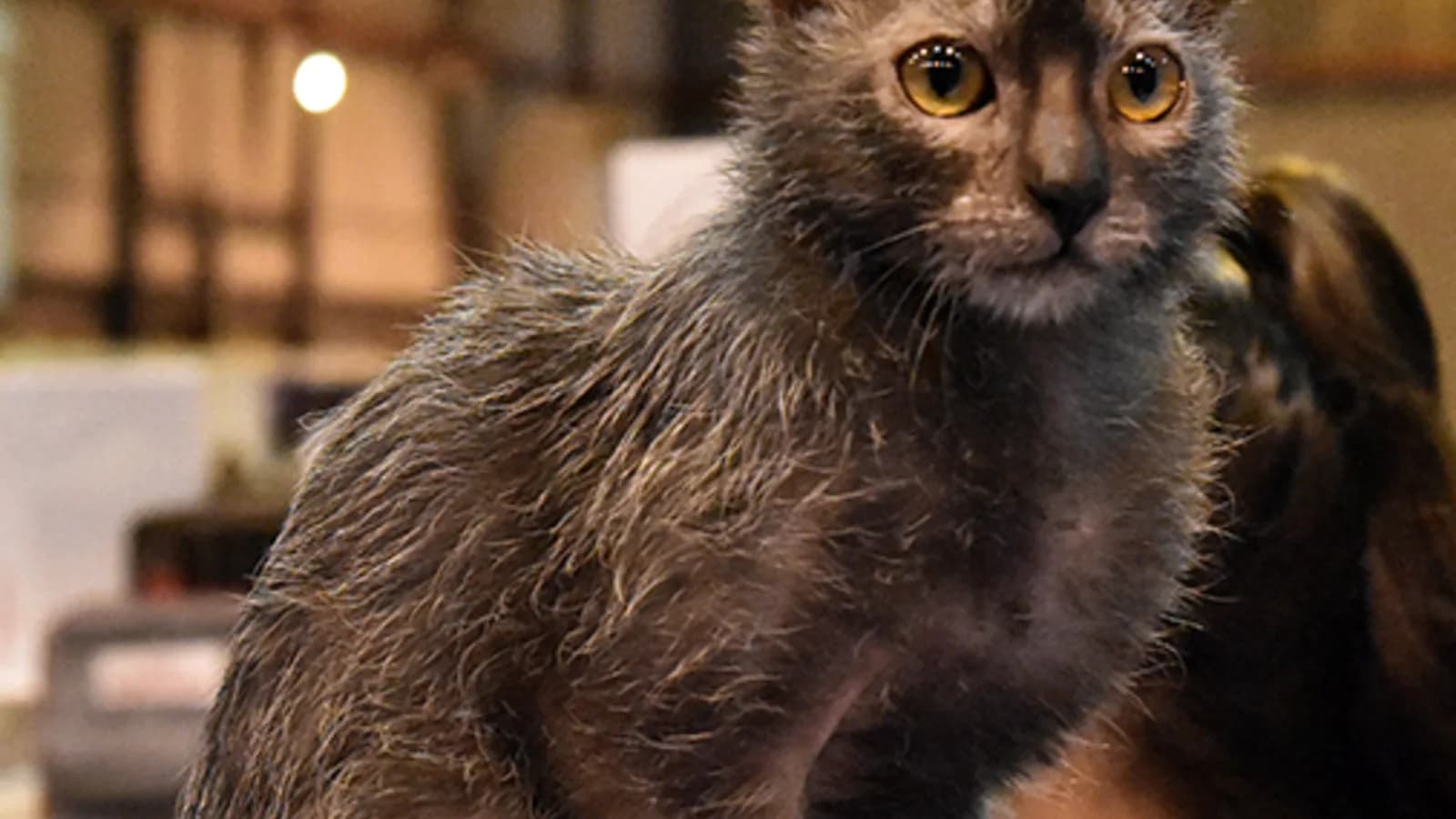
 Lykoi photos
Real photos, so you can see what the breed actually looks like: coats, ear tufts, ruff and build.
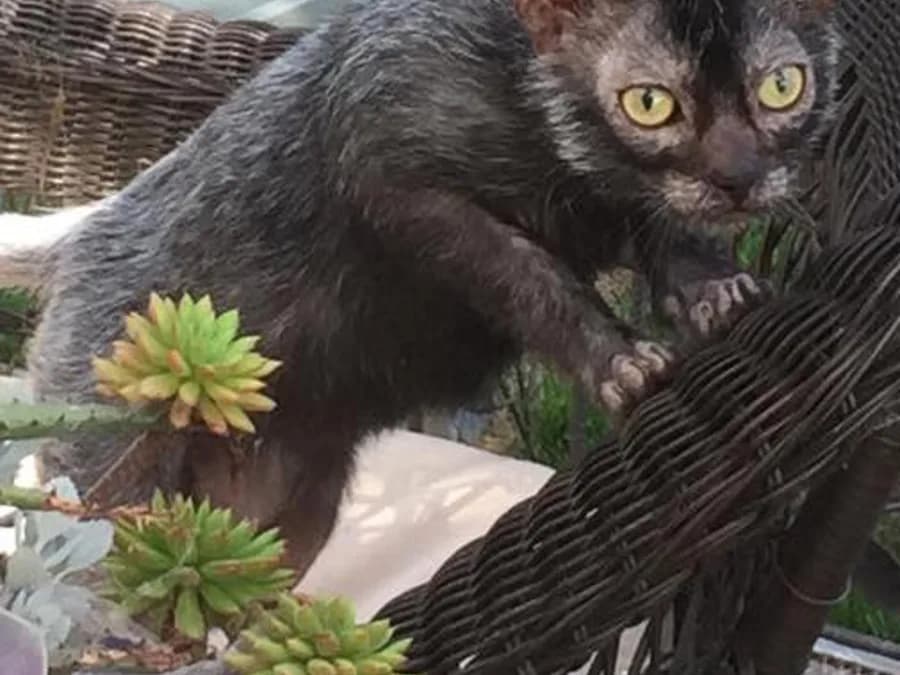
Lykoi cat with sparse patchy black fur and yellow eyes, climbing wicker furniture
Photo: steptacular · CC BY-SA 4.0 · via Wikimedia Commons
 Vital stats
Origin
United States
Tennessee, 2011: two unrelated litters of naturally occurring part-haired kittens reached veterinarian Johnny Gobble, Brittney Gobble and Patti Thomas. They health-tested the cats, ruled out disease, and founded a deliberate breeding program. The first intentionally bred Lykoi, Daciana, was born 14 September 2011. Outcrossing runs to black domestic shorthairs, and the founder base is unusually documented: 16 distinct natural lineages from Canada, France and across the US (Buckley 2020). listed the breed as experimental in 2012 and granted Championship in May 2017. followed with registration in 2018 and Championship in 2023.
Life expectancy
's box states 12-15 years. 's page says, non-numerically, that Lykoi 'have been known to live well into their late teens.' Both are registry claims. A breed founded in 2011 is too young and too rare to appear in any of the six mortality cohort studies we checked, which is the real answer. Commonly cited estimates; no measured study exists.
Coats
Black roan (the only TICA/ACF color)
Sparse-coat skin tone
White roaning hairs
Five registries, five color postures, stated per registry and never blended. and Australia's accept black roan ONLY. is fully open. accepts all colors and patterns except white and bicolour. 's standard names exactly two colors. The roan itself is follicle-level biology, not a pattern: solid-black guard hairs interspersed with white, changing with each molt cycle, and unrelated to the generic 'roan' coat gene of other species.
Understanding the coats (and their genetics)Size
No standard in any of the five registries gives a numeric weight, length or height: a checked absence, and the honest headline. The registry consumer boxes, labeled as such: TICA's page states males 7-12 lb (3.2-5.4 kg) and females 6-9 lb (2.7-4.1 kg); GCCF's box says 6-12 lb (2.7-5.4 kg) unsexed. A slender, medium-boned cat under the coat, and no measured weight study exists.
Did you know
Lykoi kittens are born looking like ordinary black kittens. The werewolf look arrives in the first weeks as the coat roans, and an adult can cycle from nearly full-coated to nearly bald and back on its own schedule. Breeders call the bald phase 'wolfing out', and no two molts look quite the same.
 Personality
 Affection4/5
 Energy4/5
 Intelligence4/5
 Friendliness3/5
 Independence3/5
 Vocal2/5
 Shedding4/5
Compatibility
 Good with children4/5
 Good with other pets3/5
 Apartment friendly4/5
Editorial ratings on our five-point scale, anchored in the registry descriptions and the measured behaviour studies cited on this profile; individual cats vary, and our members' own ratings below are the counterweight.
Still torn between this breed and another?Compare the Lykoi trait by trait, or filter every breed by what matters to you. What our members say
What our members say
Nobody has described their Lykoi here yet. As soon as the first profiles come in, this is where the community averages will show up: temperament, food, lifestyle.
Describe my Lykoi Pros & cons
Strong points
- A genuinely unique, science-documented coat: six Hairless-gene variants across 16 natural founder lineages
- Genetically PROVEN unrelated to Sphynx and Devon Rex: 'none of these variants are present in the lykoi cats' (Buckley 2020)
- Active, clever, people-bonded by three registries' converging accounts
- The 2026 skin-syndrome study's wellbeing data is honestly reassuring: pain score zero in every studied cat
Things to consider
- A documented skin condition (CAPS) exists in the breed, with no genetic test available for it or the coat variants
- Cyclic molting means real shedding phases and oil buildup: skin care is part of ownership
- One of the rarest breeds we cover: application-first catteries, waiting lists, and two of our four markets show no live supply
- Too young and rare for measured science: no lifespan, weight or behaviour study reaches the breed
 Is a Lykoi right for you?
A home that wants a rare, striking, science-backed oddball and will do the unglamorous parts: periodic bathing when the skin gets oily, sun sense for the sparse phases, a vet relationship that takes skin bumps seriously, and patience with a market where the answer is usually a waiting list.
Is the Lykoi right for YOUR home?
Answer a few questions and we'll email you your personalized result.
Take the quiz · 2 min Getting to know the Lykoi
Why it looks like a werewolf, precisely. The Lykoi coat is hypotrichia, sparse hair, never full hairlessness: loss-of-function variants in the Hairless (HR) gene, six of them identified across 16 natural founder lineages from Canada, France and the US (Buckley 2020, read in full). The roan mask is follicle-level. Solid black guard hairs sit interspersed with white, cycling through molts that can take one cat from nearly coated to nearly bald ('wolfing out') and back. Kittens are born looking like normal black kittens; the wolf arrives within weeks.
This is genetically nothing like a Sphynx, despite the surface resemblance, and the science says it in its own words. Lykoi owners' cats have been genotyped against the Sphynx and Devon Rex KRT71 mutations, and 'none of these variants are present in the lykoi cats.' Different gene, different mechanism, different breed. That is also why the Sphynx's feeding and skin lore must not be copied onto this page. One myth handled gently because real people search it: the Lykoi's appearance has nothing to do with Down syndrome, a human chromosomal condition; the look is a documented coat gene.
The health file is young, specific and honestly told. A 2026 prospective study described a cutaneous adnexal polycystic syndrome (CAPS) in 10 Lykoi: real, adult-onset (1 to 4 years, most from 3 onward), with severity from mild to severe. The study's own wellbeing data is worth quoting: Glasgow pain score zero in every cat, no systemic signs. No genetic test exists for CAPS or the coat variants, so skin bumps on any Lykoi are a vet conversation, never a home diagnosis. The price page covers the market this rarity creates; the hairless-cat family guide explains why this breed is deliberately NOT on that list.
 Health: what to watch for
A few predispositions are well documented. The good news: they can be screened for or avoided by choosing a reputable breeder and keeping an eye on the right signals.
This is information, not veterinary advice, and it cannot tell you what is wrong with your cat. Our rule is a simple one: if something is wrong with your cat, call your vet, and call an emergency clinic if it is out of hours. Nothing you read here is a reason to wait.
Cutaneous adnexal polycystic syndrome (CAPS): the breed's one described condition
MODERATEA 2026 prospective study (Burnouf et al., 10 affected cats) characterised a skin-cyst syndrome in the breed. Onset in mid-adulthood: 1 to 4 years, most from age 3 onward, never congenital. Severity spanning 6 severe, 2 moderate and 2 mild cases, with secondary bacterial infection found in 5 of the 6 SEVERE cats specifically (deep-swab culture, Pasteurella multocida).
The study's own wellbeing data is the balancing fact: Glasgow pain score zero in every cat and no systemic signs. No prevalence is established, no genetic test exists, and a normal-looking exam does not 'clear' a cat (microscopic cysts appeared even in clinically unaffected skin). Any bump or skin change on your cat means a vet visit, not a checklist.
Our full guide on this topicThe coat gene itself: documented, tested in research, no commercial test
LOWSix loss-of-function variants in the Hairless (HR) gene cause the coat (Buckley 2020, full text). The same paper's genotyping shows the Sphynx and Devon Rex KRT71 mutations are absent from the breed: a different gene entirely, so none of those breeds' health lore transfers. No commercial DNA test is sold for the HR variants; breeding programs work by pedigree and phenotype.
Skin care as preventive health
LOWThe sparse, cycling coat leaves skin doing more work. Oil builds up between baths (bathe on visible oiliness, no fixed interval exists in any source). Exposed skin darkens with sun and heat, reversibly. And molt phases can bring ingrown hairs, an observation for your vet rather than a home procedure. Nothing here is a disease; all of it is why this breed's owner watches skin the way other owners watch coat.
What is NOT in the file, stated because absence is data
LOWNo mortality study, no measured lifespan, no HCM or PKD signal, and no behaviour study reaches this breed. It is too young (founded 2011) and too rare for the cohort science this site normally cites. The registries describe an otherwise healthy cat. 'No data' means young and rare, not proven safe, which is exactly why buying from a program that does skin assessments matters.
Go deeper on health
Prevention, warning symptoms, costs and insurance: our guides, researched and sourced.
Also worth a look
American Curl
“The Peter Pan of cats (TICA's own phrase), ears swept back like a wink”
Japanese Bobtail
“The pom-pom-tailed cat of Japanese art and, popularly, of the maneki-neko”
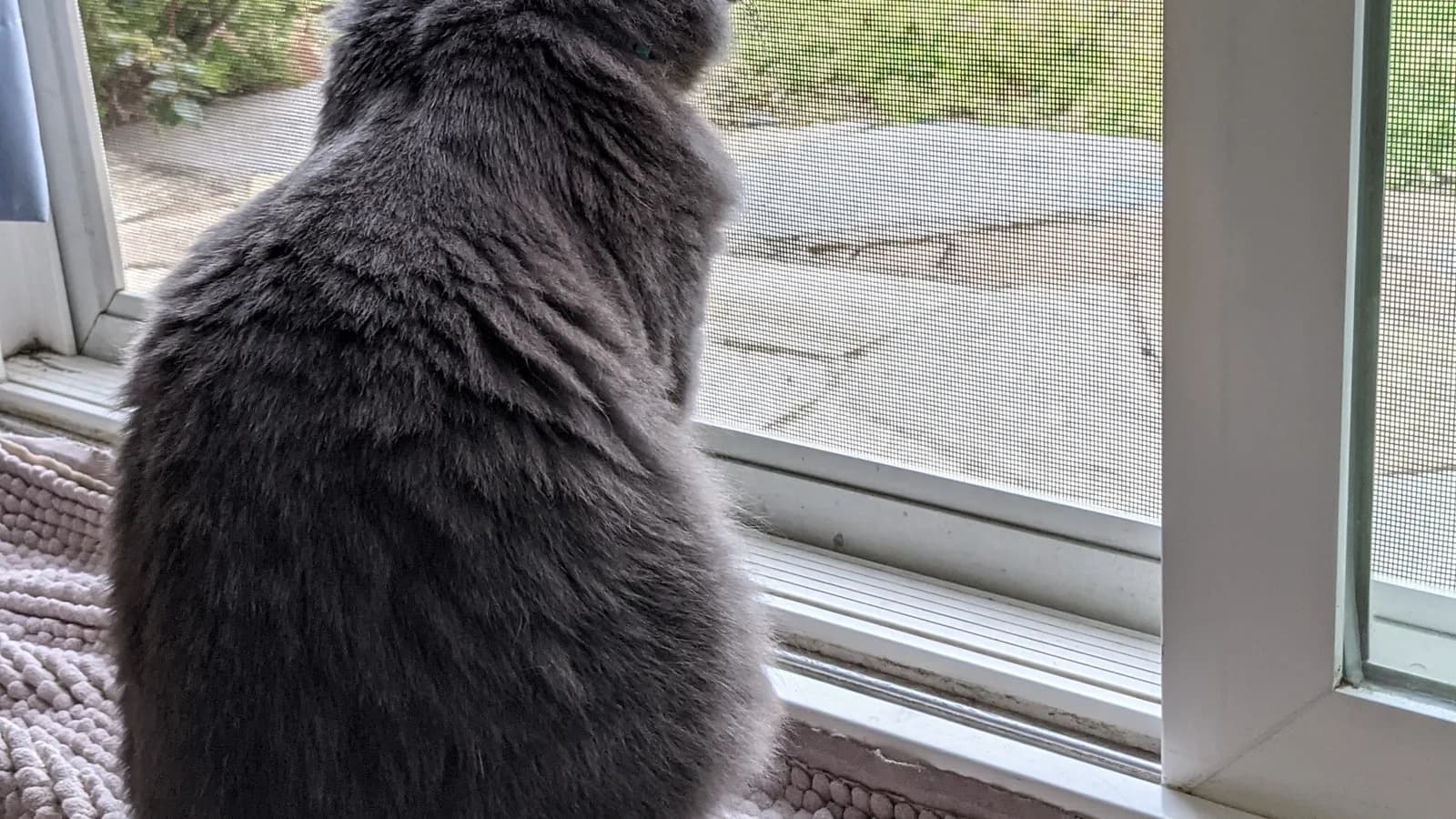
Nebelung
“The creature of the mist: German Nebel plus the Nibelungenlied saga”
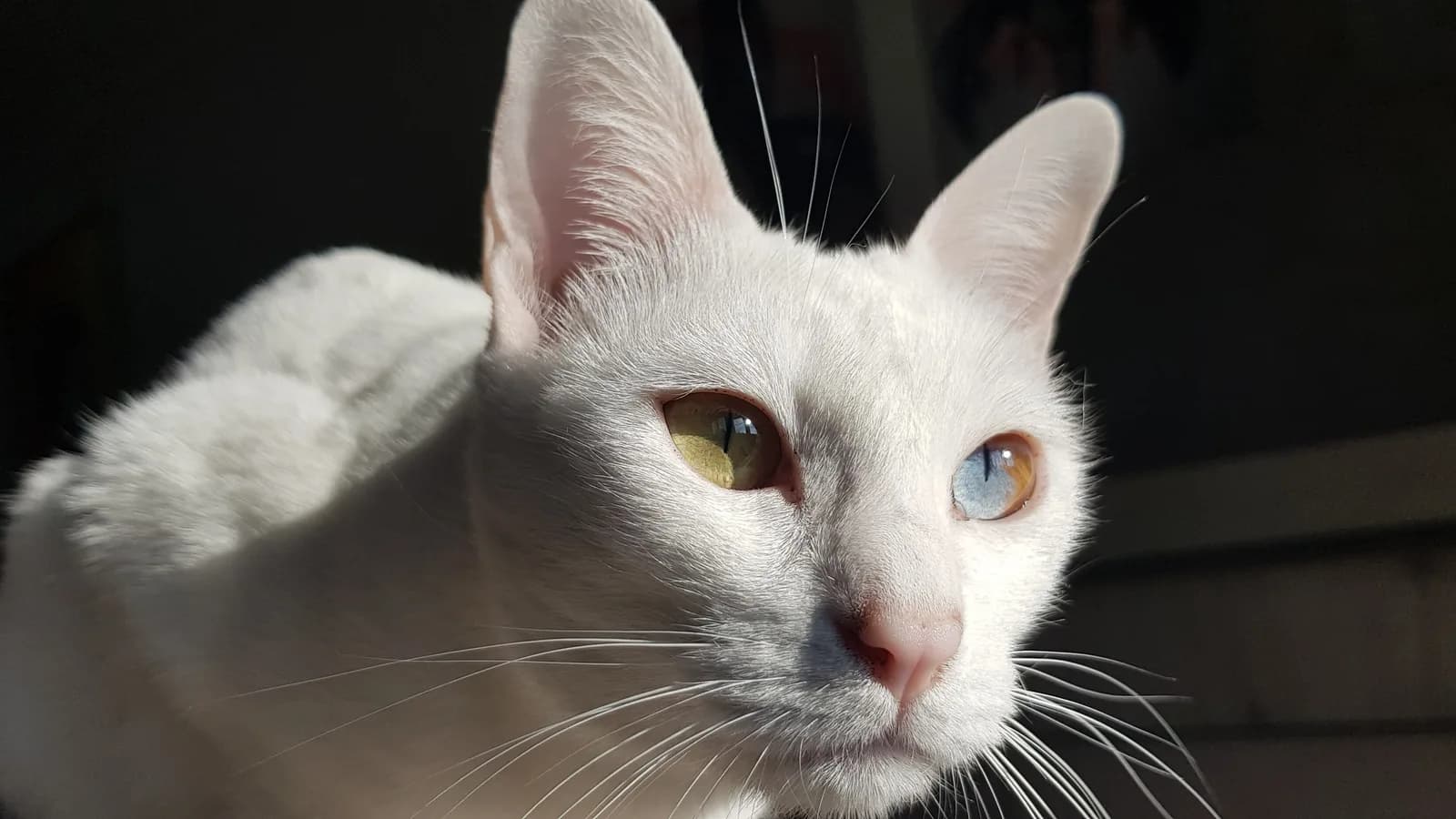
Khao Manee
“The Diamond Eye cat: Thai 'khao manee', white gem”
 Grooming & living with one
Grooming
Bathing is triggered by visible oiliness, not a fixed calendar. No source anywhere states an interval, and over-bathing dries the skin. The two registries disagree on temperature sensitivity (one warns about chill, the other about heat), which we report rather than resolve: watch YOUR cat in both. Sun exposure darkens the exposed skin toward black, reversibly. Limit strong sun rather than reaching for a product, and ask your vet before applying anything. During molts, watch for ingrown hairs as an observation to raise with your vet, not something to treat at home.
Living together
Registry prose describes a cat that plays hard, hunts anything feather-shaped, and bonds tightly to its people, with 's caveat that strangers get vetted first. The prey-drive edge argues for careful introductions to small pets. No measured study exists; treat every individual as its own data point.
 Food & diet
No elevated-calorie claim exists for this breed, a checked absence with teeth: makes exactly that claim for the Sphynx and does NOT make it for the Lykoi, on the same registry's own pages. General feline nutrition guidance applies unmodified; body condition and your vet decide portions.
 Price & budget
$2,400 to 3,500
Price of a kitten from a registered breeder, in the United States
This price reflects the quality of the breeding program: parents' health tests, registry pedigree, socialization. A very low price should raise a red flag. The real cost, though, plays out over the years.
Find a verified breederKitten price, by market
United States
$2,400 to 3,500
Canada
CA$2,500
Each figure is that country's real market price, researched separately, not a conversion of the others. The smaller line is only there so you can gauge one against your own money: European Central Bank reference rates of 2026-09-18, refreshed daily.
Work out your food budget
Type of food
Estimated monthly budget
$14
≈ 2.4 oz (68 g) per day
A ballpark figure, food only, using the same arithmetic as our portion tool (resting energy requirement × 1.2, a neutered adult). Real needs vary with age, activity level and body condition. Ask your veterinarian for advice.
 Verified catteriesThe registry-checked directory, plus a kitten alert near you. Filter it by breed.
 Should you insure a Lykoi?
Our sources list several predispositions in the Lykoi: Cutaneous adnexal polycystic syndrome (CAPS): the breed's one described condition, The coat gene itself: documented, tested in research, no commercial test, Skin care as preventive health, among others. A predisposition is not a foregone conclusion, and many of these cats live their whole lives without ever developing anything. It does change the nature of the follow-up, though: you monitor, sometimes for life, and it's that monitoring that weighs on a budget, more than a one-off accident.
One thing to weigh before deciding: this is a cat you will live alongside for well over a decade, and that is the span the real cost is spread across, premiums and care alike. Where a breed has a measured life expectancy that differs from the figure usually quoted, we say so in the lifespan section above rather than repeating the quoted one here.
 Lykoi cats in our community
No Lykoi here yet
Got one? Add a photo and yours gets to open this page.
 The vet's take

Veterinary review
Are you a vet?
Your professional read belongs here: every verified practitioner can leave a note, published once our editors have reviewed it.
Sign in and get your license number verified. We check it in the public register, we never ask for or keep a copy of your diploma, and your number is never published.
 Frequently asked questions
+What is a Lykoi cat?
A naturally occurring partial-hairless breed founded in Tennessee in 2011: sparse black-roan coat, bare mask, and cyclic molts, caused by documented variants in the Hairless (HR) gene. The name is Greek for wolf, and 'werewolf cat', 'wolf cat' and 'lycan cat' all mean this one breed.
+Is a Lykoi related to the Sphynx or Devon Rex?
No, and it is proven rather than assumed: genotyping shows the Sphynx and Devon Rex KRT71 mutations are absent from Lykoi ('none of these variants are present in the lykoi cats', Buckley 2020). Different gene, different mechanism, unrelated breeds.
+Do Lykoi cats have Down syndrome?
No. Down syndrome is a human chromosomal condition, and the Lykoi's look has a fully documented, unrelated cause: coat-gene variants that produce the sparse roan coat and bare mask. The search is common enough that we answer it plainly rather than leaving it to guesswork.
+Are Lykoi cats healthy?
The registries describe an overall healthy breed, and one condition is documented: an adult-onset skin-cyst syndrome (CAPS), described in a 2026 study of 10 cats, painless in every studied cat by pain scoring but serious in some. No test exists for it, so skin checks with your vet are the practical answer.
+How much does a Lykoi cost?
US named catteries run $2,400-3,500; Canada's one live figure is CA$2,499.99; the UK showed zero live listings at our check; Australia has no visible market at all. Our price page carries every source and the traps.
+Why is my Lykoi going bald?
Molting is the breed's normal: adults cycle between near-full coat and near-bald ('wolfing out') on their own schedule. A molt is expected; skin that looks sore, bumpy or infected during one is a vet visit.
+Do Lykoi cats shed?
Yes, dramatically at molt time: the cyclic coat means real shedding phases rather than steady light shedding. Between molts the sparse coat drops little, and there is no undercoat.
+How long do Lykoi live?
GCCF says 12-15 years and TICA says 'well into their late teens'; both are registry estimates, because a breed founded in 2011 is too young for any of the mortality studies we checked to measure. Honest answer: nobody has a measured number yet.
+Are Lykoi hairless cats?
No: the coat is hypotrichia, sparse hair, not hairlessness, which is why the Lykoi is deliberately absent from our hairless-breeds list. Even at the baldest point of a molt the mechanism differs from the Sphynx's.
+Are Lykoi legal to own everywhere?
Yes in our four markets: the standard kitten-sale rules apply and nothing targets the breed. The Netherlands' hairless-breeding restrictions, sometimes cited at it, do not name the Lykoi, whose coat is partial and cyclic rather than absent, and we found no ruling extending them to it.
+Do Lykoi cats need special food?
No: no elevated-calorie claim exists for this breed, a checked absence (TICA makes that claim for the Sphynx and not for the Lykoi). Normal feline nutrition, portioned by body condition with your vet.
 Community questions
Got a question this page doesn't cover? Ask it: the best ones get published here with their answer.
Sources & references
Data checked against reference sources (TICA and CFA standards, genetics laboratories, veterinary schools).
- TICA: Lykoi breed page
- CFA: Lykoi breed page
- CFA: Lykoi breed standard PDF
- GCCF: Lykoi breed page
- GCCF: Lykoi Registration Policy PDF (Full/Supplementary/Reference tiers)
- Buckley et al. 2020, Genes 11(6):682: the six HR variants and 16 founder lineages (PMID 32580512)
- Burnouf et al. 2026, J Feline Med Surg: the CAPS prospective study of 10 cases (PMID 41482892)
- Gandolfi et al. 2010, Mamm Genome: the Sphynx/Devon Rex KRT71 mutations the Lykoi lacks (PMID 20953787)

Worth keeping a paw on
Pin this profile
To compare later, or to show someone still torn between two breeds. One click and it sits in your board.
Pin it on Pinterest
 Purr or Pass
Still deciding? Find the perfect breed for your home.
A quick quiz that factors in your lifestyle, your kids and your other pets.
Which breed fits my home?Keep exploring
The floor belongs to our members. Keep it kind, links are not allowed, and images go through moderation before anyone else sees them.