

Chausie
“The jungle-cat hybrid built for the wild silhouette, not the spots”
 By Priya · The careful one
Published August 21, 2026Updated August 26, 20268 min read
Contents
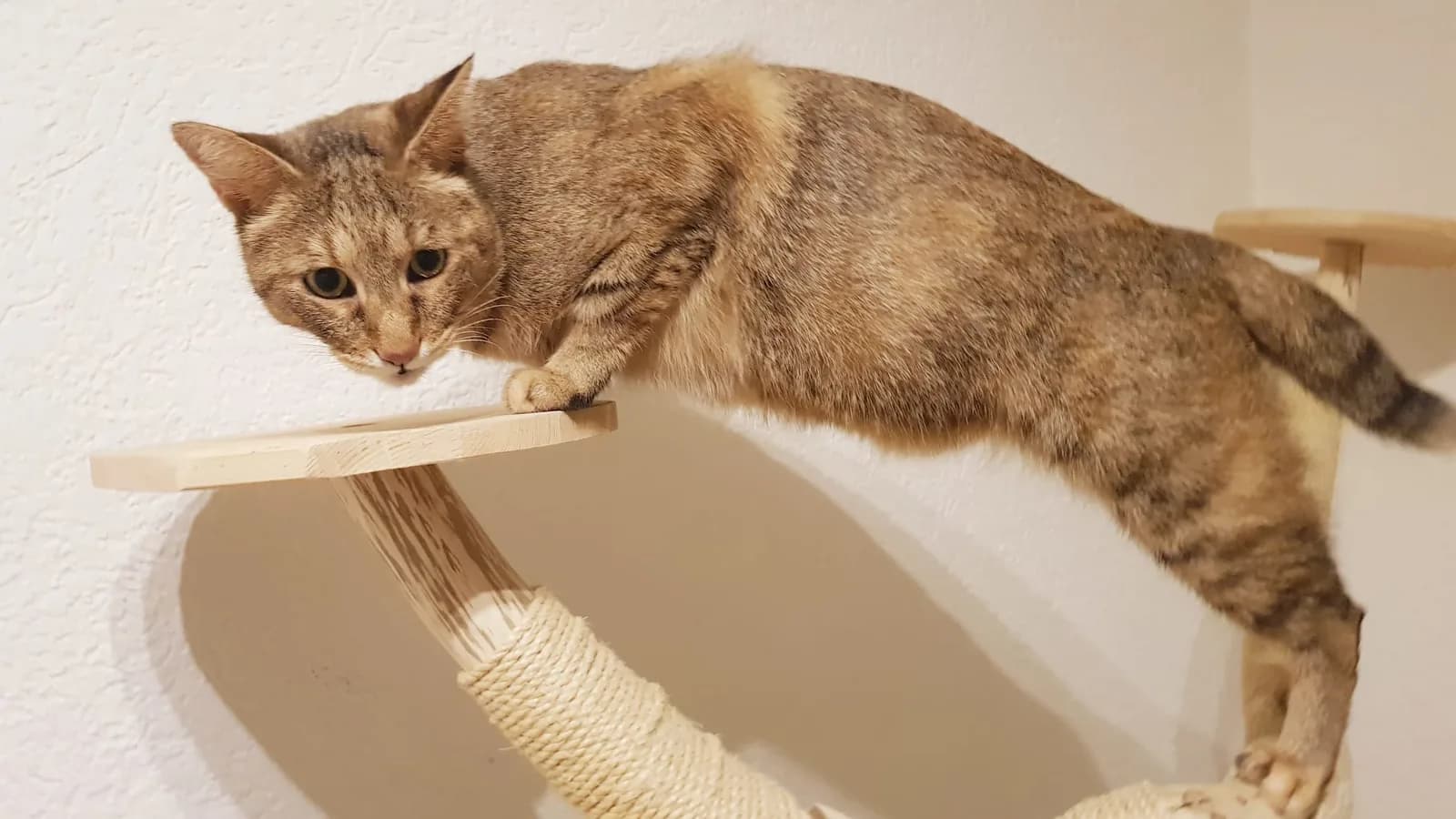
 Chausie photos
Real photos, so you can see what the breed actually looks like: coats, ear tufts, ruff and build.
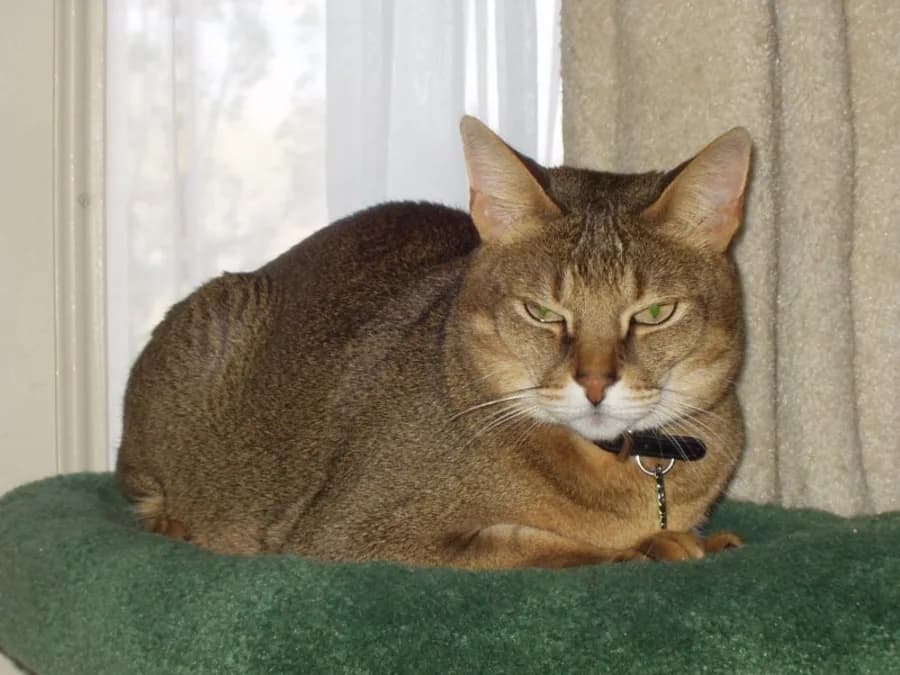
Large tawny Chausie cat resting on a green cushion by a window, tall ears, alert expression
Photo: Pschemp · CC BY-SA 3.0 · via Wikimedia Commons
 Vital stats
Origin
United States
A deliberate cross between the domestic cat and the jungle cat (Felis chaus), a small wild cat of Egypt, the Middle East and South Asia. The first recorded Chausie breeding dates to 1990. granted Foundation registry status in 1995, and full Championship recognition took effect on 1 May 2013. The ancient-Egypt material often attached to the breed (jungle cats mummified, associated with Bastet) is genuinely documented. But it belongs to the WILD species' history, not to the 1990s domestic breeding program, a distinction this page keeps.
Life expectancy
's own unsourced range is 12-18+ years; six pet-content sites converge, also unsourced, on 10-15. Neither is a study. No measured cohort includes the breed, and we print both attributed rather than picking. Commonly cited estimates; no measured study exists.
Coats
Solid black
Brown ticked tabby
Black grizzled ticked tabby (unique)
Three colors, per 's governing standard: solid black, brown , and the black grizzled ticked tabby found in no other domestic breed. (TICA's own consumer box currently lists two, an omission the standard and every independent source contradict, resolved on the standard's side.) White lockets are disqualified outright. Our colors page carries the details. No color carries a price premium anywhere in the market's own documents.
Understanding the coats (and their genetics)Size
TICA's own consumer box is the only figure traceable to a live institutional page, and it leads per our standing rule: about 15 lb (6.8 kg) for males and about 12.75 lb (5.8 kg) for females, a long, tall, jungle-cat-built frame. A wider-looking range (11-16 lb males, 8-13 lb females) circulates via two secondary sites citing a now-dead page, labeled a secondary estimate here. Zero measured weight studies exist. The 25-lb figure some competitor pages print contradicts TICA's own number by ten pounds.
Did you know
The breed's name comes straight from its wild parent's Latin name, Felis chaus. Its rarest pattern, the black grizzled , exists in no other domestic cat. The early-generation males' sterility, long breeder folklore, now has a documented genetic mechanism: a 2021 genome study traced X-linked hybrid male sterility in exactly this interspecies cross.
 Personality
 Affection4/5
 Energy5/5
 Intelligence5/5
 Friendliness3/5
 Independence3/5
 Vocal3/5
 Shedding2/5
Compatibility
 Good with children2/5
 Good with other pets3/5
 Apartment friendly2/5
Editorial ratings on our five-point scale, anchored in the registry descriptions and the measured behaviour studies cited on this profile; individual cats vary, and our members' own ratings below are the counterweight.
Still torn between this breed and another?Compare the Chausie trait by trait, or filter every breed by what matters to you. What our members say
What our members say
Nobody has described their Chausie here yet. As soon as the first profiles come in, this is where the community averages will show up: temperament, food, lifestyle.
Describe my Chausie Pros & cons
Strong points
- The jungle-cat silhouette with a genuinely athletic, engaged, dog-like temperament (TICA's own 'an eleven')
- The lowest keyword-difficulty head term of any hybrid breed, because honest content barely exists: this page is built from primary documents
- A unique pattern (black grizzled ticked tabby) no other domestic breed carries
- The breed community runs its own dedicated rescue so no Chausie hits a shelter
Things to consider
- TICA itself steers the breed away from homes with young children, a caution we print as the registry's own position
- Early-generation males are sterile (a documented genetic mechanism), which shapes breeding and pricing
- A legal patchwork sharper than Bengal's or Savannah's: a dangerous wild animal at any generation in Iowa, excluded outright in Australia
- Zero veterinary literature exists for the breed: the health file is honest absence, not reassurance
 Is a Chausie right for you?
An experienced, active, adult household with space, time and enrichment for a genuinely athletic hybrid. One with the patience for waiting lists and generation questions, and the diligence to read our legal page before falling for the silhouette.
Is the Chausie right for YOUR home?
Answer a few questions and we'll email you your personalized result.
Take the quiz · 2 min Getting to know the Chausie
The Chausie is a jungle-cat hybrid judged on silhouette, not spots. Its standard gives the coat 20 points of 100 and the body 80, because the breeding goal since 1990 has been the long, tall, deep-chested frame of Felis chaus itself: Foundation status 1995, Championship 1 May 2013. The generations vocabulary (F1 to F5) is the market's convention, not TICA's official scale, and it prices the breed: our price page carries the ladder from $8,000 F1s to $1,500 F3s, plus the breed's own dedicated rescue.
The legal map is this breed's sharpest content, with outcomes stranger than either sibling hybrid's. Not reached at all by Texas's closed species list. A dangerous wild animal at ANY generation in Iowa (whose exemption names only Bengals and Savannahs). Expressly non-controlled in Montana. F1-licence territory in the UK, and excluded from Australia entirely, by name, in the regulator's own guidance. The full jurisdiction map includes the Alaska correction our research originated: the codified rule names no breed, whatever the internet repeats.
The honesty file: zero veterinary literature exists for this breed (a checked, empty PubMed record). The one real genetics paper documents the mechanism of early-generation male sterility rather than any disease. And one widely repeated digestive claim is printed here only as the unsourced folklore it is. A three-color palette with one unique pattern completes the picture. One disambiguation: the 'Jungle Curl' is a different, separately registered curl-eared hybrid, not a Chausie variant.
 Health: what to watch for
A few predispositions are well documented. The good news: they can be screened for or avoided by choosing a reputable breeder and keeping an eye on the right signals.
This is information, not veterinary advice, and it cannot tell you what is wrong with your cat. Our rule is a simple one: if something is wrong with your cat, call your vet, and call an emergency clinic if it is out of hours. Nothing you read here is a reason to wait.
The honest headline: an empty veterinary literature
LOWThe Chausie's PubMed record is empty: zero clinical papers name the breed, a checked absence we state directly. That reflects a young, rare hybrid, not a proven-healthy one. TICA's registry prose describes a healthy, athletic cat; it is prose, and quoted only as such. Routine care, and a vet call at anything abnormal, remain the whole plan.
Early-generation male sterility: real, documented, and about breeding, not illness
LOWThe one substantive genetics paper touching this cross (Bredemeyer 2021, read in full) documents the MECHANISM of X-linked hybrid male sterility in a jungle-cat x domestic interspecies cross: why F1-F3 males generally cannot sire litters. It is a fertility mechanism, not a disease. It shapes the breed's generation structure and pricing rather than any individual cat's health.
The digestive folklore, named and left unproven
LOWA claim that Chausies have a shortened intestinal tract, cannot tolerate plant ingredients and are prone to inflammatory bowel disease circulates on several consumer sites. No veterinary or genetic source supports it anywhere. The breed's own literature is empty, and Wikipedia's editors flag the identical sentence as uncited. We do not repeat its mechanism as plausible, and we do not declare it false: it has never been tested either way. A cat with vomiting, diarrhea or weight loss needs a vet visit, not a grain-free theory.
What a buyer can actually check
LOWWith no breed-specific tests or screening programs in existence, due diligence is generic and real: the parents' health records, the cattery's vet relationship, the kitten's documented generation and TICA paperwork, and a home prepared for a high-energy athlete. Any breeder claiming breed-specific health certifications is describing paperwork that does not exist.
Go deeper on health
Prevention, warning symptoms, costs and insurance: our guides, researched and sourced.
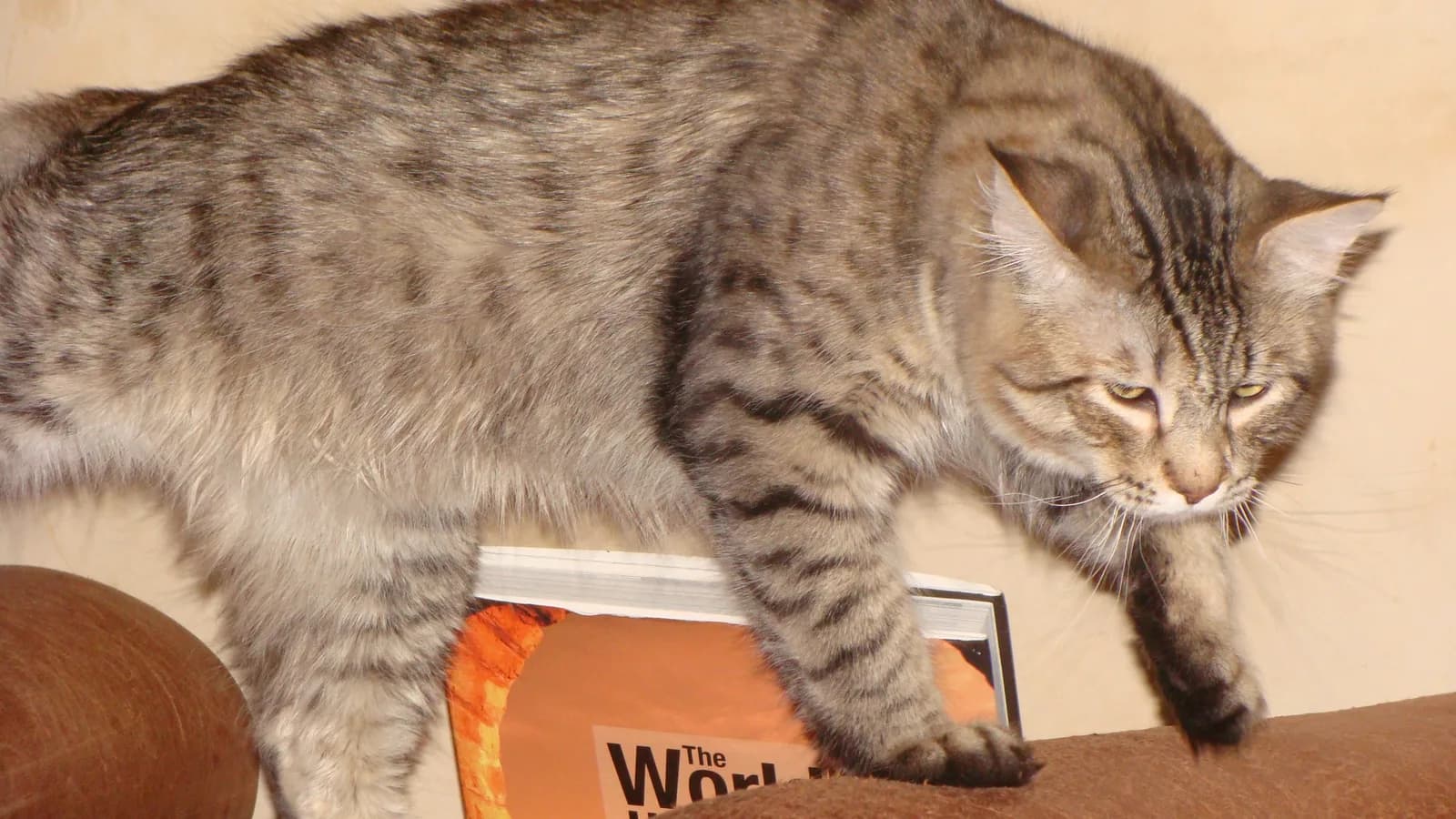
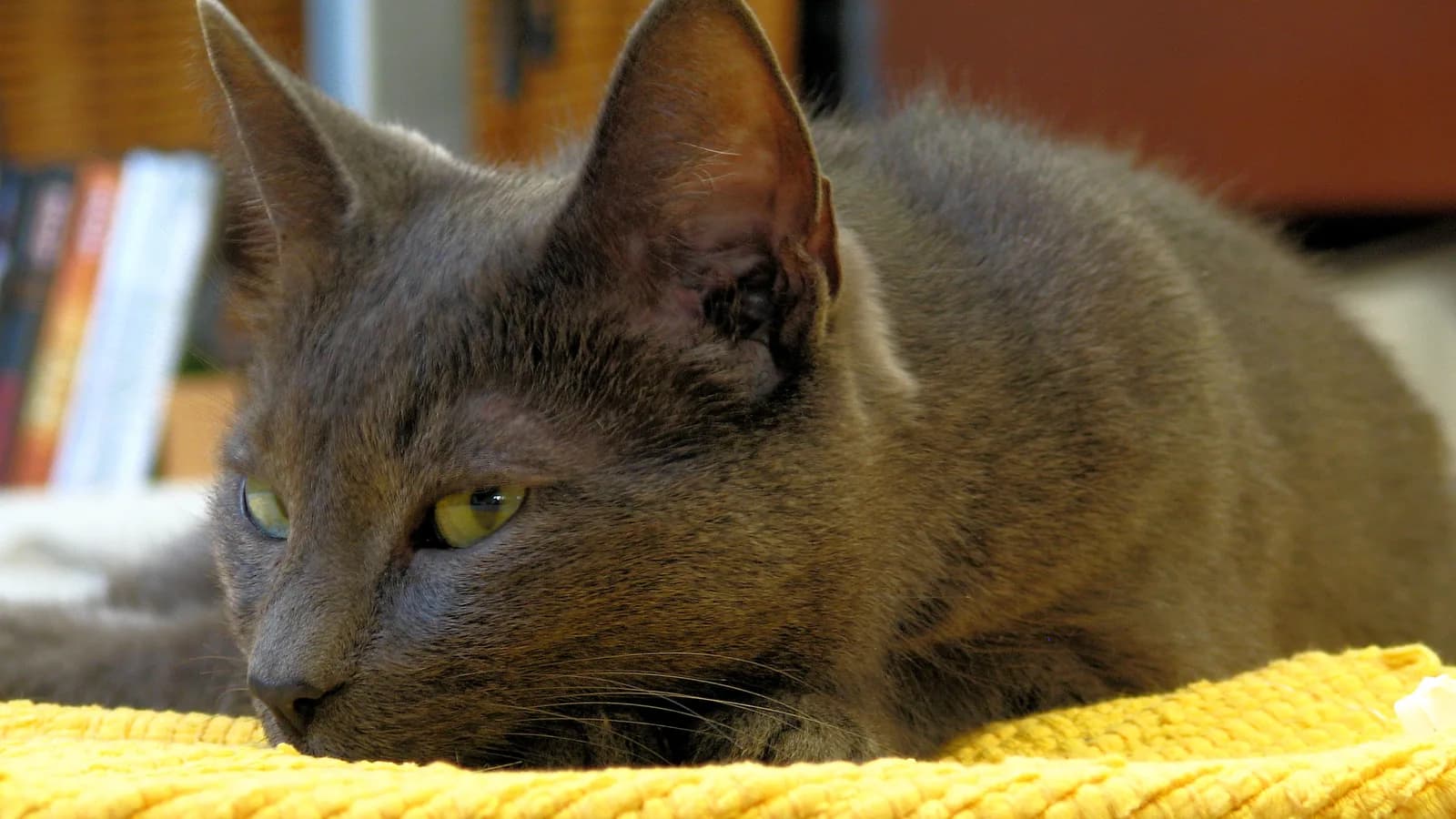
 Grooming & living with one
Grooming
Low-maintenance coat by every account: weekly brushing covers the short ticked coat. The real 'grooming' is exercise: an hour of genuine play beats any brush for this breed. Routine nails, teeth and ears, as for any cat.
Living together
An athletic, clever cat that does best with engaged adults. 's own household caution (adults and families without young children) leads this section, with WebMD's dissent named. With other pets, introductions and energy-matching matter more than for most breeds. No measured behaviour study includes the Chausie; treat every individual as its own case.
 Food & diet
General feline nutrition applies. One circulating claim is handled per our strictest health rule. A 'shortened intestinal tract / cannot digest plant matter / prone to inflammatory bowel disease' story appears on several consumer sites with NO primary source anywhere (the breed's PubMed record is empty, and Wikipedia's own editors flag the claim as uncited). We neither repeat its mechanism as plausible nor declare it false: it is unverified folklore. A cat with digestive trouble of any breed needs a vet, not a dietary theory.
 Price & budget
$2,000 to 10,000
Price of a kitten from a registered breeder, in the United States
This price reflects the quality of the breeding program: parents' health tests, registry pedigree, socialization. A very low price should raise a red flag. The real cost, though, plays out over the years.
Find a verified breederKitten price, by market
United States
$2,000 to 10,000
United Kingdom
£850 to 2,000
Canada
CA$899 to 4,000
Each figure is that country's real market price, researched separately, not a conversion of the others. The smaller line is only there so you can gauge one against your own money: European Central Bank reference rates of 2026-09-18, refreshed daily.
Work out your food budget
Type of food
Estimated monthly budget
$14
≈ 2.4 oz (68 g) per day
A ballpark figure, food only, using the same arithmetic as our portion tool (resting energy requirement × 1.2, a neutered adult). Real needs vary with age, activity level and body condition. Ask your veterinarian for advice.
 Verified catteriesThe registry-checked directory, plus a kitten alert near you. Filter it by breed.
 Should you insure a Chausie?
Our sources list several predispositions in the Chausie: The honest headline: an empty veterinary literature, Early-generation male sterility: real, documented, and about breeding, not illness, The digestive folklore, named and left unproven, among others. A predisposition is not a foregone conclusion, and many of these cats live their whole lives without ever developing anything. It does change the nature of the follow-up, though: you monitor, sometimes for life, and it's that monitoring that weighs on a budget, more than a one-off accident.
One thing to weigh before deciding: this is a cat you will live alongside for well over a decade, and that is the span the real cost is spread across, premiums and care alike. Where a breed has a measured life expectancy that differs from the figure usually quoted, we say so in the lifespan section above rather than repeating the quoted one here.
 Chausie cats in our community
No Chausie here yet
Got one? Add a photo and yours gets to open this page.
 The vet's take

Veterinary review
Are you a vet?
Your professional read belongs here: every verified practitioner can leave a note, published once our editors have reviewed it.
Sign in and get your license number verified. We check it in the public register, we never ask for or keep a copy of your diploma, and your number is never published.
 Frequently asked questions
+What is a Chausie?
A hybrid breed from crossing the domestic cat with the jungle cat (Felis chaus): a tall, long, athletic cat bred for the wild silhouette, recognized by TICA (Foundation 1995, Championship May 2013), in three colors including a grizzled pattern no other breed carries.
+Are Chausie cats legal to own?
It depends where, more sharply than for any breed we cover: no US federal ban, Texas's list does not reach it, Iowa treats it as a dangerous wild animal at ANY generation, Hawaii bans it, the UK licenses F1s only, and Australia excludes it entirely by name. Our legal page maps every jurisdiction with its instrument.
+How much does a Chausie cost?
By generation: the market band is $2,000-10,000, with one cattery's rungs at F1 from $8,000, F2 from $5,000, F3 from $1,500. The breed's own rescue rehomes adults at $150. The UK band is £850-2,000+; Australia has no legal market.
+What is an F1 or F4 Chausie?
Generations from the wild parent: F1 has a jungle-cat parent, F2 a jungle-cat grandparent, and so on. The F-scale is the market's convention rather than TICA's official vocabulary, and it drives price, legality in several jurisdictions, and male fertility (early-generation males are sterile, a documented mechanism).
+Are Chausies good family cats?
TICA's own words steer the breed to 'adults and families without young children', a caution two consumer sources echo and one contradicts, and we lead with the registry's position. The energy is real: TICA's own scale puts the breed at 'an eleven'. Experienced, active, adult households fit best.
+How big do Chausies get?
TICA's box says about 15 lb (6.8 kg) for males and 12.75 lb (5.8 kg) for females on a tall, long frame that photographs bigger than it weighs. The 25-lb figure some sites print contradicts TICA's own number by ten pounds, and no measured weight study exists.
+Do Chausies need a special diet?
No evidenced one: the widely repeated shortened-intestine/no-plants claim has no primary source anywhere (the breed's veterinary literature is empty), and we print it only as unsourced folklore. Feed a complete diet, watch body condition, and take digestive trouble to a vet.
+What colors do Chausies come in?
Three, per the governing standard: solid black, brown ticked tabby, and the black grizzled ticked tabby unique to the breed. White lockets are disqualified, and no color carries a price premium in any document we found.
+Is a Jungle Curl the same as a Chausie?
No: the Jungle Curl is a separate, differently registered curl-eared hybrid program, not a Chausie variant. Same wild ancestor family in some lines, different breed, different paperwork.
+How long do Chausies live?
TICA's unsourced range is 12-18+ years; six pet sites converge, also unsourced, on 10-15. No measured study includes the breed, so both are estimates and we print both attributed.
+Chausie vs Savannah vs Bengal: which is which?
Three different wild parents: the Chausie from the jungle cat (ticked, tall, three colors), the Savannah from the serval (spotted, tallest, generation-priced), the Bengal from the Asian leopard cat (rosetted, established, multi-color). Legally they diverge sharply by jurisdiction, which each breed's own legal content maps.
 Community questions
Got a question this page doesn't cover? Ask it: the best ones get published here with their answer.
Sources & references
Data checked against reference sources (TICA and CFA standards, genetics laboratories, veterinary schools).
- TICA: Chausie breed page
- TICA: Chausie breed standard PDF
- GCCF: unrecognised breeds page (Red Status)
- Bredemeyer et al. 2021, Mol Biol Evol: X-linked hybrid male sterility in the feline interspecies cross (PMID 34519828)
- Iowa Code §717F.1 (the two-breed exemption that excludes the Chausie)
- Animal Legal & Historical Center (MSU Law): Alaska 5 AAC 92.030 as codified
- DCCEEW: household pets guidance (the 'chausies' exclusion)
- Rare and Exotic Feline Registry: Chausie page
- Wikipedia: Jungle cat (Felis chaus), the wild parent's own history

Worth keeping a paw on
Pin this profile
To compare later, or to show someone still torn between two breeds. One click and it sits in your board.
Pin it on Pinterest
 Purr or Pass
Still deciding? Find the perfect breed for your home.
A quick quiz that factors in your lifestyle, your kids and your other pets.
Which breed fits my home?Keep exploring
The floor belongs to our members. Keep it kind, links are not allowed, and images go through moderation before anyone else sees them.