

Korat
“The good-luck cat of Thailand”
 By Priya · The careful one
Published August 21, 2026Updated August 26, 20267 min read
Contents
 Korat photos
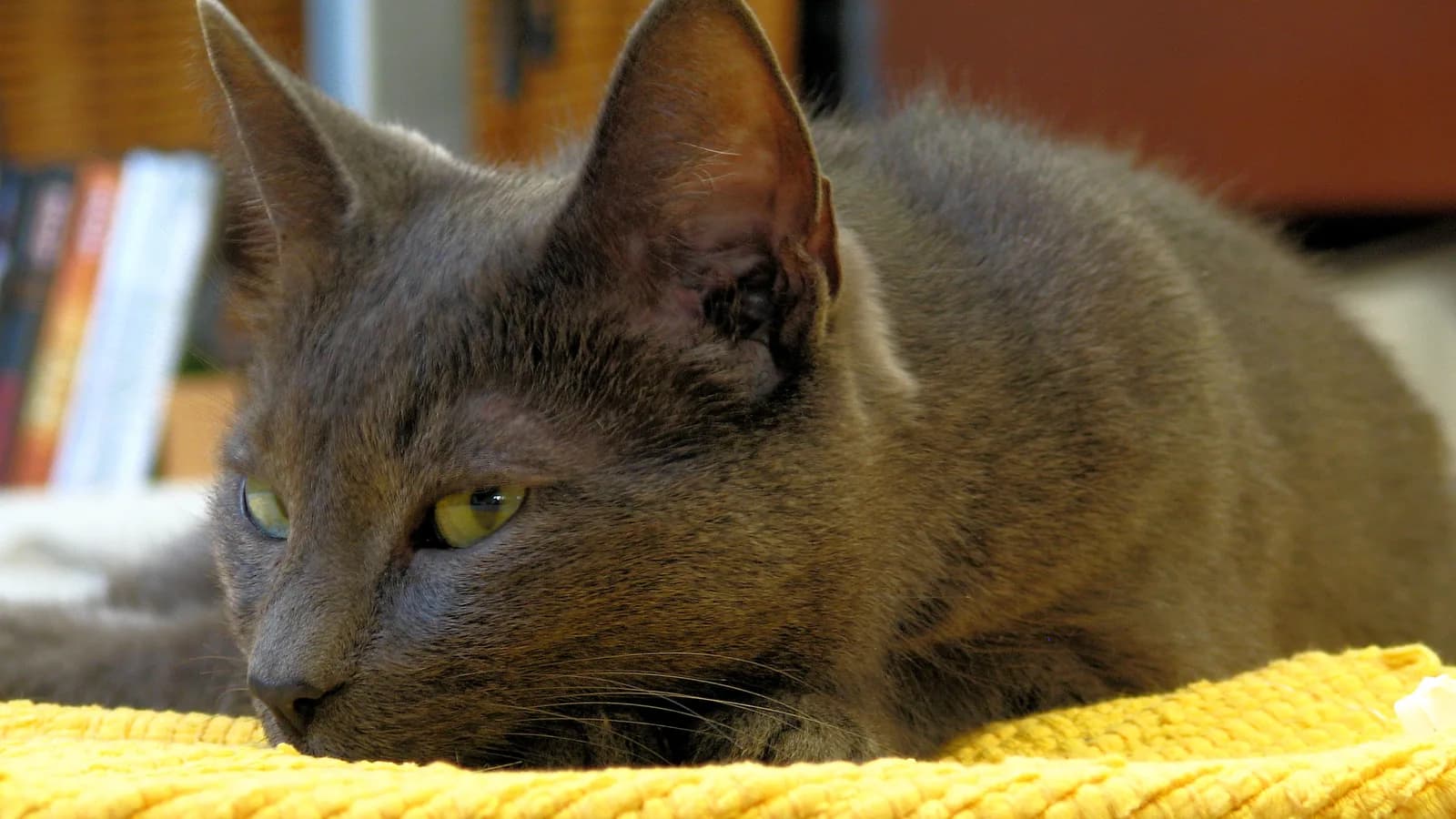
Real photos, so you can see what the breed actually looks like: coats, ear tufts, ruff and build.
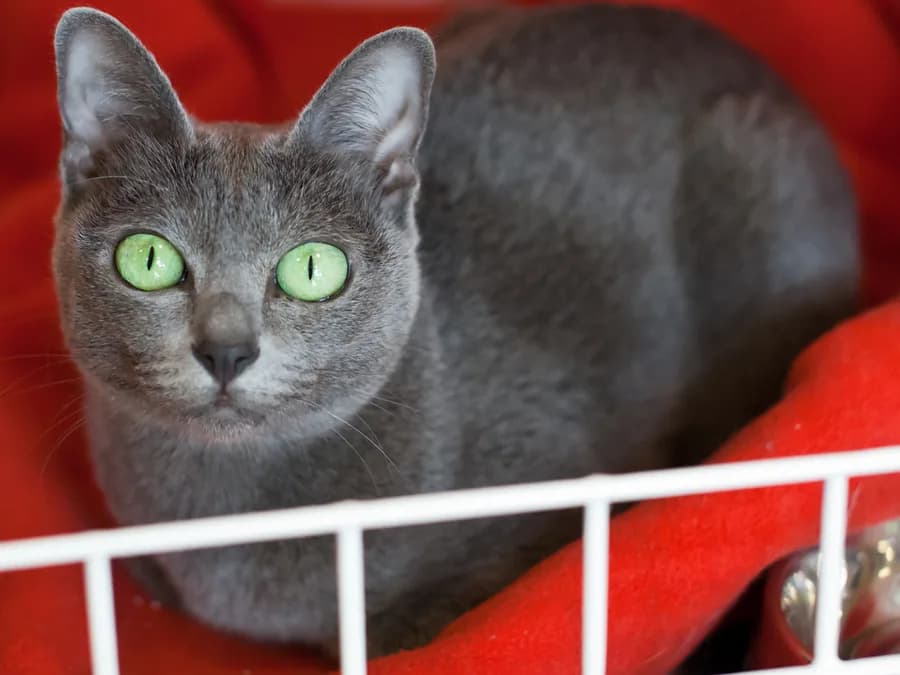
Silver blue Korat cat with green eyes and a heart-shaped face, resting on a red blanket
Photo: Heikki Siltala, catza.net · CC BY 3.0 · via Wikimedia Commons
Got a Korat? Share them with the community. Photos from our members round out this page.
 Vital stats
Origin
Thailand
Thailand, where blue cats of this type appear in the Tamra Maew, the old Thai cat treatises (with the honest caveat that the manuscript illustrations are not detailed enough to be definitive about the breed). Traditionally given in pairs as a wedding blessing, never sold. The modern Western line began with Jean Johnson's 1959 imports to the United States.
Weight
Female
6-8 lb (2.7-3.6 kg)
Male
8-10 lb (3.6-4.5 kg)
Life expectancy
No measured life-expectancy study covers the breed (the one modern 76-cat cohort sits behind a publisher wall, and the big UK life tables have no Korat row). 's own page says 'generally a long lived breed. Many reach their late teens and a few go past 20', a registry claim we quote as exactly that. 10-15 is the convention band, labeled convention.
Coats
Silver-tipped blue
Exactly one, everywhere: blue with silver tipping, each hair pale at the root and silvered at the tip. No registry on earth recognizes any other Korat color. The eyes are green, with an amber cast tolerated by every standard.
Understanding the coats (and their genetics)Size
No judged standard in five registries states a numeric weight; the figures live in the consumer pages. TICA's own page disagrees with itself (the box says males 10 lb or more, the narrative on the same page says 8-10). We store the coherent cluster: females 6-8 lb, males 8-10 (CFA's own line: males rarely exceed 10 lb; GCCF: 6-10 unsplit). A cat famous for weighing more than it looks: dense, muscular, low-fat, which its own registry flags as an anesthesia-dosing note for vets.
Did you know
In Thai tradition the Korat is a gift, not a commodity: given in pairs to brides as a wedding blessing, its silver-tipped coat read as fortune. The tradition survives in the modern market's strangest habit, documented on our price page. Most Korat breeders simply decline to publish a price.
 Personality
 Affection5/5
 Energy5/5
 Intelligence4/5
 Friendliness4/5
 Independence2/5
 Vocal3/5
 Shedding1/5
Compatibility
 Good with children3/5
 Good with other pets3/5
 Apartment friendly4/5
Editorial ratings on our five-point scale, anchored in the registry descriptions and the measured behaviour studies cited on this profile; individual cats vary, and our members' own ratings below are the counterweight.
Still torn between this breed and another?Compare the Korat trait by trait, or filter every breed by what matters to you. What our members say
What our members say
Nobody has described their Korat here yet. As soon as the first profiles come in, this is where the community averages will show up: temperament, food, lifestyle.
Describe my Korat Pros & cons
Strong points
- Measured among the most active, boldest and most people-seeking breeds tested
- The lowest litterbox-issue score of all 26 breed groups in the Finnish data
- One color, one coat, no grooming project: a weekly hand-over does it
- The fancy's DNA-screening pioneer: GM1/GM2 paperwork askable since 1998
- A living piece of Thai tradition with the documents to prove it
Things to consider
- The same data that measures its boldness measures elevated stranger- and owner-directed aggression odds: a confident cat that sets terms
- Genuinely hard to obtain: zero CFA-listed catteries, waiting lists everywhere
- Its own registries call it noise-averse and bad at long days alone
- No measured lifespan or weight cohort exists; the figures are conventions
- Most breeders decline to publish prices: budgeting means inquiring
 Is a Korat right for you?
A calm, quiet-ish household that is HOME. This is a measured high-activity, people-glued cat that its own registries describe as noise-averse and poorly suited to long days alone. A confident animal that does best with owners who respect a cat's terms.
Is the Korat right for YOUR home?
Answer a few questions and we'll email you your personalized result.
Take the quiz · 2 min Getting to know the Korat
Start in the pages of a manuscript. Blue, silver-tipped cats of the Korat's type appear in the Tamra Maew, the Thai cat treatises, among the good-fortune cats, with a caveat we keep attached: the illustrations are not detailed enough to be definitive about the breed. What is documented is the tradition. Korats given in pairs as wedding blessings, cats of fortune with a role in rain ceremonies, and a modern Western line that begins with Jean Johnson's 1959 imports to America ('s own diverging Foreign-Service framing of that story is TICA's alone, and we attribute it).
recognized the breed effective January 1967. Britain followed in 1984, and now administers the Korat and its pointed relative the Thai as one genetic unit. This breed founded a piece of veterinary genetics. Both feline models of the fatal gangliosidosis pair were characterised in Korats, GM1 and GM2. The breed answered with the fancy's first breed-wide DNA-screening program: every UK line tested clear in 1998, tested-or-clear-by-descent required ever since. The two must never be blended: the GM1 mutation is scientifically shared with the Siamese; the GM2 mutation is the Korat's own.
In 2025 the same playbook opened again, this time for an LDLR atherosclerosis variant, with a new DNA test and breeding lines under screening. The reassuring detail from the newest study is that carrier cats are asymptomatic. The measured cat is not the brochure cat. Two independent Finnish surveys place the Korat among the most active, boldest, most people-seeking breeds tested, with the lowest litterbox-issue score of all 26 groups. The same data measures significantly elevated aggression odds toward strangers and owners, a finding zero registries mention and we print anyway, beside the registries' own sentences about noise aversion and hating long days alone.
A magnificent, opinionated companion, honestly described. And it is vanishingly rare: zero catteries in 's own directory, one in Canada's, eleven in the breed community's most generous US census, and a market that mostly declines to name a price. If you are choosing between the grey breeds, our comparison maps the whole silver family, and the mix page answers the shelter-grey question honestly.
 Health: what to watch for
A few predispositions are well documented. The good news: they can be screened for or avoided by choosing a reputable breeder and keeping an eye on the right signals.
This is information, not veterinary advice, and it cannot tell you what is wrong with your cat. Our rule is a simple one: if something is wrong with your cat, call your vet, and call an emergency clinic if it is out of hours. Nothing you read here is a reason to wait.
GM1 and GM2 gangliosidosis (the founding story)
MODERATEThe Korat founded BOTH feline models of this fatal pair of storage diseases, and then wrote the fancy's screening playbook: all UK lines tested clear in 1998, GCCF requiring tested-or-clear-by-descent ever since. Two facts never to blend: the GM1 mutation is shared with the Siamese; the GM2 mutation is the Korat's own (three other GM2 mutations exist in OTHER cat populations, each distinct). In tested lineage the disease is the one the breed does not have, in its registry's own words.
Symptoms to spot
In affected kittens: tremors from weeks-to-months of age, progressing rapidly; a breeder-side genetics story, prevented by testing
How common
No measured carriage rate exists; labs say low prevalence qualitatively, and we do not dress that up as a figure
Screening & prevention
Ask for GM1/GM2 status: tested, or clear by descent under the GCCF scheme
Genetic test
Yes: both tests at UC Davis VGL ($44 single, $66 combined) and UK labs
LDLR atherosclerosis (the 2025 chapter)
MODERATEA nonsense LDLR variant causing severe atherosclerosis in homozygous Korats, modelled on human familial hypercholesterolaemia but behaving as recessive in cats. The newest study's reassuring core: heterozygous carriers (76 genotyped cats surveyed) show no clinical signs and only a minor, not-clinically-relevant lipid rise. They can ONLY be identified by DNA test, not bloodwork. A genetic test arrived in 2025; Korat and Thai breeding lines are being screened with declared eradication intent.
Symptoms to spot
In the rare homozygote: heart-failure signs; for everyone else this is paperwork, not symptoms
How common
No population rate published yet; the finding is new
Screening & prevention
Ask breeders for the parents' LDLR status; the question became askable in 2025
Genetic test
Yes, since 2025: the LDLR test
Anesthesia and the low-fat build
LOWGCCF's own page carries a practical note vets appreciate: the Korat's dense, low-body-fat build is relevant to anesthetic dosing. Not a disease, a briefing point: mention the breed before any procedure involving sedation.
Symptoms to spot
None: a pre-procedure conversation, not a condition
How common
A build trait, breed-wide
Screening & prevention
Name the breed to your vet before sedation or anesthesia
Genetic test
No
Go deeper on health
Prevention, warning symptoms, costs and insurance: our guides, researched and sourced.
Also worth a look
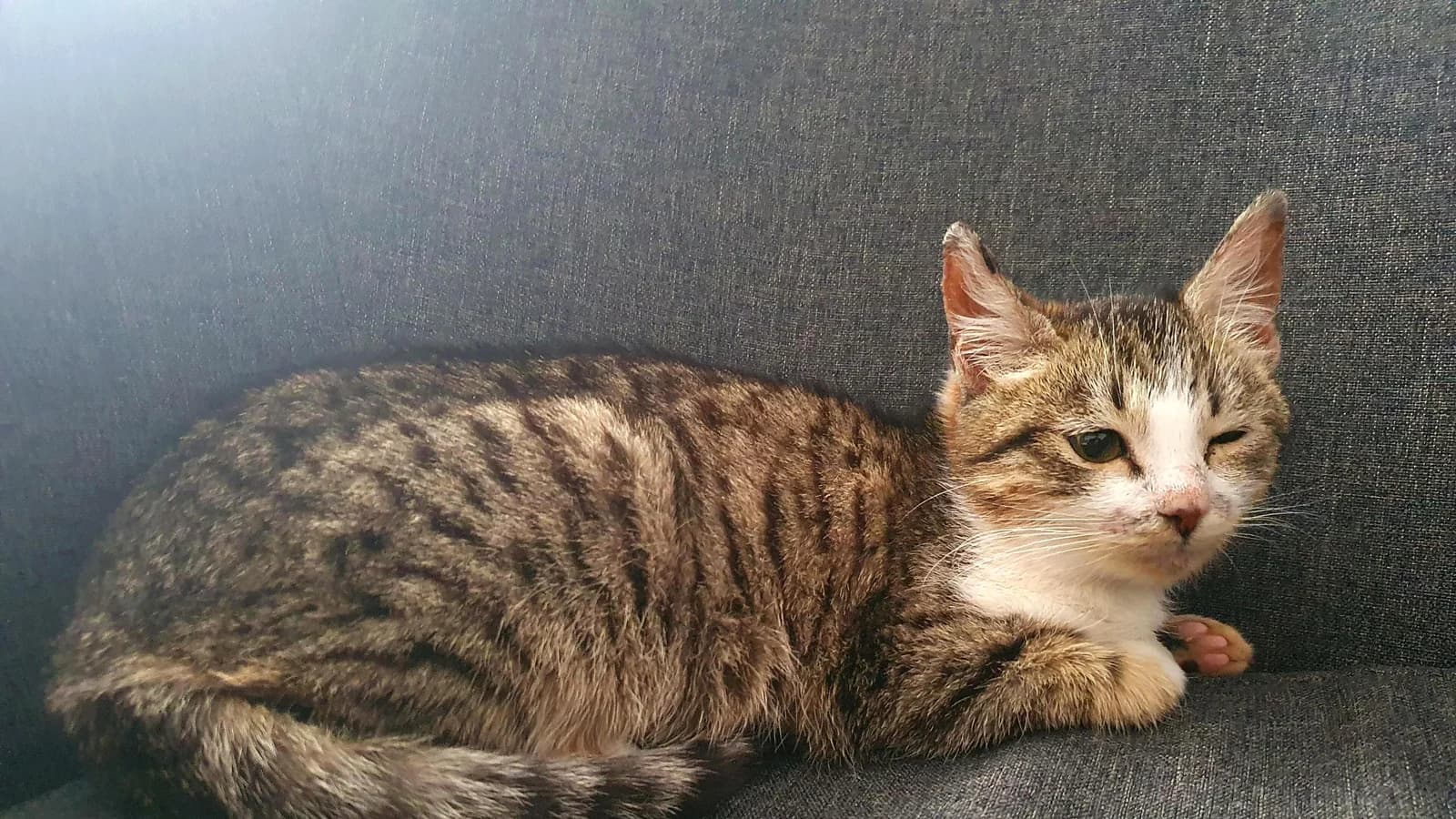
European Shorthair
“Europe's ordinary cat, perfected: a FIFe founding breed since 1949”
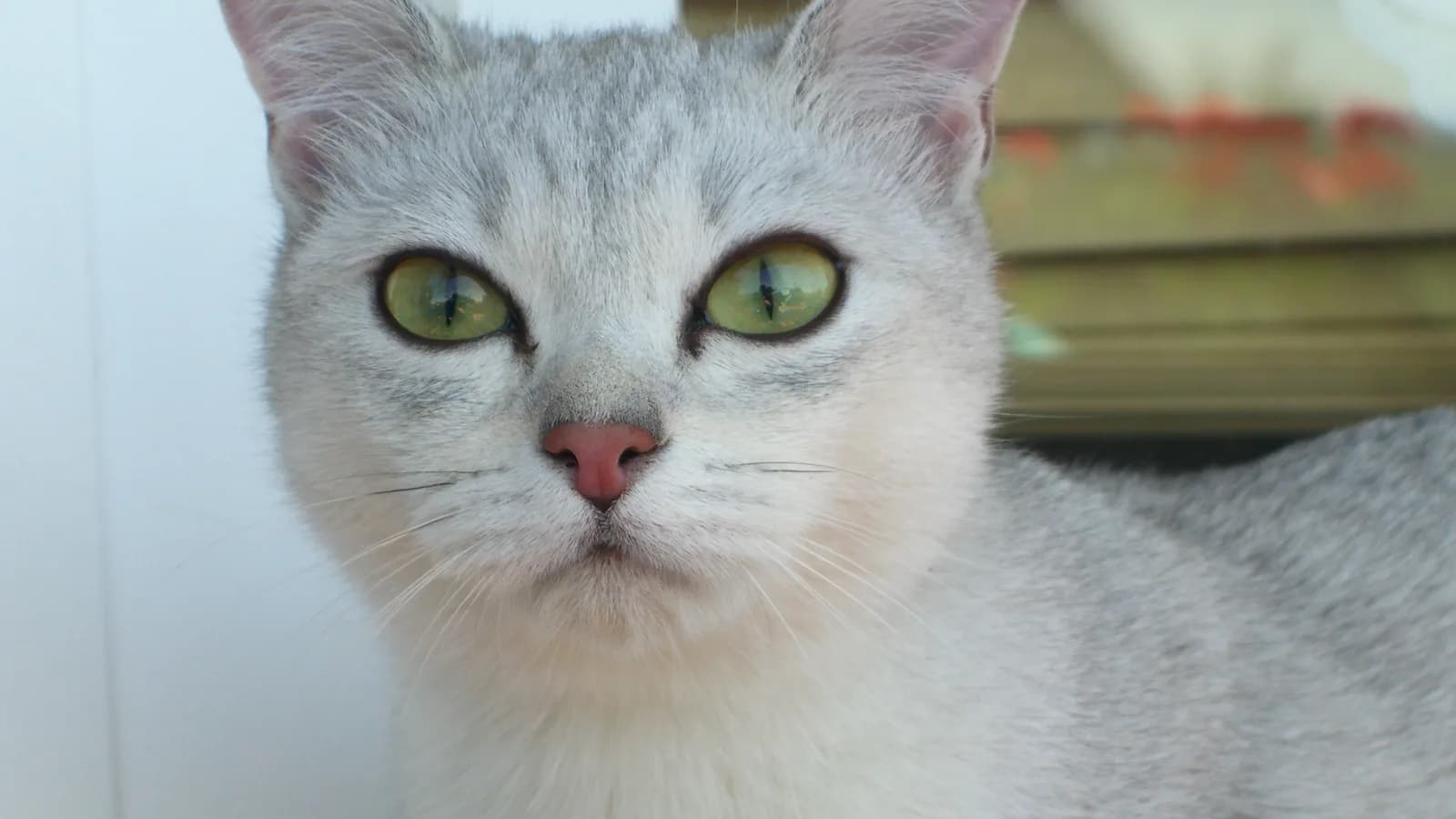
Burmilla
“The accidental aristocrat (as the story circulates, not as a fact)”
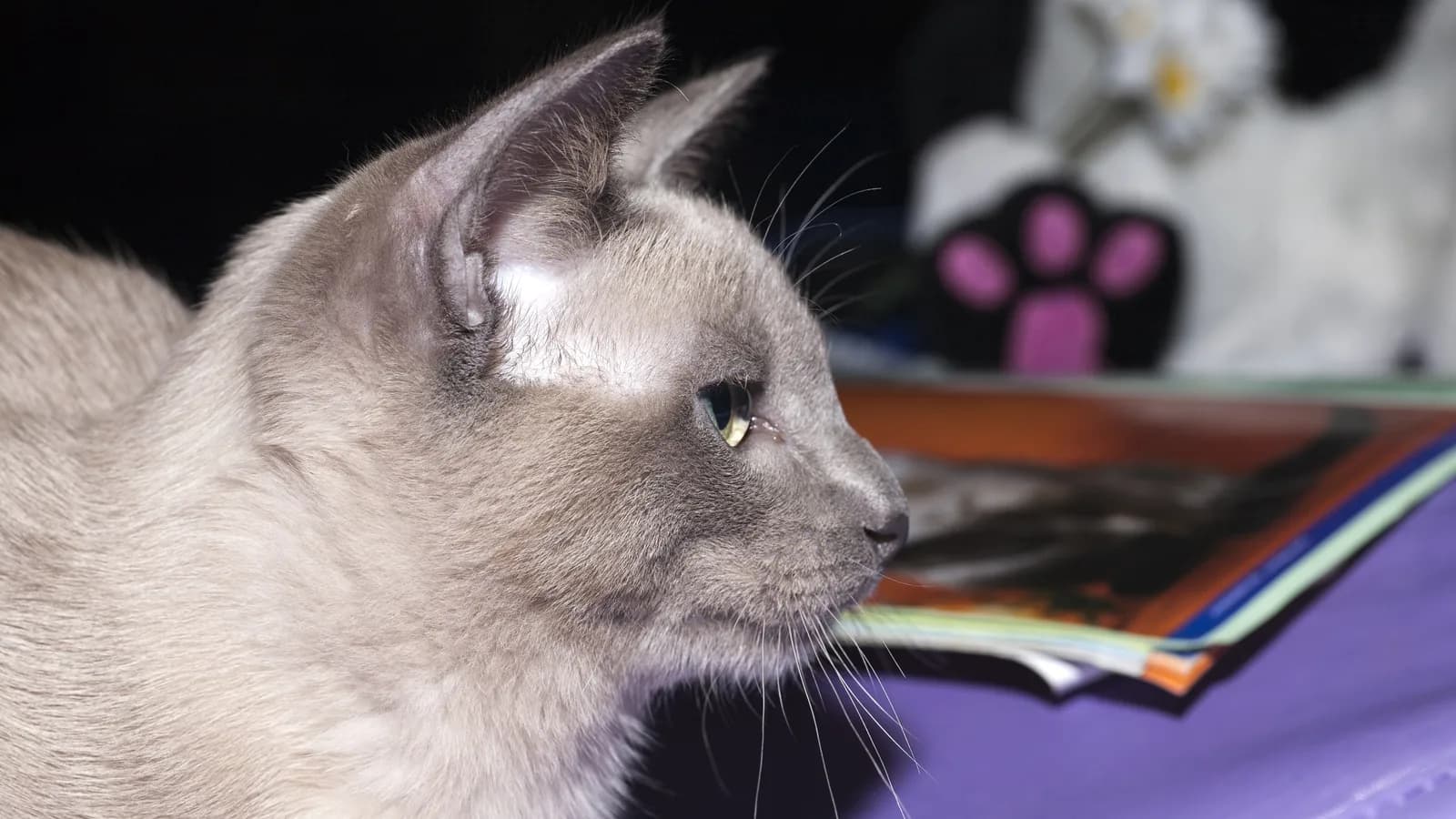
Tonkinese
“The aqua-eyed middle of the fancy's most famous triangle”
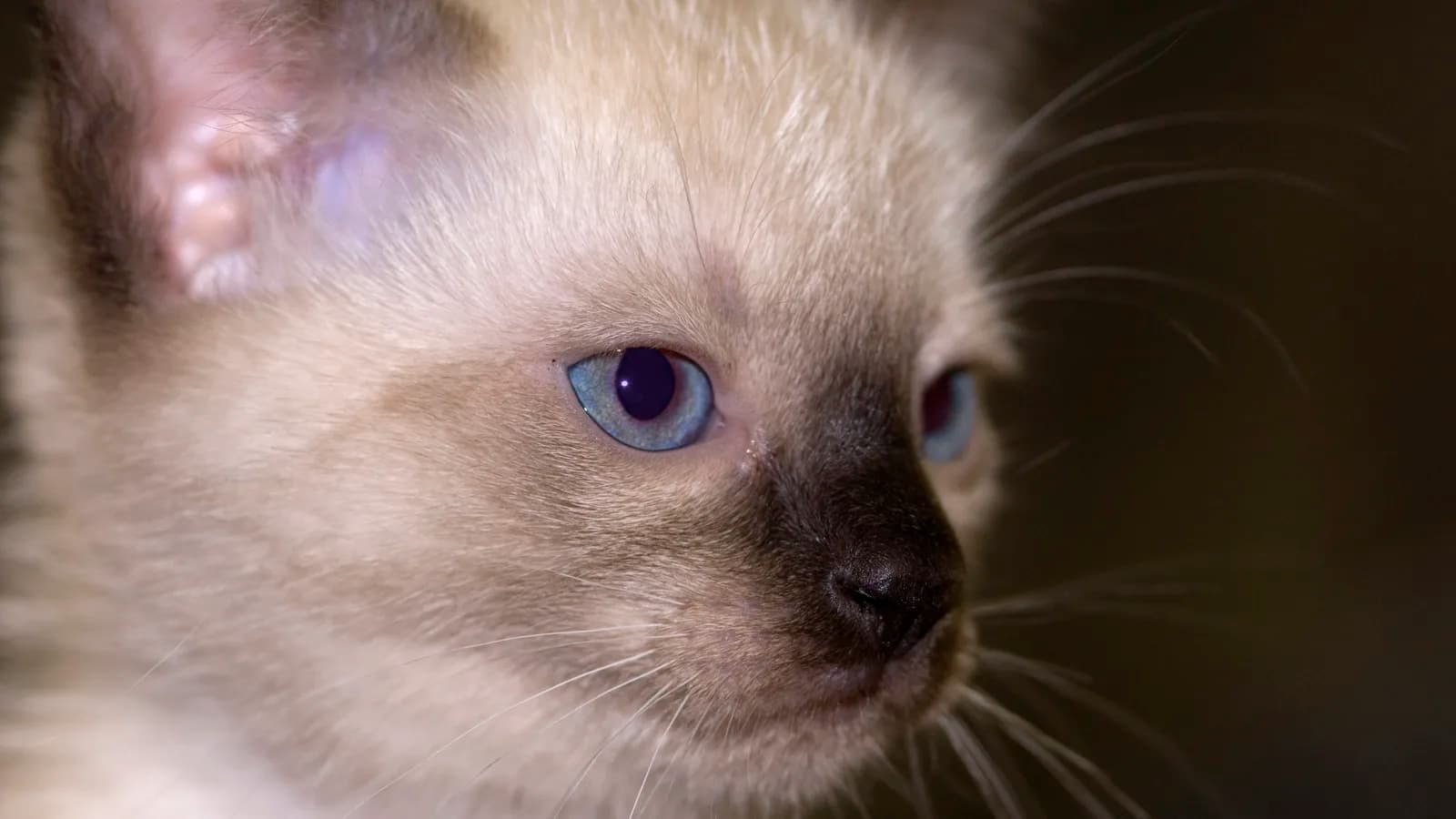
Thai
“The Wichien Maat: the old-style Siamese, formalised as its own breed”
The Korat also appears in
Our criteria-based guides, to compare this breed with the ones most like it.
 Grooming & living with one
Grooming
Minimal: the single silver-tipped coat needs a weekly smoothing hand or soft brush, nothing more, and sheds lightly. The genuinely useful care note is invisible. The breed's dense, low-fat build is flagged by its own UK registry as an anesthesia-dosing consideration, worth mentioning to your vet before any procedure.
Living together
Sociable with its own people, and measured bold with strangers. But the same data shows elevated aggression odds toward both, and its registries describe a noise-averse, attention-expecting cat. Introductions to children and other pets deserve patience and reading the cat. Not the beginner's throw-anything-at-it breed.
 Food & diet
No breed feeding study exists, and one point matters more here than elsewhere. The 2025 atherosclerosis finding has NO dietary-management angle by its own literature (heterozygous carriers are asymptomatic and cannot even be identified by blood lipids: only the DNA test sees them). Feed to body condition on a complete diet, and let the genetics be handled by genetics.
 Should you insure a Korat?
Our sources list several predispositions in the Korat: GM1 and GM2 gangliosidosis (the founding story), LDLR atherosclerosis (the 2025 chapter), Anesthesia and the low-fat build. A predisposition is not a foregone conclusion, and many of these cats live their whole lives without ever developing anything. It does change the nature of the follow-up, though: you monitor, sometimes for life, and it's that monitoring that weighs on a budget, more than a one-off accident.
One thing to weigh before deciding: this is a cat you will live alongside for well over a decade, and that is the span the real cost is spread across, premiums and care alike. Where a breed has a measured life expectancy that differs from the figure usually quoted, we say so in the lifespan section above rather than repeating the quoted one here.
 Korat cats in our community
This breed is barely covered by free photo libraries: we only found 2 photos we could verify. Your cats are especially welcome here.
No Korat here yet
Got one? Add a photo and yours gets to open this page.
 The vet's take

Veterinary review
Are you a vet?
Your professional read belongs here: every verified practitioner can leave a note, published once our editors have reviewed it.
Sign in and get your license number verified. We check it in the public register, we never ask for or keep a copy of your diploma, and your number is never published.
 Frequently asked questions
+Are Korat cats rare?
Genuinely: CFA's own breeder directory lists zero Korat catteries, Canada's registry lists one, and the breed community's most generous census counts eleven active US breeders. Waiting lists are the normal route in.
+How much does a Korat cost?
Mostly the market declines to say: US and Canadian breeders withhold prices as policy, the UK's one verified live figure is £800, and Australia's one figure is a pre-order. Our price page carries the honest four-market picture.
+What is the difference between a Korat and a Russian Blue?
Single coat versus double, in every registry's own words; the heart-shaped head only the Korat wears; and green eyes on both sides but with an amber cast tolerated only for the Korat. Our comparison page maps the whole grey family, Chartreux and British Blue included.
+How long do Korats live?
Unmeasured: no life-expectancy study covers the breed. GCCF's own page says many reach their late teens and a few pass 20, a registry claim we quote as a claim; 10-15 is the convention band.
+Are Korats aggressive?
The honest answer has two halves: the Finnish survey data measures the Korat among the boldest, most people-seeking breeds AND with elevated aggression odds toward strangers and owners versus most breeds tested. A confident cat that sets terms, best read and respected; the same data gives it the lowest litterbox-problem score of all 26 groups.
+What color are Korat cats?
Exactly one: blue (grey) with silver tipping, every hair silvered at the end, at every registry on earth. Eyes green, amber cast tolerated. A Korat in any other color is not a Korat.
+Why are Korats called good-luck cats?
Thai tradition reads the silver-tipped coat as fortune: Korats were traditionally given in pairs as wedding blessings, never sold, and Si-Sawat-colored cats hold a role in documented rain ceremonies. The tradition is real and documented; we tell it with its scope.
+What health tests should a Korat breeder show me?
Two, by name: GM1/GM2 gangliosidosis status (the screening system running since 1998) and, since 2025, the LDLR atherosclerosis test. Both exist specifically for this breed's lines.
+Do Korats shed?
Very little: a single, close-lying coat with no undercoat, one of the lightest-shedding coats in the fancy. A weekly hand-over covers the grooming.
+Is a Korat a good apartment cat?
Space-wise yes, context-wise it depends: this is a measured high-activity, people-glued cat whose own registries call it noise-averse and poorly suited to long days alone. A quiet apartment with someone home suits it; an empty one does not.
 Community questions
Got a question this page doesn't cover? Ask it: the best ones get published here with their answer.
Sources & references
Data checked against reference sources (TICA and CFA standards, genetics laboratories, veterinary schools).
- TICA: Korat breed
- CFA: Korat breed
- GCCF: Korat breed (the 1998 GM testing story + the 2025 atherosclerosis update)
- UC Davis VGL: Korat GM1 gangliosidosis test
- UC Davis VGL: Korat GM2 gangliosidosis test
- Martin et al. 2008, the Korat/Siamese GM1 mutation defined (Mol Genet Metab)
- Muldoon et al. 1994, the Korat GM2 mutation defined (Am J Pathol)
- Karkamo et al. 2025, LDLR heterozygotes asymptomatic (Res Vet Sci)
- Salonen et al. 2019, breed behaviour differences (Sci Rep)
- Mikkola et al. 2021, feline behavior and personality traits (Animals)
- OMIA: feline GM1 and GM2 variant records (the four distinct GM2 mutations mapped)

Worth keeping a paw on
Pin this profile
To compare later, or to show someone still torn between two breeds. One click and it sits in your board.
Pin it on Pinterest
 Purr or Pass
Still deciding? Find the perfect breed for your home.
A quick quiz that factors in your lifestyle, your kids and your other pets.
Which breed fits my home?Keep exploring
The floor belongs to our members. Keep it kind, links are not allowed, and images go through moderation before anyone else sees them.