

Korat vs Russian Blue: One Coat Apart, Literally
Four grey cats, one shopper's confusion: the single-vs-double coat every registry states, the eye rule that flips direction, and the heart-shaped head only one breed wears.

Published August 21, 2026 5 min read
Contents
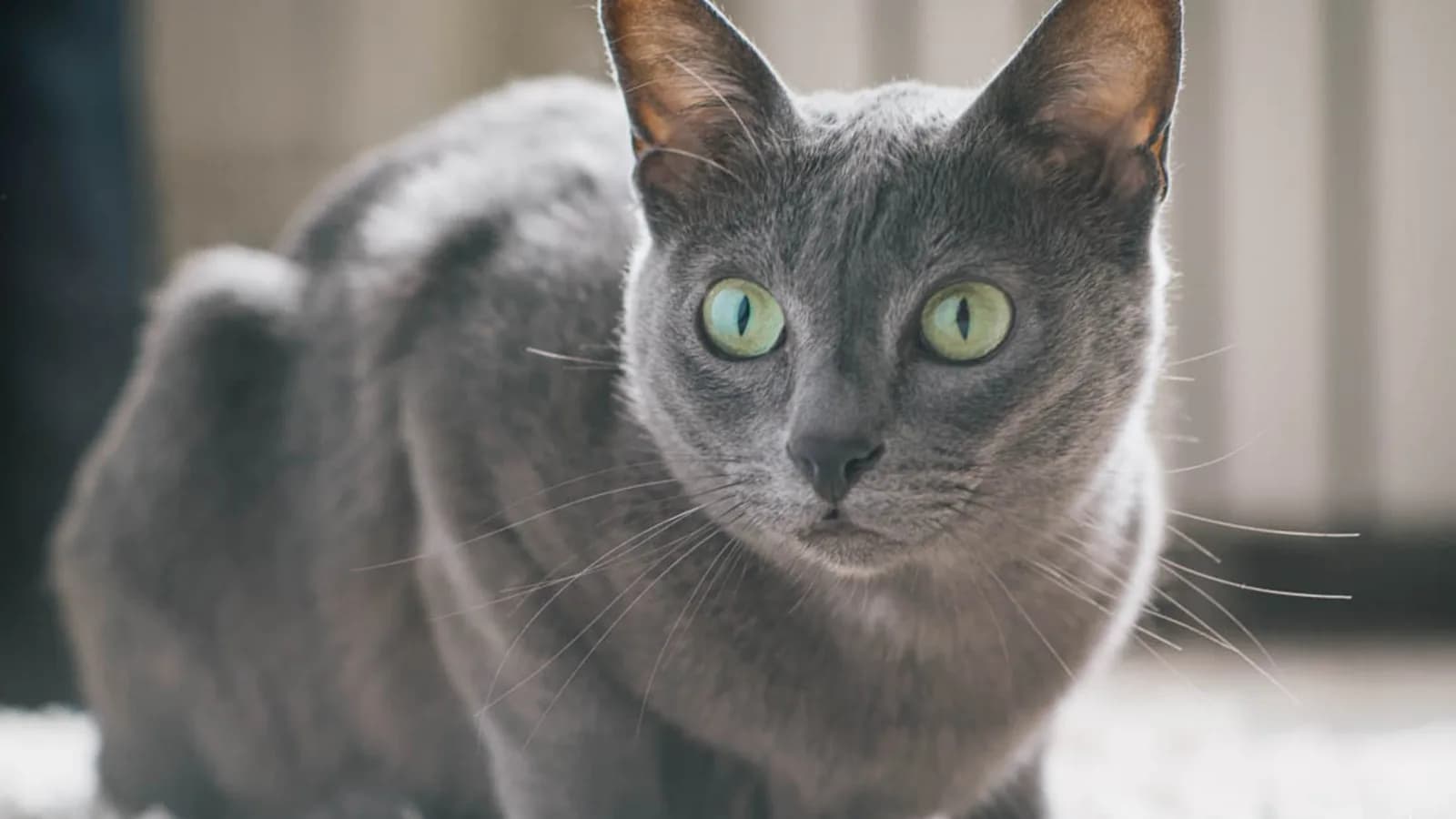
Somewhere right now a shopper is looking at four silvery-grey cats and one word, "blue," and guessing. This page is the anti-guess: the Korat and the Russian Blue differ on exactly the traits every registry writes down, and two of those traits run in directions that surprise people. We read the registries on both sides; here is the field guide.
The coat: the one word every registry agrees on
This is the sharpest contrast in the whole grey-cat family, and it is not a nuance: the Korat wears a SINGLE, close-lying coat, the Russian Blue a DOUBLE coat standing away from the body, and every registry document we read for either breed uses that exact single-or-double vocabulary on its side. Run a hand against the grain: the Russian Blue's plush springs back, the Korat's lies flat and glossy. One trait, stated by every source, and you can check it in a stroke.
Eyes: green on both sides, with one leniency
Both breeds ask for green eyes, and the difference is in the fine print: the Korat's standards tolerate an amber cast, a leniency written into every Korat document we read; the Russian Blue's standard is strict green, no tolerance clause. A grey cat with amber-leaning eyes can still be a standard Korat; on the Russian Blue side that latitude does not exist.
The head: the Korat's unshared marker
Every Korat registry, plus 's own three-breed comparison article, describes the heart-shaped head, the breed's single most distinctive and most redundantly sourced marker, formed by the curve of the skull and the line down to the chin. No other grey breed's standard describes anything like it. Size will not help you instead: the two breeds' weight bands genuinely overlap, and no honest page sells you a size test.
What the registries do NOT say
Three absences worth as much as the contrasts. No registry document anywhere states an outcross or breeding relationship between the Korat and any of the grey look-alikes: both breeds are closed books (unlike the Russian Blue's genuine, documented relationship with the Nebelung). 's own "Similar Breeds" field for the Korat names the Khaomanee, its Thai compatriot, not one single "blue cat": the grey-cat confusion is a shopper phenomenon, never a registry-curated family. And the Korat's flagship health story, the GM1/GM2 DNA-screening program running since 1998, has no Russian Blue equivalent: it is the Korat's own history, and a Korat breeder can be asked for that paperwork by name.
The other two greys, quickly and precisely
Chartreux: the one pairing where the eye rule flips completely. The Chartreux demands gold-to-copper eyes and DISQUALIFIES green; the Korat demands green. A mutual, opposite-direction disqualification: each breed's correct eye color would end the other's show career. The Chartreux also runs meaningfully heavier, wears a double, slightly woolly coat, and is the one grey where weight is a real axis.
British Blue: not a dedicated breed at all, by 's own history sentence, but the blue color variety of the British Shorthair, with gold-to-copper eyes and a coat its own standard explicitly rejects being double: a THIRD coat category. It is also the biggest cat in this line-up by a wide margin, males reaching 17 lb. CFA's own judge-authored three-breed comparison ("Got the Blues?") deliberately excludes it because the British Shorthair is not exclusively blue; we respect that framing rather than flattening four unequal things into one table of equals.
The grey family on one card
| Korat | Russian Blue | Chartreux | British Blue | |
|---|---|---|---|---|
| Coat | SINGLE, close-lying | DOUBLE, stand-away | Double, woolly | Dense, explicitly not double |
| Eyes | Green, amber tolerated | Strict green | Gold-to-copper (green disqualifies) | Gold-to-copper |
| Head | Heart-shaped: the unshared marker | Wedge | Broad, smiling look | Round |
| Size | Overlapping bands | Overlapping bands | Meaningfully heavier | Heaviest: males to 17 lb |
| Status | Own breed, closed | Own breed, closed | Own breed | A color of the British Shorthair |
 The vet's take
Veterinary review
Are you a vet?
Your professional read belongs here: every verified practitioner can leave a note, published once our editors have reviewed it.
Sign in and get your license number verified. We check it in the public register, we never ask for or keep a copy of your diploma, and your number is never published.
Frequently asked questions
What is the difference between a Korat and a Russian Blue?
The coat, first and checkably: single and close-lying on the Korat, double and stand-away on the Russian Blue, in every registry's own words. Then the Korat's heart-shaped head, which no other grey breed's standard describes, and the eye fine print: both green, but only the Korat tolerates an amber cast.
Are Korats and Russian Blues related?
No registry documents any breeding relationship between them, and both breeds are closed to outcrossing. The resemblance is color, not kinship; TICA's own similar-breeds field for the Korat names the Khaomanee instead.
Which is bigger, a Korat or a Russian Blue?
Neither, reliably: the weight bands overlap. No judged standard scores a Korat weight, and the registries' own consumer pages converge on 6-10 lb (2.7-4.5 kg), squarely inside Russian Blue territory. If size is deciding your grey cat, the genuinely heavier options are the Chartreux and above all the British Blue.
How do I tell a Korat from a Chartreux?
Look at the eyes: green (Korat) versus gold-to-copper (Chartreux), and each breed disqualifies the other's color. The Chartreux is also heavier with a woolly double coat.
Is a British Blue the same as a Russian Blue?
No: the British Blue is the blue color of the British Shorthair, a much heavier, copper-eyed, single-categoried breed. The Russian Blue is its own breed, green-eyed and double-coated.
 Community questions
Got a question this page doesn't cover? Ask it: the best ones get published here with their answer.
This is information, not veterinary advice, and it cannot tell you what is wrong with your cat. Our rule is a simple one: if something is wrong with your cat, call your vet, and call an emergency clinic if it is out of hours. Nothing you read here is a reason to wait.
Medical information applies to every reader. Prices, legal duties and common practice do not: unless stated otherwise, they are given for the United States, and they differ in the UK, Canada and Australia, and often between states or provinces. Check with your own vet and your own local authority.
Our sources

Worth keeping a paw on
Pin this guide
So you can find it the day you need it, and share it with someone whose cat does the same thing. One click and it sits in your board.
Pin it on Pinterest
 Purr or Pass
The cat newsletter
Our verified guides, no spam. Unsubscribe in one click.
More Korat guides
The Korat profile →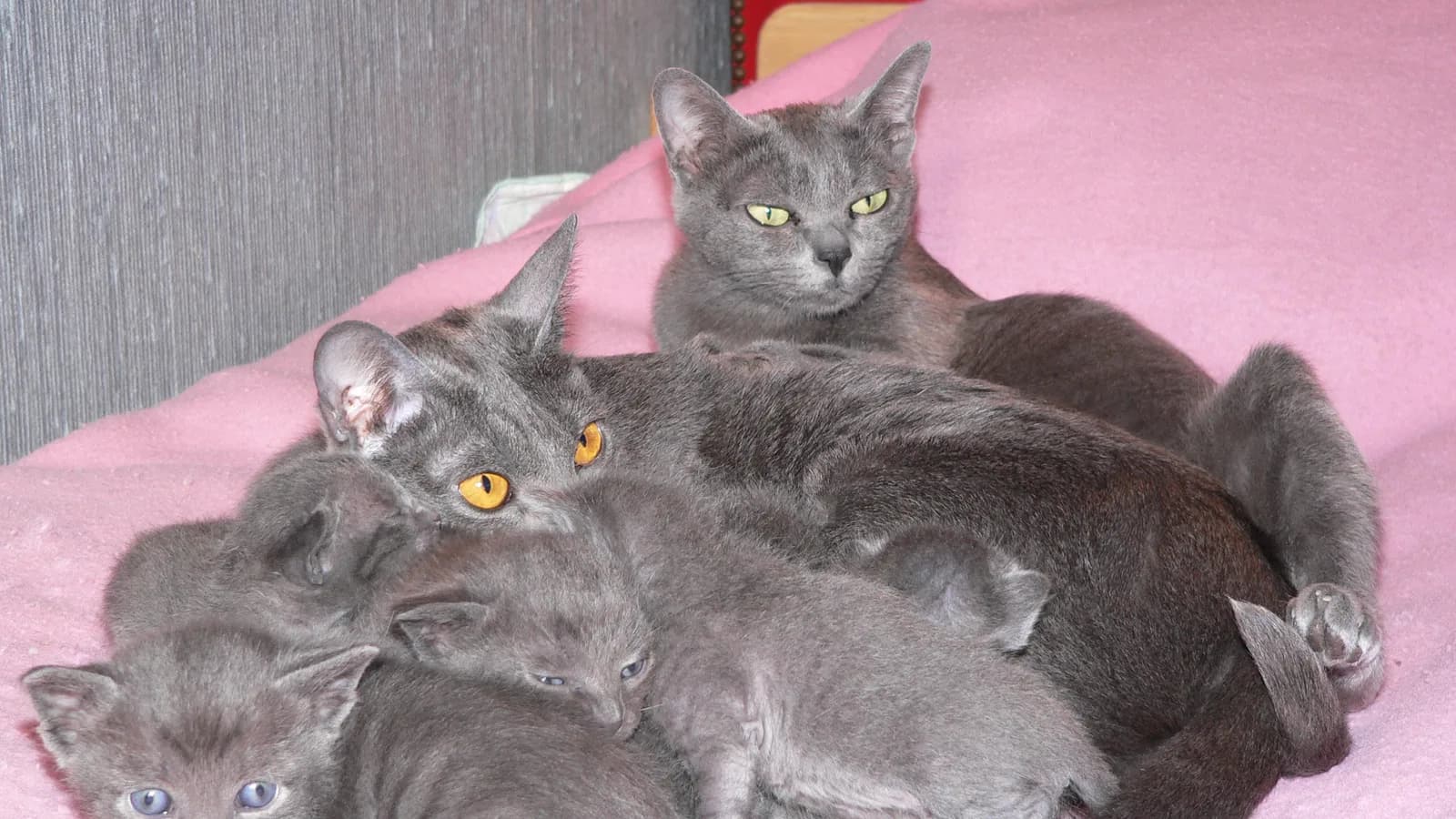
Korat guide
Korat Cat Price: The Breed That Barely Has a Market
The Korat market measured honestly: US and Canadian breeders who withhold every price, one live UK figure, one Australian pre-order, and the thinnest breeder census we have ever counted.
Read
Korat guide
Korat Mix: Is My Grey Cat Part Korat?
The honest identification guide: the heart-shaped head, the silver-tipped single coat, the green eyes with amber tolerated, and why no DNA test can settle it.
Read
The floor belongs to our members. Keep it kind, links are not allowed, and images go through moderation before anyone else sees them.