


Cat breeds by color
Gray Cats: The Breeds, the Gene, and Why the Fancy Says Blue
Walk into any shelter and the gray cat is there: sleek, silvery, and wearing the color the cat fancy stubbornly calls BLUE. Gray is one of the most beloved cat colors. Four entire breeds wear nothing else, and one gene explains the whole thing.
This page is the gray map. The dilution gene. The four all-gray breeds, and how to tell them apart at a glance. And the question half our readers arrive with: is my gray cat secretly a Russian Blue? (Honest answer below, and it starts with "probably not.")
 By Nora · The storyteller
Contents
Breeds worth knowing
Tap a breed for the full profile: temperament, health, price and coat colors, all fact-checked.
Why gray cats are called blue
Genetically, every gray cat is a black cat with the saturation turned down. The dilution gene, , changes how pigment granules are packed into each hair. Two copies, and black pigment reads as the soft blue-gray the fancy has called "blue" since the earliest cat shows. That is the whole mechanism. Gray is diluted black, exactly as cream is diluted orange, and the show-hall word for it is blue, which is why the breed names read Russian BLUE and British BLUE while your eyes say gray.
Because dilution is recessive, two gray parents breed true, which is part of why all-gray breeds were easy to found: the color, once fixed, stays.
What are gray cats called?
Blue, in the fancy's vocabulary: a gray cat is a blue cat on every and show bench. Genetically it is dilute black, made by the dilution gene.
The four famous all-gray breeds, told apart in one look
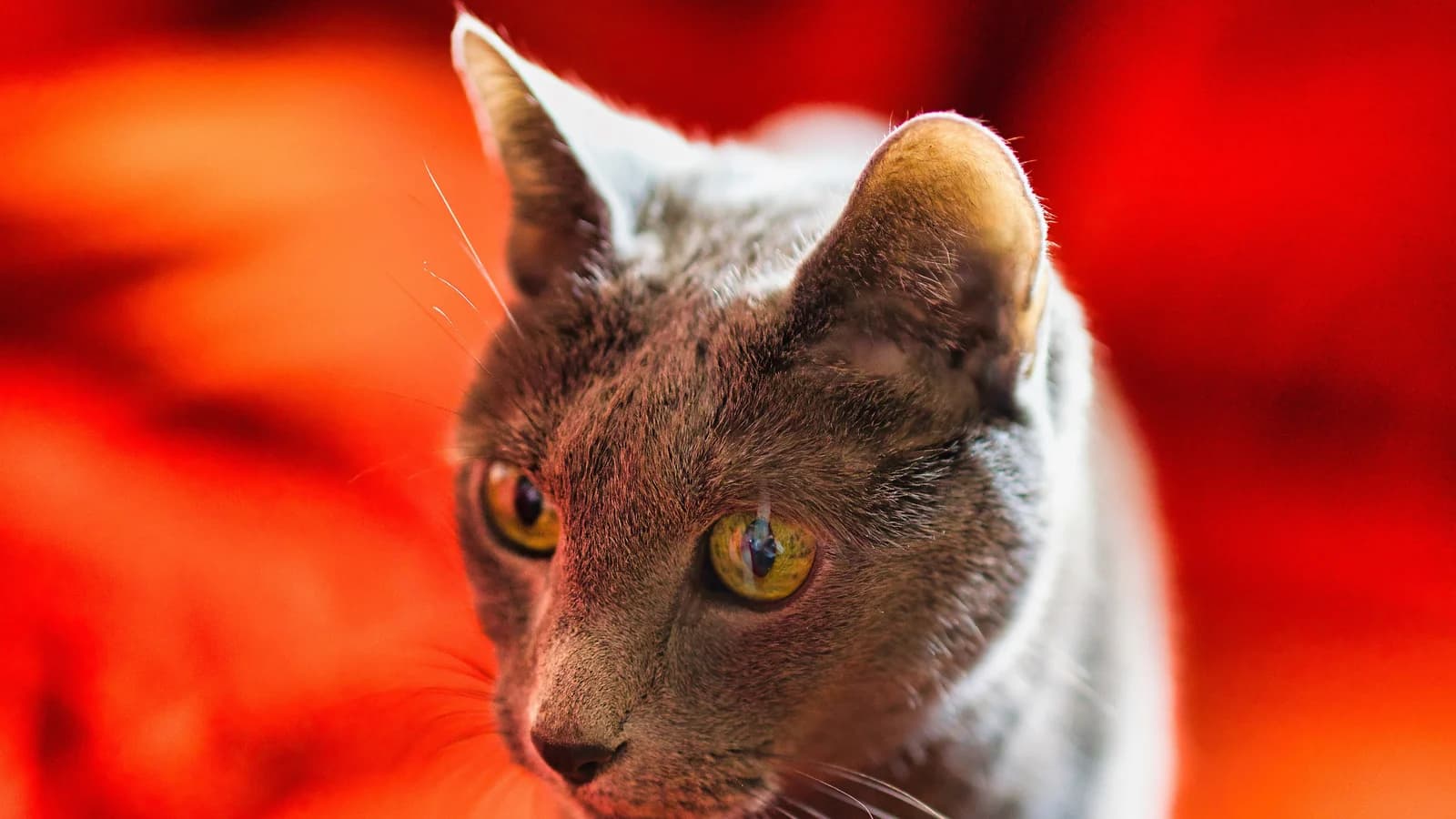
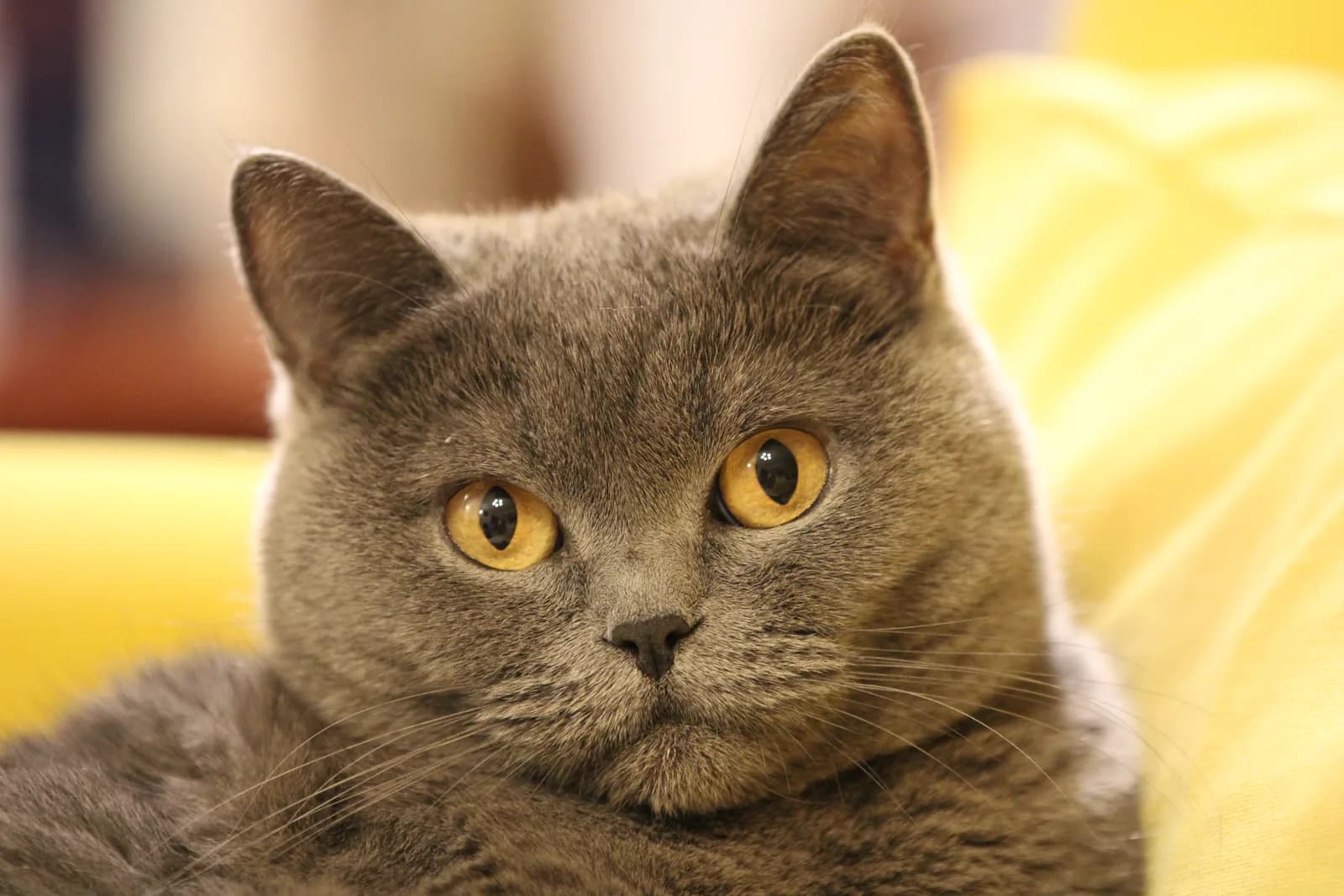
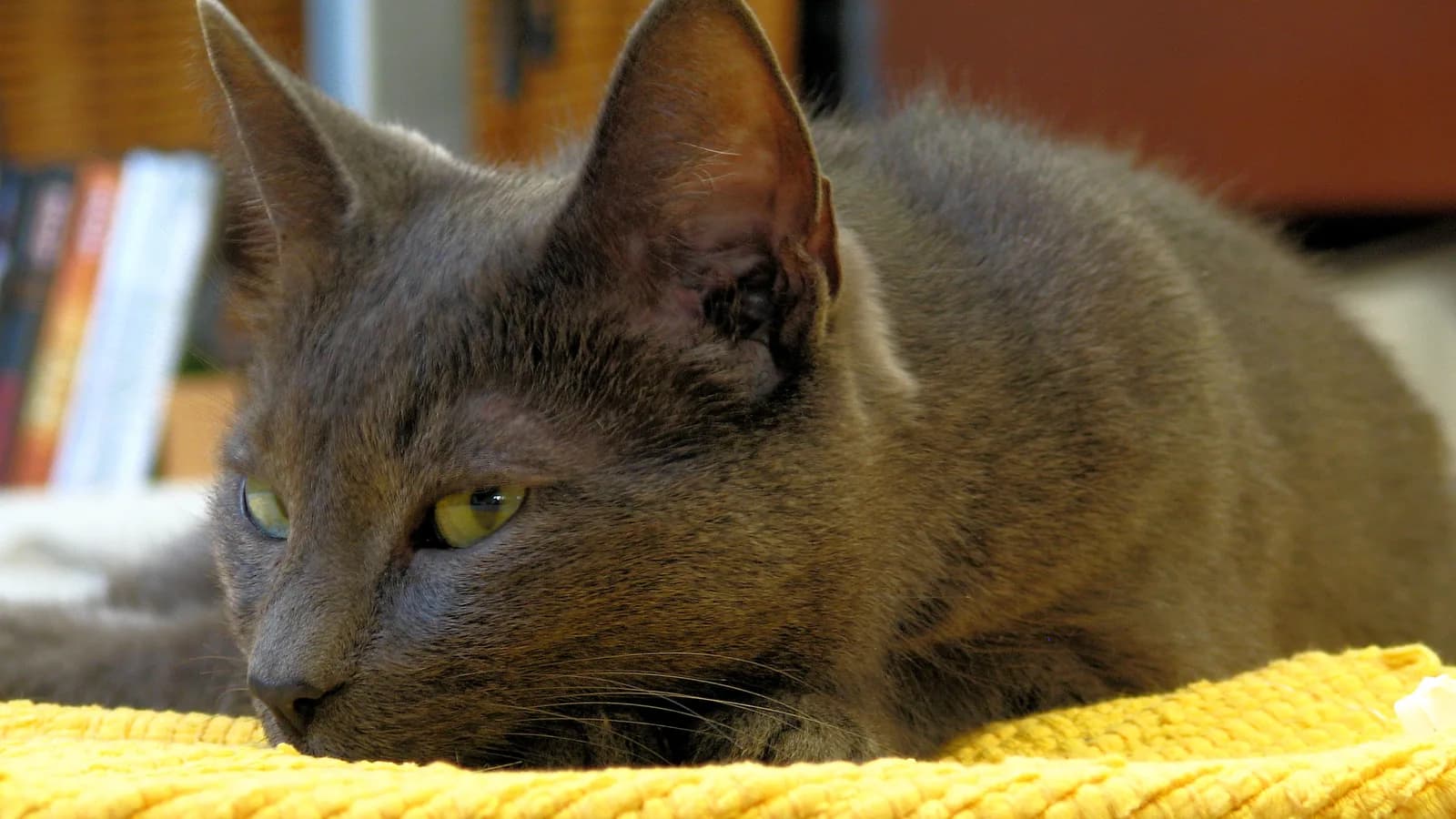
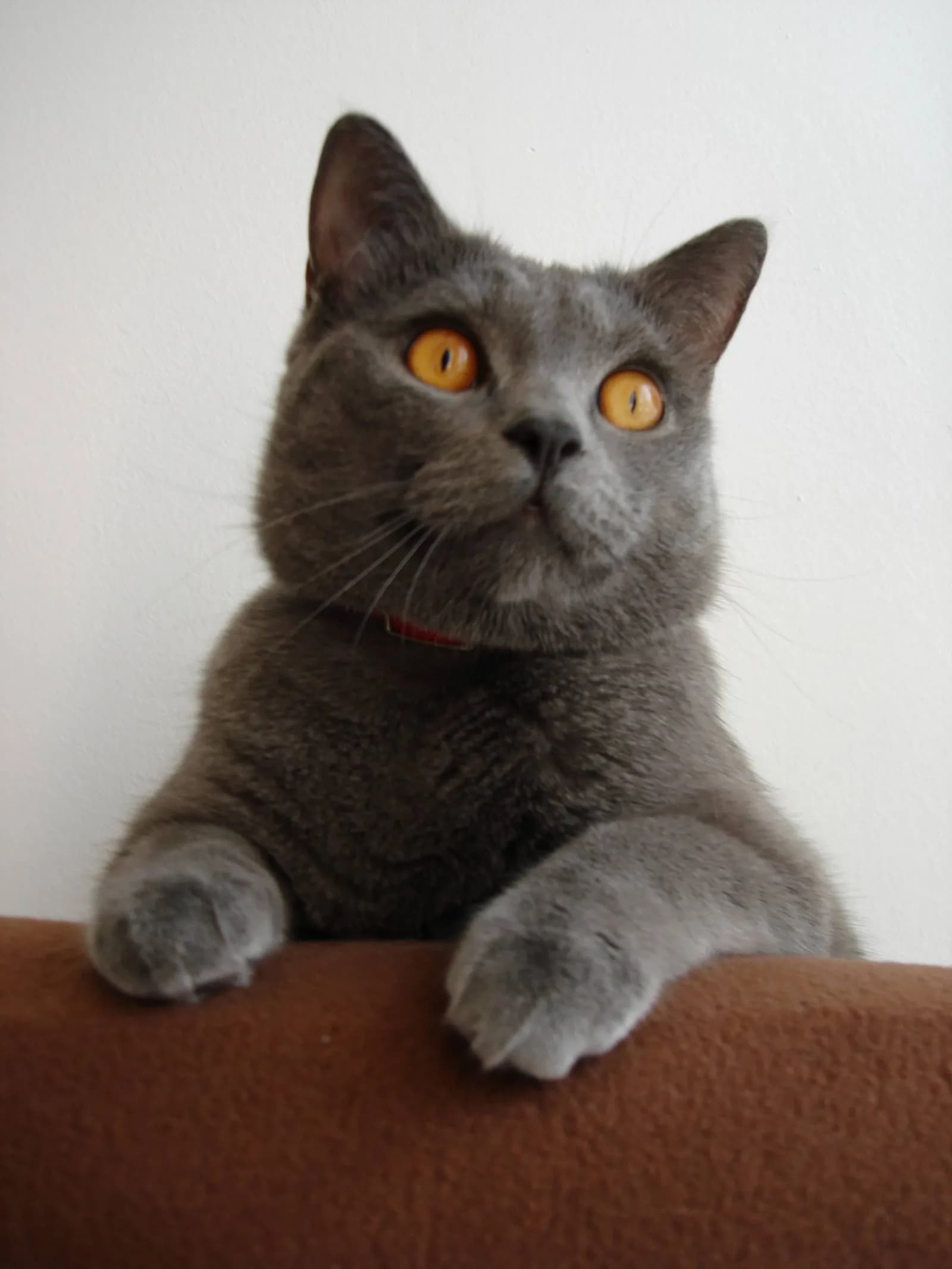
Four breeds wear gray and nothing else (or nearly), and our full comparison pages map them in detail. The one-glance version: check the EYES first, then the coat. The Russian Blue is green-eyed, with a silvery DOUBLE coat that stands off the body. The Chartreux is copper-eyed with a woolly coat: France's smiling blue cat.
The Korat is green-eyed (amber cast tolerated), with a single flat coat, silver-tipped, on a heart-shaped head. And the British Blue, the blue version of the British Shorthair, is the copper-eyed heavyweight whose plush coat is officially neither woolly nor double. Two compare pages carry the full field guide: Korat vs Russian Blue and Chartreux vs Russian Blue.
| Breed | Eyes | Coat | The tell |
|---|---|---|---|
| Russian Blue | Green, strict | Silvery double, stands off the body | The plush that springs back |
| Chartreux | Gold to copper | Woolly | The smile, and the copper glow |
| Korat | Green (amber tolerated) | Single, flat, silver-tipped | The heart-shaped head |
| British Blue | Gold to copper | Dense, neither woolly nor double | The roundest, heaviest of the four |
Is my gray cat a Russian Blue?
Probably not, and the arithmetic is friendly about it. Purebred Russian Blues are uncommon, their studbooks are closed, and gray is one of the most common colors in the general cat population, because the dilution gene runs everywhere. A gray domestic shorthair with greenish eyes is a beautiful, ordinary, wonderful cat. A Russian Blue is a with paperwork. The visual tells that suggest actual RB ancestry: the strict green eyes, the genuinely double silver-tipped coat, and the fine-boned frame. Even all three together only make a maybe. No DNA test identifies Russian Blue ancestry. Our Russian Blue profile carries the full picture.
Two more honest notes while we are at it. Gray cats are not rare (the question arrives daily; the answer is that dilute black is everywhere). And gray tabbies split evenly between the sexes: unlike orange, nothing about gray is sex-linked.
Beyond the big four: where else gray appears
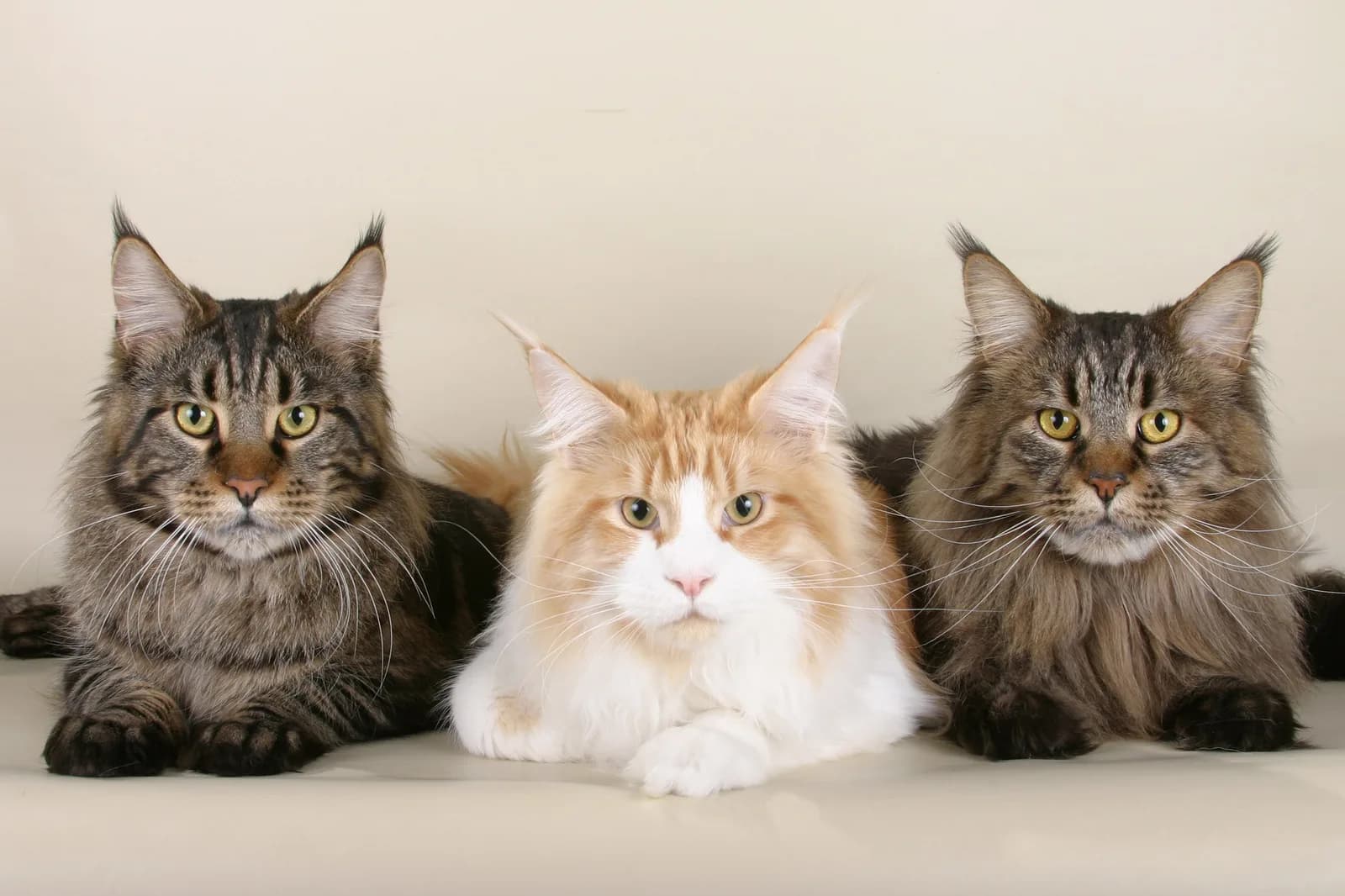
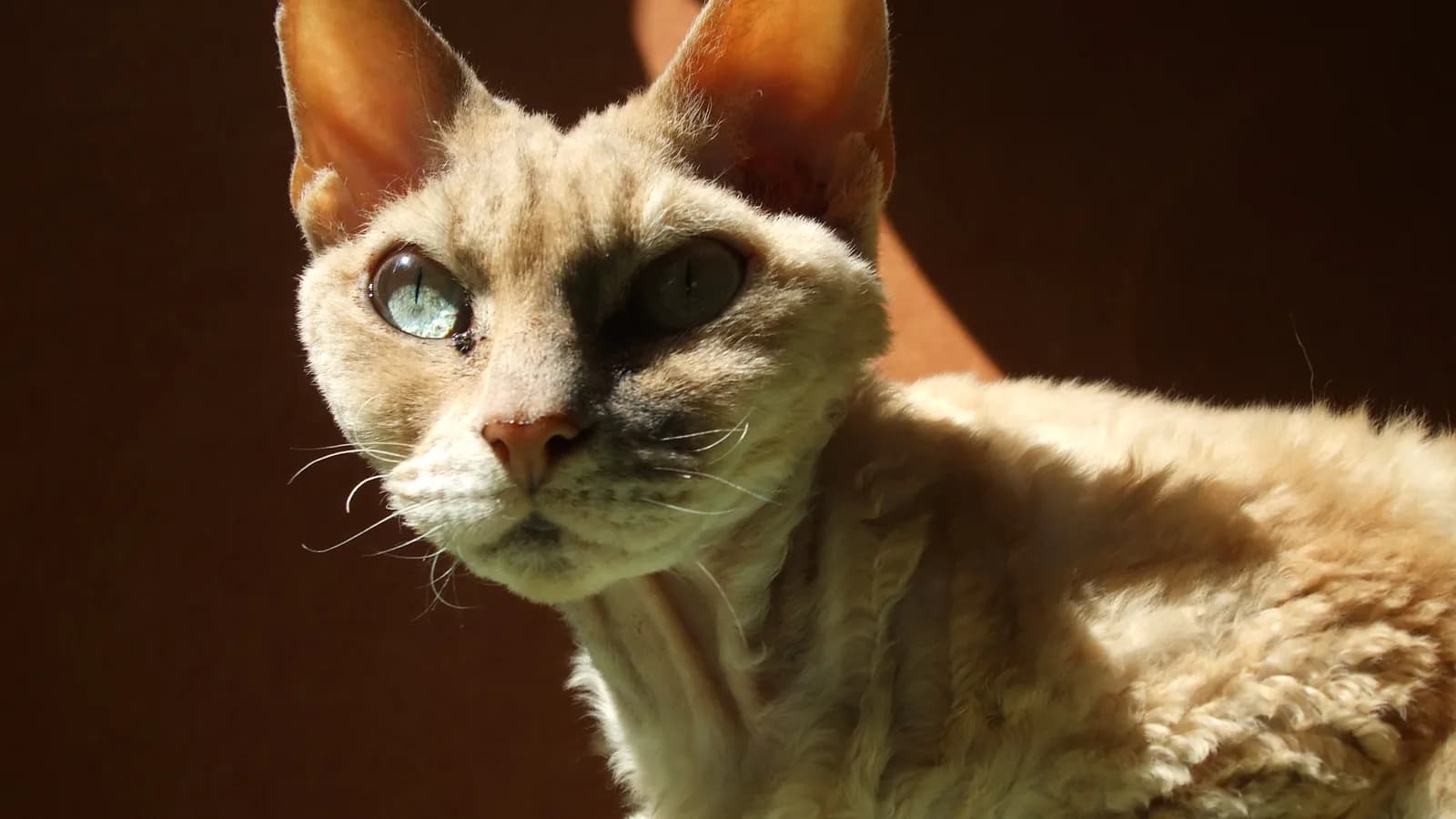
Almost everywhere. Blue is a named class in most breeds' standards: blue Maine Coons, blue Persians, blue Devon Rexes, blue Sphynx, and the Nebelung, the Russian Blue's semi-longhaired relative, which wears the same color in a longer coat. Gray also pairs with white in the bicolor pattern (that page is its own guide) and appears as the ground color of the gray tabby. Solid gray, gray-and-white, gray tabby: same gene underneath, different patterns on top.
Gray is the color the fancy loved so much it built four breeds out of it and renamed it blue for the occasion. If a gray cat runs your home, or shelter, tell us which of the four famous silhouettes she borrows most; the answer is usually 'all of them, depending on the light.'
By Nora · The storytellerFrequently asked questions
What breed is a gray cat?
Usually none: gray (dilute black) is one of the most common colors in the general cat population. The four famous all-gray breeds (Russian Blue, Chartreux, Korat, British Blue) are pedigreed and uncommon; without papers, a gray cat is a domestic shorthair or longhair wearing the fancy's favorite color.
What are gray cats called?
Blue, in cat-fancy vocabulary: pedigrees and show benches write blue where your eyes see gray. The color is genetically diluted black, made by the MLPH dilution gene.
Are gray cats rare?
No: the dilution gene runs throughout the cat population, and gray is among the most common colors at any shelter. The all-gray BREEDS are uncommon; the color is everywhere.
Are all gray cats Russian Blues?
No: purebred Russian Blues are scarce, closed-studbook cats, while gray domestic cats are everywhere. Strict green eyes, a true double coat and a fine frame together make a maybe; papers make a yes. No DNA test settles it.
Are gray tabby cats male or female?
Both, evenly: unlike orange, nothing about gray is sex-linked. A gray tabby's sex is a coin flip.
Do cats go gray with age?
Far less visibly than dogs: cats can develop scattered white hairs with age, usually around the muzzle, but the dramatic silvering of an old dog's face is rare. A cat that seems to be lightening quickly is worth mentioning at a checkup.
What should I name a gray cat?
The classics run silver and smoke: Ash, Misty, Earl Grey, Smokey, Sterling, Blue itself. Our cat name generator can shuffle a few hundred more.
Is there a gray cat with blue eyes?
Rarely as an adult: solid gray usually comes with green through copper eyes. Blue adult eyes on a gray-looking cat usually mean a pointed breed's pale body shading, not a solid gray coat.
Sources & references
Data checked against reference bodies (breed registries, allergy research, veterinary schools).
This page is a starting point. Every cat is an individual: our profiles spell out the tendencies of each breed, sources included.
 Purr or Pass
Which cat breed is right for you?
Take the quiz