

Devon Rex
“The pixie of the cat fancy”
 By Priya · The careful one
Published August 21, 2026Updated August 26, 20268 min read
Contents
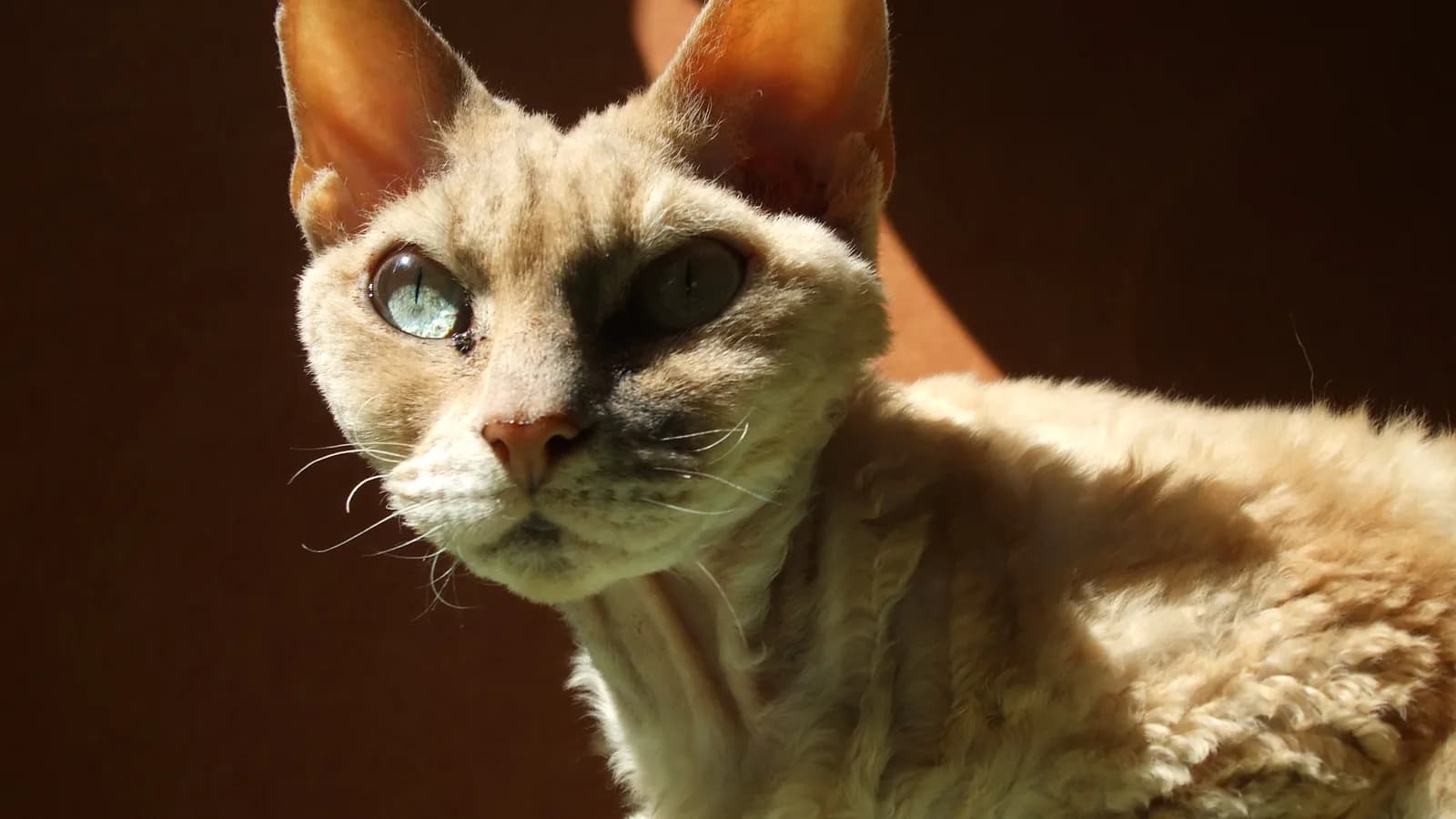
 Devon Rex photos
Real photos, so you can see what the breed actually looks like: coats, ear tufts, ruff and build.
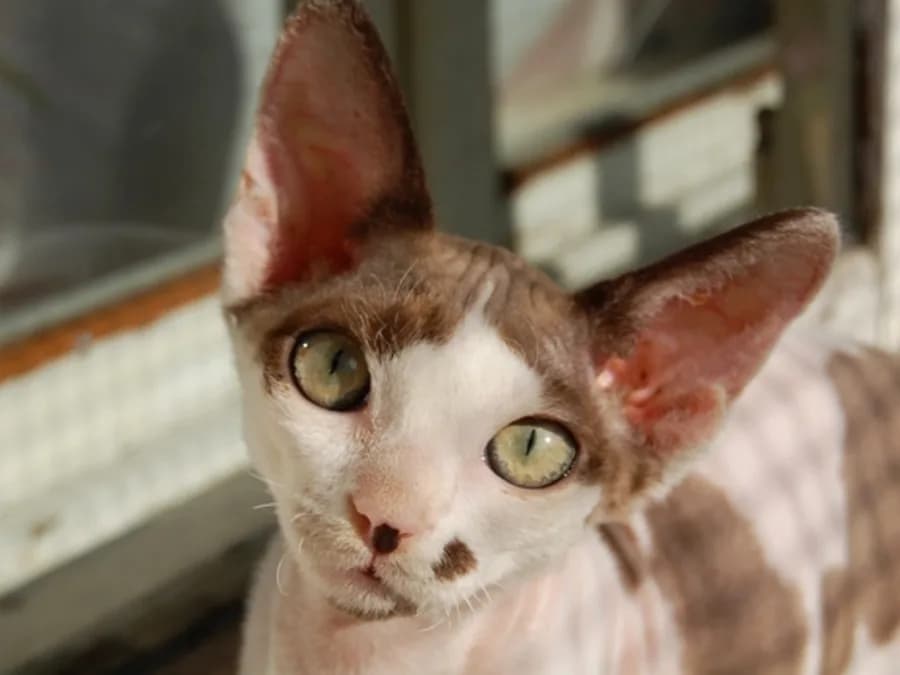
Devon Rex female showing the elfin wedge face
Photo: Anthony Ivanoff · Public domain · via Wikimedia Commons
Got a Devon Rex? Share them with the community. Photos from our members round out this page.
 Vital stats
Origin
Buckfastleigh, Devon, England: every descends from one feral-born tomcat, Kirlee (born 15 July 1959), whose curl proved genetically distinct from the Cornish Rex found ten years earlier
Weight
Female
6-9 lb (2.7-4.1 kg)
Male
6-9 lb (2.7-4.1 kg)
Life expectancy
The Devon Rex is absent from the flagship UK life-expectancy studies by their own sample-size designs, so the big headline numbers do not exist for this breed. What is measured: a 2024 UK analysis found a median age at death of 13.55 years among its 20 Devon Rex. A 2009 Swedish insured-cat study put the breed's death rate BELOW the all-breeds average (337 vs 462 per 10,000 cat-years, 94 deaths). The 9-15 and 14-17+ ranges on pet-content sites are commonly cited estimates. None cites a study, and our band is the span of those claims.
Coats
Black
Black and white
Blue
Cream
Brown tabby
Colourpoint
Color-open: says All, accepts any genetically possible color and pattern, scores color at zero points. Solids, torties, tabbies, bicolours, smokes and points all show legally.
Understanding the coats (and their genetics)Size
No registry judging standard states a weight. TICA's breed introduction and CFA's page independently converge on six to nine pounds (2.7-4.1 kg), males heavier. The largest measured cohort anywhere (1,545 Devon Rex, 2025 echocardiography dataset) puts the median at 3.0 kg (6.6 lb). A slight cat that reads bigger than it weighs, because the ears claim the silhouette.
Popularity (CFA)
No. 5
in the CFA ranking for 2026
Did you know
A white Devon Rex played Pixie in 1978's Superman. The breed's rumored connection to E.T.'s design stays exactly that, rumored: nobody official ever confirmed it, and we keep the hedge.
 Personality
 Affection5/5
 Energy3/5
 Intelligence4/5
 Friendliness5/5
 Independence2/5
 Vocal3/5
 Shedding1/5
Compatibility
 Good with children5/5
 Good with other pets4/5
 Apartment friendly5/5
Editorial ratings on our five-point scale, anchored in the registry descriptions and the measured behaviour studies cited on this profile; individual cats vary, and our members' own ratings below are the counterweight.
Still torn between this breed and another?Compare the Devon Rex trait by trait, or filter every breed by what matters to you. What our members say
What our members say
Nobody has described their Devon Rex here yet. As soon as the first profiles come in, this is where the community averages will show up: temperament, food, lifestyle.
Describe my Devon Rex Pros & cons
Strong points
- Among the most people-seeking breeds ever measured (Finnish owner data)
- Low-shedding wavy coat, easy-care by CFA's own words
- Color-open breed: no color politics, no color premiums
- A validated DNA test exists for the breed's defining condition (COLQ)
- Slight, apartment-perfect size: measured median 3.0 kg
Things to consider
- The COLQ myopathy question is mandatory at purchase: both parents' results
- High incidence of blood type B: breeders must manage neonatal risk
- Fragile coat and whiskers: gentle grooming, no hard brushes
- Documented skin-yeast findings: greasy skin is a vet conversation
- A people-cat that does poorly with empty houses
 Is a Devon Rex right for you?
Someone home enough for a shoulder cat: the measured people-seeking score is the breed's loudest fact. Suits apartments, families and multi-pet homes; suits nobody looking for a decorative loner.
Is the Devon Rex right for YOUR home?
Answer a few questions and we'll email you your personalized result.
Take the quiz · 2 min Getting to know the Devon Rex
The whole story starts with one cat. Kirlee, born 15 July 1959 near a Buckfastleigh tin mine, looked like a second Cornish Rex until the test matings said otherwise: bred to Cornish Rex descendants, every kitten came out straight-coated. Two counties, two curls, two different genes. The Devon curl is KRT71 (identified 2010), the Cornish is LPAR6 (2013), and the look-alike breeds are genetic strangers.
recognized the Devon Rex in 1967. followed with championship in May 1983, and the breed is now CFA's most popular shorthair five registration years running. The paperwork is unusually open. Every registry admits essentially every color (GCCF scores color at zero points), and our colors hub carries the five quotes. The black page takes apart the internet's favorite rare-color myth with CFA's own show results.
What the registries disagree on is outcrossing: five registries, five policies, including 's reasoned, named exclusion of Sphynx ancestry, the sharpest such rule we have found anywhere, explained on our breeders page. The health file is specific, not vague. One founder means founder genetics.
The breed's defining myopathy traces to Kirlee's own relatives and shares its exact COLQ mutation with the Sphynx; a validated DNA test exists, and the buyer's question is both parents' results. Add the blood-type B file, a startling measured figure for breeders, and a skin-over-coat care doctrine, and you have the profile below. The price page carries four markets of named catteries, and the hypoallergenic page answers the breed's most-asked question with the registries' own no.
 Health: what to watch for
A few predispositions are well documented. The good news: they can be screened for or avoided by choosing a reputable breeder and keeping an eye on the right signals.
This is information, not veterinary advice, and it cannot tell you what is wrong with your cat. Our rule is a simple one: if something is wrong with your cat, call your vet, and call an emergency clinic if it is out of hours. Nothing you read here is a reason to wait.
Congenital myasthenic syndrome (COLQ hereditary myopathy)
HIGHThe breed's defining condition, recognized since 1974 and traced to relatives of Kirlee himself. A founder-effect COLQ mutation, the SAME specific mutation the Sphynx carries (most likely originating in the Devon Rex), causing muscle weakness with a characteristic dropped head-and-neck posture. Anticholinesterase drugs worsen it, which is a fact for a vet's differential, never home guidance.
Symptoms to spot
Weakness after exertion, a dropped head posture, effortful swallowing; any of these is a vet visit
How common
No population rate published; a founder-effect recessive managed by DNA testing
Screening & prevention
Ask for BOTH parents' COLQ results before purchase
Genetic test
Yes: validated COLQ DNA test (UC Davis VGL, Sphynx and Devon Rex CMS)
Blood type B incompatibility (neonatal isoerythrolysis)
MODERATECFA's own page calls genetic testing essential for breeders, because of the high incidence of blood type B in the gene pool. A type A kitten born to a type B queen risks fatal neonatal isoerythrolysis from the mother's own colostrum, unless the breeder manages the litter. A breeding-management fact every buyer can use as a breeder-quality question.
Symptoms to spot
A breeder-side risk in a kitten's first days, not an owner-observable adult condition
How common
No Devon-Rex-only frequency published; stated as high-incidence by CFA
Screening & prevention
Ask the breeder for the parents' blood types and their plan
Genetic test
Yes: blood typing (AB system) is routine
Dystocia (difficult birth)
MODERATEA 2026 UK emergency-care study found the Devon Rex carried the highest odds of dystocia of any breed measured: OR 10.38 (CI 4.61-23.37) against crossbred queens. No source explains the mechanism, and the breed's own smaller-than-average litters rule out the obvious guess. We print the number and the open question. Relevant to breeders, not to neutered pets.
Symptoms to spot
A breeding concern: prolonged unproductive labour in a queen is an emergency vet call
How common
OR 10.38 vs crossbred queens (UK emergency caseload, abstract-stated)
Screening & prevention
Breeding queens deserve a vet birth plan; pet owners can file this under why kittens cost what they do
Genetic test
No
Skin and yeast findings (Malassezia, papular dermatitis)
MODERATEMultiple studies document higher Malassezia yeast carriage in Devon Rex than in ordinary shorthairs, with a treatable seborrhoeic dermatitis (prescription antifungal, vet-dosed, never over-the-counter). A breed-named papular dermatitis also exists. Its real clinical warning is that it can mimic ringworm, and steroids applied to actual ringworm make things worse: a skin rash on this breed earns a diagnosis before any treatment.
Symptoms to spot
Greasy or dirty-looking skin folds and nail beds, recurrent rashes; both are vet conversations
How common
Carriage documented across five studies; no single prevalence figure generalises
Screening & prevention
Skin check at every vet visit; never treat a rash at home first
Genetic test
No
Patellar luxation and limb findings
LOWDocumented in the breed since a 1985 case series, alongside a handful of mechanistically distinct limb reports (they are separate conditions, not one joint problem). No prevalence is measured. The practical translation is simply that a skipping gait or sudden lameness is a vet visit. And one absence worth stating: no established HCM predisposition exists for this breed in any source we reached, and no DNA test screens Devon Rex for HCM.
Symptoms to spot
Intermittent skipping gait, sudden lameness, reluctance to jump
How common
Case-series level only; no rate published
Screening & prevention
Orthopedic check at routine vet visits
Genetic test
No
Go deeper on health
Prevention, warning symptoms, costs and insurance: our guides, researched and sourced.
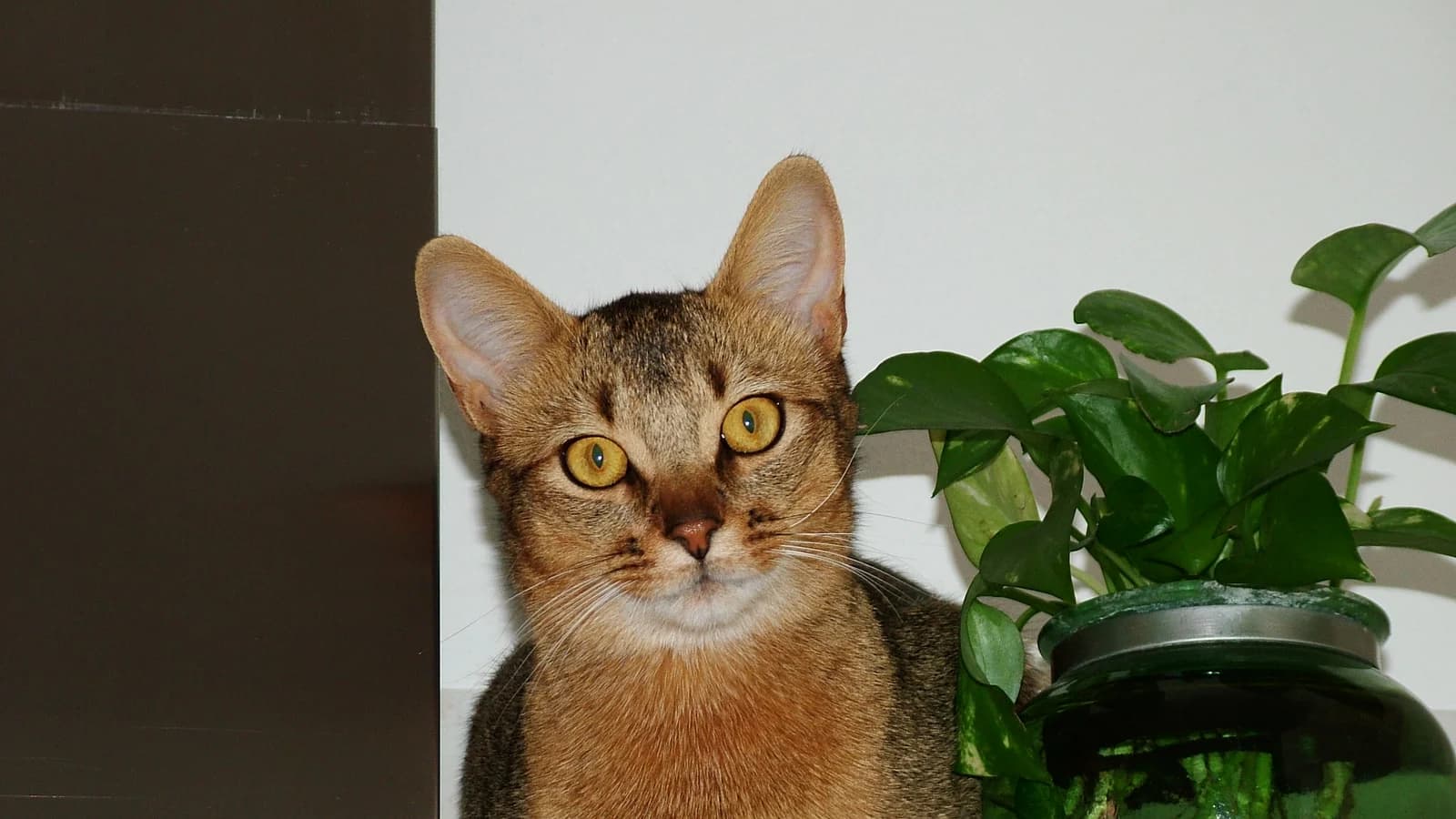
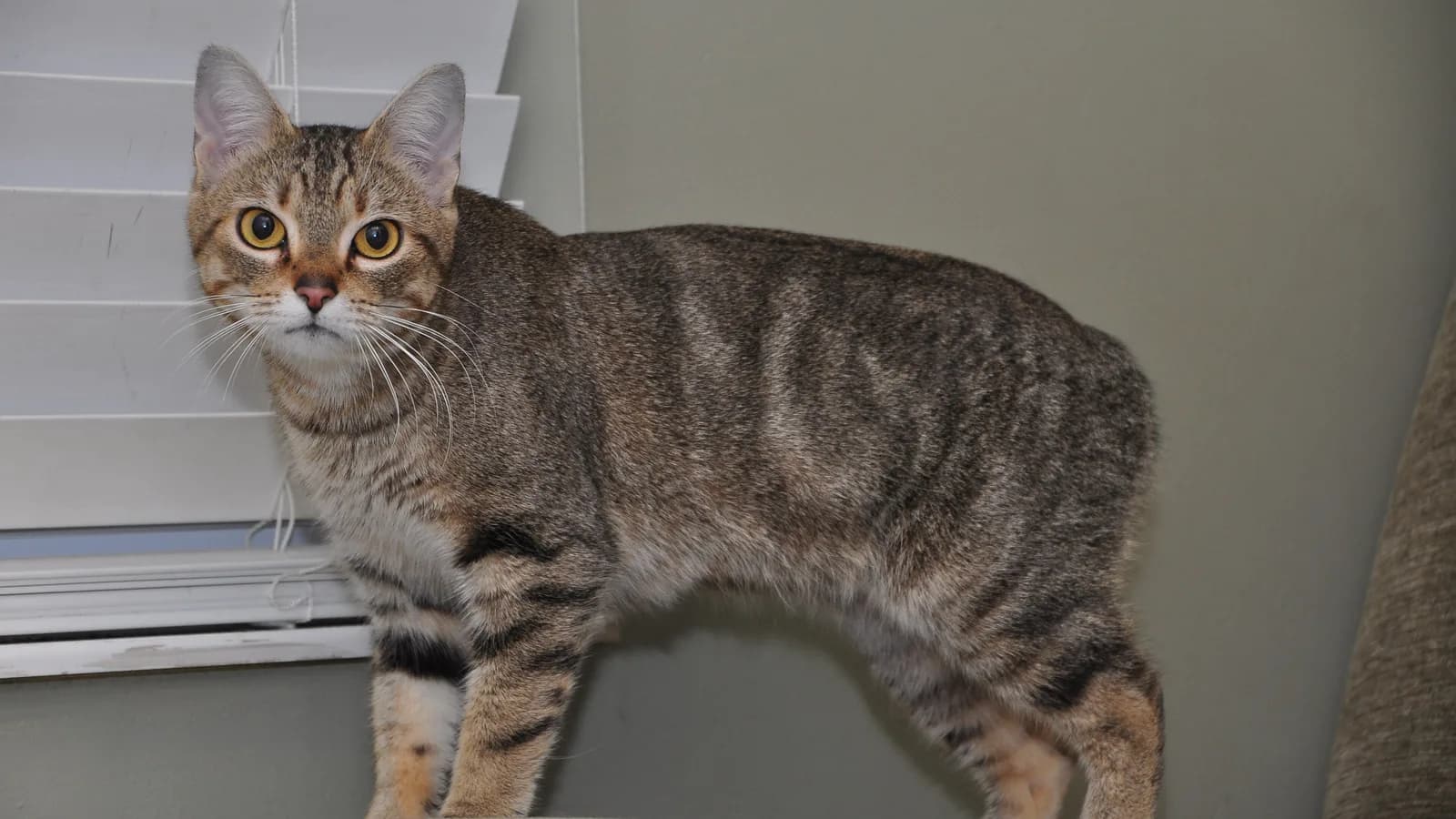
The Devon Rex also appears in
Our criteria-based guides, to compare this breed with the ones most like it.
 Grooming & living with one
Grooming
Gentle is the whole doctrine. The wavy KRT71 coat and its whiskers are fragile, so soft brushes or a cloth, never hard tools (bare patches are a texture fault, and over-grooming causes them). Low shedding is real ('s own words), though manages to say both sheds-less and sheds-like-any-cat in different tabs, a self-contradiction we name rather than smooth over. Skin beats coat in the care hierarchy. This breed carries documented Malassezia yeast findings, so greasy or dirty-looking skin folds and nail beds earn a vet visit, not a harder bath.
Living together
Excellent with children, other cats and cat-friendly dogs: the boldness and people-seeking scores both point the same way. The cost of that sociability is a cat that needs company. Long empty days are the wrong deal.
 Food & diet
No breed-specific feeding study exists, and the elevated metabolism claim some breeders repeat is unsupported by any source we reached. Feed the measured cat (median 3.0 kg), with portions to condition, not to folklore. The one real feeding note is dental: check crowding at vet visits, and let weight, not the wave in the coat, drive the bowl.
 Price & budget
$2,700 to 3,700
Price of a kitten from a registered breeder, in the United States
This price reflects the quality of the breeding program: parents' health tests, registry pedigree, socialization. A very low price should raise a red flag. The real cost, though, plays out over the years.
Find a verified Devon Rex breederKitten price, by market
United States
$2,700 to 3,700
United Kingdom
£1,000 to 1,800
live Pets4Homes cluster (full sample £250-1,998, 24 of 25 listings read 17/08/2026)
Canada
CA$1,000 to 2,850
live Kijiji cluster, the only readable totals: all four named catteries publish deposits, never totals
Australia
A$1,450 to 2,800
two named catteries' own flat GST-inclusive prices, a genuine two-lane spread
Each figure is that country's real market price, researched separately, not a conversion of the others. The smaller line is only there so you can gauge one against your own money: European Central Bank reference rates of 2026-09-18, refreshed daily.
Work out your food budget
Type of food
Estimated monthly budget
$11
≈ 2.0 oz (57 g) per day
A ballpark figure, food only, using the same arithmetic as our portion tool (resting energy requirement × 1.2, a neutered adult). Real needs vary with age, activity level and body condition. Ask your veterinarian for advice.
 Verified Devon Rex catteriesThe registry-checked directory, plus a kitten alert near you
 Should you insure a Devon Rex?
Our sources list several predispositions in the Devon Rex: Congenital myasthenic syndrome (COLQ hereditary myopathy), Blood type B incompatibility (neonatal isoerythrolysis), Dystocia (difficult birth), among others. A predisposition is not a foregone conclusion, and many of these cats live their whole lives without ever developing anything. It does change the nature of the follow-up, though: you monitor, sometimes for life, and it's that monitoring that weighs on a budget, more than a one-off accident.
One thing to weigh before deciding: this is a cat you will live alongside for well over a decade, and that is the span the real cost is spread across, premiums and care alike. Where a breed has a measured life expectancy that differs from the figure usually quoted, we say so in the lifespan section above rather than repeating the quoted one here.
 Devon Rex cats in our community
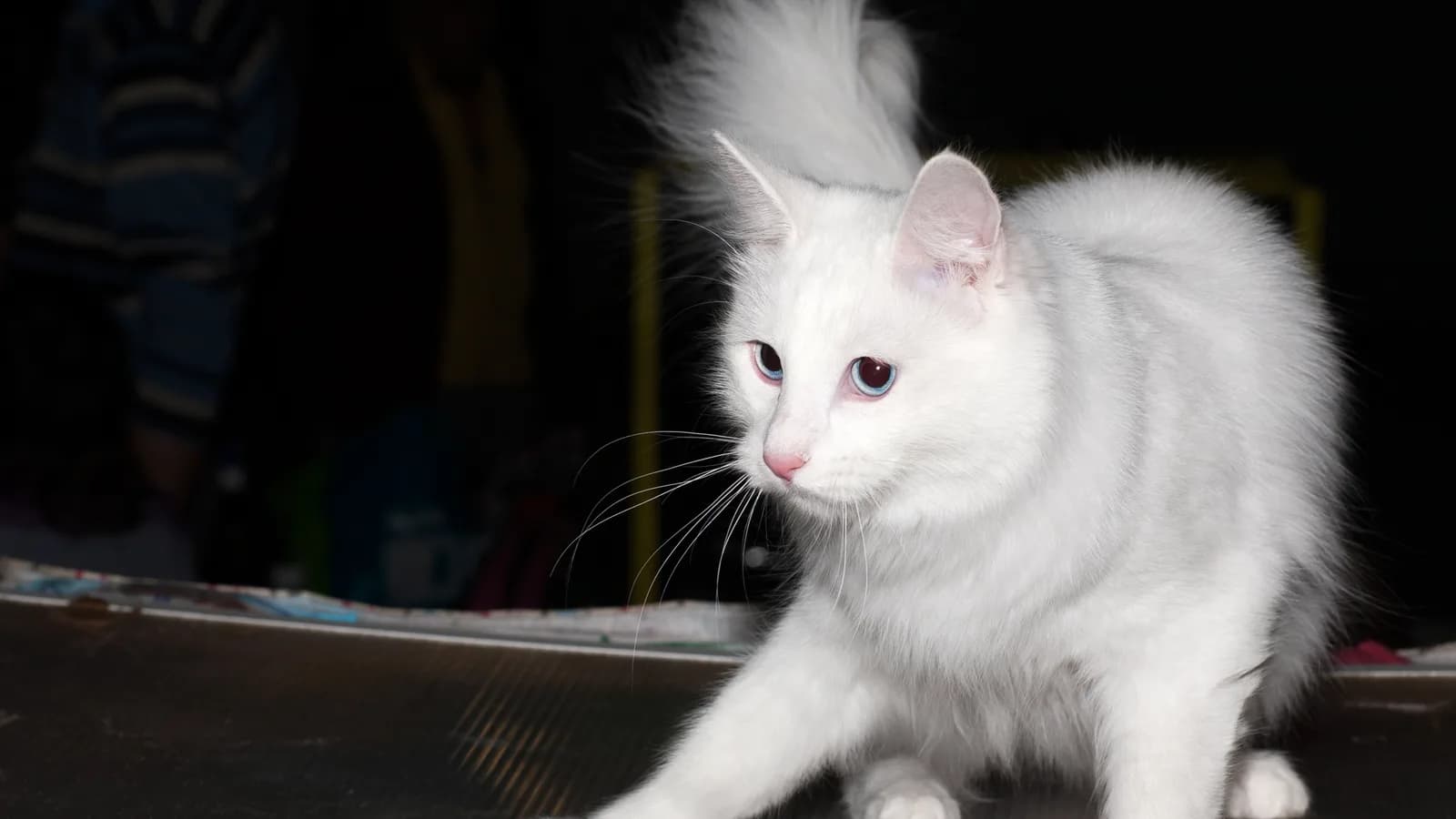
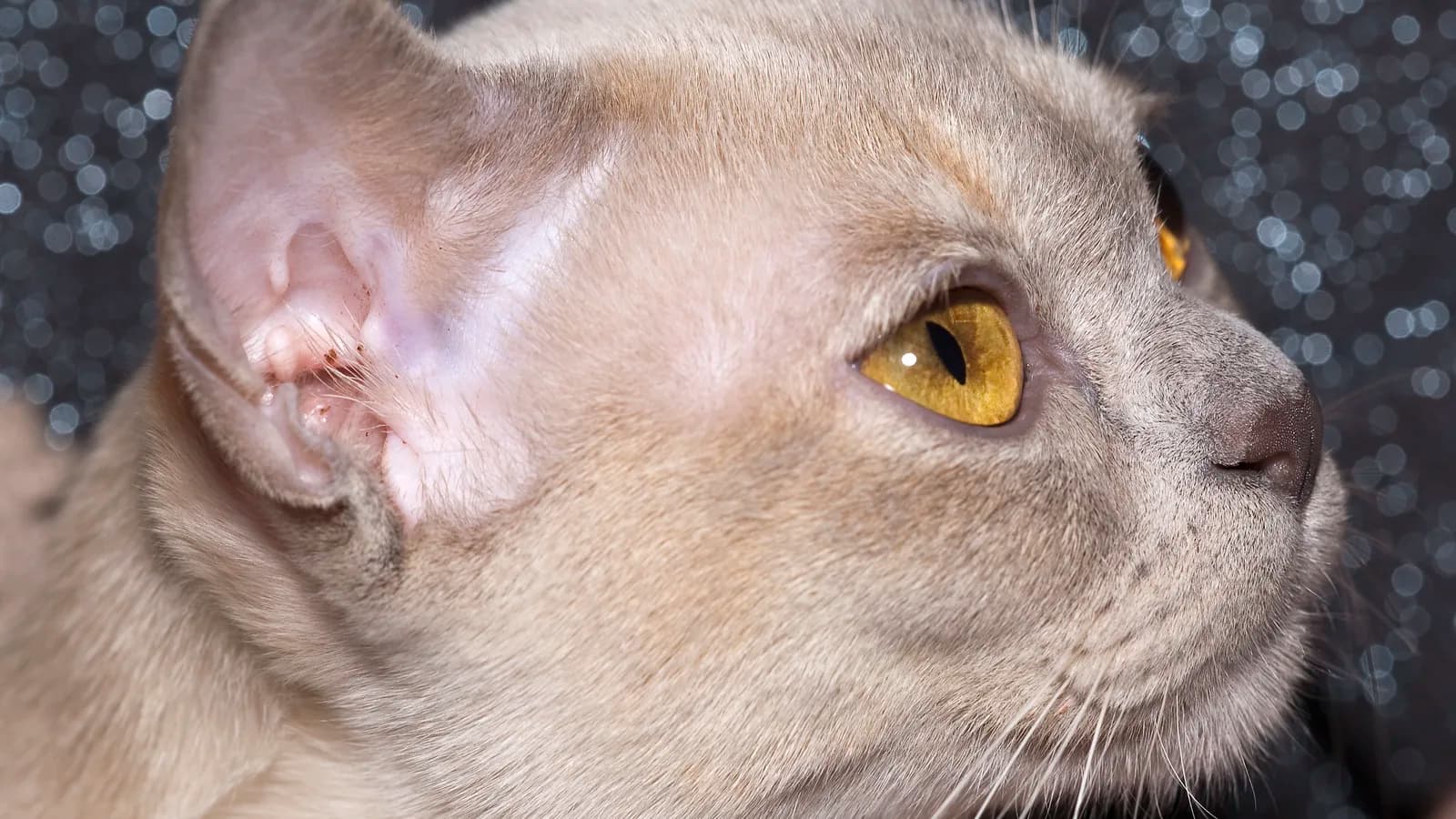
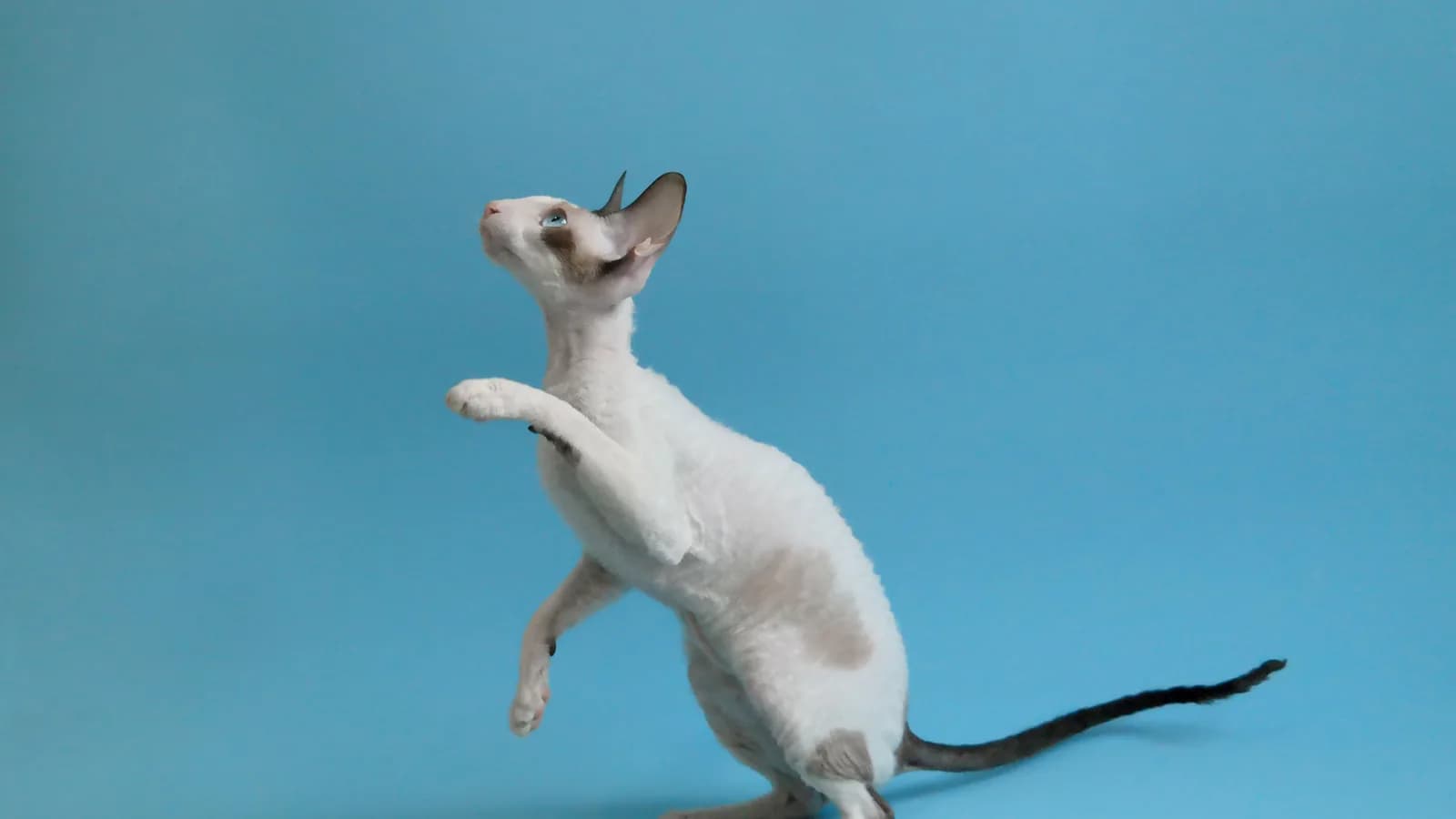
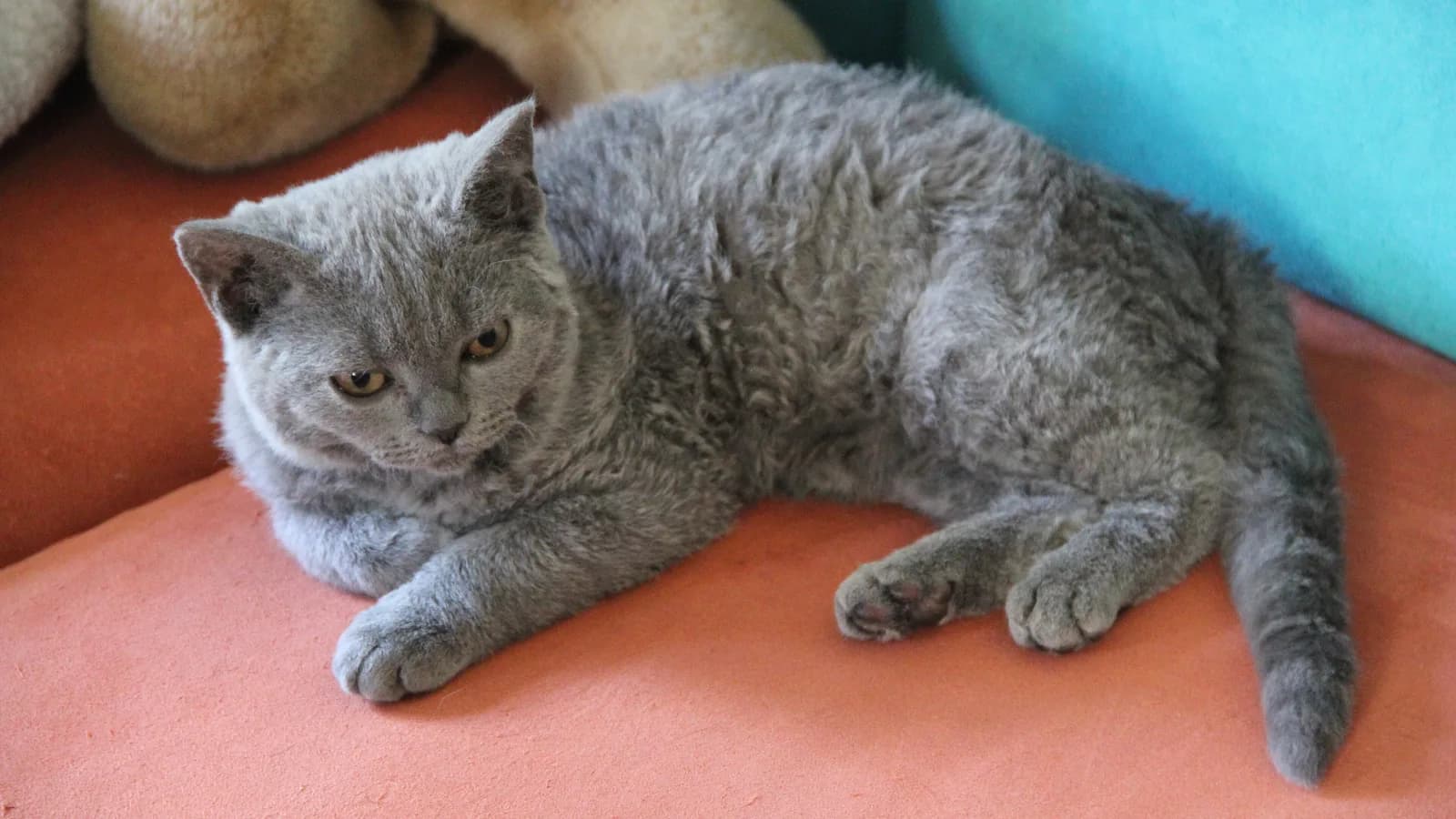
This breed is barely covered by free photo libraries: we only found 4 photos we could verify. Your cats are especially welcome here.
No Devon Rex here yet
Got one? Add a photo and yours gets to open this page.
 The vet's take

Veterinary review
Are you a vet?
Your professional read belongs here: every verified practitioner can leave a note, published once our editors have reviewed it.
Sign in and get your license number verified. We check it in the public register, we never ask for or keep a copy of your diploma, and your number is never published.
 Frequently asked questions
+Are Devon Rex cats hypoallergenic?
No, per TICA, GCCF and CFA in their own words. The coat genuinely sheds less than most, which some sensitive people tolerate better, but no cat is allergen-free and no study measures this breed's allergen output. The registries' own advice: visit the specific cat, wait 24 hours, visit again.
+How much does a Devon Rex cost?
Named US catteries cluster $2,700-3,700 flat (August 2026); UK live listings run £250-1,998 clustering £1,000-1,800; Canadian totals are only readable on live listings (CA$1,000-2,850); Australia runs A$1,450 or A$2,800 depending on the cattery. No named cattery charges by color.
+Do Devon Rex cats shed?
Less than most, per CFA's own wording, but yes: the wavy KRT71 coat is short and fine, not absent. TICA's pages famously say both sheds-less and sheds-like-any-cat in different tabs; the grooming reality is minimal hair, maximal gentleness.
+What is a Devon Rex?
A slender, huge-eared, wavy-coated breed descending entirely from one feral tomcat born in Devon, England in 1959. Its curl gene (KRT71) is different from the Cornish Rex's (LPAR6), which makes the two look-alikes genetic strangers.
+How long do Devon Rex cats live?
No large study measures this breed. A 2024 UK analysis found a 13.55-year median age at death among its 20 Devon Rex; a Swedish insured-cat study measured a below-average death rate. The 9-15 and 14-17+ ranges you read elsewhere are commonly cited estimates, no measured study exists behind either.
+Do Devon Rex cats have health problems?
A specific, testable file rather than a vague one: the COLQ myopathy (validated DNA test; ask for both parents' results), high blood-type-B incidence (a breeder-management issue), documented skin-yeast findings, and a striking measured dystocia figure that concerns breeders. No established HCM predisposition exists in any source we reached.
+Do Devon Rex cats need baths?
Not on a schedule: the doctrine is gentleness, not washing. If the skin turns greasy or the folds look dirty, that is a vet conversation first, because this breed's documented yeast findings respond to prescription treatment, not to harder bathing.
+Are Devon Rex cats cuddly?
The measured answer is yes: Finnish owner-report data places the breed among the most people-seeking ever studied, and bold rather than shy. It is a shoulder cat that supervises your day.
+How big do Devon Rex cats get?
Six to nine pounds (2.7-4.1 kg) per TICA's and CFA's own converged pages, with the largest measured cohort putting the median at just 3.0 kg (6.6 lb). The ears write cheques the body never cashes.
+What is the difference between a Devon Rex and a Cornish Rex?
Different genes, different heads: the Devon's curl is a KRT71 mutation with a wedge face, huge low-set ears and a fuller wave; the Cornish's is LPAR6 with an egg-shaped head, high-set ears and a finer marcel wave. Ten years and one county apart, genetically unrelated curls.
+Can a Devon Rex be crossed with a Sphynx?
GCCF explicitly excludes Sphynx ancestry with a stated genetic reason: the two breeds share the KRT71 gene at different alleles, and the Sphynx allele is dominant, so Sphynx blood disrupts the Devon coat. Other registries run different outcross lists; none names Sphynx as permitted.
 Community questions
Got a question this page doesn't cover? Ask it: the best ones get published here with their answer.
Sources & references
Data checked against reference sources (TICA and CFA standards, genetics laboratories, veterinary schools).
- TICA: Devon Rex breed
- TICA Devon Rex breed standard (2024)
- CFA: Devon Rex breed
- CFA Devon Rex show standard
- GCCF: Devon Rex breed
- CCA-AFC Devon Rex breed standard
- ACF Devon Rex standard (2025)
- Gandolfi et al. 2015: COLQ variant in Devon Rex and Sphynx myopathy
- Abitbol et al. 2015: COLQ missense mutation (PLoS One)
- UC Davis VGL: Sphynx and Devon Rex CMS test
- Haggstrom et al. 2025: 56,169-cat echocardiography cohort
- Leicester & O'Neill 2026: feline dystocia epidemiology
- Ahman et al. 2007: Malassezia carriage in Devon Rex

Worth keeping a paw on
Pin this profile
To compare later, or to show someone still torn between two breeds. One click and it sits in your board.
Pin it on Pinterest
 Purr or Pass
Still deciding? Find the perfect breed for your home.
A quick quiz that factors in your lifestyle, your kids and your other pets.
Which breed fits my home?Keep exploring
The floor belongs to our members. Keep it kind, links are not allowed, and images go through moderation before anyone else sees them.