

Egyptian Mau
“The natural sprinter”
 By Priya · The careful one
Published August 21, 2026Updated August 26, 202610 min read
Contents
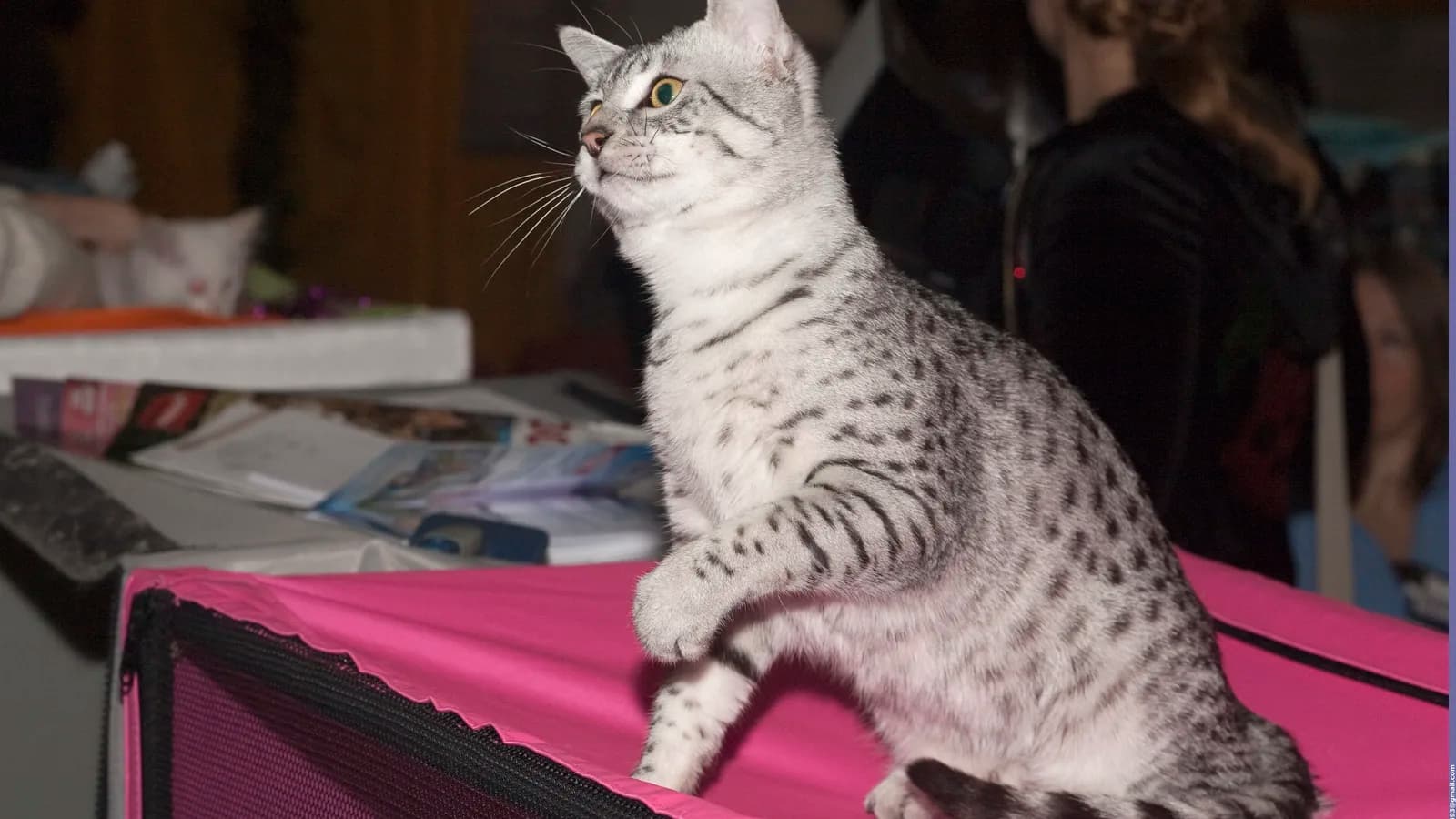
 Egyptian Mau photos
Real photos, so you can see what the breed actually looks like: coats, ear tufts, ruff and build.
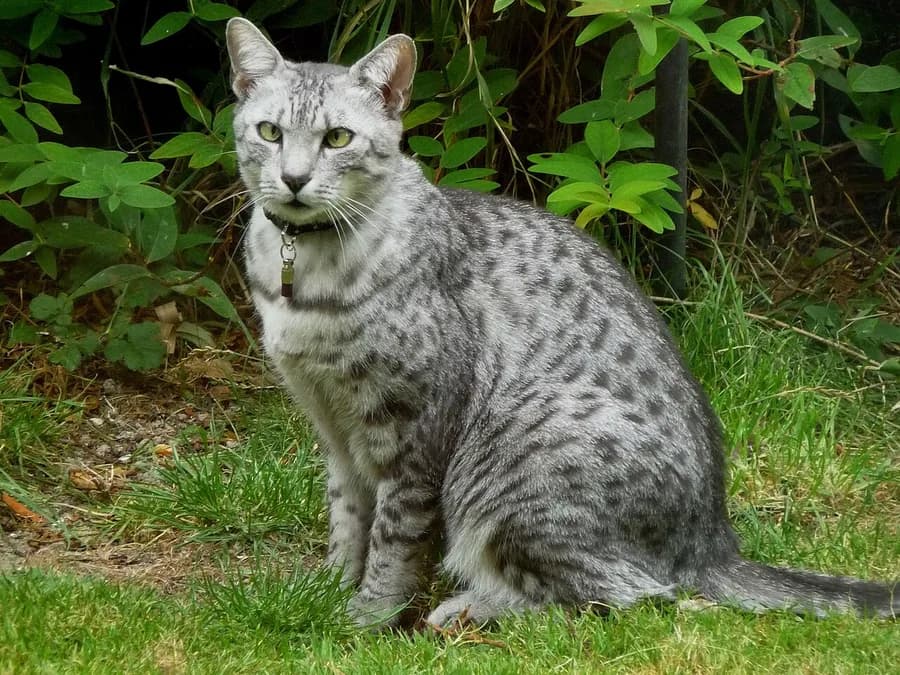
Silver Egyptian Mau sitting in a garden, the random single-spot pattern along the flank and green eyes
Photo: Lil Shepherd from United Kingdom · CC BY 2.0 · via Wikimedia Commons
Got an Egyptian Mau? Share them with the community. Photos from our members round out this page.
 Vital stats
Origin
Egypt
The modern line runs through Russian princess Nathalie Troubetskoy, who obtained spotted cats via Cairo, bred them in Italy, and brought three to the United States in 1956, founding the Fatima line. Both major US registries call it the only naturally spotted breed. Its pattern arose without any hybridization program.
Life expectancy
, and Purina cluster on 12 to 15 years, in near-identical unsourced wording (one brand page sits lower at 9-13, equally unsourced). A commonly cited estimate, no measured study exists: four separately run measured mortality datasets, including a 2.39-million-cat US clinical dataset, were each opened in full, and none carries an Egyptian-Mau-specific figure. The most complete measured absence this project has documented.
Coats
Silver
Bronze
Smoke
Black (registration-only)
Blue (registration-only)
Three showable colors at every registry: silver, bronze and smoke. Plus the two backstage ones genetics guarantees: black and blue kittens recur no matter how carefully breeders select ('s own genotype table shows why), and are registered for tracking, never shown. Adult eyes are gooseberry green by every standard. The breed's precise claim to fame: the only spotted breed whose pattern arose naturally, without a hybridization program.
Understanding the coats (and their genetics)Size
No registry standard states a weight, height or length figure anywhere: we read all five, and the silence is the finding. Brand pages disagree with each other (7-9 lb combined at one, 6-10/10-14 lb sex-split at another, 8-12 lb both sexes at a third). A separate cluster of unsourced guides converges on 6-14 lb. A medium, finely muscled sprinter, with longer hind legs and the flank-to-knee skin flap every standard names.
Did you know
Guinness World Records names the Egyptian Mau the fastest breed of domestic cat at 48 km/h (30 mph). Yet neither GWR nor (which makes its own 30 mph claim) cites a method, an individual cat, or a date, and no peer-reviewed running-speed study of any cat breed exists. The sprinter's chassis is real either way: longer hind legs, and a loose flank-to-knee skin flap named in every registry standard.
 Personality
 Affection4/5
 Energy4/5
 Intelligence4/5
 Friendliness3/5
 Independence3/5
 Vocal3/5
 Shedding2/5
Compatibility
 Good with children4/5
 Good with other pets3/5
 Apartment friendly4/5
Editorial ratings on our five-point scale, anchored in the registry descriptions and the measured behaviour studies cited on this profile; individual cats vary, and our members' own ratings below are the counterweight.
Still torn between this breed and another?Compare the Egyptian Mau trait by trait, or filter every breed by what matters to you. What our members say
What our members say
Nobody has described their Egyptian Mau here yet. As soon as the first profiles come in, this is where the community averages will show up: temperament, food, lifestyle.
Describe my Egyptian Mau Pros & cons
Strong points
- The only naturally spotted breed, by both US registries' own framing
- Devoted, musical-voiced companion (the registries' chortles-and-trills is real vocabulary)
- Short, easy coat: weekly brushing covers it
- A documented founding story with named cats and a named princess
- Registered rarity: a breed you will genuinely not meet at every corner
Things to consider
- A real urinary-stone predisposition (odds ratio 118 for urate stones in the one population studied twice)
- Reserved with strangers: guests meet the cat on its schedule
- Waiting lists are the norm: the registry itself says breeders are too few
- No measured weight, lifespan or behaviour study exists: honest data is scarce
- The famous speed figure is unmethoded marketing, however real the athleticism
 Is an Egyptian Mau right for you?
A household that wants a devoted, athletic companion and can accept the two honest asterisks. A genuine urinary-health watchpoint (hydration matters for this breed more than most). And a market that runs on waiting lists. If you want a cat that loves its own people intensely and treats strangers as an acquired taste, this is the breed built that way.
Is the Egyptian Mau right for YOUR home?
Answer a few questions and we'll email you your personalized result.
Take the quiz · 2 min Getting to know the Egyptian Mau
The Egyptian Mau's spots belong to nobody else. Every other spotted breed in the fancy was engineered into its pattern, and this one grew its own. Both US registries frame it exactly that way, the only NATURALLY spotted breed, and the precision matters: not the only spotted cat, the only one whose pattern needed no hybridization program. Random single solid spots, gooseberry-green eyes, and a sprinter's chassis with longer hind legs and the loose flank-to-knee skin flap every registry standard names.
The founding story has names. Russian princess Nathalie Troubetskoy, living in Italy, obtained spotted cats via Cairo, bred them, and in 1956 brought three to the United States, founding the line her cattery name made famous: Fatima. registered the breed in 1970 and granted championship in 1977. followed in 1979. Britain's first imports arrived in 1998, with full recognition in 2006. And the breed keeps one door open that closed breeds never do. CFA's still-active Import Policy lets a genuinely new cat from 27 named countries, Egypt and India included, become fully registrable after DNA testing and examination: the breeders page tells that story properly.
The colors are a two-act structure: silver, bronze and smoke on stage, black and blue permanently backstage, guaranteed by genetics no breeder can select away ('s own genotype table, quoted on the colors page, shows why). And because the spotted pattern is mechanically a modified tabby, half the internet wonders if its own spotted cat is part Mau. Our page answers that honestly, including what a DNA test cannot tell you.
On temperament we state the evidence situation plainly, because this breed demands it. No measured behaviour study covers the Egyptian Mau anywhere (it is absent from every dataset this site uses for other breeds), so its famous personality is registry and club prose.
The prose is at least consistent: intensely devoted to its own household, reserved with strangers, athletic, and genuinely musical, with the standards themselves describing a voice of chortles and trills. The famous speed claim gets the same honesty. GWR names the Mau the fastest domestic breed at 30 mph, and neither GWR nor cites a method, an animal or a date. We print the title with its asterisk.
Health has one headline that outranks everything else on the usual Mau pages. The breed carries the strongest measured urate-stone predisposition of any cat breed (odds ratio 118, replicated twice in the same submission population). That makes hydration a daily design question, and litter-box straining a same-day vet call. PK deficiency is real and testable (a quarter of one 36-cat research sample were carriers).
's leukodystrophy mention has no supporting literature anywhere, and we weight it accordingly. adds two husbandry-level notes (umbilical hernia lines, hormonal skin sensitivity). Lifespan: 12-15 years is the registry cluster, and no measured figure exists in any of the four datasets we opened, the most complete measured absence on this site.
Buying is a patience game the registry itself acknowledges: states there are not enough breeders to meet demand. The real figures, named cattery by named cattery, silver's consistent premium and the flat breeding-rights pattern, are on the price page. The Bengal question, cousins by paperwork, opposites by pattern, is settled on the comparison page.
 Health: what to watch for
A few predispositions are well documented. The good news: they can be screened for or avoided by choosing a reputable breeder and keeping an eye on the right signals.
This is information, not veterinary advice, and it cannot tell you what is wrong with your cat. Our rule is a simple one: if something is wrong with your cat, call your vet, and call an emergency clinic if it is out of hours. Nothing you read here is a reason to wait.
Urate urinary stones: the real headline
The strongest breed association measuredThe Egyptian Mau carries, by a wide margin, the strongest breed association with urate urolithiasis measured in any cat breed: odds ratio 118 (95% CI 38.2-510) in a decade of Canadian urolith submissions, with the same overrepresentation replicated in a second analysis of the same submission population. Read the number correctly. It compares the breed's share of urate submissions against other breeds', not '118 times more Maus get stones.' It is one population studied twice, and it is the breed's one strong, replicated health finding.
Symptoms to spot
Straining in the litter box, frequent small urinations, blood in urine, or crying at the box: same-day vet call. A cat producing NO urine is an emergency, hours matter.
How common
Odds ratio 118 for urate submissions (one population, studied twice). No incidence rate per living cat exists.
Screening & prevention
Design hydration in from day one (wet food, water sources); discuss urinary monitoring with your vet rather than waiting for signs.
Genetic test
None: urate risk here is a breed association, not a single tested gene.
Pyruvate kinase (PK) deficiency
Real, testable, carrier-levelThe multi-breed PK screening study's own table gives the Egyptian Mau row directly: 36 cats sampled, 9 carriers (25% of that research sample), none affected, allele frequency 10%. A small sample, stated as such, and a real reason the DNA test exists for this breed. The discussion's rounded '~13%' figure covers Bengals and Maus together, a different number than the table's.
Symptoms to spot
Intermittent lethargy, weakness or pale gums in any cat is a vet call, whatever the odds.
How common
9 of 36 sampled cats were carriers (allele frequency 0.10) in the one research table; no population-wide rate exists.
Screening & prevention
Both breeding cats tested; two carriers never paired.
Genetic test
Yes: the PKLR test used across breeds. Ask for both parents' results.
Leukodystrophy: a registry mention with no literature
Weighted at its evidence: near zeroTICA's breed page names leukodystrophy alongside the two documented conditions, with no citation, and our sweep found nothing behind it: no paper, no OMIA entry, no test, no non-pet-content source. The secondary sites repeating it read as one echo. We print the check rather than the claim. This is an unsourced registry sentence, not a documented breed disease, and it must never be presented with the same weight as the urate or PK findings.
Symptoms to spot
Neurological signs in any kitten (tremors, wobbliness) are a vet visit on their own merits, never a breed diagnosis.
How common
No documented cases in the literature searched.
Screening & prevention
Nothing to screen; spend the conversation on hydration and PK results instead.
Genetic test
None exists.
GCCF's two husbandry notes
Line-level, breeder-conversation itemsGCCF's health notes add two items neither US registry states: some lines are prone to umbilical hernias (easily corrected surgically, per GCCF's own wording), and some cats show hormonal, itchy skin sensitivity. Both are husbandry-level notes from one registry, useful as breeder questions, not breed-defining conditions. GCCF also frames the breed's PK-deficiency picture as unresolved, matching the honest state of the science.
Symptoms to spot
A soft belly-button bump in a kitten (hernia) or recurrent itchy skin: vet conversations, both manageable.
How common
No rates published; 'some lines', per GCCF's own wording.
Screening & prevention
Ask the breeder about hernia history in the line; skin sensitivity is a monitor-with-your-vet item.
Genetic test
Not applicable.
Go deeper on health
Prevention, warning symptoms, costs and insurance: our guides, researched and sourced.
The Egyptian Mau also appears in
Our criteria-based guides, to compare this breed with the ones most like it.
 Grooming & living with one
Grooming
One of the fancy's easiest coats: short, dense and resilient, kept glossy with a weekly brushing, plus routine nails and ear checks. and give the same weekly cadence independently. GCCF adds the detail owners confirm: all Maus enjoy the stroking that doubles as coat care.
Living together
Honesty first: no measured behaviour study covers this breed (it is absent from both large Finnish datasets and everything else we swept), so everything anyone tells you is registry and club prose. That prose is consistent. Devoted, even possessive, with its own family. Reserved with strangers. Musical (the standards' own 'chortles and trills'), with a happy tail-wiggle dance breeders describe. Good with respectful children; introductions to other pets on the cat's schedule.
 Food & diet
No breed-specific feeding study exists, but this breed carries one diet-adjacent fact that matters: the strongest urate-stone predisposition measured in any cat breed (odds ratio 118 in the one population studied twice). That is a reason to take hydration seriously (wet food, water sources), and to treat any straining in the litter box as a same-day vet call. It is never a reason to home-formulate: diet changes for stone-formers are veterinary decisions.
 Price & budget
$600 to 2,800
Price of a kitten from a registered breeder, in the United States
This price reflects the quality of the breeding program: parents' health tests, registry pedigree, socialization. A very low price should raise a red flag. The real cost, though, plays out over the years.
Find a verified Egyptian Mau breederKitten price, by market
United States
$600 to 2,800
United Kingdom
£400 to 1,000
Canada
CA$2,000 to 3,000
Australia
A$2,500 to 4,000
Each figure is that country's real market price, researched separately, not a conversion of the others. The smaller line is only there so you can gauge one against your own money: European Central Bank reference rates of 2026-09-18, refreshed daily.
The Egyptian Mau in the US, UK, Canada and Australia
| Measure | United States | United Kingdom | Canada | Australia |
|---|---|---|---|---|
| Pet-quality kitten | $600-2,800 (named catteries; silver carries the highest floor) | £400-500 pet, £700-1,000 show | CA$2,000-3,000 (one named cattery) | AUD $2,500-4,000 (single source) |
| Registry status | CFA 1970/1977; TICA 1979, Category I | GCCF: first imports 1998, full recognition 2006 | CCA-AFC, with a notably permissive origin-import rule | ACF standard (CFA-2006-sourced); ANCATS profiles the breed |
| The open door | CFA's Import Policy: street cats from 27 countries (Egypt, India included) can register after DNA testing and examination | Standard registered pipeline, waiting lists | F1-allowed import path, more permissive than the baseline | No breed-specific mechanism published |
| Measured life expectancy | No measured figure exists | No measured figure exists | No measured figure exists | No measured figure exists |
| Rarity, documented | Absent from CFA's own top-ten lists two years running; CFA itself says demand outstrips breeders | Small pipeline, two live breed clubs | Effectively one named cattery | A handful of breeders |
Four markets, four rulebooks; none of these figures converts into another. Prices are August 2026 and expire with the quarter.
Work out your food budget
Type of food
Estimated monthly budget
$14
≈ 2.4 oz (68 g) per day
A ballpark figure, food only, using the same arithmetic as our portion tool (resting energy requirement × 1.2, a neutered adult). Real needs vary with age, activity level and body condition. Ask your veterinarian for advice.
 Verified Egyptian Mau catteriesThe registry-checked directory, plus a kitten alert near you
 Should you insure an Egyptian Mau?
Our sources list several predispositions in the Egyptian Mau: Urate urinary stones: the real headline, Pyruvate kinase (PK) deficiency, Leukodystrophy: a registry mention with no literature, among others. A predisposition is not a foregone conclusion, and many of these cats live their whole lives without ever developing anything. It does change the nature of the follow-up, though: you monitor, sometimes for life, and it's that monitoring that weighs on a budget, more than a one-off accident.
One thing to weigh before deciding: this is a cat you will live alongside for well over a decade, and that is the span the real cost is spread across, premiums and care alike. Where a breed has a measured life expectancy that differs from the figure usually quoted, we say so in the lifespan section above rather than repeating the quoted one here.
 Egyptian Mau cats in our community
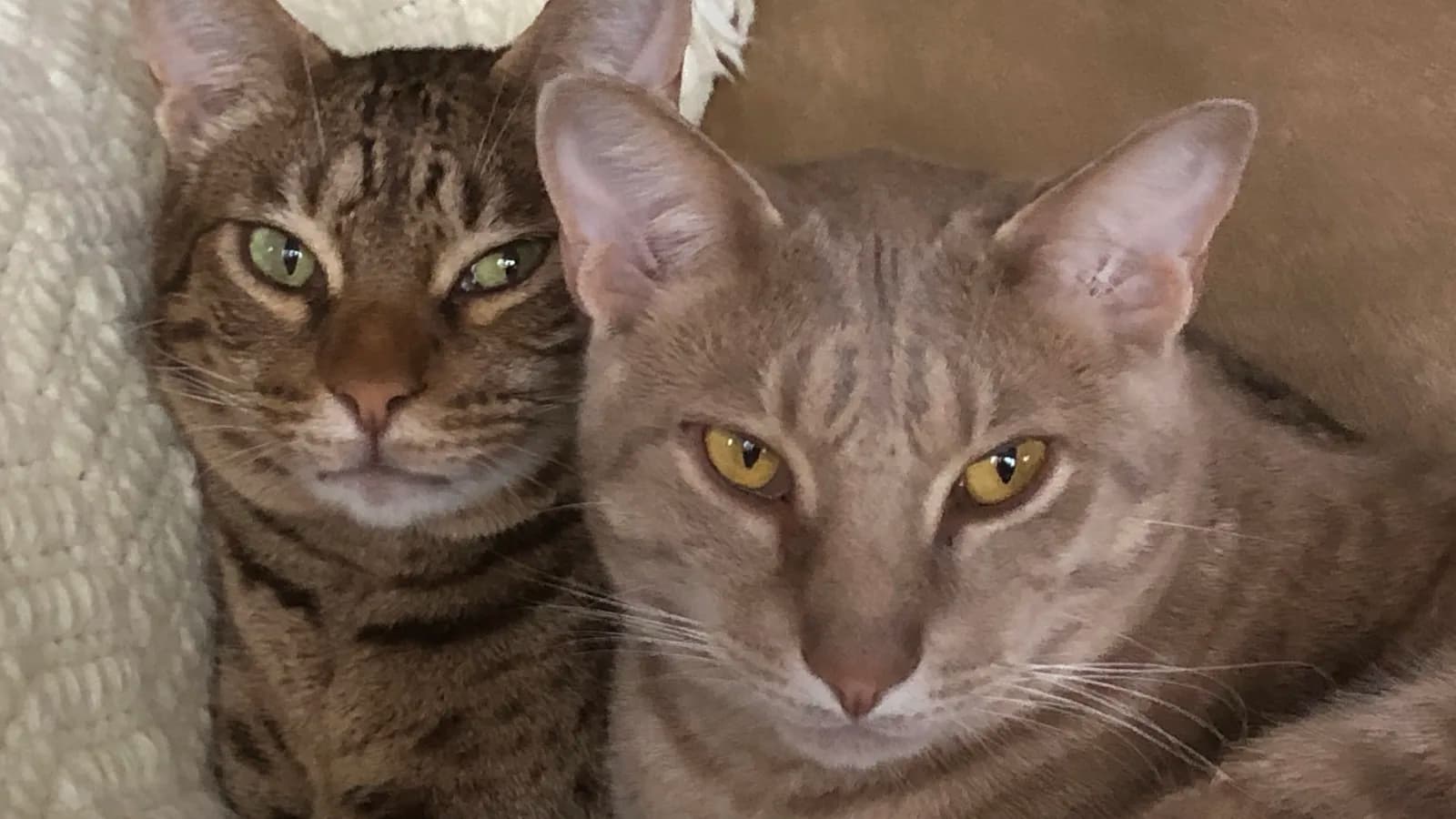
This breed is barely covered by free photo libraries: we only found 3 photos we could verify. Your cats are especially welcome here.
No Egyptian Mau here yet
Got one? Add a photo and yours gets to open this page.
 The vet's take

Veterinary review
Are you a vet?
Your professional read belongs here: every verified practitioner can leave a note, published once our editors have reviewed it.
Sign in and get your license number verified. We check it in the public register, we never ask for or keep a copy of your diploma, and your number is never published.
 Frequently asked questions
+Is the Egyptian Mau really the fastest domestic cat?
Guinness says so (48 km/h) and TICA separately claims 30 mph, but neither cites a method, an individual cat or a date, and no running-speed study of any breed exists. The sprinter's anatomy (long hind legs, the flank skin flap) is real; the exact number is folklore wearing a certificate.
+How much does an Egyptian Mau cost?
Named catteries, August 2026: US $600-2,800 with silver carrying the highest floor and breeding rights adding a flat premium; UK £400-500 pet, £700-1,000 show; Canada effectively one cattery at CA$2,000-3,000; Australia AUD $2,500-4,000 from a single source. Expect waiting lists: CFA itself says breeders are too few.
+Is my spotted cat part Egyptian Mau?
Almost certainly not, and the resemblance is expected: the Mau's pattern is a modified tabby, the same machinery every spotted domestic carries. Our mix page has the three registry-stated tells and what a DNA test cannot say.
+What colors do Egyptian Maus come in?
Silver, bronze and smoke on the show bench, everywhere. Black and blue kittens occur inevitably (the genetics guarantees it), are registered for tracking, and are never shown.
+How long do Egyptian Maus live?
The registry cluster says 12-15 years, unsourced; no measured study includes this breed in any of the four datasets we opened, including a 2.39-million-cat US clinical dataset. The absence is the honest answer.
+Are Egyptian Maus related to Bengals?
By paperwork, yes: CFA documents the Mau among the Bengal's early domestic outcrosses (not its founding parent). By pattern they are opposites: the Mau's standard penalizes the rosettes the Bengal is bred for.
+Are Egyptian Maus good pets?
For their own people, devotedly so, per every registry's prose (no measured behaviour study exists, and we say that plainly): affectionate, musical, athletic, and famously reserved with strangers. A one-family cat in the best sense.
+Do Egyptian Maus have health problems?
One real headline: the strongest measured urate-stone association of any breed (hydration matters, straining is a same-day vet call). PK deficiency is testable; TICA's leukodystrophy mention has no supporting literature anywhere, which we checked so you don't have to.
+Why are Egyptian Maus so rare?
Documentably few breeders: CFA states demand outstrips supply, and the breed is absent from its top-ten popularity lists two years running. The upside of rarity with paperwork: CFA's Import Policy still admits street cats from 27 countries into the registry.
+Where does the Egyptian Mau come from?
Egypt's street cats, via a documented route: Nathalie Troubetskoy obtained cats through Cairo, bred them in Italy, and brought three to the US in 1956. 'Mau' is said to mean 'cat' in Egyptian, a claim every source repeats and none cites, so we repeat it exactly that carefully.
+Do Egyptian Maus get along with other pets?
On their own schedule: the registry prose describes devotion to the household and reserve toward newcomers, furred or otherwise. Slow introductions work; expecting instant friendship does not.
 Community questions
Got a question this page doesn't cover? Ask it: the best ones get published here with their answer.
Sources & references
Data checked against reference sources (TICA and CFA standards, genetics laboratories, veterinary schools).
- TICA: Egyptian Mau
- CFA: Egyptian Mau
- CFA Egyptian Mau rules of registration (Import Policy)
- CFA Egyptian Mau standard (PDF)
- GCCF Egyptian Mau breed page
- GCCF Egyptian Mau breeding policy (PDF)
- ACF Egyptian Mau standard (PDF)
- Moore & Weese 2010, urate urolith case-control (Guelph)
- Grahn et al. 2012, PK deficiency across breeds
- GWR: fastest breed of domestic cat
- CFA Most Popular Breeds 2026

Worth keeping a paw on
Pin this profile
To compare later, or to show someone still torn between two breeds. One click and it sits in your board.
Pin it on Pinterest
 Purr or Pass
Still deciding? Find the perfect breed for your home.
A quick quiz that factors in your lifestyle, your kids and your other pets.
Which breed fits my home?Keep exploring

The floor belongs to our members. Keep it kind, links are not allowed, and images go through moderation before anyone else sees them.