

Selkirk Rex
“The poodle cat (per GWR and TICA) and the cat in sheep's clothing”
 By Priya · The careful one
Published August 21, 2026Updated August 26, 20267 min read
Contents
 Selkirk Rex photos
Real photos, so you can see what the breed actually looks like: coats, ear tufts, ruff and build.
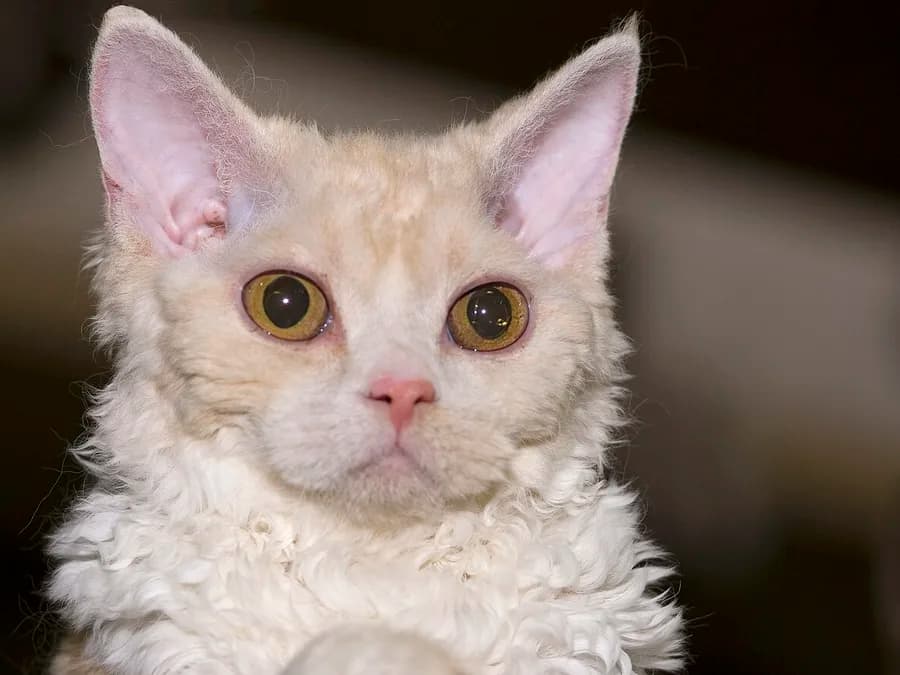
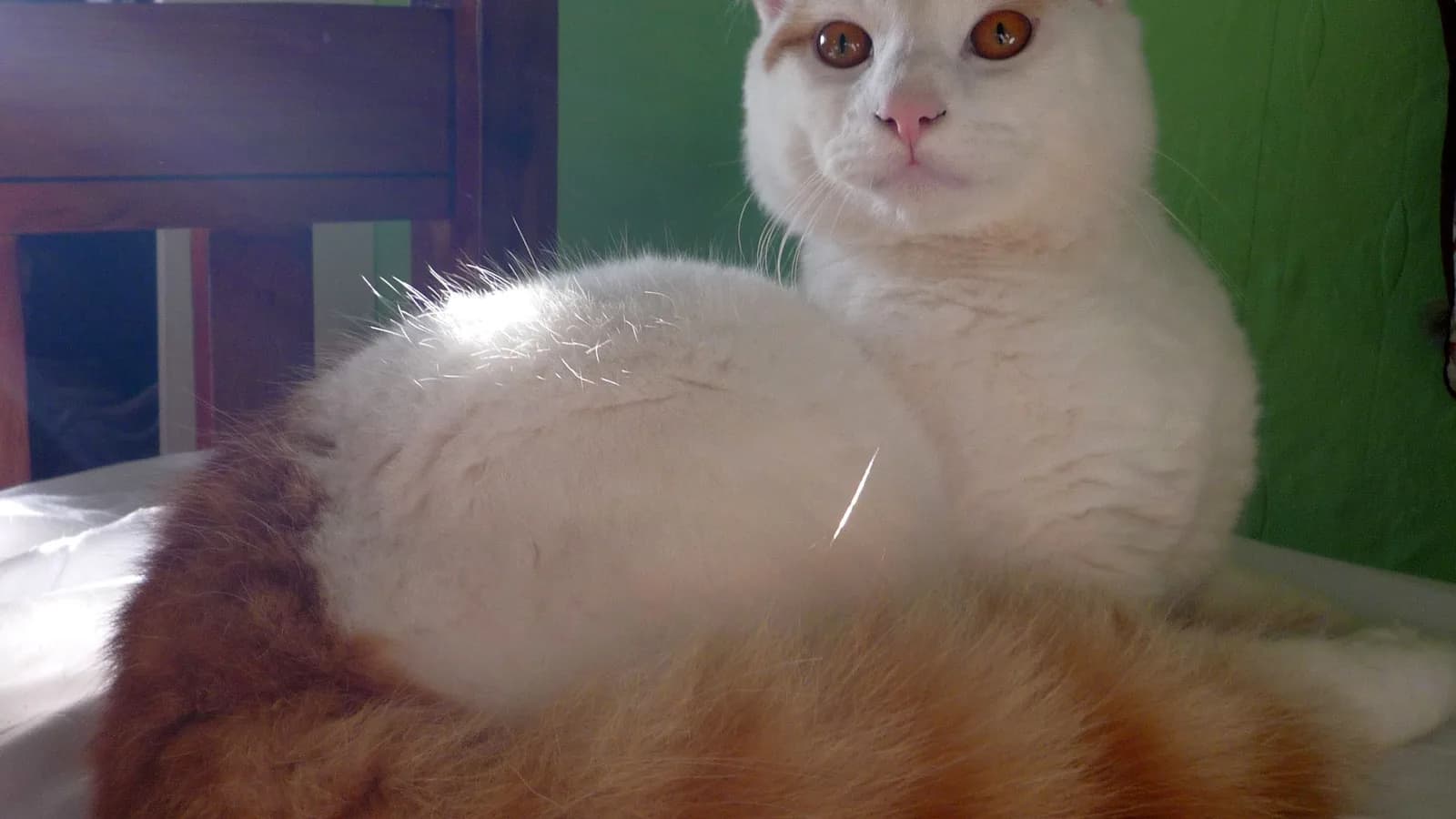
Cream Selkirk Rex cat close up, showing its curly coat and large amber eyes
Photo: Nickolas Titkov from Moscow, Russian Federation · CC BY-SA 2.0 · via Wikimedia Commons
 Vital stats
Origin
United States
Sheridan, Montana, 1987: a curly-coated kitten named Miss DePesto, born in an otherwise ordinary litter at a shelter, reached breeder Jeri Newman. She recognized the surprise for what it was: a new, DOMINANT curl mutation. Four independent sources, including Newman's own first-hand and self-correcting account, converge on 1987 and Montana. Persian and British Shorthair outcrossing built the breed's round, heavy-boned frame, a family connection population genetics later confirmed.
Weight
Female
9-12 lb (4.1-5.4 kg)
Male
12-15 lb (5.4-6.8 kg)
Life expectancy
No cohort study anywhere has measured this breed's lifespan (five checked directly). The 10-15 band is the convergent public convention, independently stated by four separately-run sources ('s own page says 10-15+), none citing a study. The UK footnote we keep visible: 's own breed page says 15 flat (twice), while GCCF's own Breeding Policy says 14-18. The registry's own internal disagreement, reported rather than resolved. All commonly cited estimates; no measured study exists.
Coats
Blue curl
Cream curl
Black curl
Tortie curl
White curl
Effectively everything. states COLORS: All. weights color at 1 point of 100 (the lightest weighting in our files). 's points table omits color entirely, accepts all, and excludes only amber. The differentiated fact: GCCF's Breeding Policy and CCA-AFC's standard both route breeders to the British Shorthair's color-genetics documentation, the registry-paperwork echo of the breed's measured Persian-family clustering.
Understanding the coats (and their genetics)Size
Per our SR3 ruling, CFA's sex-split figure leads: males 12-15 lb (5.4-6.8 kg), females 'somewhat smaller' with no number given. TICA, unusually, publishes no numeric weight across four separate documents. GCCF's wider unsplit 9-16 lb band is the corroborating context. The female figures shown on this page are a labeled construction from it (GCCF's 9 lb floor up to CFA's male floor), not a registry's own split. The only measured data point in the literature is two individual female cats (3.0 and 5.0 kg), consistent with both registries and too thin to referee.
Did you know
The whole breed began with one shelter kitten: Miss DePesto, born curly in an ordinary Montana litter in 1987. Her mutation turned out to be dominant, so one cat was enough, and every Selkirk Rex on earth descends from her surprise.
 Personality
 Affection4/5
 Energy3/5
 Intelligence4/5
 Friendliness4/5
 Independence3/5
 Vocal2/5
 Shedding3/5
Compatibility
 Good with children4/5
 Good with other pets4/5
 Apartment friendly4/5
Editorial ratings on our five-point scale, anchored in the registry descriptions and the measured behaviour studies cited on this profile; individual cats vary, and our members' own ratings below are the counterweight.
Still torn between this breed and another?Compare the Selkirk Rex trait by trait, or filter every breed by what matters to you. What our members say
What our members say
Nobody has described their Selkirk Rex here yet. As soon as the first profiles come in, this is where the community averages will show up: temperament, food, lifestyle.
Describe my Selkirk Rex Pros & cons
Strong points
- A dominant curl with the fancy's best founding story: one shelter kitten, 1987, Montana
- The teddy-bear build and calm registry portrait of its Persian-family genetics
- Straight-coated kittens are real, registrable Selkirks at lower prices: the genotype ladder is honest
- Both coat lengths, one breed group, one shared standard at TICA and CFA
Things to consider
- No measured study exists for weight, lifespan or temperament: the file is convention and registry portrait, labeled
- The Persian-family identity brings the family's screening questions (PKD, HCM) via the outcross breeds
- Sheds normally and visibly, whatever the poodle nickname implies
- Australia is an unpriced market: breeder networks or nothing
 Is a Selkirk Rex right for you?
A household that wants a calm, plush, teddy-bear companion with a great origin story. One that understands the genotype question (and its price ladder), and asks for the parents' PKD and screening like a Persian-family buyer should.
Is the Selkirk Rex right for YOUR home?
Answer a few questions and we'll email you your personalized result.
Take the quiz · 2 min Getting to know the Selkirk Rex
Start with a shelter kitten who founded a breed. Miss DePesto, born curly in an otherwise ordinary Montana litter in 1987, reached breeder Jeri Newman, and her surprise turned out to be a DOMINANT mutation. One copy curls the cat, so one cat was enough. Persian and British Shorthair outcrosses built the round, heavy-boned frame, and the nicknames wrote themselves: the poodle cat, the cat in sheep's clothing.
The genetics are the breed's best content, told precisely on [the rex-family page](/breeds/compare/selkirk-rex-vs-devon-rex-and-cornish-rex): three rex breeds, three different genes or alleles, with the Selkirk's dominant SADRE allele in KRT71 distinct from the Devon's recessive allele in the same gene and the Cornish's entirely different gene. Dominance is why litters mix curly and straight kittens. It is why heterozygous cats are 's own breeding favorites, and why one US cattery prices kittens by genotype.
The finding nobody expects: population genetics clusters the Selkirk with the Persian, British Shorthair, Scottish Fold and Exotic, and two registries' own paperwork independently points at the same family. That identity is the whole health frame. PKD and screening are inherited prudence from the outcross family, not measured Selkirk findings, and the parents' results are the buyer's question. The breed's own measured literature is nearly empty (no weight, lifespan or behaviour study anywhere), which this profile states as the finding it is.
The market is honest and quotable: three US price shapes including the genotype ladder, a British club that states its no-price policy in its own words, two named Quebec catteries, and an Australian market that publishes nothing (the full file). And no, the curls are not hypoallergenic: the poodle logic never transferred to cats, and this breed's file is the cleanest proof.
 Health: what to watch for
A few predispositions are well documented. The good news: they can be screened for or avoided by choosing a reputable breeder and keeping an eye on the right signals.
This is information, not veterinary advice, and it cannot tell you what is wrong with your cat. Our rule is a simple one: if something is wrong with your cat, call your vet, and call an emergency clinic if it is out of hours. Nothing you read here is a reason to wait.
The outcross screening frame: PKD and HCM, by family not by measurement
MODERATEThe breed's screening logic is inherited. PKD and HCM are screened for because the Persian and British Shorthair outcross family demonstrably carries them, not because any study has measured the Selkirk itself. GCCF's own Breeding Policy documents the UK's actual PKD-testing history and ties registration eligibility to it. The buyer's question is the parents' PKD (DNA) and HCM (echo) results; two clean answers close the file.
Our full guide on this topicBlood-type awareness: a breeding-side inheritance
LOWThe British Shorthair family's blood-type-B prevalence travels with the outcross ancestry. That makes blood typing a breeding-program concern (neonatal isoerythrolysis planning) and, rarely, a transfusion fact your vet handles. A pet owner never acts on this outside those contexts.
One case report, stated at its size
LOWThe breed-named clinical literature contains a single portosystemic shunt case report: n=1, and this row exists so one case never inflates into a breed problem. Any kitten failing to thrive is a vet visit on its own merits.
The honest structural note
LOWNo cohort has measured this breed's lifespan, no study its weight beyond two individual cats, and no behavioural dataset includes it unpooled. The absences are the finding. Ordinary preventive care, the two family screening questions above, and scepticism toward any page quoting Selkirk-specific rates, because none exist.
Go deeper on health
Prevention, warning symptoms, costs and insurance: our guides, researched and sourced.
 Grooming & living with one
Grooming
Counterintuitive and easy: LESS brushing, not more, because aggressive grooming relaxes the curl. A gentle weekly pass and ordinary nail and dental care cover it. The coat sheds normally and visibly, whatever the folk logic says about curls trapping hair (no source supports it).
Living together
The registry portrait says gentle with children and other pets, patient and people-oriented; no measured dataset checks it, which we say. The build and temperament both read Persian-family: calm presence over acrobatics.
 Food & diet
No breed-specific dietary requirement exists anywhere (a checked absence), including no coat-specific fatty-acid science. Ordinary complete-diet, portion-controlled feeding, with body condition checked at the vet under the plush coat.
 Price & budget
$600 to 2,500
Price of a kitten from a registered breeder, in the United States
This price reflects the quality of the breeding program: parents' health tests, registry pedigree, socialization. A very low price should raise a red flag. The real cost, though, plays out over the years.
Find a verified breederKitten price, by market
United States
$600 to 2,500
United Kingdom
£455 to 1,250
Canada
CA$2,200 to 3,000
Each figure is that country's real market price, researched separately, not a conversion of the others. The smaller line is only there so you can gauge one against your own money: European Central Bank reference rates of 2026-09-18, refreshed daily.
Work out your food budget
Type of food
Estimated monthly budget
$16
≈ 2.8 oz (79 g) per day
A ballpark figure, food only, using the same arithmetic as our portion tool (resting energy requirement × 1.2, a neutered adult). Real needs vary with age, activity level and body condition. Ask your veterinarian for advice.
 Verified catteriesThe registry-checked directory, plus a kitten alert near you. Filter it by breed.
 Should you insure a Selkirk Rex?
Our sources list several predispositions in the Selkirk Rex: The outcross screening frame: PKD and HCM, by family not by measurement, Blood-type awareness: a breeding-side inheritance, One case report, stated at its size, among others. A predisposition is not a foregone conclusion, and many of these cats live their whole lives without ever developing anything. It does change the nature of the follow-up, though: you monitor, sometimes for life, and it's that monitoring that weighs on a budget, more than a one-off accident.
One thing to weigh before deciding: this is a cat you will live alongside for well over a decade, and that is the span the real cost is spread across, premiums and care alike. Where a breed has a measured life expectancy that differs from the figure usually quoted, we say so in the lifespan section above rather than repeating the quoted one here.
 Selkirk Rex cats in our community
No Selkirk Rex here yet
Got one? Add a photo and yours gets to open this page.
 The vet's take

Veterinary review
Are you a vet?
Your professional read belongs here: every verified practitioner can leave a note, published once our editors have reviewed it.
Sign in and get your license number verified. We check it in the public register, we never ask for or keep a copy of your diploma, and your number is never published.
 Frequently asked questions
+What is a Selkirk Rex?
The curly-coated breed founded by one shelter kitten (Miss DePesto, Montana, 1987) whose curl mutation turned out to be dominant: a round, heavy-boned, teddy-bear cat in loose plush curls, long or short, genetically part of the Persian family.
+How much does a Selkirk Rex cost?
US: $600 to $2,500+ across six named catteries, one pricing explicitly by curl genotype. UK: live listings £455-1,200, the named cattery £1,250. Canada: CA$2,200-3,000. Australia: no findable price, stated plainly. Our price page carries every source.
+Are Selkirk Rex cats hypoallergenic?
No: no registry or veterinary source claims it, no study exists, and the coat sheds normally and visibly. The poodle-cat logic never transferred to cats, and our dedicated page checks it honestly.
+How long do Selkirk Rex cats live?
No cohort study has measured it anywhere: the convergent public convention is 10-15 years (four independent sources), with GCCF's own two documents disagreeing at 15 flat and 14-18. We publish the convention, the absence, and the disagreement.
+Is the Selkirk Rex curl dominant?
Yes, incomplete-dominant: one copy curls the cat, litters mix curly and straight kittens, and heterozygous cats are GCCF's own breeding favorites. It is the key difference from the Devon and Cornish Rex, whose curls are both recessive.
+Are straight-haired Selkirk Rex real Selkirks?
Completely: the dominant curl means straight kittens occur in normal litters, register as Selkirk Rex, and matter to breeding programs. They also cost less, as one US cattery's genotype price ladder shows explicitly.
+Do Selkirk Rex cats shed?
Normally and visibly, by every source that addresses it: the curls do not trap loose hair. Grooming runs gentler, not lighter: over-brushing relaxes the curl.
+What health tests should Selkirk Rex breeders show?
The Persian-family pair: parents' PKD DNA results and HCM screening, inherited screening prudence from the breed's outcross family rather than measured Selkirk findings. GCCF ties UK registration eligibility to the PKD history.
+What is the difference between the Selkirk, Devon and Cornish Rex?
Three different genetic stories: the Selkirk's dominant KRT71 allele, the Devon's recessive allele in the same gene, and the Cornish's entirely different gene (LPAR6), on three different builds. Our rex-family page holds the precise version.
+Are Selkirk Rex cats calm?
The four-registry portrait converges on gentle, people-oriented and moderately active, with unusual consistency for a young breed, and we label it honestly: consistent registry narrative, never yet measured by any study.
 Community questions
Got a question this page doesn't cover? Ask it: the best ones get published here with their answer.
Sources & references
Data checked against reference sources (TICA and CFA standards, genetics laboratories, veterinary schools).
- TICA: Selkirk Rex breed page
- TICA Selkirk Rex standard (PDF)
- CFA: Selkirk Rex breed page
- CFA Selkirk Rex standard (PDF)
- GCCF: Selkirk Rex breed page
- GCCF Selkirk Rex Breeding Policy (PDF)
- GCCF Selkirk Rex Standard of Points (PDF)
- CCA-AFC Selkirk Rex standard (PDF)
- ACF Selkirk Rex standard (PDF, 2025)
- Filler et al. 2012, the SADRE allele and Persian-family clustering (J Hered)
- Gandolfi et al. 2010, KRT71 mutations (Mamm Genome)
- Kienzle & Moik 2011, measured weights (the two-cat data point)
- Guinness World Records: newest breed of cat (the poodle-cat nickname's record home)
- VCA Hospitals: Selkirk Rex

Worth keeping a paw on
Pin this profile
To compare later, or to show someone still torn between two breeds. One click and it sits in your board.
Pin it on Pinterest
 Purr or Pass
Still deciding? Find the perfect breed for your home.
A quick quiz that factors in your lifestyle, your kids and your other pets.
Which breed fits my home?Keep exploring
The floor belongs to our members. Keep it kind, links are not allowed, and images go through moderation before anyone else sees them.