

Chartreux
“The smiling blue cat of France”
 By Priya · The careful one
Published August 21, 2026Updated August 26, 20268 min read
Contents
 Chartreux photos
Real photos, so you can see what the breed actually looks like: coats, ear tufts, ruff and build.
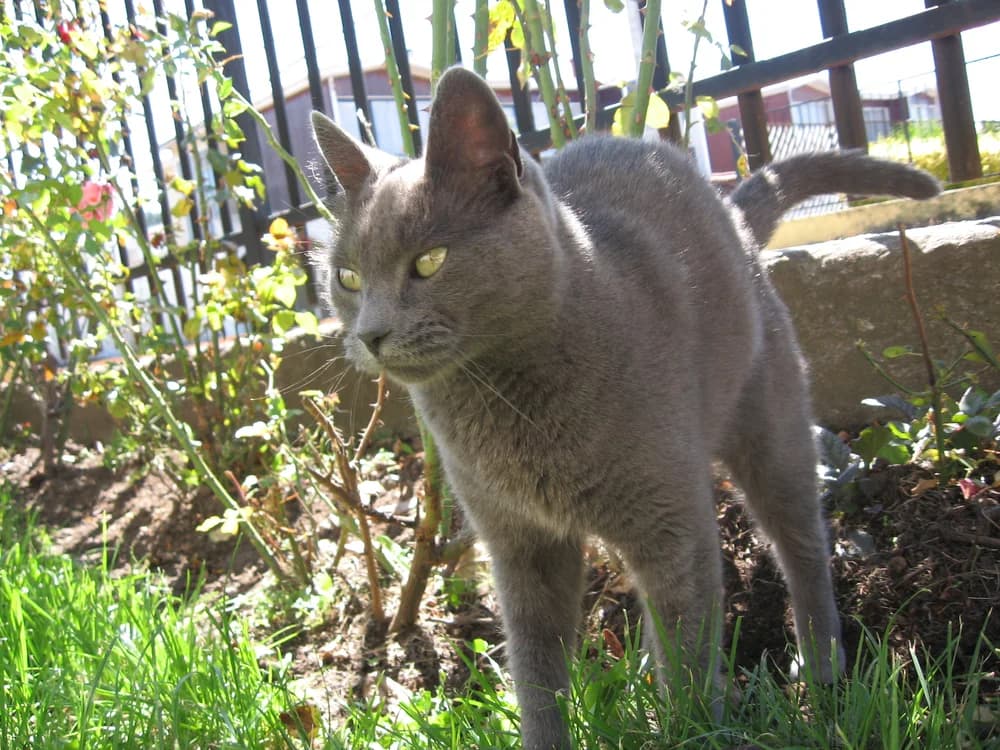
Blue-grey Chartreux sitting, the robust body on fine legs
Photo: Leofonseca · CC BY-SA 4.0 · via Wikimedia Commons
Got a Chartreux? Share them with the community. Photos from our members round out this page.
 Vital stats
Origin
France
France, by long association; by documentation, more modest. The Carthusian-monks legend is the famous origin. The most concrete fact our research holds is the Grande Chartreuse monastery's own 1972 statement that it has no archival record of the monks keeping the breed. The documented modern history: the Léger sisters' breeding program on Belle-Île from the late 1920s, near-extinction in the war, and a postwar recovery that 's own account says borrowed British Shorthair blood.
Weight
Female
6-9 lb (2.7-4.1 kg)
Male
10-14 lb (4.5-6.4 kg)
Life expectancy
's box says 8-13+ years, 's says 12-15: two registry claims that disagree, neither citing a study, printed as the span they are. The genuinely differentiated finding: the Chartreux appears in NONE of the five multi-breed measured-longevity cohorts this project checked. So no measured life expectancy exists for the breed anywhere, stated plainly rather than papered over with a box figure.
Coats
Blue-grey
One color, everywhere and always: blue-grey, from ash to slate, with gold-to-copper eyes; green eyes disqualify at every registry. (If a search engine suggested you a tabby or pink Chartreux, it hallucinated: no such cat exists in any standard, current or historical.)
Understanding the coats (and their genetics)Size
A rare two-registry convergence: TICA's official standard and Canada's CCA-AFC agree to the decimal. Males 10-14 lb (4.5-6.4 kg), females 6-9 lb (2.7-4.1 kg). GCCF's own box runs higher, 11-18 lb, attributed to GCCF by name and never averaged in. The build is the breed's famous joke made flesh: a potato on toothpicks, a strong, robust body on notably fine, slim legs.
Did you know
Charles de Gaulle shared the Élysée years with a Chartreux named Gris-Gris, and the novelist Colette wrote hers, Saha, into 'La Chatte'. The often-repeated upgrade that the breed was declared the official cat of France traces to no primary source anywhere our research reached, its own UK breed club included: two true cats, one untraceable title.
 Personality
 Affection4/5
 Energy3/5
 Intelligence4/5
 Friendliness3/5
 Independence4/5
 Vocal1/5
 Shedding3/5
Compatibility
 Good with children4/5
 Good with other pets4/5
 Apartment friendly5/5
Editorial ratings on our five-point scale, anchored in the registry descriptions and the measured behaviour studies cited on this profile; individual cats vary, and our members' own ratings below are the counterweight.
Still torn between this breed and another?Compare the Chartreux trait by trait, or filter every breed by what matters to you. What our members say
What our members say
Nobody has described their Chartreux here yet. As soon as the first profiles come in, this is where the community averages will show up: temperament, food, lifestyle.
Describe my Chartreux Pros & cons
Strong points
- One of the quietest voices in the fancy: some Chartreux barely meow at all
- Genuinely tolerant of solo time, by every portrait: a working household's cat
- TICA and Canada agree its weight to the decimal: rare, trustworthy figures
- GCCF's 2024 testing scheme makes UK paperwork unusually complete (PKD1, longhair, blood type)
- One color, one coat, a weekly comb: the grooming is the easy part
Things to consider
- Never measured in any behaviour survey: the calm portrait is prose, not data
- No measured lifespan exists; the registry boxes disagree (8-13+ vs 12-15)
- The woolly coat's seasonal shed surprises owners sold on low-maintenance
- Three sources flag a mature weight-gain tendency (against TICA's lone no-special-needs line)
- Thin market: waiting lists in the UK, price silence in Canada, no cats in Australia
 Is a Chartreux right for you?
Someone who wants presence without noise. A quiet, independent-leaning companion that bonds deeply and tolerates a workday alone better than most breeds' portraits claim. It asks for a weekly comb, a watched waistline in middle age, and no drama.
Is the Chartreux right for YOUR home?
Answer a few questions and we'll email you your personalized result.
Take the quiz · 2 min Getting to know the Chartreux
Start with the legend, and its denial. The story says Carthusian monks bred quiet blue cats between prayers. The Grande Chartreuse monastery itself, asked in 1972, said it holds no archival record of any such thing, and we lead with that concrete answer. The documented breed begins in the late 1920s with the Léger sisters on Belle-Île, nearly ends in the war, and recovers with borrowed British Shorthair blood, by 's own account of a three-way postwar exchange that also touched the Russian Blue.
The cat is a study in quiet contrasts. One color, blue-grey under gold-to-copper eyes (green disqualifies everywhere). The fancy's only 'woolly' coat. A robust body on fine legs the fancy fondly calls a potato on toothpicks. The famous smile drawn by the tapered muzzle, and a voice so small some Chartreux barely meow. How it differs from the Russian Blue and the British Blue is one glance and one stroke: eye color, then coat word.
The honest data picture is thin, and we say so. No behaviour survey has ever measured the breed. No longevity cohort includes it. The registries' own lifespan boxes disagree, and we print the disagreement. What IS solid: and Canada's registry agree its weights to the decimal. And Britain's , which granted championship status in 2023, now requires -clear, longhair-non-carrier and blood-typed paperwork for every active-register cat.
That is the fancy's most complete buyer's checklist for a breed this size, born of a single 2010 kidney case and a registry that chose prevention. Owning one is mostly waiting: the market publishes two real prices, the UK runs on a club waiting list, Canada publishes nothing, and Australia, by its own federation's statement, currently has no Chartreux at all.
 Health: what to watch for
A few predispositions are well documented. The good news: they can be screened for or avoided by choosing a reputable breeder and keeping an eye on the right signals.
This is information, not veterinary advice, and it cannot tell you what is wrong with your cat. Our rule is a simple one: if something is wrong with your cat, call your vet, and call an emergency clinic if it is out of hours. Nothing you read here is a reason to wait.
PKD1, and the registry that chose prevention
Screenable, registry-ledThe whole story runs through one case: a single confirmed Chartreux PKD1-positive cat, published in 2010, with the paper's own historically grounded hypothesis of how a Persian-family mutation could have entered the gene pool through past crossbreeding. GCCF's answer is the lead fact. Since 1 January 2024, every Chartreux wanting UK active-register status must test PKD1 clear (alongside the longhair-gene and blood-type requirements of the same scheme). One case, one registry response, and a paperwork question any buyer anywhere can now ask by name.
Symptoms to spot
PKD is typically silent for years; increased thirst and urination or weight loss in an adult cat is a vet call, never a wait.
How common
One confirmed published case; no population rate exists for the breed.
Screening & prevention
Ask for both parents' PKD1 results; in the UK the paperwork must exist.
Genetic test
Yes: the PKD1 DNA test, GCCF-mandatory for UK active-register cats since 1 January 2024.
Blood type (the b-allele file)
Breeder-side, manageableA genotyping survey found b-alleles (the type-B blood group) present in a small Chartreux sample. That is a breeding-management fact: a type-A kitten born to a type-B queen risks neonatal isoerythrolysis from the mother's own colostrum, unless the breeder manages the litter. GCCF's 2024 scheme requires a recorded blood type for exactly this reason. For an owner, this is a question answered on the pedigree paperwork, not a disease.
Symptoms to spot
A breeder-side risk in a kitten's first days, not an owner-observable adult condition.
How common
b-alleles present in a small genotyped sample; no large population figure exists.
Screening & prevention
Ask the breeder for the parents' blood types and the litter plan.
Genetic test
Yes: blood-typing (including b1/b2 alleles), part of the GCCF scheme.
Urinary stones (a proportion, not a rate)
Good to knowIn a German stone-analysis-center dataset (5,173 feline stones, 1981-2008), Chartreux cats were the fourth most represented named breed among stone-formers, at 1.7% of submissions. The discipline this figure demands: it is a proportion among cats that already formed stones, with no population denominator. It shows the breed is not rare among stone-formers in that dataset, and it is NOT a risk ratio. Hydration and ordinary urinary vigilance apply as for any cat.
Symptoms to spot
Straining, frequent small urinations, blood in urine, or crying in the box: a vet visit; a male cat unable to pass urine is an EMERGENCY, immediately.
How common
1.7% of stone-forming submissions in one German center dataset; no population rate exists.
Screening & prevention
Water access and wet food in the diet conversation; urinary signs are never a wait-and-see.
Genetic test
No
What is NOT documented (the honest file)
Honest evidence levelGCCF's own page calls the Chartreux one of the healthiest pure breeds; our research frames it more carefully: the literature is scattered and thin rather than clean. HCM: the breed was one of five in a 2012 echocardiography study, with no breed-specific rate readable and no Chartreux HCM gene test existing anywhere. One striking single case (a young cat's developmental lung disease, 2024) is a case report, not a pattern. No breed-defining mutation exists. Thin data cuts both ways: nothing alarming is documented, and little is documented at all.
Symptoms to spot
As for any cat: breathing changes, lethargy or exercise intolerance are same-day vet calls.
How common
No breed-specific rates exist for any cardiac or respiratory condition.
Screening & prevention
Routine vet care; mention the breed and follow your vet's lead on any murmur.
Genetic test
None breed-specific beyond the PKD1/blood-type scheme above.
Go deeper on health
Prevention, warning symptoms, costs and insurance: our guides, researched and sourced.
Also worth a look
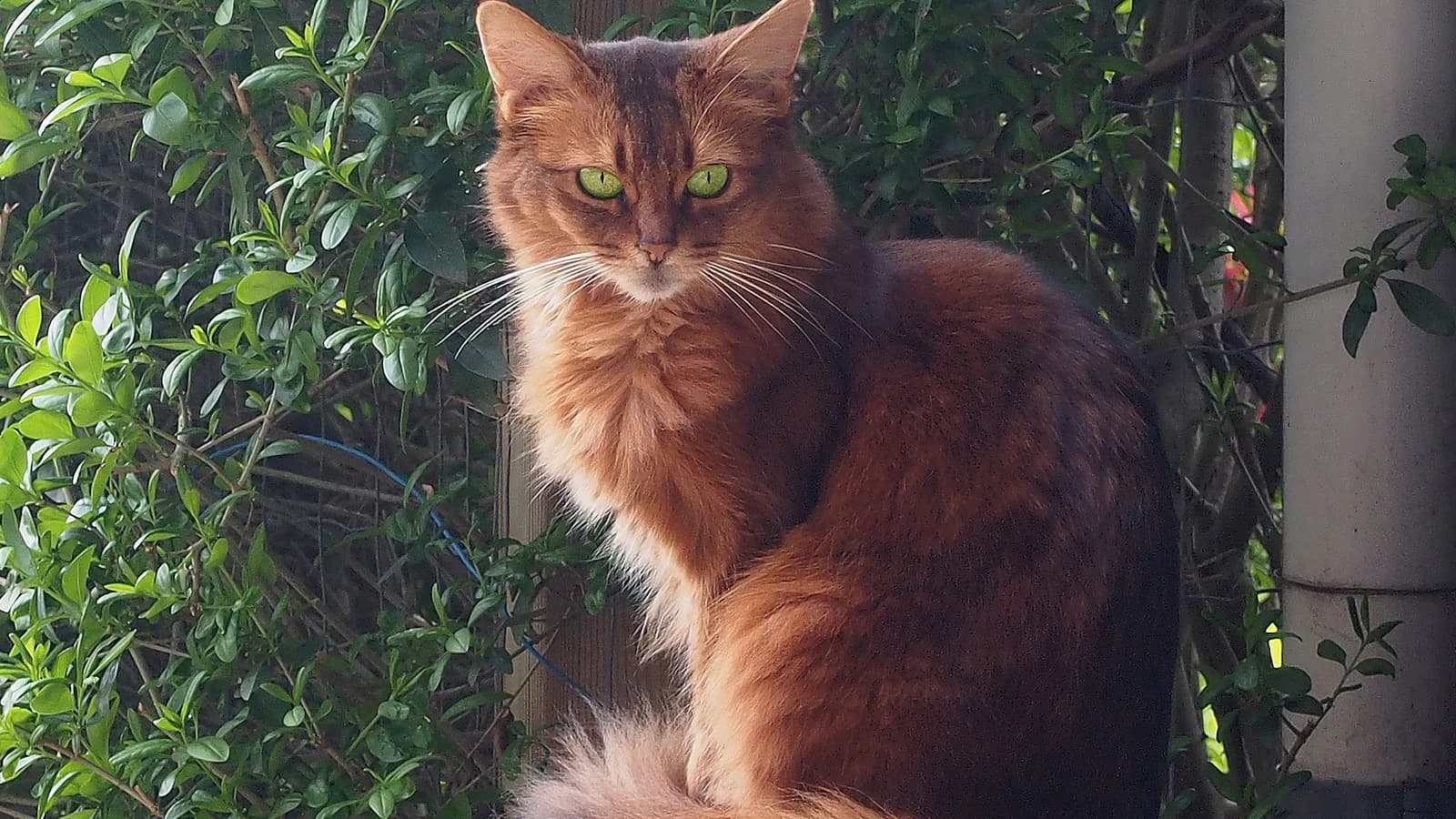
Somali
“The fox cat: TICA's own word for it is 'nickname'”
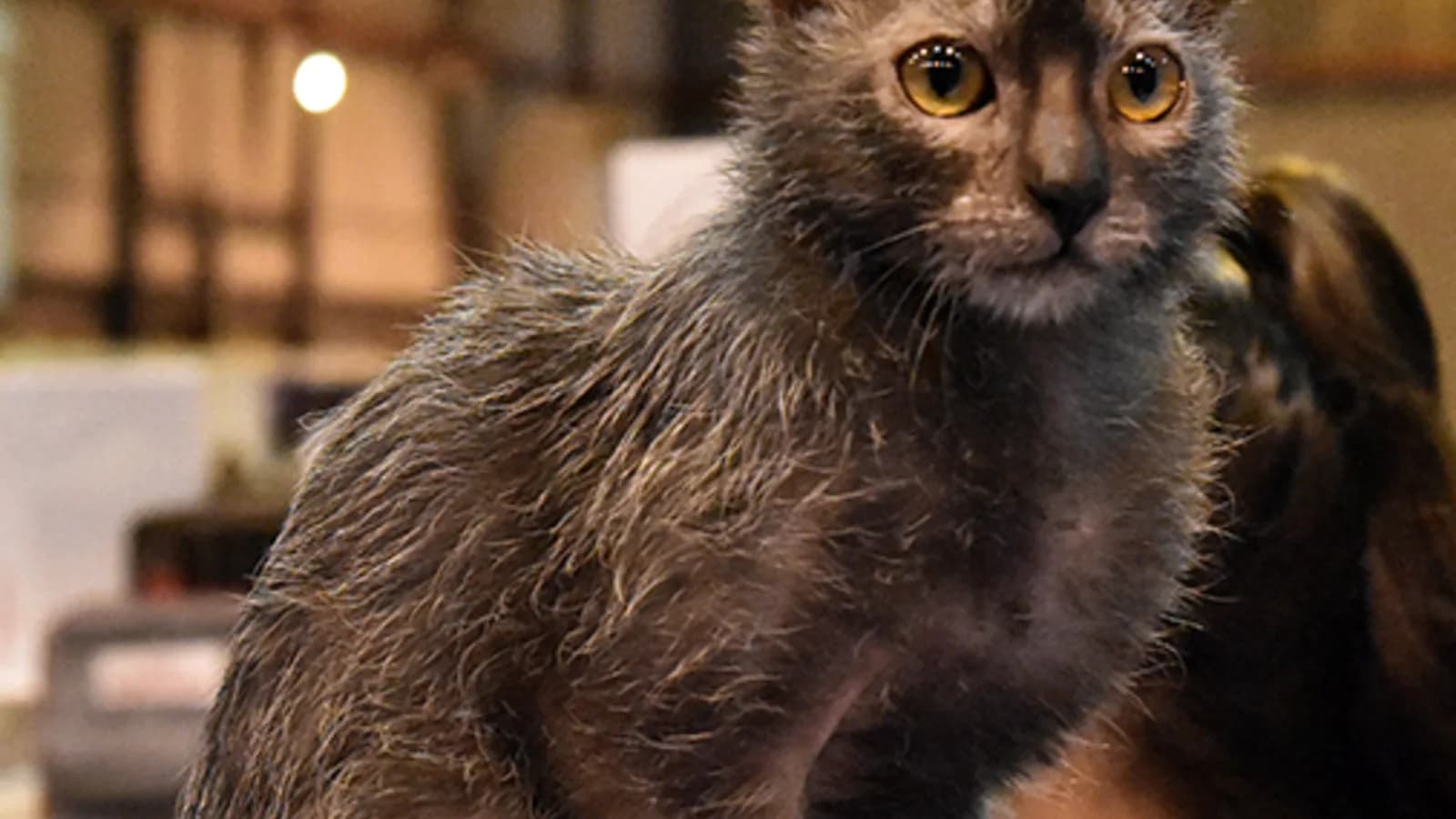
Lykoi
“The werewolf cat (also wolf cat, lycan cat): Greek 'lykos', wolf”
American Curl
“The Peter Pan of cats (TICA's own phrase), ears swept back like a wink”
Japanese Bobtail
“The pom-pom-tailed cat of Japanese art and, popularly, of the maneki-neko”
The Chartreux also appears in
Our criteria-based guides, to compare this breed with the ones most like it.
 Grooming & living with one
Grooming
's low-maintenance label describes the EFFORT, not the shedding. A weekly comb does the routine work, and the woolly double coat still delivers a real seasonal shed twice a year, sourced across five independent sites. Degreasing shampoos and over-bathing work against the coat's texture; a comb and patience work with it.
Living together
Good with children and other pets by the registry portraits: a tolerant, unflappable presence rather than a playmate-in-chief. Its quiet voice and independence make it one of the easiest breeds to keep in an apartment. The honest caveat: no survey has ever measured the breed's behaviour.
 Food & diet
General adult-cat guidance applies, labeled general. The one breed pattern worth a sentence: three independent sources (, Royal Canin, Purina UK) flag a weight-gain tendency in mature Chartreux, against 's lone claim of no special needs. We print both, and watch the waistline from middle age. Portion math lives on our tools.
 Price & budget
$1,300
Price of a kitten from a registered breeder, in the United States
This price reflects the quality of the breeding program: parents' health tests, registry pedigree, socialization. A very low price should raise a red flag. The real cost, though, plays out over the years.
Find a verified breederKitten price, by market
United States
$1,300
United Kingdom
£1,200
Each figure is that country's real market price, researched separately, not a conversion of the others. The smaller line is only there so you can gauge one against your own money: European Central Bank reference rates of 2026-09-18, refreshed daily.
The Chartreux in the US, UK, Canada and Australia
| Measure | United States | United Kingdom | Canada | Australia |
|---|---|---|---|---|
| Price picture | $1,300, the one published cattery figure | £1,200, the breed club's own waiting-list price | No published price (checked absence) | No market: no exhibits in the country per ACF |
| Registry status | CFA (accepted 1979, championship 1987), TICA (Category II Natural Breed) | GCCF championship status since 2023 | CCA-AFC: a fully CLOSED studbook | ACF: no current standard, a reasoned absence |
| Outcross policy | None permitted | GCCF permits one specific DNA-tested outcross route | Closed entirely | Not applicable |
| Buyer's paperwork | PKD1 test askable | GCCF-mandatory since 1 Jan 2024: PKD1 clear, longhair (M4) non-carrier, recorded blood type | US/UK lab tests available | Not applicable |
Four markets, three registry pictures and one stated absence. Prices are August 2026 and expire with the quarter.
Work out your food budget
Type of food
Estimated monthly budget
$14
≈ 2.4 oz (68 g) per day
A ballpark figure, food only, using the same arithmetic as our portion tool (resting energy requirement × 1.2, a neutered adult). Real needs vary with age, activity level and body condition. Ask your veterinarian for advice.
 Verified catteriesThe registry-checked directory, plus a kitten alert near you. Filter it by breed.
 Should you insure a Chartreux?
Our sources list several predispositions in the Chartreux: PKD1, and the registry that chose prevention, Blood type (the b-allele file), Urinary stones (a proportion, not a rate), among others. A predisposition is not a foregone conclusion, and many of these cats live their whole lives without ever developing anything. It does change the nature of the follow-up, though: you monitor, sometimes for life, and it's that monitoring that weighs on a budget, more than a one-off accident.
One thing to weigh before deciding: this is a cat you will live alongside for well over a decade, and that is the span the real cost is spread across, premiums and care alike. Where a breed has a measured life expectancy that differs from the figure usually quoted, we say so in the lifespan section above rather than repeating the quoted one here.
 Chartreux cats in our community
This breed is barely covered by free photo libraries: we only found 3 photos we could verify. Your cats are especially welcome here.
No Chartreux here yet
Got one? Add a photo and yours gets to open this page.
 The vet's take

Veterinary review
Are you a vet?
Your professional read belongs here: every verified practitioner can leave a note, published once our editors have reviewed it.
Sign in and get your license number verified. We check it in the public register, we never ask for or keep a copy of your diploma, and your number is never published.
 Frequently asked questions
+How do you pronounce Chartreux?
Shar-TROO, with a silent final X, in the US form. The name follows the French mountain massif and its famous monastery, whatever the archives say about the cats.
+What is the difference between a Chartreux and a Russian Blue?
One glance: gold-to-copper eyes on the Chartreux, green on the Russian Blue, each disqualifying at the other's registries. Then the coat: woolly versus silvery double-plush. Our comparison page carries the full grey-family field guide.
+Did Carthusian monks really breed the Chartreux?
The monastery itself said no record exists: in 1972 the Grande Chartreuse stated it holds no archive of the monks keeping the breed. The legend is charming, its own registries hedge it, and we print the denial as the one concrete fact.
+How much does a Chartreux cost?
The market publishes exactly two trustworthy figures: $1,300 at the one US cattery that publishes a price, and £1,200 as the UK club's waiting-list figure. Canada publishes nothing (a checked absence) and Australia currently has no cats of the breed at all, per its own federation.
+How long do Chartreux cats live?
Unmeasured: the breed appears in none of the five multi-breed longevity cohorts we checked. The registry boxes disagree (TICA 8-13+, GCCF 12-15), neither citing a study; we print the span and the absence.
+Are Chartreux cats quiet?
Famously: the quiet voice is the most consistent line in every registry and club portrait, and some Chartreux barely meow at all. The honest caveat: no behaviour survey has ever measured the breed, so the portrait is prose, not data.
+Do Chartreux cats shed?
Yes, genuinely and seasonally: the low-maintenance label describes the effort (a weekly comb), not the shed volume. The woolly double coat delivers a real molt twice a year.
+Can a Chartreux have green eyes?
Not per any registry: green eyes disqualify everywhere, and GCCF's standard withholds all awards for them. Gold-to-copper is the breed's color; a green-eyed grey is likely telling you Russian Blue.
+What colors do Chartreux come in?
One: blue-grey, from ash to slate, at every registry current or historical. Search suggestions for tabby or pink Chartreux are search-engine hallucinations; no such cat exists in any standard.
+Was the Chartreux declared the official cat of France?
We could not trace that claim to any primary source, including the breed's own UK club. What is documented: de Gaulle's Chartreux Gris-Gris, and Colette's Saha in 'La Chatte'. The cats are real; the title is repute.
+Are Chartreux good apartment cats?
Among the best on paper: quiet-voiced, calm, independent-leaning and tolerant of solo time by every portrait. Add the weekly comb and a watched waistline from middle age, and it is a low-drama companion.
 Community questions
Got a question this page doesn't cover? Ask it: the best ones get published here with their answer.
Sources & references
Data checked against reference sources (TICA and CFA standards, genetics laboratories, veterinary schools).
- TICA: Chartreux breed
- CFA: Chartreux breed
- GCCF: Chartreux breed (championship since 2023)
- GCCF Chartreux Registration Policy (the 2024 DNA testing scheme)
- GCCF Chartreux Standard of Points (eyes yellow-to-copper; green withholds)
- The first reported Chartreux PKD case (PMC7129492)
- CMAH blood-type genotyping survey incl. Chartreux (PMC6520129)
- Hesse et al. 2012, German urolith-center dataset (Tierarztl Prax)
- The Chartreux Cat Club UK

Worth keeping a paw on
Pin this profile
To compare later, or to show someone still torn between two breeds. One click and it sits in your board.
Pin it on Pinterest
 Purr or Pass
Still deciding? Find the perfect breed for your home.
A quick quiz that factors in your lifestyle, your kids and your other pets.
Which breed fits my home?Keep exploring
The floor belongs to our members. Keep it kind, links are not allowed, and images go through moderation before anyone else sees them.