

Nebelung
“The creature of the mist: German Nebel plus the Nibelungenlied saga”
 By Priya · The careful one
Published August 21, 2026Updated August 26, 20268 min read
Contents
 Nebelung photos
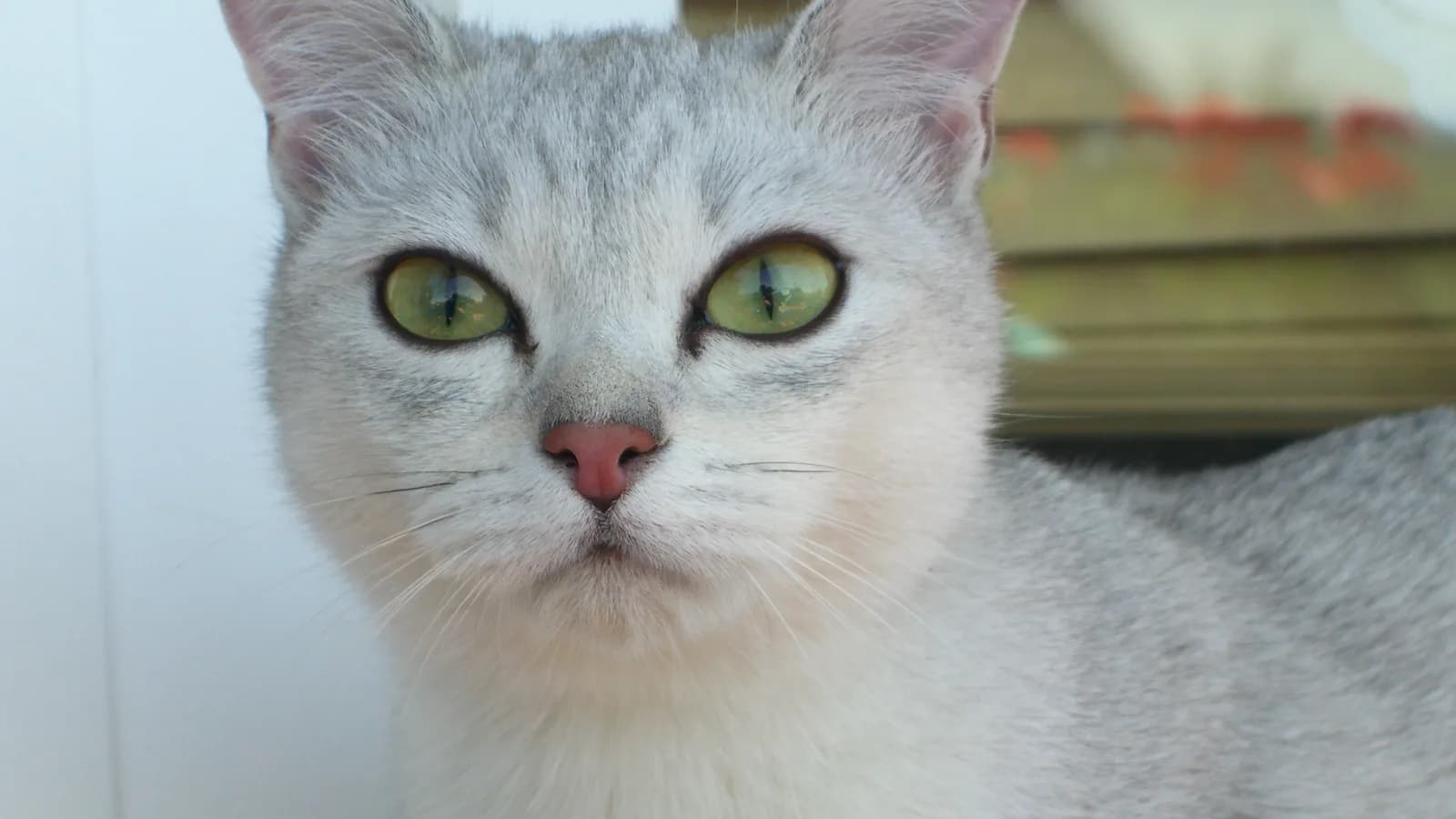
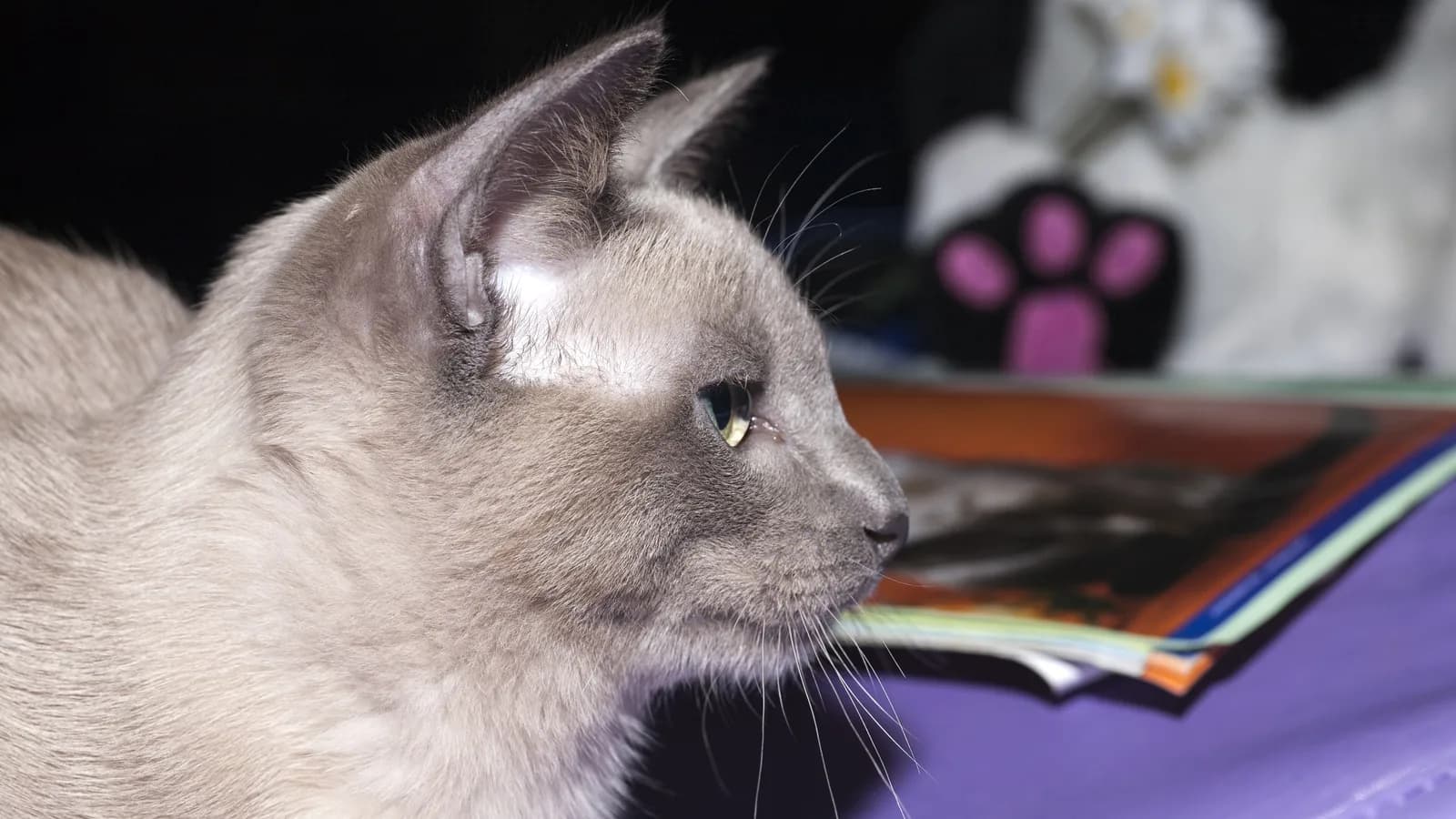
Real photos, so you can see what the breed actually looks like: coats, ear tufts, ruff and build.
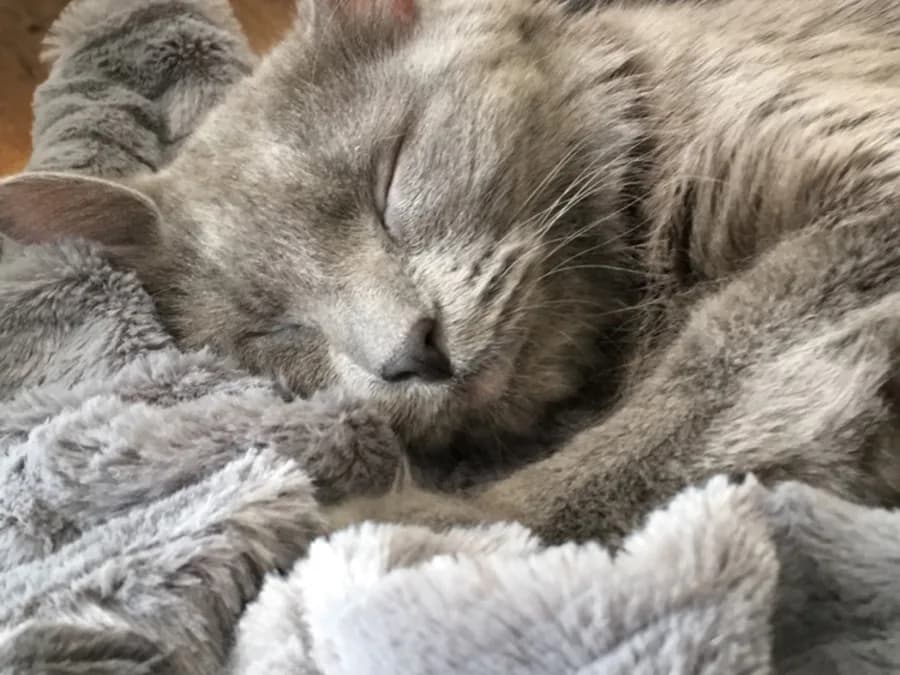
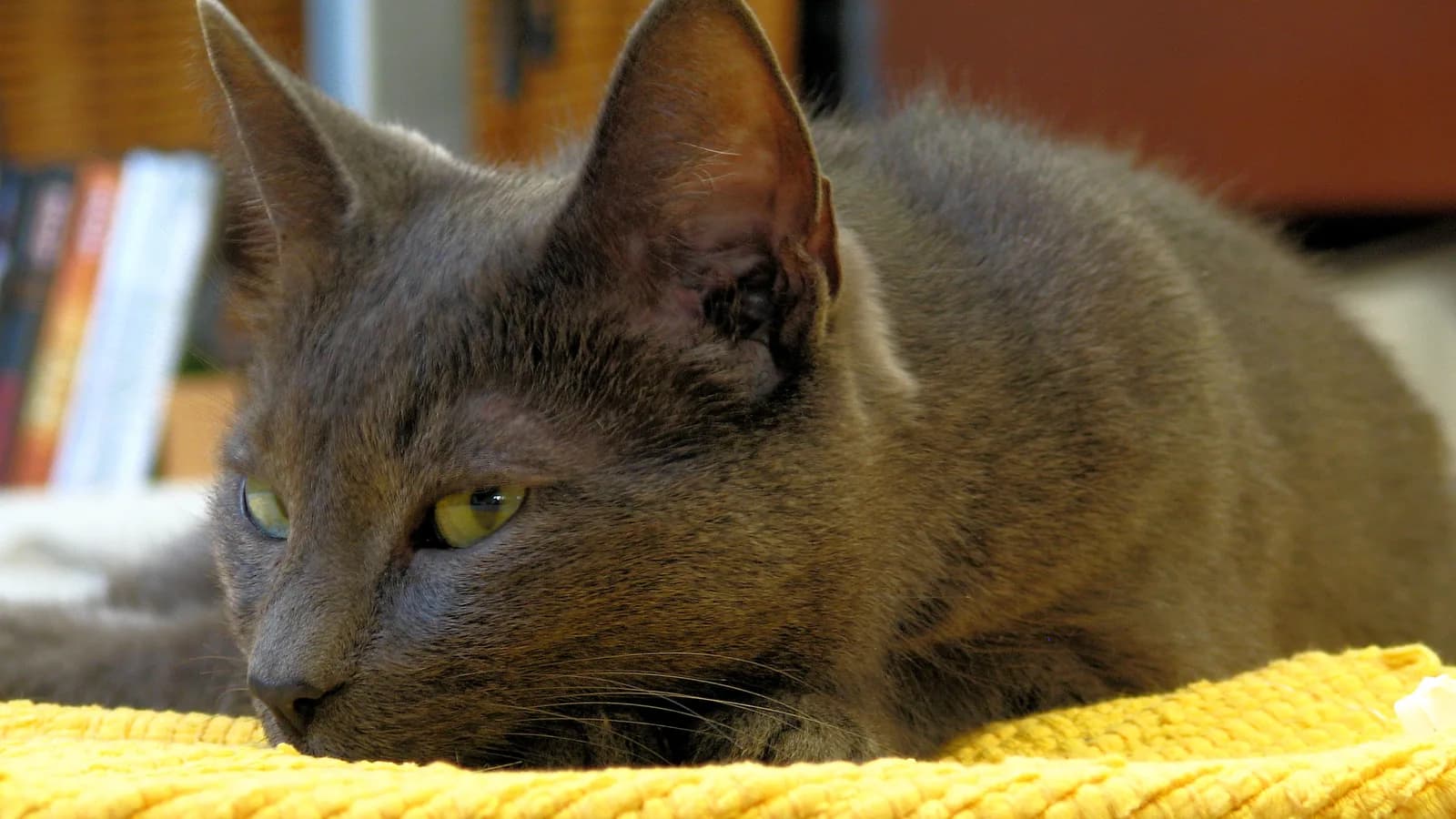
Blue-gray Nebelung cat curled up asleep on a plush blanket, faint tabby shading on the face
Photo: Aehlert95 · CC BY-SA 4.0 · via Wikimedia Commons
 Vital stats
Origin
United States
Denver, Colorado, the 1980s. Programmer Cora Cobb's cats Siegfried (born 1984) and Brunhilde (born 1985), both named for Nibelungenlied characters, founded the breed at her Nebelheim Cattery. Geneticist Dr Solveig Pflueger advised, with a standard drafted from the Russian Blue's with a semi-long coat. accepted the Nebelung as a new breed in 1987 and, after a rejected first attempt in 1995, granted full Championship in 1997. Cobb's own account says a kitten named Sigrdrifa helped clinch that vote in person.
Life expectancy
Three unreconciled registry claims and zero measured backing, printed as exactly that. 's stat box says 11-16+ years. TICA's own body text says reaching eighteen is not uncommon (a registry disagreeing with itself). 's box says 15-18. The one measured study naming the breed pools it with the Russian Blue and measures KITTEN mortality in a French cohort, never adult lifespan. The 11-18 span covers the claims; no figure here is a measurement.
Coats
Blue with silver tipping (the only color)
Green eyes (the standard's aim)
Blue only, every recognizing registry agrees, with the silver-tipped shimmer as the breed's finish. The one nuance real owners search: a small white patch (usually the chest) is a real, named fault. It is penalised by and awards-withheld by and , but not formally disqualifying at any of the three. Green eyes are the standard's aim, arriving with maturity.
Understanding the coats (and their genetics)Size
Stated exactly as thin as it is: no measured adult-weight study exists for this breed anywhere. GCCF's own two documents disagree with each other (its SOP carries an apparent transcription error in the male ceiling; its consumer page states a wider 8-16 lb / 3.6-7.3 kg range). The consumer convergence zone runs roughly 7-15 lb (3.2-6.8 kg). Three unreconciled ranges, named side by side, none picked as authoritative.
Did you know
The name is a double allusion founder Cora Cobb built in: German 'Nebel' (mist) for the shimmering blue coat, and the Nibelungenlied, the medieval German epic that also named her founding cats Siegfried and Brunhilde. Rarity is not a marketing line here. recorded 413 registrations across 34 years, and the breed's founding US cattery was also its last.
 Personality
 Affection4/5
 Energy3/5
 Intelligence4/5
 Friendliness2/5
 Independence3/5
 Vocal2/5
 Shedding3/5
Compatibility
 Good with children3/5
 Good with other pets3/5
 Apartment friendly5/5
Editorial ratings on our five-point scale, anchored in the registry descriptions and the measured behaviour studies cited on this profile; individual cats vary, and our members' own ratings below are the counterweight.
Still torn between this breed and another?Compare the Nebelung trait by trait, or filter every breed by what matters to you. What our members say
What our members say
Nobody has described their Nebelung here yet. As soon as the first profiles come in, this is where the community averages will show up: temperament, food, lifestyle.
Describe my Nebelung Pros & cons
Strong points
- A genuinely rare, quiet, family-devoted companion with a documented founding story told in the founder's own words
- Blue-and-silver semi-long coat with the plumed tail: the Russian Blue's shimmer at length
- Recognized outright by TICA, GCCF and ACF, with the relationship to the Russian Blue managed in the standards themselves
- Calm, routine-loving apartment temperament by both registries' converging accounts
Things to consider
- Genuinely hard to buy: zero current TICA-listed breeders, a retired founding cattery, and markets where crossbreeds dominate the listings
- No measured weight, lifespan, temperament or health study exists: the file is registry prose with self-contradictions we print rather than hide
- Shy with strangers and young children by both registries' own text
- Weekly combing: the coat does not inherit the Russian Blue's low-maintenance reputation
 Is a Nebelung right for you?
A calm, patient household, ideally without a parade of visitors or toddlers. One that wants a quiet, devoted, mist-colored companion, will comb weekly, and accepts that finding a papered kitten is a cross-border project measured in months.
Is the Nebelung right for YOUR home?
Answer a few questions and we'll email you your personalized result.
Take the quiz · 2 min Getting to know the Nebelung
Start with the question everyone actually asks: is this just a long-haired [Russian Blue](/breeds/russian-blue)? Closely related, same standard blue color, same ancestry, and NOT the same breed. Coat length is the axis every source converges on, and the registries themselves manage the relationship. recognizes the Nebelung outright, with the Russian Blue as its only permitted outcross. recognizes it fully, and its own text rejects the 'just a longhaired Russian Blue' framing.
Australia's follows . WCF is the one registry that genuinely blurs the line (its listing badges the breed 'Russian Blue LH'). does not recognize it at all, calling the Russian Blue its 'sister breed'. And , and have simply never had it applied. Five bodies, three different verdicts, and not one borrowed statistic crosses between the two breeds anywhere on this page. The long story of the relationship has its own page.
The honesty file is unusually pure here: no measured weight, lifespan, temperament or health study exists for this breed anywhere. The registries contradict each other AND themselves on the numbers (we print all of it). The one substantive health data point is a correctly-scoped negative: Nebelungs screened clear of the Russian Blue's own REM-sleep-disorder gene variant. Rarity is measurable instead: 413 registrations in 34 years, no current TICA-listed breeder, a founding US cattery that was also the last, and today's population concentrated in Europe and Russia.
Buying one is the project, and our price page is built around the two honest gaps: live listings versus compiled guides, and purebreds versus the crossbreds that dominate rare-breed search results.
 Health: what to watch for
A few predispositions are well documented. The good news: they can be screened for or avoided by choosing a reputable breeder and keeping an eye on the right signals.
This is information, not veterinary advice, and it cannot tell you what is wrong with your cat. Our rule is a simple one: if something is wrong with your cat, call your vet, and call an emergency clinic if it is out of hours. Nothing you read here is a reason to wait.
The honest headline: no Nebelung-specific condition is documented anywhere
LOWNo confirmed, peer-reviewed, Nebelung-specific disease finding exists in the reachable literature. That is a near-total absence we state directly, rather than dress up in either direction: it reflects a rare, young, lightly studied breed, never a proven-healthy one. TICA's 'considered overall a healthy' line is registry prose, not a sourced medical claim, and is quoted only as such. Routine care and a vet call at anything abnormal remain the whole plan.
The one real data point: screened CLEAR of the Russian Blue's own gene variant
LOWThe genuinely new finding in the file is a correctly-scoped negative. Nebelung cats were screened for the Russian Blue's own FAM8A1 variant (associated with a REM-sleep behaviour disorder in that breed) and tested negative. That is a crossover-risk data point handled properly, not a Nebelung disease finding. It is exactly why no Russian Blue health figure appears anywhere on this page in either direction.
The pooled kitten study, named as pooled every time
LOWThe only measured study naming the breed at all is a French kitten-mortality cohort that POOLED Russian Blue and Nebelung before computing its figures. Nothing in it is a Nebelung-specific number. So none of its figures (mortality rate, mean birth weight, thresholds) is printed here as one: the pooling is the finding. Any concern about a specific kitten's weight or vigour is a breeder-and-vet conversation.
An insurer's claims list, labeled at its true weight
LOWOne US pet insurer's own resource page names five conditions commonly claimed for in its Nebelung policies (2015-2020), with no sample size, rate or ranking, and its own disclaimer that no Nebelung is guaranteed to develop any of them. We pass it along at exactly that weight: a labeled, low-confidence signal from proprietary data, published because so little else exists for this breed, never a prevalence list.
Go deeper on health
Prevention, warning symptoms, costs and insurance: our guides, researched and sourced.
Also worth a look
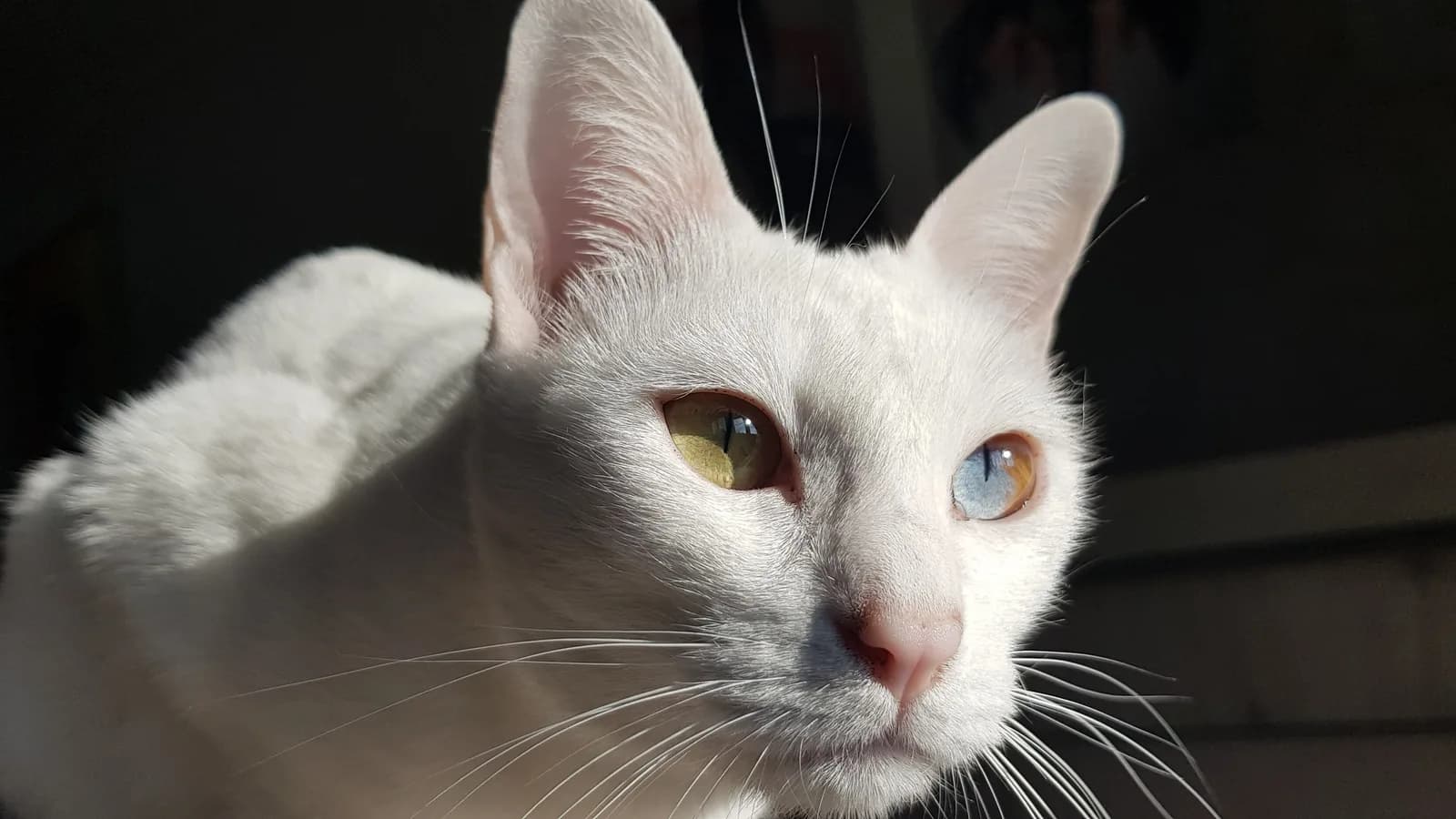
Khao Manee
“The Diamond Eye cat: Thai 'khao manee', white gem”
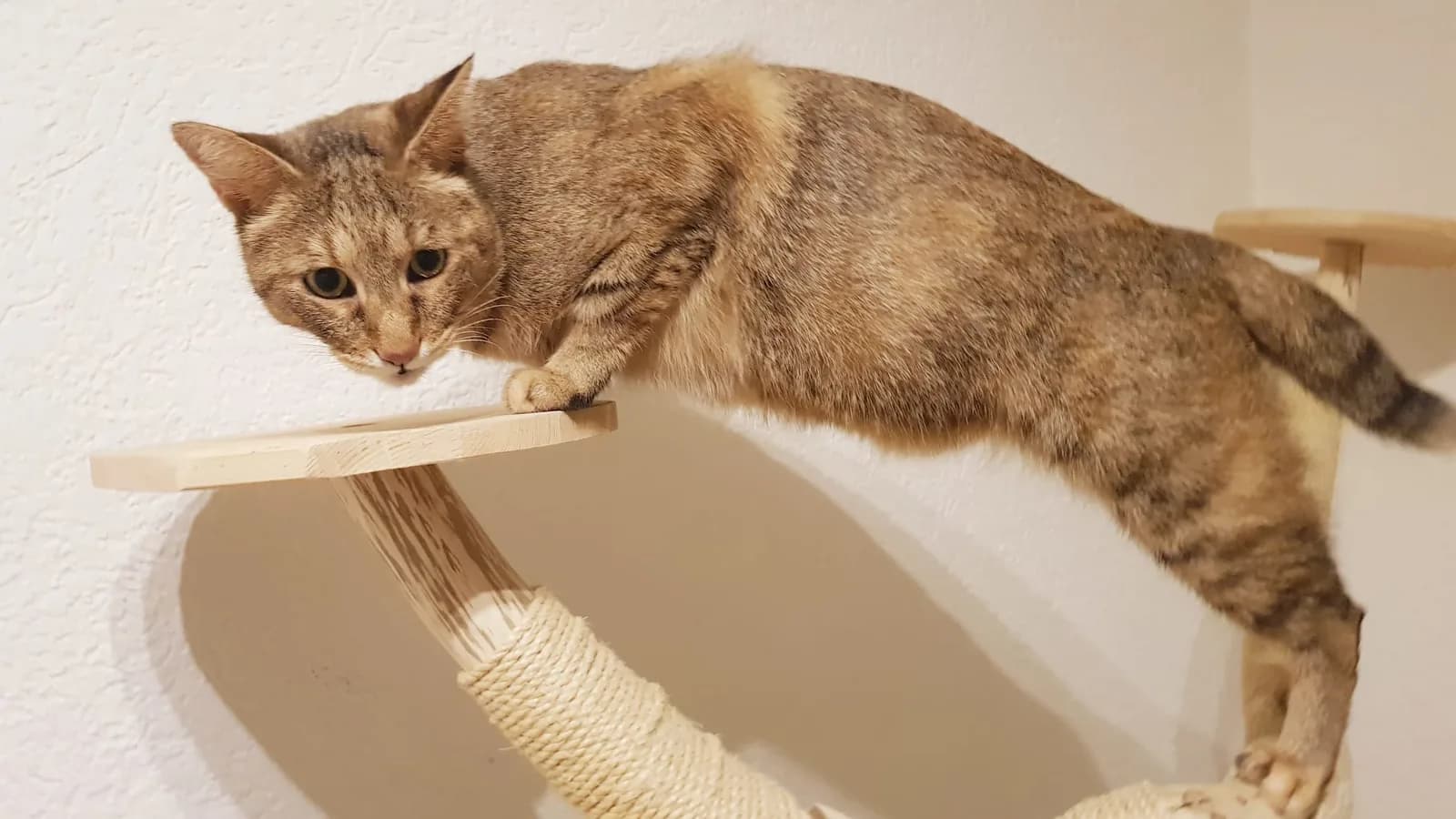
Chausie
“The jungle-cat hybrid built for the wild silhouette, not the spots”
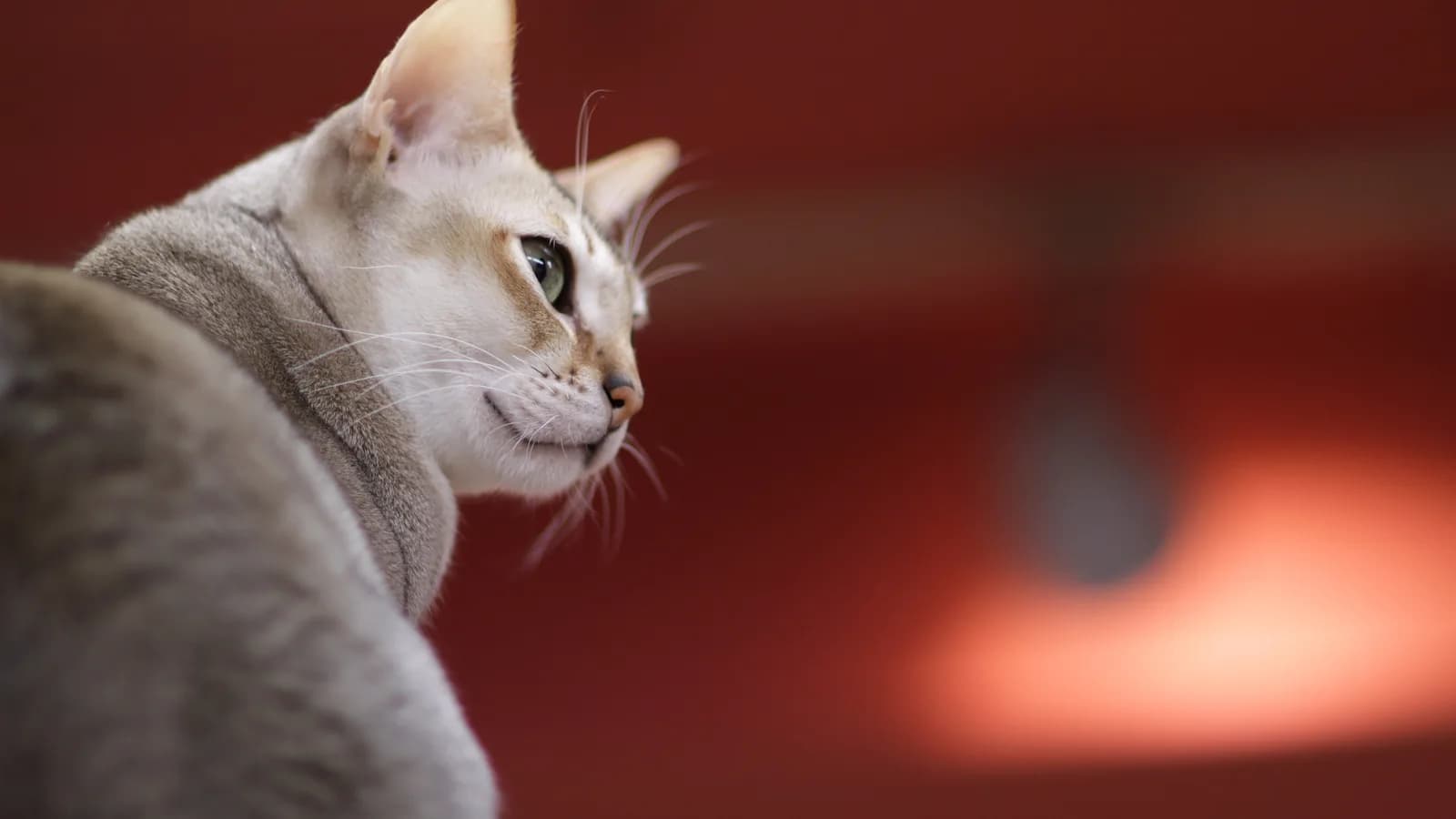
Singapura
“The Kucinta, Singapore's 'love cat', and one of the smallest breeds alive”
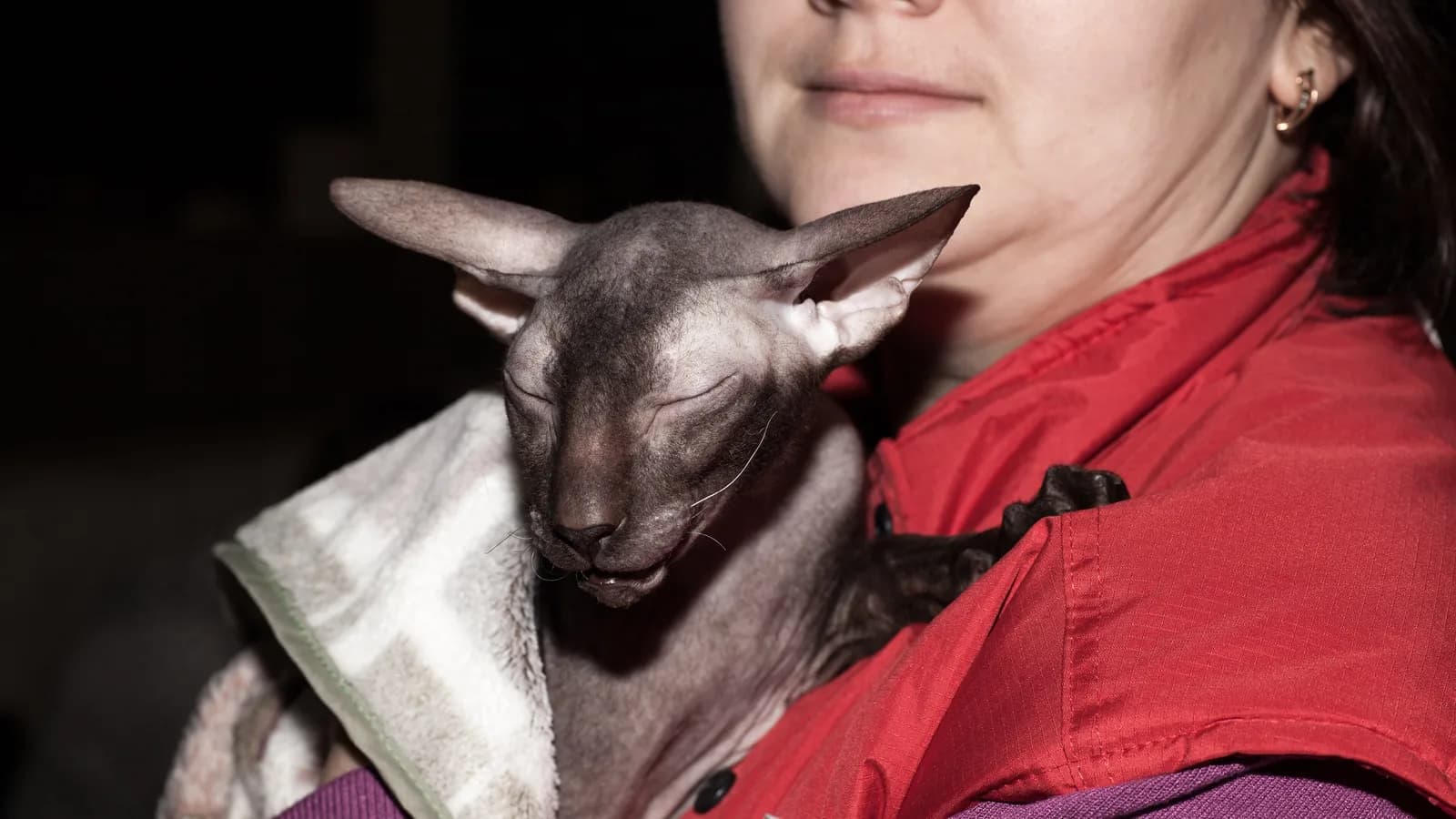
Peterbald
“St Petersburg's bald aristocrat: an Oriental frame in five coat classes”
 Grooming & living with one
Grooming
Weekly combing with a steel comb or long-hair brush, on which both registries and two independent consumer sources converge. The semi-long coat mats less than a Persian's. But it does NOT carry the Russian Blue's low-shedding reputation (Cats Protection lists the Russian Blue on its low-shedding list and does not list the Nebelung). Routine nails, teeth and ears complete it.
Living together
Devoted and gentle inside its family, reserved beyond it. Both registries describe a cat that hides from strangers rather than greets them, and does best with older, calmer children. With other calm pets it does well. A boisterous household works against the breed's whole temperament grain. No measured study exists behind any of this, and we say so.
 Food & diet
's own line is the breed's one feeding note: a fussy eater at first that risks overweight once a preferred food is found, worth knowing at the bowl. That is explicitly NOT the Russian Blue's 'large appetite' reputation, which stays on its own breed's page. General feline nutrition applies, portioned by body condition with your vet.
 Price & budget
$600 to 1,200
Price of a kitten from a registered breeder, in the United States
This price reflects the quality of the breeding program: parents' health tests, registry pedigree, socialization. A very low price should raise a red flag. The real cost, though, plays out over the years.
Find a verified breederKitten price, by market
United States
$600 to 1,200
United Kingdom
£250 to 800
Canada
CA$150 to 300
Each figure is that country's real market price, researched separately, not a conversion of the others. The smaller line is only there so you can gauge one against your own money: European Central Bank reference rates of 2026-09-18, refreshed daily.
Work out your food budget
Type of food
Estimated monthly budget
$14
≈ 2.4 oz (68 g) per day
A ballpark figure, food only, using the same arithmetic as our portion tool (resting energy requirement × 1.2, a neutered adult). Real needs vary with age, activity level and body condition. Ask your veterinarian for advice.
 Verified catteriesThe registry-checked directory, plus a kitten alert near you. Filter it by breed.
 Should you insure a Nebelung?
Our sources list several predispositions in the Nebelung: The honest headline: no Nebelung-specific condition is documented anywhere, The one real data point: screened CLEAR of the Russian Blue's own gene variant, The pooled kitten study, named as pooled every time, among others. A predisposition is not a foregone conclusion, and many of these cats live their whole lives without ever developing anything. It does change the nature of the follow-up, though: you monitor, sometimes for life, and it's that monitoring that weighs on a budget, more than a one-off accident.
One thing to weigh before deciding: this is a cat you will live alongside for well over a decade, and that is the span the real cost is spread across, premiums and care alike. Where a breed has a measured life expectancy that differs from the figure usually quoted, we say so in the lifespan section above rather than repeating the quoted one here.
 Nebelung cats in our community
No Nebelung here yet
Got one? Add a photo and yours gets to open this page.
 The vet's take

Veterinary review
Are you a vet?
Your professional read belongs here: every verified practitioner can leave a note, published once our editors have reviewed it.
Sign in and get your license number verified. We check it in the public register, we never ask for or keep a copy of your diploma, and your number is never published.
 Frequently asked questions
+What is a Nebelung?
A rare semi-longhaired blue breed founded in 1980s Denver from two cats named for the Nibelungenlied saga: the Russian Blue's shimmer at length, with green eyes and a plumed tail, recognized by TICA (1987, Championship 1997), GCCF and ACF.
+Is a Nebelung just a long-haired Russian Blue?
No, and the registries themselves split three ways on how to manage the relationship: TICA, GCCF and ACF recognize it as a separate breed (Russian Blue as the only permitted outcross), WCF badges it as a Russian Blue variety, and FIFe declines recognition, calling the Russian Blue its sister breed. Same ancestry, same color, separate breed, and no statistic crosses between the two pages.
+Are Nebelung cats rare?
Measurably: TICA recorded 413 registrations across 34 years, lists no current breeder, and the founding US cattery, which was also the last active one, has retired. The living population is concentrated in Europe and Russia, and a papered kitten is a cross-border search.
+How much does a Nebelung cost?
Compiled guides converge on $600-1,200; the live listings we read ran $75-1,000 in the US (unpapered), £250-800 in the UK with one TICA-registered litter at £800, and a crossbreed-heavy Canadian sample at $150-300. Our price page keeps every figure in its frame.
+How long do Nebelung cats live?
Nobody has measured it: TICA's box says 11-16+, TICA's own body text says eighteen is not uncommon, and GCCF says 15-18, three unreconciled registry claims we print as such. The only study naming the breed pools it with Russian Blues and measures kitten mortality, not adult lifespan.
+How do I know if my cat is a Nebelung?
Honestly: no registry publishes a visual identification checklist, and long-haired blue-grey cats occur everywhere. A real Nebelung is a paperwork claim, TICA or GCCF registration tracing to breed lines; without papers you have a lovely Nebelung-type cat, which is its own good outcome.
+Do Nebelung cats shed?
Moderately, and more than their short-haired cousin: the breed does NOT inherit the Russian Blue's low-shedding reputation (Cats Protection lists one and not the other). Weekly combing with a steel comb keeps the semi-long coat ahead of it.
+Are Nebelung cats good with children?
Both registries say the same nuanced thing: devoted to their family, shy with strangers and young children, best with calm older kids and predictable routines. No measured behaviour study includes the breed, so registry prose is all anyone has, and we label it as such.
+Can a Nebelung have a white spot?
It happens, usually on the chest, and the standards treat it as a fault, not an execution: penalised by TICA, awards withheld by GCCF and ACF, formally disqualifying at none of the three. For a pet, it is a birthmark; for the show bench, a problem.
+What health problems do Nebelung cats have?
None are documented for the breed specifically anywhere, an absence that reflects rarity rather than proven robustness. The one real data point is reassuring and correctly scoped: Nebelungs screened clear of the Russian Blue's own sleep-disorder gene variant. Anything wrong with your cat means call your vet.
 Community questions
Got a question this page doesn't cover? Ask it: the best ones get published here with their answer.
Sources & references
Data checked against reference sources (TICA and CFA standards, genetics laboratories, veterinary schools).
- TICA: Nebelung breed page
- GCCF: Nebelung breed page
- Cora Cobb, 'Nebelung History' (2007): the founder's own first-person account
- GCCF: Russian Blue breed page (the sister-breed boundary)
- ASPCA Pet Insurance: Nebelung cat facts (the labeled claims list)
- UC Davis VGL: cat test catalog (the FAM8A1 screening context)

Worth keeping a paw on
Pin this profile
To compare later, or to show someone still torn between two breeds. One click and it sits in your board.
Pin it on Pinterest
 Purr or Pass
Still deciding? Find the perfect breed for your home.
A quick quiz that factors in your lifestyle, your kids and your other pets.
Which breed fits my home?Keep exploring
The floor belongs to our members. Keep it kind, links are not allowed, and images go through moderation before anyone else sees them.