

Peterbald
“St Petersburg's bald aristocrat: an Oriental frame in five coat classes”
 By Priya · The careful one
Published August 21, 2026Updated August 26, 20268 min read
Contents
 Peterbald photos
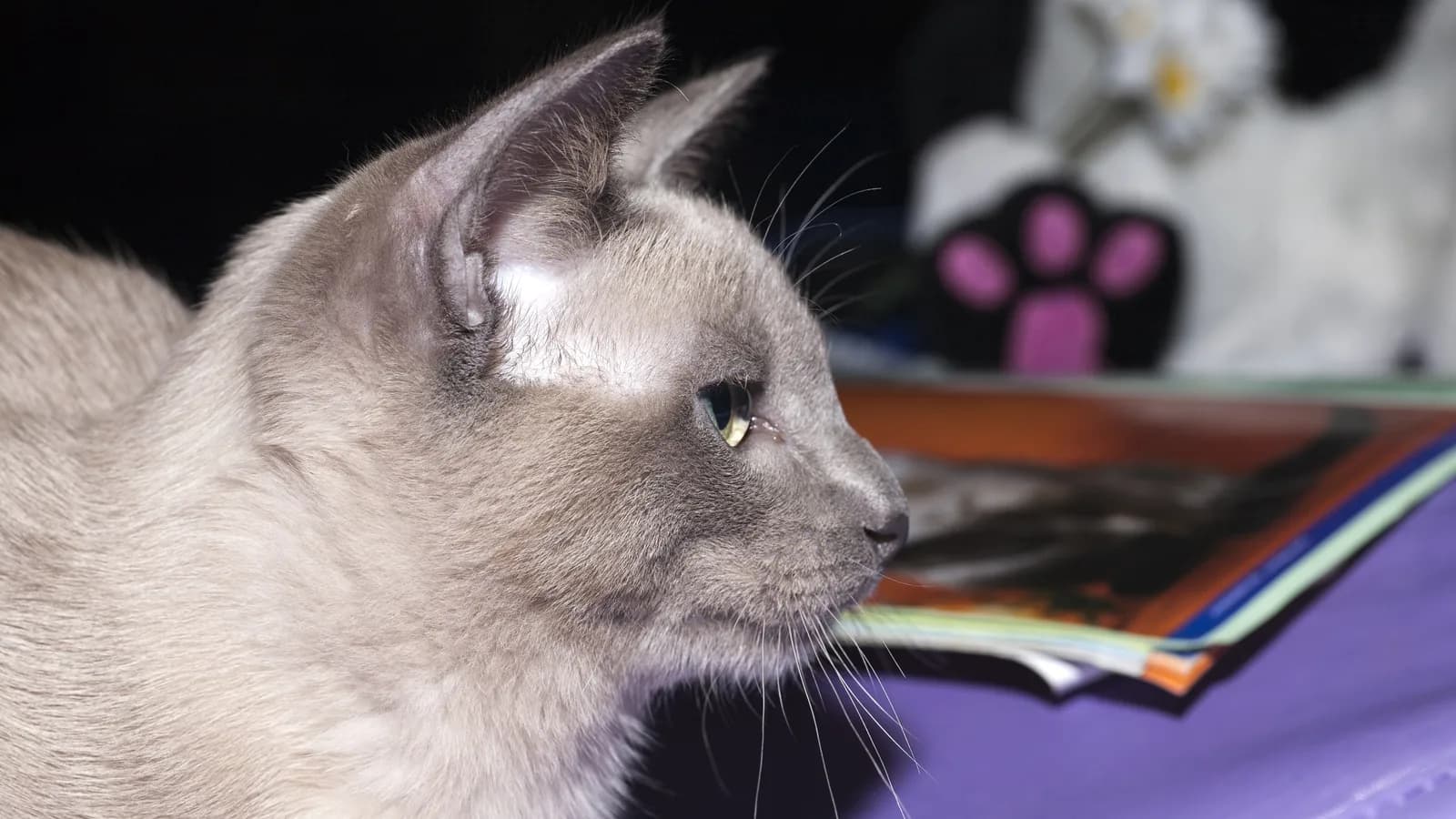
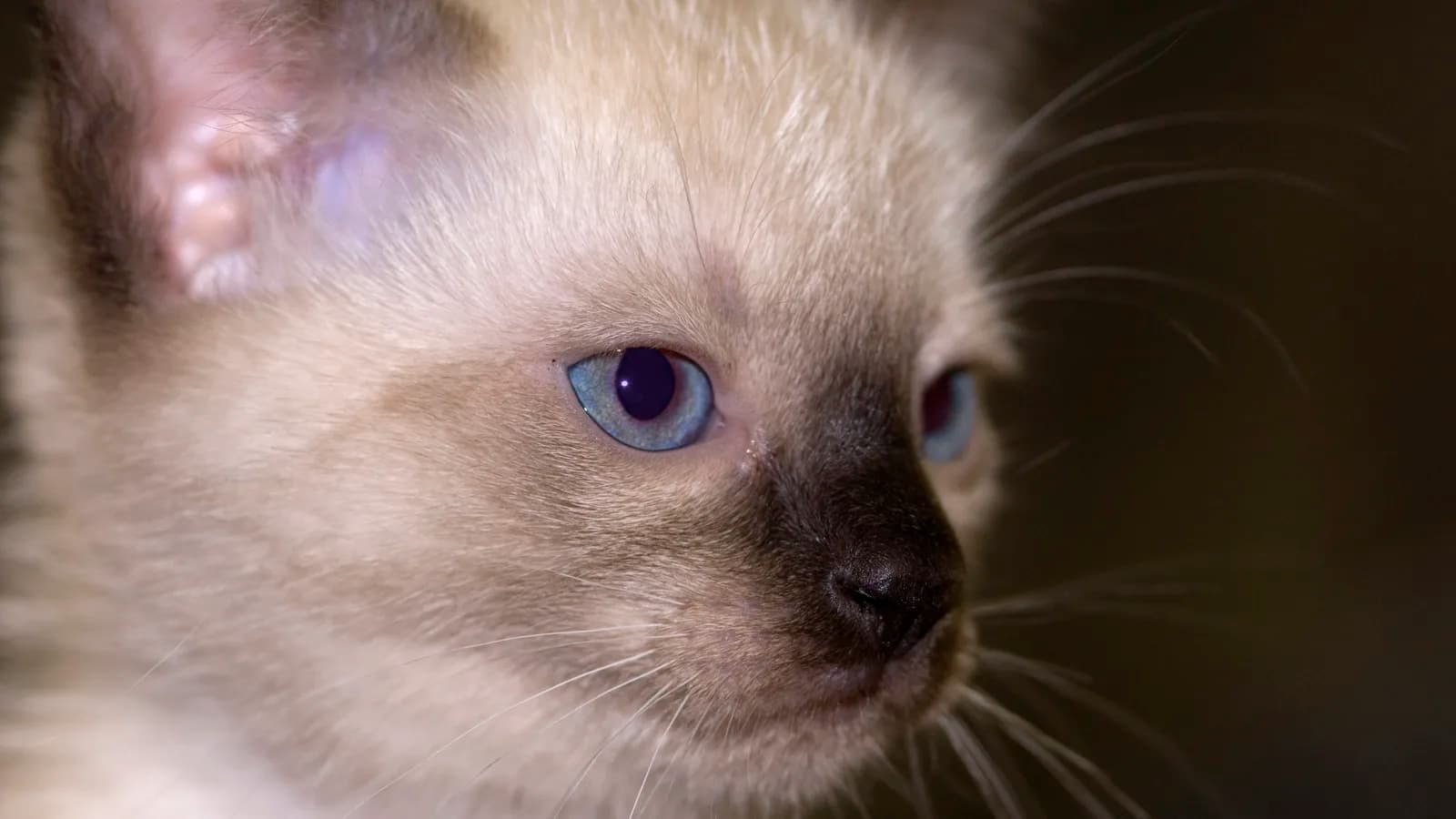
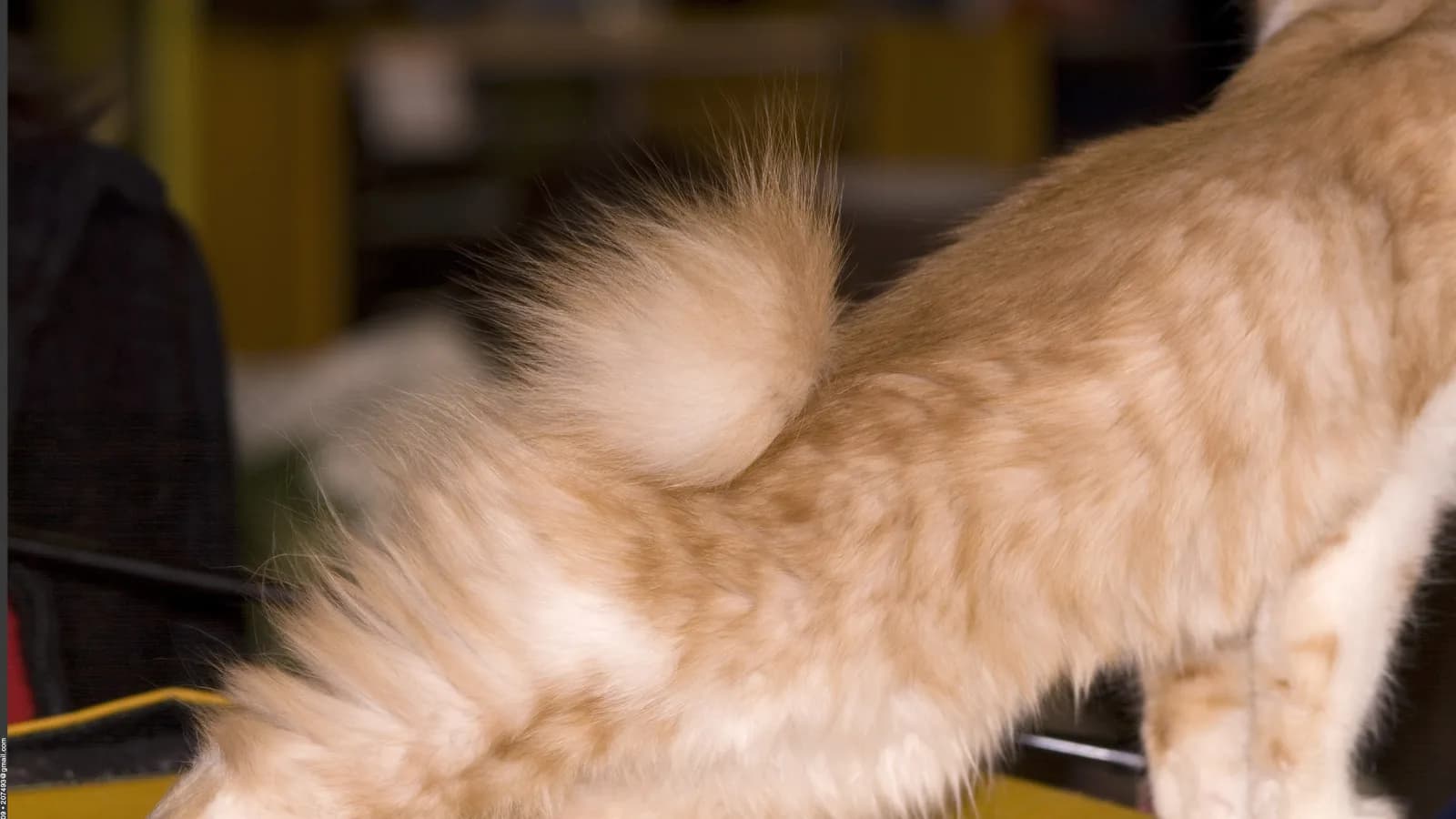
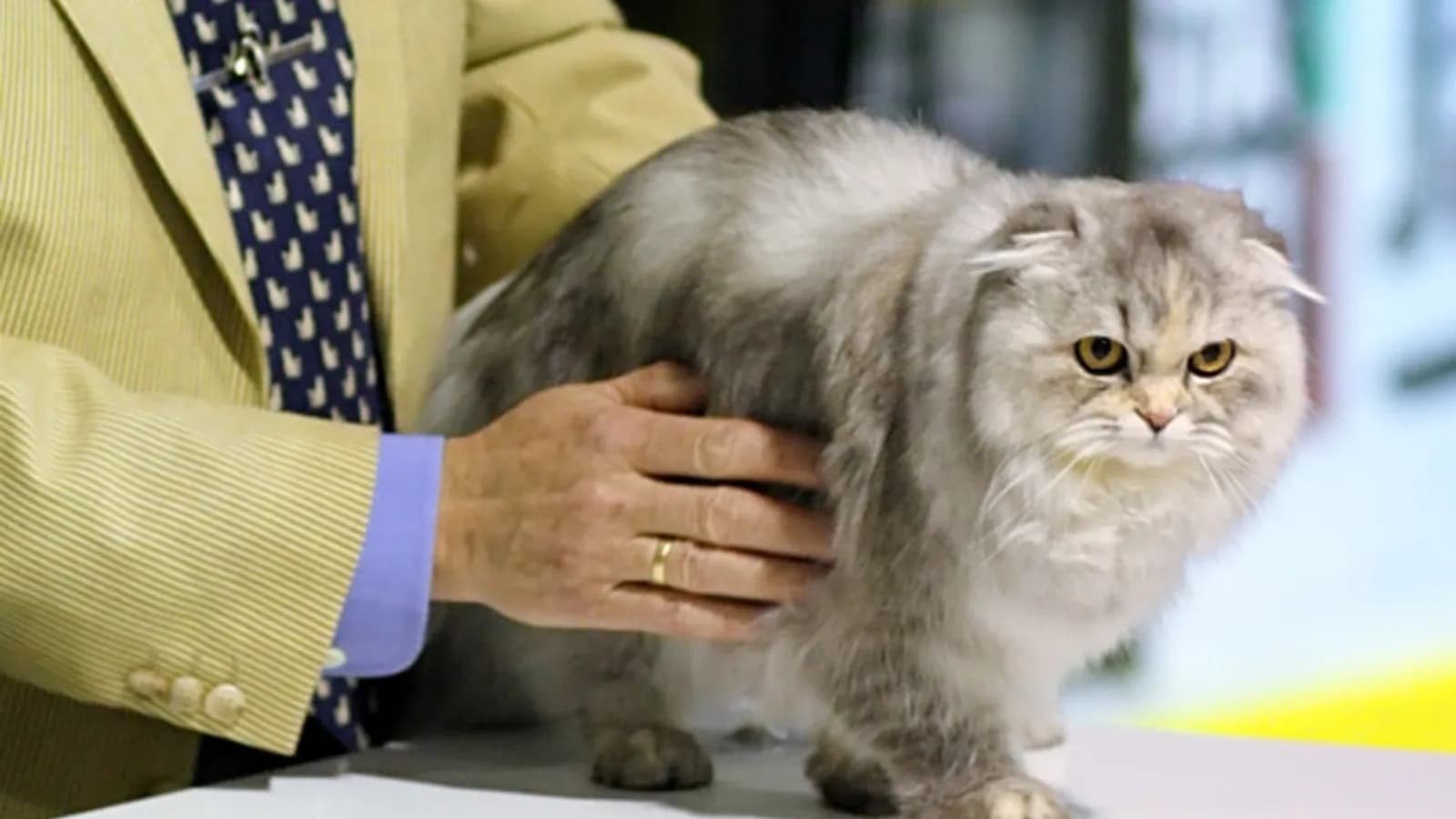
Real photos, so you can see what the breed actually looks like: coats, ear tufts, ruff and build.
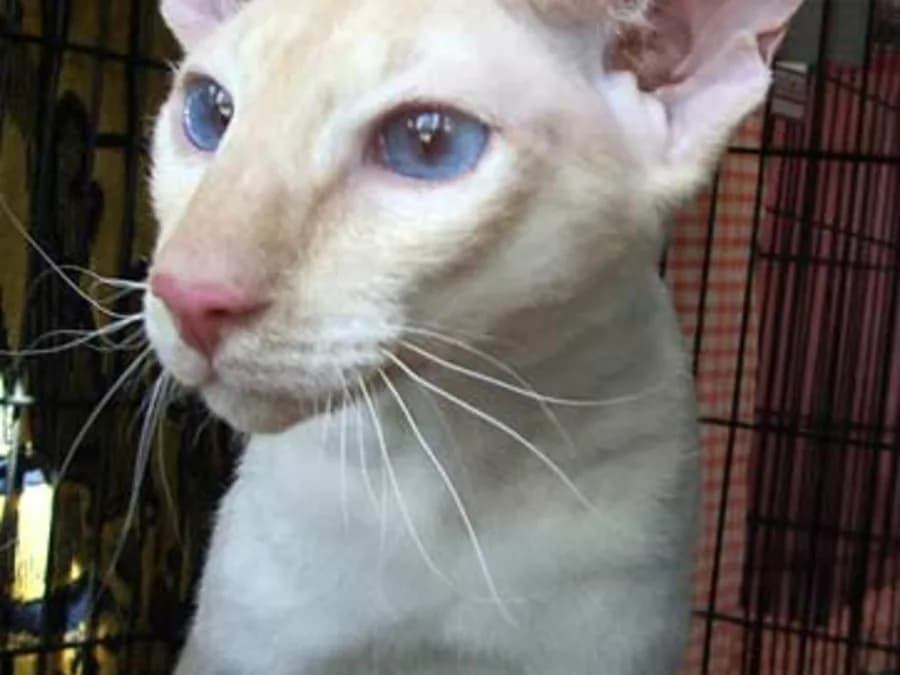
Cream Peterbald cat close up with fine coat, blue eyes and large ears
Photo: Peterbald · Public domain · via Wikimedia Commons
 Vital stats
Origin
Russia
St Petersburg, Russia. Per 's own formal breed standard, the breed began in January 1994, from crossing the Donskoy (Russia's dominant-hairless breed) onto Oriental and Siamese-type cats, with RADMA VOM JAGERHOF and AFINOGUEN MYTH as the named founding pair. (TICA's own separate consumer page says 'in 1993' with slightly different spellings, a same-registry two-document variance we footnote rather than silently resolve.) TICA granted Championship status in 2005, and the name says the rest: Peter's bald cat, from Peter the Great's city.
Weight
Female
5-7 lb (2.3-3.2 kg)
Male
7-10 lb (3.2-4.5 kg)
Life expectancy
Three sources converge on 12-15 years, with no study cited by any of them. This breed is the first in our files with genuinely ZERO measured cohort data to set against the convention: five mortality studies checked directly, the Peterbald named in none, most plausibly because the breed stayed too rare to clear their inclusion thresholds. An unsourced convention, published as exactly that.
Coats
Naked to chamois skin tones
Brush-coat grey
Straight-coat lilac
All colors and patterns are accepted on every coat class. The breed's identity lives in the coat SPECTRUM, not the palette, which is why no color pages exist for it. The five classes are the content: naked (fully bald), chamois (a suede feel), flock (a peach-fuzz down), brush (wiry, curly-feeling coat), and straight (a normal coat with Peterbald papers). All come from one dominant gene whose identity, honestly, science has not yet published.
Understanding the coats (and their genetics)Size
The only numeric range in the breed's entire paperwork is TICA's own At a Glance box: females 5-7 lb (2.3-3.2 kg), males 7-10 lb (3.2-4.5 kg), on a long, tubular Oriental frame. No standard text carries a number. No other market's registry publishes one (we state that rather than converting). And the 14 lb figure one consumer site circulates sits 40 percent above TICA's own male ceiling, and is not published here. No measured weight study exists.
Did you know
The Peterbald prices itself by baldness. One Canadian cattery's printed contract runs Born Naked $3,000, Flock $2,500, Chamois $2,500, Brush $2,200, Full Coat $2,000: the clearest coat-class price ladder in our files, and a structure found at three US catteries independently. The barer the cat, the higher the tier.
 Personality
 Affection5/5
 Energy4/5
 Intelligence4/5
 Friendliness4/5
 Independence2/5
 Vocal3/5
 Shedding1/5
Compatibility
 Good with children4/5
 Good with other pets4/5
 Apartment friendly5/5
Editorial ratings on our five-point scale, anchored in the registry descriptions and the measured behaviour studies cited on this profile; individual cats vary, and our members' own ratings below are the counterweight.
Still torn between this breed and another?Compare the Peterbald trait by trait, or filter every breed by what matters to you. What our members say
What our members say
Nobody has described their Peterbald here yet. As soon as the first profiles come in, this is where the community averages will show up: temperament, food, lifestyle.
Describe my Peterbald Pros & cons
Strong points
- Five formal coat classes from one gene: the fancy's only bald-to-coated spectrum, in TICA's own vocabulary
- An Oriental frame and temperament with a genuinely rare-breed story (under twenty North American breeders, per the breeders themselves)
- DOMINANT hairlessness genetically distinct from the Sphynx's recessive KRT71 story: no Sphynx figure applies here
- Straight-coated kittens are full Peterbalds at the ladder's friendlier end
Things to consider
- Bare skin is real husbandry: bathing rhythm, sun sense and warmth are part of ownership
- GCCF's class policy against hairless breeds closes the mainstream UK route
- No measured lifespan, weight or behaviour study exists anywhere: the first zero-cohort breed in our files
- A sub-twenty-breeder continent means waitlists, travel and echo-prone marketplaces
 Is a Peterbald right for you?
A household drawn to the Oriental temperament that will do hairless husbandry properly (skin, sun, warmth). One that asks the coat-class question first, and treats the breed's thin science as a reason for good breeder conversations rather than borrowed Sphynx factoids.
Is the Peterbald right for YOUR home?
Answer a few questions and we'll email you your personalized result.
Take the quiz · 2 min Getting to know the Peterbald
The coat spectrum IS the breed, and this page uses 's own five formal words for it: naked, chamois, flock, brush, straight. One dominant gene runs from fully bald to fully coated, judged and priced class by class (the price ladder makes it literal). What science has NOT done is find the gene. The Peterbald's hairlessness is dominant and unconfirmed by any published paper.
The obvious candidate (the Sphynx's KRT71) was ELIMINATED in the parent Donskoy by the one study that looked. And the single candidate-gene lead since (LPAR6, one cat, one 2021 paper, an inheritance mismatch its own authors flag) is a footnote, not a finding. Our four-way comparison keeps the bald breeds' genetics from blurring, because nothing transfers from the Sphynx's pages to this one.
The honesty file is the deepest on this site: zero measured cohort data of any kind (five mortality studies checked, none includes the breed), a 12-15-year convention with no study behind it, and one registry weight box as the only number in the paperwork. Even 's own founding documents disagree with each other on the year (January 1994 in the judged standard, 1993 on the consumer page), which we print as the registry's own variance. , for its part, declines all new hairless breeds as a class, in its own quoted words: a POLICY we place once in the registries section, and never dress up as a measured health finding.
Practically: a sub-twenty-breeder continent, coat-class pricing everywhere a structure exists, and hairless husbandry (baths on 's every-other-week rhythm, sun, warmth) as the real daily commitment.
 Health: what to watch for
A few predispositions are well documented. The good news: they can be screened for or avoided by choosing a reputable breeder and keeping an eye on the right signals.
This is information, not veterinary advice, and it cannot tell you what is wrong with your cat. Our rule is a simple one: if something is wrong with your cat, call your vet, and call an emergency clinic if it is out of hours. Nothing you read here is a reason to wait.
The honest headline: zero measured studies, and TICA's line quoted as TICA's
LOWNo measured lifespan, weight, behaviour or disease study includes this breed anywhere in the peer-reviewed literature, checked directly across nine standard cohort and behaviour studies: the first complete zero in our files. TICA's own 'no health issues reported' line is the registry's position, quoted as such, never independent proof of safety. Routine care, and a vet call at anything abnormal, remain the whole plan.
Skin, sun and temperature: the real daily file
MODERATEBare or near-bare skin does the coat's work. Watch for skin changes that are new, spreading, non-resolving after a few weeks, or accompanied by scratching, discomfort or discharge. Sun exposure can burn exposed skin (shade and limits beat products, unless your vet advises one). And the breed's higher metabolism plus reduced insulation cut both ways: overheating and chilling. All of it is observation-and-vet territory: nothing here is a home-treatment instruction.
The genetics footnote, with every caveat welded on
LOWOne 2021 paper incidentally flagged LPAR6 (the Cornish Rex's gene) as a candidate in ONE Peterbald, heterozygous, with a mismatch the authors themselves note (that gene's known mechanism is recessive; this trait behaves dominant), and no replication exists. It is not a confirmed cause, not a validated test, and not a reason to expect one. No genetic test for Peterbald hairlessness exists, and a breeder claiming otherwise is describing paperwork that does not exist.
What must never be borrowed
LOWThe Sphynx's HCM/ALMS1 literature, the Oriental family's amyloidosis file and the Lykoi's skin-syndrome study each belong to their own breed's documented population. None is documented in the Peterbald, and none appears on this page as if it were. GCCF's hairless-class policy (quoted in the registries section) is a policy position, not a measured Peterbald finding, and the distinction stays visible everywhere it could blur.
Go deeper on health
Prevention, warning symptoms, costs and insurance: our guides, researched and sourced.
 Grooming & living with one
Grooming
's own registry figure leads: a bath every other week, with its stated mechanism (over-bathing strips oils and triggers a sebum rebound). Consumer sources range from weekly baths to daily wipes, and no controlled study settles the question, which we say plainly. Between baths: a soft wipe-down, sun sense for exposed skin, warmth in cold rooms, and nails, teeth and ears as for any cat. New, spreading or uncomfortable skin changes are a vet visit, never a grooming project.
Living together
The Oriental-family portrait: sociable, busy, people-glued, fine with children and cat-friendly dogs by 's account, and poorly suited to long solitary days. No measured study exists behind any of it; the individual cat is the data.
 Food & diet
notes hairless cats run a higher metabolism (more calories burned keeping warm), the one feeding-adjacent statement in the breed's paperwork. No breed-specific diet exists beyond it. A complete diet portioned by body condition, with your vet as the tiebreaker.
 Price & budget
$1,700 to 4,000
Price of a kitten from a registered breeder, in the United States
This price reflects the quality of the breeding program: parents' health tests, registry pedigree, socialization. A very low price should raise a red flag. The real cost, though, plays out over the years.
Find a verified breederKitten price, by market
United States
$1,700 to 4,000
United Kingdom
£950 to 1,500
Canada
CA$2,000 to 3,000
Each figure is that country's real market price, researched separately, not a conversion of the others. The smaller line is only there so you can gauge one against your own money: European Central Bank reference rates of 2026-09-18, refreshed daily.
Work out your food budget
Type of food
Estimated monthly budget
$11
≈ 2.0 oz (57 g) per day
A ballpark figure, food only, using the same arithmetic as our portion tool (resting energy requirement × 1.2, a neutered adult). Real needs vary with age, activity level and body condition. Ask your veterinarian for advice.
 Verified catteriesThe registry-checked directory, plus a kitten alert near you. Filter it by breed.
 Should you insure a Peterbald?
Our sources list several predispositions in the Peterbald: The honest headline: zero measured studies, and TICA's line quoted as TICA's, Skin, sun and temperature: the real daily file, The genetics footnote, with every caveat welded on, among others. A predisposition is not a foregone conclusion, and many of these cats live their whole lives without ever developing anything. It does change the nature of the follow-up, though: you monitor, sometimes for life, and it's that monitoring that weighs on a budget, more than a one-off accident.
One thing to weigh before deciding: this is a cat you will live alongside for well over a decade, and that is the span the real cost is spread across, premiums and care alike. Where a breed has a measured life expectancy that differs from the figure usually quoted, we say so in the lifespan section above rather than repeating the quoted one here.
 Peterbald cats in our community
No Peterbald here yet
Got one? Add a photo and yours gets to open this page.
 The vet's take

Veterinary review
Are you a vet?
Your professional read belongs here: every verified practitioner can leave a note, published once our editors have reviewed it.
Sign in and get your license number verified. We check it in the public register, we never ask for or keep a copy of your diploma, and your number is never published.
 Frequently asked questions
+What is a Peterbald?
St Petersburg's hairless-spectrum breed: a Donskoy-descended, Oriental-built cat whose one dominant gene produces five formal coat classes (naked, chamois, flock, brush, straight), TICA-recognized with Championship status since 2005.
+Is a Peterbald the same as a Sphynx?
No, at the mechanism level: the Sphynx's hairlessness is recessive with a characterised gene (KRT71); the Peterbald's is dominant with NO published gene, and KRT71 was eliminated in its parent breed by the one study that looked. No Sphynx health or lifespan figure transfers, in either direction.
+What are the Peterbald coat types?
TICA's five formal classes: naked (fully bald), chamois (suede-feel), flock (peach fuzz), brush (wiry curl), and straight (a normal coat with Peterbald papers). One litter can span several, and the market prices by class.
+How much does a Peterbald cost?
US: a consistent $1,700-4,000 pet band. Canada: one cattery's printed ladder runs $2,000 (full coat) to $3,000 (born naked). UK: live listings ran £950-1,500 against a higher evergreen claim. Australia: one labeled retailer table. Our price page carries every source and date.
+How long do Peterbalds live?
The convention is 12-15 years, and we label it honestly: no study is cited by any source stating it, and no measured lifespan study anywhere includes the breed, the first complete research zero in our files. An unsourced convention, not a measurement.
+Do Peterbalds need baths?
Yes, on a rhythm: TICA's own figure is every other week, with the mechanism stated (over-bathing triggers oil rebound); consumer sources range wider and no study settles it. Between baths, a soft wipe, sun sense and warmth cover the skin's needs.
+Why doesn't GCCF recognize the Peterbald?
A class policy, in the registry's own words: its Genetics Committee declines to recognize further hairless breeds as a category, citing 'reported health problems associated with hairlessness', with no named study and no Peterbald-specific finding. A policy position, which we quote as one, and its own suggested UK alternative is the Sphynx.
+Are Peterbalds hypoallergenic?
No cat is: allergens are glandular, not coat-based, and a bald cat still produces them. The bare skin changes cleaning routines, not allergy chemistry; meet the individual cat and involve your allergist.
+What is the difference between a Peterbald and a Donskoy?
Descent and build: the Peterbald is the Donskoy crossed onto Oriental and Siamese-type cats, wearing its baldness on a long, tubular frame. Both breeds' hairlessness is dominant, and neither's causal gene has been published, so no honest page says they 'share the same mutation'.
+Can a Peterbald have a full coat?
Yes: the straight class is a genuine Peterbald with a normal coat, registrable and typically at the price ladder's friendlier end, effectively an Oriental-built cat with Peterbald papers. The gene's spectrum, not a defect.
+Do Peterbald cats have health problems?
The honest file: nothing measured exists for the breed (a complete research zero we state plainly), the daily realities are skin, sun and temperature care, and the borrowed problems the internet attaches (Sphynx HCM, Oriental amyloidosis) are other breeds' documented files, not this one's. Anything wrong with your cat means call your vet.
 Community questions
Got a question this page doesn't cover? Ask it: the best ones get published here with their answer.
Sources & references
Data checked against reference sources (TICA and CFA standards, genetics laboratories, veterinary schools).
- TICA: Peterbald breed page (At a Glance weights; coat classes)
- GCCF: unrecognised breeds page (the Genetics Committee's hairless-class policy)
- Dierks et al. 2013, Anim Genet: KRT71 eliminated in the Donskoy (PMID 23914843)
- Rodney et al. 2021, Sci Rep: the single-cat LPAR6 candidate flag (PMID 33785770)
- Gandolfi et al. 2010, Mamm Genome: the Sphynx KRT71 contrast (PMID 20953787)
- Heavenly Hairless Cats: the printed coat-type price ladder

Worth keeping a paw on
Pin this profile
To compare later, or to show someone still torn between two breeds. One click and it sits in your board.
Pin it on Pinterest
 Purr or Pass
Still deciding? Find the perfect breed for your home.
A quick quiz that factors in your lifestyle, your kids and your other pets.
Which breed fits my home?Keep exploring
The floor belongs to our members. Keep it kind, links are not allowed, and images go through moderation before anyone else sees them.