

American Bobtail
“America's own wild-look bobtail: every color allowed, no bobcat required”
 By Priya · The careful one
Published August 21, 2026Updated August 26, 20268 min read
Contents
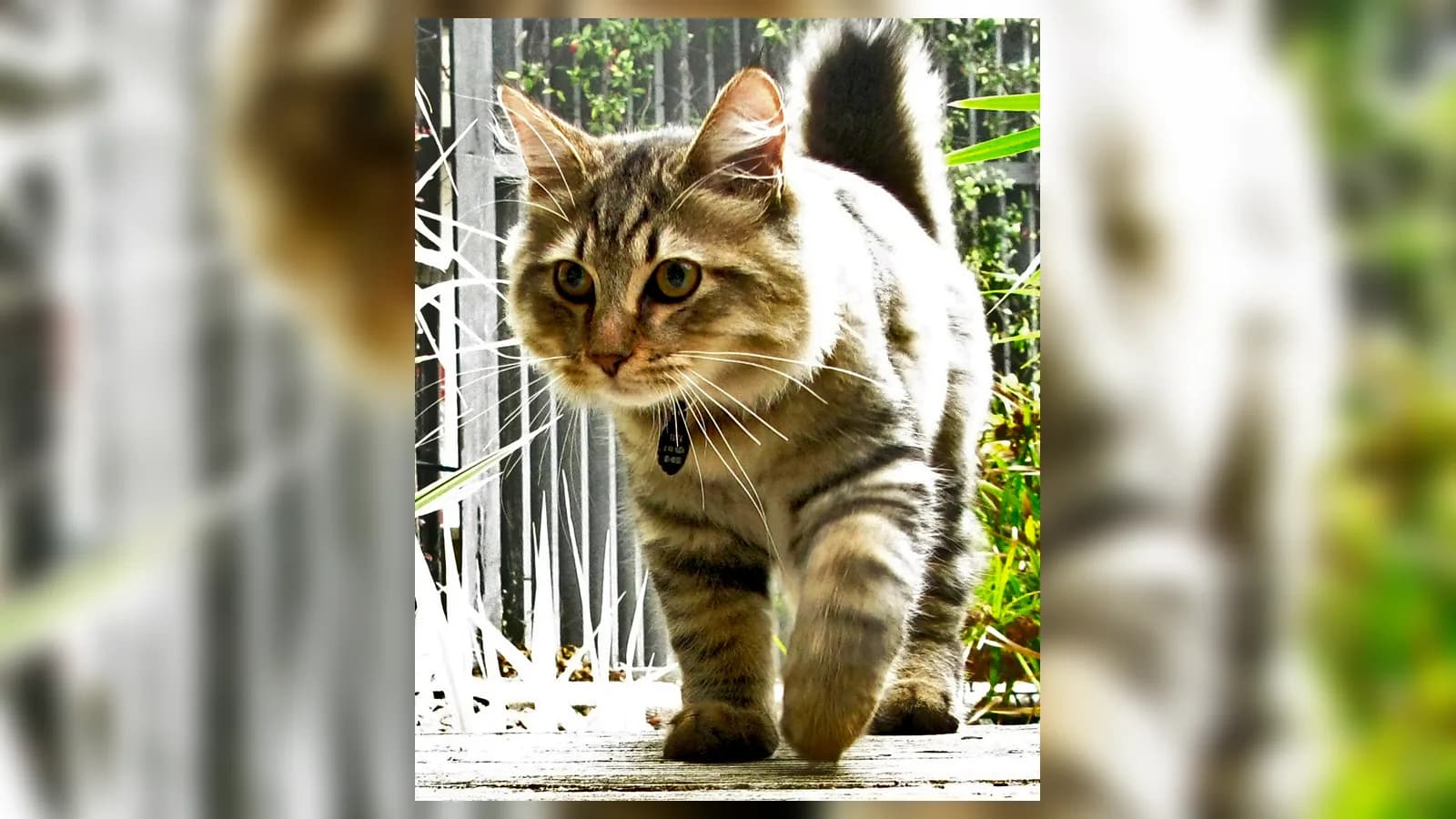
 American Bobtail photos
Real photos, so you can see what the breed actually looks like: coats, ear tufts, ruff and build.
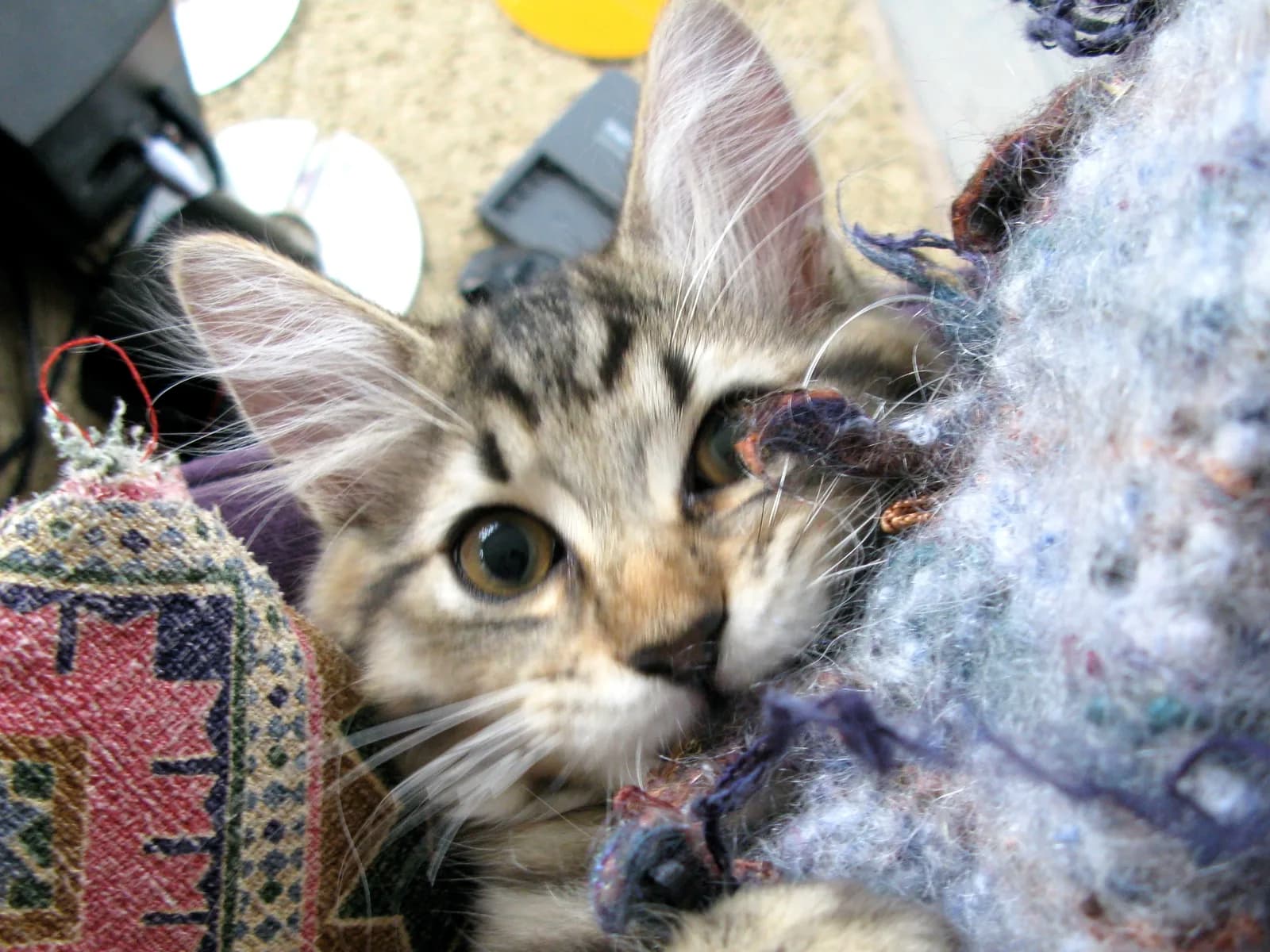
American Bobtail kitten with tufted ears playing among woollen textiles
Photo: torbakhopper · CC BY 2.0 · via Wikimedia Commons
Got an American Bobtail? Share them with the community. Photos from our members round out this page.
 Vital stats
Origin
United States
's own account, the fullest primary version, names everyone. John and Brenda Sanders, vacationing in Arizona in the late 1970s, took home a short-tailed brown tabby named Yodi. Bred to their colourpoint female Mishi, his kittens inherited the short tail, and family friends Mindy Shultz and Charlotte Bentley developed the line. TICA recognized the breed in 1989. The bobcat detail stays folklore. ACFA's own page hedges it as a 'rumored... love tryst', and no registry claims wild ancestry as fact, which this page treats as the finding it is.
Weight
Female
7-11 lb (3.2-5 kg)
Male
12-16 lb (5.4-7.3 kg)
Life expectancy
's own stated figure is 11 to 15-plus years, published as TICA's, not as a measurement. No measured mortality study includes this breed in any of the four flagship cohorts this project checks, a confirmed absence. Three pet-content pages converge on a narrower 13-15, noted as unsourced convention.
Coats
Brown wild-look tabby (the preferred aesthetic)
Red tabby
Blue
Colourpoint (allowed, like everything else)
Every color and every pattern. All four registries with a reachable standard (, , ACFA, ) recognize any genetically possible color, with no exclusion list at all: a genuine four-way convergence. CFA's own class list runs to roughly 60 entries and states a preference for 'colors and patterns that enhance the natural wild appearance', with high rufusing desirable in tabbies 'with no penalty for lack thereof'. The one firm foot rule points the other way from the Pixie-bob: polydactyly is disqualified by every American Bobtail standard that addresses toes at all.
Understanding the coats (and their genetics)Size
The most useful size fact is a shape, not a number. Not one of the four scored standards (TICA, CFA, ACFA, CCA-AFC) puts a pound figure in the document a judge actually scores. All judge 'medium to large' by type and boning, and TICA's standard states females 'may be substantially smaller' without penalty.
The 12-16 lb male / 7-11 lb female (5.4-7.3 / 3.2-5 kg) split shown here is TICA's own consumer-page narrative, not a standard's requirement. TICA also states the breed matures slowly, taking up to three years. The tail: 1 to 4 inches on average by TICA's own text, a minimum of 1 inch of bone in every standard read, never past the hock. No tail, a full-length tail or a docked tail are all disqualifying.
Did you know
The founding 's name is spelled Yodi, per 's own history, not the commonly circulated 'Yodie'. The wild story attached to him is hedged by the registries themselves: ACFA calls the bobcat parentage 'rumored'. And the sequenced genetics found something better than the legend, a tail allele shared with the Manx.
 Personality
 Affection4/5
 Energy3/5
 Intelligence5/5
 Friendliness4/5
 Independence3/5
 Vocal2/5
 Shedding3/5
Compatibility
 Good with children5/5
 Good with other pets4/5
 Apartment friendly4/5
Editorial ratings on our five-point scale, anchored in the registry descriptions and the measured behaviour studies cited on this profile; individual cats vary, and our members' own ratings below are the counterweight.
Still torn between this breed and another?Compare the American Bobtail trait by trait, or filter every breed by what matters to you. What our members say
What our members say
Nobody has described their American Bobtail here yet. As soon as the first profiles come in, this is where the community averages will show up: temperament, food, lifestyle.
Describe my American Bobtail Pros & cons
Strong points
- A sturdy, even-tempered, quiet-voiced family cat whose registry portrait converges across every source read
- Every color and pattern accepted by all four registries, with no exclusion list anywhere
- The fancy's best-corroborated bobtail genetics: a three-source, twice-sequenced finding this page states exactly
- Grooming stays weekly-to-twice-weekly even for the Longhair, by CFA's own words
Things to consider
- A thin real market: named US catteries across just eleven states, one live Canadian listing, a single UK price sentence
- No measured weight, lifespan or behaviour study includes the breed, so every portrait is registry opinion, labeled
- Two registries independently caution about the rare fully tailless extreme, and GCCF holds the breed at its Amber tier pending welfare evidence
- Slow to mature (up to three years) with obesity flagged by two consumer sources
 Is an American Bobtail right for you?
A household that wants a sturdy, even-tempered, quietly talkative family cat with a genuinely interesting genetic story. One that will brush weekly to twice weekly. And one that accepts that buying one means a thin, eleven-state cattery map, waitlists or distance, and a two-tier market that rewards reading listings carefully.
Is the American Bobtail right for YOUR home?
Answer a few questions and we'll email you your personalized result.
Take the quiz · 2 min Getting to know the American Bobtail
The tail gene is shared with the Manx, and no consumer page tells you that. Wikipedia and Catster both imply this breed's mutation is simply unrelated to other bobtails'. The sequenced truth is more interesting: 60% of short-tailed American Bobtails tested carry the IDENTICAL Manx allele, heterozygous only, 5% a second Manx-associated variant, and 35% no detected mutation at all (Buckingham 2013, confirmed by Anderson 2022). The five bobtail breeds split into two genetic camps. This breed sits with the Manx and Pixie-bob, while the Japanese Bobtail and Kurilian Bobtail carry HES7, entirely unrelated.
What it is not: a breed (every standard that addresses toes disqualifies extra ones, the exact opposite of the Pixie-bob), and not a proven bobcat descendant (ACFA's own page calls that a 'rumored... love tryst'). What buying one looks like lives on our price page: a two-tier US market, a single-sentence UK, a one-listing Canada and a bot-walled Australia, told market by market. For the tail-to-tail comparison, see Manx vs bobtail cats.
 Health: what to watch for
A few predispositions are well documented. The good news: they can be screened for or avoided by choosing a reputable breeder and keeping an eye on the right signals.
This is information, not veterinary advice, and it cannot tell you what is wrong with your cat. Our rule is a simple one: if something is wrong with your cat, call your vet, and call an emergency clinic if it is out of hours. Nothing you read here is a reason to wait.
The tail gene, told at its true resolution
LOWBuckingham et al. 2013 sequenced 20 short-tailed American Bobtails. 12 (60%) carry the identical Manx T-gene allele (c.998delT), heterozygous only; one more carries a second Manx-associated allele; 7 (35%) carry neither. Independently confirmed in a larger sample by Anderson et al. 2022 (the c.995delT numbering there is a reference-genome update, not a different finding), and corroborated a third way by Australia's ACF by-laws, which cite the paper by name. The Manx's own severe spinal syndrome is tied to a fully tailless phenotype no American Bobtail standard permits. Every standard read disqualifies the absent tail as firmly as the full one.
The two registries' own tailless-extreme caution
MEDIUMCFA's own page states the tail mutation 'could make the cat susceptible to spine and hip problems' and that 'completely tailless cats... may have issues with incontinence'. GCCF's Amber-status row independently words the same concern ('spinal, bladder and/or bowel problems'), neither registry citing the other. Both tie the caution to the rare fully tailless extreme, never to the ordinary bobbed phenotype. No clinical spinal-outcome study exists for this breed at all, a checked absence. If anything about a specific cat concerns you, that is a question for your vet, not a page.
HCM variant carriage (a testing consideration, not a prevalence)
MEDIUMAnderson et al. 2022 found the MYBPC3 R818W variant, discovered in the Ragdoll, at 4/35 (11.4%) CARRIER frequency in American Bobtail Longhairs: higher than the Ragdoll's own 3.0% in the same dataset. That is carriage, never a disease rate. The paper's one suspected cardiac death in a carrier is owner-reported and explicitly unconfirmed by the authors. The actionable version: ask a breeder for panel-test results, and screen breeding cats.
Our full guide on this topicBlood type, for breeders and transfusions
LOWIn the same 2022 dataset, 44 American Bobtails typed as 84.1% type A, 15.9% type B, 0% AB. A double-digit type-B share is worth a breeder's attention (neonatal isoerythrolysis risk in mismatched matings), and a vet's in any transfusion. Population data, not a statement about your cat.
Weight, watched over a slow maturity
LOWTwo consumer sources independently flag obesity as a common concern for the breed, and TICA's own text has it maturing for up to three years. A published range is a population description, never a target for one cat. Body condition is scored by a vet, not a chart.
Go deeper on health
Prevention, warning symptoms, costs and insurance: our guides, researched and sourced.
Also worth a look
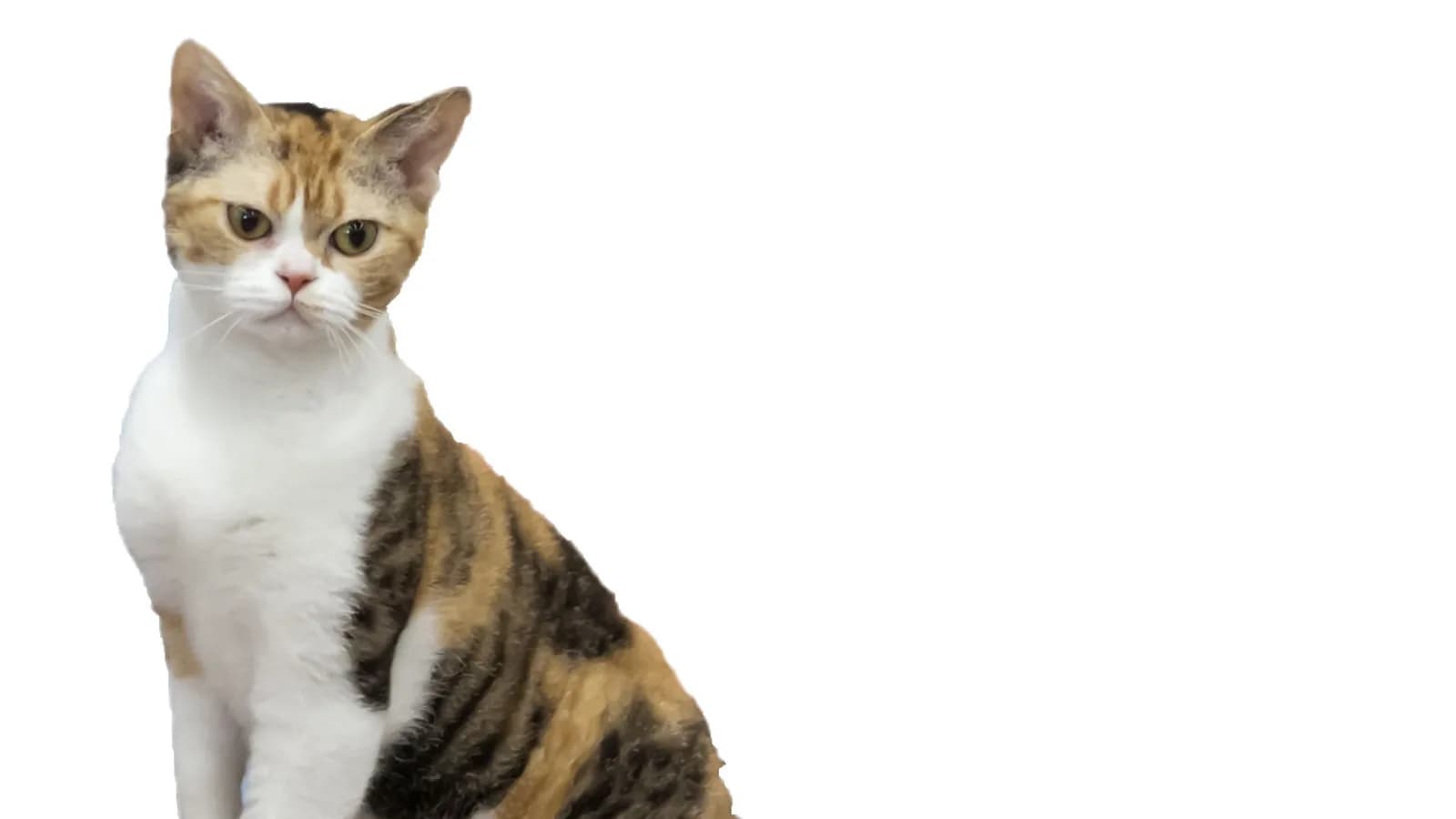
American Wirehair
“The rarest CFA breed: one springy coat gene on an American Shorthair”
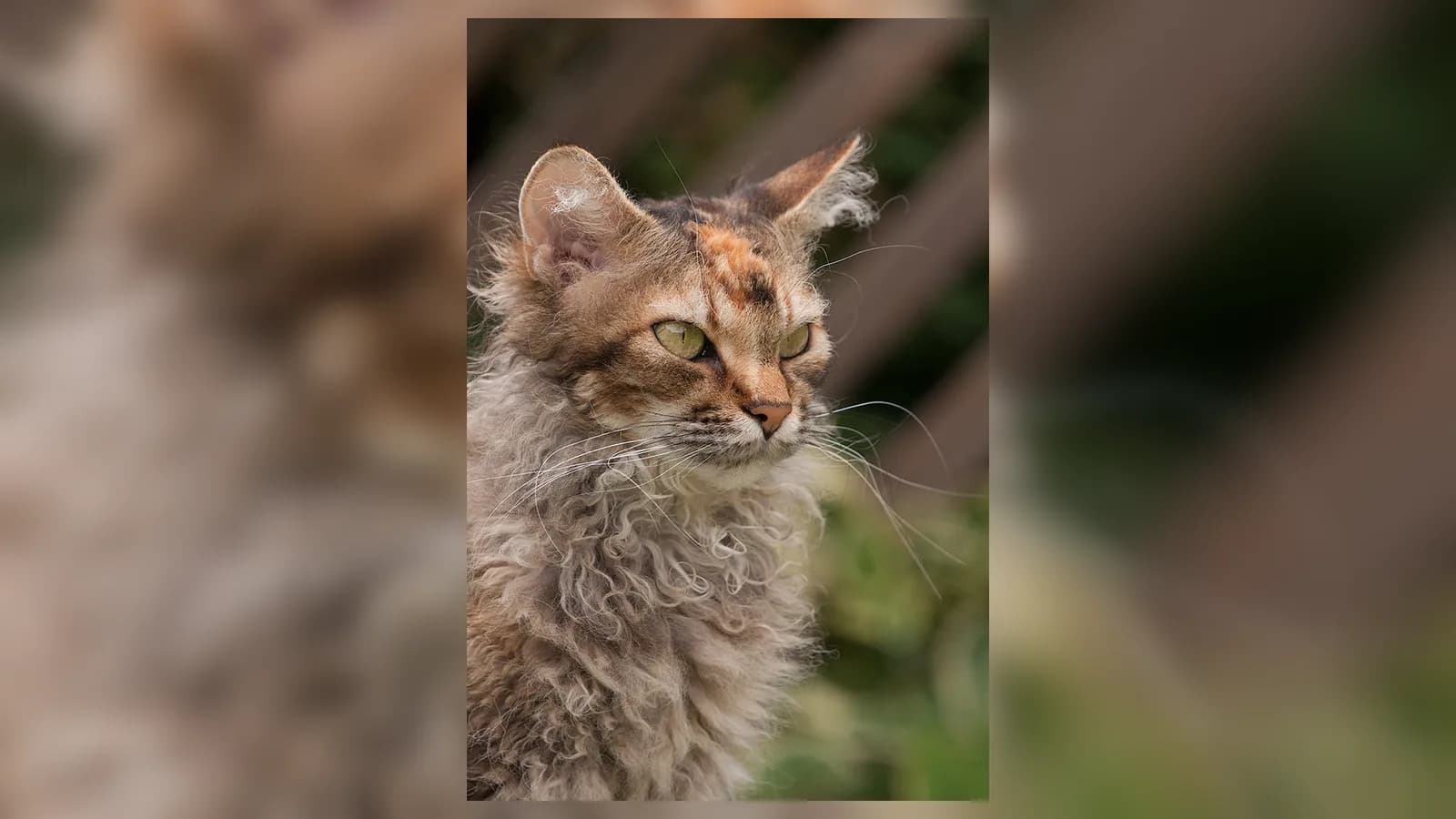
LaPerm
“The Oregon farm cat in permanent curls, whose gene science still hasn't found”
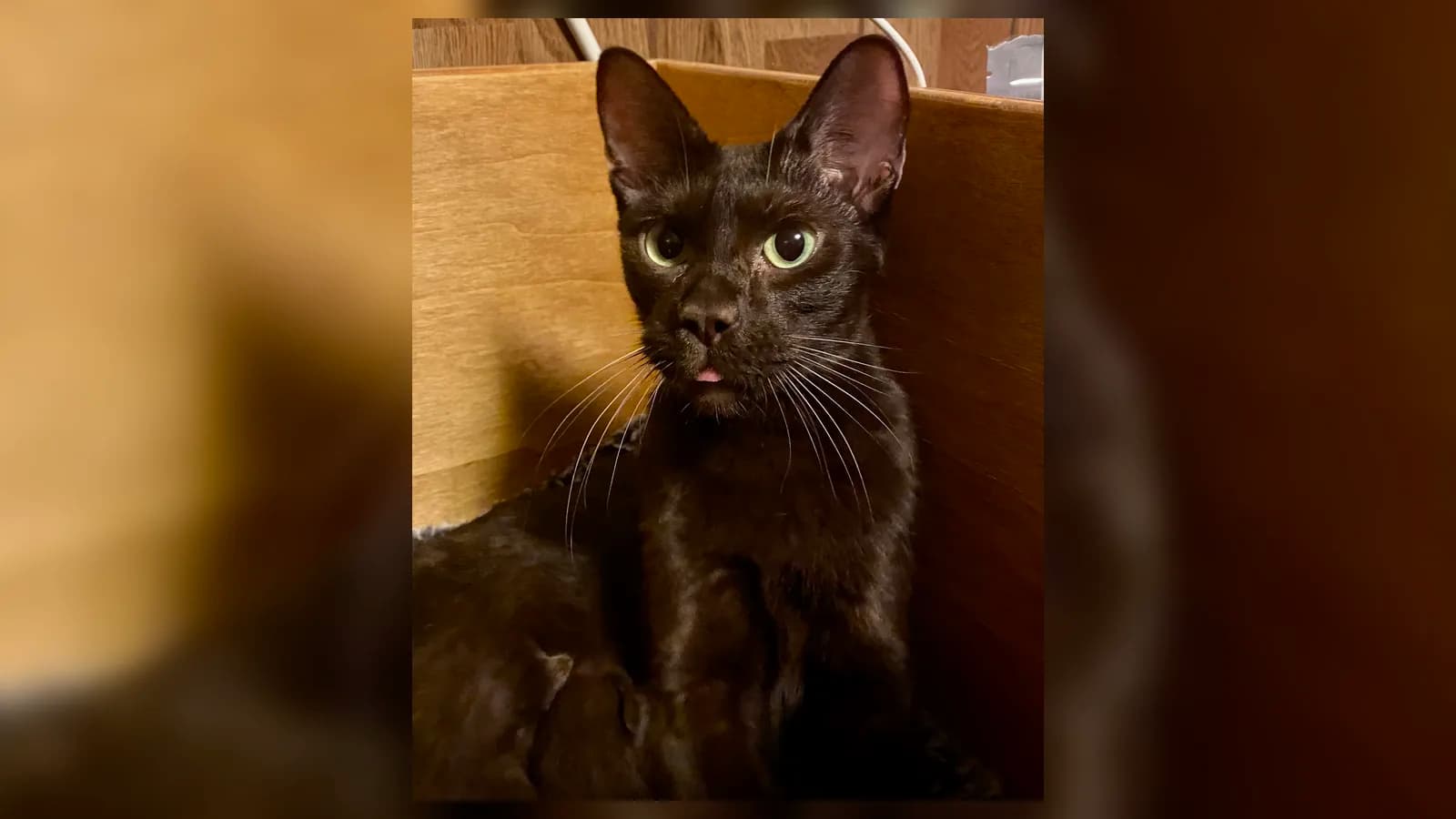
Havana Brown
“CFA's 'Brownies': mahogany head to tail, green eyes, and a transatlantic naming trap”
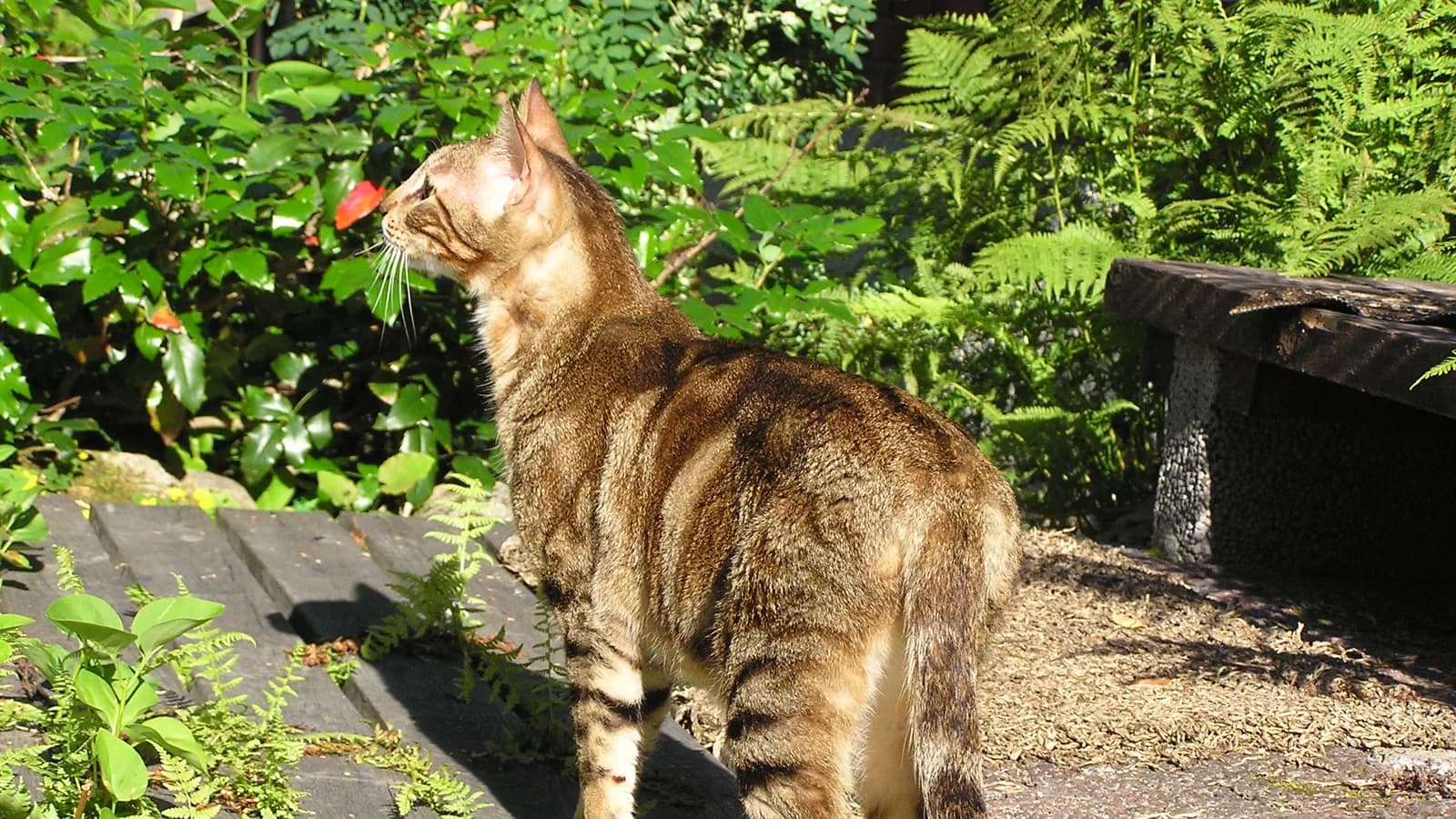
Sokoke
“The see-through tabby from Kenya's coastal forest, rarest of the rare”
The American Bobtail also appears in
Our criteria-based guides, to compare this breed with the ones most like it.
 Grooming & living with one
Grooming
Every registry splits the coat DESCRIPTION by length. Not one source splits the GROOMING CADENCE by length, and says it outright: 'even the long-haired version' needs only weekly brushing. Across four sources the stated cadence runs weekly to at least twice weekly, published here as the range it is rather than one picked figure. The coat is shaggy and semi-dense, not a true heavy-undercoat longhair, which is plausibly why no source splits the routine.
Living together
The converged registry portrait is a confident, adaptable cat good with children, dogs and other pets, often described in therapy-cat terms. No measured study exists behind any of it, and we say so. Its quiet voice (chirps and trills) and moderate energy make it an easy multi-pet housemate on paper. Introduce like any cat, gradually.
 Food & diet
No breed-specific feeding literature or registry guidance exists anywhere in our reading. All four judging standards are silent on nutrition entirely, stated as the finding it is. Two consumer sources independently flag obesity as a common concern for the breed, and notes the slow, up-to-three-year maturity. So the honest guidance is general: portion-controlled feeding matched to life stage and body condition, set with your vet. Nothing here is a prescription for a specific cat.
 Price & budget
$800 to 3,000
Price of a kitten from a registered breeder, in the United States
This price reflects the quality of the breeding program: parents' health tests, registry pedigree, socialization. A very low price should raise a red flag. The real cost, though, plays out over the years.
Find a verified breederKitten price, by market
United States
$800 to 3,000
United Kingdom
£800 to 1,500
Canada
CA$2,500
Each figure is that country's real market price, researched separately, not a conversion of the others. The smaller line is only there so you can gauge one against your own money: European Central Bank reference rates of 2026-09-18, refreshed daily.
Work out your food budget
Type of food
Estimated monthly budget
$15
≈ 2.6 oz (74 g) per day
A ballpark figure, food only, using the same arithmetic as our portion tool (resting energy requirement × 1.2, a neutered adult). Real needs vary with age, activity level and body condition. Ask your veterinarian for advice.
 Verified catteriesThe registry-checked directory, plus a kitten alert near you. Filter it by breed.
 Should you insure an American Bobtail?
Our sources list several predispositions in the American Bobtail: The tail gene, told at its true resolution, The two registries' own tailless-extreme caution, HCM variant carriage (a testing consideration, not a prevalence), among others. A predisposition is not a foregone conclusion, and many of these cats live their whole lives without ever developing anything. It does change the nature of the follow-up, though: you monitor, sometimes for life, and it's that monitoring that weighs on a budget, more than a one-off accident.
One thing to weigh before deciding: this is a cat you will live alongside for well over a decade, and that is the span the real cost is spread across, premiums and care alike. Where a breed has a measured life expectancy that differs from the figure usually quoted, we say so in the lifespan section above rather than repeating the quoted one here.
 American Bobtail cats in our community
This breed is barely covered by free photo libraries: we only found 2 photos we could verify. Your cats are especially welcome here.
No American Bobtail here yet
Got one? Add a photo and yours gets to open this page.
 The vet's take

Veterinary review
Are you a vet?
Your professional read belongs here: every verified practitioner can leave a note, published once our editors have reviewed it.
Sign in and get your license number verified. We check it in the public register, we never ask for or keep a copy of your diploma, and your number is never published.
 Frequently asked questions
+What is an American Bobtail cat?
A sturdy, wild-looking US breed defined by a naturally short tail (1 to 4 inches on average, per TICA), developed from a short-tailed tom named Yodi found in Arizona and recognized by TICA in 1989. Every color and pattern is accepted, in Shorthair and Longhair divisions.
+Are American Bobtail cats rare?
As a market, yes: our census found named US catteries in just eleven states, Canada's registry directory listed zero current advertisers despite a full 29-page standard, and the UK had no genuine live listing at our check. Registry recognition is solid in North America; the cats themselves are thin on the ground.
+Can American Bobtails have long tails?
Yes, genetically: the tail allele is carried heterozygous-only, and the key study itself sequenced one full-tailed American Bobtail. A full-length tail (like a missing one) is a show disqualification in every standard read, not a health problem, and such kittens make ordinary pets.
+Is the American Bobtail related to the Manx?
More than the consumer pages say: 60% of sequenced short-tailed American Bobtails carry the identical Manx T-gene allele, heterozygous only (Buckingham 2013, confirmed 2022). The Japanese and Kurilian Bobtails carry a different gene entirely (HES7). The Manx's severe spinal syndrome tracks a fully tailless phenotype no American Bobtail standard permits.
+Is the American Bobtail part bobcat?
No registry claims it as fact: ACFA's own page calls the bobcat parentage 'rumored' from a 'love tryst', and TICA's history names ordinary domestic cats. Because no wild ancestry is claimed, no hybrid-ownership law applies to this breed in any of our four markets.
+How big do American Bobtail cats get?
TICA's consumer page says males 12-16 lb (5.4-7.3 kg) and females 7-11 lb (3.2-5 kg), but the honest fact is that no scored standard contains a number at all: judges score type and boning, 'medium to large'. The breed matures slowly, up to three years.
+How long do American Bobtail cats live?
TICA's own stated figure is 11 to 15-plus years; no measured mortality study includes the breed, a confirmed absence, so that is a registry estimate, labeled as one. Three pet-content pages repeat a narrower, unsourced 13-15.
+How much is an American Bobtail cat?
US: $100-850 on the live marketplace tier and $800-3,000 at named TICA-registered catteries. UK: a single editorial £800-1,500. Canada: one live listing at CA$2,500. Australia: no fetchable source priced the breed. Our price page tells each market separately.
+Do American Bobtail cats shed, and are they hypoallergenic?
They shed like any shaggy-coated cat and need weekly to twice-weekly brushing, the same cadence for both coat lengths by every source read. No hypoallergenic or Fel d 1 data exists for this breed anywhere in our files, and no registry claims the label: assume a normal allergen load.
+Are American Bobtail cats friendly?
Every registry and brand source converges on confident, affectionate, good with children and dogs, quiet-voiced and often described as a therapy cat, and none of it is measured: both large behaviour surveys report no data for this breed. A strong, consistent, honest-labeled portrait.
 Community questions
Got a question this page doesn't cover? Ask it: the best ones get published here with their answer.
Sources & references
Data checked against reference sources (TICA and CFA standards, genetics laboratories, veterinary schools).
- TICA: American Bobtail breed page (weights box, 1-4 inch tail text, the Yodi history, 1989 recognition)
- TICA: American Bobtail judging standard (disqualifications; no weight figure in the scored text)
- CFA: American Bobtail breed page (the registry's own spine/hip/incontinence caution)
- CFA: American Bobtail standard (two divisions 'judged as separate breeds'; any genetically possible color; toe counts)
- CCA-AFC: the 29-page Canadian standard (the only explicit 'Polydactyl paws are NOT allowed' clause)
- ACFA: American Bobtail page (the hedged 'rumored... love tryst' founding version)
- GCCF: Unrecognised Breeds page (the Amber-status row and its own welfare wording)
- Buckingham et al. 2013, Mammalian Genome: the T-gene sequencing, 21 American Bobtails (PMID 23949773)
- Anderson et al. 2022, PLoS Genetics: the 11,036-cat panel (T-gene confirmation, MYBPC3 carriage, blood types) (PMID 35709088)
- ACF By-Laws Part 2 (Nov 2024): the Australian regulatory text citing Buckingham 2013 by name, with no ACF breed code for the breed

Worth keeping a paw on
Pin this profile
To compare later, or to show someone still torn between two breeds. One click and it sits in your board.
Pin it on Pinterest
 Purr or Pass
Still deciding? Find the perfect breed for your home.
A quick quiz that factors in your lifestyle, your kids and your other pets.
Which breed fits my home?Keep exploring
The floor belongs to our members. Keep it kind, links are not allowed, and images go through moderation before anyone else sees them.