

Manx vs Japanese Bobtail vs American Bobtail: Which Tailless Cat Is It?
Manx, Japanese Bobtail or American Bobtail? The identification table, and the genetics most pages get wrong: both short-tail genes are dominant, and only one is lethal in double dose.

Published August 21, 2026 4 min read
Contents
Three breeds, one missing tail, and a genetics story most comparison pages get wrong. 's own "Similar Breeds" field for the Manx lists the Japanese Bobtail, Kurilian Bobtail, American Bobtail and Pixiebob, which is independent confirmation that this grouping is the real question. Here is how to tell them apart by eye, and the one genetic fact that genuinely separates their health files.
| Manx | Japanese Bobtail | American Bobtail | |
|---|---|---|---|
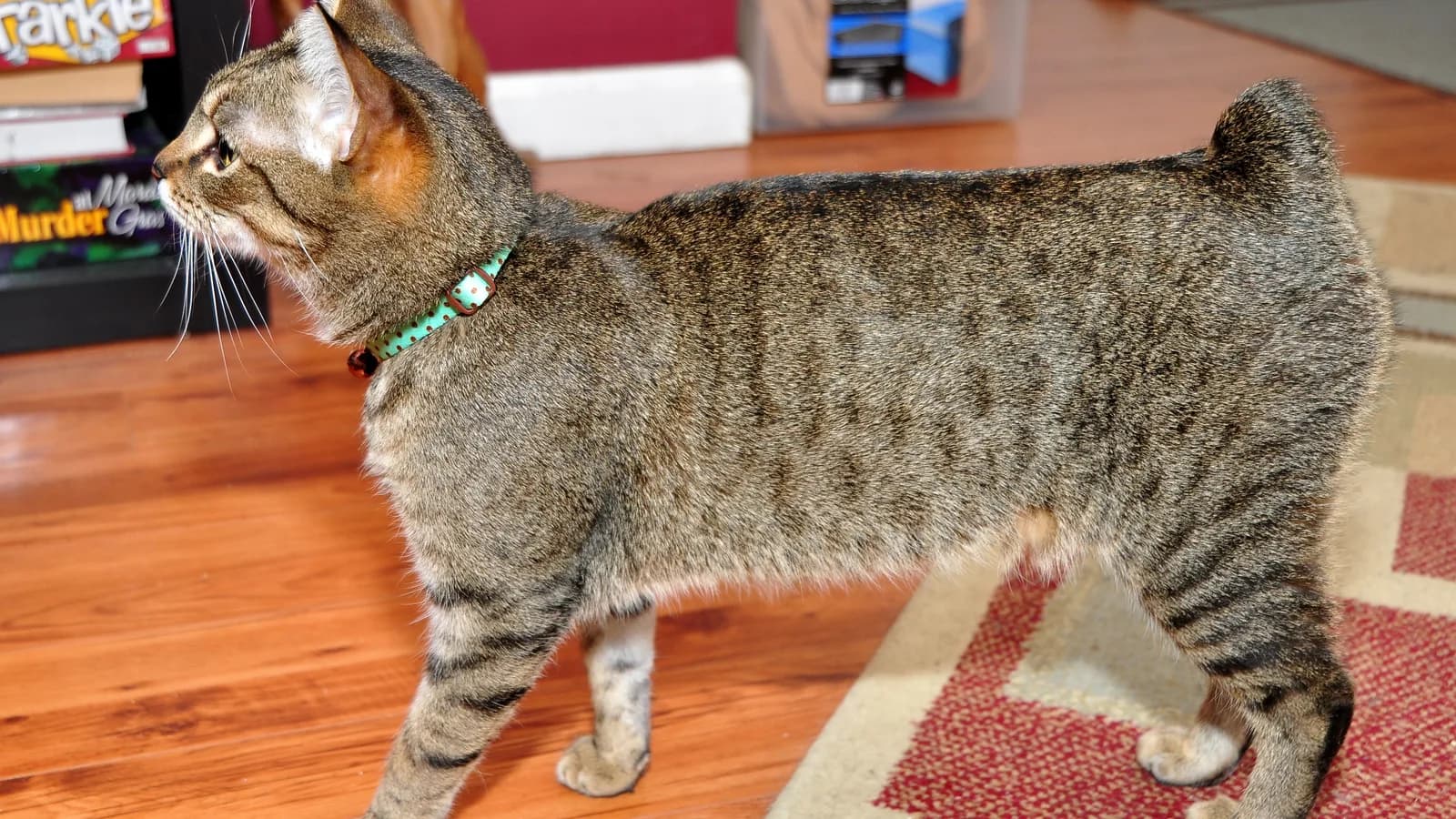
| Tail | None to near-normal (4 classes); show classes tailless | Short kinked pompom, always present | Short flexible brush, 1/3-1/2 length |
| Frame | Round, cobby, hind legs longer | Slender, refined, high cheekbones | Big, athletic, wild-looking |
| Gene | T (Brachyury), dominant | HES7, dominant | A shared mutant T allele documented |
| Double dose | Uniformly lethal in utero | Routinely tolerated: 12/12 tested purebreds homozygous and healthy | No published lethality rate: we state none |
| Health file | Manx Syndrome (own page) | No equivalent syndrome known | Not established |
The genetics, corrected
Start with the correction, because even careful sources fumble it: BOTH the Manx's and the Japanese Bobtail's short-tail traits are DOMINANT. (Our own research brief originally assumed one was recessive; reading the papers overturned it, and 's own Japanese Bobtail page independently confirms the dominant inheritance.) What genuinely differs is what happens with TWO copies. In the Manx, the T-gene (Brachyury) mutation is homozygous-lethal: no cat has ever been found carrying two mutant copies and surviving to term (Buckingham et al. 2013). In the Japanese Bobtail, the HES7 mutation is routinely tolerated in double dose: in the identifying study (Xu et al. 2016), every one of the twelve purebred Japanese Bobtails tested was homozygous, healthy, and short-tailed. Same visible outcome, opposite genetic risk profile, and it is why Manx Syndrome has no Japanese Bobtail equivalent.
One more published error corrected while we are here: a widely-read consumer site states the American Bobtail "does not share the Manx tailless gene." Buckingham et al.'s own results say otherwise: a shared mutant T allele (c.998delT) was found in both breeds. What no source states is an American Bobtail homozygous-lethality rate, so we do not state one either: the shared allele is the finding, not a transplanted risk figure.
Telling them apart by eye
The Manx: no tail at all or a rump dimple in the show classes (four classes exist, rumpy to longy), a round, cobby body, a rabbit-like hopping gait in some cats, and hind legs longer than the front. The Japanese Bobtail: a short POMPOM tail, kinked and curved, always present, on a slender, refined Asian body type with high cheekbones. The American Bobtail: a short but flexible straight-ish tail, one-third to one-half normal length, on a big, athletic, wild-looking frame. Rump with nothing: think Manx. Pompom: Japanese. Short expressive brush on a linebacker: American.
The Cymric row
The longhaired Manx, called the Cymric in most registries, carries the same T-gene mechanics under a silky semi-long coat: its own page covers the naming maze. For identification purposes it reads as a fluffy Manx, never as a Bobtail.
Which is right for you
If you love the look but want the simplest health file, the Japanese Bobtail's double-dose-tolerated genetics make it the structurally simpler bet; neither Bobtail has a full profile on this site yet, so we say that plainly rather than pretending. If it is the Manx, buy informed: tail classes, breeding-program questions and the syndrome file are all one click away, and an informed Manx buyer gets a wonderful, storied, round cat.
 The vet's take

Veterinary review
Are you a vet?
Your professional read belongs here: every verified practitioner can leave a note, published once our editors have reviewed it.
Sign in and get your license number verified. We check it in the public register, we never ask for or keep a copy of your diploma, and your number is never published.
Frequently asked questions
How do I tell a Manx from a bobtail cat?
By the tail and the frame: nothing-or-a-dimple on a round, cobby cat is a Manx; a kinked pompom on a refined frame is a Japanese Bobtail; a short flexible brush on a big athletic cat is an American Bobtail.
Is the Manx gene recessive?
No, and neither is the Japanese Bobtail's: both are dominant. The difference is the double dose: uniformly lethal in utero for the Manx T-gene, routinely tolerated for the Japanese Bobtail's HES7.
Do American Bobtails carry the Manx gene?
A shared mutant T allele has been documented in both breeds (Buckingham et al. 2013), contradicting the common claim that they are unrelated. No source states an American Bobtail lethality rate, so neither do we.
Can a Manx have a tail?
Yes: four tail classes exist, from the tailless rumpy to the nearly-normal longy, and tailed Manx are deliberately included in responsible breeding programs. Only the shortest classes are showable.
Which tailless breed is healthiest?
The Japanese Bobtail's short tail carries no known equivalent of Manx Syndrome: its mutation is tolerated in double dose. The Manx's file is manageable with informed breeding, which our dedicated page explains without drama.
 Community questions
Got a question this page doesn't cover? Ask it: the best ones get published here with their answer.
This is information, not veterinary advice, and it cannot tell you what is wrong with your cat. Our rule is a simple one: if something is wrong with your cat, call your vet, and call an emergency clinic if it is out of hours. Nothing you read here is a reason to wait.
Medical information applies to every reader. Prices, legal duties and common practice do not: unless stated otherwise, they are given for the United States, and they differ in the UK, Canada and Australia, and often between states or provinces. Check with your own vet and your own local authority.
Our sources

Worth keeping a paw on
Pin this guide
So you can find it the day you need it, and share it with someone whose cat does the same thing. One click and it sits in your board.
Pin it on Pinterest
 Purr or Pass
The cat newsletter
Our verified guides, no spam. Unsubscribe in one click.
More Manx guides
The Manx profile →
Manx guide
Manx Syndrome: What It Really Means for a Kitten
Manx Syndrome explained precisely: the gene that is uniformly lethal in double dose, the severity gradient by tail class, four disagreeing prevalence figures, and the breeder questions.
Read
Manx guide
Cymric: The Longhaired Manx, and Five Registries That Disagree About It
The Cymric is the longhaired Manx, and whether it is a real breed depends on the registry: five bodies, five answers, mapped with dates. Plus the coat, the care and the same tail genetics.
Read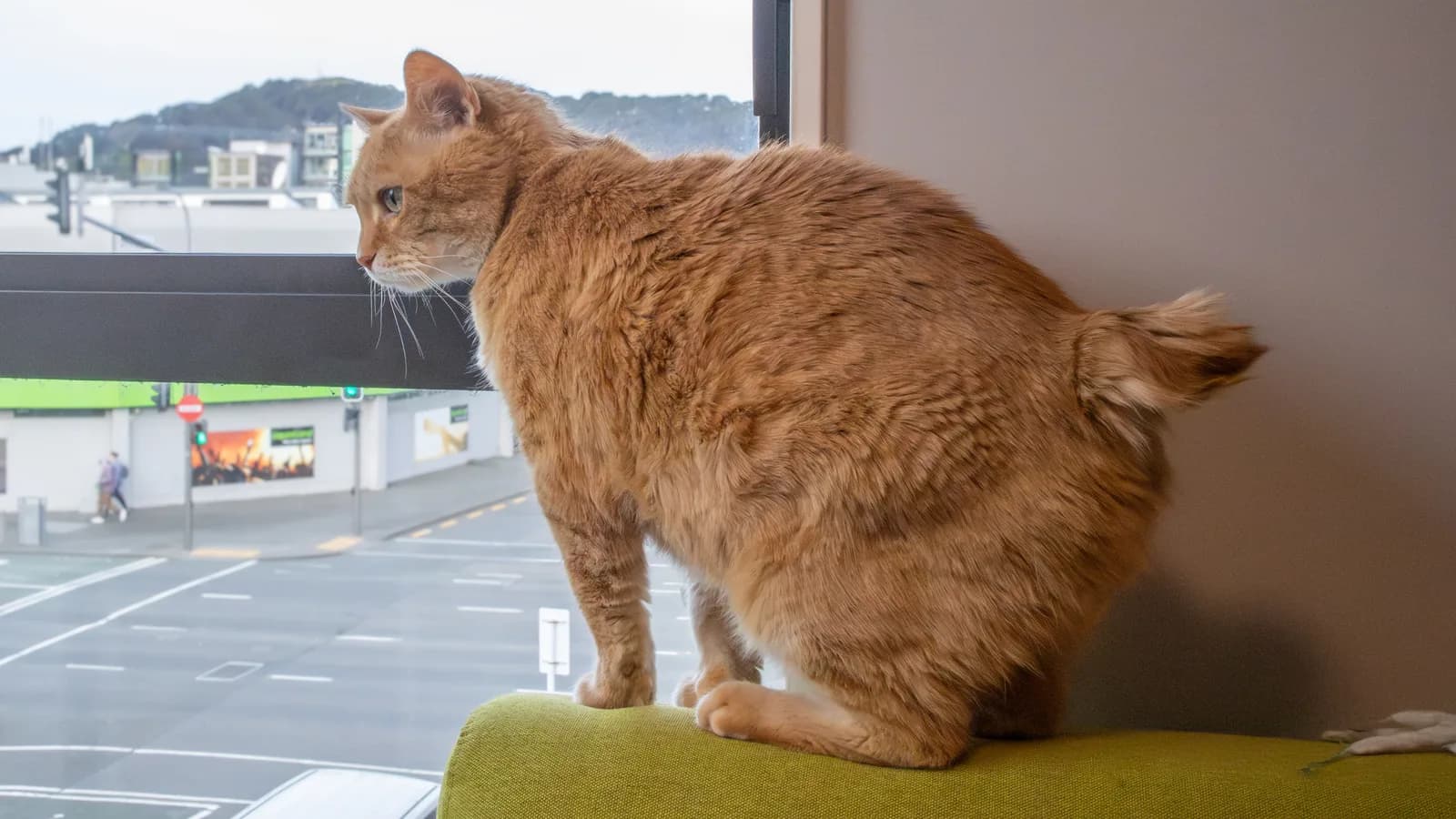
Manx guide
Manx Cat Price, Kittens for Sale and Breeders: Four Markets, Counted
Real Manx prices: a live US sample at $195-850, the UK's two marketplaces, Canada's one rate card with the rumpy-vs-tailed split, and why breeders themselves rarely publish a number.
Read
The floor belongs to our members. Keep it kind, links are not allowed, and images go through moderation before anyone else sees them.