

Manx
“The Isle of Man's round, tailless original”
 By Priya · The careful one
Published August 21, 2026Updated August 26, 20268 min read
Contents
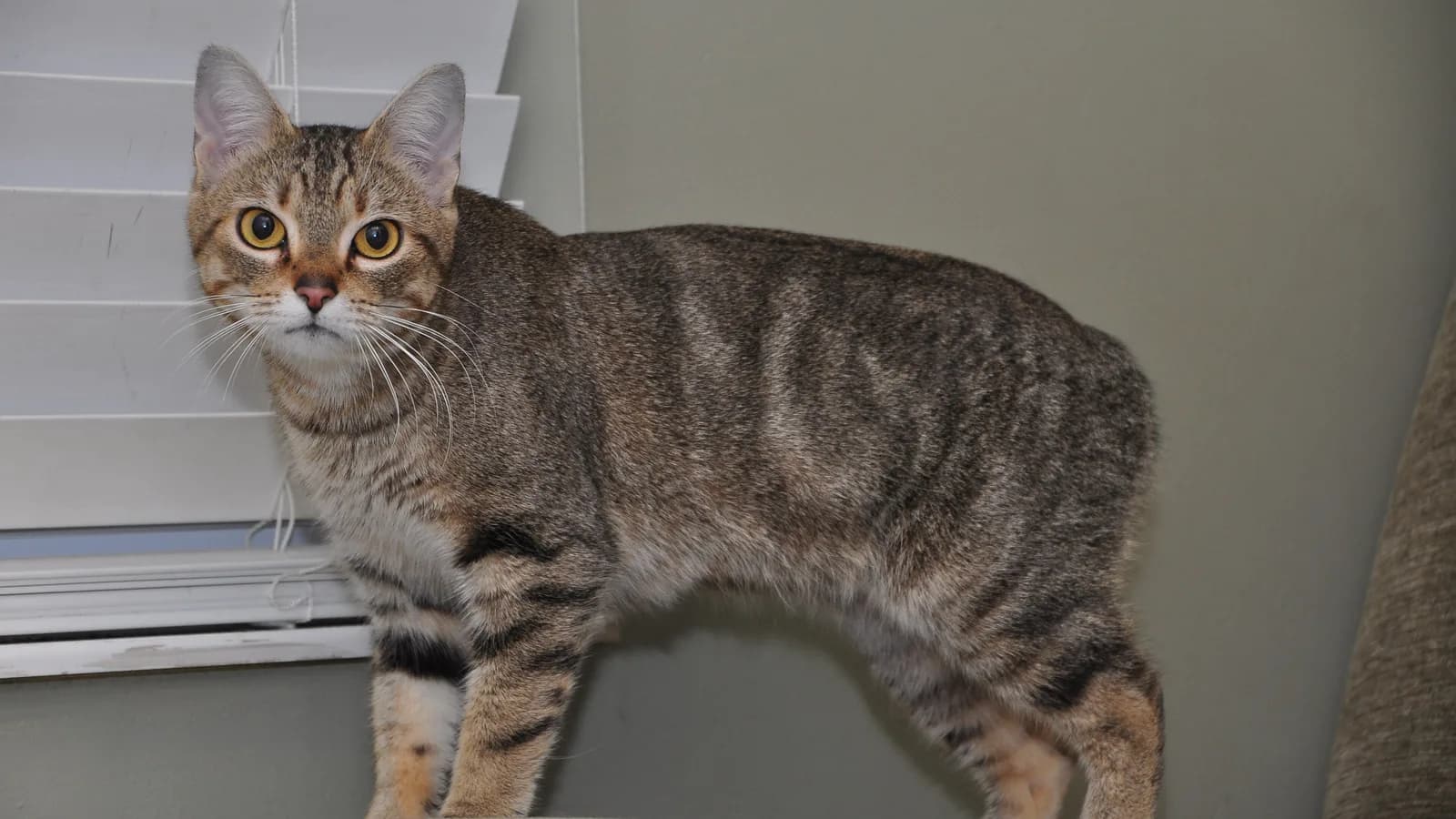
 Manx photos
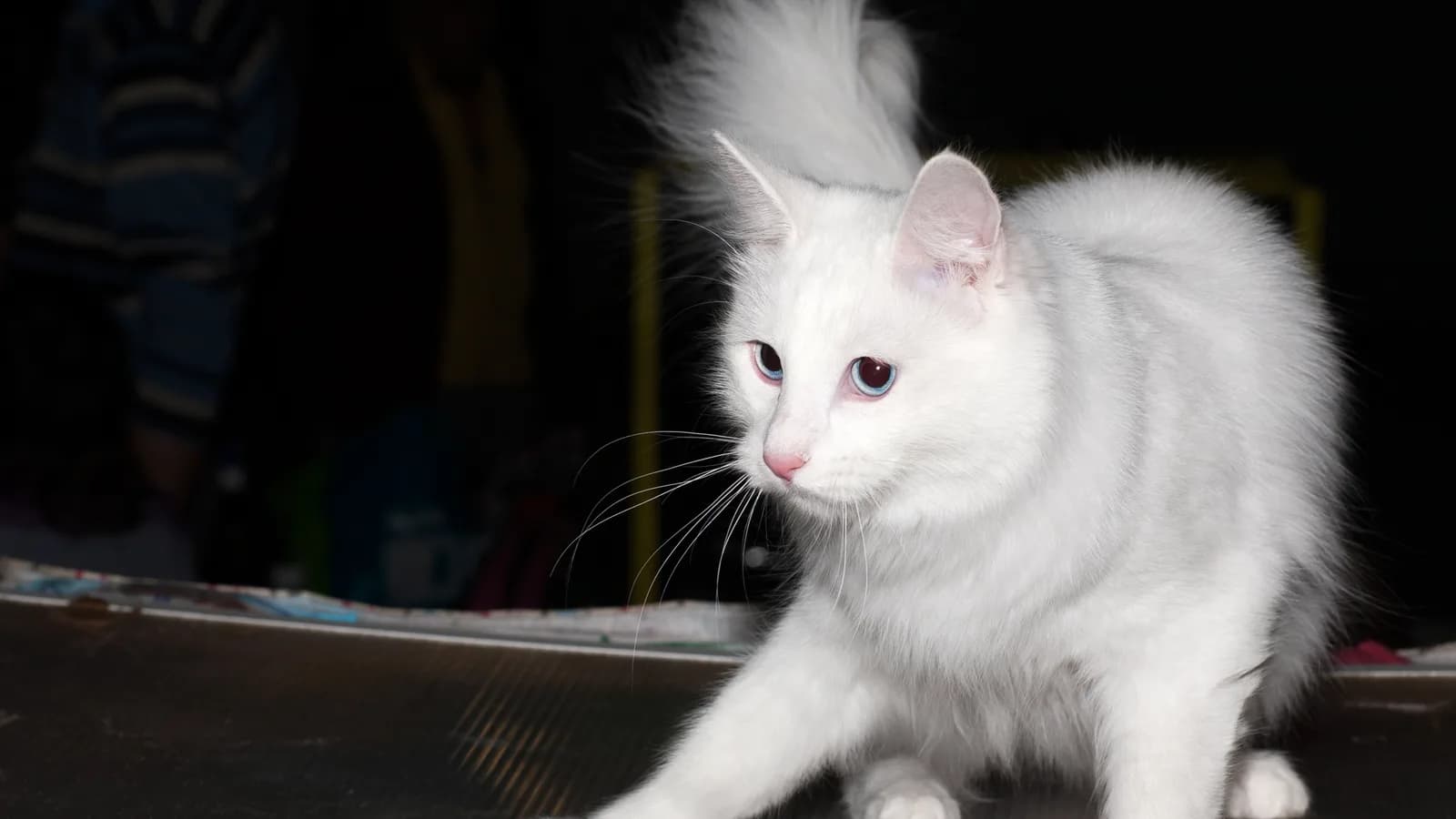
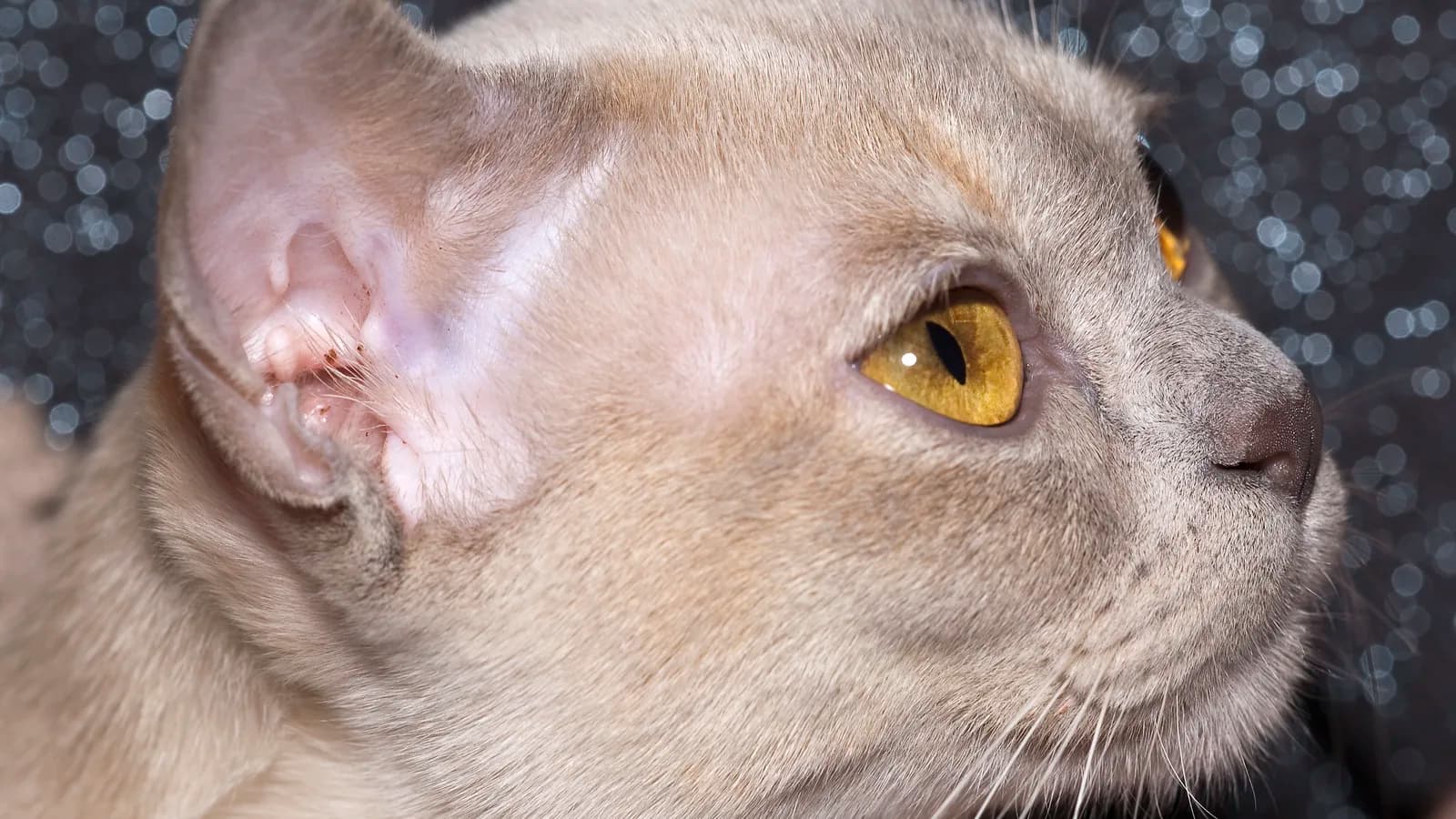
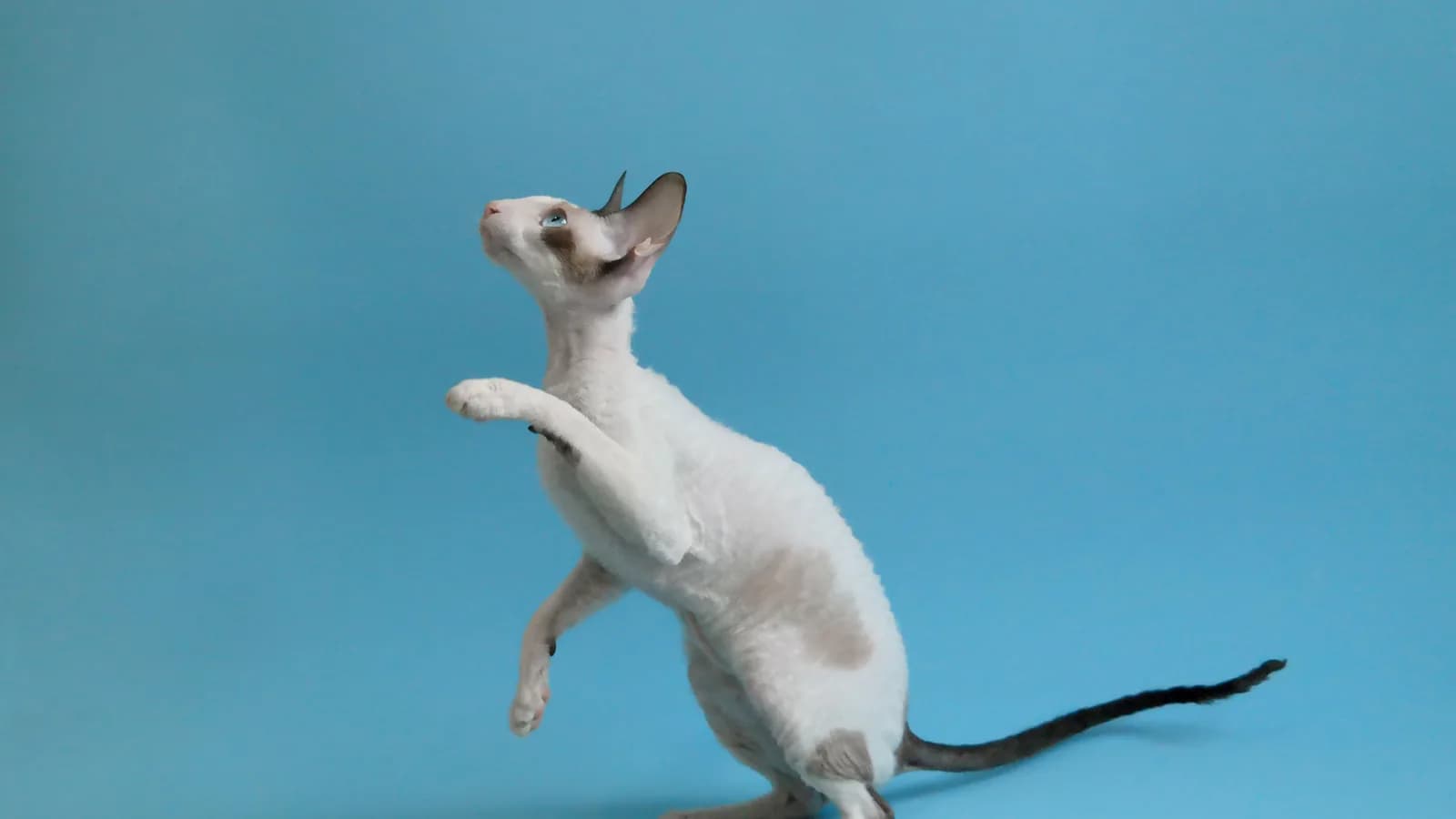
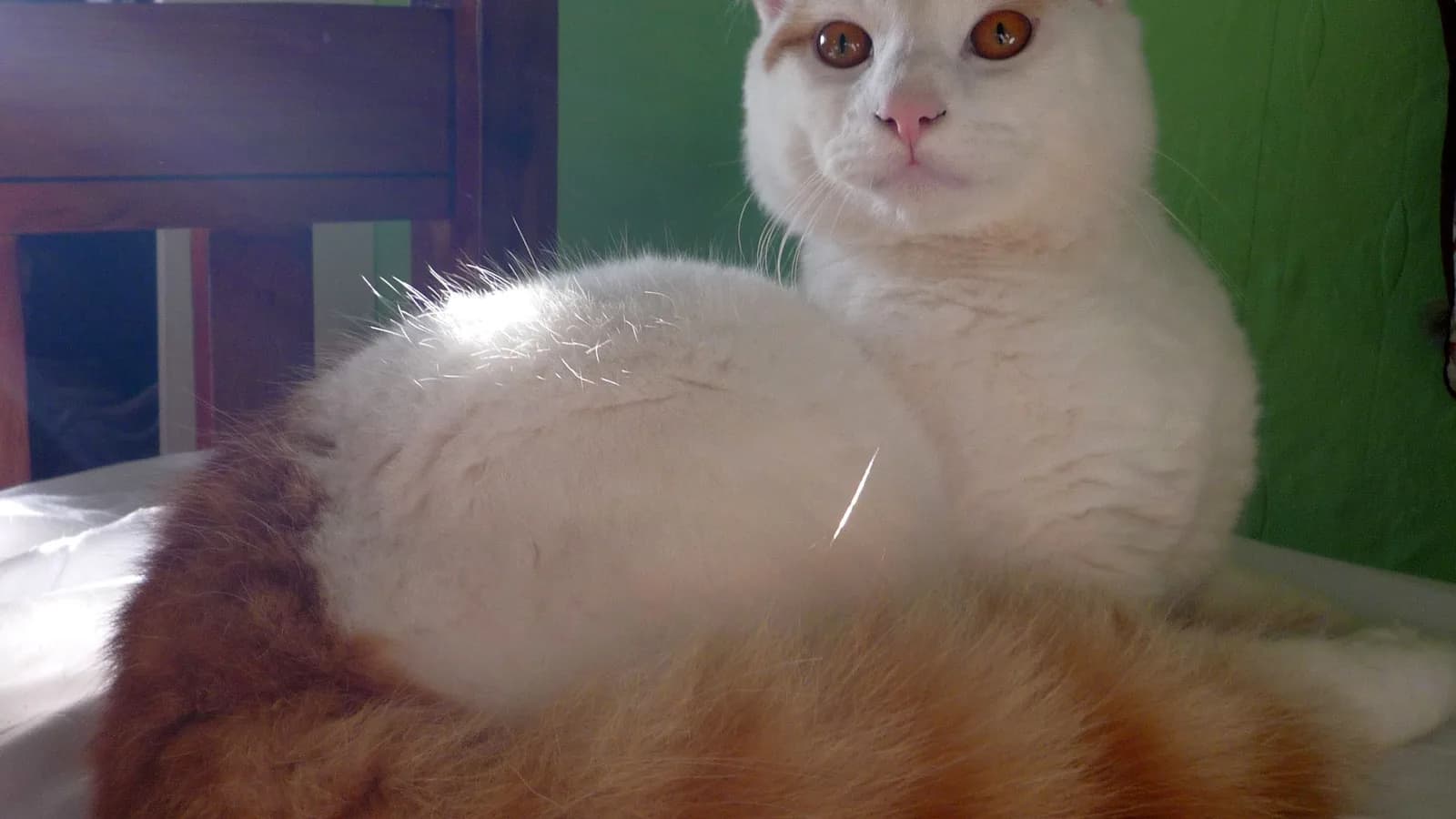
Real photos, so you can see what the breed actually looks like: coats, ear tufts, ruff and build.
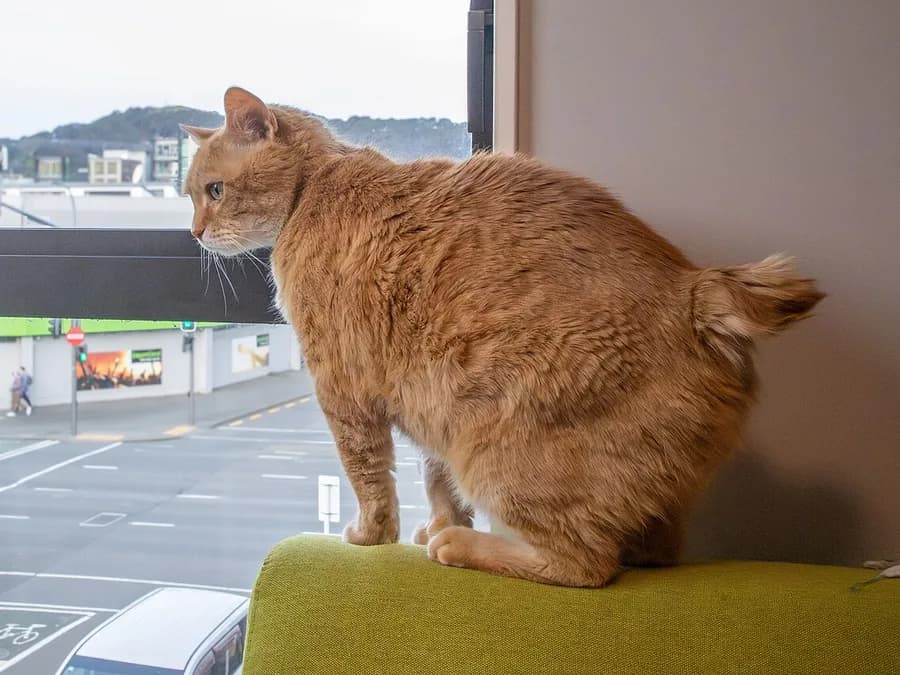
Ginger tabby Manx cat perched on a sofa back, short tail and full flank fur
Photo: ThomasVenelli · CC BY 4.0 · via Wikimedia Commons
 Vital stats
Origin
The Isle of Man, by founder effect: a small island cat population in which a spontaneous tail-shortening mutation, arising in ordinary African-wildcat-descended domestic cats, could spread the way isolated populations let genes spread. That documented mechanism is the origin. The famous stories (a Spanish Armada shipwreck, the tail lost in Noah's Ark door) are folklore, labeled as such by the sources themselves. And the cat-rabbit hybrid is genetically impossible, in Wikipedia's own words.
Weight
Female
7.7-9.9 lb (3.5-4.5 kg)
Male
9.9-12.1 lb (4.5-5.5 kg)
Life expectancy
No measured cohort study anywhere names the Manx. Four large veterinary datasets (UK twice, Sweden, US) were checked directly, and none carries a Manx row. The 9-16 band spans the circulating institutional claims ( and Hillspet 9-13, 16+), with 's current breed page stating 12-14 as the recognizing UK registry's own middle number, and GCCF's older 2011 policy more optimistic still. All are commonly cited estimates; no measured study exists. One scoping line belongs in the same breath: a minority of Manx kittens are born with or develop severe Manx Syndrome and do not survive kittenhood, so no range applies uniformly across the breed.
Coats
Orange tabby (the historic stock)
Brown tabby
Black
Blue
Tortoiseshell
White & bicolor
Not the open palette you might assume. Four of five registries (, , , ) name real exclusions, at minimum chocolate, lavender/lilac and the pointed pattern. is the genuine outlier stating 'COLORS: All'. And the black-cat association is historically backwards: the two earliest period sources (Lane 1903, Barton 1908) describe the original Isle of Man stock as orange-dominated.
Understanding the coats (and their genetics)Size
The circulating figures converge across GCCF, TICA and CFA: males 10-12 lb (4.5-5.5 kg), females 8-10 lb (3.5-4.5 kg), on a round, cobby frame with hind legs longer than the front. Stated plainly: no judged standard itself prints a number. The figures live on the registries' consumer pages, and no measured cohort exists to check them.
Did you know
The 'black Manx' of popular imagination is historically backwards. The two earliest period sources describing the Isle of Man's own cats (1903 and 1908) both report the original stock as dominated by ORANGE cats. The island's most famous export wore ginger before it wore anything else.
 Personality
 Affection4/5
 Energy3/5
 Intelligence4/5
 Friendliness4/5
 Independence3/5
 Vocal2/5
 Shedding3/5
Compatibility
 Good with children4/5
 Good with other pets4/5
 Apartment friendly4/5
Editorial ratings on our five-point scale, anchored in the registry descriptions and the measured behaviour studies cited on this profile; individual cats vary, and our members' own ratings below are the counterweight.
Still torn between this breed and another?Compare the Manx trait by trait, or filter every breed by what matters to you. What our members say
What our members say
Nobody has described their Manx here yet. As soon as the first profiles come in, this is where the community averages will show up: temperament, food, lifestyle.
Describe my Manx Pros & cons
Strong points
- A storied, genuinely ancient island breed with the fancy's most distinctive silhouette
- The registry portrait: placid, loyal, dog-adjacent, an accomplished mouser
- Four tail classes mean tailed Manx exist, are essential to good breeding, and cost less
- An easy shorthair coat (the longhaired Cymric trades up to a real grooming routine)
Things to consider
- Manx Syndrome is real and needs an informed buyer: our dedicated page carries the file without drama
- No measured study exists for weight, lifespan or temperament: the profile is registry consensus, labeled
- Show-class (tailless) kittens cost more and carry the higher statistical share of the syndrome
- A thin, inquiry-driven market: most breeders publish no price and run waiting lists
 Is a Manx right for you?
A household that wants a calm, loyal, distinctive companion and will do its buying homework. Tail classes, breeder questions and the syndrome file are all one page away, and an informed Manx buyer gets one of the fancy's great originals. Teach children the shoulder-petting rule and everyone thrives.
Is the Manx right for YOUR home?
Answer a few questions and we'll email you your personalized result.
Take the quiz · 2 min Getting to know the Manx
Start on the island. The Manx is a founder-effect story: an isolated Isle of Man cat population in which a spontaneous tail-shortening mutation spread as island genetics allow. That is the documented origin. The shipwrecked-Armada ancestor is unevidenced folklore (and tailless cats are not notably Spanish). The Noah's Ark door story is charming Lamarckism, and the cat-rabbit hybrid is genetically impossible. We keep the legends because they are good, and label them because they are legends.
The tail comes in four classes: rumpy (nothing), rumpy riser (a rise of cartilage), stumpy (a short stub) and longy (nearly normal), and only the shortest classes are showable. The classes matter three ways. They price differently (the market file found the first named rumpy-versus-tailed rate card). Tailed cats are deliberately kept in responsible breeding programs, by all three major registries' own recommendation. And severity of the breed's one big health question concentrates statistically in the most tailless cats: Manx Syndrome, explained precisely, mechanism first, four disagreeing prevalence figures published as four.
The longhaired Manx is its own naming maze. The Cymric is a breed at , a renamed division at , two-breeds-one-standard in Canada and unrecognised under its name at : five answers we map with dates instead of flattening. And the tailless silhouette has lookalikes with entirely different genetics: the bobtail identification page carries the corrected inheritance story most comparisons get wrong.
Honesty about the file: no measured cohort anywhere carries a Manx row for weight or lifespan, so the numbers above are attributed registry claims, and the lifespan band spans a genuine institutional disagreement ('s own two documents included). The color chart is narrower than assumed (four registries exclude chocolate, lilac and pointed; alone says all). And the breed's historic palette was orange, not black, by the earliest sources on record.
 Health: what to watch for
A few predispositions are well documented. The good news: they can be screened for or avoided by choosing a reputable breeder and keeping an eye on the right signals.
This is information, not veterinary advice, and it cannot tell you what is wrong with your cat. Our rule is a simple one: if something is wrong with your cat, call your vet, and call an emergency clinic if it is out of hours. Nothing you read here is a reason to wait.
Manx Syndrome: the file, precisely and without drama
HIGHThe tail gene is dominant and uniformly lethal in double dose (no homozygous cat has ever been found born alive, three independent sources across thirty-three years). The syndrome is what can follow when a single copy's effect runs beyond the tail: spina bifida forms, sacral underdevelopment, bowel and bladder involvement, concentrated statistically in the most tailless cats. Four disagreeing prevalence figures exist, and our dedicated page publishes all four, attributed, never averaged. No DNA test exists. Informed breeding with tailed cats, per all three registries' own recommendation, is the real mitigation.
The breeding mechanics buyers should understand
MODERATEGCCF's own policy explains why tailed Manx belong in every responsible program: a rumpy-to-rumpy mating yields roughly two tailless kittens per tailed one among LIVE births, the missing quarter lost in utero. A breeder who can explain their program's use of tailed cats, their kitten checks and their homing age is showing you the actual health guarantee.
Corneal dystrophy: a separate, thin, honest mention
LOWA wholly separate hereditary eye condition was described in the breed in a single 1976 paper and has not been meaningfully studied since. One paper is the entire modern evidence base, and this row exists so the condition is neither hidden nor inflated. Any cloudiness or vision change in any cat is a vet visit on its own merits.
The handling note that doubles as a health rule
LOWTICA's own care material cautions that the tailless area can be sensitive: pet shoulders, lift with full body support, and teach children the same. Separately, any NEW straining, accidents, reduced rear sensation or gait change in a Manx of any age is a prompt vet conversation, never a breed trait to wait out.
Go deeper on health
Prevention, warning symptoms, costs and insurance: our guides, researched and sourced.
The Manx also appears in
Our criteria-based guides, to compare this breed with the ones most like it.
 Grooming & living with one
Grooming
The shorthair needs a couple of passes a month by 's account (one consumer source says daily; we print both attributions rather than pick). The double coat sheds seasonally. The Cymric is a genuine semi-longhair routine, covered on its own page.
Living together
Registry-described as good with children and other pets, with the one sourced safety note repeated: the tailless area can be sensitive, so supervised, shoulder-first handling is the house rule with small children.
 Food & diet
No breed-specific feeding requirement exists outside the veterinary management of megacolon-spectrum cats, which belongs to a vet, not a webpage. One sourced nuance: the round build does not itself cause weight gain. The real risk is visual, a rounded frame hiding a body-condition change. So weigh the cat rather than judging the silhouette.
 Price & budget
$195 to 1,000
Price of a kitten from a registered breeder, in the United States
This price reflects the quality of the breeding program: parents' health tests, registry pedigree, socialization. A very low price should raise a red flag. The real cost, though, plays out over the years.
Find a verified breederKitten price, by market
United States
$195 to 1,000
United Kingdom
£130 to 600
Canada
CA$850 to 1,000
Each figure is that country's real market price, researched separately, not a conversion of the others. The smaller line is only there so you can gauge one against your own money: European Central Bank reference rates of 2026-09-18, refreshed daily.
Work out your food budget
Type of food
Estimated monthly budget
$14
≈ 2.4 oz (68 g) per day
A ballpark figure, food only, using the same arithmetic as our portion tool (resting energy requirement × 1.2, a neutered adult). Real needs vary with age, activity level and body condition. Ask your veterinarian for advice.
 Verified catteriesThe registry-checked directory, plus a kitten alert near you. Filter it by breed.
 Should you insure a Manx?
Our sources list several predispositions in the Manx: Manx Syndrome: the file, precisely and without drama, The breeding mechanics buyers should understand, Corneal dystrophy: a separate, thin, honest mention, among others. A predisposition is not a foregone conclusion, and many of these cats live their whole lives without ever developing anything. It does change the nature of the follow-up, though: you monitor, sometimes for life, and it's that monitoring that weighs on a budget, more than a one-off accident.
One thing to weigh before deciding: this is a cat you will live alongside for well over a decade, and that is the span the real cost is spread across, premiums and care alike. Where a breed has a measured life expectancy that differs from the figure usually quoted, we say so in the lifespan section above rather than repeating the quoted one here.
 Manx cats in our community
No Manx here yet
Got one? Add a photo and yours gets to open this page.
 The vet's take

Veterinary review
Are you a vet?
Your professional read belongs here: every verified practitioner can leave a note, published once our editors have reviewed it.
Sign in and get your license number verified. We check it in the public register, we never ask for or keep a copy of your diploma, and your number is never published.
 Frequently asked questions
+What is a Manx cat?
The tailless breed of the Isle of Man: a founder-effect original with a round, cobby body, longer hind legs, and four tail classes from fully tailless to nearly normal. One of the fancy's oldest and most distinctive cats.
+Why do Manx cats have no tails?
A dominant mutation in the T gene (Brachyury) shortens the spine's tail end. One copy makes a Manx; two copies are uniformly lost before birth, which is why the gene never breeds true and why tailed Manx are part of every responsible program.
+Can a Manx cat have a tail?
Yes: four classes exist (rumpy, rumpy riser, stumpy, longy), and only the shortest are showable. Tailed Manx are genuine Manx, essential to good breeding, and typically cost less.
+How long do Manx cats live?
No measured study exists anywhere: the circulating claims span 9-13 (PDSA, Hillspet) to 16+ (TICA), with GCCF's current page saying 12-14. We publish the honest range and the absence, and note that severe early-onset syndrome cases mean no range applies uniformly.
+Are Manx cats rare?
The market says moderately: US breeders exist but almost none publishes a price, Britain's new breed club counts three active breeders, and Australia's market is opaque. Expect inquiries and waiting lists rather than shopping carts.
+How much does a Manx cat cost?
US: a live sample at $195-850 with a stated cattery floor around $1,000+. UK: £130-600 across two marketplaces. Canada: the one named rate card reads CA$1,000 rumpy / CA$850 tailed. Australia: no verified figure. Our price page carries every source.
+Are Manx cats hypoallergenic?
No cat is, and no Manx-specific allergen study exists. The double coat sheds seasonally; that is a grooming fact, not an allergy category.
+Is a Cymric the same as a Manx?
It is the longhaired Manx, and its status genuinely depends on the registry: a breed at TICA, a renamed division at CFA, two-breeds-one-standard in Canada, unrecognised under the name at GCCF. Our Cymric page maps all five answers with dates.
+What colors do Manx cats come in?
A narrower chart than assumed: four of five registries exclude chocolate, lavender and the pointed pattern at minimum, with TICA the outlier allowing all. Historically the island's stock was orange-dominated, per the earliest period sources.
+Do Manx cats really hop like rabbits?
Some do: the longer hind legs produce a distinctive gait in part of the population, one root of the impossible-but-immortal cat-rabbit legend. The hop is real; the rabbit is not.
+Are Manx cats good with children?
The registry portrait says yes, placid and loyal, with one sourced house rule: the tailless area can be sensitive, so children learn to pet shoulders and lift with support, per TICA's own care note.
 Community questions
Got a question this page doesn't cover? Ask it: the best ones get published here with their answer.
Sources & references
Data checked against reference sources (TICA and CFA standards, genetics laboratories, veterinary schools).
- TICA: Manx breed page
- CFA: Manx breed page
- CFA: Manx article
- GCCF: Manx breed page
- GCCF UK Manx breeding policy (PDF, 2011/2013)
- Buckingham et al. 2013, mutant T alleles and Brachyury haploinsufficiency (Mamm Genome)
- Xu et al. 2016, HES7 and short tails in Asian domestic cats (Sci Rep)
- UC Davis VGL: cat tests index (no Manx-specific test: the checked absence)
- Science for Animal Welfare: Manx syndrome
- Hill's Pet: Manx breed page

Worth keeping a paw on
Pin this profile
To compare later, or to show someone still torn between two breeds. One click and it sits in your board.
Pin it on Pinterest
 Purr or Pass
Still deciding? Find the perfect breed for your home.
A quick quiz that factors in your lifestyle, your kids and your other pets.
Which breed fits my home?Keep exploring
The floor belongs to our members. Keep it kind, links are not allowed, and images go through moderation before anyone else sees them.