

Burmese
“The brick wrapped in silk”
 By Priya · The careful one
Published August 21, 2026Updated August 26, 20269 min read
Contents
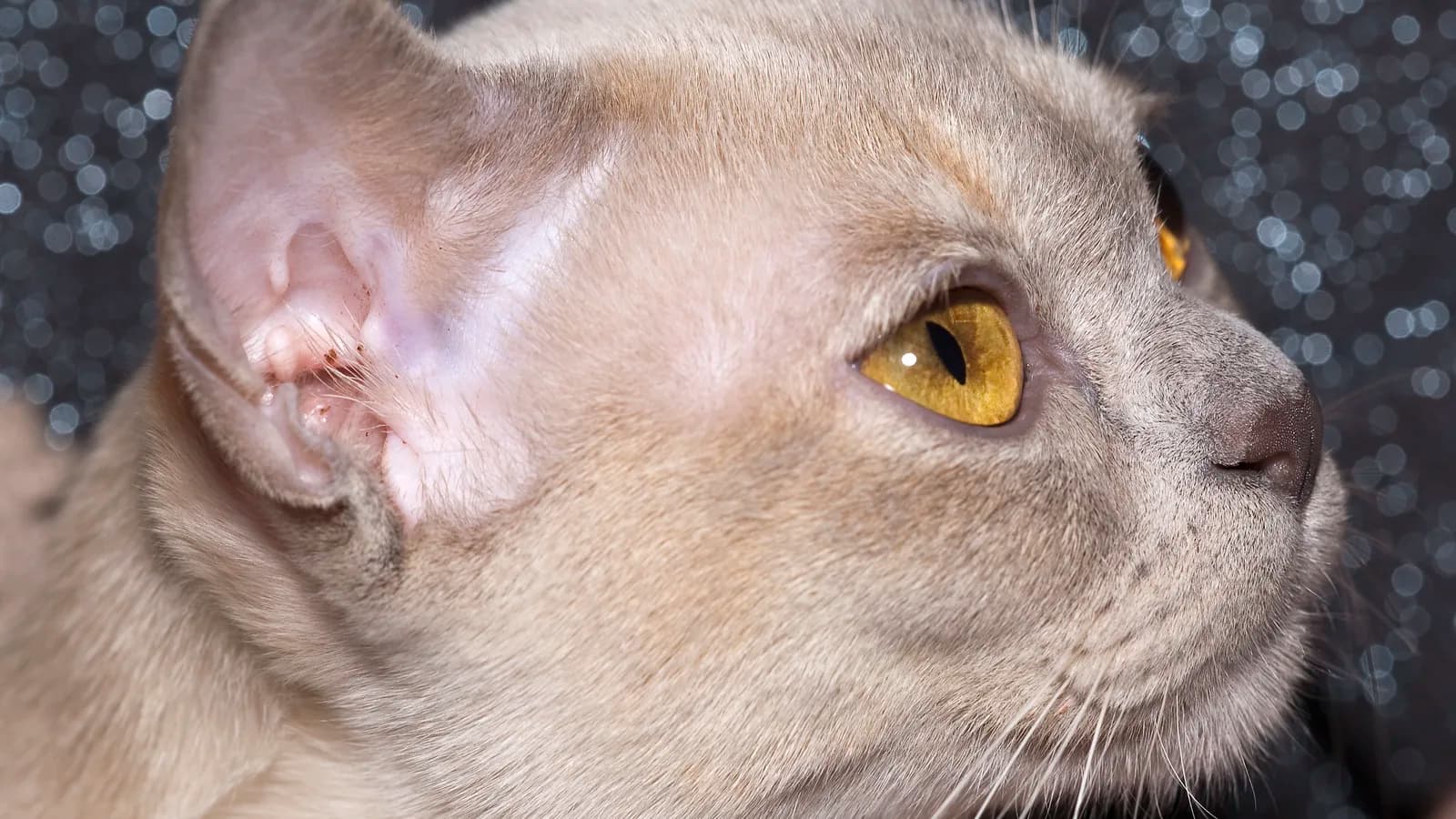
 Burmese photos
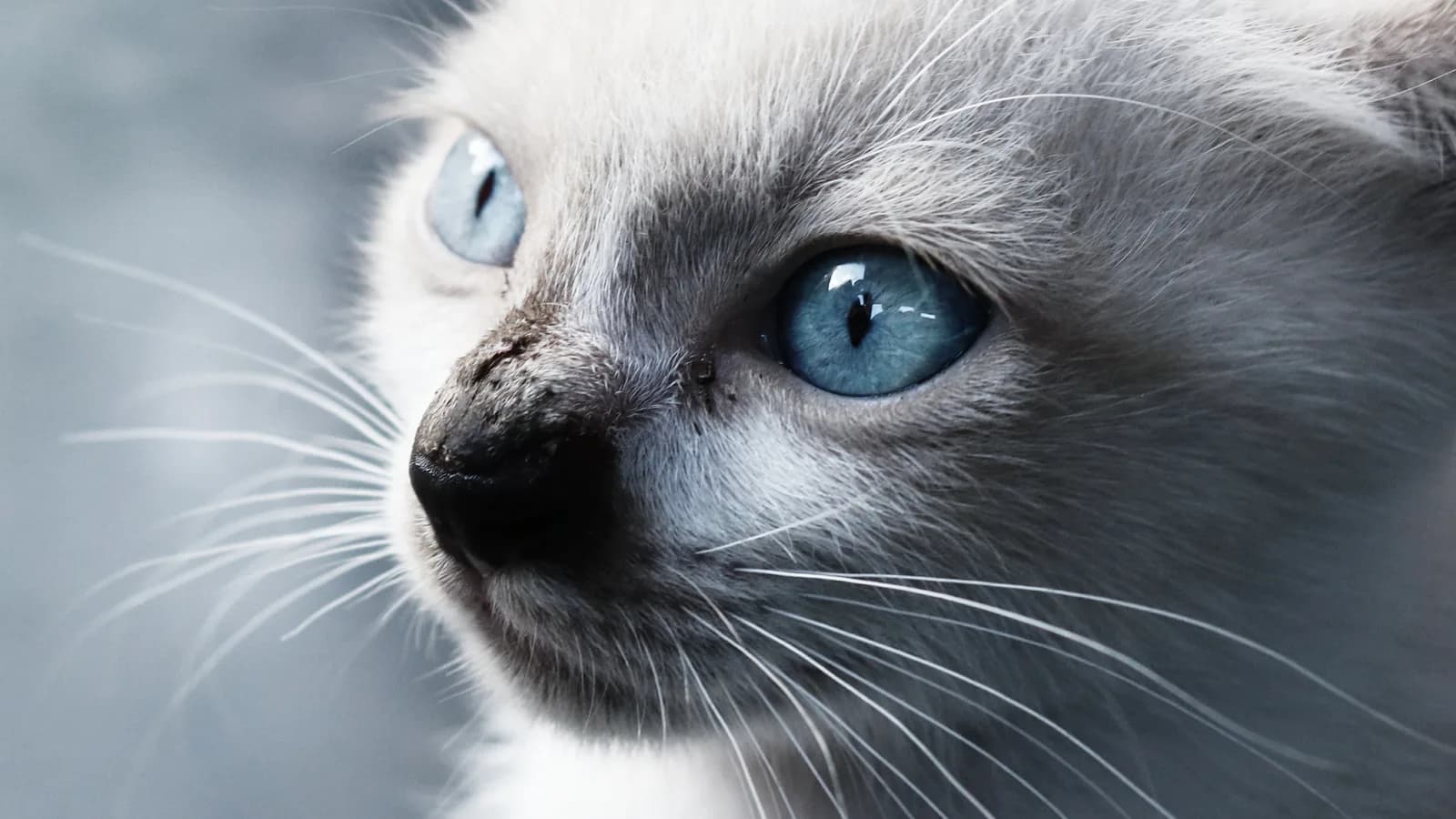
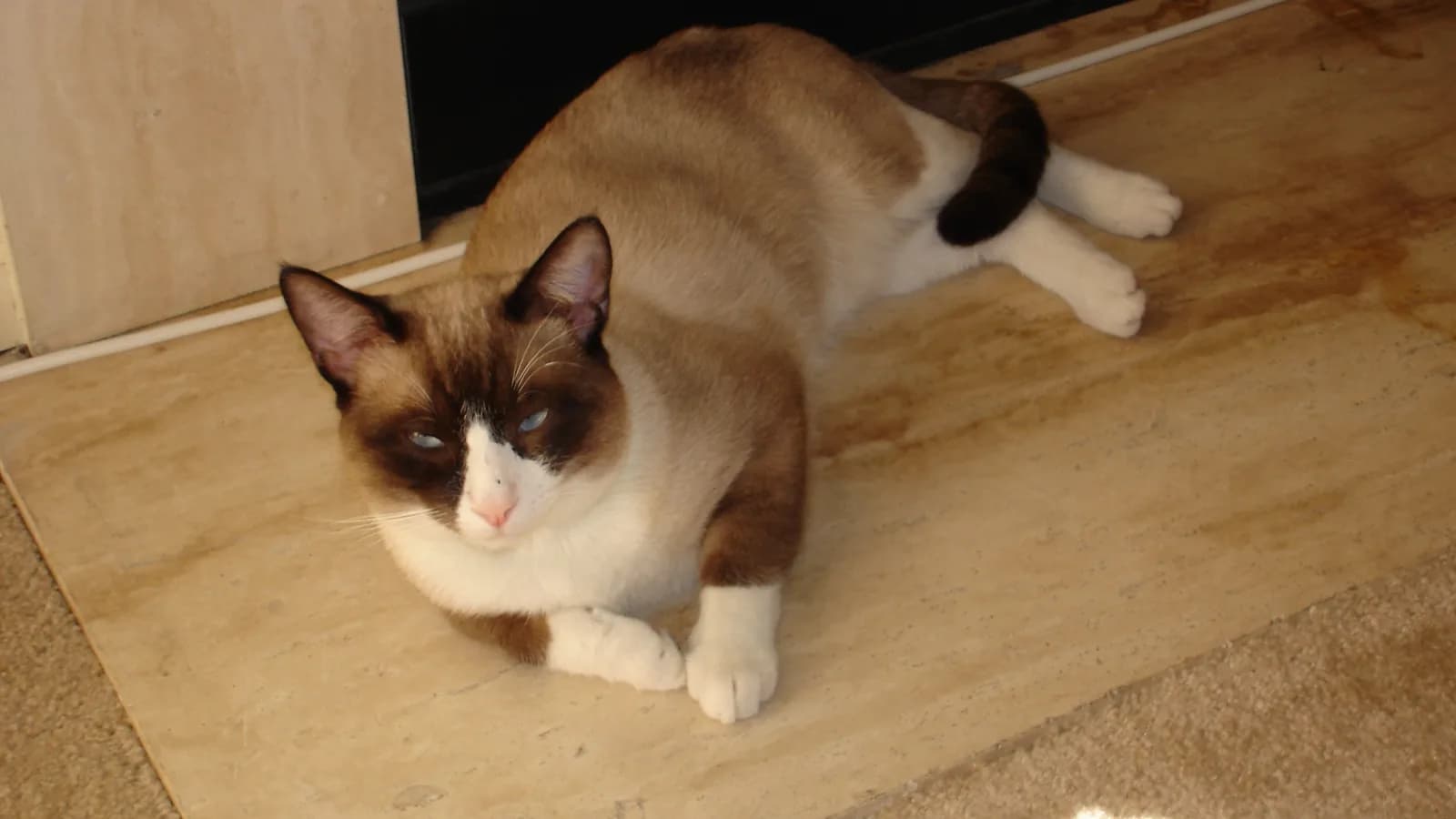
Real photos, so you can see what the breed actually looks like: coats, ear tufts, ruff and build.
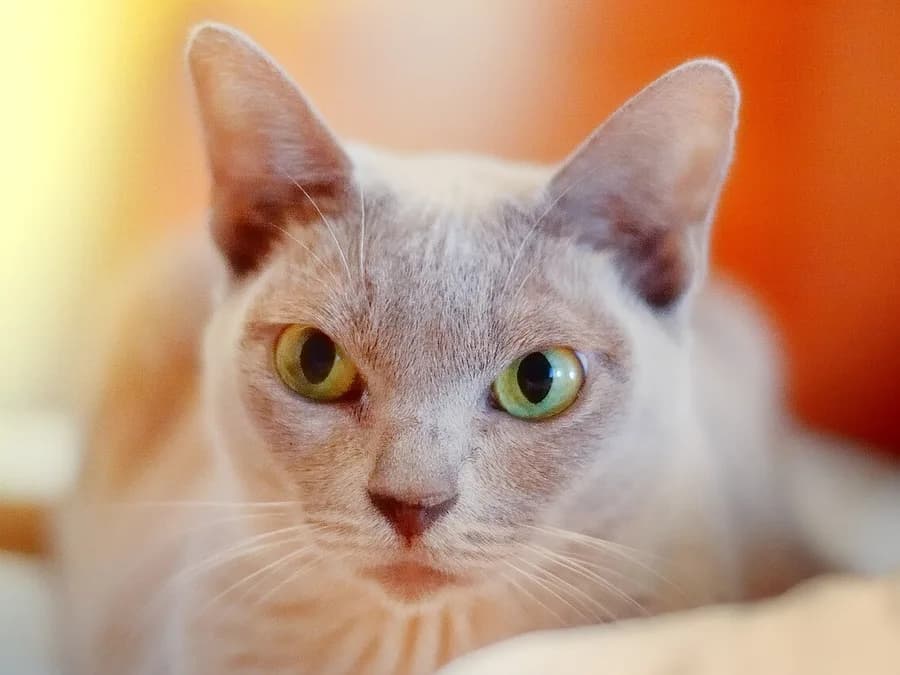
Close-up of a lilac Burmese cat's face, round golden-green eyes and rounded ears
Photo: Mikael Moiner from Gothenburg, Sweden · CC BY 2.0 · via Wikimedia Commons
 Vital stats
Origin
Myanmar (Burma)
San Francisco, 1930: a small walnut-brown cat named Wong Mau, brought from Burma, was bred to a Siamese, and her dark-brown descendants founded the breed. Who brought her, and how the doctor's name is spelled, genuinely varies across four accounts, which our profile states rather than smooths. And two registries' own pages describe Wong Mau herself, in modern genetic terms, as a natural mink Tonkinese rather than a purebred Burmese.
Weight
Female
6-9 lb (2.7-4.1 kg)
Male
11-14 lb (5-6.4 kg)
Life expectancy
The measured figure LEADS here, and it is a headline: 14.42 years at birth (95% CI 12.91-15.93, 45 deaths), the HIGHEST-ranked breed in the entire 2024 UK life table, with the older 2015 VetCompass cohort agreeing (median 14.3 years, second-longest of ten breeds). One honest tension stated rather than hidden: a different UK dataset (Farrell 2024, NLP-classified records, n=144) reports a sharply lower 9.84-year median, with no CI overlap and its own internally inconsistent table row for this breed. We publish the disagreement as a methodology gap, never an average. The 10-18 band spans 's own two self-disagreeing claims (box 10-17, text 16-18), both attributed.
Coats
Sable (Brown)
Champagne (Chocolate)
Blue
Platinum (Lilac)
Depends on the registry, structurally. 's American standard allows exactly four (Sable, Champagne, Blue, Platinum) and disqualifies the rest. recognizes ten under the Brown/Chocolate/Lilac vocabulary. Australia's : up to twenty, including ten variants unique to it. No black exists: the darkest Burmese is a deep Sable, and the standards fault a coat that reads black.
Understanding the coats (and their genetics)Size
A registry-silence finding stated honestly: only ONE of five registries (GCCF) publishes a numeric weight anywhere in its own materials, males 11-14 lb (5.0-6.4 kg) and females 6-9 lb (2.7-4.1 kg), box and text agreeing. TICA publishes none across three documents. The measured literature is thin and non-US: a Swedish insured-cat cohort (n=46) puts the median at 4.4 kg. The famous nickname is real, though: a compact cat that is always heavier than it looks.
Did you know
The Burmese sits at the top of the UK's measured life table: 14.42 years at birth, the highest-ranked breed in the whole 2024 cohort, a first place it holds by a nose over the Birman.
 Personality
 Affection5/5
 Energy4/5
 Intelligence5/5
 Friendliness5/5
 Independence1/5
 Vocal3/5
 Shedding1/5
Compatibility
 Good with children5/5
 Good with other pets4/5
 Apartment friendly4/5
Editorial ratings on our five-point scale, anchored in the registry descriptions and the measured behaviour studies cited on this profile; individual cats vary, and our members' own ratings below are the counterweight.
Still torn between this breed and another?Compare the Burmese trait by trait, or filter every breed by what matters to you. What our members say
What our members say
Nobody has described their Burmese here yet. As soon as the first profiles come in, this is where the community averages will show up: temperament, food, lifestyle.
Describe my Burmese Pros & cons
Strong points
- The longest measured life expectancy in the UK's 2024 life table: 14.42 years at birth
- Measured among the boldest and most people-and-cat-sociable breeds tested (Mikkola 2021, Burmese-only data)
- One of only four breeds measured significantly more likely to fetch
- A short satin coat with a weekly rubber-brush grooming bill and minimal shedding
Things to consider
- Intensely people-oriented: TICA and GCCF both warn against leaving it alone for long periods
- One name, two real populations: the American and European types carry different color charts and different test lists, and buyers must know which they are buying
- The health file is genuinely geography-split (three conditions documented mostly outside North America), so breeder paperwork matters more than averages
- A confident, busy cat that wants in on everything: furniture-statue owners should look elsewhere
 Is a Burmese right for you?
A present household that wants a bold, sociable, dog-adjacent cat that fetches, supervises and lives long enough to become furniture-in-chief. Fine with children and cat-friendly dogs, by the measured data and the registries alike. Wrong for homes empty all day.
Is the Burmese right for YOUR home?
Answer a few questions and we'll email you your personalized result.
Take the quiz · 2 min Getting to know the Burmese
Start with one small brown cat on a ship. Wong Mau reached San Francisco in 1930, was bred to a Siamese, and her dark-brown descendants became the Burmese. The accounts of who brought her genuinely disagree, and we say so. Better still, 's Tonkinese page and 's Burmese page both describe Wong Mau herself as, genetically, a natural mink Tonkinese. The founding Burmese was not quite a Burmese, which is the best kind of origin story.
The breed then split without changing its name. From 1949, American-bred Burmese exported to Britain evolved into a separate lineage. Today runs two breeds (the four-color American and the ten-color European), 's Burmese simply IS the European shape with no second name, and the two types carry different genetic-testing expectations.
Our European Burmese page maps the whole split, registry by registry; the colors page counts the four-versus-ten-versus-twenty chart honestly. Two more historical wrinkles worth knowing. suspended Burmese registration outright from 1947 into the 1950s (its own documents leave the exact end date ambiguous, 1953 or 1957). And from 1979 to 1984 the dilute colors lived as a separate CFA breed called the Malayan, before being folded back in.
The measured cat is better than the marketing. Boldest tier. Most sociable tier, toward people and cats alike. One of four breeds measured significantly more likely to fetch. And the top row of the UK's 2024 measured life table, at 14.42 years. Almost no breed on this site has its registry prose so thoroughly CONFIRMED by independent measurement.
The honest asterisks. A different UK mortality dataset reports a much lower median for the breed, a methodology gap we publish rather than average. And the health file is geography-split three ways: the craniofacial defect runs American, hypokalaemia and GM2 run European and Australasian, diabetes runs Australian and British, each documented in its own founding paper's words on our health section below. The practical translation is one question: which line, and where are the parents' test results?
The comparison everyone eventually needs: a very dark Burmese is not a Bombay, and the eye color settles it faster than the coat ever will.
 Health: what to watch for
A few predispositions are well documented. The good news: they can be screened for or avoided by choosing a reputable breeder and keeping an eye on the right signals.
This is information, not veterinary advice, and it cannot tell you what is wrong with your cat. Our rule is a simple one: if something is wrong with your cat, call your vet, and call an emergency clinic if it is out of hours. Nothing you read here is a reason to wait.
The import test list: GCCF's own three-test registration rule
MODERATEThe registry requirement leads, per our editorial policy. GCCF's current Registration Policy (approved June 2026) requires an imported Burmese to test clear of GM2 gangliosidosis, hypokalaemic polymyopathy and the craniofacial defect before registration. Commercial DNA tests for all three exist (Langford in the UK, UC Davis VGL in the US). For a buyer, the entire section below compresses into one question: which line, and where are the parents' results?
Craniofacial defect (ALX1): the American-line condition
HIGHA severe inherited head malformation in affected kittens, with the causal ALX1 variant identified in 2016 and a DNA test sold by both major laboratories. The geography is the point, stated in the sources' own words: historically associated with the American 'contemporary' lines, while an 800-cat UK/European survey found roughly 1% carriage. Carrier parents are healthy; testing is what prevents affected kittens. This describes breeding paperwork, never an owned pet's prognosis.
Hypokalaemic polymyopathy (WNK4): the non-US condition
MODERATEEpisodic muscle weakness from low blood potassium, with the causal WNK4 variant identified in 2012 and a DNA test available. Documented in Australasian, European and South African Burmese, and explicitly NOT diagnosed within the US population per the founding paper's own words. The paper's 14.9% carrier figure belongs to non-US Burmese and outcross breeds only. Sudden weakness, a dropped or wobbly head, or reluctance to walk or jump is a same-day veterinary matter in any cat.
GM2 gangliosidosis: the European-line condition
HIGHA fatal inherited neurological storage disease documented specifically in European Burmese lines, with no US-type source naming it; a Burmese-specific DNA test exists and GCCF requires it for imports. Carriers are healthy; two tested-clear parents cannot produce an affected kitten. The full context lives on our European Burmese page, where this condition genuinely belongs.
Diabetes mellitus: the Australasian-and-British signal
MODERATEDocumented at roughly four times the general-population rate in Australian, British and European Burmese lines, and explicitly not observed at that rate in North America per the research's own introduction. The Australian work treats the breed as a genetic model of human type 2 diabetes. The practical translation is unglamorous: keep the cat lean, and ask your vet about screening cadence. Nothing here predicts any individual cat.
Our full guide on this topicFeline orofacial pain syndrome (FOPS): a breed-associated pain condition
MODERATEA recognized episodic orofacial pain condition in which Burmese cats predominate in the largest case series (113 cases). Signs like sudden exaggerated licking, chewing motions or pawing at the mouth are a prompt veterinary matter, not a behaviour quirk to wait out. Dental disease can trigger episodes: one more reason routine dental care earns its keep in this breed.
Go deeper on health
Prevention, warning symptoms, costs and insurance: our guides, researched and sourced.
 Grooming & living with one
Grooming
A weekly pass with a rubber brush, agreed independently by and , covers the satin coat; shedding is minimal. The non-American type carries even less undercoat, a detail two registries state for that population only.
Living together
Measured among the most sociable breeds toward people AND other cats, with no elevated aggression over a house-cat baseline in the pooled Finnish data. and both state it should not be left alone for long periods. Company, feline or human, is a requirement rather than a luxury.
 Food & diet
No breed-specific feeding study exists. One genuinely breed-relevant note, scoped precisely: diabetes mellitus is documented at roughly four times the general rate in Australian, British and European Burmese lines, and explicitly NOT observed at that rate in North America. So weight management and routine vet screening conversations matter especially for European-line cats. Portion the food, weigh the cat, and let your vet set any screening cadence.
 Price & budget
$600 to 2,500
Price of a kitten from a registered breeder, in the United States
This price reflects the quality of the breeding program: parents' health tests, registry pedigree, socialization. A very low price should raise a red flag. The real cost, though, plays out over the years.
Find a verified breederKitten price, by market
United States
$600 to 2,500
United Kingdom
£795 to 1,500
Canada
CA$2,500
Each figure is that country's real market price, researched separately, not a conversion of the others. The smaller line is only there so you can gauge one against your own money: European Central Bank reference rates of 2026-09-18, refreshed daily.
Work out your food budget
Type of food
Estimated monthly budget
$14
≈ 2.4 oz (68 g) per day
A ballpark figure, food only, using the same arithmetic as our portion tool (resting energy requirement × 1.2, a neutered adult). Real needs vary with age, activity level and body condition. Ask your veterinarian for advice.
 Verified catteriesThe registry-checked directory, plus a kitten alert near you. Filter it by breed.
 Should you insure a Burmese?
Our sources list several predispositions in the Burmese: The import test list: GCCF's own three-test registration rule, Craniofacial defect (ALX1): the American-line condition, Hypokalaemic polymyopathy (WNK4): the non-US condition, among others. A predisposition is not a foregone conclusion, and many of these cats live their whole lives without ever developing anything. It does change the nature of the follow-up, though: you monitor, sometimes for life, and it's that monitoring that weighs on a budget, more than a one-off accident.
One thing to weigh before deciding: this is a cat you will live alongside for well over a decade, and that is the span the real cost is spread across, premiums and care alike. Where a breed has a measured life expectancy that differs from the figure usually quoted, we say so in the lifespan section above rather than repeating the quoted one here.
 Burmese cats in our community
No Burmese here yet
Got one? Add a photo and yours gets to open this page.
 The vet's take

Veterinary review
Are you a vet?
Your professional read belongs here: every verified practitioner can leave a note, published once our editors have reviewed it.
Sign in and get your license number verified. We check it in the public register, we never ask for or keep a copy of your diploma, and your number is never published.
 Frequently asked questions
+How long do Burmese cats live?
The Burmese holds the TOP row of the UK's 2024 measured life table: 14.42 years at birth, with the older VetCompass cohort agreeing at a 14.3-year median. One other UK dataset reports lower and we publish that tension openly, but the best-measured answer is: longer than almost any other breed.
+Are Burmese cats hypoallergenic?
No cat is, and no study has measured the Burmese. The short, minimally-shedding coat is a housekeeping advantage, not an allergy category; our dedicated page carries the evidence.
+How much does a Burmese cat cost?
US: $600-1,500 pet-quality, $1,500-2,500 show, European line $2,000-3,000. UK live listings £795-1,500. Canada's named figure is CA$2,500. Australia prices on request across the board. Our price page carries every source and date.
+What is the difference between American and European Burmese?
A documented separate lineage since 1949: head type, a four-versus-ten color chart, closed pedigrees at CFA, and different genetic test lists. It is the single most useful thing to know before buying; our European Burmese page maps it registry by registry.
+What does a Burmese cat look like?
A compact, surprisingly heavy cat in a short satin coat with a sepia glow: golden eyes, a rounded (American) or moderately wedge-shaped (European) head, and colors from deep Sable to pale Platinum. The famous description is a brick wrapped in silk.
+Are Burmese and Siamese cats related?
Yes, by documented history: the founding cat Wong Mau was bred to a Siamese in the 1930s. The breeds have since split completely on eye color (gold versus blue) and body type (compact versus svelte).
+Are Burmese cats aggressive?
The measured data says the opposite: bold and sociable, with no elevated aggression over a house-cat baseline in the pooled Finnish dataset. Individual cats vary, but the breed's file is confidence, not conflict.
+Do Burmese cats fetch?
Measurably yes: a 2024 study of 8,224 cats found the Burmese one of only four breeds significantly more likely to fetch, which happens to match CFA's own long-standing claim word for word.
+Are Burmese cats indoor cats?
They suit indoor life well: people-oriented, playful and content where their household is. What they do not tolerate is an empty home; TICA and GCCF both warn against long periods alone.
+Is there a black Burmese?
No: the darkest Burmese is a deep Sable, and the standards explicitly fault a coat that reads black. The genuinely black cat built from Burmese foundations is the Bombay, and our comparison page teaches the eye-color tell.
+Are Burmese cats from Burma?
The founding cat was: Wong Mau came from Burma to San Francisco in 1930. The breed itself was developed in America, and later split into American and European lineages that both trace to her.
 Community questions
Got a question this page doesn't cover? Ask it: the best ones get published here with their answer.
Sources & references
Data checked against reference sources (TICA and CFA standards, genetics laboratories, veterinary schools).
- TICA: Burmese breed page
- TICA combined Burmese/Bombay standard (PDF)
- CFA: Burmese breed page
- CFA: European Burmese breed page
- CFA Burmese standard (PDF)
- GCCF: Burmese breed page
- GCCF Registration Policy for Burmese Cats (June 2026, the import test rule)
- Teng et al. 2024, VetCompass life tables (Burmese 14.42y, the top row)
- O'Neill et al. 2015, England longevity records (median 14.3y)
- Farrell et al. 2024, premature mortality analysis (the 9.84y tension, stated)
- Mikkola et al. 2021, behaviour and personality traits (the Burmese-only boldness data)
- Salonen et al. 2019, breed behaviour (the pooled Burmese/Burmilla group)
- Delgado et al. 2024, fetching behaviour in 8,224 cats (PLoS One)
- Lyons et al. 2016, ALX1 and the Burmese craniofacial defect (Dev Biol)
- Gandolfi et al. 2012, WNK4 hypokalaemia model in Burmese cats (PLoS One)
- Bradbury et al. 2009, GM2 gangliosidosis in European Burmese (Mol Genet Metab)
- Samaha et al. 2020, diabetes mellitus in the Australian Burmese (Sci Rep)
- Egenvall et al. 2009, Swedish insured-cat mortality (the 'Burma' cohort)

Worth keeping a paw on
Pin this profile
To compare later, or to show someone still torn between two breeds. One click and it sits in your board.
Pin it on Pinterest
 Purr or Pass
Still deciding? Find the perfect breed for your home.
A quick quiz that factors in your lifestyle, your kids and your other pets.
Which breed fits my home?Keep exploring
The floor belongs to our members. Keep it kind, links are not allowed, and images go through moderation before anyone else sees them.