

Burmese Cat Colors: Four in America, Ten in Britain, Twenty in Australia
The Burmese color count depends on the registry: CFA's American standard allows four, GCCF ten, Australia's ACF up to twenty. The counts, the two vocabularies, and the black-cat question.

Published August 21, 2026 4 min read
Contents
Ask how many colors the Burmese comes in and the honest answer is a question back: which Burmese, and whose registry? 's American Burmese standard recognizes exactly FOUR colors and disqualifies the rest; every other document we read, including CFA's own separate European Burmese standard, recognizes ten or more, up to Australia's twenty. Britain's registry states the gap itself, unprompted, on its own breed page: "The Cat Fanciers Association in the USA only recognizes four colors in Burmese... ... ten." This page maps who counts what, in each registry's own vocabulary.
colors in 's American Burmese standard
4
Sable, Champagne, Blue, Platinum; everything else disqualifies
colors at (and 's own European standard)
10
adds Red, Cream and four torties under the Brown/Chocolate/Lilac vocabulary
colors in 's Australian standard
20
the largest count read, including ten Ticked Tabby variants unique to it
The American four
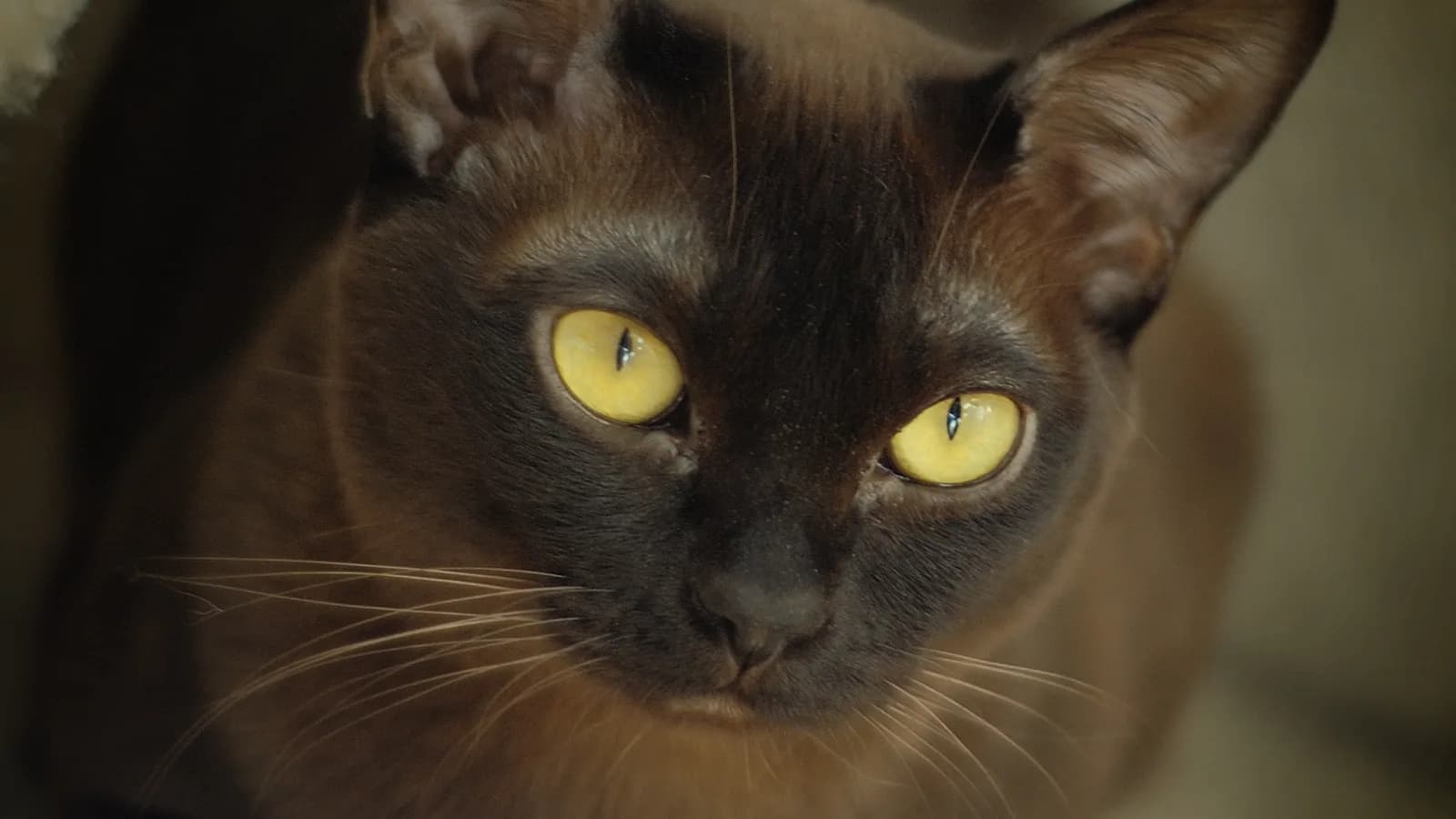
's Burmese standard admits Sable (the deep warm brown that defines the breed), Champagne (a warm honey-beige), Blue (soft silvery grey) and Platinum (pale dove-grey with fawn undertones), and formally disqualifies any other color. Every one is a solid; the coat's sepia gene keeps even "solid" Burmese subtly darker on the points, which is part of the breed's glow.
The wider charts, and the two vocabularies
| American name () | British/European name | The shade |
|---|---|---|
| Sable | Brown | The deep warm brown that defines the breed |
| Champagne | Chocolate | Warm honey-beige |
| Blue | Blue | Soft silvery grey (one name everywhere) |
| Platinum | Lilac | Pale dove-grey with fawn undertones |
The same shades travel under two naming systems. What 's American standard calls Champagne and Platinum, the British and European tradition calls Chocolate and Lilac: Australia's prints both names side by side in one document ("BROWN (Sable)," "CHOCOLATE (Champagne)," "LILAC (Platinum)"), which is the cleanest primary-source proof the two vocabularies name one chart. Beyond the four, 's ten adds Red, Cream and four tortoiseshell colors; ACF's twenty, the largest count we read anywhere, adds ten named Ticked Tabby variants no other registry accepts at all.
Is there a black Burmese?
No, and the near-misses explain the question: a mature or poorly-lit Sable reads almost black, and both 's European standard and explicitly fault a coat that HAS gone effectively black. Neither CFA's nor 's Burmese standard uses the word "black" at all. The uniformly black cat built FROM the Burmese is the Bombay, and telling a dark Sable from a true Bombay by eye color and body length is exactly what our comparison page teaches.
Is there a long-haired Burmese?
Also no: every registry's Burmese is shorthaired. The longhaired relative you may have met is the Tiffanie, a separate -recognized breed in the Asian group, itself distinct from the silver-tipped Burmilla. Neither is a Burmese color class; both deserve their own pages one day, and we name them here so the search does not mislead you.
Two colors science knows and no show hall does
The breed also carries two named, non-standard color mutations from two different founder populations: russet, an MC1R variant documented in New Zealand lines, and mocha, a -gene variant from Thai populations. Neither is a recognized show color in any registry we read; they are genetics-literature facts, listed here because completeness beats tidiness.
 The vet's take

Veterinary review
Are you a vet?
Your professional read belongs here: every verified practitioner can leave a note, published once our editors have reviewed it.
Sign in and get your license number verified. We check it in the public register, we never ask for or keep a copy of your diploma, and your number is never published.
Frequently asked questions
What colors do Burmese cats come in?
Depends on the registry: CFA's American standard allows four (Sable, Champagne, Blue, Platinum); GCCF recognizes ten under the Brown/Chocolate/Lilac vocabulary; Australia's ACF up to twenty including ticked tabbies. We publish each count under its own name rather than blending them.
What is the rarest Burmese color?
No registry publishes registration counts by color, so honest ranking is impossible. Structurally, the colors only some registries accept (the tabby and tortie variants) are scarcer in practice because fewer registries and breeders work them.
Is a black Burmese possible?
As a registered color, no: the darkest Burmese is a deep Sable, which standards explicitly fault when it reads black. A genuinely jet-black cat of this type is the Bombay, a separate breed bred from the Burmese.
Are Champagne and Chocolate the same color?
Yes: two vocabularies for one shade, American (Champagne/Platinum) and British-European (Chocolate/Lilac), printed side by side in ACF's own standard.
Do Burmese cats' colors change with age?
Sable in particular can deepen and mature; the sepia pattern also keeps points subtly darker than the body throughout life. A color that darkens with age is normal for the breed.
 Community questions
Got a question this page doesn't cover? Ask it: the best ones get published here with their answer.
This is information, not veterinary advice, and it cannot tell you what is wrong with your cat. Our rule is a simple one: if something is wrong with your cat, call your vet, and call an emergency clinic if it is out of hours. Nothing you read here is a reason to wait.
Medical information applies to every reader. Prices, legal duties and common practice do not: unless stated otherwise, they are given for the United States, and they differ in the UK, Canada and Australia, and often between states or provinces. Check with your own vet and your own local authority.
Our sources
- CFA Burmese standard (PDF): the four colors, DISQUALIFY clause
- CFA European Burmese standard (PDF): the ten-color chart
- GCCF: Burmese breed page (the four-vs-ten sentence, in GCCF's own words)
- ACF Burmese Standard (PDF, Feb 2025): twenty colors, both vocabularies side by side
- TICA combined Burmese/Bombay standard (PDF)
- CCA-AFC Burmese standard (PDF)

Worth keeping a paw on
Pin this guide
So you can find it the day you need it, and share it with someone whose cat does the same thing. One click and it sits in your board.
Pin it on Pinterest
 Purr or Pass
The cat newsletter
Our verified guides, no spam. Unsubscribe in one click.
More Burmese guides
The Burmese profile →
Burmese guide
Burmese Kittens for Sale: What Four Markets Actually Charge
What a Burmese kitten costs, sourced: US tiers from $600 pet-quality to $2,500 show, the UK's live-vs-evergreen gap, Canada's one named cattery, and Australia's ask-the-breeder market.
Read
Burmese guide
European Burmese: A Real Split, Not a Naming Quirk
The European Burmese is a documented separate lineage since 1949: its own CFA standard, more colors, and a different genetic test list. What each registry decides, and why it matters.
Read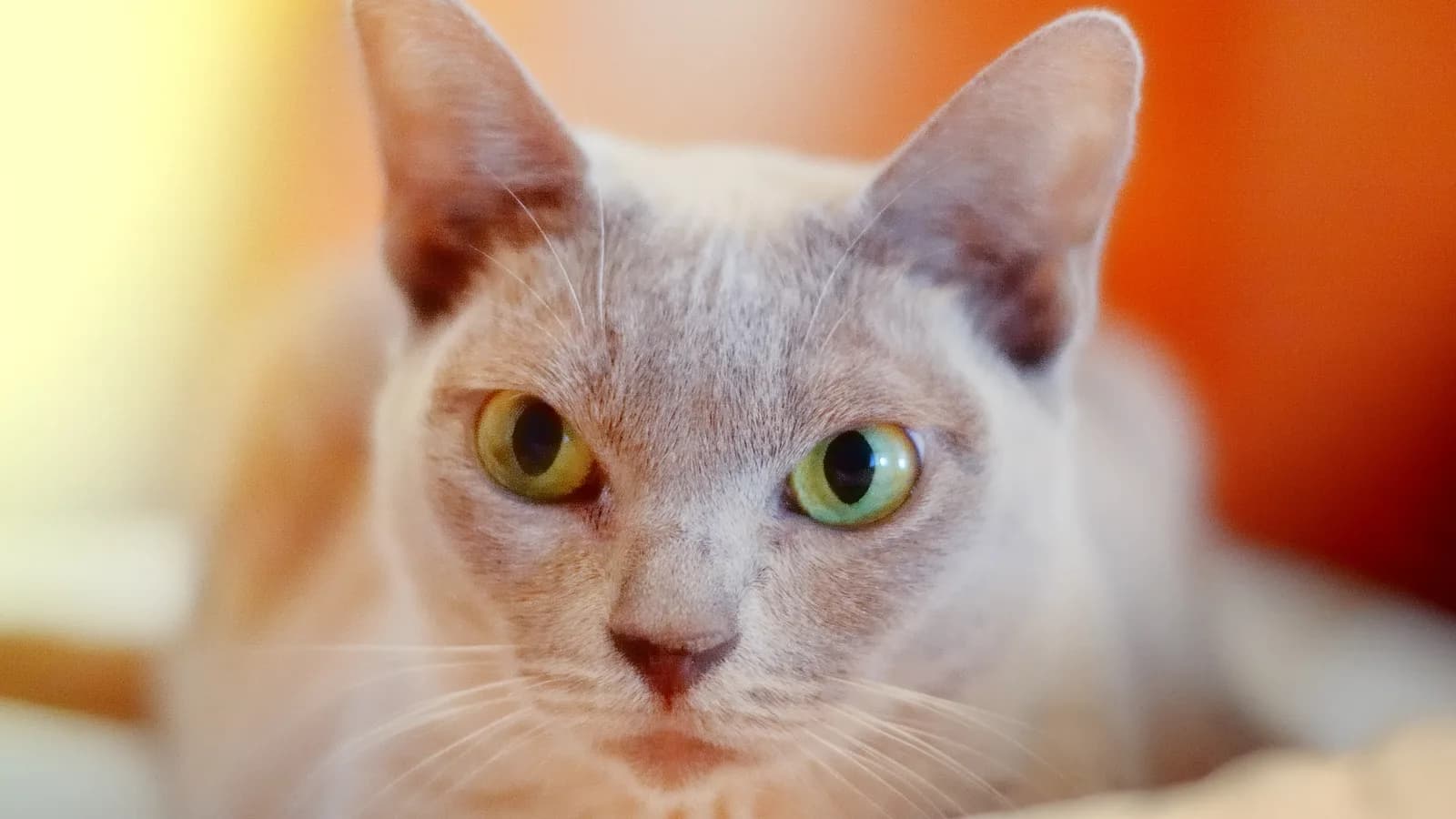
Burmese guide
Are Burmese Cats Hypoallergenic? The Honest Answer
No study has measured allergens in the Burmese, and no cat is allergen-free. What the short, low-shedding coat can and cannot do for an allergic household.
Read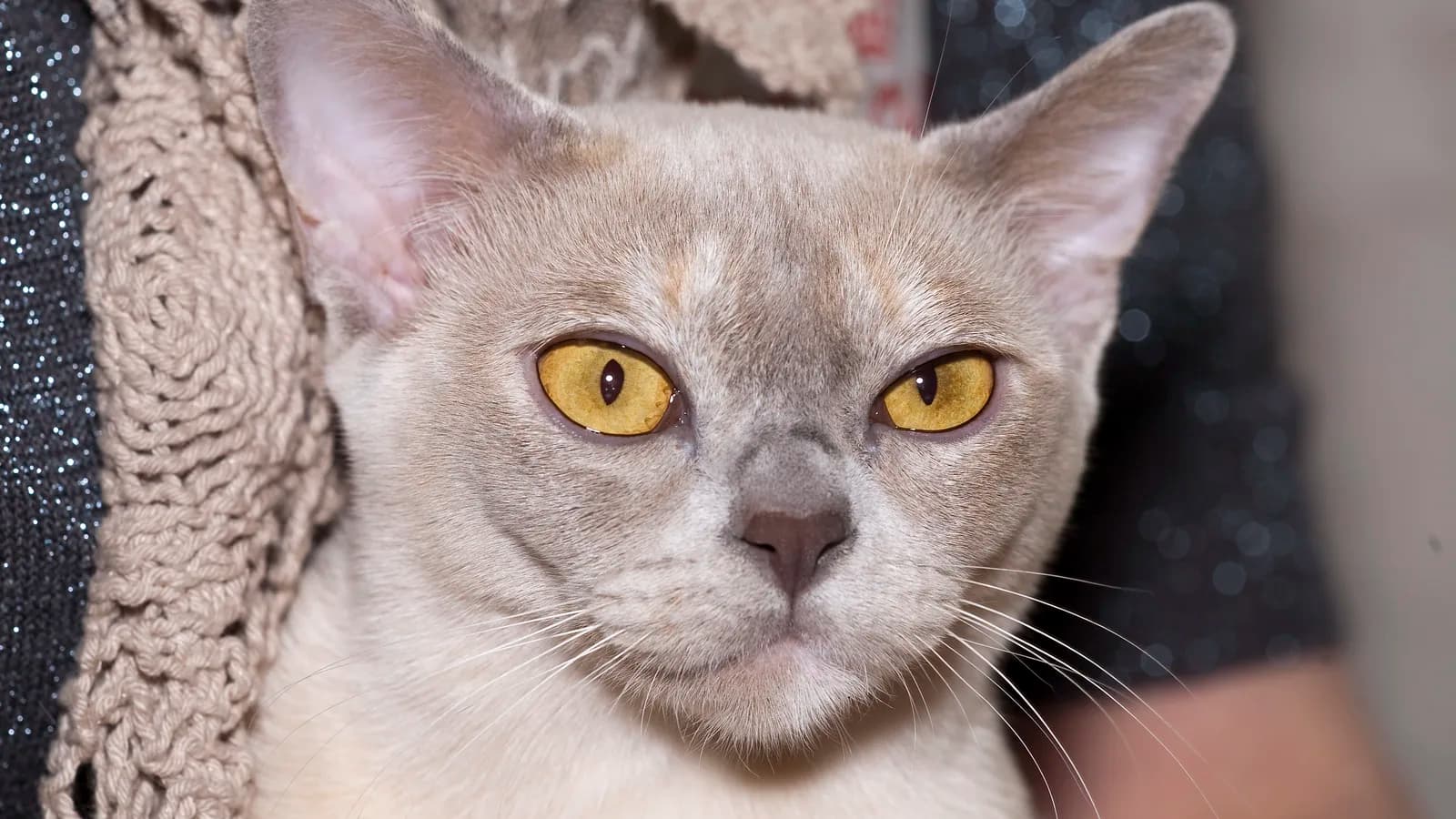
Burmese guide
Burmese vs Bombay: How to Actually Tell Them Apart
A dark Sable Burmese is not a black cat, by the standards' own words: the eye-color direction, the body length, and the Siamese connection told from the founding cat.
Read
The floor belongs to our members. Keep it kind, links are not allowed, and images go through moderation before anyone else sees them.