

Bombay
“The parlor panther”
 By Priya · The careful one
Published August 21, 2026Updated August 26, 20268 min read
Contents
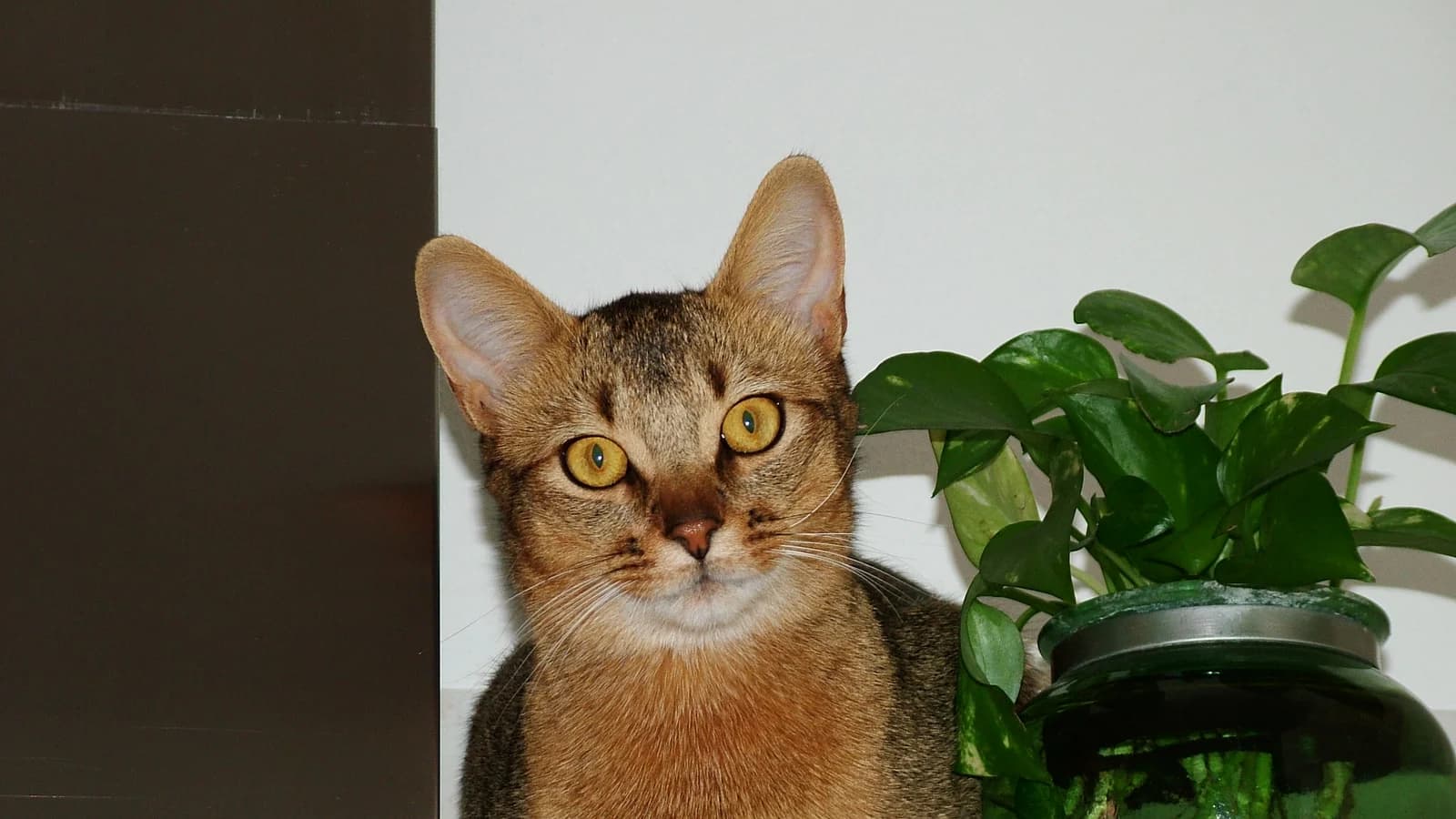
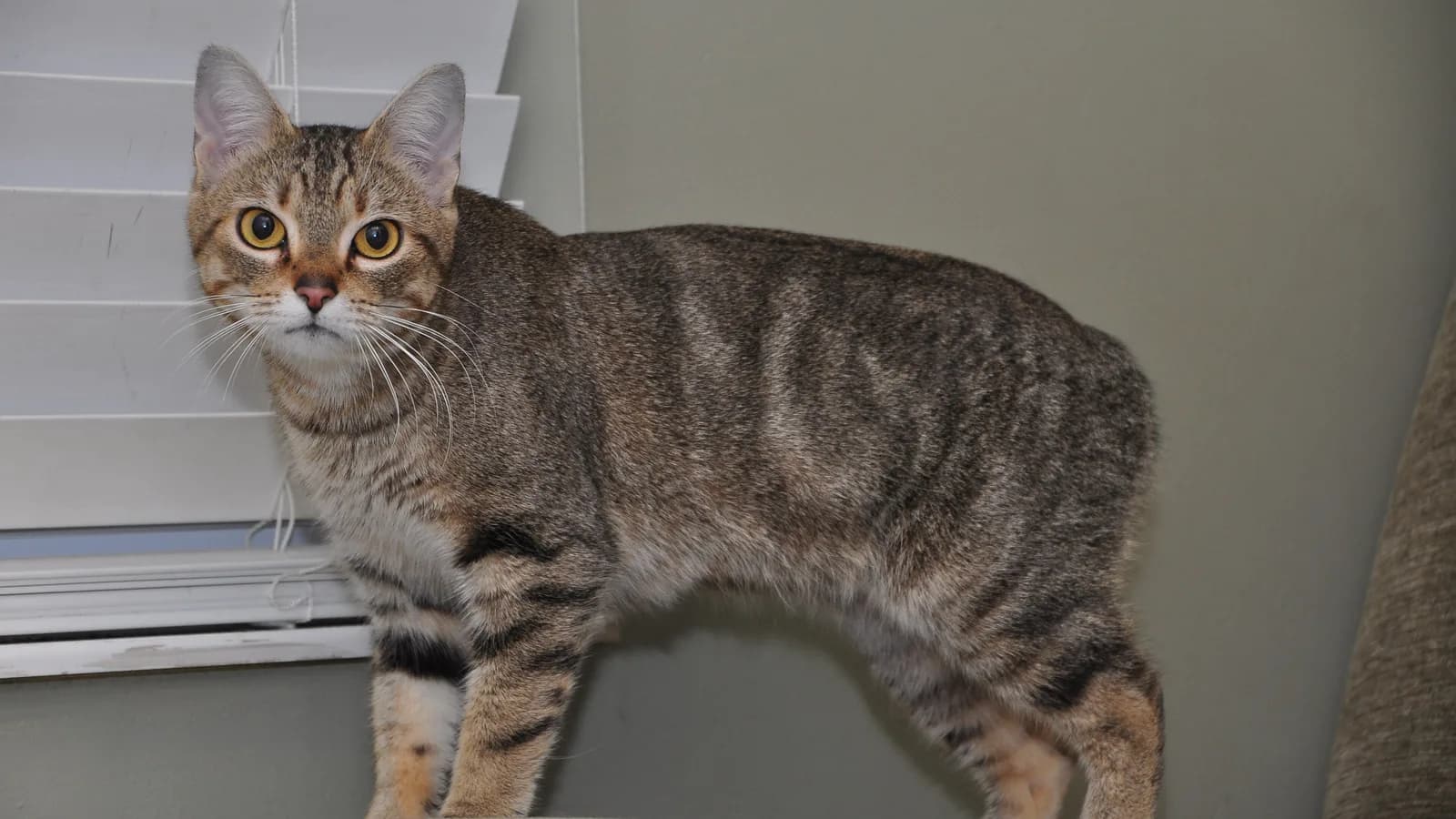
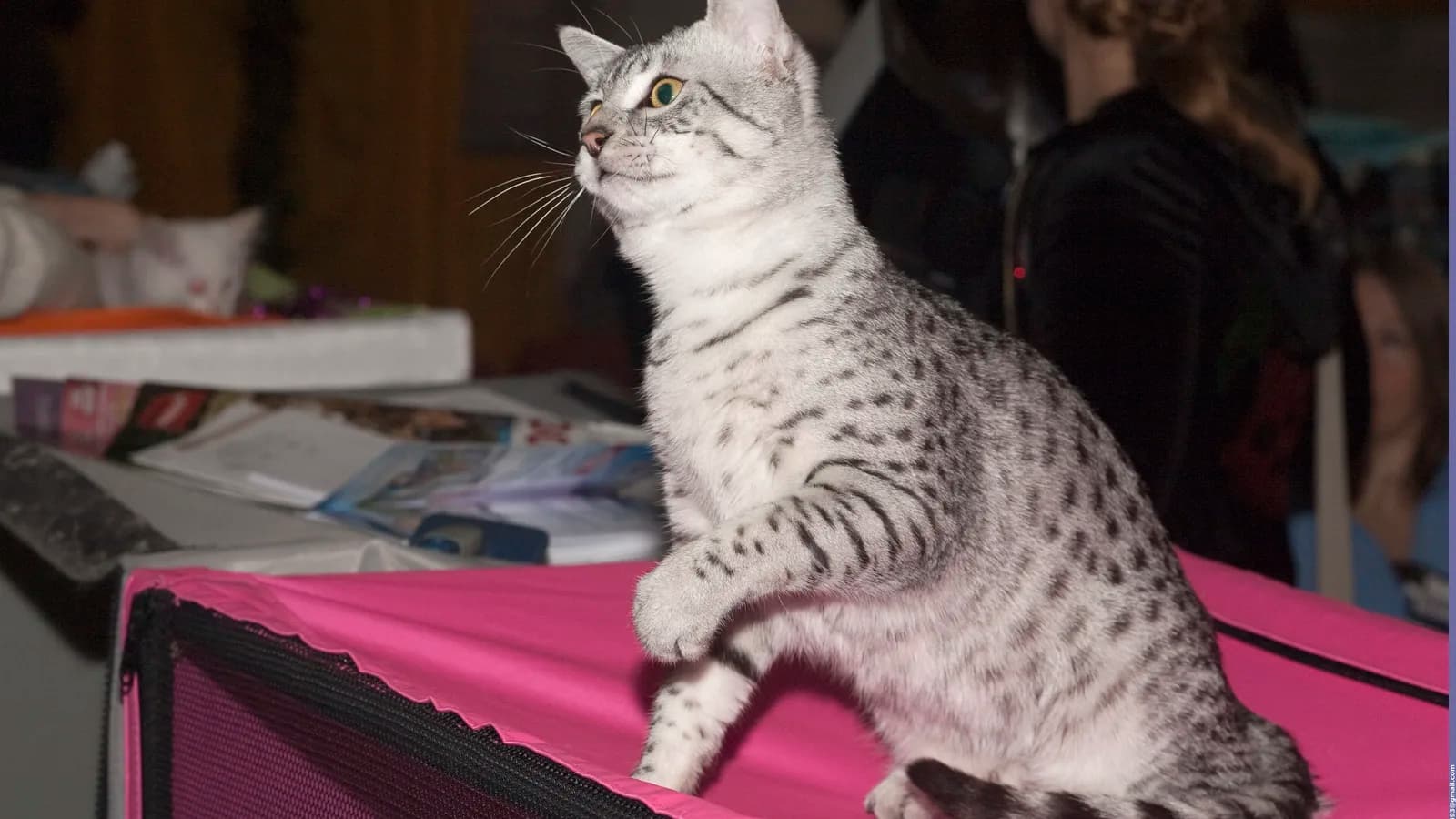
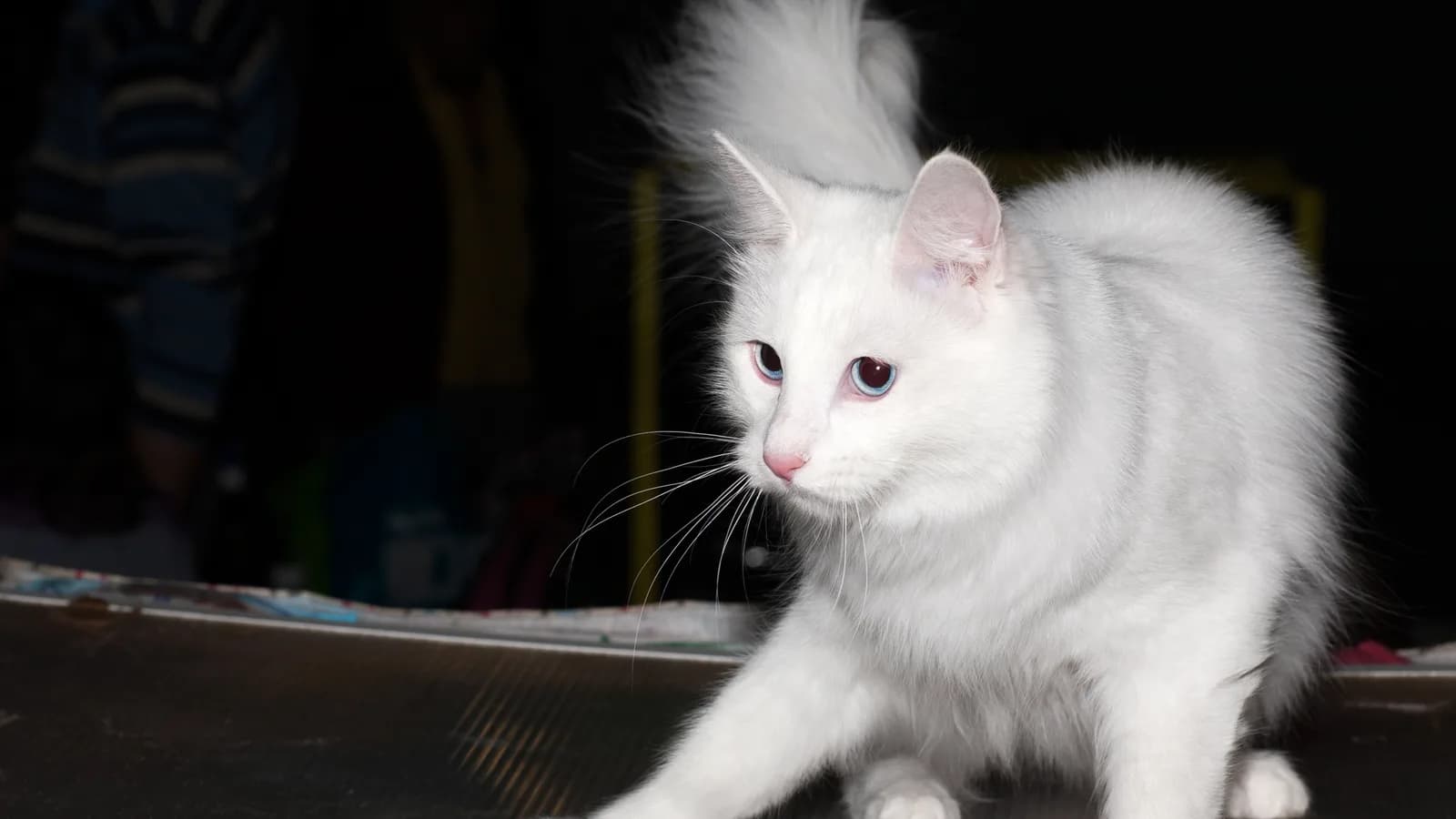
 Bombay photos
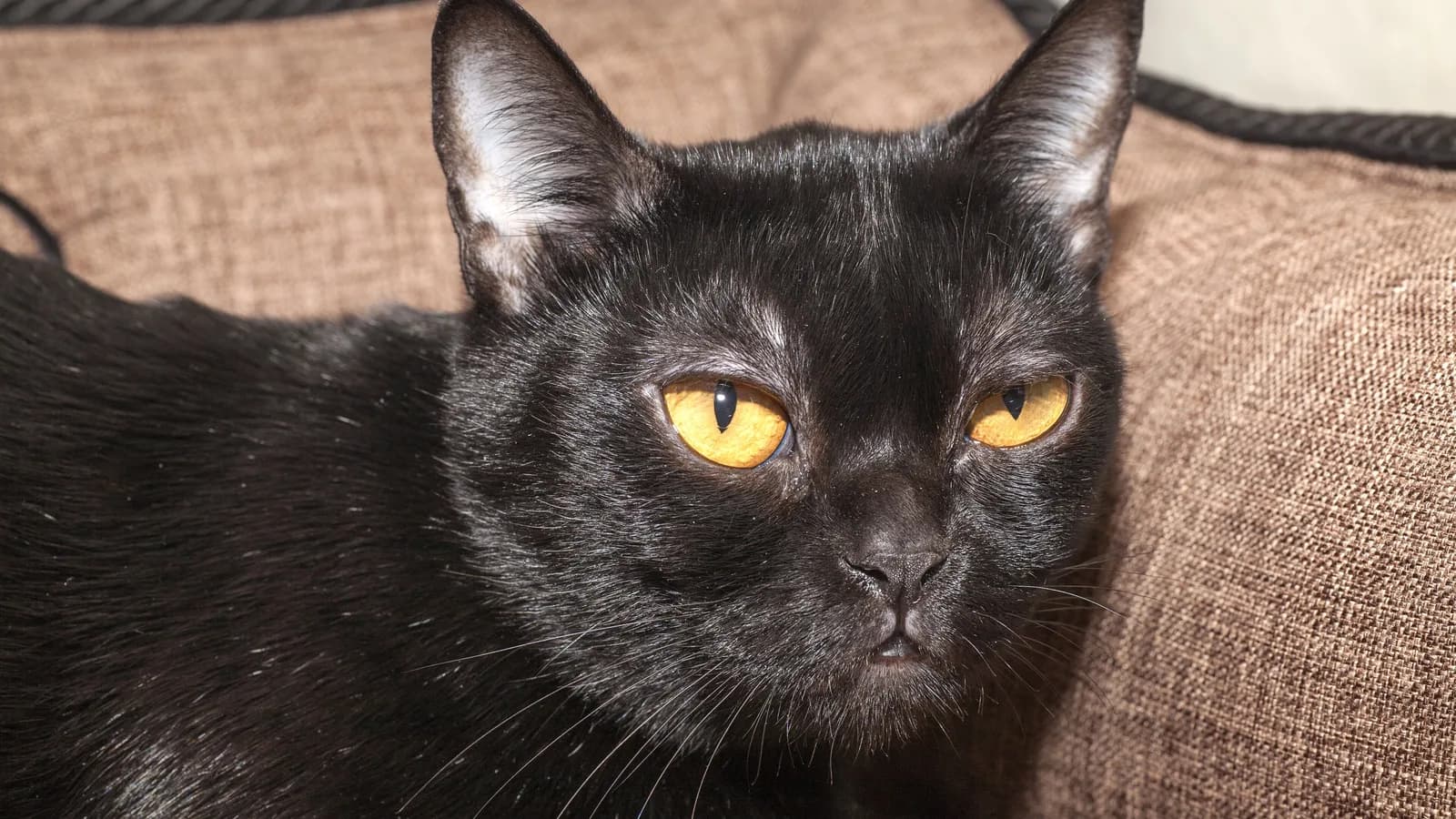
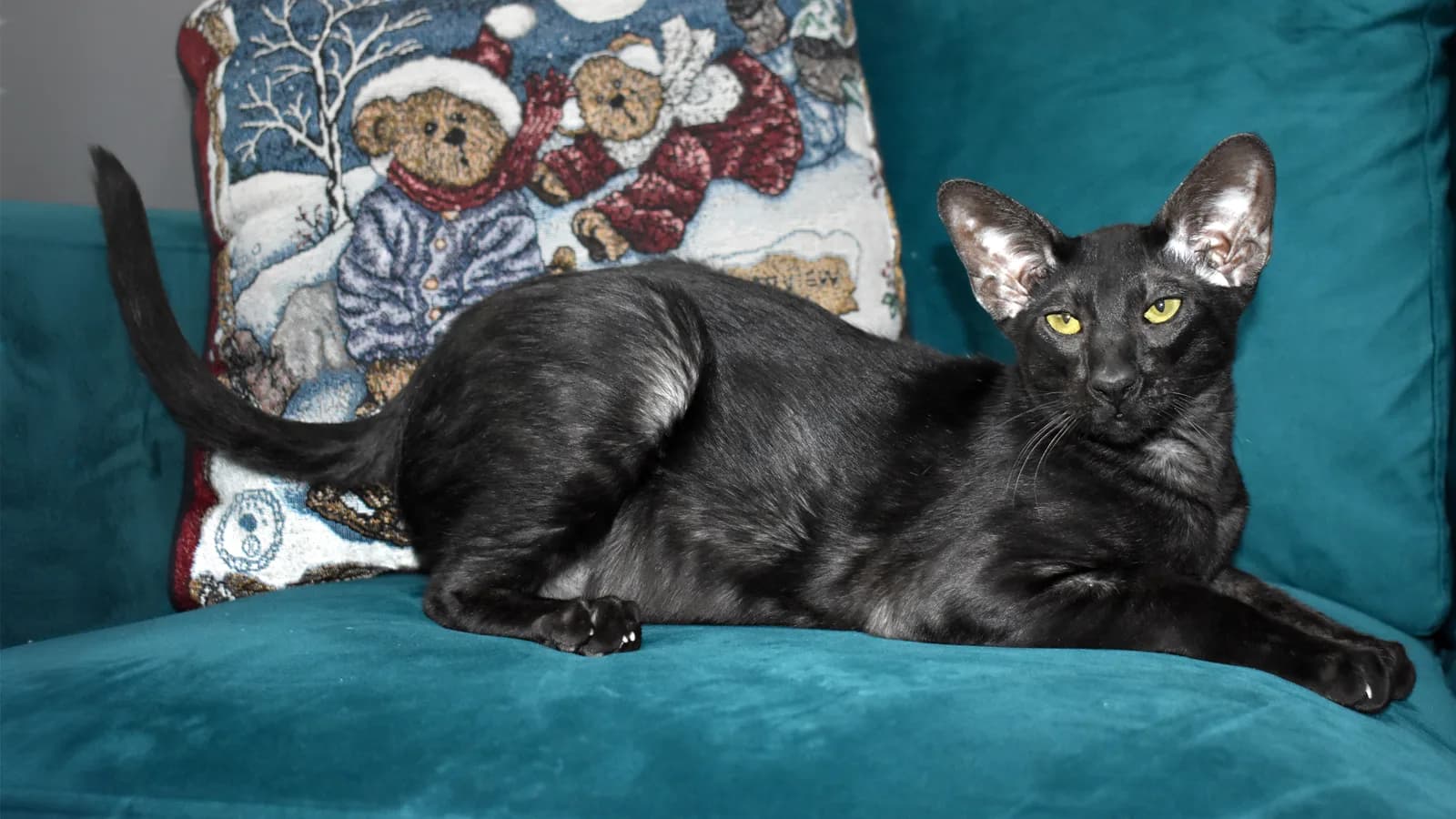
Real photos, so you can see what the breed actually looks like: coats, ear tufts, ruff and build.
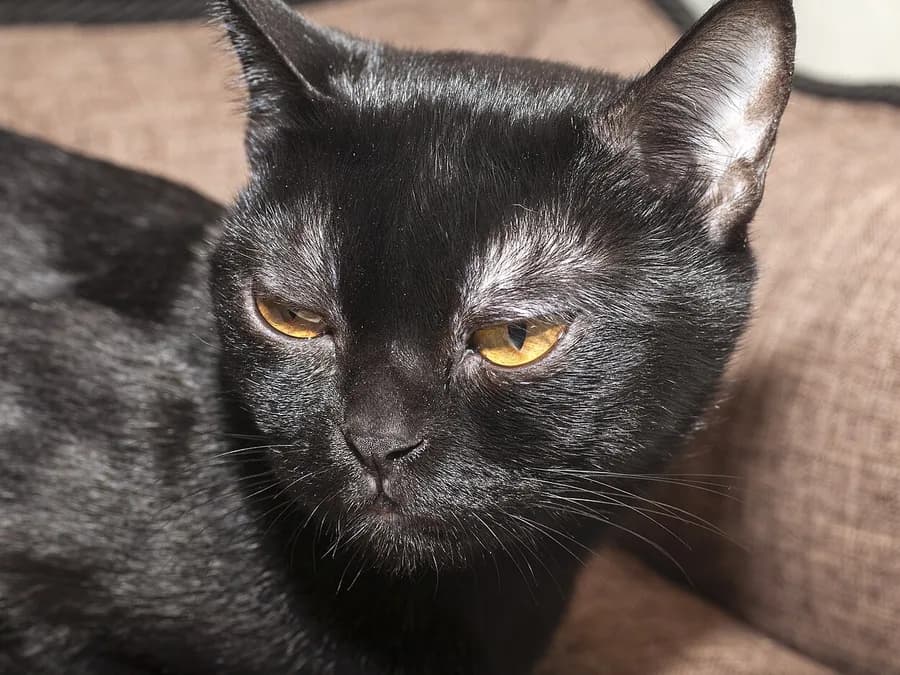
Bombay show cat, Melody in Black
Photo: Nickolas Titkov · CC BY-SA 2.0 · via Wikimedia Commons
 Vital stats
Origin
United States
Louisville, Kentucky: breeder Nikki Horner's deliberate project to build a miniature black panther. A first, unsuccessful late-1950s attempt used black Domestic Shorthairs. A second, successful mid-1960s cross paired Burmese with black American Shorthairs. The name is pure evocation (the Indian black leopard, the city of Bombay): no part of the breed was ever bred in India.
Weight
Female
6-8 lb (2.7-3.6 kg)
Male
8-10 lb (3.6-4.5 kg)
Life expectancy
No measured lifespan figure exists for this breed anywhere. We checked the UK life tables, the England longevity study and the Swedish insurance cohort directly, and none carries a Bombay row. What circulates is four claims that disagree and cite nothing: 's own page says 12+ years, a US source says 12 to 18, a UK source 9 to 15, an Australian source 12 to 16. Our band is the span of those claims, and all of it is a commonly cited estimate, no measured study exists.
Coats
Black (patent leather)
Exactly one: black to the roots, in near-identical wording at four registries, with black nose leather, black paw pads and copper-preferred eyes. grades even a rust tinge as a fault. The general mechanism is a self (solid) black coat at full color, not the sepia allele the Burmese parent carries. No Bombay-specific genetic study exists, and we say so.
Understanding the coats (and their genetics)Size
No measured cohort study anywhere names this breed, and only one registry states a number: CCA-AFC's own claim of 6-8 lb (2.7-3.7 kg) for females and 8-10 lb (3.6-4.5 kg) for males, published here as the registry claim it is. What every registry agrees on is the paradox in the hands. A Bombay is deceptively, surprisingly heavy for its size: a compact cat with density the eye does not predict.
Did you know
describes Bombays as part cat, part dog, part clown: the registry's own words, and we pass them on as exactly that, CFA's description, since no study has ever measured Bombay temperament.
 Personality
 Affection5/5
 Energy4/5
 Intelligence4/5
 Friendliness5/5
 Independence2/5
 Vocal4/5
 Shedding2/5
Compatibility
 Good with children5/5
 Good with other pets4/5
 Apartment friendly5/5
Editorial ratings on our five-point scale, anchored in the registry descriptions and the measured behaviour studies cited on this profile; individual cats vary, and our members' own ratings below are the counterweight.
Still torn between this breed and another?Compare the Bombay trait by trait, or filter every breed by what matters to you. What our members say
What our members say
Nobody has described their Bombay here yet. As soon as the first profiles come in, this is where the community averages will show up: temperament, food, lifestyle.
Describe my Bombay Pros & cons
Strong points
- The look: a patent-leather panther with copper eyes, by the standards' own vocabulary
- Low-maintenance coat: three registries agree
- Affectionate, outgoing, people-loving by every registry portrait
- No hybrid-ownership law anywhere: a fully domestic breed
- The easiest head-term market of our whole wave to find one in is Australia
Things to consider
- Genuinely scarce: 0.25% of TICA's cumulative 2013 registrations, 10 FIFe registrations in 2023
- The Burmese lineage carries testable baggage: craniofacial defect and hypokalemia DNA tests exist for a reason
- Diabetes risk is documented in the Burmese parent in three countries (and explicitly not in the US)
- No measured size or lifespan data exists: buyers navigate on registry claims
- Most 'Bombay' listings are black cats wearing the name: the papers are the product
 Is a Bombay right for you?
Someone who wants a shadow with opinions. The registry portrait is a people-fixated, playful, vocal companion that suits families and apartments. And someone patient enough to verify papers, because with this breed the is the whole difference.
Is the Bombay right for YOUR home?
Answer a few questions and we'll email you your personalized result.
Take the quiz · 2 min Getting to know the Bombay
First, the disambiguation this breed cannot skip. Most black cats are not Bombays. A Bombay is a documented , and one of the fancy's smallest ('s own 2013 count put it at 0.25% of cumulative registrations; recorded 10 in all of 2023). What the pedigree buys is a specific animal: a patent-leather black coat to the roots, copper-to-gold eyes both US registries weight at a tenth of the whole standard, surprising heft in the hands, and TICA's own leopard sway.
Our vs-black-cat page carries the four-point test, and the myth about nose color that the standards themselves refute. There are two Bombays, and we keep them separate. The American Bombay (, ), Nikki Horner's Kentucky creation from Burmese and black American Shorthairs, is the cat this profile describes: green eyes disqualify. The British Bombay is a different lineage entirely, a black Asian Shorthair under , where green eyes are normal and expected. That reversal rests on UK secondary sources (GCCF's own breed page stayed unreachable), and we label it accordingly.
Australia adds a third variant by 's own account: a Black British Shorthair stood in for the American Shorthair in the founding cross. The honest data story is absence, stated. No measured cohort has ever weighed this breed (one registry's claim stands in, labeled). No lifespan study names it (four uncited claims disagree, and we publish the span as the span). No behaviour study has measured it (the closest measured data describes the Burmese parent: unusually bold and sociable in two independent Finnish studies, boxed and labeled Burmese wherever we use it).
The health file is lineage-first. The DNA tests that matter (craniofacial defect, hypokalemia) exist because of the Burmese parent, and the one laboratory running them lists Bombay as in scope. The diabetes literature is Burmese-measured in three countries and explicitly absent in the US. And the one condition flags for the breed itself, , has no validated mutation in any cat close to this breed, which makes the , not a swab, the screen. The price page carries four markets and the checklist: with a breed this scarce, the paperwork is the product.
 Health: what to watch for
A few predispositions are well documented. The good news: they can be screened for or avoided by choosing a reputable breeder and keeping an eye on the right signals.
This is information, not veterinary advice, and it cannot tell you what is wrong with your cat. Our rule is a simple one: if something is wrong with your cat, call your vet, and call an emergency clinic if it is out of hours. Nothing you read here is a reason to wait.
Craniofacial defect (Burmese head defect, ALX1)
HIGHA lethal head malformation whose founding genetics were studied in BURMESE cats, never in a single Bombay: we say that in the same sentence every time. Why it belongs here anyway: UC Davis VGL's own test page lists Bombay among the breeds appropriate for testing, and GCCF's registration policy for the British line requires imported Burmese used in Asian breeding to test clear. Affected kittens do not survive. Carrier-times-carrier matings are what the DNA test prevents.
Symptoms to spot
A breeder-side genetics issue, not an owner-observable adult condition
How common
No Bombay figure exists; the risk enters through Burmese ancestry
Screening & prevention
Ask the breeder for both parents' head-defect results
Genetic test
Yes: the ALX1 (Burmese head defect) DNA test, with Bombay listed in scope by the testing lab
Hypokalemia (WNK4, Burmese lineage)
MODERATEEpisodic low blood potassium causing muscle weakness, identified in BURMESE cats (the 2012 genome-wide study that found WNK4). The lab lists Bombay in testing scope. GCCF has made hypokalaemia testing mandatory for Active-Register Asian-group cats (the British Bombay's own group) since 2018. A UK service-lab carrier figure of 14.9% exists for the Burmese/Asian group as a whole. Bombay's own share within it is undetermined, so we do not publish it as a Bombay rate.
Symptoms to spot
Episodes of weakness, a head that droops toward the chest, wobbling: any such episode is a same-day vet call
How common
No Bombay-specific figure; a Burmese/Asian-group carrier figure exists with Bombay's share undetermined
Screening & prevention
Both parents' WNK4 results; the GCCF gate does this work in the UK
Genetic test
Yes: the WNK4 (Burmese hypokalemia) DNA test, Bombay in scope
Diabetes mellitus (the Burmese-lineage file)
MODERATEDocumented in the BURMESE parent breed, not in Bombays. Elevated odds in two independent UK cohorts (OR 2.07 and 3.0), two Australian datasets (22.4 vs 7.6 cases per 1,000 cats) and a Swedish insurance cohort (4.3 times other cats). The Swedish paper itself states no Burmese predisposition has been found in the United States, plausibly because American and European Burmese lines have been genetically separate for decades. For a Bombay owner this is lineage caution with one practical handle: weight.
Symptoms to spot
Increased thirst and urination, weight loss despite appetite: a same-week vet visit
How common
Burmese-measured in three countries; explicitly not found in the US; no Bombay figure exists
Screening & prevention
Weight management and body-condition checks: the one lever an owner holds
Genetic test
None
Hypertrophic cardiomyopathy (TICA's one flag)
MODERATEThe one condition TICA's own Bombay health tab names, urging echocardiogram screening by a veterinary cardiologist for breeders and proactive screening for owners. Our own targeted pass on the genetics (a 2024 open-access review read in full, plus title-restricted literature searches) found NO validated HCM mutation in Bombay or Burmese cats. The commercial DNA tests target other breeds' mutations (Maine Coon A31P, Ragdoll R820W). So for this breed the echocardiogram, not a swab, is the screen, exactly as TICA says.
Symptoms to spot
Often nothing; laboured or rapid breathing, lethargy, or sudden hind-leg pain are emergencies
How common
No Bombay or Burmese rate exists in the literature we reached
Screening & prevention
TICA's own recommendation: breeder echocardiograms by a cardiologist, and proactive owner screening since HCM can appear after the first years
Genetic test
None applies to this breed: existing HCM DNA tests are other breeds' mutations
Go deeper on health
Prevention, warning symptoms, costs and insurance: our guides, researched and sourced.
The Bombay also appears in
Our criteria-based guides, to compare this breed with the ones most like it.
 Grooming & living with one
Grooming
Low-maintenance by three independent standards. says weekly brushing, says two to three times a month, and we print both rather than picking. The patent-leather shine is mostly diet and health, not product. One genuinely useful note for any solid black cat: gum color is harder to read against a black-furred face. So learn to check the gums or inner eyelid in good light, as observation, so a vet call happens on time.
Living together
Every registry describes an outgoing, affectionate, people-seeking cat that does well with children and other pets. The voice is real (vocal appears across the portraits) without being Siamese-grade. Company matters: this is not a solitary ornament.
 Food & diet
No Bombay-specific dietary need is documented anywhere: the baseline is obligate-carnivore, life-stage-appropriate feeding, with weight as the real lever. The one bridge worth stating: the Burmese parent's documented diabetes risk (three countries) makes weight monitoring the practical, source-backed takeaway for this breed too, as lineage caution, not a Bombay-measured fact.
 Price & budget
$500 to 2,000
Price of a kitten from a registered breeder, in the United States
This price reflects the quality of the breeding program: parents' health tests, registry pedigree, socialization. A very low price should raise a red flag. The real cost, though, plays out over the years.
Find a verified breederKitten price, by market
United States
$500 to 2,000
United Kingdom
£50 to 250
22 live Pets4Homes listings, mostly unregistered: in Britain the word Bombay on a listing is usually not the pedigree
Canada
CA$60 to 1,300
live Kijiji listings across five provinces
Australia
A$700 to 2,000
SINGLE SOURCE (one pet-content site, itself likely templated): no second AU price source could be reached
Each figure is that country's real market price, researched separately, not a conversion of the others. The smaller line is only there so you can gauge one against your own money: European Central Bank reference rates of 2026-09-18, refreshed daily.
The Bombay in the US, UK, Canada and Australia
| Measure | United States | United Kingdom | Canada | Australia |
|---|---|---|---|---|
| Pet-quality kitten | $500-2,000 (3 guide sources) | £50-250 live listings, mostly unregistered | CA$60-1,300 (live listings) | A$700-2,000 (single source, labeled) |
| Which Bombay | American: Burmese x American Shorthair (TICA, CFA) | British: a black Asian Shorthair under GCCF, green eyes normal (UK secondary sources) | American line (CCA-AFC, F1 outcross allowed) | ANCATS's own history: a Black British Shorthair replaced the American Shorthair in the founding cross |
| Main registries | TICA, CFA | GCCF (Asian group) | CCA-AFC | ACF, ANCATS |
| Measured breed life expectancy | No measured figure exists | No Bombay row in any UK cohort checked | No measured figure exists | No measured figure exists |
Four markets, four sets of rules and prices; none of these figures converts into another. Prices are August 2026 and expire with the quarter.
Work out your food budget
Type of food
Estimated monthly budget
$11
≈ 2.0 oz (57 g) per day
A ballpark figure, food only, using the same arithmetic as our portion tool (resting energy requirement × 1.2, a neutered adult). Real needs vary with age, activity level and body condition. Ask your veterinarian for advice.
 Verified catteriesThe registry-checked directory, plus a kitten alert near you. Filter it by breed.
 Should you insure a Bombay?
Our sources list several predispositions in the Bombay: Craniofacial defect (Burmese head defect, ALX1), Hypokalemia (WNK4, Burmese lineage), Diabetes mellitus (the Burmese-lineage file), among others. A predisposition is not a foregone conclusion, and many of these cats live their whole lives without ever developing anything. It does change the nature of the follow-up, though: you monitor, sometimes for life, and it's that monitoring that weighs on a budget, more than a one-off accident.
One thing to weigh before deciding: this is a cat you will live alongside for well over a decade, and that is the span the real cost is spread across, premiums and care alike. Where a breed has a measured life expectancy that differs from the figure usually quoted, we say so in the lifespan section above rather than repeating the quoted one here.
 Bombay cats in our community
No Bombay here yet
Got one? Add a photo and yours gets to open this page.
 The vet's take

Veterinary review
Are you a vet?
Your professional read belongs here: every verified practitioner can leave a note, published once our editors have reviewed it.
Sign in and get your license number verified. We check it in the public register, we never ask for or keep a copy of your diploma, and your number is never published.
 Frequently asked questions
+Are all black cats Bombay cats?
No: Bombay is a pedigree, not a color, and one of the fancy's smallest (0.25% of TICA's cumulative 2013 registrations; 10 FIFe registrations in 2023). Our vs-black-cat page carries the four-point look test and the paperwork truth.
+What is a Bombay cat?
A deliberately created American breed: Burmese crossed with black American Shorthairs in 1960s Kentucky to build a miniature panther: patent-leather black coat, copper-to-gold eyes, compact and surprisingly heavy. Britain runs a separate lineage (a black Asian Shorthair under GCCF) where green eyes are normal.
+How long do Bombay cats live?
Honestly: nobody has measured it. Four circulating claims disagree (TICA says 12+, others say 12-18, 9-15 and 12-16) and none cites a study: all of it is a commonly cited estimate, no measured study exists. Our band is the span of those claims.
+Are Bombay cats rare?
Yes, by the registries' own dated counts: 1,080 of TICA's 427,593 cumulative registrations in its 2013 poll (0.25%), and 10 FIFe registrations in all of 2023 (52nd of 59 breed codes).
+Are Bombay cats hypoallergenic?
No: no breed is, no study measures this breed's allergen output, and the short satin coat still sheds. The question barely gets asked about this breed, and the answer would be the same anyway.
+How much is a Bombay cat?
US $500-2,000 pet-quality (August 2026), UK live listings £50-250 (mostly unregistered), Canada CA$60-1,300 on live listings, Australia A$700-2,000 from a single labeled source. The pedigree is the product: an unpapered Bombay is a black cat.
+Can Bombay cats have green eyes?
Not the American (TICA/CFA) Bombay: green eyes disqualify, copper to gold is the signature. Britain's separate British Bombay line normally has green eyes, per UK sources: same name, different lineage, different rulebook.
+Can a Bombay cat have white spots?
Not and stay show-eligible: the standards require black to the roots with no lockets or spots. A small white medallion on a family pet changes nothing about the cat and everything about the paperwork.
+Do Bombay cats shed?
Lightly: the fine satin coat is low-maintenance by three registries' agreement (TICA says weekly brushing, CFA says two to three times a month, and we print both).
+Where are Bombay cats from?
Louisville, Kentucky: Nikki Horner's two-attempt breeding project (a failed late-1950s try, then the successful mid-1960s Burmese x American Shorthair cross). The name is pure evocation of the Indian black leopard: no part of the breed comes from India.
 Community questions
Got a question this page doesn't cover? Ask it: the best ones get published here with their answer.
Sources & references
Data checked against reference sources (TICA and CFA standards, genetics laboratories, veterinary schools).
- TICA: Bombay breed
- CFA: Bombay breed
- CFA American Shorthair show standard (the look-alike's own rules)
- UC Davis VGL: Burmese Head Defect test (Bombay in scope)
- UC Davis VGL: Burmese Hypokalemia test (Bombay in scope)
- Gandolfi et al. 2012: WNK4 hypokalemia in Burmese cats
- Lyons et al. 2016: ALX1 craniofacial variant in Burmese cats
- Öhlund et al. 2025: diabetes in 1.2M UK cats
- Öhlund et al. 2015: diabetes in insured Swedish cats
- Grzeczka et al. 2024: genetic basis of HCM in cats (review)
- Petfinder: Bombay breed profile

Worth keeping a paw on
Pin this profile
To compare later, or to show someone still torn between two breeds. One click and it sits in your board.
Pin it on Pinterest
 Purr or Pass
Still deciding? Find the perfect breed for your home.
A quick quiz that factors in your lifestyle, your kids and your other pets.
Which breed fits my home?Keep exploring
The floor belongs to our members. Keep it kind, links are not allowed, and images go through moderation before anyone else sees them.