

Oriental Shorthair
“The Siamese in every other color”
 By Priya · The careful one
Published August 21, 2026Updated August 26, 20269 min read
Contents
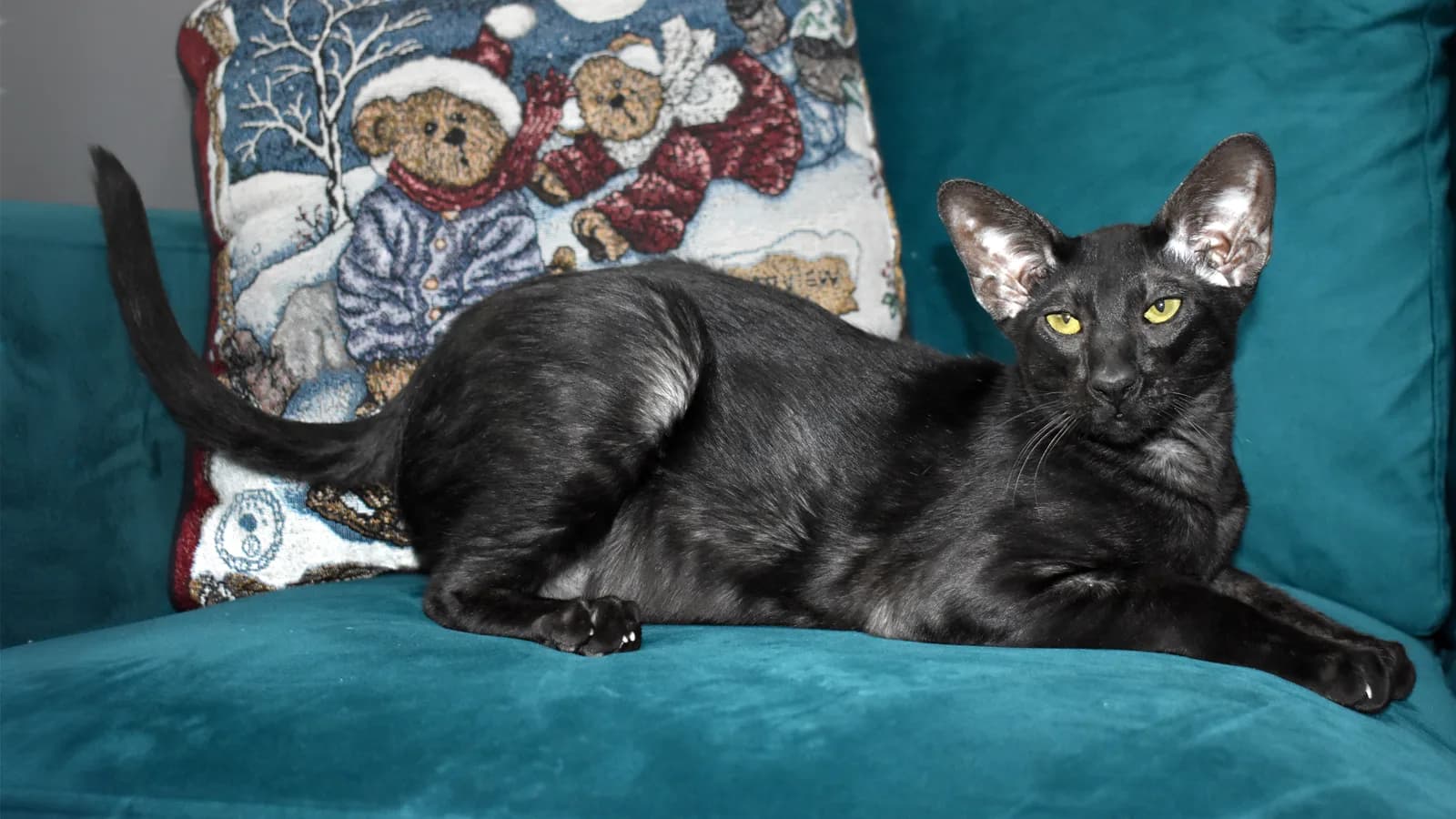
 Oriental Shorthair photos
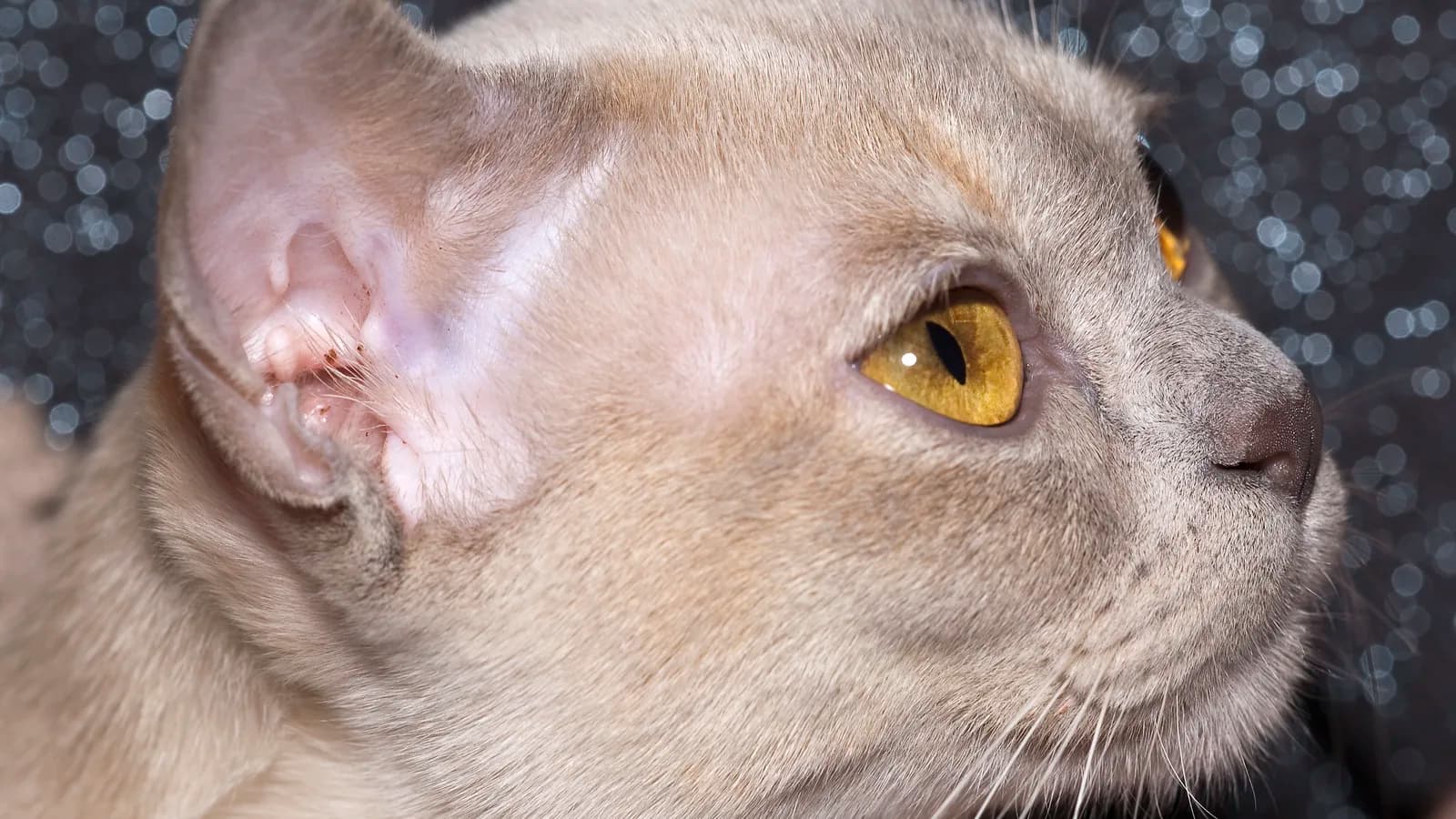
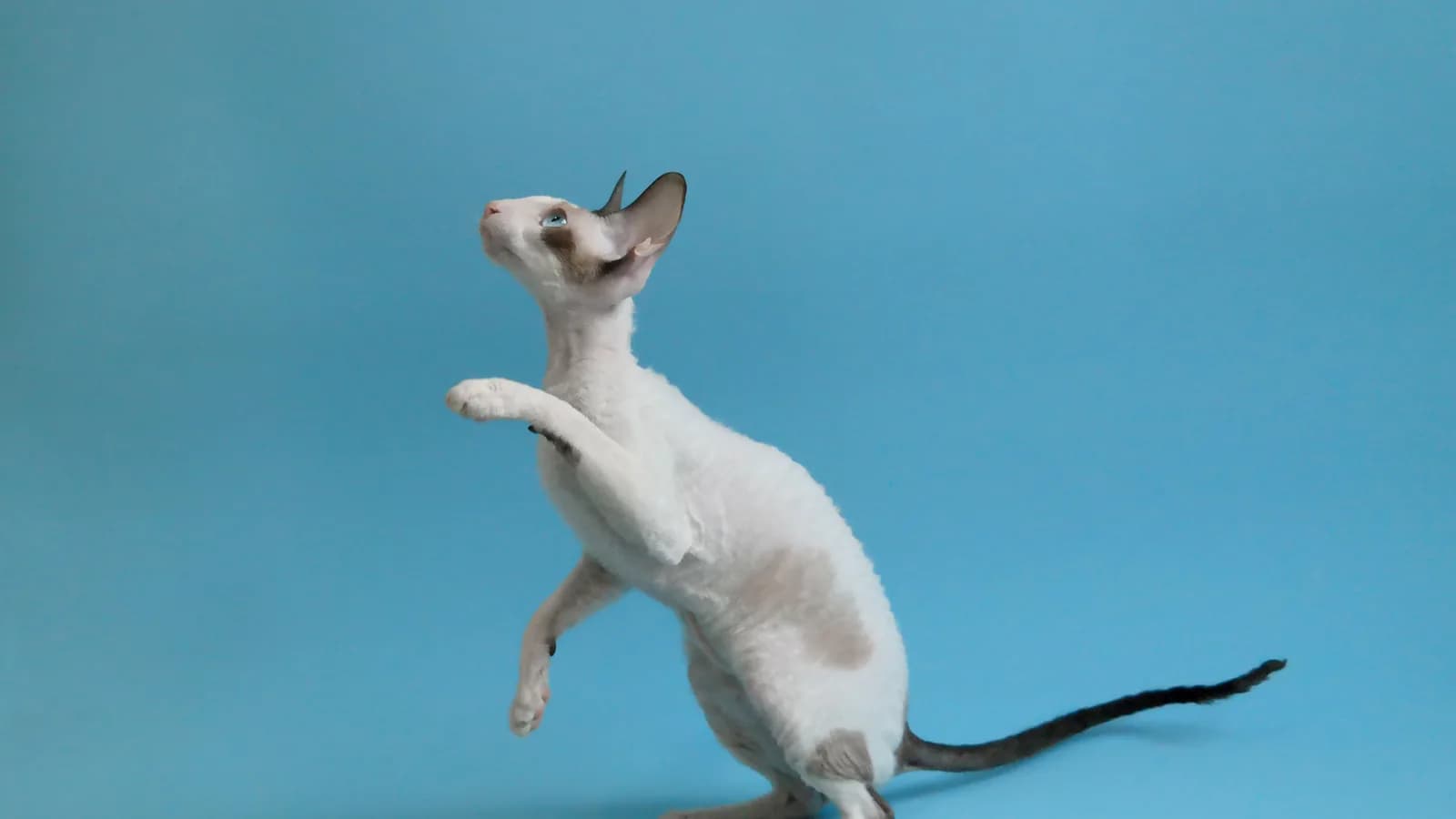
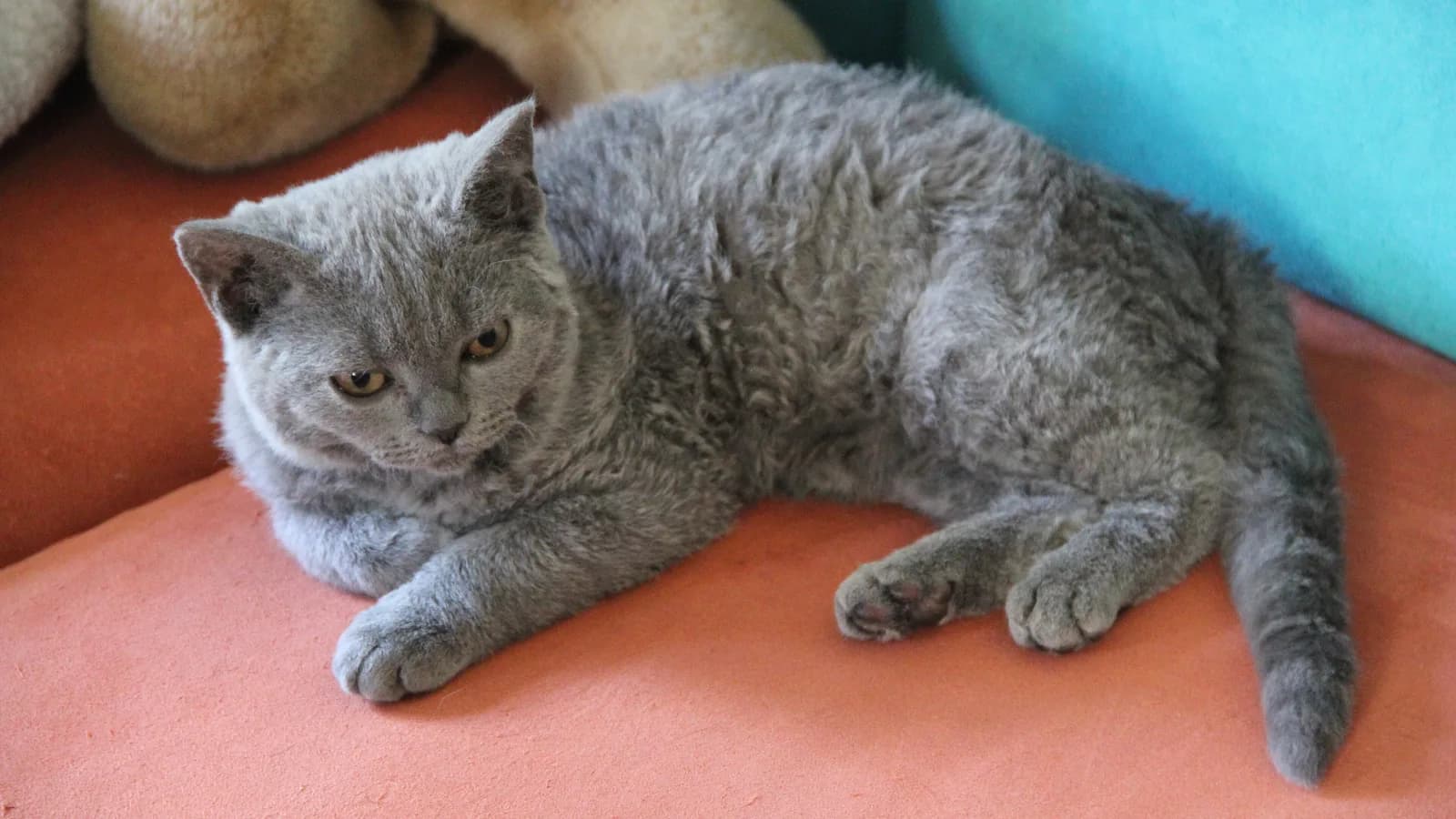
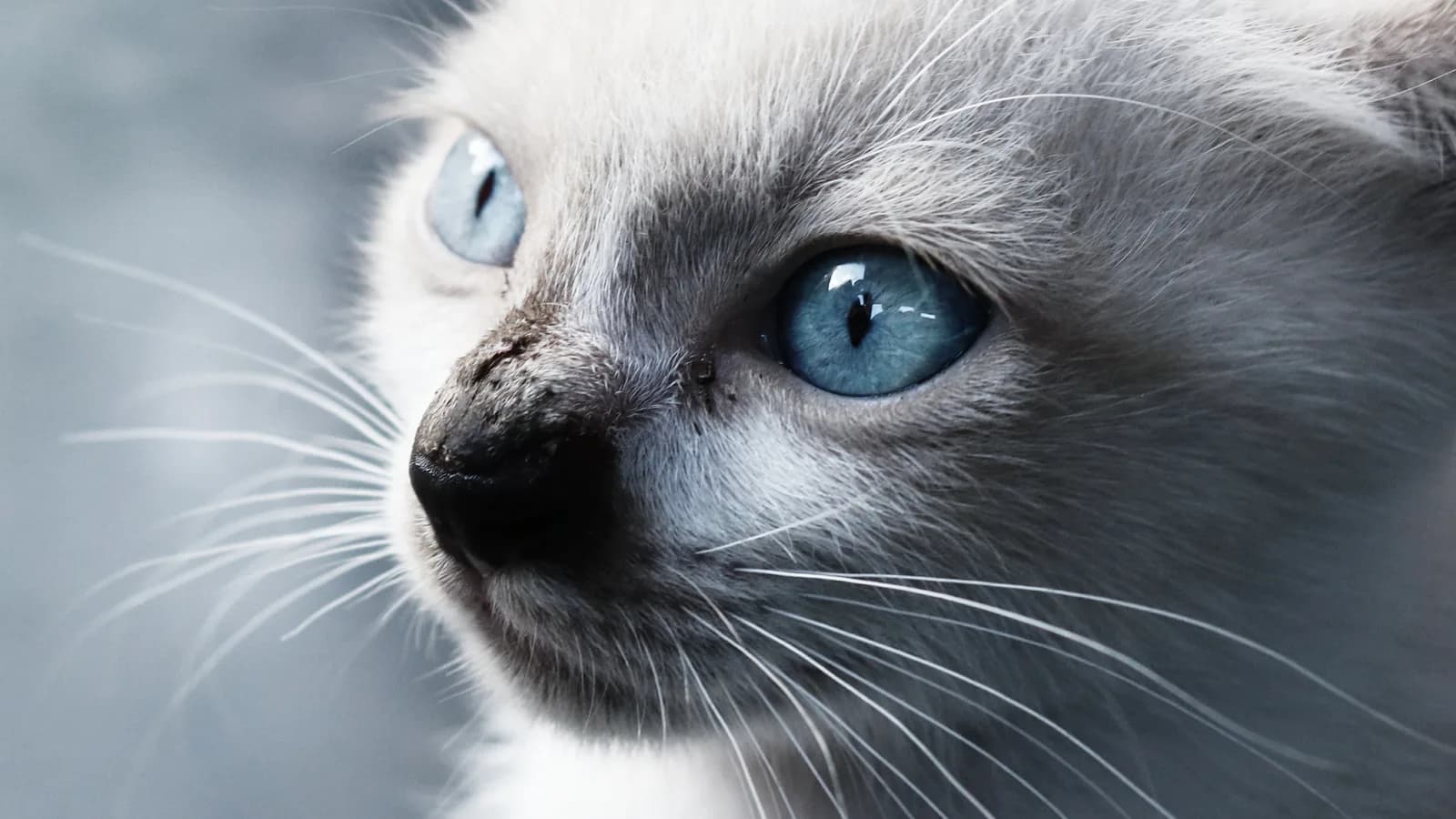
Real photos, so you can see what the breed actually looks like: coats, ear tufts, ruff and build.
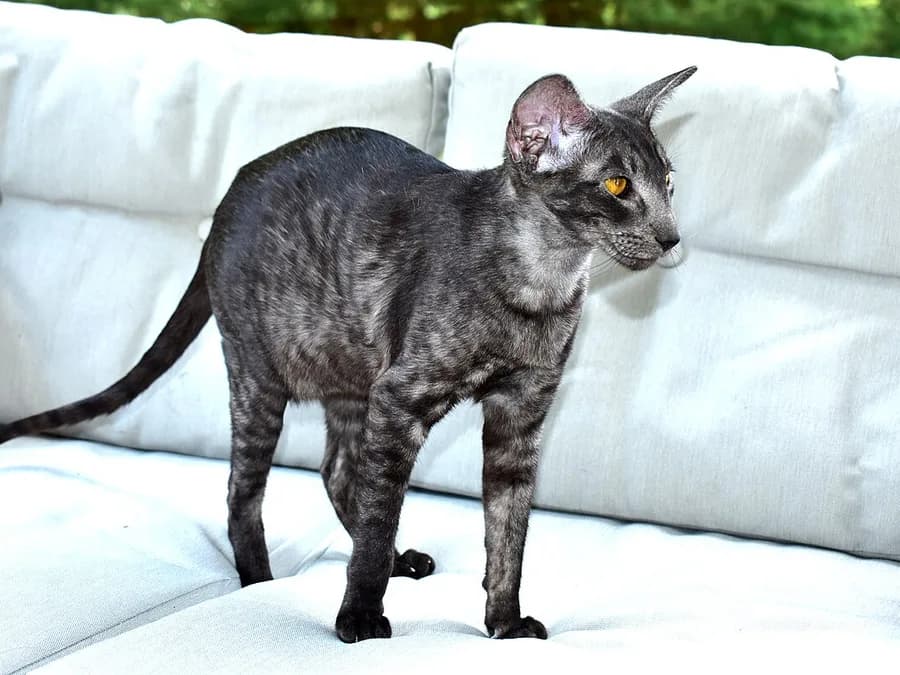
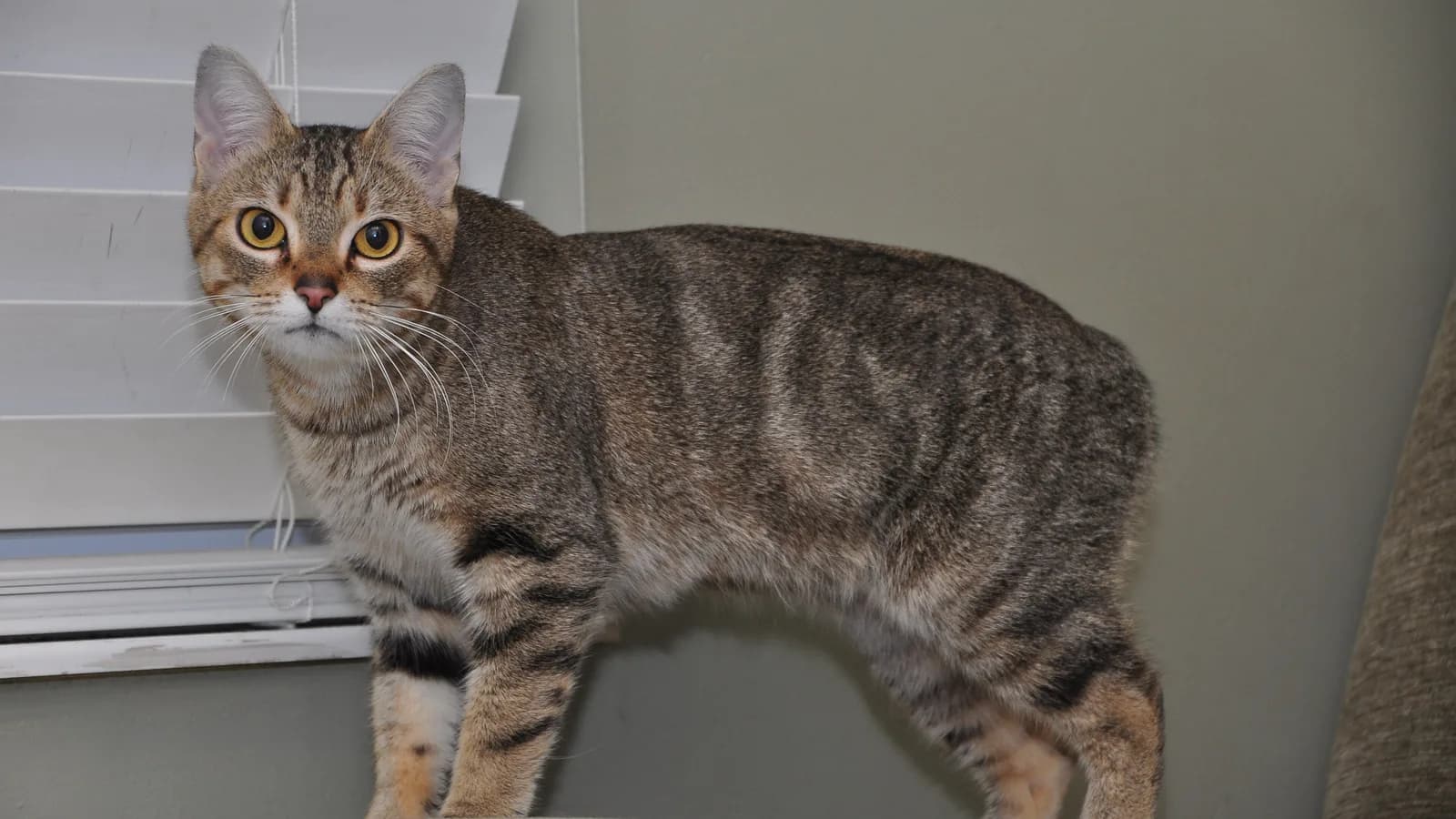
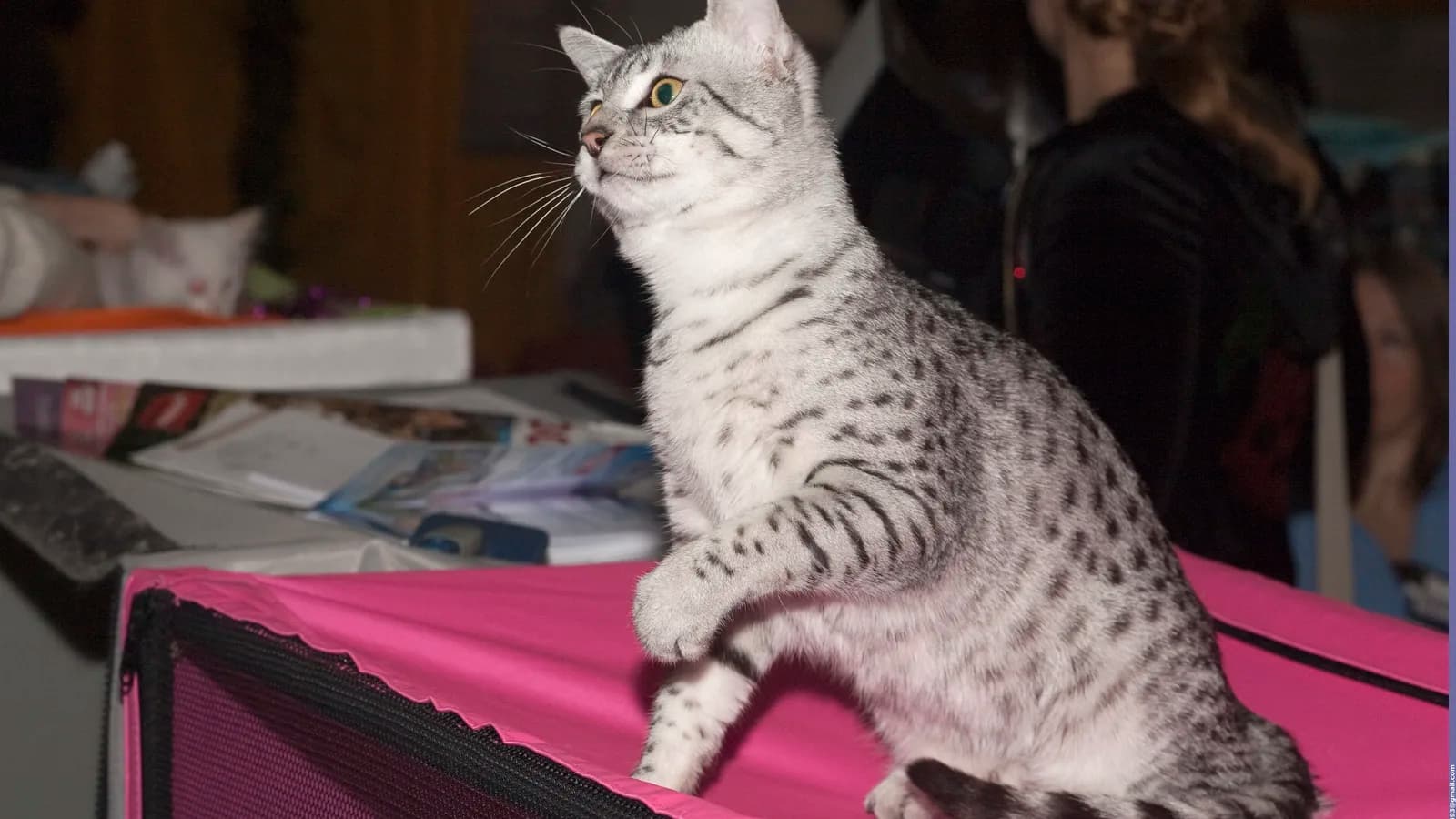
Smoke gray Oriental cat standing on a sofa, huge ears and slender body in profile
Photo: Felinlove · CC BY-SA 4.0 · via Wikimedia Commons
Got an Oriental Shorthair? Share them with the community. Photos from our members round out this page.
 Vital stats
Origin
United Kingdom
Developed in Britain in the 1950s-60s by crossing Siamese with domestic and other shorthairs, to bring the Siamese body every color the pointed gene forbids. The Oriental is, by 's own shared standard, the NON-POINTED cat of the Siamese family, oriental in type. registers it as one breed with shorthair and longhair divisions. The family's shared standard covers Siamese, Balinese and both Orientals in a single document.
Weight
Female
5-8 lb (2.3-3.6 kg)
Male
8-12 lb (3.6-5.4 kg)
Life expectancy
One genuinely breed-attributed measured figure exists and it leads. A 2024 UK deceased-cat cohort gives the Oriental Shorthair a median age at death of 14.01 years (CI 13.67-14.33, 16 cats), just below its own Siamese figure and clearly above crossbreds. The registry ranges sit beside it, labeled: says 10+ (with a 20+ flourish), 's page says 12-15. One Swedish insured-cat study pools the breed into a six-breed Siamese group with that table's highest mortality. That is a pooled figure about the family, never this breed's own, and it is printed with exactly that scope.
Coats
Ebony
Chocolate (Havana)
Blue
Lilac
Cinnamon
Red tabby
Silver tabby
White
The largest open palette in the fancy, and nobody agrees how to count it. 's materials count 281 color-pattern combinations. 's own page says both "over 150" and "over 600". 's documents compute 816. And the "over 300" repeated everywhere traces to a superseded 2021 document. Ebony (GCCF: "Black") is the flagship; pointed cats are, by every registry's rule, Siamese instead.
Understanding the coats (and their genetics)Size
A study in registry disagreement our research settles with a scale. TICA gives females 5-8 lb (2.3-3.6 kg) and males 8-12 lb (3.6-5.4 kg). GCCF's page states one combined 8-14 lb figure whose floor sits ABOVE TICA's. The measured pooled Siamese/Oriental cohorts (the only scale data that exists) put females at a mean 2.9 kg (6.4 lb) and males 3.4 kg (7.5 lb), the LIGHTEST weight class in their system. Long, fine-boned and tubular: the cat weighs less than it looks long.
Did you know
Every Oriental page on the internet says the breed comes in "over 300 colors", and no registry actually says it: we traced the number to a superseded 2021 document. The registries' own counts are 281 (), "over 150" AND "over 600" on one page, and 816 ('s arithmetic). The only breed whose color count is itself a story about sources.
 Personality
 Affection5/5
 Energy5/5
 Intelligence5/5
 Friendliness4/5
 Independence2/5
 Vocal5/5
 Shedding2/5
Compatibility
 Good with children4/5
 Good with other pets4/5
 Apartment friendly4/5
Editorial ratings on our five-point scale, anchored in the registry descriptions and the measured behaviour studies cited on this profile; individual cats vary, and our members' own ratings below are the counterweight.
Still torn between this breed and another?Compare the Oriental Shorthair trait by trait, or filter every breed by what matters to you. What our members say
What our members say
Nobody has described their Oriental Shorthair here yet. As soon as the first profiles come in, this is where the community averages will show up: temperament, food, lifestyle.
Describe my Oriental Shorthair Pros & cons
Strong points
- A measured lifespan anchor most breeds lack: 14.01 years median, breed-attributed
- The fancy's largest palette on the Siamese chassis: every color the points forbid
- Minimal grooming: a short, fine coat and an easy weekly once-over
- The family's famous engagement: vocal, clever, permanently involved in your business
- Flat-fee cattery culture makes US prices unusually comparable
Things to consider
- The voice: this family talks, at volume, with opinions, all day
- A velcro cat that does poorly with empty houses and busy owners
- Five registries file the breed three different ways: paperwork needs reading
- The family health file (amyloidosis, PRA) is real and mostly Siamese-measured: scoped, not absent
- A search space with wholesale storefronts and copied cost tables: verification is on you
 Is an Oriental Shorthair right for you?
A household that wants a conversation, not a roommate. The Oriental brings the Siamese family's voice, velcro attachment and athleticism, in whichever of its hundreds of colors you fall for. Plan for company (another cat genuinely helps), vertical space, and a breeder whose paperwork you have actually read. With five registries filing this breed three different ways, the documents are the due diligence.
Is the Oriental Shorthair right for YOUR home?
Answer a few questions and we'll email you your personalized result.
Take the quiz · 2 min Getting to know the Oriental Shorthair
The Oriental Shorthair is the answer to a question the 1950s British cat fancy asked out loud: what if the Siamese came in every color? By the family's own shared standard, the definition is exactly that clean. The Siamese is the POINTED cat of the group, the Oriental the NON-POINTED one. Same tubular body, same wedge head, same enormous ears, green eyes replacing blue, and a palette so large that counting it is itself a story.
That story is this profile's favorite. Every page on the internet says "over 300 colors", and no registry says it. The colors page traces the number to a superseded 2021 document and prints what the registries actually publish: 's 281, 's same-page "over 150" and "over 600", 's computed 816. Plus the flagship ebony (GCCF files the same jet-black cat under "Black") and the pointed boundary that quietly re-files a cat as Siamese the moment its color moves to the points.
The paperwork is the buying skill on this breed, because five registries file the family three different ways. Two breeds at . One-breed-two-divisions at . Three separate registration policies (the Bicolour one carrying a mandatory hearing test for whites). And the Havana trap waiting at the bottom: a COLOUR in Britain, a separate BREED with its own five-generation rule in America. The longhaired sibling multiplies the fun with six registry names of its own, Javanese and Mandarin included.
On the numbers, this profile is unusually lucky. A 2024 UK deceased-cat study gives the breed its own measured lifespan anchor (14.01 years median, 16 cats, printed with its interval), sitting just under its Siamese cousin's figure. The registry ranges ( 10+, 12-15) stand beside it, labeled. Weight gets the same treatment: TICA's and GCCF's ranges disagree with each other, and the measured pooled cohorts, the lightest weight class in their dataset, settle what a healthy Oriental actually weighs.
Health is the Siamese family's file, kept honestly scoped. The amyloidosis literature and the UK breeder guidance cluster are largely Siamese-measured, and this profile says so at every claim. PRA's rdAc mutation is real, testable, and neither originated in nor is exclusive to this family. And a 2022 genomics paper's own speculation about common heart and gut conditions is exactly that, speculation with no prevalence study behind it, reported here as population genetics, not disease rates. VetDisclaimer applies; your own cat's file belongs to your vet.
Buying is where our research earned its keep: the price page carries four named US catteries whose FLAT fees ($850 to $4,500) make the market unusually readable, the UK's live-sample-versus-site-claim gap, Canada's mostly-Quebec marketplace, and Australia's one anchored figure. Plus the two warnings this search space demands: wholesale storefront patterns, and the syndicated cost table two "independent" sites publish word for word.
 Health: what to watch for
A few predispositions are well documented. The good news: they can be screened for or avoided by choosing a reputable breeder and keeping an eye on the right signals.
This is information, not veterinary advice, and it cannot tell you what is wrong with your cat. Our rule is a simple one: if something is wrong with your cat, call your vet, and call an emergency clinic if it is out of hours. Nothing you read here is a reason to wait.
Amyloidosis (the family condition, scoped)
Family-documented, Siamese-measuredAA-amyloidosis, abnormal protein deposits that can damage the liver and kidneys, is the Siamese family's best-documented serious condition, and the honest scope matters. The key prevalence figure in the literature (6.2%) comes from a 1987-1994 Netherlands necropsy series that POOLS Siamese and Oriental cats. No general-population figure exists for any of our four markets. This profile reports the condition as real family history with no current Oriental-specific rate, because none exists.
Symptoms to spot
Vague and late, historically: appetite loss, weight loss, lethargy in a middle-aged cat. Any persistent change is a vet visit; nothing here is watchable at home in a useful way.
How common
6.2% in one 1987-1994 pooled necropsy series: never a current or market-relevant rate, and printed only with that scope.
Screening & prevention
Ask breeders about longevity and cause of death in the line: the honest amyloidosis conversation is pedigree history, not a test result.
Genetic test
None exists.
Progressive retinal atrophy (rdAc)
Documented, DNA-testableThe rdAc mutation (CEP290) causes adult-onset progressive retinal atrophy and is real, testable, and managed in this family. Scope kept honest: rdAc was first characterised in Abyssinian and Somali cats and occurs in numerous breeds. It is neither exclusive to nor originated in the Siamese-Oriental family. A commercial DNA test exists and responsible breeders test.
Symptoms to spot
Night-vision decline first (hesitance in dim rooms, bumping in the dark), progressing over years. Any vision change is a vet conversation; blind cats adapt remarkably with stable furniture and patience.
How common
No current Oriental-specific rate published; the family carries the allele and breeders test for it.
Screening & prevention
Both breeding cats tested; two carriers never paired. For a pet kitten, one tested-clear parent rules it out.
Genetic test
Yes: the rdAc (CEP290) test, commercially offered. Ask for both parents' results.
The 2022 genomics finding, kept in its lane
Population genetics, not disease ratesA 2022 genomics study of the breed's closed gene pool found signatures of selection near genes elsewhere associated with cardiac and gastrointestinal conditions, and its own discussion speculated such conditions 'are common' in the breed. No prevalence study supports that sentence, and this profile declines to repeat it as fact. The finding is about the genome's history, not your cat's odds. UK breeder guidance for this breed is meanwhile largely Siamese-worded (GCCF's own advisory sources from a Siamese page), applied here because of the family relation, never as Oriental-measured findings.
Symptoms to spot
Nothing actionable follows from a selection signature. The every-cat list applies: breathing, appetite, litter habits, energy: changes go to the vet.
How common
None established: that is this row's whole point.
Screening & prevention
Ordinary preventive care, plus healthy skepticism toward any page quoting Oriental-specific rates for conditions only ever measured in Siamese.
Genetic test
None follows from the study.
Go deeper on health
Prevention, warning symptoms, costs and insurance: our guides, researched and sourced.
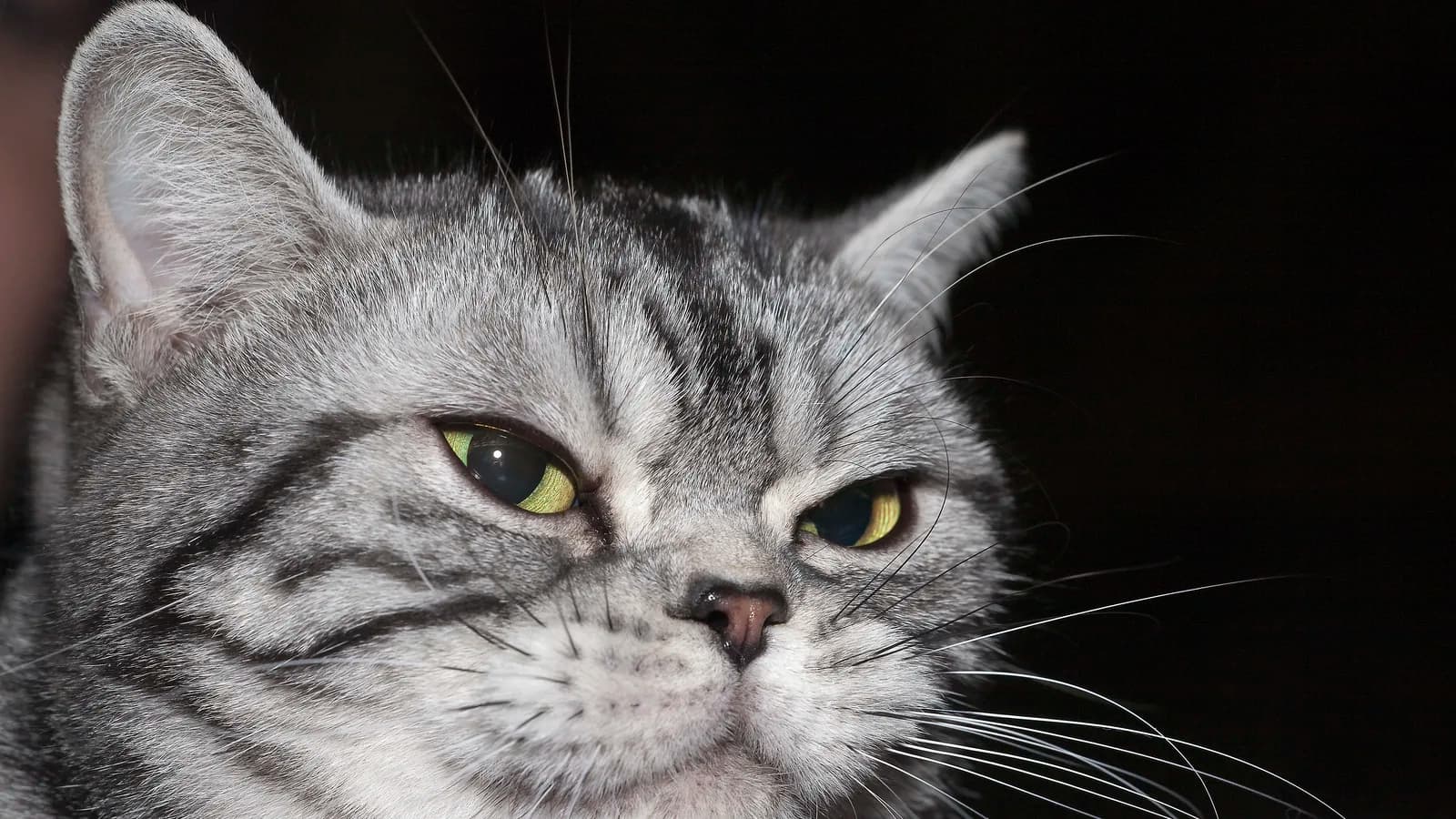
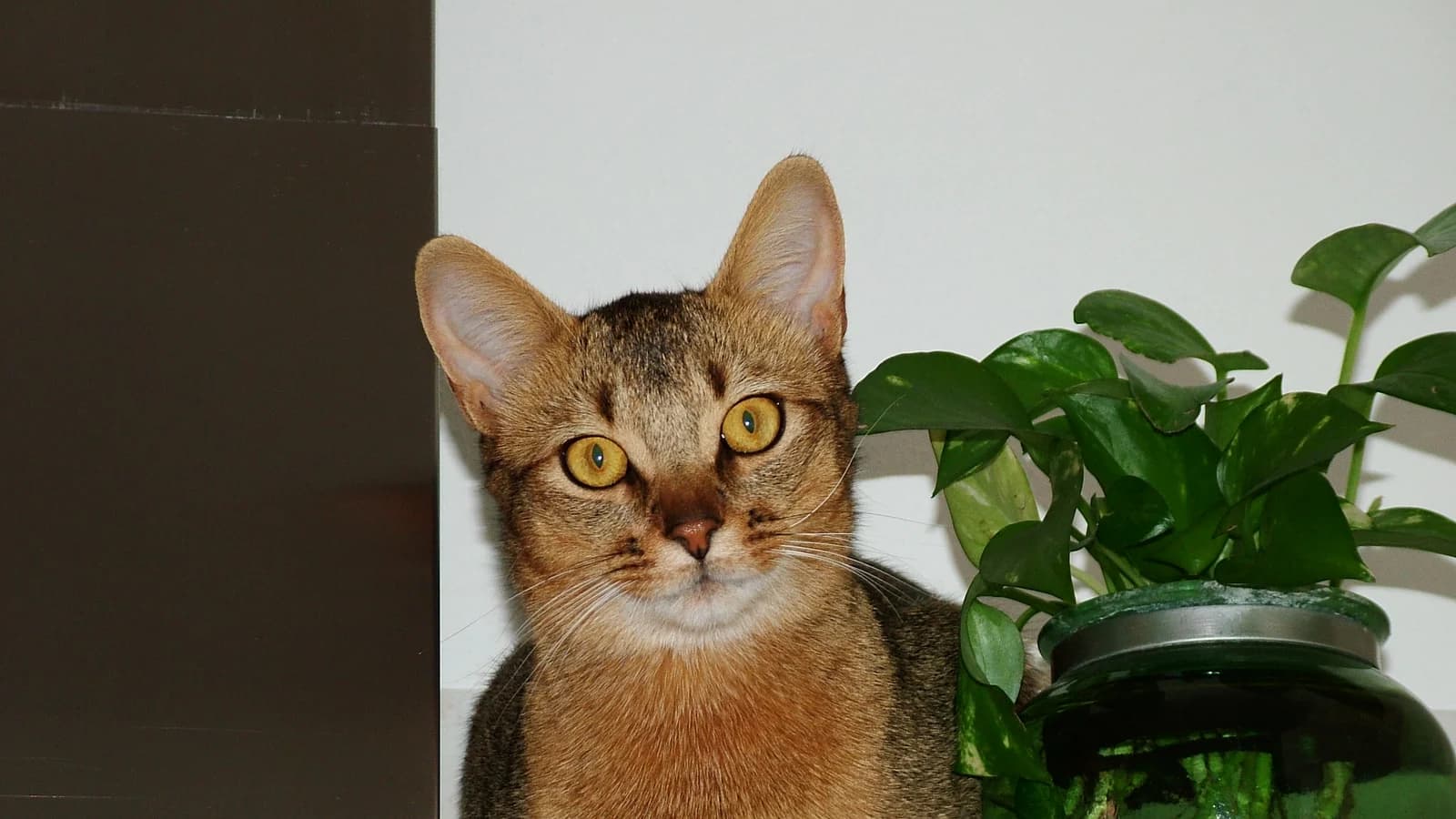
The Oriental Shorthair also appears in
Our criteria-based guides, to compare this breed with the ones most like it.
 Grooming & living with one
Grooming
Among the easiest coats on this site: short, fine and close-lying, kept polished with a weekly once-over ( suggests weekly, every couple of weeks; we print both). The sleek coat sheds less VISIBLE hair, which is a housekeeping fact, not an allergy one. Our hypoallergenic page keeps those two mechanisms honestly apart. The longhaired sibling adds a comb, not a workload: no true undercoat, by four registries' own accounts.
Living together
The registry portrait is the Siamese family's: talkative, demanding of company, clever, athletic, excellent with engaged children and cat-friendly dogs, miserable when ignored. The measured family literature backs the sociable-and-vocal shape. Where a claim is Siamese-measured rather than Oriental-measured, this profile says so rather than borrowing silently. The practical consequence owners repeat: this breed does best with an audience, and a second cat is not a luxury.
 Food & diet
No breed-specific feeding study exists. Feed the lean, tubular build to body condition, per general veterinary guidance. The one visual trap: this cat is LONG, and the measured family cohorts are the lightest weight class in their system. A healthy Oriental looks slim by design. Weigh rather than eyeball, and resist feeding the silhouette up to a stockier breed's outline.
 Price & budget
$850 to 4,500
Price of a kitten from a registered breeder, in the United States
This price reflects the quality of the breeding program: parents' health tests, registry pedigree, socialization. A very low price should raise a red flag. The real cost, though, plays out over the years.
Find a verified Oriental Shorthair breederKitten price, by market
United States
$850 to 4,500
United Kingdom
£700 to 1,500
Canada
CA$300 to 1,800
Australia
A$2,100
Each figure is that country's real market price, researched separately, not a conversion of the others. The smaller line is only there so you can gauge one against your own money: European Central Bank reference rates of 2026-09-18, refreshed daily.
The Oriental in the US, UK, Canada and Australia
| Measure | United States | United Kingdom | Canada | Australia |
|---|---|---|---|---|
| Pet-quality kitten (published prices) | $850-4,500, mostly FLAT fees at named catteries | £700-1,500 live licensed cluster | CA$300-1,800 marketplace | AU$2,100 (one anchored cattery figure) |
| One breed or two? | TICA: two breeds, one standard; CFA: one breed, two divisions | GCCF: three separate registration policies (4/5/4 generations) | CCA-AFC: judged as two separate breeds, bred freely together | ANCATS: one joint Siamese-Oriental division; ACF: separate (OLH)(JAVANESE) standard |
| The Havana trap | Havana Brown = a separate breed, its own 5-generation rule | Havana = a chestnut COLOUR of Oriental | Follows the US reading | Color usage |
| UK registration trend (GCCF's own stats) | n/a | Shorthair 7th (-25% yr/yr); Longhair 24th (-47%); Havana 34th (flat) | n/a | n/a |
| Measured lifespan | None (the study is UK) | 14.01 yrs median age at death (16 cats, 2024) | None | None |
Four markets, four rulebooks, and five registries that cannot agree if this is one breed or two. Prices August 2026.
Work out your food budget
Type of food
Estimated monthly budget
$13
≈ 2.2 oz (63 g) per day
A ballpark figure, food only, using the same arithmetic as our portion tool (resting energy requirement × 1.2, a neutered adult). Real needs vary with age, activity level and body condition. Ask your veterinarian for advice.
 Verified Oriental Shorthair catteriesThe registry-checked directory, plus a kitten alert near you
 Should you insure an Oriental Shorthair?
Our sources list several predispositions in the Oriental Shorthair: Amyloidosis (the family condition, scoped), Progressive retinal atrophy (rdAc), The 2022 genomics finding, kept in its lane. A predisposition is not a foregone conclusion, and many of these cats live their whole lives without ever developing anything. It does change the nature of the follow-up, though: you monitor, sometimes for life, and it's that monitoring that weighs on a budget, more than a one-off accident.
One thing to weigh before deciding: this is a cat you will live alongside for well over a decade, and that is the span the real cost is spread across, premiums and care alike. Where a breed has a measured life expectancy that differs from the figure usually quoted, we say so in the lifespan section above rather than repeating the quoted one here.
 Oriental Shorthair cats in our community
This breed is barely covered by free photo libraries: we only found 4 photos we could verify. Your cats are especially welcome here.
No Oriental Shorthair here yet
Got one? Add a photo and yours gets to open this page.
 The vet's take

Veterinary review
Are you a vet?
Your professional read belongs here: every verified practitioner can leave a note, published once our editors have reviewed it.
Sign in and get your license number verified. We check it in the public register, we never ask for or keep a copy of your diploma, and your number is never published.
 Frequently asked questions
+How much does an Oriental Shorthair cost?
From named US catteries (August 2026): $850 to $4,500, mostly flat fees, and both ends are legitimate. UK live listings £700-1,500; Canada CA$300-1,800 marketplace; Australia one anchored AU$2,100 figure. Our price page carries the two warnings this search space earned.
+How long do Oriental Shorthairs live?
A real measured anchor exists: 14.01 years median age at death (UK 2024 cohort, 16 cats), with TICA's 10+ and GCCF's 12-15 beside it as labeled registry figures. A long-lived family by every reading.
+How many colors do Orientals really come in?
Nobody agrees, and no registry says "over 300": TICA counts 281, CFA's own page says both 150 and 600, GCCF computes 816. The famous 300 traces to a superseded 2021 document: our colors page has the whole story.
+Are Oriental Shorthairs hypoallergenic?
No: the sleek coat sheds less visible hair, which is a different mechanism from allergen production, and no study has measured this breed's Fel d 1. Our hypoallergenic page keeps the two honestly apart.
+What is the difference between an Oriental and a Siamese?
The points, definitionally: the family's own shared standard makes the Siamese the pointed cat and the Oriental the non-pointed one, same body, green eyes instead of blue. A pointed "Oriental" is registered as a Siamese at every major registry.
+Is the Oriental Longhair a separate breed?
Depends on the registry: two breeds at TICA and CCA-AFC, one breed with divisions at CFA, and six different names worldwide (Javanese and Mandarin included). Our longhair page untangles the whole web.
+Are Oriental Shorthairs loud?
Famously: this is the Siamese family's voice in every color, conversational, insistent and lifelong. Owners describe it as company; neighbors of thin walls should meet one before committing.
+What is an ebony Oriental?
The flagship: the jet-black, green-eyed Oriental. "Ebony" is the US registries' word; GCCF files the identical cat under "Black". No premium attaches to it in any market source we read.
+What is the Havana trap?
One word, two meanings: in GCCF vocabulary Havana is a chestnut COLOUR of Oriental; at CFA and TICA, Havana Brown is a separate BREED with its own five-generation rule. Read the registry before the listing.
+Do Orientals have health problems?
The family file is real and mostly Siamese-measured, which our health section says at every claim: amyloidosis as family history, testable rdAc PRA, and a genomics finding kept as population genetics. Ask breeders for rdAc results and line longevity.
+Are Oriental Shorthairs rare?
Established but thinning in places: GCCF's own statistics rank the breed 7th in UK registrations but falling 25% year over year. In the US the flat-fee cattery scene remains active; our breeders page maps it.
 Community questions
Got a question this page doesn't cover? Ask it: the best ones get published here with their answer.
Sources & references
Data checked against reference sources (TICA and CFA standards, genetics laboratories, veterinary schools).
- TICA: Oriental Shorthair breed
- TICA Siamese/Balinese/Oriental combined standard
- CFA: Oriental
- GCCF: Oriental breed page
- Farrell et al. 2024, UK deceased-cat cohort (the 14.01y anchor)
- Egenvall et al. 2009, Swedish insured cats (pooled, scoped)
- Kienzle and Moik 2011, adult body weights (pooled Siamese/Oriental)
- TICA: Oriental Longhair breed
- Salonen et al. 2019, breed behaviour study
- Catster Oriental colors guide

Worth keeping a paw on
Pin this profile
To compare later, or to show someone still torn between two breeds. One click and it sits in your board.
Pin it on Pinterest
 Purr or Pass
Still deciding? Find the perfect breed for your home.
A quick quiz that factors in your lifestyle, your kids and your other pets.
Which breed fits my home?Keep exploring
The floor belongs to our members. Keep it kind, links are not allowed, and images go through moderation before anyone else sees them.