


Coat patterns
Tortoiseshell Cats: The Woven Coat, Every Variant in Photos
A tortoiseshell cat, to her friends, wears black and orange woven through the same coat. Not patches on white like a calico, but a , marbled mix that runs the whole cat. It is a pattern, not a breed, and like the calico it appears almost exclusively on females.
Torties come with the fancy's most famous personality rumor attached, "tortitude", and with genetics good enough that no two of them have ever matched. Here is what the standards, the chromosome studies and the one real behavior study actually say, with every named variant photographed on the way down.
 By Nora · The storyteller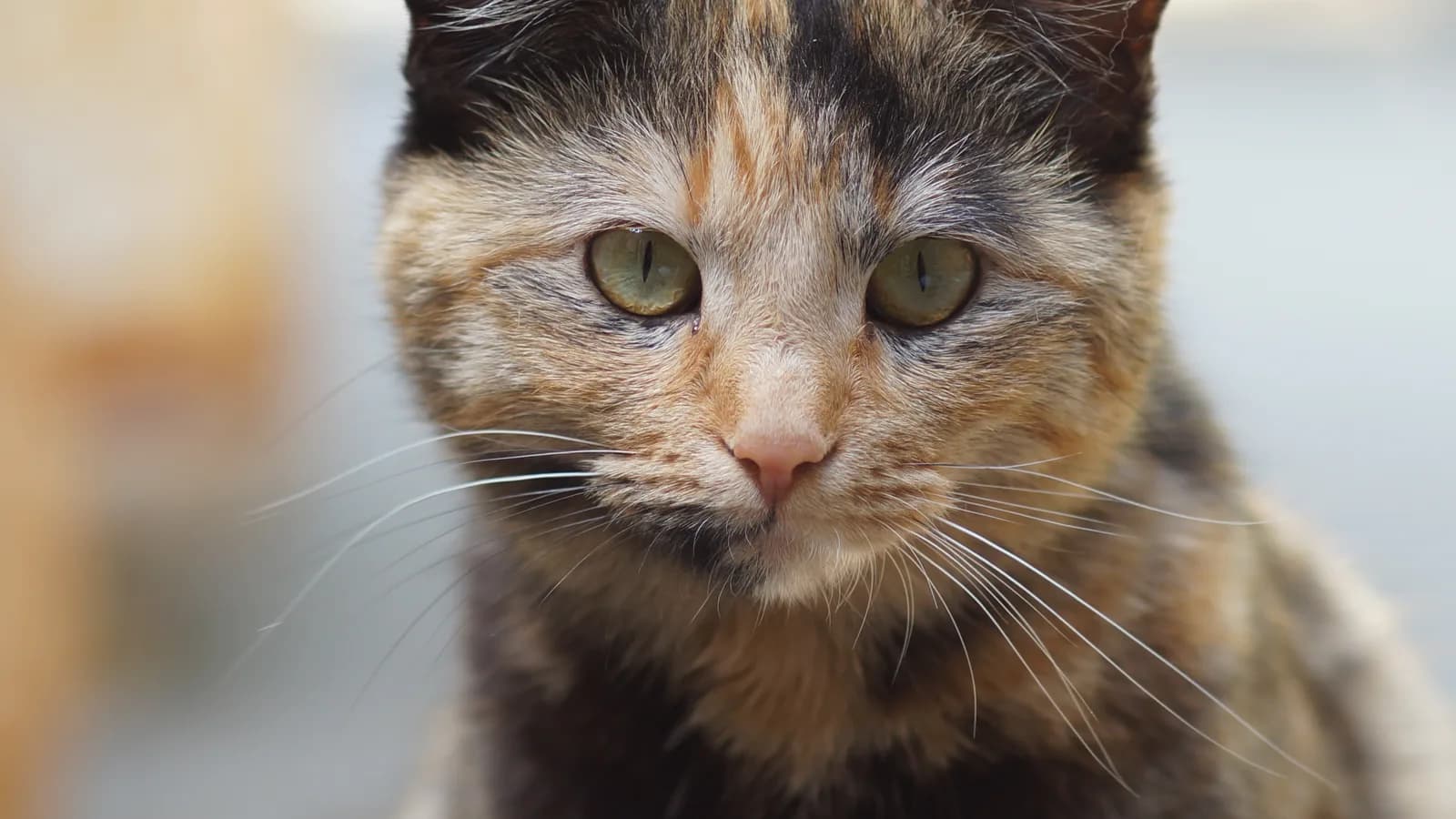
Contents
Breeds worth knowing
Tap a breed for the full profile: temperament, health, price and coat colors, all fact-checked.
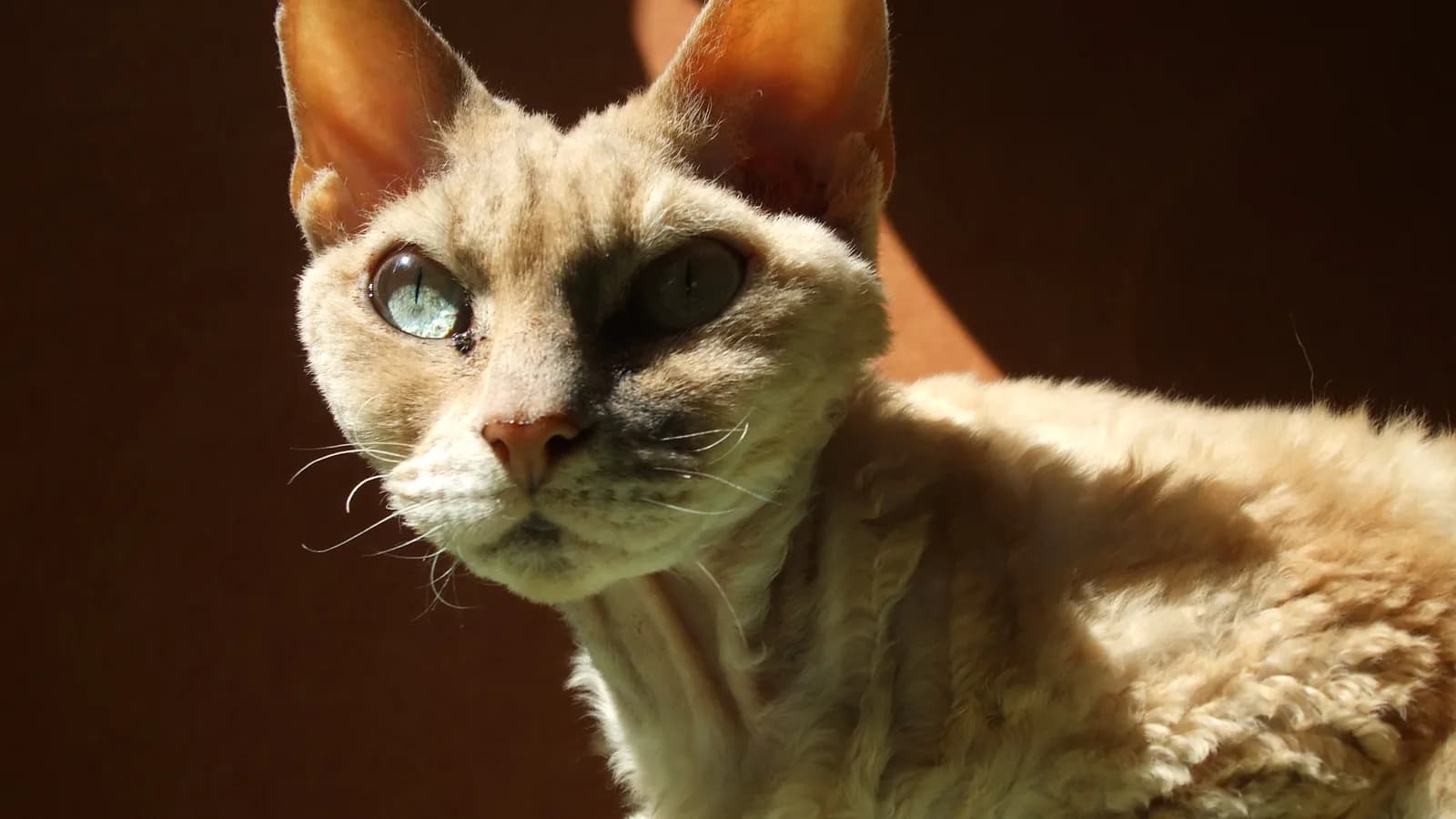
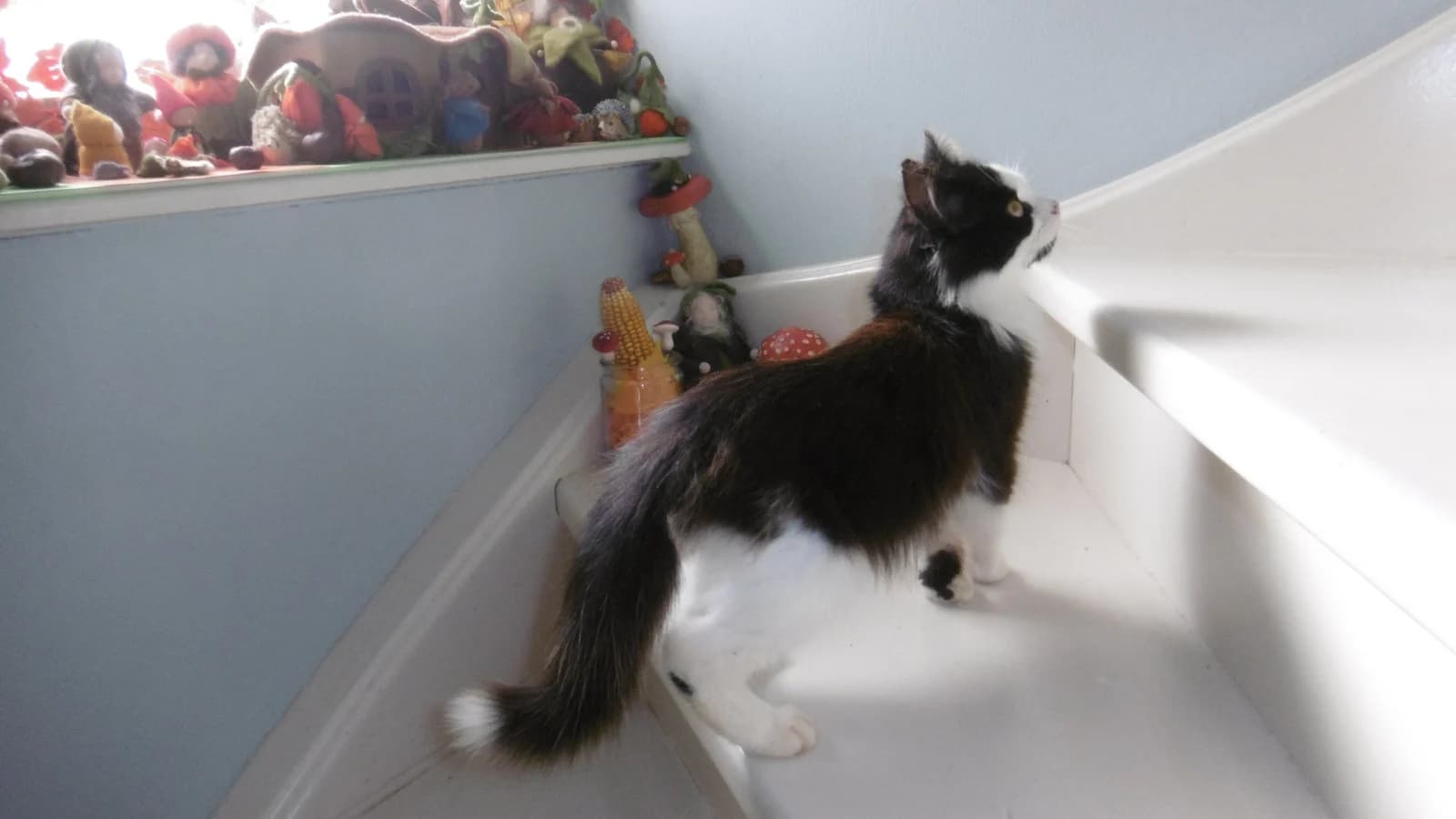
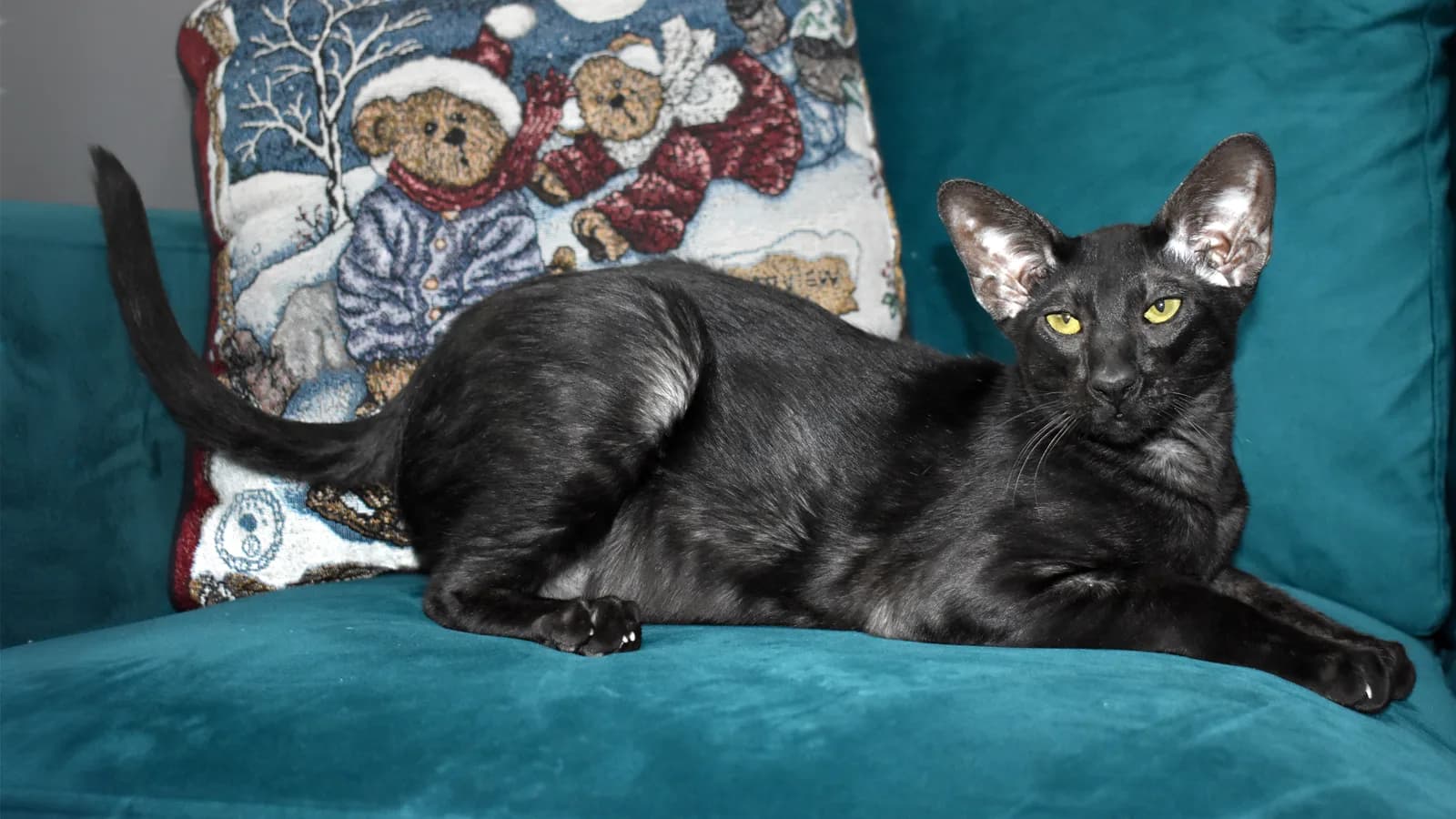
What is a tortoiseshell cat?
's standards define the tortoiseshell as "black with patches of red or softly intermingled areas of red on both the body and the extremities": orange and black sharing every part of the coat, with no structured white ground. The moment a cat adds real white (bib, belly, paws), US registries reclassify her as a calico. In Britain, where the never uses the word calico at all, that same cat is a "tortoiseshell and white." One family of patterns, two vocabularies.
The University of Michigan's Kalantry Lab, which studies the underlying mechanism, describes torties as the calico's "close cousins," with " patterns showing more intimate color mixing, reflecting different timing of inactivation events". Same coin-flip genetics, run at a finer grain. That is why a reads as woven where a calico reads as blocked.
Notice that 's tortoiseshell wording allows both looks at once: "patches of red" or "softly intermingled areas." One registry name, two presentations, and breeders call them the patched and the . Calico's definition, by contrast, demands "unbrindled patches" only. Cat-genetics writer Sarah Hartwell puts the family in one plain sentence: torties "combine two colours other than white in an asymmetrical distribution, either closely mixed ('brindled') or in larger patches." Where the white line falls between tortie and calico, and why it trips everyone, has its own side-by-side page.
Is a tortoiseshell a breed?
No. Tortoiseshell is a coat pattern that appears across many breeds and countless mixed-breed cats. A without papers is a domestic shorthair or longhair wearing a tortoiseshell coat.
The genetics: one coat, two X chromosomes
The runs on the same machinery as the calico. The orange-or-black instruction sits on the X chromosome. A female cat carries two Xs, and each of her cells permanently silences one of the two at random before birth. Cells that kept the orange X grow orange fur; cells that kept the black X grow black fur. The woven coat is the map of millions of those choices. Our calico guide tells the full story, including why the pattern can never be cloned.
The practical consequences repeat here. Torties are almost all female. Male torties are rare chromosome exceptions (most carried an extra X in the classic 1973 series, and most, not all, are sterile). And every 's weave is a one-off.
Why is one a fine weave and the next a patchwork? Two explanations are proposed, and neither is settled science. The timing theory: if a cell's happens early, its descendants have room to multiply into large single-color patches; late inactivation leaves patches "no larger than a single hair." The migration theory: torties start with more pigment cells, already color-committed, spreading from the spine. What is better established is white's side effect: Hartwell notes that the more white spotting a tortie carries, the more her black and red separate into blocks instead of staying intermingled, which is one more reason calicos look blocked and torties look woven.
Add the dilution gene and the palette softens: black becomes blue-gray, orange becomes cream, and the registries call the result a . Add tabby striping through the patches and the registries file her as a patched tabby, informally a : not a third pattern but the weave with the tabby gene expressed inside both colors at once, classic, mackerel or spotted. It dilutes too, into the blue-cream patched tabby.
Two rarer wardrobe options complete the family. A chocolate (chocolate plus red) exists in breeds whose standards allow chocolate as a base color, the way the Persian standard names a Chocolate Calico; no universal registry class name covers it, so treat it as breed-specific vocabulary. And on pointed cats the weave hides in the mask, ears, legs and tail: the tortie point, which our Siamese tortie point page covers in full.
Tortie
Black + orange woven, no structured white. The pattern this page is about.
Blue-cream (dilute )
Same weave through the dilution gene: blue-gray + cream, softer contrast.
Torbie
The weave plus tabby stripes: registries say patched tabby.
Calico
Patches on a white ground instead of a weave: her own page covers her.
Split faces, Venus, and what a chimera actually is
Some torties wear the lottery on their face: black on one side, orange on the other, split down the nose. The internet's favorite example is Venus, a North Carolina stray with a black half, an orange tabby half, and one blue eye. Popular coverage calls her "the cat." The one named geneticist who examined her case, Leslie Lyons, called her "extremely, extremely rare" but "not necessarily a chimera": ordinary , the same mechanism behind every , can land cleanly along the midline by pure luck.
Here is the part the headlines skip: Venus was never DNA tested. Lyons described exactly what would settle it, a DNA fingerprint from each side of the body, different on each side if she were truly two fused embryos. That test was never run, so " cat" remains a label, not a diagnosis. Her single blue eye is the genuinely unresolved part: her tiny white chest patch is not enough, by the usual white-spotting genetics, to explain it, and Lyons called it "a bit of a mystery."
Real feline chimeras do exist, and DNA is how they are actually found. A 2020 case report in Animal Genetics confirmed a female by DNA profiling, and its authors note that several reported male tortoiseshell "chimeras" were never molecularly confirmed at all. The best-documented male case is the fertile Maine Coon mentioned below: two genetically distinct male cell lines fused into one cat, proven by microsatellite analysis. The honest rule for any two-faced cat: the coat suggests, only the DNA concludes.
Tortitude: what the one study actually found
The rumor says torties are firecrackers: opinionated, feisty, dramatic. There is exactly one study behind the whole conversation, and it is worth reading precisely. Stelow, Bain and Kass collected 1,432 owner questionnaires on coat color and behavior, and analyzed 1,274 of them (Journal of Applied Animal Welfare Science, 2016). Owners of sex-linked orange females, torties, calicos and torbies, did report more frequent aggression toward humans in everyday interactions. Two scopes matter before anyone prints "science proves tortitude". The data is owner-reported impressions collected online, not observed behavior. And in the same study, aggression during handling and during vet visits showed little difference among coat colors.
So the honest summary is: one modest survey found owners perceive -family cats as spicier in daily life, and found the effect largely absent in the settings where it would matter most. No study since has replicated or extended it. A tortie may well run the household. The evidence that her coat predicts it is thin, and we found no other measured study on coat color and temperament anywhere.
Do not take our word for the modesty; take the author's. Interviewed by HuffPost about her own study's coverage, UC Davis behaviorist Elizabeth Stelow said "it's not that your average white cat is an angel and your average calico is a devil... we're looking at a continuum," noted that reported aggression "for all groups was relatively low," and said she absolutely does not think anyone should use the study as a guide to pet adoption. One more honest wrinkle, proposed by Hartwell as an explanation rather than a finding: a shelter worker who has heard the tortitude legend approaches a more nervously, and a cat mirrors the nerves. The stereotype may partly feed itself.
owner surveys in the one tortitude study
1,274
Stelow et al. 2016, online questionnaire
where owners reported more aggression
Everyday only
handling and vet visits showed little difference among colors
replication studies since
0
the whole tortitude literature is this one survey
Male torties, rarity, and what a tortie costs
Male tortoiseshells are the same story as male calicos, and the classic study covered both patterns together. Of 25 male tortoiseshell-and-calico cats examined chromosomally (Centerwall and Benirschke, 1973), 16 were XXY and the rest mosaics or chimeras. Most were sterile, though a 2020 case report documents a fertile chimeric male Maine Coon. The famous rarity figure of one in three thousand traces to no study anyone can produce, and our calico guide unpacks that paper trail. Nothing about a male tortie makes him financially valuable, only biologically interesting.
As for the herself: she is not rare. The weave is common in shelter cats and accepted across many breeds. So "tortoiseshell price" is really the price of whatever breed (or rescue fee) she comes with. What IS uncommon is a large, clearly divided, high-contrast weave, which show breeders prize. That is an aesthetic premium inside a breed's normal price range, not a separate tortie market.
How long do tortoiseshell cats live?
No lifespan study anywhere segments cats by coat pattern; we checked, and "the lifespan" does not exist as a measured number. The honest anchors: the largest UK life-table study (Teng et al. 2024) puts overall life expectancy at birth at 11.74 years, and female cats, which torties almost all are, at 12.51 years, 1.33 years ahead of males. Beyond that, a tortie's lifespan is her breed's, her weight's and her care's, not her coat's.
Money cats and threshold luck: tortie folklore
Folklore has strong opinions about this coat, and they travel by region. In North America the tortoiseshell (and the calico) is the "money cat," a bringer of financial luck; the nickname is real enough to appear in a Cambridge University Press linguistics survey of American English (Finegan and Rickford, 2004). Irish and Scottish tradition holds that a crossing your threshold brings the household good fortune, and one Irish variant adds that rubbing her tail on a wart cures it, but only in May. In Japan, tortoiseshell-and-white cats were prized as lucky, historically down to sailing aboard ships against shipwreck.
Two honest footnotes. Nothing here is a claim about real cats' effects on anything; it is folklore, recorded and dated. And the record is not even uniformly flattering: a 1935 folklore survey in Notes and Queries (Bonnerjea, cited via the reference trail rather than read at source) recorded an English variant in which a strange tortoiseshell entering the house meant misfortune, and a woman dreaming of one was warned about her so-called friends. Same coat, opposite omens, depending on the county.
The tortoiseshell field guide
Every variant named on this page, gathered in one place. Tap any photo to enlarge it; each caption names the exact coat so you can identify the in front of you. One variant is deliberately missing: the chocolate tortie, which we describe in the genetics section but will not illustrate until we find a photo that shows the chocolate base unambiguously; a wrong-variant photo on a genetics page is a factual error.
Torties wear the most personal coat in the cat world: a weave that was decided cell by cell before she was born and will never repeat. Whether the attitude comes with it, science is genuinely unsure. If a runs your home, tell us: does yours match the rumor, or is she the calmest cat on the street? Share her photo through the Share + button and she may end up in the community games alongside every other one-of-a-kind coat on this site.
By Nora · The storytellerFrequently asked questions
What is a tortoiseshell cat?
A cat whose coat weaves black and orange (or their dilute versions, blue-gray and cream) through the whole body with no structured white. It is a coat pattern found in many breeds and mixes, not a breed itself.
Are all tortoiseshell cats female?
Almost all. Showing black and orange at once requires two X chromosomes. Male torties exist as rare exceptions, usually XXY or chimeras, and most are sterile.
Can male cats be tortoiseshell?
Rarely, yes. In the classic 1973 chromosome series of 25 male tortoiseshell and calico cats, 16 were XXY and the rest mosaics or chimeras. Most male torties are sterile; one documented chimeric male was fertile.
Are tortoiseshell cats rare?
No, the pattern is common in mixed-breed cats and accepted in many breeds. Male torties are rare; torties are not.
What is the difference between a calico and a tortoiseshell?
White. A calico carries separate orange and black patches on a white ground; a tortoiseshell weaves the two colors together with no structured white. UK registries call the calico a tortoiseshell-and-white.
What is a torbie?
A tortoiseshell whose colors also carry tabby striping: the tortie weave plus the tabby gene expressed in both colors at once. Registries call her a patched tabby. She exists in dilute form too, the blue-cream patched tabby.
Are tortoiseshell cats mean?
No study supports mean. One owner survey (Stelow et al. 2016) found guardians reported more frequent everyday aggression from tortie-family cats, but the same study found little difference during handling or vet visits, and it measured impressions, not behavior. Individual personality dwarfs coat color.
Is a split-faced tortoiseshell a chimera?
Usually not provably. A face split into black and orange halves is normally ordinary X-inactivation mosaicism landing along the midline. True feline chimeras exist but are confirmed only by DNA profiling, and most famous "chimera cats," including Venus, were never tested.
Do tortoiseshell cats have white on them?
By the US show definitions, no: structured white makes her a calico. In practice a small white locket or belly spot appears on some torties; UK vocabulary handles it differently, calling any white-added tortie a tortoiseshell-and-white.
How much is a tortoiseshell cat worth?
The price of her breed or her adoption fee. There is no separate tortie market; show breeders may prize a large, high-contrast weave within a breed's normal range. Male torties carry no premium either: most are sterile.
How long do tortoiseshell cats live?
No measured tortie-specific figure exists, because no study tracks lifespan by coat pattern. The nearest honest anchor: UK female cats average 12.51 years of life expectancy at birth (Teng et al. 2024), and torties are almost all female.
Are tortoiseshell cats hypoallergenic?
No. Coat pattern has no effect on the Fel d 1 allergen. No cat is truly hypoallergenic, tortie or otherwise.
Sources & references
Data checked against reference bodies (breed registries, allergy research, veterinary schools).
- CFA Maine Coon standard (tortoiseshell color class wording)
- CFA British Shorthair standard (tortoiseshell classes)
- GCCF Standard of Points, May 2025 (tortoiseshell-and-white vocabulary)
- Kalantry Lab, University of Michigan: X-inactivation and the tortoiseshell weave
- Stelow, Bain & Kass 2016, coat color and aggressive behaviors (J Appl Anim Welf Sci)
- HuffPost interview with Dr. Elizabeth Stelow on her study's media coverage
- Centerwall & Benirschke 1973, male tortoiseshell and calico cats (J Heredity)
- Bugno-Poniewierska et al. 2020, fertile chimeric male tortoiseshell (Reprod Domest Anim)
- Jaraud et al. 2020, feline chimerism revealed by DNA profiling (Animal Genetics)
- Smithsonian Magazine: the genetics behind Venus, the two-faced cat
- National Geographic: Venus the two-faced cat still a mystery (Leslie Lyons quotes)
- Sarah Hartwell, messybeast.com: tortoiseshell and tricolour cats
- Sarah Hartwell, messybeast.com: X-inactivation and split-face torties
- Sarah Hartwell, messybeast.com: is coat colour linked to temperament?
- Bonnerjea 1935, Cats in Folklore and Belief (Notes and Queries; cited via reference trail, paywalled)
- Teng et al. 2024, life tables for UK companion cats (J Feline Med Surg)
This page is a starting point. Every cat is an individual: our profiles spell out the tendencies of each breed, sources included.
 Purr or Pass
Which cat breed is right for you?
Take the quiz