

Persian
“The fancy's founding aristocrat”
 By Priya · The careful one
Published August 21, 2026Updated August 26, 202611 min read
Contents
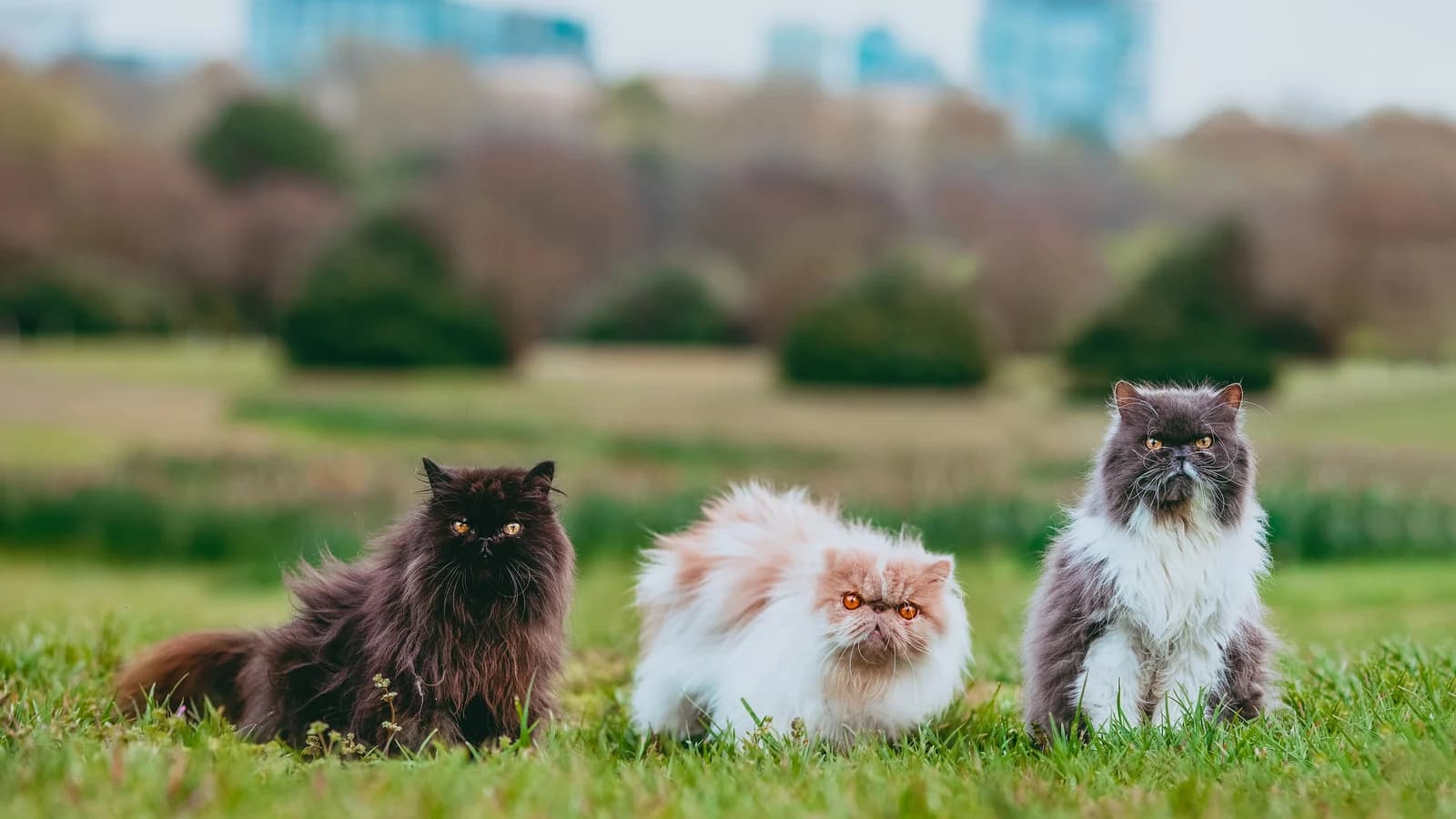
 Persian photos
Real photos, so you can see what the breed actually looks like: coats, ear tufts, ruff and build.
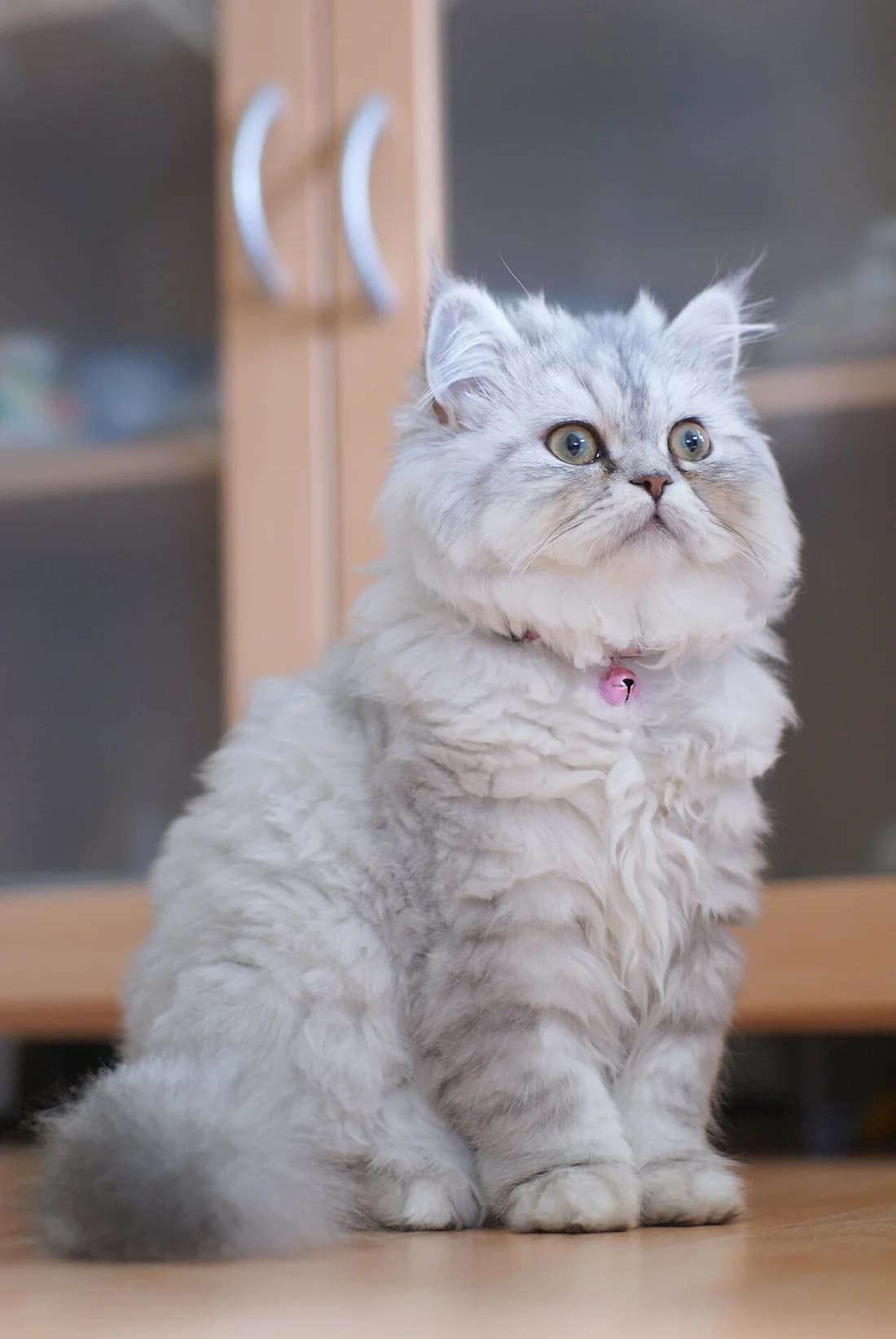
Silver shaded Persian kitten sitting indoors, long fluffy coat and a pink bell collar
Photo: Volkan_83 · CC BY 2.0 · via Wikimedia Commons
Got a Persian? Share them with the community. Photos from our members round out this page.
 Vital stats
Origin
Iran
The famous account has the Italian traveller Pietro della Valle bringing longhaired cats from Persia to Europe in the 1620s, and the honest version keeps its labels. His own letter describes GREY cats, and the line from them to today's breed is tradition, not documented ( and Wikipedia hedge it; we hedge with them). The checkable history starts at the first cat shows, which Persians ruled. 's own 1899 Westminster photo caption and America's 1900-1902 blue-and-silver champions are the receipts. The modern flat face is a mid-20th-century development. Persian-speakers, for the record, never called the breed "Persian cat".
Life expectancy
Three measured UK figures exist, each with its own endpoint, and the breed-specific one leads. A 2019 study of 3,235 Persians gives a median age at death of 13.5 years (IQR 9.9-16.0). The 2024 life tables give a life expectancy at birth of 10.93 years (CI 9.63-12.23, 80 deaths). An earlier general study read 14.1. The registry claims SPAN 8 to 16 because they disagree with each other ( says 8-11, 14-16). The band shown here is the span of those claims, not any single source's range, and the measured figures are the numbers to trust.
Coats
White
Blue
Black
Cream
Silver chinchilla
Golden
Red tabby
Seal point (Himalayan)
The fancy's biggest palette, filed by in seven divisions (solid, silver and golden, smoke and shaded, tabby, parti-color, calico and bi-color, Himalayan) and organized differently by every other registry. White runs its own three-way eye system. Blue and silver were the fashion of the first cat shows. The Himalayan drawer is four registries' different answers to one question.
Understanding the coats (and their genetics)Size
The fancy's clearest case of a coat writing checks the body doesn't cash. No registry standard publishes a weight figure at all (TICA's box is empty, GCCF's Standard of Points silent), and the measured file is unusually good. The largest breed cohort anywhere (3,235 UK Persians, 2019) puts the mean adult at 3.9 kg (8.6 lb), males 4.3 kg (9.5 lb), females 3.4 kg (7.5 lb): BELOW the UK's average pet cat. The cat under the coat is medium and compact; the silhouette is fur.
Popularity (CFA)
No. 3
in the CFA ranking for 2026
Did you know
No registry standard publishes a weight for the Persian, and the measured file explains the silence better than any number. The largest cohort ever weighed (3,235 UK Persians) averaged 3.9 kg: LESS than the ordinary British pet cat. The fancy's most imposing silhouette is, by measurement, mostly fur.
 Personality
 Affection4/5
 Energy1/5
 Intelligence3/5
 Friendliness3/5
 Independence3/5
 Vocal1/5
 Shedding5/5
Compatibility
 Good with children3/5
 Good with other pets4/5
 Apartment friendly5/5
Editorial ratings on our five-point scale, anchored in the registry descriptions and the measured behaviour studies cited on this profile; individual cats vary, and our members' own ratings below are the counterweight.
Still torn between this breed and another?Compare the Persian trait by trait, or filter every breed by what matters to you. What our members say
What our members say
Nobody has described their Persian here yet. As soon as the first profiles come in, this is where the community averages will show up: temperament, food, lifestyle.
Describe my Persian Pros & cons
Strong points
- The calmest temperament portrait in the fancy, consistent across a century of registries
- A real measured lifespan file, and the breed-specific median (13.5y) is a good number
- PKD, the historic scourge, is a testing success story where the rules force the test
- The biggest palette in the fancy, with three color pages of our own to prove it
- Apartment perfection: quiet, low, routine-loving, furniture-safe
Things to consider
- The daily grooming contract: this coat mats in days, not weeks
- Brachycephaly is real and TIERED: the extreme face carries measured findings the moderate one doesn't
- Eyes need daily wiping by anatomy (a measured, shortened tear-drainage duct)
- PKD vigilance is the buyer's job in North America: no CFA/TICA testing gate exists
- Heat, stairsprints and adventure are other breeds' departments
 Is a Persian right for you?
A household that wants presence over participation. The Persian presides, on a routine, near its people, at floor level. It asks in exchange for the fancy's most honest labour contract: a daily comb, a daily eye-wipe, and a buyer who asked the PKD question before falling for the face. Match the face tier to your ethics and the grooming budget to your honesty, and no breed keeps its side of the bargain more reliably.
Is the Persian right for YOUR home?
Answer a few questions and we'll email you your personalized result.
Take the quiz · 2 min Getting to know the Persian
The Persian is the cat fancy's founding aristocrat: the breed that headlined the first cat shows in the 1890s, ruled the registries' registration counts for a century, and still owns the most recognizable silhouette in the species. A compact cat presenting as a large one, by carrying the fancy's biggest coat over its smallest attitude. Nearly everything interesting in its file comes in pairs of numbers, and this profile prints both of each.
Start with the body. No registry publishes a weight ('s box is empty, 's standard silent), and the measured file is the best on this site: 3,235 UK Persians averaging 3.9 kg, below the ordinary pet cat. Lifespan runs the same way. The registries' claims disagree so widely (TICA 8-11, GCCF 14-16) that their SPAN is the only honest band, while the measured figures (a breed-specific 13.5-year median, a 10.93-year life expectancy at birth) do the real work. The theme is the profile's method: this breed's marketing is a costume, and the measurements underneath are consistently more interesting.
The face is the breed's real fork, and the doll-face guide refuses the usual binary. Three tiers (traditional, standard, extreme), with 's own breeding policy drawing the moderate/extreme line, and the 2017 imaging study's ten-fold ventricle finding attached to the EXTREME tier specifically, not to the breed. The same anatomy runs the eye file. Ophthalmological disorders measured as the breed's second most common group (15.3% of the 2019 cohort, against 6.7% of all cats), driven by a tear-drainage duct measured shortened in the breed. That is why the grooming contract includes a daily eye-wipe next to the daily comb.
Health's biggest word is PKD, and it is the fancy's best testing story: from historical carrier estimates near 38% (the figure UC Davis's own test page still cites) to 0.7% in the 2019 UK general-practice cohort, with the UK's mandatory-test registration rule since 2016 as the machinery. The catch is geographic. No or testing gate exists, so in North America the buyer's question does the gatekeeping (the breeders page carries the whole five-registry map, the popularity numbers three registries disagree on, and the Canadian rule nobody else explains).
The palette gets four pages of its own: the colors hub runs 's seven-division architecture and the five-registry filing differences, with children for white (three eye classes and a deafness file that measured LOWER than its long-haired peers), black (the registry's own silkier-coat note) and blue (the color that won the first shows). The Himalayan question, one cat, four registry answers, has its own page. So does the history file: della Valle's grey cats, Garfield answered honestly, Blofeld's disputed lap cat, and the record-book Persians that were actually Himalayan crosses.
Buying one is a study in asking two questions in the right order: PKD first, face tier second, price third (the price page carries five named US catteries, the fake quote we caught, and the Exotic-Shorthair discount for buyers who want the face without the daily comb). And the comparisons write themselves: against the Maine Coon it is compact-versus-rangy, and against the Bengal it is the widest gap in the fancy, a choice between households more than cats.
 Health: what to watch for
A few predispositions are well documented. The good news: they can be screened for or avoided by choosing a reputable breeder and keeping an eye on the right signals.
This is information, not veterinary advice, and it cannot tell you what is wrong with your cat. Our rule is a simple one: if something is wrong with your cat, call your vet, and call an emergency clinic if it is out of hours. Nothing you read here is a reason to wait.
Polycystic kidney disease (PKD)
The historic scourge, now a testing success where rules force the testThe breed's defining genetic disease (autosomal dominant, PKD1), and the fancy's clearest evidence that testing works, told in three UK numbers: 49.2% affected in a 2001 screening population, 27.5% of laboratory submissions in 2007, and 0.7% (CI 0.4-1.0) in the 2019 general-practice cohort of 3,235 Persians, whose authors credit the screening schemes. The historical ~38% US estimate still appears on UC Davis's own test page, alongside its note that testing has greatly reduced the frequency. The machinery matters. GCCF has MANDATED a negative test for full UK registration since 2016. CFA and TICA carry no requirement in the documents we read, so the North American gatekeeper is the buyer's question.
Symptoms to spot
Kidney cysts are silent for years; increased thirst, weight loss or appetite loss in an adult cat is a call-your-vet sign regardless of breed.
How common
UK: 0.7% in the 2019 general-practice cohort (screening-era); historical screening populations ran 27-49%; Australia's 2001 screening study read 42-45%. Population type explains every gap.
Screening & prevention
UK Active-Register kittens carry the mandated test; everywhere else, no PKD paperwork means no purchase. This is the one question that sorts Persian breeders.
Genetic test
Yes: the PKD1 DNA test (UC Davis VGL and others); ultrasound screening is the older route. Ask for BOTH parents' results.
Brachycephaly: a tiered file, not a blanket one
Tracks the face tier, per the registry's own lineThe flat face is a gradient, and the evidence attaches to its far end. GCCF's own breeding policy calls the moderate show type "moderately brachycephalic, well-balanced" and warns against the extreme tier by name. The 2017 imaging study (92 Persians) found the extreme peke-face group carried a ten-fold higher ventricle-to-brain ratio (0.159 vs 0.015), shorter nasal bones and smaller brain-cavity volume: a picture its authors compare to human craniosynostosis. Every standard we read faults impaired breathing. The buyer's lever is the tier: our doll-face guide carries the whole three-tier file.
Symptoms to spot
Noisy or laboured breathing, exercise or heat intolerance, open-mouth breathing: each is a vet conversation. Snoring alone is common in the breed; a CHANGE in breathing is the signal.
How common
No population rate exists for the syndrome as such; the imaging findings above are one study's tiers, scoped as such.
Screening & prevention
Choose the moderate tier, see the parents breathe at rest, and treat 'extreme' and 'teacup' vocabulary as walk-away words.
Genetic test
None: the face is the phenotype. Seeing both parents is the practical screen.
Eye and tear-duct disorders (the measured second group)
Measured: the breed's #2 disorder groupIn the 3,235-cat 2019 UK cohort, ophthalmological disorders were the Persian's second most common disorder group at 15.3% (against 6.7% of all cats): ocular discharge 5.8%, conjunctivitis 4.5% (markedly above purebred cats generally), tear-duct abnormality 2.3%, ulcerative keratitis 2.3%. The mechanism is measured, not guessed. Anatomical studies, including a 2026 Persian-specific paper, show a structurally shortened, sometimes V-shaped tear-drainage duct. The daily eye-wipe is anatomy management.
Symptoms to spot
Staining and mild watering are the breed's baseline; a CHANGE (color, amount, squinting, a held-shut eye) is a vet visit, and ulcers on a flat face move fast: same-day for a painful eye.
How common
15.3% of the 2019 UK cohort carried an ophthalmological disorder (the breed's second most common group).
Screening & prevention
Daily eye care as routine; parents' eye history asked; the moderate face tier again earns its keep.
Genetic test
None: anatomical, tracking the face tier.
Coat and dental disorders (the daily-care file)
Measured groups #3 and #2 single disorderThe same 2019 cohort ranks haircoat disorders as the breed's third most common group (12.3%: the daily comb is preventive medicine) and periodontal disease as its second most common single disorder (11.3%, roughly in line with UK cats generally). The honest asterisk from a small anesthetized-exam study: under full dental examination, malocclusion, crowding and tooth resorption run far higher than routine records capture, a jaw-anatomy consequence of the shortened skull. Routine dental checks earn their keep in this breed.
Symptoms to spot
Mats (armpits, behind ears) and hairballs on the coat side; drooling, dropped food, mouth-shyness or breath changes on the dental side: each a vet conversation.
How common
Haircoat group 12.3%, periodontal 11.3% in the 2019 UK cohort; anesthetized-exam findings run higher (small study, stated as such).
Screening & prevention
Daily combing (it is healthcare, not vanity), dental checks at every vet visit, and a breeder whose adults' mouths a vet has actually seen.
Genetic test
None: management is the daily comb and dental care.
Go deeper on health
Prevention, warning symptoms, costs and insurance: our guides, researched and sourced.
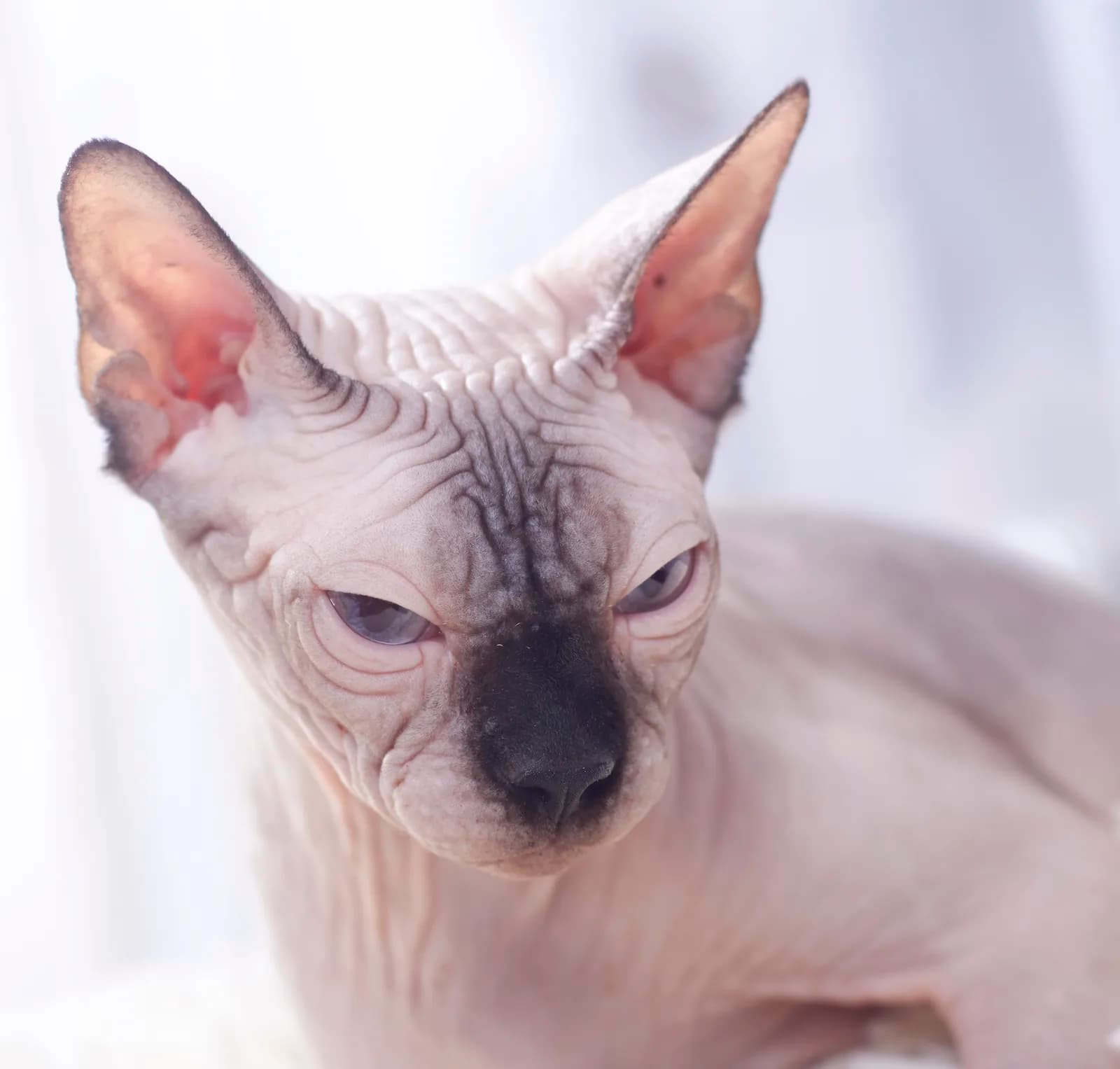
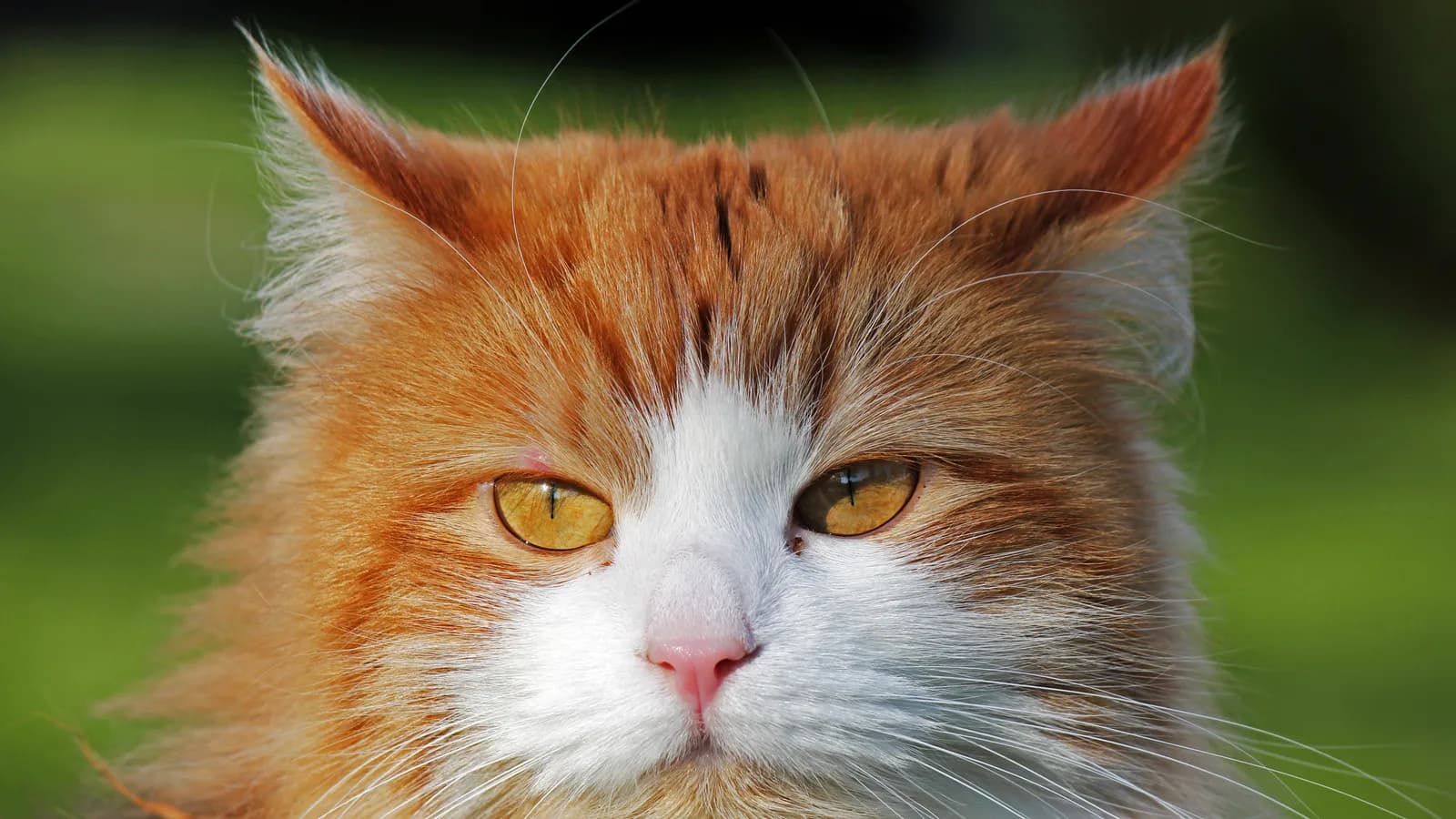
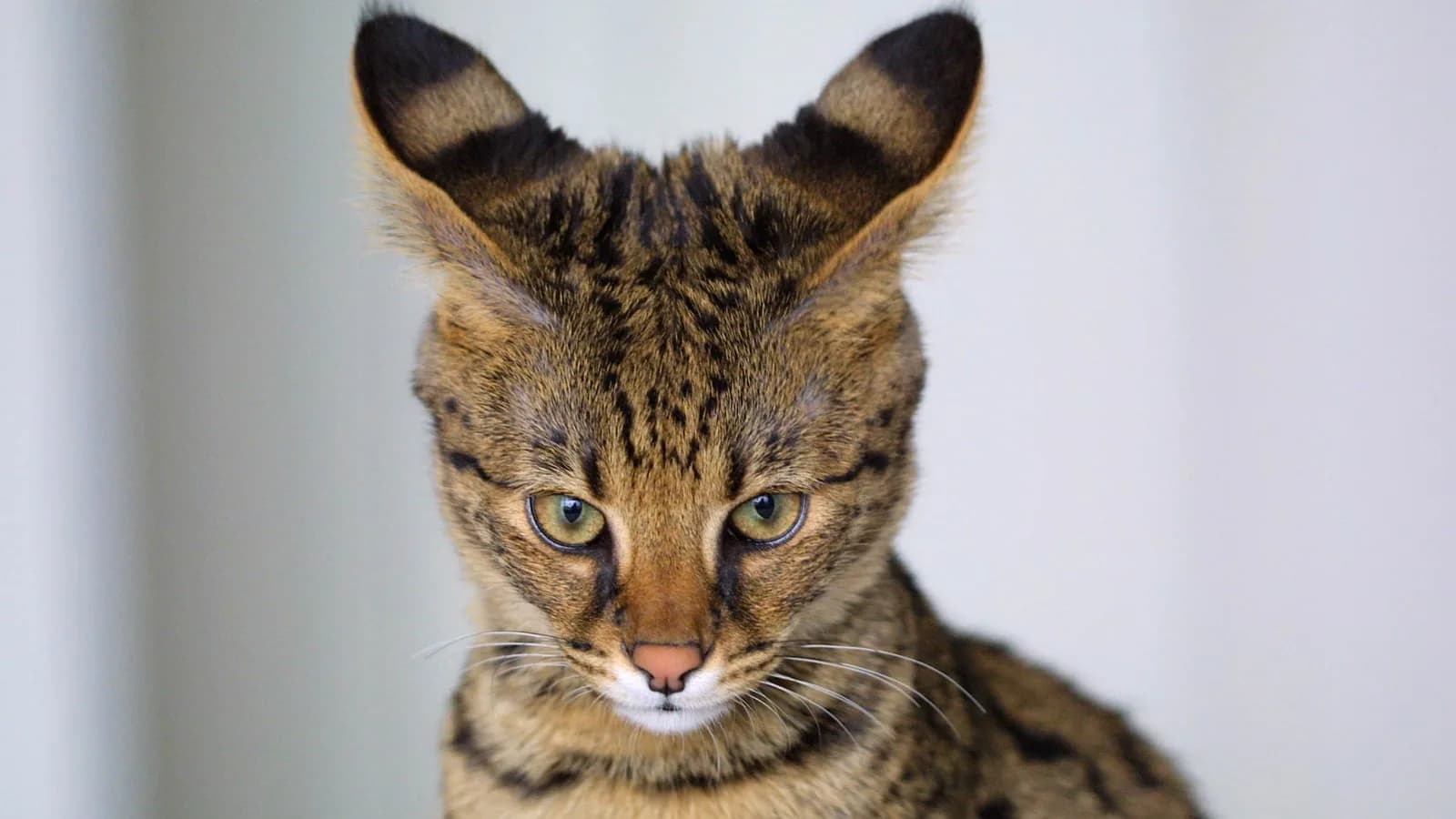
The Persian also appears in
Our criteria-based guides, to compare this breed with the ones most like it.
 Grooming & living with one
Grooming
Daily combing, per the cross-source consensus (, , , iCatCare; alone declines a number). The woolly undercoat mats in days, armpits and behind the ears first. Daily eye-wiping manages a MEASURED anatomical fact (a shortened, sometimes V-shaped tear-drainage duct). Never scissor a mat at home: the charity sourcing is blunt because clinics stitch the results. The full routine, the bathing question the registries split on, and the groomer schedule: our grooming guide.
Living together
The registry portrait has been consistent for a century: composed, quiet, gentle, routine-loving, happiest presiding over a calm household from a soft surface. Good with respectful children and easygoing pets; wrong for households wanting a climbing, fetching participant. The practical notes: this cat lives at floor level by build and inclination, and tolerates being groomed as a love language when raised to it. It repays predictability with the steadiest companionship in the fancy.
 Food & diet
No breed-specific feeding study exists. Feed the measured cat (3.9 kg average), not the silhouette, and weigh rather than eyeball a coat two sizes larger than its contents. Two breed-flavoured practicalities: the flat face makes shallow, wide dishes kinder than deep bowls, and hairball management (the coat's tax on the gut) rides on the daily comb more than on any speciality food's promises.
 Price & budget
$1,200 to 3,500
Price of a kitten from a registered breeder, in the United States
This price reflects the quality of the breeding program: parents' health tests, registry pedigree, socialization. A very low price should raise a red flag. The real cost, though, plays out over the years.
Find a verified Persian breederKitten price, by market
United States
$1,200 to 3,500
United Kingdom
£100 to 1,499
Canada
CA$1,500 to 2,500
Australia
A$800 to 4,500
Each figure is that country's real market price, researched separately, not a conversion of the others. The smaller line is only there so you can gauge one against your own money: European Central Bank reference rates of 2026-09-18, refreshed daily.
The Persian in the US, UK, Canada and Australia
| Measure | United States | United Kingdom | Canada | Australia |
|---|---|---|---|---|
| Pet-quality kitten (published prices) | $1,200-3,500 (five named catteries); keeper tier $10,000+ | £100-1,499 live sample | CA$1,500-2,500 (three-province overlap) | AU$800-1,000 or 2,500-4,500 (two lanes) |
| PKD testing rule | CFA/TICA: no requirement found: the buyer asks | GCCF MANDATES a negative test for full registration since 2016 | No registry gate found | ACF encouraged testing from 2004, no gate |
| Popularity, per each registry | CFA #3 two years running; TICA's Top Five omits it | GCCF: 8th and falling (its own dated table) | n/a | n/a |
| The Himalayan question | CFA: a color division; TICA: its own consumer breed | GCCF: 'Colourpoint' publicly, 'carries Himalayan' on paper | CCA-AFC: two separate breeds | ACF: Colourpoint inside Persian |
| Measured lifespan | None (the studies are UK) | 13.5y breed median / 10.93y LE0 | None | None |
Four markets, four rulebooks; the PKD testing rules differ by registry and matter more than any price. Figures August 2026.
Work out your food budget
Type of food
Estimated monthly budget
$14
≈ 2.4 oz (68 g) per day
A ballpark figure, food only, using the same arithmetic as our portion tool (resting energy requirement × 1.2, a neutered adult). Real needs vary with age, activity level and body condition. Ask your veterinarian for advice.
 Verified Persian catteriesThe registry-checked directory, plus a kitten alert near you
 Should you insure a Persian?
Our sources list several predispositions in the Persian: Polycystic kidney disease (PKD), Brachycephaly: a tiered file, not a blanket one, Eye and tear-duct disorders (the measured second group), among others. A predisposition is not a foregone conclusion, and many of these cats live their whole lives without ever developing anything. It does change the nature of the follow-up, though: you monitor, sometimes for life, and it's that monitoring that weighs on a budget, more than a one-off accident.
One thing to weigh before deciding: this is a cat you will live alongside for well over a decade, and that is the span the real cost is spread across, premiums and care alike. Where a breed has a measured life expectancy that differs from the figure usually quoted, we say so in the lifespan section above rather than repeating the quoted one here.
 Persian cats in our community
This breed is barely covered by free photo libraries: we only found 3 photos we could verify. Your cats are especially welcome here.
No Persian here yet
Got one? Add a photo and yours gets to open this page.
 The vet's take

Veterinary review
Are you a vet?
Your professional read belongs here: every verified practitioner can leave a note, published once our editors have reviewed it.
Sign in and get your license number verified. We check it in the public register, we never ask for or keep a copy of your diploma, and your number is never published.
 Frequently asked questions
+How much does a Persian cat cost?
Pet-tier from five named US catteries (August 2026): $1,200-3,500, keeper tier past $10,000. UK live sample £100-1,499; Canada CA$1,500-2,500; Australia runs two lanes (AU$800-1,000 and 2,500-4,500). The famous 'CFA price range' online is fake: no registry prices this breed.
+How long do Persian cats live?
The breed-specific measured median is 13.5 years (3,235 UK Persians), with the life-table figure at 10.93. The registries' own claims disagree so widely (TICA 8-11, GCCF 14-16) that only their span makes an honest band: trust the measurements.
+How big do Persian cats get?
Smaller than they look, by measurement: a 3.9 kg (8.6 lb) mean across 3,235 UK Persians, below the average pet cat, and no registry publishes a weight at all. The silhouette is coat.
+Are Persian cats high maintenance?
Yes, by honest contract: daily combing (the undercoat mats in days), daily eye-wiping (a measured tear-duct anatomy), periodic baths, and never scissors on a mat. Our grooming guide carries the full routine.
+Do Persian cats have breathing problems?
The honest answer is tiered: GCCF's own policy calls the moderate show face well-balanced, and the measured findings (including a ten-fold imaging difference) attach to the EXTREME tier. Choose the tier, watch for breathing changes, and read our doll-face guide.
+What is PKD in Persian cats?
The breed's historic kidney disease, now the fancy's best testing story: from ~38-49% in old screening populations to 0.7% in the 2019 UK cohort. The UK mandates the test for registration; in North America YOUR question to the breeder is the gate.
+Are Persian cats hypoallergenic?
No, and the coat runs the other way: more allergen-carrying hair, not less. No study measures the breed's output; our hypoallergenic page carries the honest file.
+What is the difference between a Persian and a Himalayan?
One physical type, one pointed coat, four registry answers: CFA files the Himalayan as a Persian color division, TICA gives it its own consumer breed page, GCCF calls it Colourpoint, Canada runs it as a separate breed. Our Himalayan page maps the spectrum.
+Is Garfield a Persian?
Unresolved on purpose: the strip never names a breed and the Persian fan theory rests on a quote we could not verify at a primary source. Our history page treats it honestly.
+What colors do Persian cats come in?
The fancy's biggest palette, filed by CFA in seven divisions and organized differently by every registry. White (with its three eye classes), black and blue carry their own pages here; blue won the first cat shows.
+Are Persian cats lazy?
Composed is the fairer word: the registry portrait has been consistent for a century (calm, quiet, routine-loving, floor-level). It is the fancy's steadiest companionship, not its most athletic.
 Community questions
Got a question this page doesn't cover? Ask it: the best ones get published here with their answer.
Sources & references
Data checked against reference sources (TICA and CFA standards, genetics laboratories, veterinary schools).
- CFA: Persian breed
- CFA Persian breed standard
- TICA: Persian breed
- GCCF Persian Standard of Points
- GCCF Persian breeding policy
- O'Neill et al. 2019, 3,235 UK Persians (demography, mortality, disorders)
- Teng et al. 2024, UK VetCompass life tables
- Schmidt et al. 2017, brachycephaly and hydrocephalus imaging
- Tagliavia et al. 2026, Persian craniofacial morphometry
- UC Davis VGL: PKD1 test
- GCCF Persian & Exotic registration policy (the PKD gate)
- CFA most popular breeds 2026

Worth keeping a paw on
Pin this profile
To compare later, or to show someone still torn between two breeds. One click and it sits in your board.
Pin it on Pinterest
 Purr or Pass
Still deciding? Find the perfect breed for your home.
A quick quiz that factors in your lifestyle, your kids and your other pets.
Which breed fits my home?Keep exploring
The floor belongs to our members. Keep it kind, links are not allowed, and images go through moderation before anyone else sees them.