

Coat patterns
Orange Tabby Cats: Why Every Orange Cat Wears Stripes
The orange tabby is not a breed: it is a color with a built-in pattern. Ginger, marmalade, red, creamsicle, whatever you call him (and it usually is a him, for a measurable genetic reason). The orange cat wears tabby markings because his own color gene will not let him hide them.
Orange is also the cat color science just finished explaining: the gene behind it was only identified in 2025, closing a sixty-year hunt. Here is the whole orange story, every pattern in photos. The male-bias question, answered honestly. And the famous figure about it that turns out to have no source.
 By Nora · The storyteller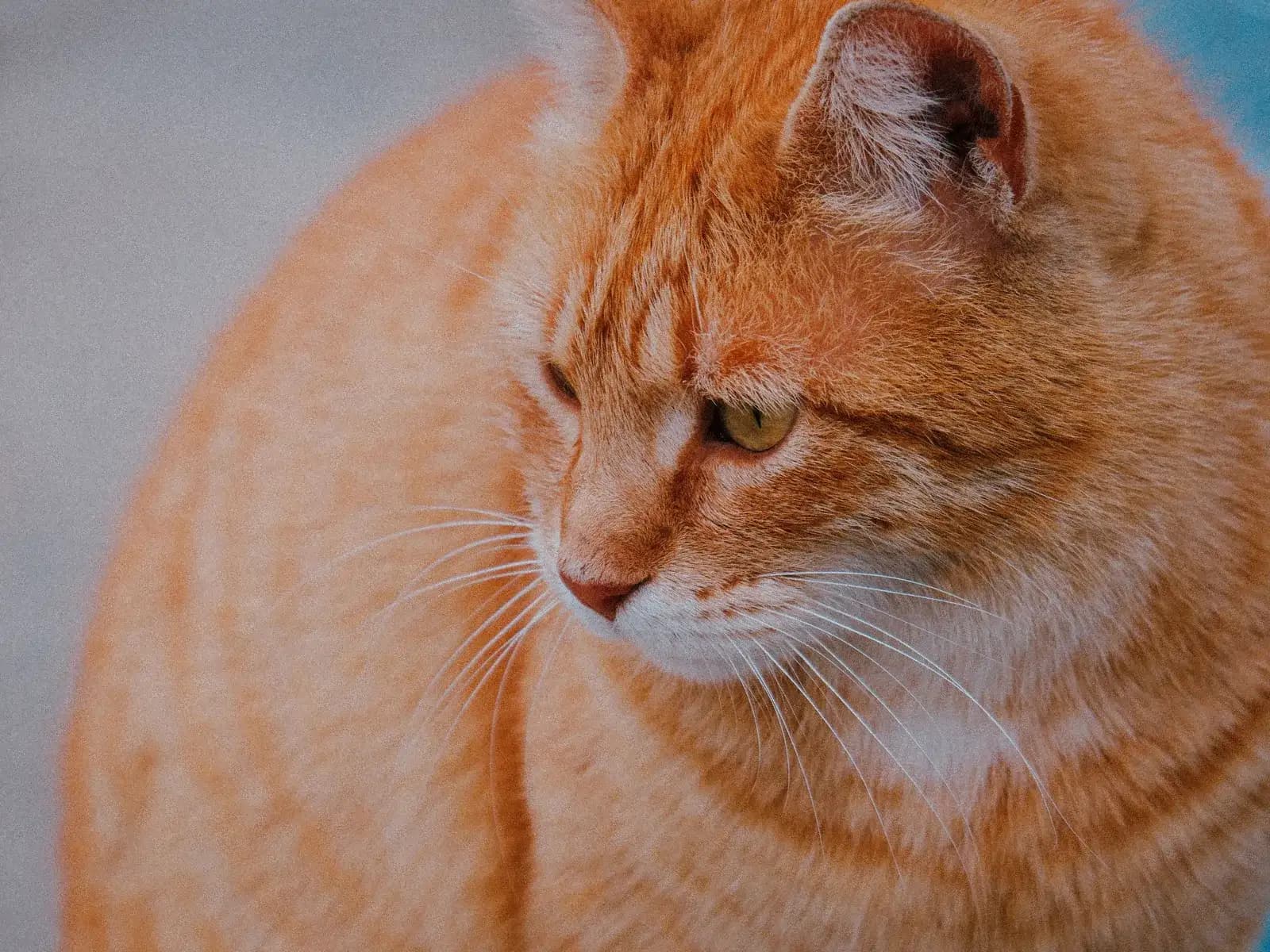
Contents
Breeds worth knowing
Tap a breed for the full profile: temperament, health, price and coat colors, all fact-checked.
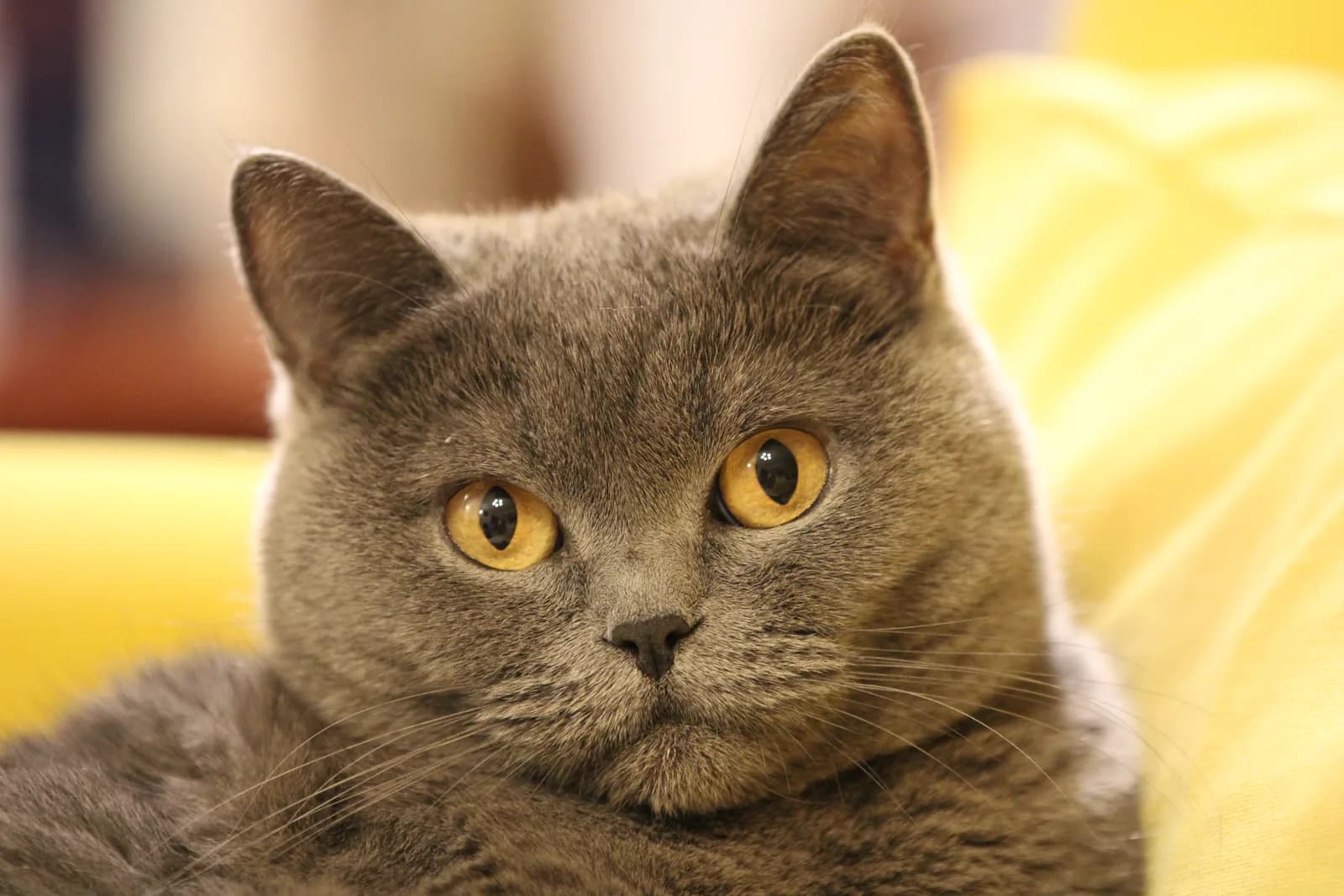
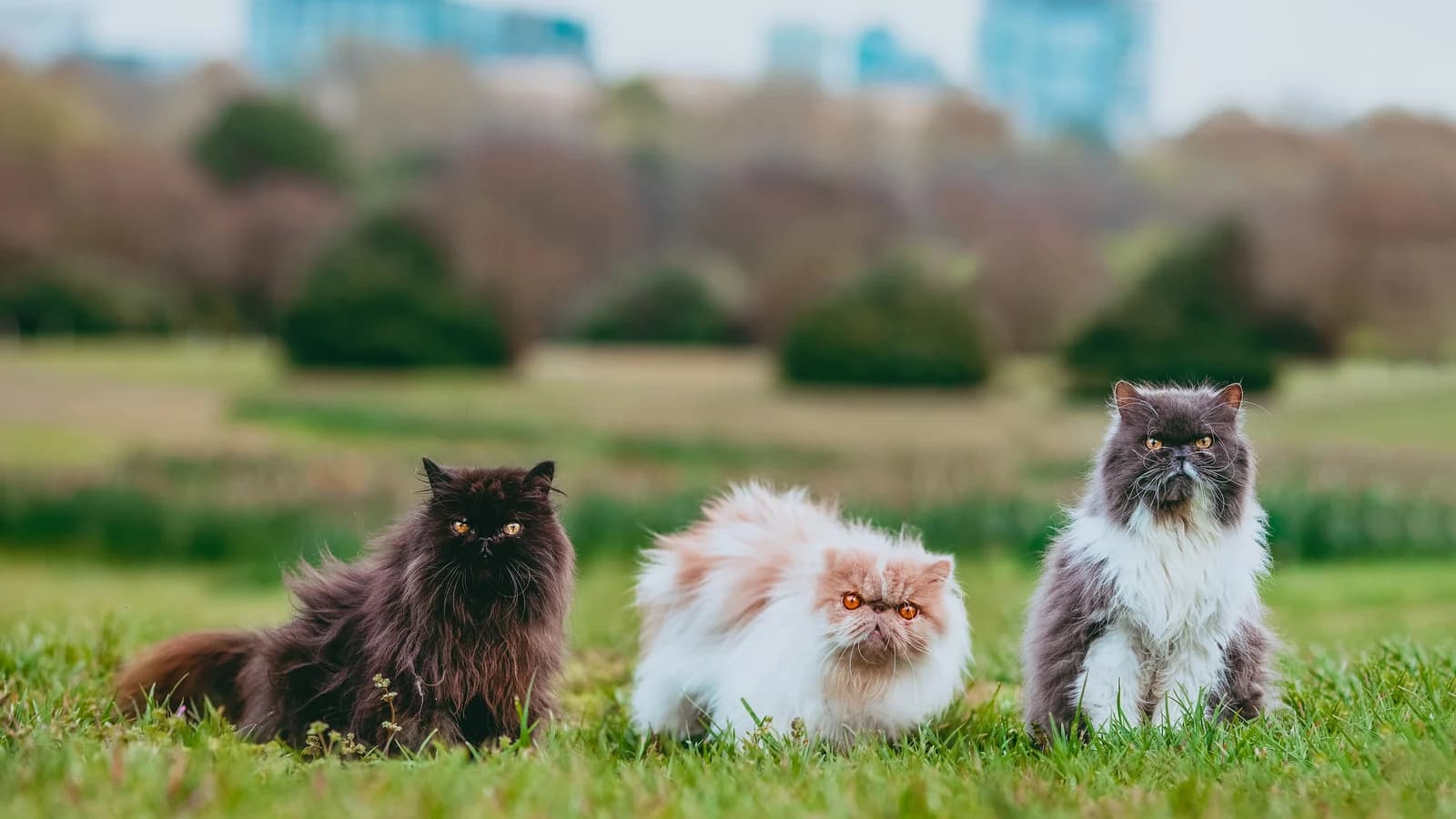
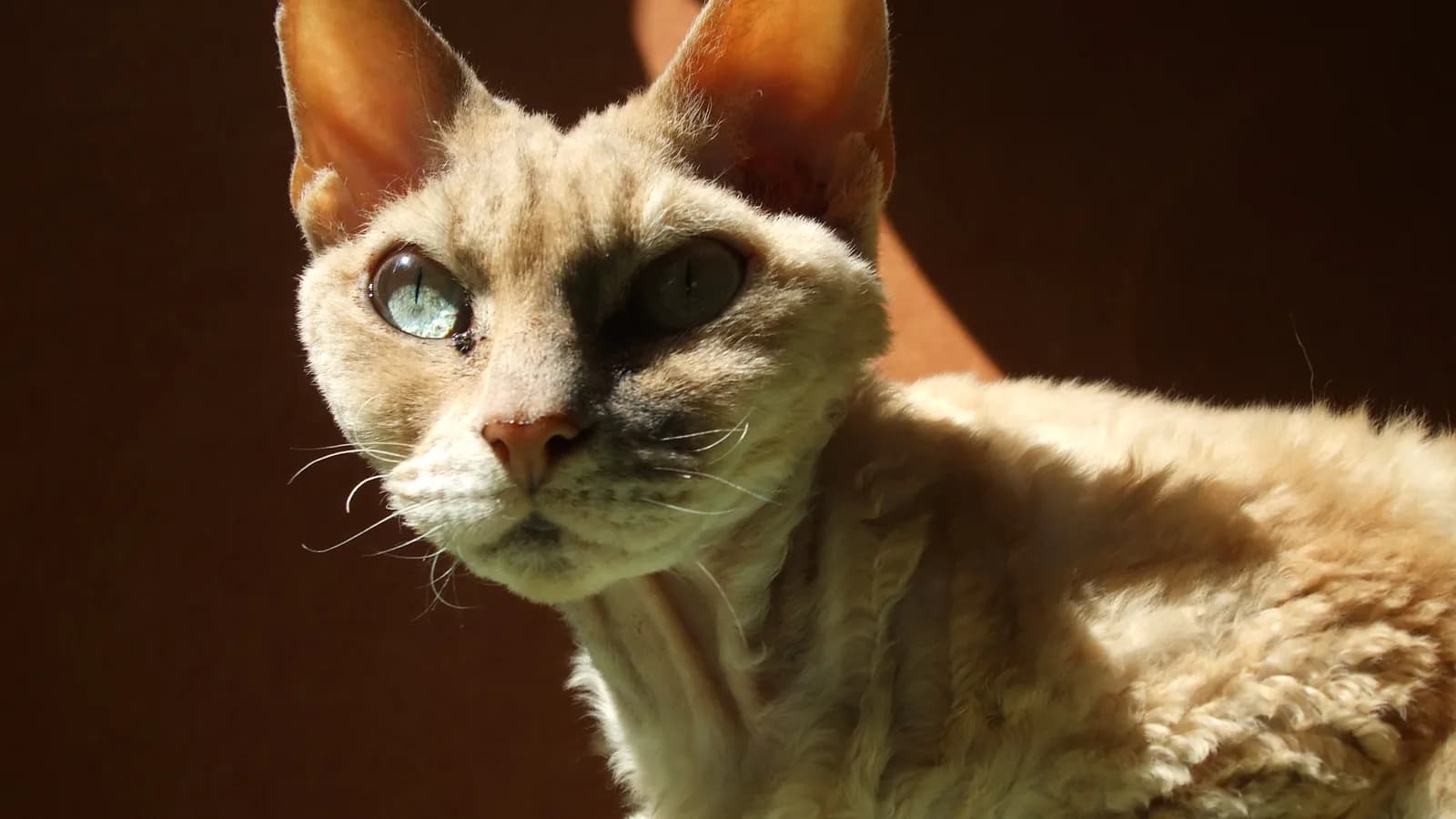
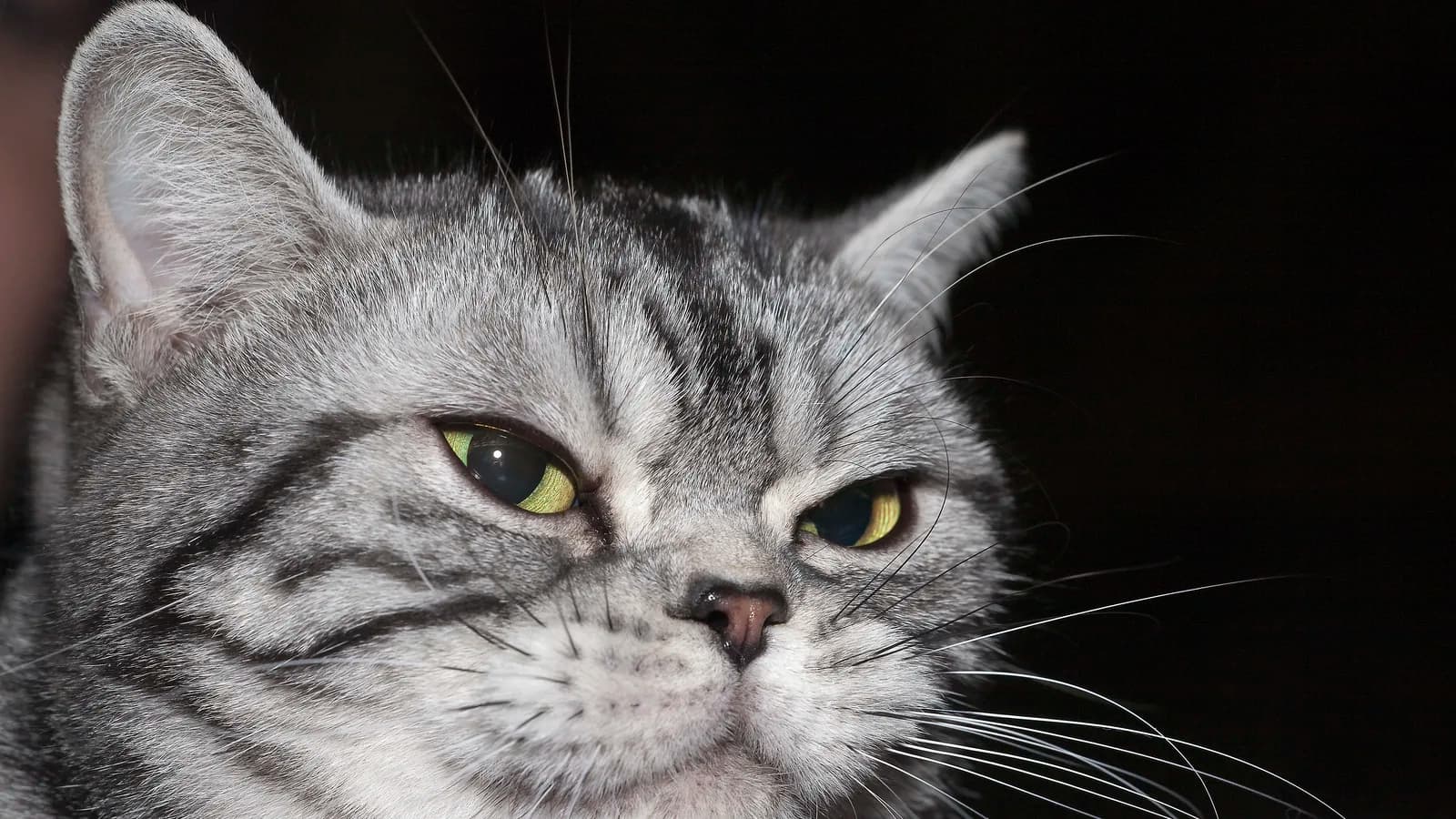
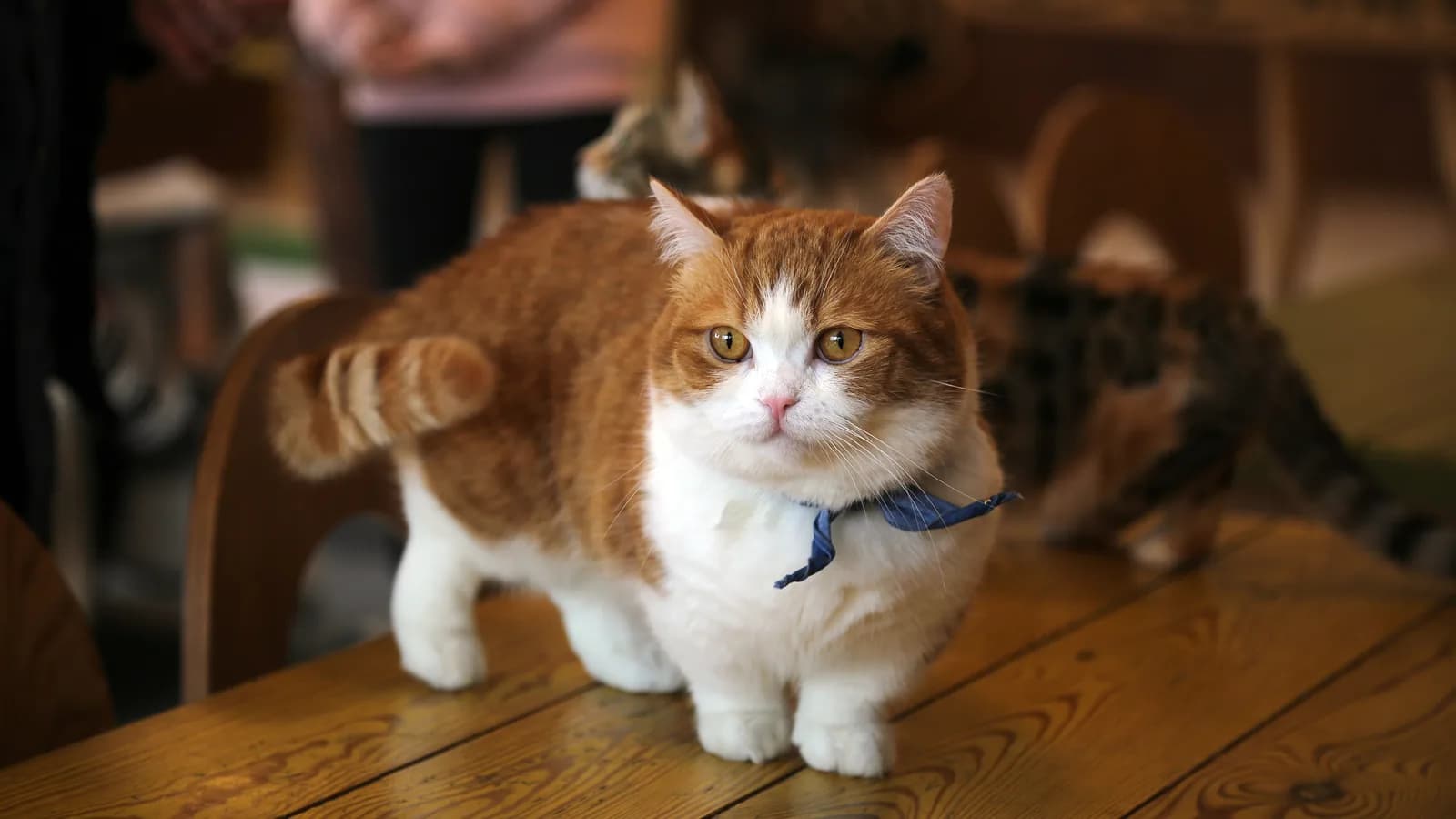
What is an orange tabby cat?
An orange tabby is any cat whose coat runs on , the red-yellow pigment, arranged in one of the four tabby patterns: mackerel stripes most often, classic swirls, spots or ticking. In Britain he is a ginger cat. Older books say marmalade; registries write red. All one cat.
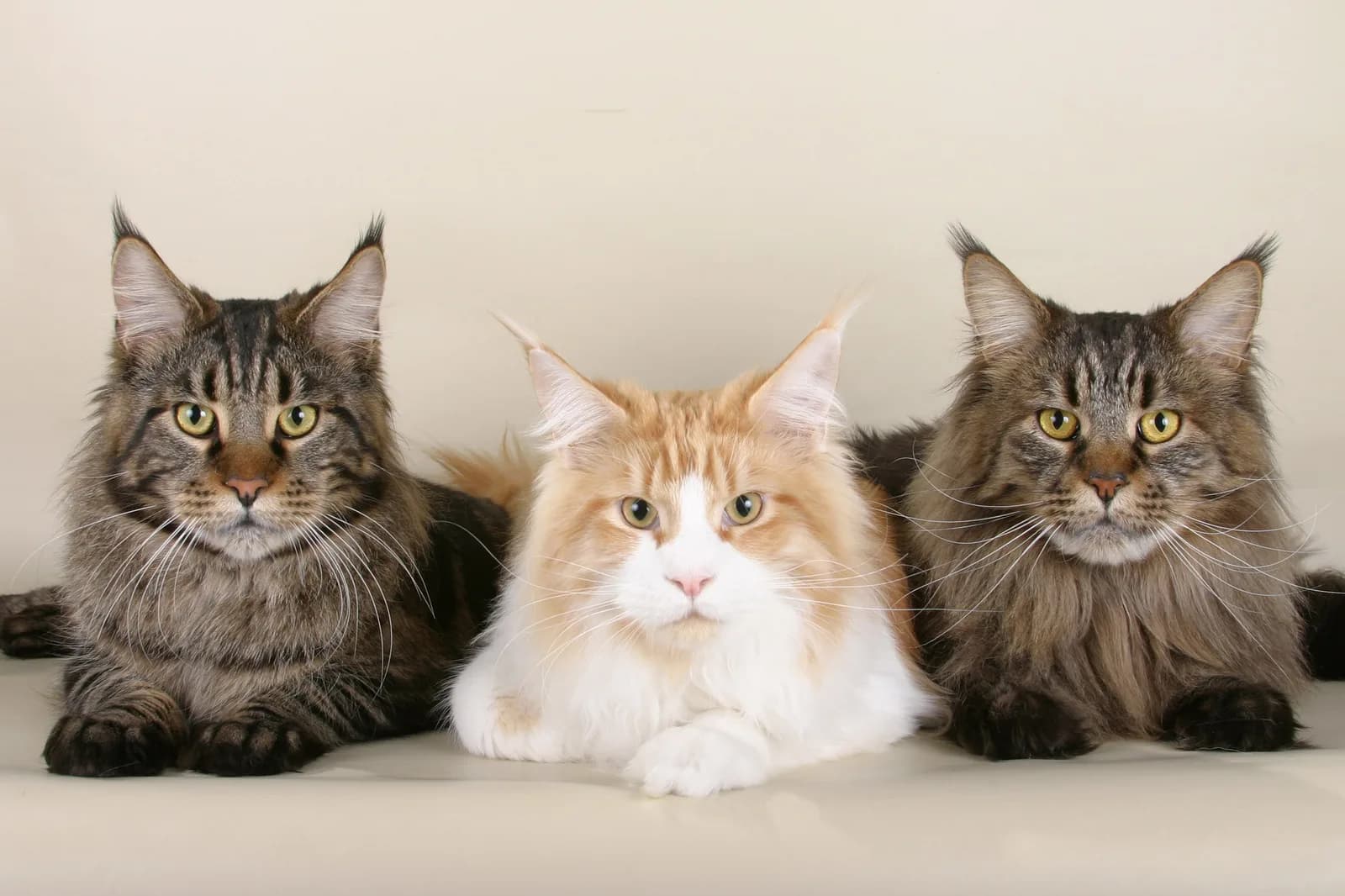
It is a color found across many breeds, from the orange Maine Coon to red British Shorthairs, Persians, Devon Rexes and legions of magnificent non- gingers. So "what breed is my orange tabby" has the usual pattern-page answer: the color will not tell you.
Are all orange cats tabbies?
Effectively yes. UC Davis's veterinary genetics lab states it plainly: a sex-linked red or orange cat will exhibit the tabby pattern regardless of its genotype. The gene that would normally hide the pattern in solid cats does not work on orange pigment, so every orange cat shows his stripes.
The four patterns, in photos
Every orange cat wears one of the four tabby layouts, and on an orange coat they are unusually easy to read. Mackerel is the common one: narrow stripes dropping down the flanks like fish bones. Classic (also called blotched) trades the stripes for wide swirls that often close into a bullseye on the side. Spotted breaks the lines into dots and dashes. And ticked hides the pattern inside each hair, leaving a nearly plain coat with the markings pushed out to the face, legs and tail.
Why orange cats cannot hide their stripes
Solid-colored cats exist because a gene called can switch off the banding in the ground hairs, hiding the tabby layout every cat carries. Orange breaks that trick. In UC Davis VGL's own words: "A sex-linked red/orange cat will exhibit the tabby pattern regardless of whether it is agouti or ." The masking mechanism that produces solid black cats simply does not suppress the pattern when the pigment being produced is .
Geneticists call that relationship : the orange gene sits above the gene in the control hierarchy and overrides it. The breeder community has known the practical consequence for decades. The Cat Fanciers color-genetics reference states it flatly: there are no true solid red or cream colors. Breeders can select for washed-out, low-contrast coats, but a tell-tale M usually survives on the forehead of even the most "solid" red. Why specifically refuses the masking is, honestly, not explained by any source we reached: the fact is solid, the deep mechanism still is not.
That is why a "solid orange" cat, looked at in good light, always resolves into stripes, swirls or freckled ticking. The closest a cat gets to solid orange is the red self of some breeds. There, generations of selective breeding have blurred the markings without ever deleting them.
The 2025 discovery: the orange gene, finally
Cat geneticists knew for decades that orange was carried on the X chromosome and behaved unlike any coat gene in any other mammal. What they could not find was the gene. In 2025, Current Biology published the answer twice in one week: two independent teams, one at Stanford led by Christopher Kaelin and Gregory Barsh, one at Kyushu University led by Hiroyuki Sasaki, landed on the same small deletion, roughly 5,000 base pairs, that switches on a gene called in melanocytes, where it normally has no business being expressed.
The mechanism, as the papers and the OMIA veterinary-genetics database describe it: the wrongly awakened lowers a signalling protein at the last step of the pigment pathway, which shuts down , the black-brown pigment. The cell defaults to making instead, and the cat turns orange. The Kyushu team found the identical deletion in every orange cat they checked, 18 cats first, then 49 more plus an international genome database, and OMIA notes the variant is estimated to be about 900 years old. In the Stanford paper's own words, there is "no apparent homolog for Sex-linked orange in other mammals". The orange cat is running a mechanism evolution appears to have used exactly once.
the year the orange gene was identified
2025
, Current Biology: a 60-year genetic hunt closed by two teams at once
the chromosome that carries orange
X
which is what skews orange cats male
known mammal lineage using this mechanism
1
the paper found no equivalent in any other mammal
Are orange tabby cats always male?
Not always, but the skew is real and the mechanism is textbook. Orange rides the X chromosome. A male cat (XY) needs one orange copy to be fully orange. A female (XX) needs two, one from each parent, which happens less often. A female with one copy becomes a tortie or calico instead, orange in patches rather than all over; the full side-by-side of those two coats lives on our calico vs tortoiseshell page. So orange cats skew male, and female orange tabbies are the less common ticket, all from one chromosome of arithmetic.
Now the correction this page owes you. The famous figure that "80 percent of orange cats are male" appears on every orange-cat page on the internet, and none of them sources it. We chased it through every citation trail we could find, including one that named a specific Cornell survey which does not appear to exist. We found no study, no survey, no registry count behind the number anywhere. The male skew is real (the mechanism guarantees it); the 80 percent figure is a number the internet tells itself. We publish the mechanism and decline to publish the statistic.
| Cat | What it takes to be orange | Result |
|---|---|---|
| Male (XY) | One orange X | Fully orange: the common case |
| Female (XX) | Two orange Xs, one per parent | Fully orange: rarer |
| Female (XX), one orange X | One copy only | Tortoiseshell or calico patches, not an orange tabby |
The 80% figure has no source
Repeated everywhere, cited nowhere: no study or count we could trace stands behind "80% of orange cats are male." The male skew itself is genetically certain; the exact percentage is folklore wearing a lab coat.
Shades of orange: red, cream, and the dilutes
Registry vocabulary calls the intense shade red; add the dilution gene (the same that turns black into blue) and red softens to cream. Dilution is recessive: a cat needs two copies of the dilute variant to wear it. Between marmalade-dark and pale apricot, most of the variation you see is polygenic intensity, not separate colors. And the rule follows the color down: as the breeder references put it, all cream cats are tabbies too. A cream tabby is the orange tabby with the volume turned down, ghost stripes included.
As for the personality every orange-cat meme insists on, the affectionate goofball with one brain cell: no measured study supports an orange personality. The one coat-color behavior study did not flag orange tabbies in its findings, and the meme is doing what memes do. Orange cats are exactly as individual as the rest of the species. That will not stop yours from proving the meme right on purpose.
Orange plus white: the bicolor gingers
Plenty of orange cats also wear white: a blaze, a bib, socks, or patches that push the orange up to the top of the head and tail. That white is a separate gene entirely, the white-spotting locus, layered on top of the orange tabby coat, so an orange-and-white cat is still an orange tabby everywhere the orange shows. The amount of white runs on its own ladder, from a single locket to the nearly all-white van pattern, and that ladder has its own page: our tuxedo cat guide walks it grade by grade. Because the orange underneath still rides the X chromosome, orange-and-white cats skew male exactly as solid gingers do.
Those freckles on the nose and lips: lentigo
Many orange cats collect small dark freckles on the nose, lips, gums and eyelid rims as they mature. The condition is called , and the veterinary dermatology sources describe it as common, benign and orange-linked: flat brown-to-black spots, roughly 1 to 9 mm, produced by a local increase in pigment cells. It is not caused by sun exposure, and it is seen most in orange, calico, tortoiseshell and flame-point cats.
The reading that matters at home is flat versus not flat. Normal spots stay flat and quiet. A spot that grows quickly, rises above the skin, cracks, bleeds or seems painful is no longer a freckle question: that is a veterinary appointment, promptly. Nothing about your own cat's spots gets decided from a web page; if a mark is changing, your vet looks at it.
Famous orange tabbies
The orange tabby has been cast as cinema and comic royalty. Garfield arrived first in print: 19 June 1978, in 41 newspapers, named by Jim Davis after his grandfather James A. Garfield Davis (the "what breed is Garfield" question gets its honest answer on our Persian history page). Hollywood's working ginger was Orangey, the only cat act in film history to take two PATSY Awards, for Rhubarb in 1952 and Breakfast at Tiffany's in 1962, where he played Cat. One honest footnote from his trainer Frank Inn: "Orangey" was a stage name worn by several orange cats across those years, not one thirty-year-old performer.
Add Puss in Boots, Orlando the Marmalade Cat and Churchill's wartime companion Jock, and culture keeps choosing the orange cat for the charming rogue. If yours needs a name worthy of the tradition, our orange cat names page runs on the same science this one does.
The orange tabby field guide
The rest of the album, one look per card: the forehead M every tabby carries, the patterns on long hair, the cream dilutes in daylight, and the bicolor faces. Tap any photo to enlarge it.
The orange tabby is genetics showing off: a color no other mammal makes the same way, wearing stripes it cannot take off, distributed to the boys by chromosome arithmetic. If a ginger runs your home, we would love to see the evidence: share a photo of him through the Share + button and tell us which pattern he wears, mackerel, classic, spotted or ticked, and whether he lives up to the meme.
By Nora · The storytellerFrequently asked questions
How long do orange tabby cats live?
No study measures lifespan by coat color, so no orange-specific figure exists. An orange tabby lives as long as his breed or mix does; the UK's large life-table study puts overall cat life expectancy at 11.74 years at birth.
Are orange tabby cats always male?
No, but most are. Orange is carried on the X chromosome: males need one copy, females need two, so full-orange females are genuinely less common. The oft-quoted 80% male figure has no traceable source; the skew is real, the exact number is unmeasured.
Are all orange cats tabbies?
Effectively yes: the genetics lab at UC Davis states that a sex-linked orange cat shows the tabby pattern regardless of its other genes. The mechanism that hides the pattern in solid-colored cats does not work on orange pigment.
What breed is an orange tabby cat?
Any of many, or none: orange tabby appears in Maine Coons, British Shorthairs, Persians and plenty of other breeds, and in countless non-pedigree cats. The color and pattern carry no breed information.
Are female orange tabby cats rare?
Less common, genuinely: a female needs an orange gene from both parents, while a male needs just one. Exactly how much less common is unmeasured; the famous 80/20 split is repeated everywhere and sourced nowhere.
Are orange tabby cats friendly?
The reputation is unmeasured: no study supports an orange personality, and the one coat-color behavior study did not flag orange tabbies. Individual character and upbringing decide it; the meme is entertainment.
Why does my orange cat have black spots on his nose and lips?
Usually lentigo: a common, benign gathering of pigment cells that shows as small flat dark freckles on the nose, lips, gums and eyelid rims, most often in orange, calico, tortoiseshell and flame-point cats. Flat and quiet is the normal look; a spot that grows, rises, cracks or bleeds should be checked by a vet.
Are orange tabby cats rare?
No. Orange is one of the most common cat colors worldwide; the only mildly uncommon version is the fully orange female.
Why are orange cats called ginger cats?
British English: ginger is simply the UK's everyday word for the orange cat, as marmalade was a generation earlier. Registries use red. All three name the same pheomelanin coat.
This is information, not veterinary advice, and it cannot tell you what is wrong with your cat. Our rule is a simple one: if something is wrong with your cat, call your vet, and call an emergency clinic if it is out of hours. Nothing you read here is a reason to wait.
Sources & references
Data checked against reference bodies (breed registries, allergy research, veterinary schools).
- UC Davis VGL: Agouti (orange cats show tabby regardless of genotype)
- Kaelin et al. 2025, sex-linked orange and ARHGAP36 (Current Biology)
- Toh et al. 2025, ARHGAP36 deletion and orange coloration (Current Biology)
- OMIA 001201-9685: coat colour, orange, in the domestic cat (curated genetics database)
- Kyushu University research release on the ARHGAP36 discovery (samples and X-inactivation context)
- Kaelin et al. 2012, pigmentation patterns in domestic and wild cats (Science)
- Cat Fanciers: color genetics (no true solid red or cream; the surviving forehead M)
- CFA: Coat & Color Descriptions (red, cream, patched tabby vocabulary)
- Catster (vet-reviewed): cat nose spots, lentigo
- Stelow, Bain & Kass 2016, coat color and aggressive behaviors (J Appl Anim Welf Sci)
- Teng et al. 2024, life tables for UK companion cats (J Feline Med Surg)
- Time: the story behind Garfield's creation (launch date and the grandfather)
- Wikipedia: Orangey (the two PATSY Awards and the stage-name history)
This page is a starting point. Every cat is an individual: our profiles spell out the tendencies of each breed, sources included.
 Purr or Pass
Which cat breed is right for you?
Take the quiz