


Cat breeds by trait
Flat-Faced Cat Breeds: The Word Is Brachycephalic, and the Degree Is Everything
The cats with flat faces are called BRACHYCEPHALIC (short-headed), and the breeds that define the look are the Persian family: the Persian itself, its short-coated twin the Exotic Shorthair, and its pointed sibling the Himalayan. This page answers the naming question, then does what most flat-face pages skip. It separates the DEGREES of flatness, because the measured health evidence tracks the degree, not the label.
I write the health pages on this site, so one line before we start: everything here describes cats in general, never your cat. Something wrong with your cat means call your vet; out of hours, an emergency clinic.
 By Priya · The careful one
Contents
Breeds worth knowing
Tap a breed for the full profile: temperament, health, price and coat colors, all fact-checked.
What flat-faced cats are called, and who they are
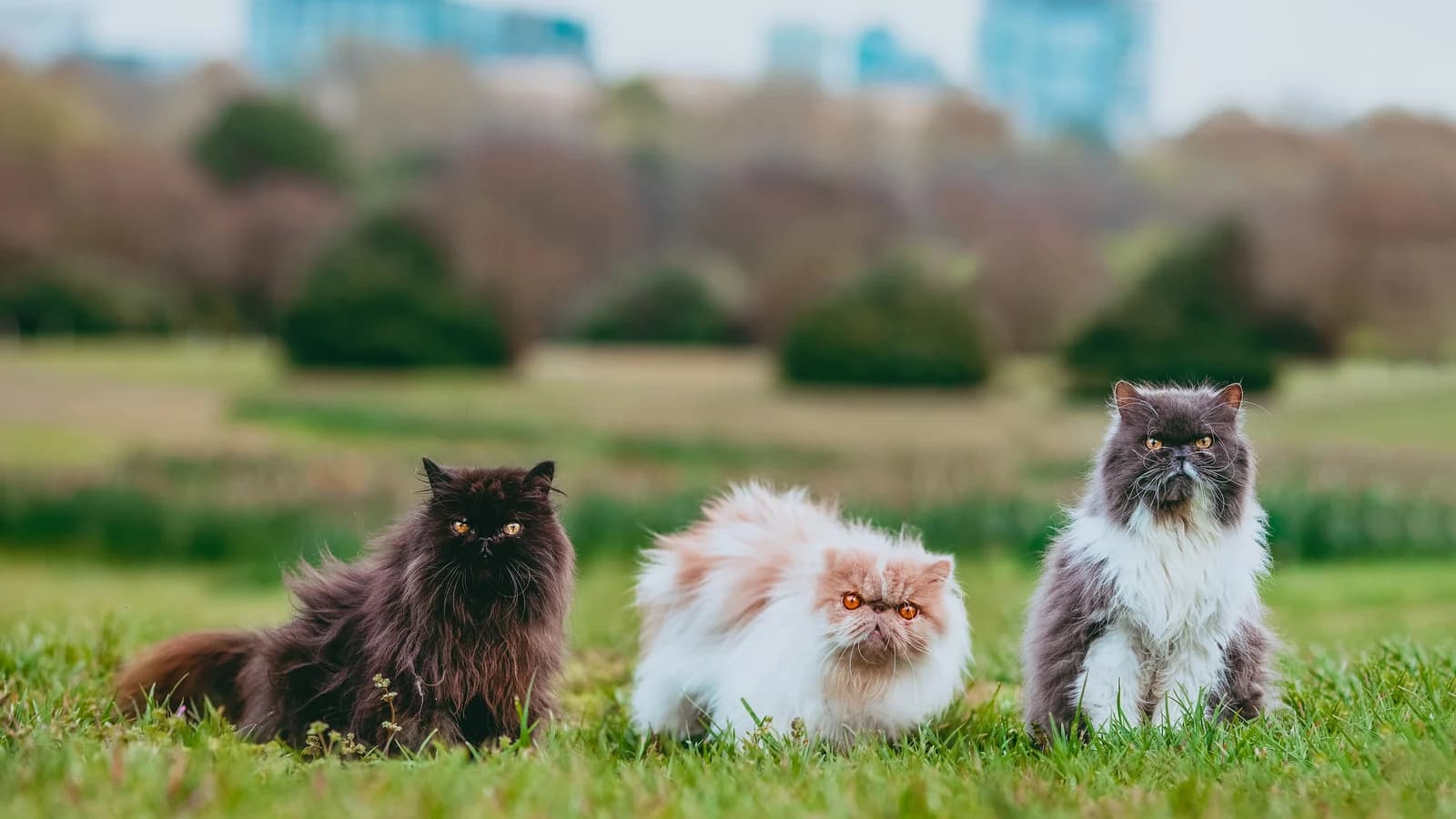
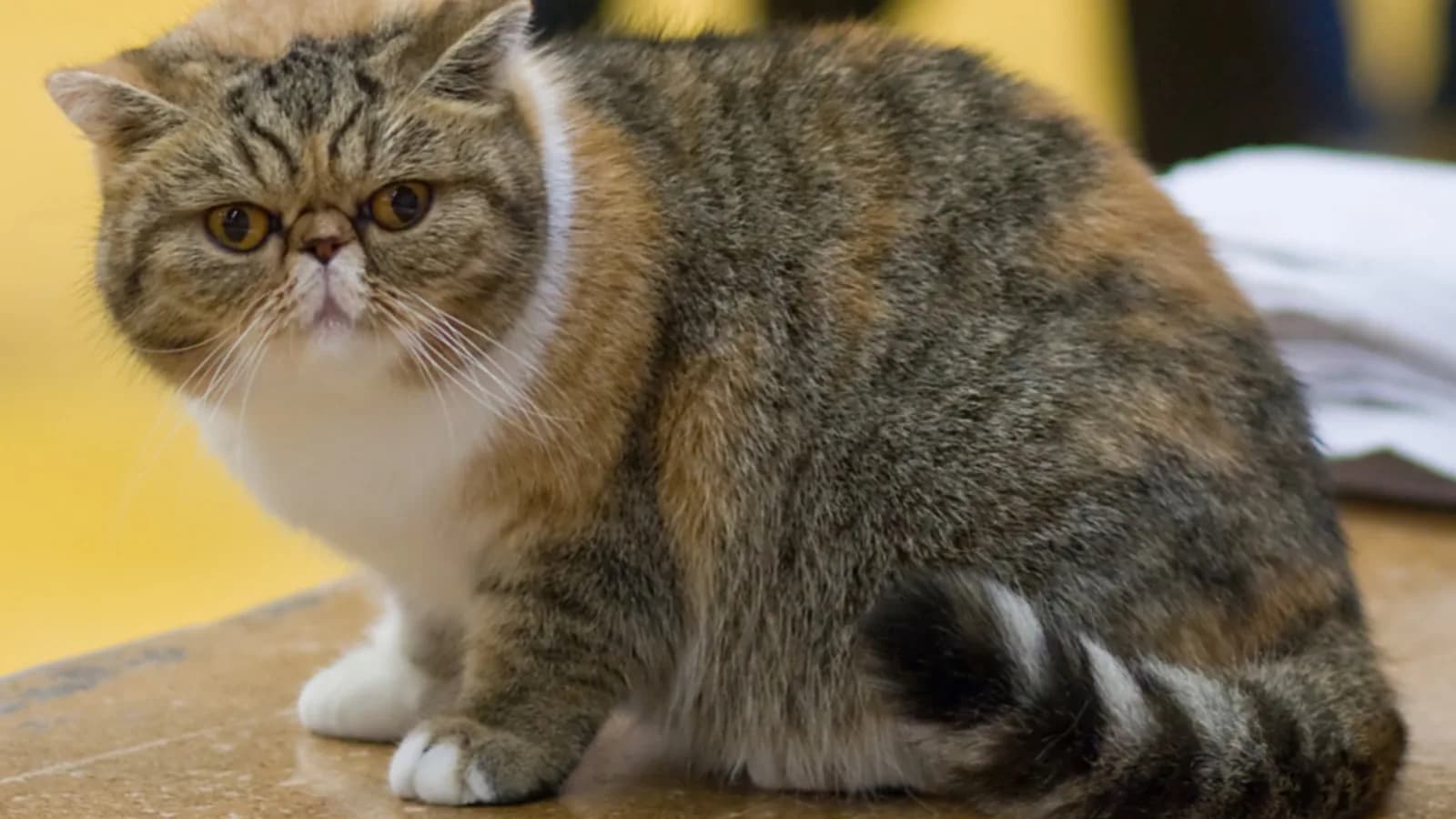
Brachycephalic is the veterinary word: a skull shortened front to back, so the nose sits closer to the eyes and the face reads flat. The full members of the club are the [Persian](/breeds/persian), the [Exotic Shorthair](/breeds/exotic-shorthair) and the [Himalayan](/breeds/himalayan): one family sharing one head architecture. Breeds like the British Shorthair have ROUND faces, which the internet sometimes files here by mistake. Round is a cheek story, flat is a skull story, and the health file below belongs to the skull.
The short version
Flat-faced cats are called brachycephalic. The defining breeds are the Persian, Exotic Shorthair and Himalayan: one family, one skull, three coats.
One breed, several faces: the degree is the story
The single most useful fact on this page: "Persian" covers a RANGE of faces, from the older doll-face type with a visible nose to the extreme flat show type. The measured evidence splits along exactly that line. A 2017 imaging study of 92 Persians found the extreme ("peke-face") group had a smaller brain cavity, and a ventricle-to-brain ratio roughly TEN TIMES that of the doll-face group (0.159 versus 0.015), a pattern consistent with internal hydrocephalus. The doll-face cats sat near the healthy end. The study's own conclusion: selection for extreme brachycephaly should be reconsidered.
A 2021 CT study of 69 Persians made the dose-response direct. The flatter the skull, the more of each eyeball sits outside its bony socket (means of 39.9 to 40.2% in Persians versus 8.8 to 9.9% in domestic shorthairs), the smaller the nasal airways at every measured level, and the more misaligned the teeth. Cats with visible tear staining (30.4% of the study's Persians) had measurably flatter skulls than those without. None of this is a verdict on an individual cat. It is a gradient, and the degree of flatness is the dial.
ventricle-to-brain ratio, extreme vs doll-face Persians
x10
0.159 vs 0.015, 92-cat imaging study, 2017
of the eyeball outside the socket in Persians
~40%
vs ~9% in domestic shorthairs, 69-cat CT study, 2021
of the same study's Persians with tear staining
30.4%
staining tracked with flatter skull indices
What this means day to day
The practical file for a flat-faced household. Breathing that is audible at rest or effortful in heat is worth a vet conversation rather than a shrug. Eyes that overflow need routine face-fold cleaning, and staining that changes character deserves a check. Dental crowding makes tooth care and vet dental checks matter more than in most breeds. And heat is a genuine enemy, because a shortened airway buys less cooling. None of these observations replaces a vet, and the registry paperwork now agrees: 's own Persian breeding policy draws the moderate-versus-extreme line and ties welfare risk to how extreme the type is.
Kidney disease runs on separate rails. The Persian family's PKD story is a gene-testing story, not a skull story, and 's registration policy gates on the PKD test. Each breed profile carries the details in its health section.
- Noisy or effortful breathing at rest: a vet conversation, not a breed quirk to accept.
- Daily face care: the folds and the tear channels are part of owning the face.
- Teeth: crowded jaws need closer dental attention than the average cat.
- Heat: shade, water and cool rooms in summer; the airway has less margin.
- Buying: ask to meet the parents and favor moderate faces; the degree is the dial.
Are flat faces natural?
The head is bred, not found. The Persian's face flattened dramatically over the twentieth century through show selection, and the extreme type is a modern artifact. That history is why the moderate-versus-extreme distinction exists at all, why registries now write welfare language into breeding policies, and why the answer to "are flat-faced cats healthy" is honestly neither yes nor no but WHICH FACE. The measured studies put the doll-face tier close to ordinary cats and load the findings onto the extreme tier. If you love the look, the moderate version of it comes with most of the charm and measurably less of the file.
What to remember: the word is brachycephalic, the breeds are the Persian family, and the health evidence tracks the DEGREE of flatness, not the label. Choose moderate, budget for face care and dental attention, treat heat with respect, and let a vet, not a webpage, judge your own cat's breathing.
By Priya · The careful oneFrequently asked questions
What are flat-faced cats called?
Brachycephalic, the veterinary term for a front-to-back shortened skull. The defining breeds are the Persian, Exotic Shorthair and Himalayan.
Why do Persian cats have flat faces?
Because breeders selected for it: the extreme flat face is a twentieth-century show-ring development, not the breed's original look. The older doll-face type, with a visible nose, still exists and sits closer to ordinary cats in the measured studies.
Are flat-faced cats healthy?
The honest answer is: which face? The measured evidence loads breathing, eye, dental and neurological findings onto the EXTREME tier, while moderate types measure much closer to ordinary cats. Degree, not label, carries the file; and only a vet can judge an individual cat.
Do flat-faced cats have health problems?
The documented risks scale with flatness: smaller nasal airways, more exposed eyes with tear overflow, crowded teeth, and in the extreme type, findings consistent with internal hydrocephalus. A moderate-faced cat from health-focused breeding carries meaningfully less of this. Anything concerning in your own cat means call your vet.
Are flat-faced cats natural?
The breeds are real and beloved, but the extreme face is bred: decades of show selection flattened it, and registry breeding policies now push back toward moderation on welfare grounds.
Are all Persians flat-faced?
No: the breed spans doll-face (visible nose) to extreme show type, and the difference is exactly where the measured health findings split. Our Persian profile documents the tiers.
This is information, not veterinary advice, and it cannot tell you what is wrong with your cat. Our rule is a simple one: if something is wrong with your cat, call your vet, and call an emergency clinic if it is out of hours. Nothing you read here is a reason to wait.
Sources & references
Data checked against reference bodies (breed registries, allergy research, veterinary schools).
- Schmidt et al. 2017, brachycephalic head features and internal hydrocephalus in Persians (J Vet Intern Med)
- Sieslack et al. 2021, brachycephaly grade, exophthalmos, airways and dental malalignment (PLoS ONE)
- O'Neill et al. 2019, 3,235 UK Persians: demography, mortality, disorders
- iCatCare: Persian cats and brachycephaly
- GCCF Persian breeding policy (the moderate/extreme welfare line)
- GCCF Persian & Exotic registration policy (the PKD gate)
- CFA Persian breed standard
- TICA Persian Breed Group standard (covers Persian, Himalayan, Exotic)
This page is a starting point. Every cat is an individual: our profiles spell out the tendencies of each breed, sources included.
 Purr or Pass
Which cat breed is right for you?
Take the quiz