

Scottish Fold
“The round cat with the hard question”
 By Priya · The careful one
Published August 21, 2026Updated August 26, 202611 min read
Contents
 Scottish Fold photos
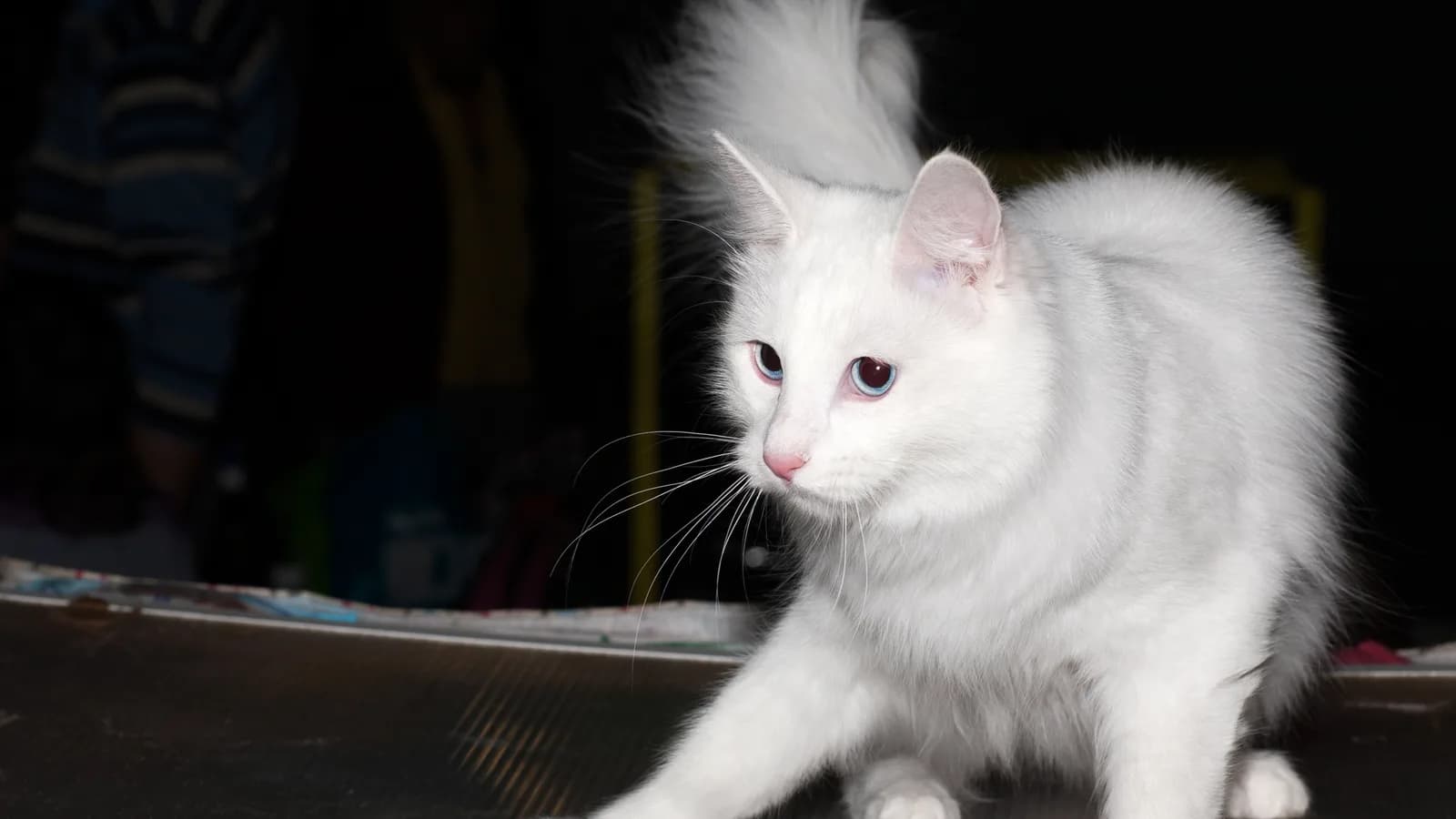
Real photos, so you can see what the breed actually looks like: coats, ear tufts, ruff and build.
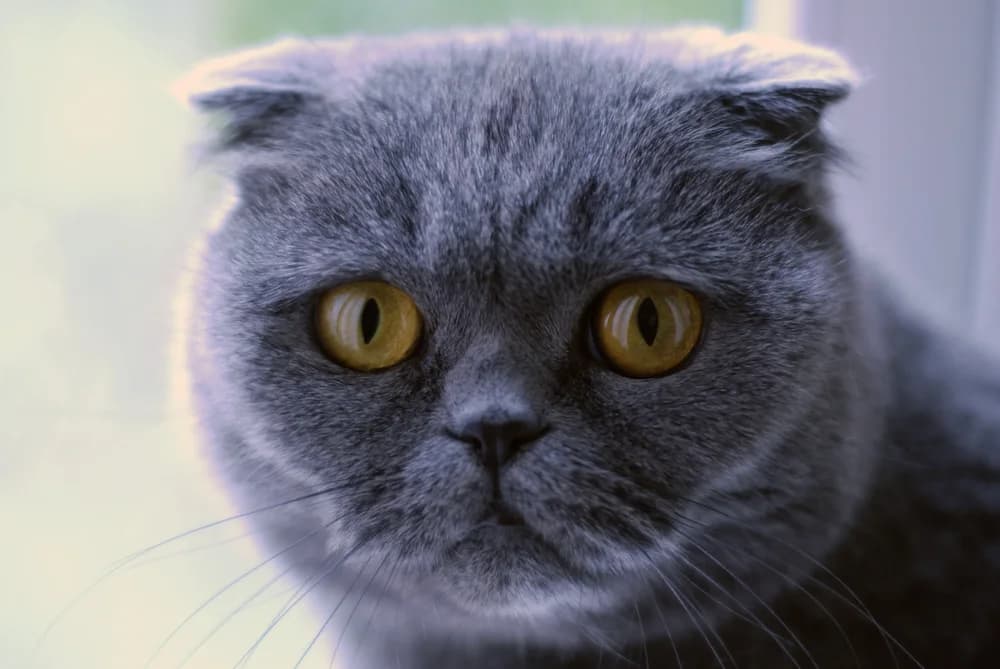
Blue Scottish Fold in side view, folded ears flat against the round head
Photo: Peter Perepelkin · CC BY-SA 3.0 · via Wikimedia Commons
 Vital stats
Origin
United Kingdom
One white barn cat named Susie, found in 1961 near Coupar Angus, Scotland, by shepherd William Ross, carried a spontaneous cartilage mutation. Every Scottish Fold descends from her. The Ross family registered cats with from 1966. The registry stopped, in its own quoted words, "in the early 1970s" on health grounds (RSPCA Australia gives the year 1974). The breed's development then moved to America, on British Shorthair and American Shorthair outcrosses.
Weight
Female
7-10 lb (3.2-4.5 kg)
Male
7-10 lb (3.2-4.5 kg)
Life expectancy
says "11-14+ years" and Purina UK "11-15"; neither cites a study. The genuinely differentiated fact our research found: none of the four large measured-mortality cohorts that exist (two UK studies, one Swedish, one UK reanalysis) gives the Scottish Fold its own row. So NO measured life expectancy exists for this breed anywhere: a finding, not a gap. The ranges above are commonly cited estimates; no measured study exists behind them.
Coats
Blue
Silver tabby
Lilac
Brown tabby
Black
Colorpoint
One of the cat fancy's rare open palettes. All four recognizing registries independently allow every genetically possible color and pattern ('s own class list runs to roughly ninety entries, with a catch-all so nothing falls outside). Australia's alone adds a mink and sepia series borrowed from its Tonkinese conventions. The full map: the colors guide.
Understanding the coats (and their genetics)Size
TICA's quick-reference box says "medium-sized cat, 7-10 pounds" in one range for the whole breed (its own male/female fields are genuinely empty, a template quirk we report rather than fill). Consumer pages run the ceiling higher, to about 13 lb (Purina UK, PetMD). No measured study with a workable sample exists for adult Scottish Fold weight: the one study that weighed any had three males and four females, below its own classification threshold.
Did you know
No Scottish Fold is born with folded ears. Every kitten starts with ordinary upright ears; in the gene carriers, the fold arrives at around three to four weeks, and about half of every litter never folds at all: those become Scottish Straights.
 Personality
 Affection5/5
 Energy2/5
 Intelligence3/5
 Friendliness4/5
 Independence2/5
 Vocal2/5
 Shedding3/5
Compatibility
 Good with children4/5
 Good with other pets4/5
 Apartment friendly5/5
Editorial ratings on our five-point scale, anchored in the registry descriptions and the measured behaviour studies cited on this profile; individual cats vary, and our members' own ratings below are the counterweight.
Still torn between this breed and another?Compare the Scottish Fold trait by trait, or filter every breed by what matters to you. What our members say
What our members say
Nobody has described their Scottish Fold here yet. As soon as the first profiles come in, this is where the community averages will show up: temperament, food, lifestyle.
Describe my Scottish Fold Pros & cons
Strong points
- Measured, not marketed: among the least aggressive, least excitable, most affection-seeking breeds in the one study that ranked it
- A genuinely open color palette almost no purebred matches
- The defining health question has a $60-ish DNA test, and the blinded studies corrected the severity picture in the reassuring direction
- The straight-eared littermates (Scottish Straights) offer the same cat without the gene
Things to consider
- The fold gene IS a cartilage disorder: every single-copy cat shows at least some radiographic change, and two-copy cats are severely affected
- GCCF refuses the breed on stated health grounds, and the Netherlands, Brussels, Flanders and Victoria restrict it by law
- The calm temperament has a documented differential: welfare bodies warn quiet may mask joint pain
- No measured life expectancy exists anywhere: you are buying without that number
 Is a Scottish Fold right for you?
Someone who does the reading first and the vet visits after. This breed rewards an owner who demands both parents' TRPV4 results in writing, keeps the cat lean, watches jumping and tail flexibility without paranoia, and treats the calm as a personality to enjoy and a signal to keep half an eye on.
Is the Scottish Fold right for YOUR home?
Answer a few questions and we'll email you your personalized result.
Take the quiz · 2 min Getting to know the Scottish Fold
The Scottish Fold is the cat fancy's hardest honest conversation wearing its softest face: a round, calm, owl-eared cat whose defining gene is also its defining disease. This profile treats that fact the way the evidence does, precisely, in both directions. This breed's internet is split between sellers who never mention it and headlines that overstate it, and neither serves the person actually deciding.
The look first, since it is why you are here. Round everything ('s own standard says "ROUND in every sense of the word"). An open color palette almost no purebred matches. Folded ears that arrive at three to four weeks in the gene carriers, and littermates who never fold at all and are shown as Scottish Straights. The longhaired version answers to Highland Fold at the pet store, and "Scottish Fold Longhair" at every registry.
The temperament is measured, not marketed. In the one study ranking this breed among twelve, the Fold scored among the least excitable, least aggressive and least nervous, with top-three friendliness and affection demand. The caveat this breed uniquely requires travels with it. Cats Protection warns the famous calm "may actually be caused by the pain they are experiencing," and a 2020 facial-landmark study found Folds' neutral faces scoring more pain-like than cats actually recovering from surgery, with two explanations the paper declines to choose between. Nobody can tell you from a website whether your quiet cat hurts; a vet with their hands on the cat can.
The health section below carries the full three-beat story: the TRPV4 mechanism (essentially all single-copy cats show some radiographic change), the blinded-study correction (clinical signs were uncommon and mild in the two genotype-controlled studies), and the two-copy severity that explains why fold-to-fold breeding is banned by rule, by Australian registry policy, and by Victorian law. The price page shows the market consequence. Folded ears cost about $1,000 more than straight ears from the same litters: a premium that buys the look and the question together.
And the law, because this is the one breed on this site where "is it legal where I live" is a real question: the legal page maps it precisely. Not banned anywhere in the UK despite the headlines (Scotland is a licensing grey zone, not a ban). Owning new ones banned in the Netherlands from 2026. Breeding banned in Flanders since 2021, and everything including keeping restricted in Brussels since 2019. Named verbatim in Victoria's breeding code. The Munchkin cross sold as the Scottish Kilt gets its own careful page, and the British Shorthair comparison explains the one-way outcross gate that keeps this breed viable at all.
 Health: what to watch for
A few predispositions are well documented. The good news: they can be screened for or avoided by choosing a reputable breeder and keeping an eye on the right signals.
This is information, not veterinary advice, and it cannot tell you what is wrong with your cat. Our rule is a simple one: if something is wrong with your cat, call your vet, and call an emergency clinic if it is out of hours. Nothing you read here is a reason to wait.
Osteochondrodysplasia (the fold gene itself)
Defining, DNA-testableThree beats, in the evidence's own order. The mechanism: one dominant TRPV4 variant (mapped in 2016) folds the ear cartilage and alters cartilage mechanosensing body-wide. Changes localize to the distal limbs and tail, and essentially all single-copy cats show at least some radiographic change, which is the sense in which welfare charities write that "all" Folds are affected.
The correction: the only two blinded, genotype-controlled studies both found heterozygous disease milder than the older case reports implied (one of twelve single-copy cats with clinical signs in the Italian study, no progression over 18 months in those re-examined; "much milder radiological signs than previously published" and no clinical signs in the blinded US survey), small samples both. The severe case: two-copy cats develop early, severe, deforming disease. That is why fold-to-fold breeding is banned by CFA rule (since 1 May 2022), by Australian registry policy, and restricted under Victorian law.
Symptoms to spot
Lameness, reluctance to jump, a stiff or stilted gait, a short thick inflexible tail, swelling around the hocks, or a cat that stops doing stairs. TICA's own page says stiffness or pain on tail handling means the veterinarian immediately, and any of these signs at any age is a vet visit, never a wait.
How common
Radiographic change: essentially universal in gene carriers at some degree. Clinical diagnosis: 1.1% of 1,131 Australian Folds in veterinary records (the study's own authors call that an undercount); no US, UK or Canadian population figure exists.
Screening & prevention
Ask for both parents' TRPV4 results; keep the cat lean; treat gait, jumping and tail flexibility as things worth noticing for life. A 2026 finding closes one loophole: about 1 in 8 gene carriers (a 7-cat subgroup) straighten visually with age, so straight ears never substitute for the test.
Genetic test
TRPV4 DNA test (UC Davis VGL among others); VGL labels even a single copy 'affected'. Both parents' results in writing is the buyer's floor.
Polycystic kidney disease variant (PKD1): a different gene
Screenable, ancestry-linkedEntirely separate from the fold gene, and never to be conflated with it. A Japan-scoped 2023 study (1,281 cats at a Tokyo hospital) found the PKD1 variant, classically a Persian-lineage disease, in 6.9% of 87 Scottish Folds tested (odds ratio 5.1 versus other breeds). The plausible route is documented history: the breed's founders outcrossed to Persians among other breeds in the 1970s. No US, UK, Canadian or Australian breed-specific figure exists.
Symptoms to spot
Often none for years; increased drinking and urination, weight loss or poor appetite in an adult cat are a vet call, not a wait, and never a home diagnosis.
How common
6.9% of 87 Japanese Scottish Folds carried the variant (one study, Japan-scoped); no figure exists for our four markets.
Screening & prevention
Ask whether the parents were PKD1-tested alongside TRPV4; the combined panel makes 'yes' easy for a good breeder.
Genetic test
PKD1 DNA test; UC Davis VGL sells a combined TRPV4-plus-PKD1 bundle for this breed precisely because breeders screen both at once.
Heart (HCM): no breed-specific evidence exists
Good to knowStated as the finding it is: TICA's page recommends HCM screening for the breed, but our research found no Scottish-Fold-specific HCM gene test, no breed case series, and no population figure anywhere. UC Davis VGL's catalog lists breed-specific HCM tests only for the Maine Coon and Ragdoll. TICA's advice reads as general good practice for any purebred, not evidence of a breed-specific risk.
Symptoms to spot
As for any cat: labored or rapid breathing, open-mouth breathing or lethargy are same-day calls; open-mouth breathing or sudden hind-leg paralysis is an emergency.
How common
No Scottish Fold figure exists in the literature our research reached.
Screening & prevention
Nothing breed-specific to schedule; mention the breed at routine checkups and follow your vet's lead on any murmur.
Genetic test
None breed-specific; echocardiogram is the screening tool where a vet advises one.
The folded ears and ear health
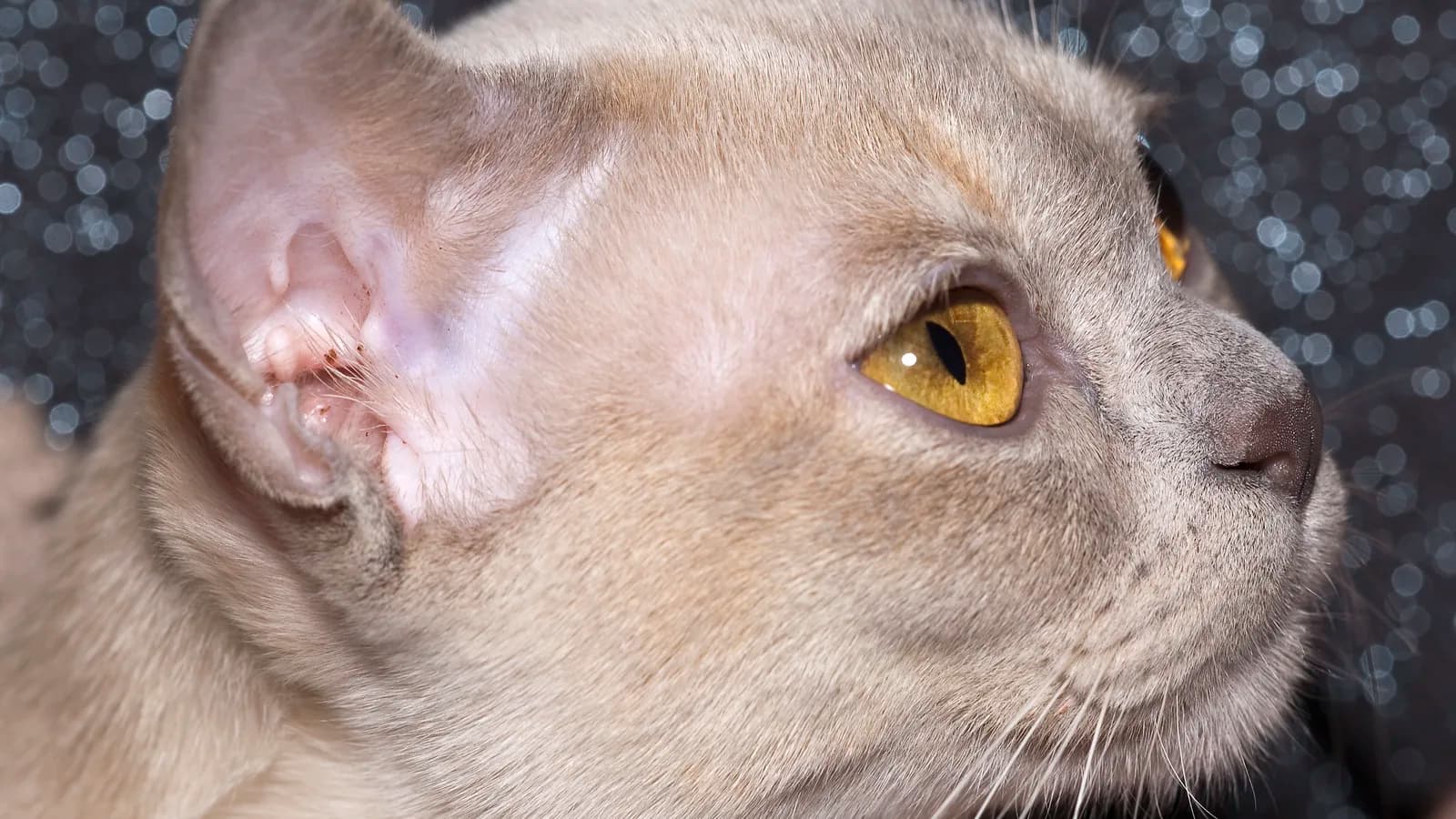
Honest evidence level: no study either wayConsumer sites widely claim the folded ear traps wax or breeds infections. The registries and institutional sources our research read either deny a special risk or stay silent, the consumer claims are uncited, and no study exists in either direction. We publish that as the state of the evidence rather than picking a side. What the fold does affect, per Cats Protection: ear-based communication with other cats may read differently.
Symptoms to spot
The same as any cat's ears: head shaking, scratching at the ears, discharge, odor or redness are a vet visit; nothing about the fold changes that rule.
How common
No measured figure exists; the claim itself is unstudied.
Screening & prevention
Look at the ears during normal grooming; clean nothing deep; let your vet handle anything that looks irritated.
Genetic test
Not applicable.
Go deeper on health
Prevention, warning symptoms, costs and insurance: our guides, researched and sourced.
 Grooming & living with one
Grooming
Weekly brushing for the shorthair, several times a week for the Highland (longhair), per the registries' own cadence. Monthly bathing: optional per , on condition per . The folded ears themselves: registries and institutional sources either deny or stay silent on any special infection risk, widely repeated consumer claims are uncited, and no study exists either way. So we state the honest level of evidence: check ears during normal grooming, and let your vet see anything that looks irritated.
Living together
The measured profile (least aggressive toward people AND cats of the twelve breeds ranked, high affection demand) makes the Fold an easy housemate on paper, and 's "quiet but not placid" homebodies line matches. Gentle children and calm resident pets fit well. The one breed-specific rule: teach everyone in the house that this cat's jumping, gait and tail are worth noticing. Reluctance that looks like laziness deserves a vet conversation, not a shrug.
 Food & diet
General feline guidance applies, made sharper by the joint disease: weight management matters more in a breed whose cartilage carries a known variant. Two evidence notes from the dossier's own reading. Omega-3 supplementation has real evidence for feline osteoarthritis pain; chondroitin-glucosamine does not (a systematic-review finding). And any supplement or dosage decision belongs to your vet, not a label.
 Price & budget
$1,500 to 4,500
Price of a kitten from a registered breeder, in the United States
This price reflects the quality of the breeding program: parents' health tests, registry pedigree, socialization. A very low price should raise a red flag. The real cost, though, plays out over the years.
Find a verified breederKitten price, by market
United States
$1,500 to 4,500
United Kingdom
£300 to 1,600
Canada
CA$160 to 2,000
Australia
A$3,000 to 4,000
Each figure is that country's real market price, researched separately, not a conversion of the others. The smaller line is only there so you can gauge one against your own money: European Central Bank reference rates of 2026-09-18, refreshed daily.
The Scottish Fold in the US, UK, Canada and Australia
| Measure | United States | United Kingdom | Canada | Australia |
|---|---|---|---|---|
| Pet-quality kitten (registered breeder) | $1,500-4,500 (nine named sources) | £50-1,200 live listings; no registry card exists | CA$160-2,000 (marketplace samples) | A$3,000-4,000 (one publishing breeder) |
| Registry status | TICA + CFA recognize (CFA champ. 1978/1992/2022 by division) | GCCF refuses: Red status, "known serious health problems (osteochondrodysplasia)" | CCA-AFC recognizes Fold, Straight AND Foldex | ACF recognizes, with an enforced breeding policy |
| Fold-to-fold breeding | Prohibited by CFA rule since 1 May 2022 | No licensed-breeder pathway likely (Scotland licensing conditions per Cats Protection) | Against every registry's outcross rules | Victoria: prohibited outside an approved program |
| Legal restrictions | None found; pet-purchase (lemon) laws apply breed-blind | None; Cats Protection campaigns for a breeding ban | None found | Victoria names the breed in its heritable-defects Code |
| The DNA test | UC Davis VGL, TRPV4 (single copy = 'affected') | Commercial labs offer it | Available via US/UK labs | Available; Victoria's Code effectively requires genotype knowledge |
Four markets, four different legal and registry pictures; no figure converts into another. Prices are August 2026 and expire with the quarter.
Work out your food budget
Type of food
Estimated monthly budget
$13
≈ 2.2 oz (63 g) per day
A ballpark figure, food only, using the same arithmetic as our portion tool (resting energy requirement × 1.2, a neutered adult). Real needs vary with age, activity level and body condition. Ask your veterinarian for advice.
 Verified catteriesThe registry-checked directory, plus a kitten alert near you. Filter it by breed.
 Should you insure a Scottish Fold?
Our sources list several predispositions in the Scottish Fold: Osteochondrodysplasia (the fold gene itself), Polycystic kidney disease variant (PKD1): a different gene, Heart (HCM): no breed-specific evidence exists, among others. A predisposition is not a foregone conclusion, and many of these cats live their whole lives without ever developing anything. It does change the nature of the follow-up, though: you monitor, sometimes for life, and it's that monitoring that weighs on a budget, more than a one-off accident.
One thing to weigh before deciding: this is a cat you will live alongside for well over a decade, and that is the span the real cost is spread across, premiums and care alike. Where a breed has a measured life expectancy that differs from the figure usually quoted, we say so in the lifespan section above rather than repeating the quoted one here.
 Scottish Fold cats in our community
No Scottish Fold here yet
Got one? Add a photo and yours gets to open this page.
 The vet's take
Veterinary review
Are you a vet?
Your professional read belongs here: every verified practitioner can leave a note, published once our editors have reviewed it.
Sign in and get your license number verified. We check it in the public register, we never ask for or keep a copy of your diploma, and your number is never published.
 Frequently asked questions
+How much is a Scottish Fold cat?
From named sellers, August 2026: roughly $1,500 to $4,500 at US catteries (marketplaces from $800), £50 to £1,200 on live UK listings with crosses mixed in, CA$160 to $2,000 on Canadian marketplaces, and A$3,000 to $4,000 at the one Australian breeder that publishes a price. Folded ears run about $1,000 above straight-eared littermates at the US catteries pricing both.
+Are Scottish Fold cats in pain?
Not every cat, and nobody can tell you from a website. What the evidence says: every gene carrier shows at least some cartilage change on X-ray, the two blinded studies found clinical signs uncommon and mild in single-copy cats, two-copy cats are severely affected, and welfare charities warn that a very quiet Fold's calm can mask joint pain. Lameness, stiffness, reluctance to jump or a rigid tail mean a vet visit.
+Why are Scottish Fold cats banned in some countries?
Because the ear-fold gene is a body-wide cartilage disorder. The Netherlands bans owning new ones from 1 January 2026, Brussels has banned breeding, buying and keeping since 2019, Flanders bans breeding and trading since 2021, and Victoria (Australia) prohibits fold-to-fold breeding outside an approved program. The breed is NOT banned anywhere in the UK, whatever the headlines say.
+How long do Scottish Folds live?
Honestly: no one has measured it. None of the four large mortality studies gives this breed its own row, so no measured life expectancy exists anywhere. TICA says 11-14+ years and Purina UK 11-15, commonly cited estimates with no study behind them.
+Are Scottish Fold cats hypoallergenic?
No. All cats produce the Fel d 1 allergen, no breed is hypoallergenic, and no allergen study has ever been done on Scottish Folds specifically, in either direction.
+Do all Scottish Folds have osteochondrodysplasia?
Every cat carrying the fold gene shows at least some cartilage change radiographically, which is what 'all Folds are affected' means. How many develop painful clinical disease is a different question: uncommon and mild in the two blinded single-copy studies, near-universal and severe in two-copy cats, which is why fold-to-fold breeding is banned.
+What is the difference between a Scottish Fold and a Scottish Straight?
The same litters produce both: about half the kittens inherit the fold gene and fold at three to four weeks, the rest stay straight-eared and are shown as Scottish Straights. A genuinely gene-free Straight does not carry the fold's cartilage disorder, but 1 in 8 carriers straighten with age in one small study, so only a DNA test settles a cat's status.
+Do Scottish Fold cats shed?
Yes, year-round with spring and fall peaks: a weekly brush for shorthairs, several times a week for the longhaired Highland Fold. No source suggests reduced shedding for this breed.
+How big do Scottish Fold cats get?
TICA's box says 7 to 10 lb (3.2-4.5 kg) for the whole breed, with consumer pages running the ceiling to about 13 lb. No measured weight study with a real sample exists; the breed reads medium and round rather than large.
+Are Scottish Folds friendly?
Measurably yes, in the one study that ranked the breed: top-three friendliness and affection demand among twelve breeds, with the lowest tiers of aggression, excitability and nervousness. CFA calls them quiet but not placid homebodies.
+Do Scottish Folds have ear problems?
The infection claim you see online is uncited: registries and institutional sources deny or stay silent, and no study exists either way. Treat the ears like any cat's (look, don't dig, vet for irritation), and know the fold can change how other cats read ear signals.
 Community questions
Got a question this page doesn't cover? Ask it: the best ones get published here with their answer.
Sources & references
Data checked against reference sources (TICA and CFA standards, genetics laboratories, veterinary schools).
- TICA: Scottish Fold breed
- TICA: Scottish Straight breed
- CFA: Scottish Fold
- GCCF: Unrecognised Breeds (the Red-status entry)
- Gandolfi et al. 2016, the TRPV4 discovery study
- Sartore et al. 2023, genotype-controlled radiographic study
- Rorden et al. 2021, blinded radiographic survey
- Velie et al. 2023, Australian VetCompass prevalence study
- Takanosu & Hattori 2020, the homozygous cross-breed cases
- Ukawa et al. 2026, the 2,029-Fold genotype trend study
- Matsumoto et al. 2026, the 'cryptic fold' finding
- Shitamori et al. 2023, the PKD1 variant study
- Takeuchi & Mori 2009, the 12-breed behavior profiles
- Finka et al. 2020, facial landmarks and pain features
- UC Davis VGL: Scottish Fold (TRPV4) test
- Cats Protection: Scottish Fold cats
- RSPCA Australia: Scottish Fold welfare problems
- RVO (Netherlands): the 2026 keeping ban
- Victoria: Code of Practice for breeding animals with heritable defects

Worth keeping a paw on
Pin this profile
To compare later, or to show someone still torn between two breeds. One click and it sits in your board.
Pin it on Pinterest
 Purr or Pass
Still deciding? Find the perfect breed for your home.
A quick quiz that factors in your lifestyle, your kids and your other pets.
Which breed fits my home?Keep exploring
The floor belongs to our members. Keep it kind, links are not allowed, and images go through moderation before anyone else sees them.