


Cat breeds by trait
Hairless Cats: Three Genes, Five Breeds, One Honest Guide
The hairless cat is the fancy's most argued-about look, and the first thing worth knowing is that it is a LOOK, not a gene. Science has traced at least three completely unrelated mutations that strip or thin a cat's coat, and the breeds that carry them are not one family. Any page that says "the hairless gene" in the singular is wrong before it starts.
Here is the honest map. Which gene makes which breed. Why Britain's registry refuses two of them by name. What the care contract really involves. And the answer to the allergy question everyone actually came for.
 By Priya · The careful one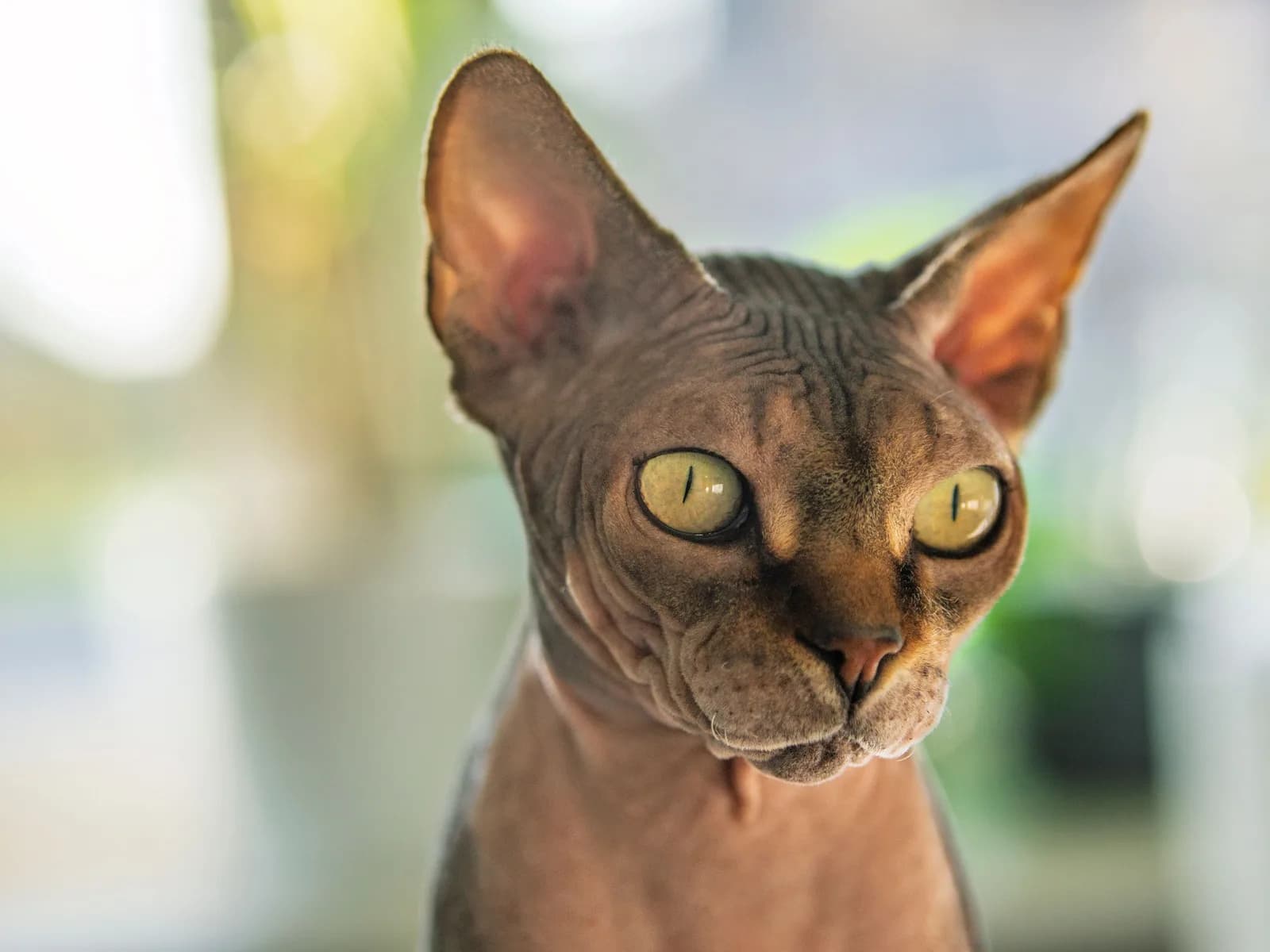
Contents
Breeds worth knowing
Tap a breed for the full profile: temperament, health, price and coat colors, all fact-checked.
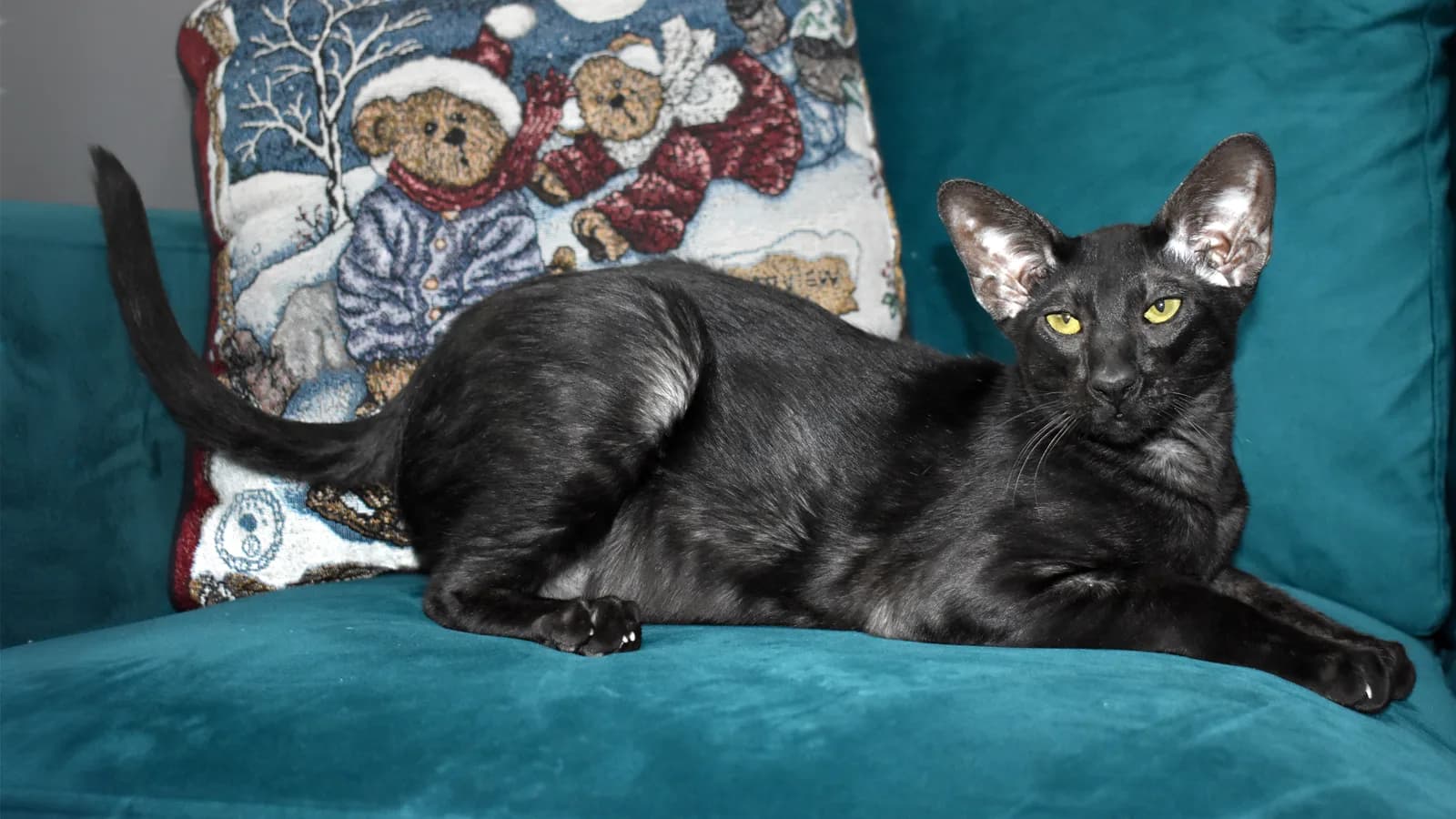
Three genes, not one: the map
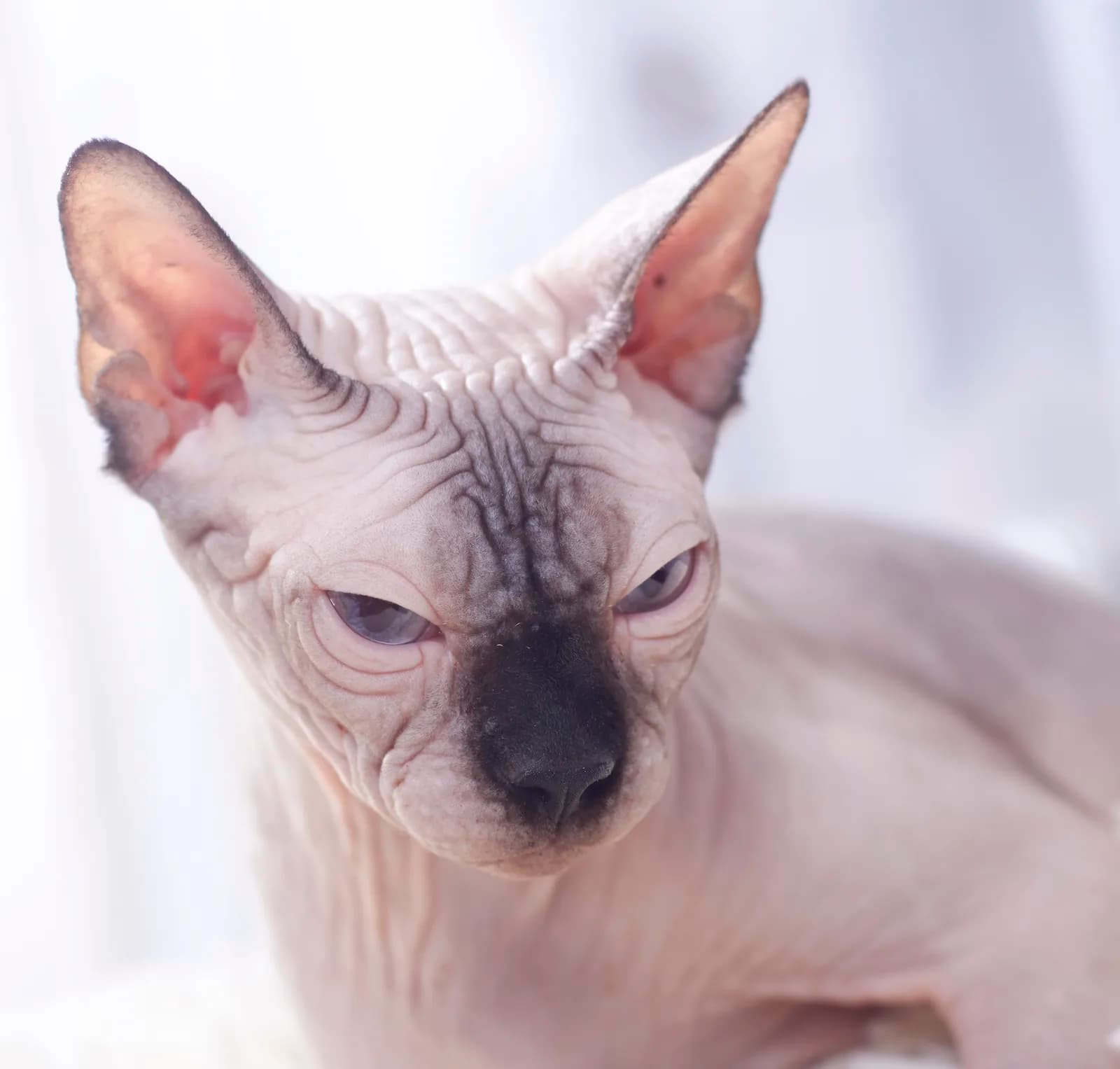
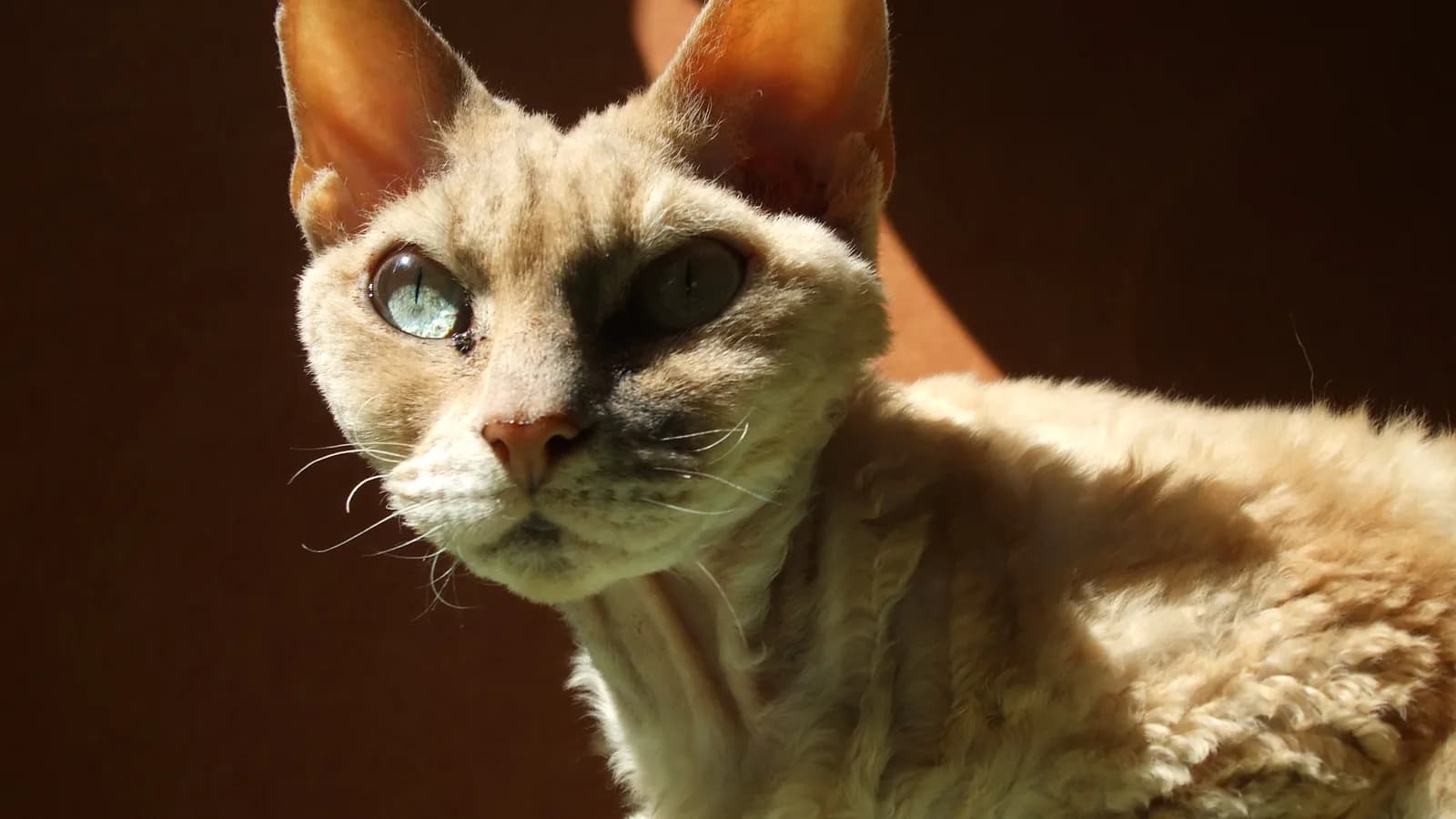
The Sphynx is hairless by a recessive mutation in KRT71, a hair- gene. The same 2010 paper that proved it also showed the Devon Rex's CURL is a different mutation of the same gene, with a strict pecking order (normal coat beats hairless, hairless beats curl). The Donskoy, Russia's hairless cat, got there by a completely different route. Its hairlessness is DOMINANT, dose-dependent, and its gene is still unidentified: KRT71, the obvious suspect, was specifically tested and ELIMINATED by a 2013 study.
The Peterbald carries the Donskoy's dominant gene on an Oriental Shorthair frame. Its coat can land anywhere from fully bald to brush-coated to, rarely, entirely normal. And the Lykoi, the werewolf cat, is a third story again: partial hairlessness (the proper word is hypotrichia) from loss-of-function variants in the HR gene, with SIX independent mutations found across three countries, and every known KRT71 variant specifically checked and absent.
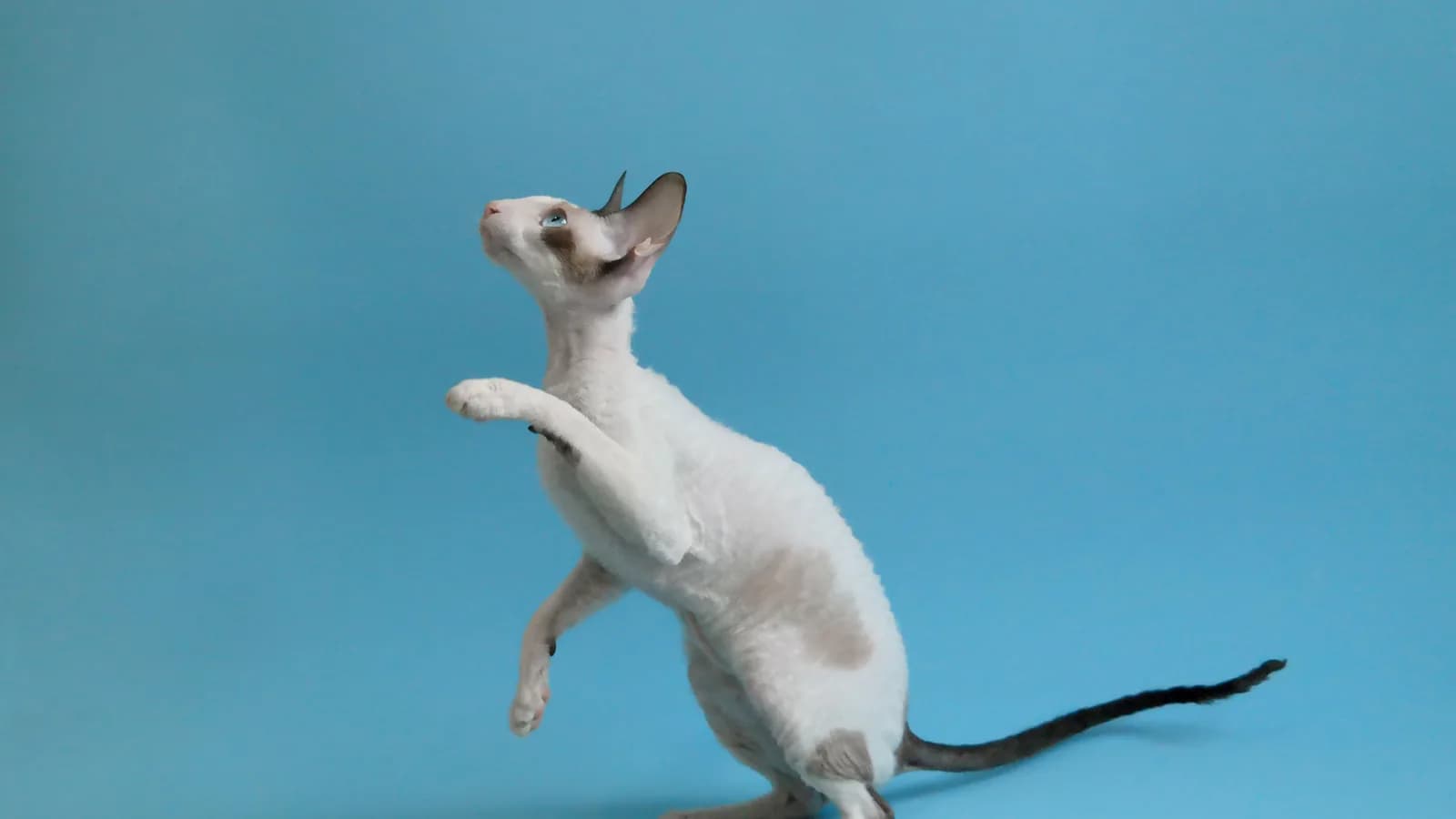
One unreplicated curiosity, reported honestly. A 2021 sequencing resource found a single Peterbald carrying a variant in LPAR6, the Cornish Rex's curl gene: a finding its own authors label tentative, and nobody has replicated. The Peterbald's actual gene remains an open research question. That is a rare and delightful thing to be able to say about a famous breed in 2026.
Sphynx: KRT71, recessive
The famous one: a gene mutation, cousin to the Devon Rex's curl. Warm suede skin, fine down, not truly bald.
Donskoy: dominant, gene unknown
Russia's hairless line: dose-dependent, and the obvious candidate gene was tested and ruled out in 2013.
Peterbald: the Donskoy gene, Oriental frame
Five coat outcomes from one gene, bald to brush to normal. St. Petersburg, 1993.
Lykoi: HR, six separate mutations
The werewolf cat: sparse, roaned, cycling coat. Not hairless, and genetically unrelated to all of the above.
What the registries decided, breed by breed
The registry map is genuinely split, and Britain wrote its reasons down. recognizes the Sphynx (preliminary status since 2006) but holds the Donskoy and Peterbald at Red Status, unrecognised. It states in its own words that it has "no intention to recognise further hairless breeds" on health grounds tied to the hairlessness itself, and points prospective owners toward the Sphynx it does accept.
The Lykoi, by contrast, is fully recognized at , and . And the Instagram-era crosses (Elf, Bambino, Dwelf: Sphynx crossed with American Curl, Munchkin, or both) currently hold NO recognition at TICA or CFA at all, checked against the registries' own current rules. They exist as labels, including in one 2025 veterinary case report describing limb deformity in a Dwelf: a reminder that stacking mutations is not automatically free of consequence.
| Breed | |||
|---|---|---|---|
| Sphynx | Championship | Championship | Recognized (the one hairless breed it accepts) |
| Donskoy | Recognized | Not recognized | Red Status: refused, on stated health grounds |
| Peterbald | Championship 2005 | Not recognized | Red Status: refused, same stated reason |
| Lykoi | Recognized | Championship 2020 | Fully recognized |
| Elf / Bambino / Dwelf | None (checked in the current rules) | None | Never mentioned at all |
The care contract: skin, sun, cold, baths
A hairless coat is not a maintenance-free coat; it is a different contract. The two independent institutional sources that address the family agree on the same three points. Sun: pale skin burns, and summer means shade or pet-safe sunscreen. Cold: no insulation means warm rooms and a winter layer, and notes hairless cats run a higher metabolism, eating more per gram than coated cats. And skin oil: the oils a coat would absorb sit on the skin instead.
On bathing, honesty beats a fake number. Breeder sites publish at least four different cadences, no controlled study exists, and the one sourced mechanism worth keeping is 's own caution that OVER-bathing backfires by triggering more oil. Roughly every other week, adjusted to the actual cat, with a vet consulted if the skin ever looks irritated rather than just oily: that is the defensible version.
All of it adds up to an indoor cat by design. Not a rule any registry writes, but the direct consequence of the sun-and-cold file every source describes.
The health small print, from the studies rather than the folklore
A word from Priya, the careful one
Two evidence-based notes belong in any hairless household. The Sphynx's oily-skin reputation has a measured mechanism: culture studies found Malassezia yeast colonising most Sphynx sampled, versus about half of coated controls. That is why skin care is routine maintenance, and why persistent redness, odor or greasy buildup is a vet conversation rather than a bathing problem. And the Sphynx shares with the Devon Rex a rare recessive muscle condition (COLQ congenital myasthenic syndrome, carrier rates around 4% in the tested panels). A DNA test exists, carriers are healthy, and asking a breeder for both parents' COLQ results is the one-line question that covers it.
Nothing here diagnoses your cat: the rule stands, something wrong means call your vet, and out of hours an emergency clinic.
Are hairless cats hypoallergenic?
No, and the breeds' own registries say so unprompted. The allergen, , is made in a cat's skin and salivary glands, not its fur: "even hairless Sphynx cats produce Fel d 1," in the words of a 2024 academic review. 's own Sphynx page is blunter: "The Sphynx is not a hypoallergenic cat despite the claims of some people." 's Peterbald page volunteers the same warning for its own breed.
What a hairless cat changes is the housekeeping (less hair around the home carrying the allergen), which some allergic owners find helps in practice and others find changes nothing. The full evidence picture, breed by breed and intervention by intervention, lives on our hypoallergenic cats hub. The short version for this page: choose a hairless cat for the personality and the look, never as an allergy treatment.
The hairless cat is three separate genetic accidents that people fell in love with three separate times, and the honest guide to them is mostly a guide to reading small print: the gene, the registry status, the care contract. What to remember: the look is real, the shortcut claims mostly are not, and the cats themselves, warm, demanding and glued to their people, tend to make the small print feel like a bargain.
By Priya · The careful oneFrequently asked questions
What breeds of cat are hairless?
The Sphynx (the famous one), the Donskoy and Peterbald (Russia's dominant-gene pair), and, partially, the Lykoi. Crosses like the Elf, Bambino and Dwelf exist but currently hold no TICA or CFA recognition. Three unrelated genes are involved: there is no single hairless gene.
Are hairless cats really completely bald?
Rarely: most Sphynx wear a fine peach-fuzz down, Donskoy and Peterbald coats range from bald to brush-coated depending on gene dose, and the Lykoi is sparse-coated rather than bald. Truly naked skin is one end of a spectrum.
Are hairless cats hypoallergenic?
No: the Fel d 1 allergen comes from skin and saliva, not fur, and even the Sphynx's own registries say so plainly. Less hair means less allergen-carrying shed around the house, which helps some allergic households and not others. Our hypoallergenic hub carries the full evidence.
Why are hairless cats so expensive?
Small breeding populations, high demand and intensive care standards: the Sphynx price picture is on our Sphynx price page. No hairless breed has a cheap, casual market, and a bargain hairless kitten deserves extra verification.
Do hairless cats need baths?
Regular skin care, yes: the oils a coat would absorb sit on the skin, and the Sphynx's measured yeast findings make skin maintenance genuinely functional. No controlled study sets the cadence; roughly every other week is the common practice, with TICA's own caution that over-bathing triggers more oil, not less.
Do hairless cats get cold?
Yes, by design: no coat means no insulation, warm rooms, winter layers and sunny windowsills are part of the deal, and TICA notes they eat more per gram of body weight to fuel the higher metabolism. Sun is the summer risk: pale skin burns.
Why isn't the Donskoy recognized in Britain?
GCCF holds the Donskoy and Peterbald at Red Status, stating in its own words that it will not recognize further hairless breeds because of health concerns it ties to hairlessness itself, while continuing to recognize the Sphynx. A genuine, documented registry split.
What is a Lykoi?
The werewolf cat: a partially-coated breed whose sparse, roaned coat comes from mutations in the HR gene, six independent ones found so far, none related to the Sphynx's or Donskoy's genetics. It is fully recognized at TICA, CFA and GCCF.
Sources & references
Data checked against reference bodies (breed registries, allergy research, veterinary schools).
- Gandolfi et al. 2010, Sphynx and Devon Rex mutations in KRT71 (Mamm Genome)
- Dierks et al. 2013, KRT71 eliminated as candidate for Don Sphynx hairlessness (Anim Genet)
- Buckley et al. 2020, Hairless (HR) variants in the Lykoi (Genes)
- Rodney et al. 2021, the single-cat Peterbald LPAR6 candidate (Sci Rep)
- TICA: Peterbald breed page (the dominant gene; care and metabolism notes)
- TICA: Sphynx breed page
- CFA: Sphynx breed page (not a hypoallergenic cat, in CFA's own words)
- GCCF: Unrecognised breeds (Donskoy and Peterbald at Red Status, with reasons)
- Hilger et al. 2024, Hypoallergenic animals: a promise of hope? (Allergol Select)
This page is a starting point. Every cat is an individual: our profiles spell out the tendencies of each breed, sources included.
 Purr or Pass
Which cat breed is right for you?
Take the quiz