


Cat breeds by trait
Blue-Eyed Cat Breeds: Three Routes to Blue, One Question About Hearing
A blue cat eye holds no blue pigment at all. The color is an optical effect in an iris that keeps pigment OUT, and only a few genetic routes manage that in an adult cat. Which is why the blue-eyed breeds sort so cleanly: know the routes and you know the list.
This page maps the three routes, names the breeds each one powers, answers the hearing question with precision instead of folklore, and settles the most-asked question in the topic: the black cat with blue eyes.
 By Nora · The storyteller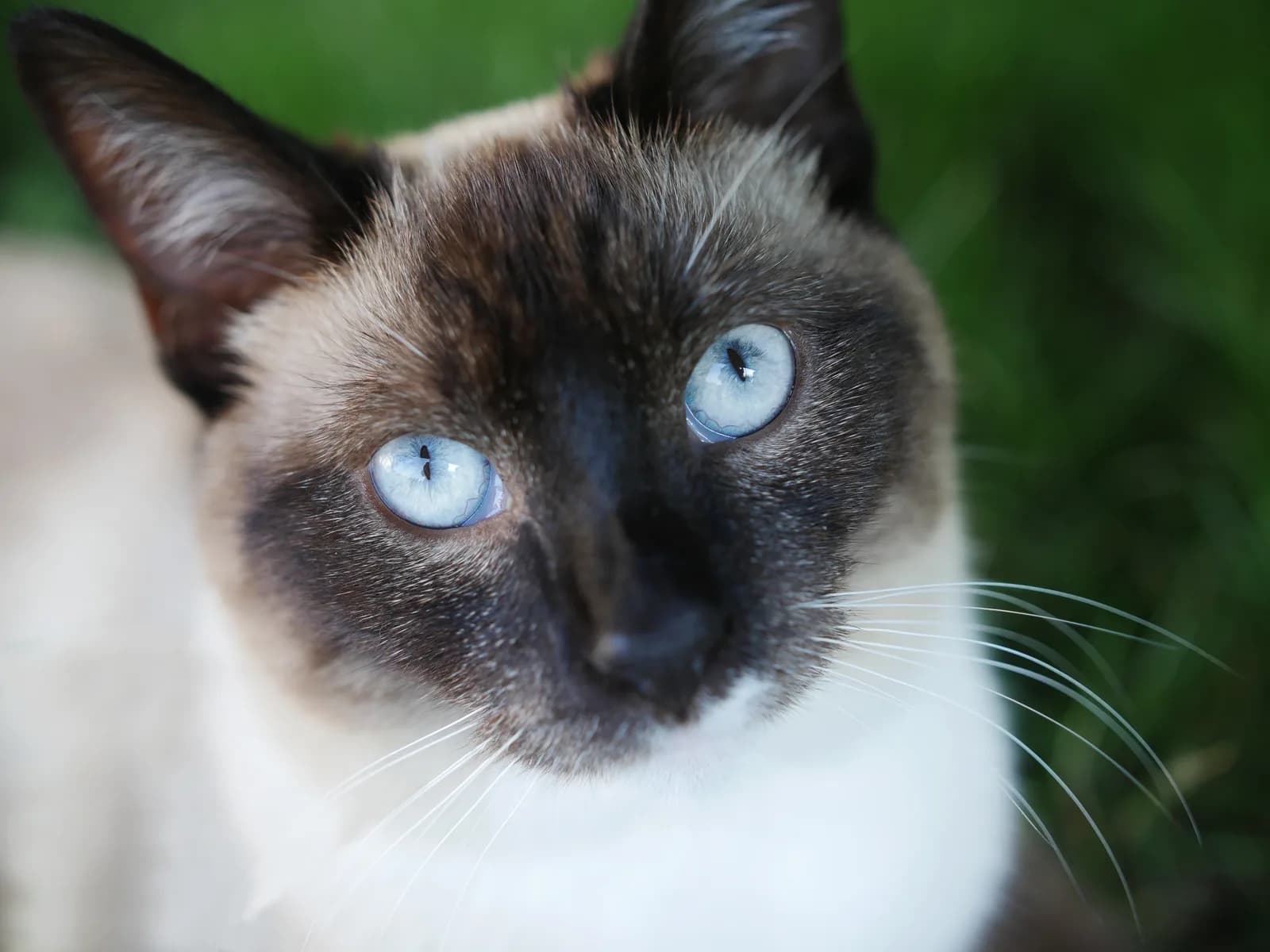
Contents
Breeds worth knowing
Tap a breed for the full profile: temperament, health, price and coat colors, all fact-checked.
Where blue eyes come from
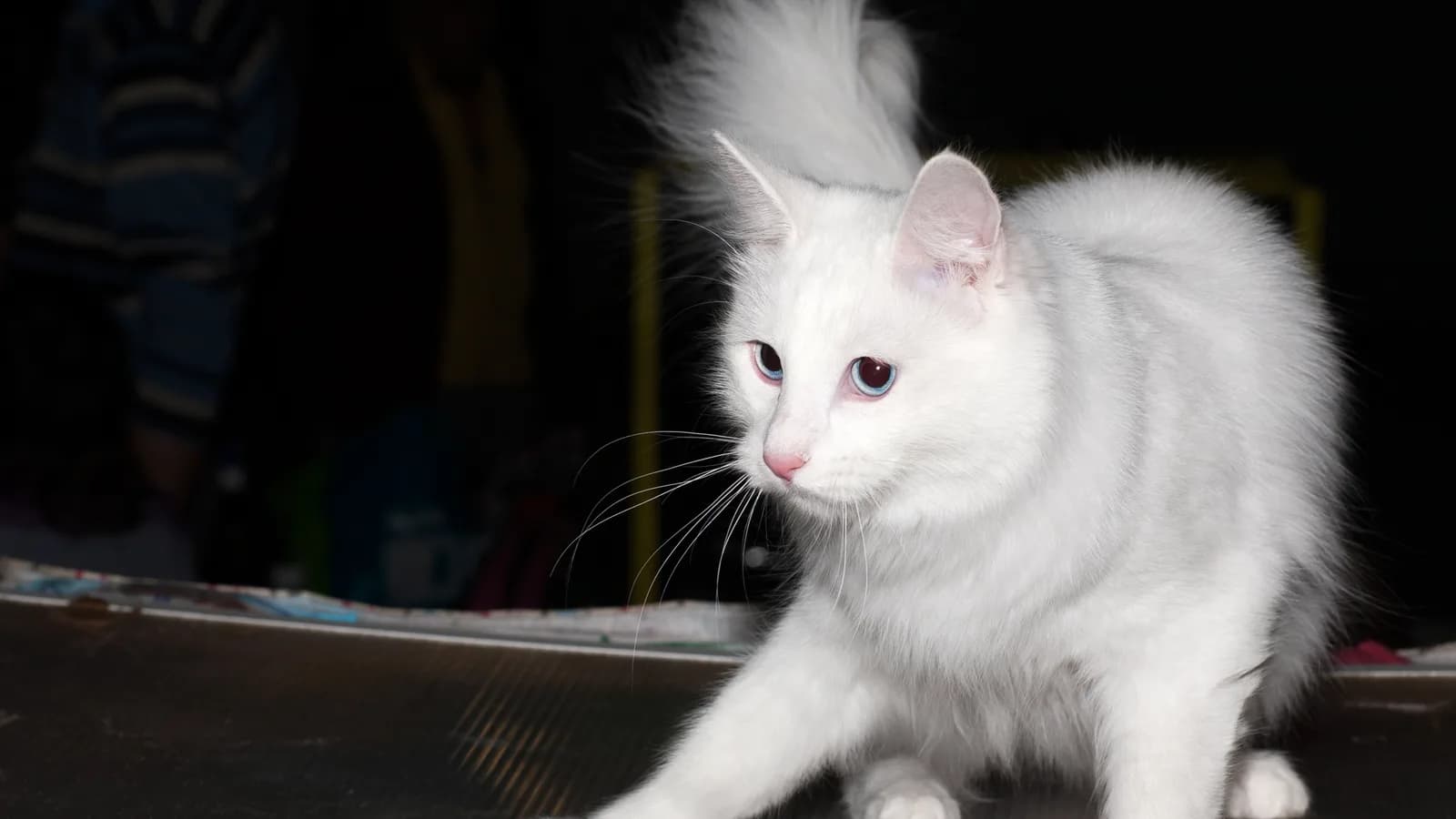
A blue cat eye contains no blue pigment. The color is structural: light scattering in an iris with LITTLE pigment of its own. That is why kittens' eyes start blue-ish (pigment arrives over the first weeks and settles toward the adult color), and why adult blue eyes need a gene that KEEPS pigment out. The fancy has three such routes. The pointed (Siamese-pattern) gene restricts pigment and guarantees blue eyes in every pointed cat. The gene can bundle blue eyes with an all-white coat. And heavy white spotting sometimes reaches the eyes and leaves one or both blue: the classic cat.
Route 1: the pointed gene
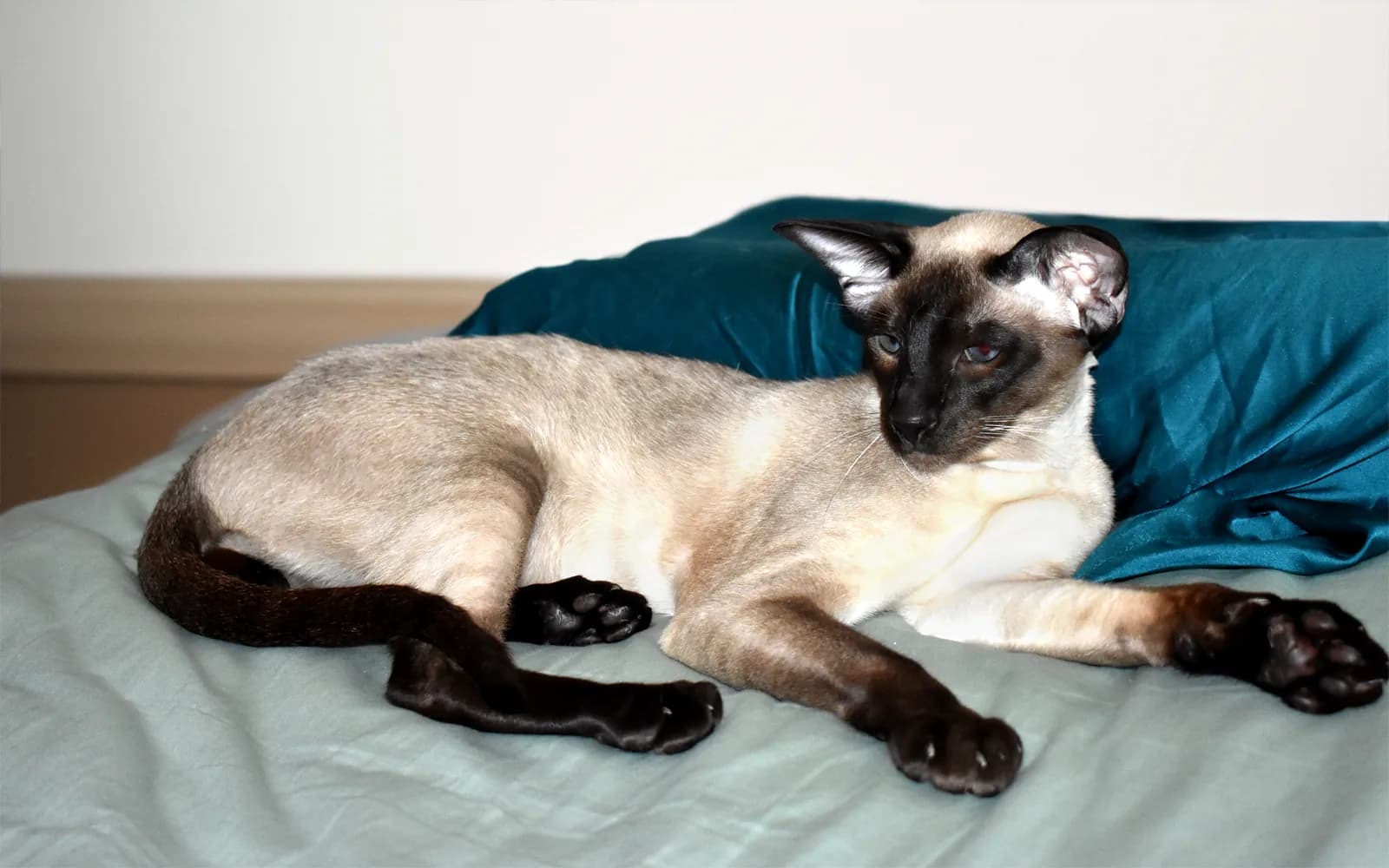
Every pointed cat has blue eyes, by the same gene that colors the points. The guaranteed route.
Route 2:
The all-white coat that can bundle blue eyes, and carries the hearing file below.
Route 3: white spotting
When the white patches reach an eye: blue on one side, gold on the other, the classic.
The always-blue breeds
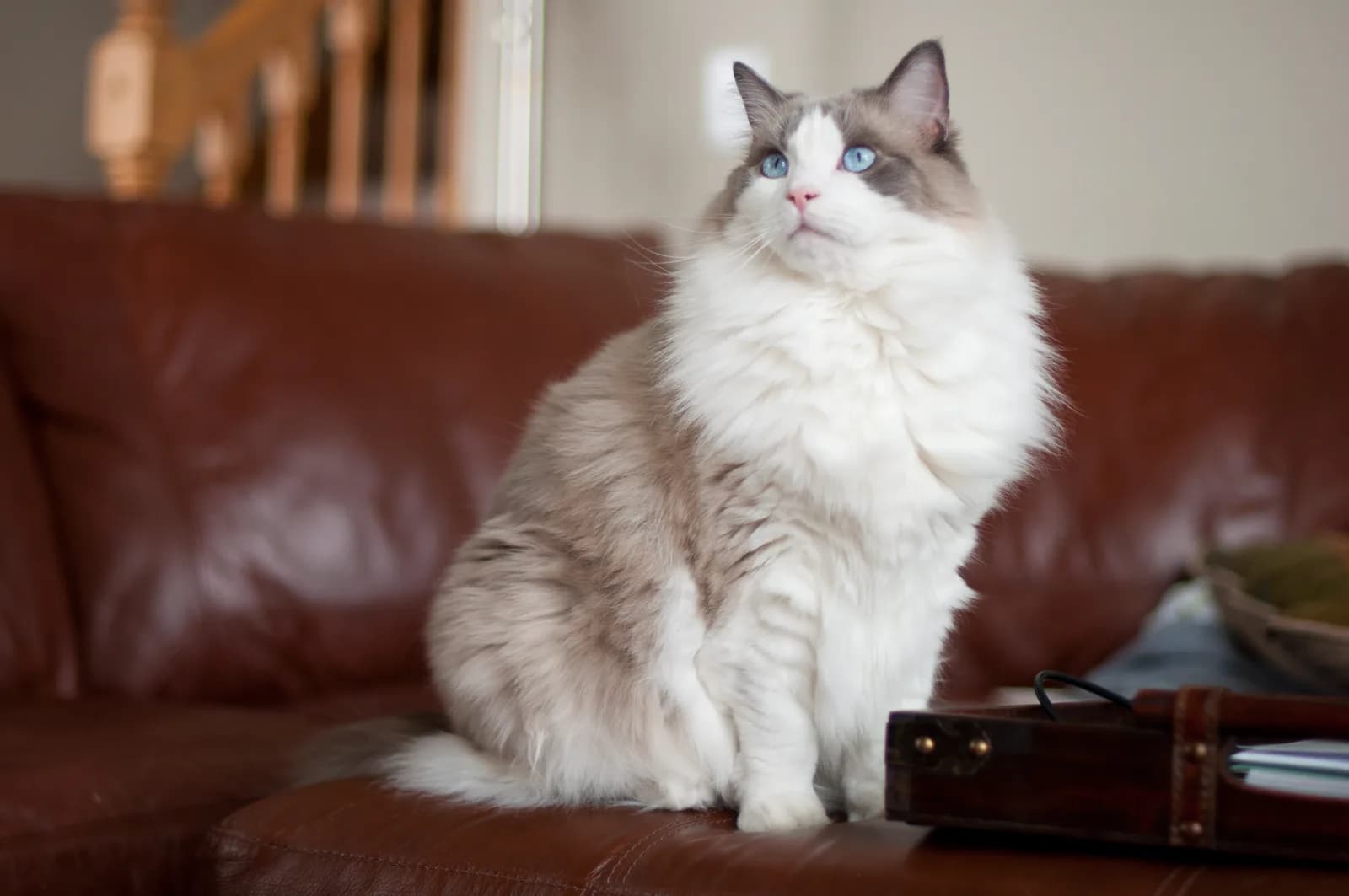
The pointed route powers the guaranteed list. Every [Siamese](/breeds/siamese) has blue eyes: the standard requires deep blue, and the same gene that shades the points makes the guarantee. Every [Ragdoll](/breeds/ragdoll) is blue-eyed for the same reason. The breed is pointed by definition, and its standard asks for blue. The [Himalayan](/breeds/himalayan) brings the guarantee to the Persian family. And the [Oriental](/breeds/oriental) family contributes Britain's Foreign White, a blue-eyed all-white cat bred pointed-underneath within a -testing culture.
Beyond our built profiles, the Birman, Snowshoe and Balinese carry the same pointed guarantee, and the Tonkinese wears its own aqua variation; their full files are on our build list. And the [Turkish Angora](/breeds/turkish-angora) represents the second route. Its famous white, blue-eyed cats are dominant-white history in a breed, with the hearing science handled honestly on our profile.
White cats with blue eyes: the hearing question, precisely
The internet's version is "blue-eyed cats are deaf", and it is wrong twice. Precisely: congenital deafness in cats is associated with the WHITE COAT genetics (the gene). Within white cats, the risk rises when the eyes are blue, with the published research reporting graded ranges rather than one number, single-sided or double-sided, never a certainty. A pointed cat's blue eyes come from a different gene and carry no such association: the Siamese is not part of this file. Our white cat breeds page carries the graded numbers with their sources; the box below covers the test that answers the question for an individual cat.
The BAER test, and who actually needs it
A word from Priya, the careful one
The hearing question has a proper test: (brainstem auditory evoked response), a painless electrode test that checks each ear objectively, usable from a few weeks of age. It matters because the deafness association belongs to WHITE-COATED cats, where risk rises with blue eyes, and not to the pointed breeds, whose blue eyes come from a different gene entirely: a blue-eyed Siamese carries no white-cat deafness file. UK breeding practice reflects this. documents BAER testing for white cats, and the UK's blue-eyed white Foreign White is bred under exactly that testing culture. A deaf cat, found early, lives a full indoor life; what the test buys is knowledge instead of folklore.
As always: nothing here judges your own cat's hearing. A cat that stops responding to sounds it used to notice is a vet visit, at any age and any eye color.
Can a black cat have blue eyes?
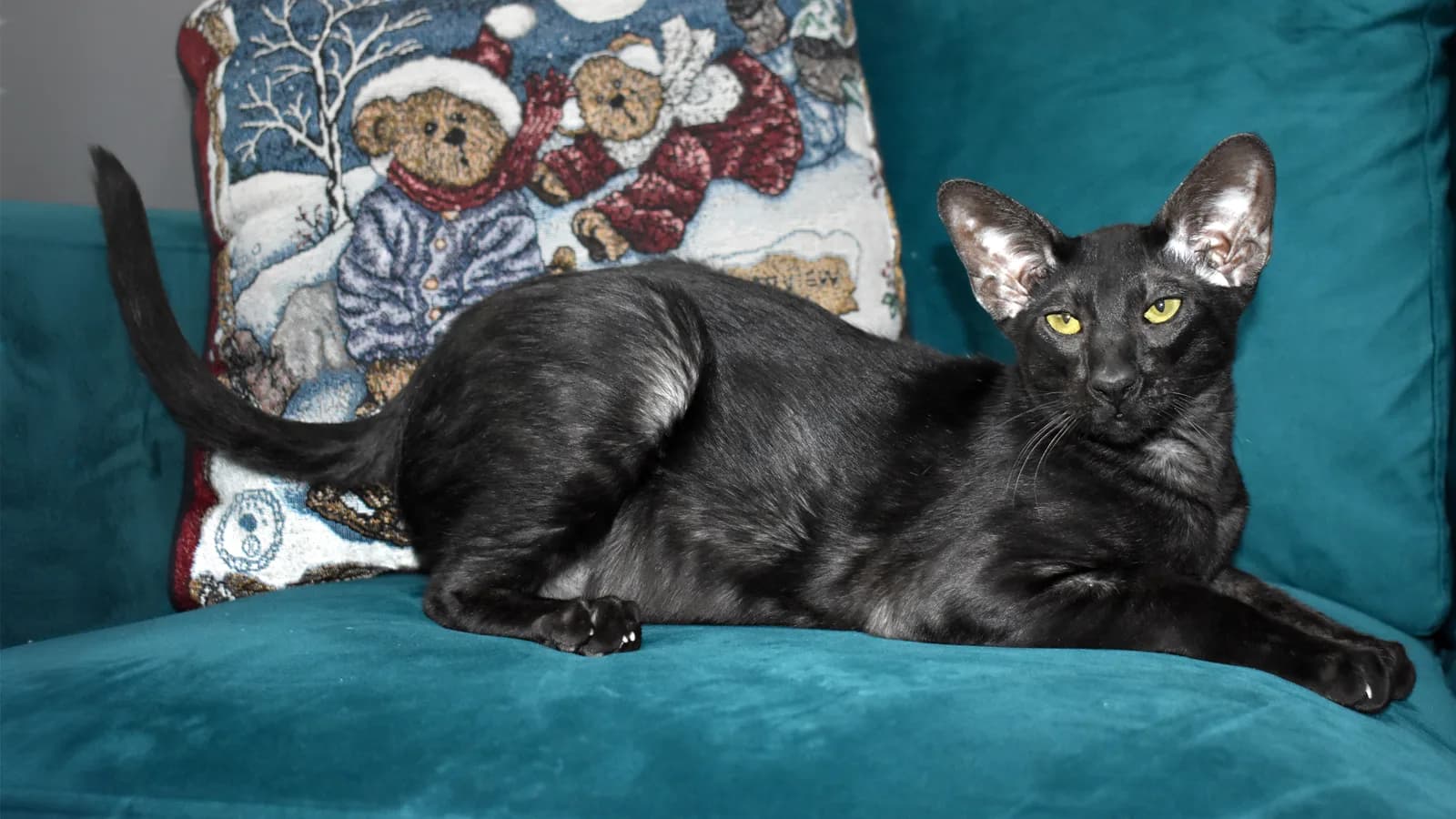
It is the most-asked question on this topic, and the honest answer is: almost never as an adult. A black KITTEN can absolutely have blue eyes for its first weeks, before pigment settles the adult color. An adult cat that reads black-with-blue-eyes is usually wearing hidden white genetics (spotting reaching the eyes), unusual lighting in the photo, or belongs to the tiny circle of unusual blue-eye lines the fancy has occasionally worked with. A solid black adult with true deep-blue eyes is not an established, recognized thing in the major registries' standards, whatever a viral photo suggests.
Kitten eyes change
All kittens start with blue-ish eyes: the pigment arrives over the first weeks. A blue-eyed eight-week-old is a normal kitten; the adult color declares itself in the following months.
Are blue eyes rare?
In the pointed breeds, blue is not rare, it is mandatory: millions of Siamese, Ragdolls and their relatives carry the guarantee. Outside the pointed and white families, adult blue eyes ARE genuinely uncommon. They need one of the three genetic routes, and random-bred cats mostly carry none of them. Which is the honest version of the rarity claim: common where guaranteed, rare everywhere else.
Three routes, one guarantee, and a hearing question with an actual test instead of a myth. If a blue-eyed cat runs your household, the community wants to know which route made the eyes, and whether the photos ever do them justice.
By Nora · The storytellerFrequently asked questions
What cat breeds have blue eyes?
Guaranteed blue: the pointed breeds, led by the Siamese, Ragdoll and Himalayan (plus the Birman, Snowshoe and Balinese beyond our built profiles). Sometimes blue: white cats (dominant white) and heavily white-spotted cats, where the genetics permit rather than promise.
Do all Siamese cats have blue eyes?
Yes: the same gene that makes the pointed coat keeps pigment out of the iris, and the standard requires deep blue. A pointed cat without blue eyes is not a pedigree Siamese.
Do all Ragdoll cats have blue eyes?
Yes: the Ragdoll is a pointed breed by definition and its standard asks for blue. Blue-eyed is part of what the pedigree means.
Are blue-eyed cats deaf?
Mostly no, and the association is precise: congenital deafness tracks the WHITE-coat genetics, with risk rising in white cats that have blue eyes, in graded ranges rather than certainties. Pointed breeds' blue eyes come from a different gene and carry no such file. The BAER test answers it for an individual cat.
Are all cats born with blue eyes?
Essentially yes: kitten irises start with little pigment, so they read blue-gray, and the adult color arrives over the first weeks and months. Adult blue eyes mean a gene kept the pigment out permanently.
Can a black cat have blue eyes?
As a kitten, yes, briefly. As an adult, almost never: an apparent black-with-blue adult usually involves hidden white-spotting genetics, photo lighting, or the fancy's rare experimental blue-eye lines. No major registry standard recognizes a solid black, blue-eyed adult.
Are blue-eyed cats rare?
Not in the pointed breeds, where blue is mandatory. Outside the pointed and white families, adult blue eyes are genuinely uncommon: they require specific genetics most cats do not carry.
This is information, not veterinary advice, and it cannot tell you what is wrong with your cat. Our rule is a simple one: if something is wrong with your cat, call your vet, and call an emergency clinic if it is out of hours. Nothing you read here is a reason to wait.
Sources & references
Data checked against reference bodies (breed registries, allergy research, veterinary schools).
- CFA Siamese show standard (deep blue required)
- TICA: Ragdoll breed page (the pointed, blue-eyed definition)
- Strain 2015, The Genetics of Deafness in Domestic Animals (Front Vet Sci)
- Mari et al. 2019, congenital deafness in UK purebred kittens (J Vet Intern Med)
- UC Davis VGL: Dominant White and White Spotting (KIT)
- GCCF, BAER testing for white cats
- GCCF Oriental Shorthair Registration Policy (the Foreign White scoping)
This page is a starting point. Every cat is an individual: our profiles spell out the tendencies of each breed, sources included.
 Purr or Pass
Which cat breed is right for you?
Take the quiz