

Ragdoll cat
“The laid-back lap cat”
 By Priya · The careful one
Published August 20, 2026Updated August 26, 202612 min read
Contents
 Ragdoll photos
Real photos, so you can see what the breed actually looks like: coats, ear tufts, ruff and build.
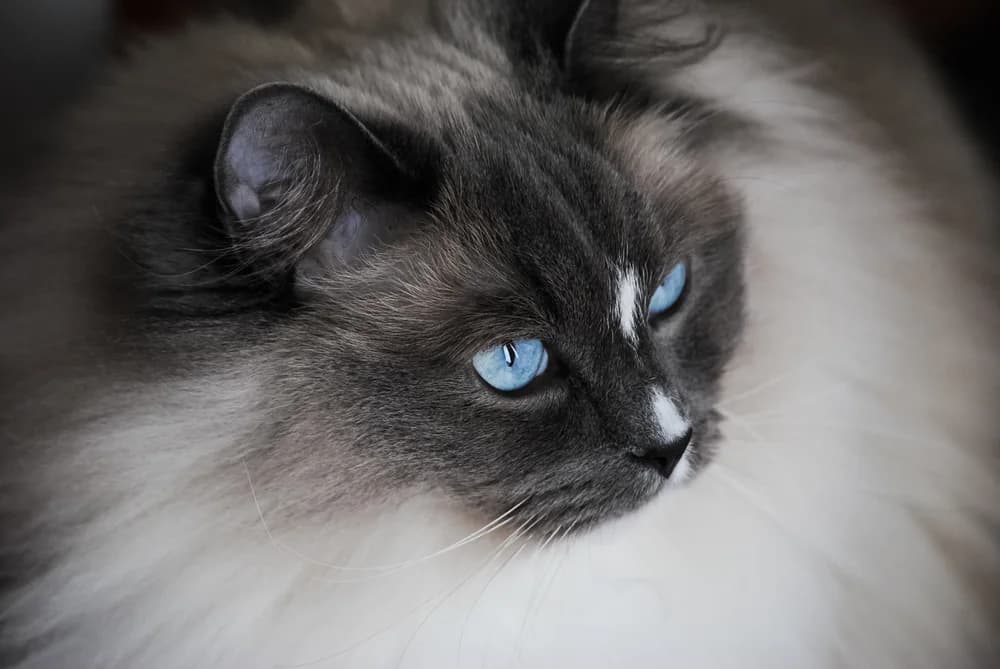
Blue point Ragdoll close up: dark mask, white blaze and deep blue eyes against the pale ruff
Photo: Shadowmeld Photography · CC BY-SA 4.0 · via Wikimedia Commons
 Vital stats
Origin
United States
Founded in early-1960s Riverside, California, by breeder Ann Baker, from a white longhaired cat named Josephine. What the foundation cats were is genuinely disputed (registries say domestic longhairs; other accounts say Persian, Birman and Burmese; Baker reportedly said alley cats). This profile keeps the dispute rather than picking.
Weight
Female
10-15 lb (4.5-6.8 kg)
Male
15-20 lb (6.8-9.1 kg)
Life expectancy
The 12 to 17 years everywhere online is 's box figure, echoed uncited across cattery sites; no measurement stands behind it. The measured figure is newer and better. A 2025 UK study dedicated to this breed (21,358 Ragdolls, 133 deaths) put median age at death at 12.85 years. That is higher than two earlier, smaller studies (10.1 and 10.31 years), and its authors explain why: the breed's population boomed fivefold, and young populations bias death samples downward. Their verdict: lifespan "largely typical for purebred cats overall." No US, Canadian or Australian measured figure exists. The whole story: our lifespan guide.
Coats
Seal point
Blue point
Chocolate point
Lilac point
Flame (red) point
Cream point
Six point colors every registry recognizes (seal, blue, chocolate, lilac, red/flame, cream). Three patterns (, , bicolor), and overlays, and blue eyes required in all of them. alone also recognizes mink, sepia and solid cats as "" since May 2025. Australia's alone adds silver, smoke, caramel and apricot. Every combination, gene by gene: the colors guide.
Understanding the coats (and their genetics)Size
TICA and GCCF market the Ragdoll as one of the largest cat breeds. CFA, Canada's and Australia's registries avoid the claim. And the largest measured sample (5,211 Ragdolls inside a 56,169-cat study) does not flag the breed's weight above the all-cat median. Substantial, long-bodied, and slower to finish growing than almost any breed: four years.
Popularity (CFA)
No. 2
in the CFA ranking for 2026
Did you know
Every Ragdoll is born almost pure white. The gene that colors the points only works in cool skin, and a womb has no cold spots. The mask, ears and tail darken over weeks, and full color takes about three years by 's own standard.
 Personality
 Affection5/5
 Energy1/5
 Intelligence3/5
 Friendliness5/5
 Independence2/5
 Vocal2/5
 Shedding3/5
Compatibility
 Good with children4/5
 Good with other pets4/5
 Apartment friendly5/5
Editorial ratings on our five-point scale, anchored in the registry descriptions and the measured behaviour studies cited on this profile; individual cats vary, and our members' own ratings below are the counterweight.
Still torn between this breed and another?Compare the Ragdoll trait by trait, or filter every breed by what matters to you. What our members say
What our members say
Nobody has described their Ragdoll here yet. As soon as the first profiles come in, this is where the community averages will show up: temperament, food, lifestyle.
Describe my Ragdoll Pros & cons
Strong points
- Measured, not marketed: one of the calmest, most people-oriented breeds in the behavior literature
- Silky semi-long coat on a light maintenance schedule (weekly combing per the registries)
- The breed's one major heart risk has a DNA test, and UK breeding stock is screened by mandate
- Big-cat presence without measured big-cat weight: easier on joints, doors and vets' scales than the legend suggests
Things to consider
- The R820W heart mutation is real: unscreened lines carry a hard risk (homozygous median survival 5.65 years in the one outcome study)
- Kidney disease led recorded causes of death in the 2025 UK data
- A people-seeking, low-activity cat left alone all day is a bored, sad cat
- Popularity attracts scams: the 6-to-8-week kitten offer is the tell
 Is a Ragdoll right for you?
Someone home enough to be followed around. The Ragdoll profile (measured low activity, high contact-seeking) fits apartments, families with respectful kids, and first-time owners who will do one thing rigorously: buy from a breeder who shows the parents' DNA results.
Is the Ragdoll right for YOUR home?
Answer a few questions and we'll email you your personalized result.
Take the quiz · 2 min Getting to know the Ragdoll
The Ragdoll is the cat the internet promises everyone: huge, silky, blue-eyed, and so relaxed it was literally named after going limp. Two-thirds of that is true. It IS silky and blue-eyed, and it is genuinely one of the calmest cats ever measured. The limp part is a 1960s marketing story the registries themselves hedge or reject. This profile runs on what the documents and studies actually say, which turns out to be a better sales pitch than the folklore.
Start with the temperament, because it is the breed's real product and the rare claim science backs. In two large independent behavior studies, the Ragdoll ranks among the least active breeds measured and above average for seeking human contact. That is the technical description of a cat that follows you between rooms and then does nothing, magnificently, near you. The registries agree in their own voices: "very laid back" ('s standard), "relaxed, happy" (), and widely described as a quiet breed. It is also a slow-growing one. Four years to full size, per four registries independently, so your one-year-old is not small, just unfinished.
The look is a pointed cat scaled up: darker mask, ears and tail over a pale body, in six colors and three patterns, with blue eyes required in every one of them by every standard. The famous bulk deserves its asterisk, so here it is with sources. and call the breed one of the largest. , Canada's and Australia's pointedly do not, and the biggest measured cohort ever assembled does not flag Ragdoll weight above the ordinary-cat median. Our size guide has the scales.
History, told honestly: Riverside, California, early 1960s, a breeder named Ann Baker and a white longhaired cat named Josephine. Baker trademarked the breed's name, ran her own registry, and wrapped the founding cats in stories (hospital gene alterations included) that no registry repeats in its own voice.
What the foundation cats actually were is disputed to this day: domestic longhairs per the registries; Persian, Birman and Burmese per an early community account; "alley cats" per Baker herself, reportedly. The breed reached the mainstream registries through breeders who split from her program. The founding litter even included a solid black cat, Buckwheat, per 's own breeding policy. The full saga lives in the colors guide and the name story.
Health has one headline, and it is testable: a Ragdoll-specific heart mutation (R820W in the gene, found in 2007, not the Maine Coon's mutation despite sharing the gene), with a $47 DNA test and, in the UK, a registry mandate behind it. The section below carries the real numbers, including the one study that followed 236 genotyped cats to their outcomes. Kidneys are the breed's second story. They are the leading recorded cause of death in the newest UK data, while the dedicated screening studies say, in their own words, that a true breed predisposition remains unproven. Informed beats alarmed: the lifespan data is genuinely reassuring.
Buying one: four-market prices with named rate cards, and how to vet a breeder (the 6-to-8-week kitten offer is the scam tell; 12 to 16 weeks is the real release window). If an ad says "rare brown Ragdoll" or promises a hypoallergenic one, our chocolate page and allergy page will save you the deposit. And if you suspect the pointed beauty at the shelter is part Ragdoll: without papers, nobody can be sure, and that page explains why.
 Health: what to watch for
A few predispositions are well documented. The good news: they can be screened for or avoided by choosing a reputable breeder and keeping an eye on the right signals.
This is information, not veterinary advice, and it cannot tell you what is wrong with your cat. Our rule is a simple one: if something is wrong with your cat, call your vet, and call an emergency clinic if it is out of hours. Nothing you read here is a reason to wait.
Hypertrophic cardiomyopathy (HCM, the R820W mutation)
Serious, screenableThe UK registry's own rule leads, because it is the strongest buyer protection in any market. GCCF has required the HCM DNA test for every breeding Ragdoll since 24 February 2016, and since 2021 carrier cats are excluded from breeding registration entirely. The mutation itself (R820W in the MYBPC3 gene, discovered 2007) is the Ragdoll's own, NOT the Maine Coon's A31P, though both sit in the same gene.
What a result means, per the testing labs themselves: negative does not rule out HCM from other causes; one copy may raise risk, and most one-copy cats live normal lives; two copies is the serious case. The one outcome study (236 genotyped Ragdolls, UK) measured median survival above 15 years for negative AND one-copy cats, against 5.65 years for two-copy cats. That is exactly why breeders screen: so two-copy kittens are never born.
Symptoms to spot
Often nothing at all. Labored or rapid breathing, open-mouth breathing or lethargy can appear when fluid builds up; a clot can cause sudden hind-leg pain or paralysis. Open-mouth breathing or hind-leg paralysis is an emergency; any of the rest is a same-day call to your vet.
How common
Carriage, not disease: 27% of 2,018 Ragdolls in a 2014 British Isles testing-lab database (a young screening sample) carried R820W; the same lab's current page says around 13%. No US, Canadian or Australian carriage figure has ever been published, and no measured Ragdoll HCM disease-rate exists anywhere.
Screening & prevention
Ask any breeder, in any market, for both parents' R820W results and the lab paperwork; expect the question to be welcomed. Echocardiography remains the diagnostic tool regardless of genotype, and Langford's lab recommends ultrasound follow-up for genetically positive cats.
Genetic test
R820W (MYBPC3) DNA test, swab or blood; US $47 at UC Davis VGL. Negative does not clear a cat of HCM from other causes; homozygous carries high risk.
Kidney disease
Watch, honestly unresolvedTwo true things, held together. In the 2025 UK mortality data, kidney disorders were the single most common recorded cause of death (21% of deaths with a recorded cause, at the oldest ages), and a Swedish insurance dataset found the breed's kidney/ureter mortality the highest in its table. Yet the dedicated screening studies (four Belgian, on 400-plus healthy Ragdolls) conclude, in their own words, that a breed predisposition "cannot be excluded" and "further studies are required": suspicious signals that never reached statistical significance. Polycystic kidney disease specifically measured uncommon (under 3% by ultrasound, and genetically negative wherever tested).
Symptoms to spot
Drinking more, urinating more, eating less, losing weight, or low energy in a middle-aged or older cat. Any of these is a vet call, not a wait; none of them is a diagnosis.
How common
No confirmed breed rate exists: the largest screening study found ultrasound-suspected chronic kidney disease in almost 10% of 244 healthy Ragdolls, a signal its own authors declined to call a predisposition. Kidney disorder led recorded causes of death (21.18%, median age 14.41 at diagnosis for chronic kidney failure) in the 2025 UK study.
Screening & prevention
Routine senior bloodwork and urinalysis matter in this breed; ask your vet about kidney values from age seven or so, and treat changed drinking or urination as a same-week call.
Genetic test
None for the open question; the PKD1 test (for classic polycystic kidney disease) exists and Ragdoll populations studied have tested negative.
Blood type (the AB story)
Ask the breederRagdolls carry the rare AB blood type at the highest rate measured in any breed sample (18% in the one 61-cat typing study, against under 5% type B), driven by a breed-specific gene variant traced to the small founder population. Why it matters: blood-type mismatches cause transfusion reactions. A type-B queen with a type-A tom risks neonatal isoerythrolysis in kittens, a breeder-and-vet conversation before any mating, never a home calculation. The same study's upside framing: all three types present makes Ragdolls "an ideal donor breed" for feline blood programs.
Symptoms to spot
None in daily life: blood type is invisible until a transfusion or a mismatched litter. Fading, weak newborn kittens in a Ragdoll litter are an emergency vet call.
How common
77.1% type A, 4.9% type B, 18% type AB in 61 typed Italian Ragdolls, with an estimated 5% of kittens at risk of neonatal isoerythrolysis (the largest published typing study).
Screening & prevention
Have your cat typed once and keep the result with its records; breeders type before pairing.
Genetic test
Blood typing is a routine laboratory test; a CMAH genotyping panel also exists (the AB-associated variant c.364C>T was discovered in this breed).
Heart rhythm (arrhythmia)
Vet-detected, newly documentedNew, US-measured, and not yet in the breed guides. Across 9,440 cardiologist-read feline ECGs, Ragdolls showed the highest odds of any breed of at least one arrhythmia (odds ratio 3.17), most commonly ventricular premature complexes. The authors' own caution travels with the finding: an arrhythmia alone is not heart disease, and further research on the breed link is needed.
Symptoms to spot
This is a finding a vet hears with a stethoscope or sees on an ECG, never something an owner detects at home. If a murmur or irregular rhythm is noted at a visit, asking about a cardiac workup is the right next question.
How common
Odds ratio 3.17 (95% CI 1.43-6.17) for at least one arrhythmia versus other breeds, in one large US general-practice ECG dataset (2024); not yet independently corroborated.
Screening & prevention
Nothing to schedule for a healthy pet; mention the breed if your vet flags an irregular heartbeat.
Genetic test
None; this is an electrocardiographic finding, distinct from the R820W story above.
Breed-specific "normal" bloodwork
Good to knowA study comparing 42 healthy adult Ragdolls with ordinary cats found the breed's normal ranges differ on a dozen standard blood values (hematocrit, creatinine and glucose among them). The authors' own explanation (the breed's relaxed nature) is explicitly flagged as speculative. Translation for owners: a mildly "abnormal" value on a generic feline panel may be normal FOR A RAGDOLL.
Symptoms to spot
None: this is about how lab reports read, not how the cat feels.
How common
Reference-interval differences on 13 analytes in one 42-cat Italian study; not a disease rate.
Screening & prevention
If a routine panel comes back mildly off, it is worth asking whether the lab uses breed-specific reference intervals before worrying.
Genetic test
Not applicable.
Go deeper on health
Prevention, warning symptoms, costs and insurance: our guides, researched and sourced.
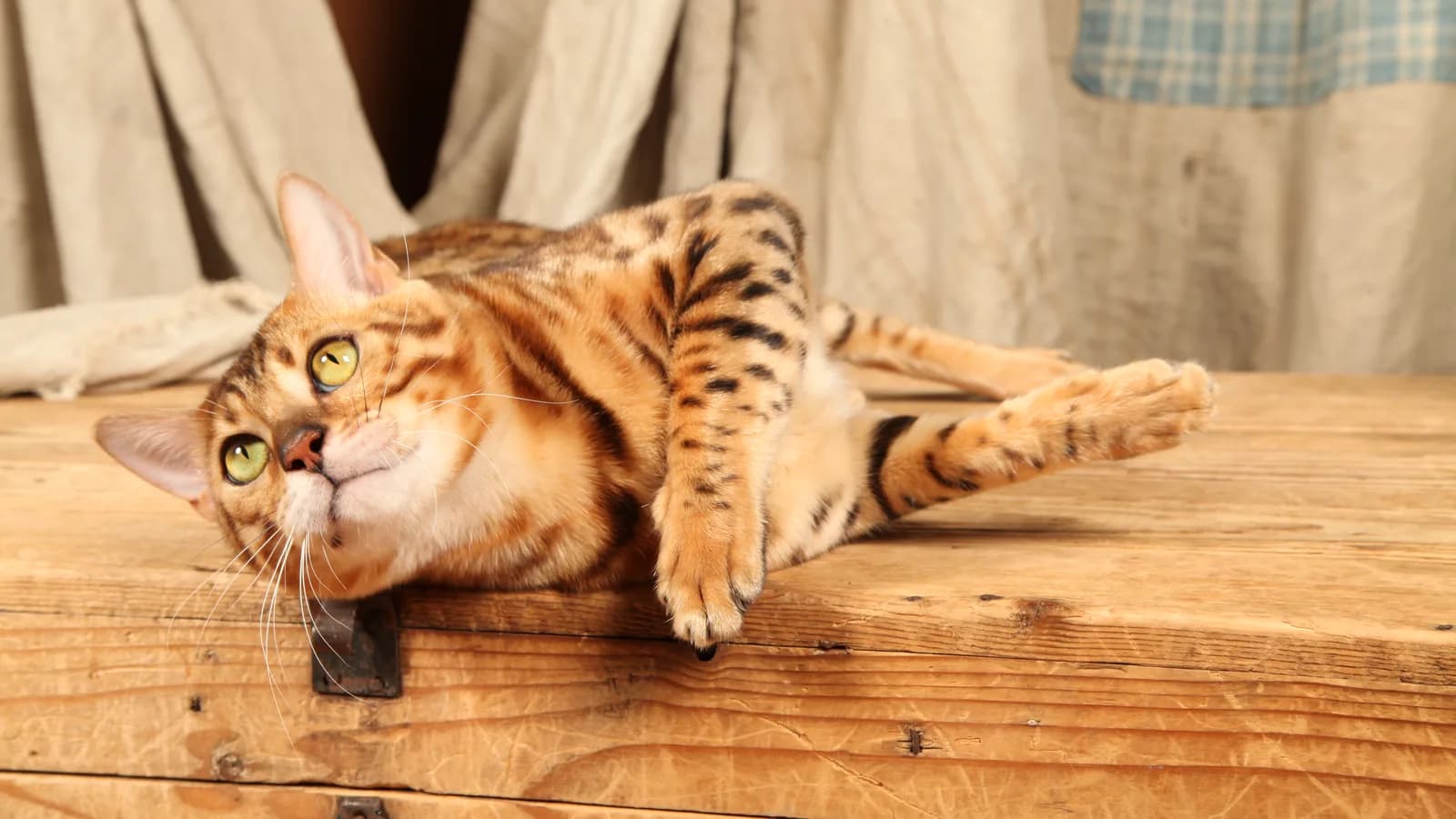
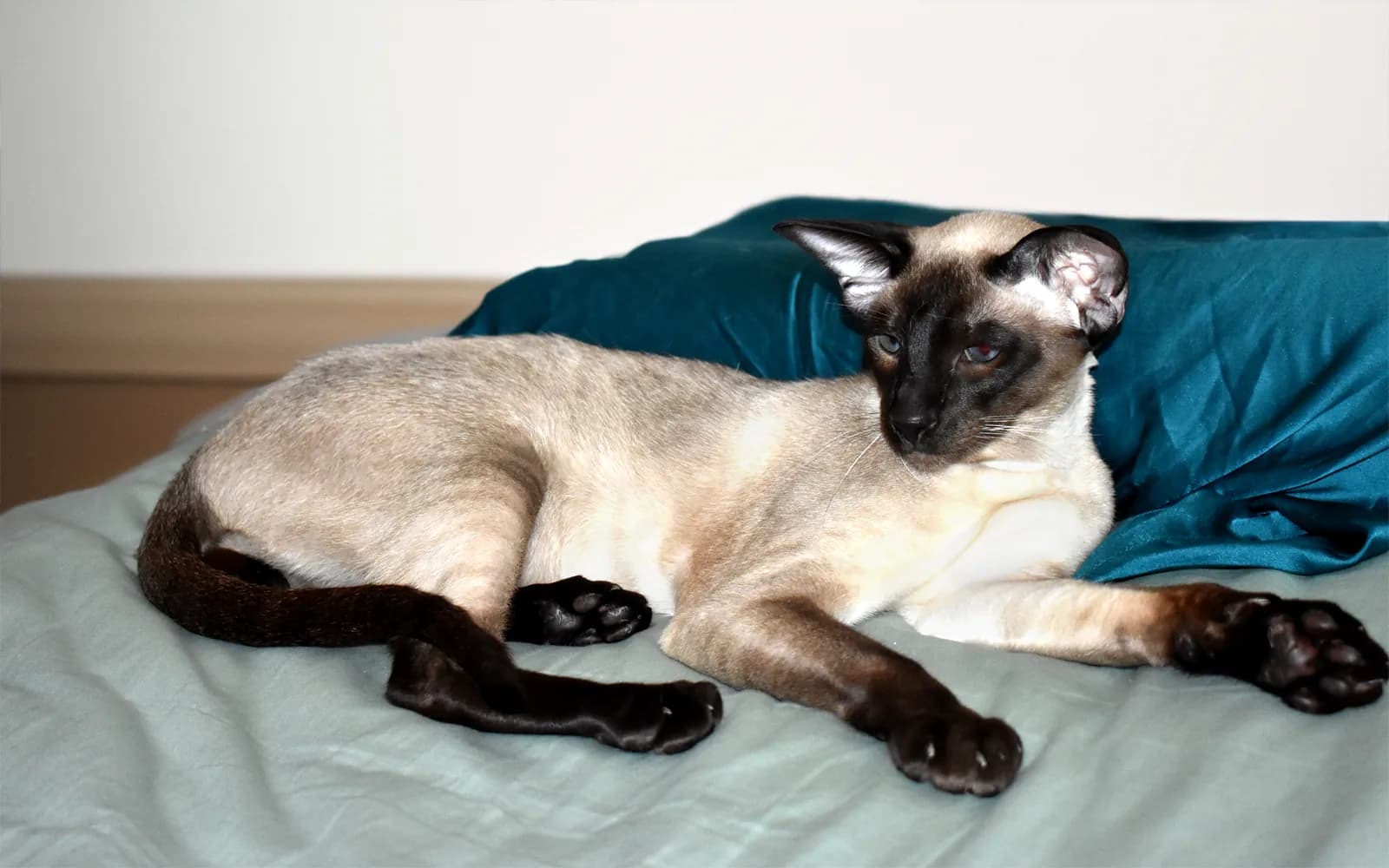
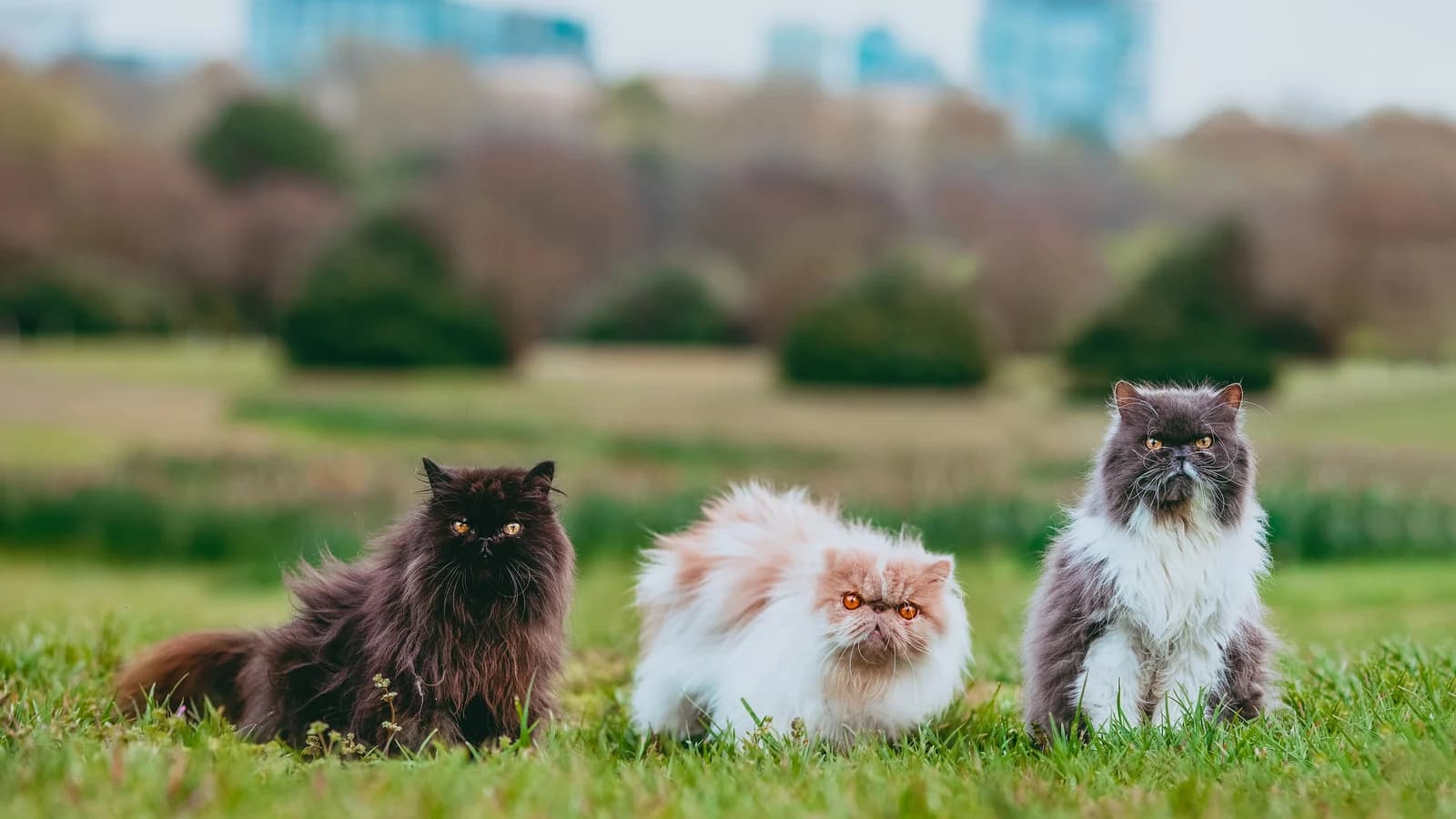
The Ragdoll also appears in
Our criteria-based guides, to compare this breed with the ones most like it.
 Grooming & living with one
Grooming
The registries' own cadence is remarkably light for a semi-longhair. says brush once a week or more, with a steel or Greyhound comb, down to the skin. says once or twice a week, and credits the minimal undercoat for reduced matting. warns the coat WILL mat if left unattended, and asks for extra grooming during molts. Armpits first during shedding season, TICA's own tip. The undercoat question itself is a genuine registry disagreement, told honestly in our shedding guide.
Living together
The registry portrait (laid back, companionable, good with gentle children and other pets) matches the measured data: above-average people-seeking, bottom-of-table activity in two large independent studies. The one correction that matters comes from Purina UK's own page. The floppy, low-pain-threshold legend once sold Ragdolls as "playthings for children," and it is false. A Ragdoll feels pain like any cat and is never a toy. Teach supported holds and respect the cat's exits, exactly as with any breed.
 Food & diet
No Ragdoll-specific feeding protocol exists in any registry or veterinary source our research reached. The honest per-cat arithmetic (body condition over breed labels) applies here as everywhere. Two breed-adjacent facts worth knowing: flags obesity and diabetes risk generally for the breed, and notes the Ragdoll's "love of food." The breed's slow four-year growth means the adult-food switch is a conversation with your vet, not a birthday.
 Price & budget
$2,500 to 4,500
Price of a kitten from a registered breeder, in the United States
This price reflects the quality of the breeding program: parents' health tests, registry pedigree, socialization. A very low price should raise a red flag. The real cost, though, plays out over the years.
Find a verified Ragdoll breederKitten price, by market
United States
$2,500 to 4,500
United Kingdom
£800 to 2,000
Canada
CA$1,675 to 3,100
Australia
A$2,000 to 2,500
Each figure is that country's real market price, researched separately, not a conversion of the others. The smaller line is only there so you can gauge one against your own money: European Central Bank reference rates of 2026-09-18, refreshed daily.
The Ragdoll in the US, UK, Canada and Australia
| Measure | United States | United Kingdom | Canada | Australia |
|---|---|---|---|---|
| Pet-quality kitten (registered breeder) | $2,500-4,500 (named cattery, live card) | £550-2,000 (two live marketplaces) | CA$1,675-3,100 (5 Ontario catteries) | A$2,000-2,500 + GST (2 NSW catteries) |
| Main registries | TICA, CFA | GCCF | CCA-AFC, TICA | ACF-federated bodies, ANCATS |
| HCM DNA testing | Breeder practice: ask for results | Mandatory for breeding cats since 24/02/2016; carriers excluded since 2021 | Breeder practice: ask for results | Breeder practice: ask for results |
| Measured breed life expectancy | No measured figure exists | 12.85 years median age at death (VetCompass 2025, 133 deaths) | No measured figure exists | No measured figure exists |
| CFA popularity rank | #1 for several years through 2023; #2 behind the Maine Coon in the two latest editions | GCCF publishes no equivalent ranking | n/a | n/a |
Four markets, four registries, four price cards; none of these figures converts into another. Prices are August 2026 and expire with the quarter.
Work out your food budget
Type of food
Estimated monthly budget
$19
≈ 3.4 oz (95 g) per day
A ballpark figure, food only, using the same arithmetic as our portion tool (resting energy requirement × 1.2, a neutered adult). Real needs vary with age, activity level and body condition. Ask your veterinarian for advice.
 Verified Ragdoll catteriesThe registry-checked directory, plus a kitten alert near you
 Should you insure a Ragdoll?
Our sources list several predispositions in the Ragdoll: Hypertrophic cardiomyopathy (HCM, the R820W mutation), Kidney disease, Blood type (the AB story), among others. A predisposition is not a foregone conclusion, and many of these cats live their whole lives without ever developing anything. It does change the nature of the follow-up, though: you monitor, sometimes for life, and it's that monitoring that weighs on a budget, more than a one-off accident.
One thing to weigh before deciding: this is a cat you will live alongside for well over a decade, and that is the span the real cost is spread across, premiums and care alike. Where a breed has a measured life expectancy that differs from the figure usually quoted, we say so in the lifespan section above rather than repeating the quoted one here.
 Ragdoll cats in our community
No Ragdoll here yet
Got one? Add a photo and yours gets to open this page.
 The vet's take

Veterinary review
Are you a vet?
Your professional read belongs here: every verified practitioner can leave a note, published once our editors have reviewed it.
Sign in and get your license number verified. We check it in the public register, we never ask for or keep a copy of your diploma, and your number is never published.
 Frequently asked questions
+What is a Ragdoll cat?
A large, semi-longhaired pointed breed founded in 1960s California, blue-eyed by requirement in every color, and measured as one of the calmest, most people-oriented cats in the behavior literature. CFA ranked it the most popular breed for several years through 2023; it now sits second behind the Maine Coon.
+How big do Ragdoll cats get?
TICA's quick-reference range runs 10 to 15 lb (4.5-6.8 kg) for females and 15 to 20 lb (6.8-9.1 kg) for males. On veterinary scales, 204 Ragdolls across three studies averaged 8.4 to 9.3 lb (3.8-4.2 kg), the same as ordinary cats, with big males genuinely passing 15 lb. Full growth takes four years, per four registries independently.
+How long do Ragdoll cats live?
Median 12.85 years in the newest, largest measured study (UK 2025, 133 deaths among 21,358 Ragdolls under care), with the longest-lived cat in the study reaching 21.5 years. The "12 to 17" quoted everywhere is the UK registry's uncited box range that happens to bracket the measurement. Older studies said about 10 years; the 2025 paper explains why they read low (a fast-growing breed population skews young).
+How much is a Ragdoll cat?
As of August 2026, from named sources: $2,500 to $4,500 at US catteries with published cards, £550 to £2,000 registered on UK live listings, CA$1,675 to CA$3,100 pet tier across five Ontario catteries, and A$2,000 to A$2,500 plus GST at the NSW catteries that publish. Each figure lives in its own market; none is a conversion, and a price far below your market's band is a question, not a bargain.
+Are Ragdoll cats hypoallergenic?
No. No cat breed is: every cat produces the Fel d 1 allergen, peer-reviewed reviews state production is unaffected by hair length, and no study has ever measured the Ragdoll as lower-allergen (we checked the biomedical literature directly). Anyone allergic should spend time with the specific cat before committing.
+Do Ragdoll cats shed?
Yes, seasonally, like every cat. What the breed genuinely offers is effort, not absence: the silky, guard-hair-dominant coat resists matting, and the registries' own care advice is just a weekly combing, stepped up during molts. No registry publishes a shedding-intensity score.
+Do all Ragdolls have blue eyes?
All pointed (show-standard) Ragdolls do, and every registry requires it: the temperature-sensitive gene that restricts color to the points also lightens the iris. Mink, sepia and solid Ragdoll-type cats, recognized only by TICA as Cherubim since May 2025, sit outside that rule.
+Why do Ragdoll cats go limp when you pick them up?
Mostly they don't: the always-flops story traces to founder Ann Baker's account of one 1960s cat, and the registries themselves hedge or reject it (CFA says it is "not typical of most of today's Ragdolls"). No study has ever measured a Ragdoll-specific limpness, and the breed feels pain exactly like any cat. What is measured: a genuinely relaxed, low-activity temperament.
+Are Ragdoll cats friendly?
The registry portrait (laid back, companionable) matches the measured data: above-average people-seeking and bottom-of-table activity in two large independent studies. Individual cats vary; the breed's average is genuinely soft, and it is widely described as a quiet breed too.
+Can Ragdoll cats go outside?
No registry document we read mandates indoor life for the breed. The relevant sourced facts: the Ragdoll measures among the least active and most people-oriented cats (little drive to roam), and trauma accounts for about 6% of its recorded deaths in the UK data. Many breeders contract for indoor-only homes; ask yours what they require, and check your local containment rules (parts of Australia require them for all cats).
+Is a Ragdoll bigger than a Maine Coon?
Measured, no: the largest comparison study (56,169 cats) flags Maine Coon weight above the all-breed median and does not flag the Ragdoll in either direction. The two share a 20-pound male ceiling in CFA's descriptions, word for word, which says more about CFA's copywriting than about the cats.
 Community questions
Got a question this page doesn't cover? Ask it: the best ones get published here with their answer.
Sources & references
Data checked against reference sources (TICA and CFA standards, genetics laboratories, veterinary schools).
- TICA: Ragdoll breed
- CFA: Ragdoll
- GCCF: Ragdoll
- GCCF Ragdoll Registration Policy (the HCM testing mandate)
- O'Neill et al. 2025, VetCompass Ragdoll mortality study
- Borgeat et al. 2014, the 236-cat R820W survival study
- Langford Vets: Ragdoll HCM (RD-HCM) test
- UC Davis VGL: HCM in Ragdolls
- Häggström et al. 2025, the 56,169-cat bodyweight comparison
- Paepe et al. 2013, the 133-Ragdoll kidney screening study
- Salonen et al. 2019, breed behaviour study
- Mikkola et al. 2021, feline behaviour traits study
- Proverbio et al. 2013, Ragdoll blood-type study
- Szlosek et al. 2024, the 9,440-ECG arrhythmia study

Worth keeping a paw on
Pin this profile
To compare later, or to show someone still torn between two breeds. One click and it sits in your board.
Pin it on Pinterest
 Purr or Pass
Still deciding? Find the perfect breed for your home.
A quick quiz that factors in your lifestyle, your kids and your other pets.
Which breed fits my home?Keep exploring
The floor belongs to our members. Keep it kind, links are not allowed, and images go through moderation before anyone else sees them.