

Ragdoll Colors and Patterns: The Real List, and Where Registries Disagree
All six Ragdoll point colors, the three patterns, and where the five registries genuinely disagree: minks, Cherubim, Van, and Australia's silver-and-smoke extension.
Published August 20, 2026 6 min read
Contents
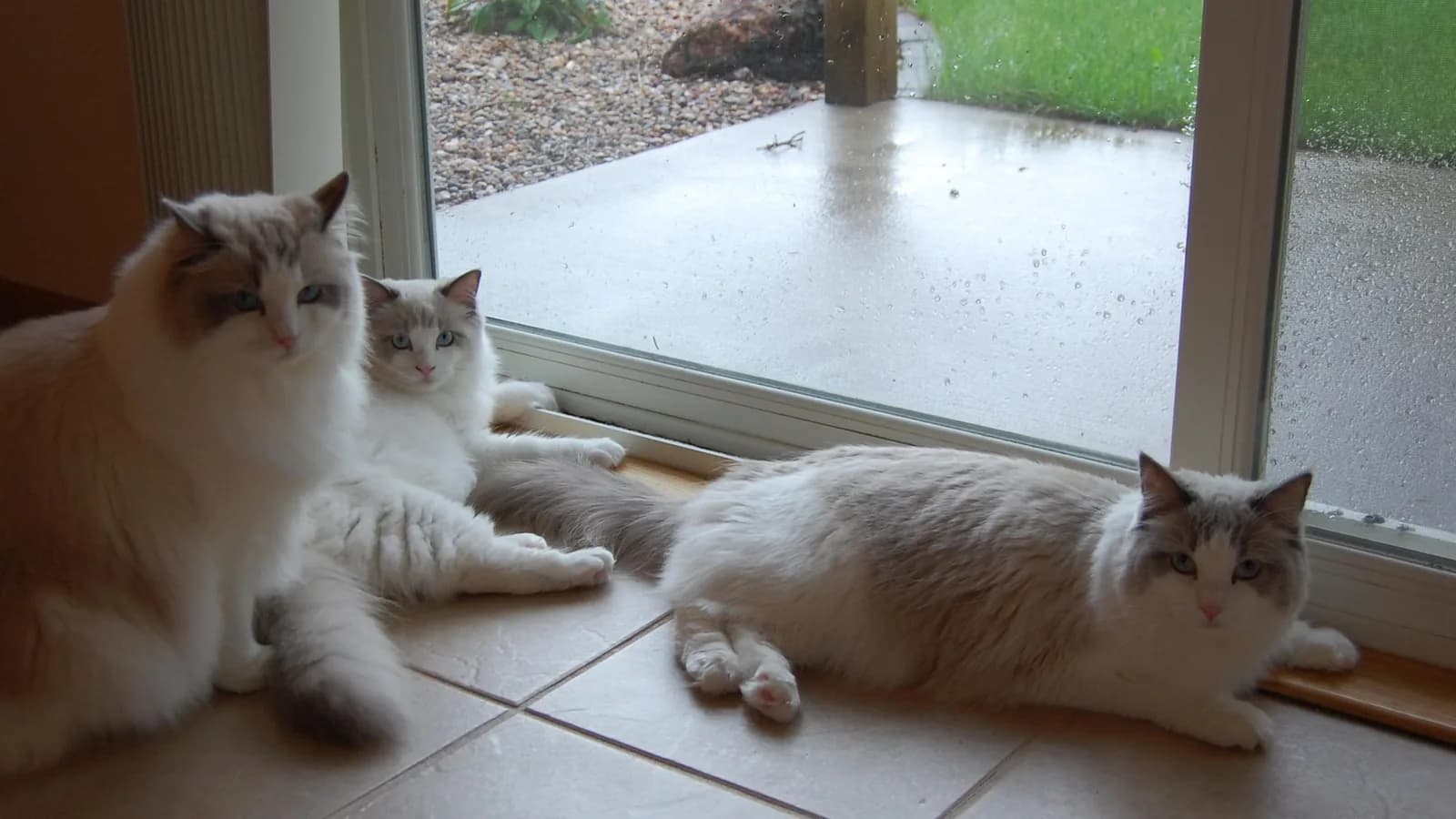
Every Ragdoll wears a combination from one grid: a point color, a pattern, and sometimes a modifier. The six point colors all five major registries agree on are seal, blue, chocolate, lilac, red and cream. The three patterns are (no white), (white feet, chin and chest) and bicolor (the white inverted V). Two modifiers can overlay any of it: (tabby stripes in the points) and (red or cream mottling). That grid is the whole official palette. Each combination reads like coordinates: a "blue lynx mitted" is a blue-pointed cat with tabby markings and white feet.
| Color / feature | (CA) | (AU) | |||
|---|---|---|---|---|---|
| Seal, blue, chocolate, lilac, red, cream | ✓ | ✓ | ✓ | ✓ | ✓ |
| Colorpoint, , bicolor patterns | ✓ | ✓ | ✓ | ✓ | ✓ |
| Lynx and overlays | ✓ | ✓ | ✓ | ✓ | ✓ |
| Van pattern, separately named | no | ✓ (only registry) | no | no | no |
| Mink, sepia, solid () | ✓ since 05/2025 | no provision | screened against on import | no provision | no provision |
| Silver, smoke, caramel, apricot | no | no | no | no | ✓ (only registry) |
| Solid white | excluded by name | not recognized | not recognized | not recognized | not recognized |
The pattern, in one paragraph each
Colorpoint is the classic Siamese-style layout: dark mask, ears, legs and tail, no white anywhere, the pattern the breed's founding myth was photographed in. Mitted adds white "mittens" on the front paws, boots on the back legs, a white chin and chest stripe. 's own genetics account calls its gene s2, dominant, with a double dose ("High Mitted") looking like a bicolour.
Bicolor carries the white inverted V and gets its own page, including the high-white extreme only names "Van". Patterns are scored cosmetics, not varieties. Every registry weights color and markings as a minority of the judge's scorecard, and 's standard says outright that type "is paramount over colour and markings."
When do Ragdoll kittens get their color?
A Ragdoll is born nearly white, and that is not a breeder's tale. The pointed gene is a temperature-sensitive version of the pigment enzyme tyrosinase (the gene), which shuts down in warm skin. A kitten fresh from a uniformly warm womb has had no cold extremities yet, so no points. Color arrives as the extremities cool in the outside world, and it keeps deepening for a remarkably long time.
's standard states full color "is not reached until 3 years old." 's puts coat and color maturity "at about three years of age," and every standard describes the points darkening with age. So yes, Ragdolls do "change color with temperature," within limits: the same mechanism that darkens a kitten's ears will slightly deepen an adult's coat in a cold winter. The blue eyes are part of the same package, and every one of the six colors keeps them.
Minks, sepias and solids: the Cherubim question
Here is the sharpest disagreement in the breed. Mink, sepia and solid Ragdoll-type cats exist and are widely sold. But four of the five registries (, , , ) make no provision for them at all; the words "mink" and "sepia" do not appear anywhere in their standards. , alone, gave these cats a named division with a championship path on May 1, 2025: . Before that date, TICA itself treated them as disqualifying. GCCF goes the other way.
It requires imported Ragdolls to carry DNA proof they are FREE of the Burmese color-restriction gene (the mink/sepia ingredient) before registration. And the breed's own history smiles at all of this: 's own Breeding Policy names "Buckwheat, a black self (solid)" among the three cats the breed was founded on in 1963. If you are buying a mink or solid Ragdoll, the honest summary is: a real cat with founding-litter ancestry, registrable as a breed only under 's division as of today.
Australia's extension: silver, smoke, caramel and apricot
One more registry split, useful to Australian readers. 's Ragdoll standard is the only one of the five that recognizes silver tabby points, smoke points, caramel and apricot points: sixteen-plus named entries no other registry lists. One caution travels with the silver family project-wide. The gene behind feline silver has never been confirmed in peer-reviewed literature (a 2026 review states the candidate mutations remain unpublished), so "DNA-verified silver" is a claim no current test supports. The phenotype is real and ACF's standard describes it precisely; the certificate is what does not exist yet.
"Black", "brown", "white", "orange": what those searches actually find
The four highest-volume Ragdoll color searches are words no registry uses. Black (4,400 US searches a month), brown (4,400), white (2,400) and orange (1,900) together outnumber every correctly-named color except flame. Each has a real answer. A "black Ragdoll" is usually a very dark seal (every standard defines seal as deep brown, never black), or a genuine -only solid: seal page. A "brown Ragdoll" is seal or chocolate; brown appears in no standard: chocolate page.
A "white Ragdoll" is almost always the white PART of a or bicolor coat, or the high-white bicolour extreme. No registry recognizes a solid-white Ragdoll, and even 's division excludes solid white by name. And an "orange Ragdoll" is a red point, which the market calls flame: flame page. We wrote a page for each, because a buyer typing "black ragdoll kitten" deserves to know whether the listing means a dark seal or a cat only one registry will register.
The six colors, one line each
Seal
deep warm brown points, the breed's default and the color "black ragdoll" searches usually mean
Blue
slate-gray points, seal softened by the dilution gene
Chocolate
milk-chocolate points, warmer and lighter than seal
Lilac
the palest of the four, a frosty pinkish gray: chocolate plus dilution
Flame (red)
the orange one; "red" on every , "flame" in every listing
Cream
red softened by dilution, the subtlest color in the palette
 The vet's take
Veterinary review
Are you a vet?
Your professional read belongs here: every verified practitioner can leave a note, published once our editors have reviewed it.
Sign in and get your license number verified. We check it in the public register, we never ask for or keep a copy of your diploma, and your number is never published.
Frequently asked questions
What colors do Ragdolls come in?
Six point colors (seal, blue, chocolate, lilac, red, cream), three patterns (colorpoint, mitted, bicolor), plus lynx and tortie overlays. TICA additionally recognizes mink, sepia and solid cats as Cherubim, and Australia's ACF adds silver, smoke, caramel and apricot points.
What is the rarest Ragdoll color?
No registry publishes color population counts, so every "rarest" claim online is a breeder's impression. What can be said with sources: one large US cattery names chocolate, lilac, cream and red as the colors it considers rare and possibly dearer, and minks carried a CA$200 to CA$1,000 premium at one Ontario cattery's card.
What is the most popular Ragdoll color?
Same honest answer: nobody counts. Seal and blue dominate cattery galleries and the search volumes, which measures interest, not births.
Do Ragdoll kittens change color?
Yes, dramatically: born nearly white, points arriving in the first weeks, full color taking about three years by TICA's and CFA's own standards, and points darkening further with age.
Can a Ragdoll be tortoiseshell?
Yes, as a modifier: tortie (and tortie-lynx) versions of the point colors are recognized across the registries' lists.
Do all Ragdolls have blue eyes?
All pointed (registered show-standard) Ragdolls do; the gene that restricts color to the points also lightens the iris. The full story is on the blue page.
 Community questions
Got a question this page doesn't cover? Ask it: the best ones get published here with their answer.
This is information, not veterinary advice, and it cannot tell you what is wrong with your cat. Our rule is a simple one: if something is wrong with your cat, call your vet, and call an emergency clinic if it is out of hours. Nothing you read here is a reason to wait.
Medical information applies to every reader. Prices, legal duties and common practice do not: unless stated otherwise, they are given for the United States, and they differ in the UK, Canada and Australia, and often between states or provinces. Check with your own vet and your own local authority.
Our sources
- TICA Ragdoll Breed Group standard (PDF, 05/2025)
- TICA: Ragdoll breed page
- CFA Ragdoll Show Standard (PDF)
- GCCF Ragdoll Standard of Points (PDF, June 2026)
- GCCF Ragdoll Registration Policy (PDF, June 2025)
- GCCF Ragdoll Breeding Policy (PDF, 2012)
- CCA-AFC Ragdoll breed standard (PDF)
- ACF Ragdoll standard (PDF, Australia)
- Górska et al. 2026, color-variant genetics review (Genes)
- Wiseacres Ragdolls: kitten cost guide
- Until One Day Ragdolls: kittens page

Worth keeping a paw on
Pin this guide
So you can find it the day you need it, and share it with someone whose cat does the same thing. One click and it sits in your board.
Pin it on Pinterest
 Purr or Pass
The cat newsletter
Our verified guides, no spam. Unsubscribe in one click.
More Ragdoll guides
The Ragdoll profile →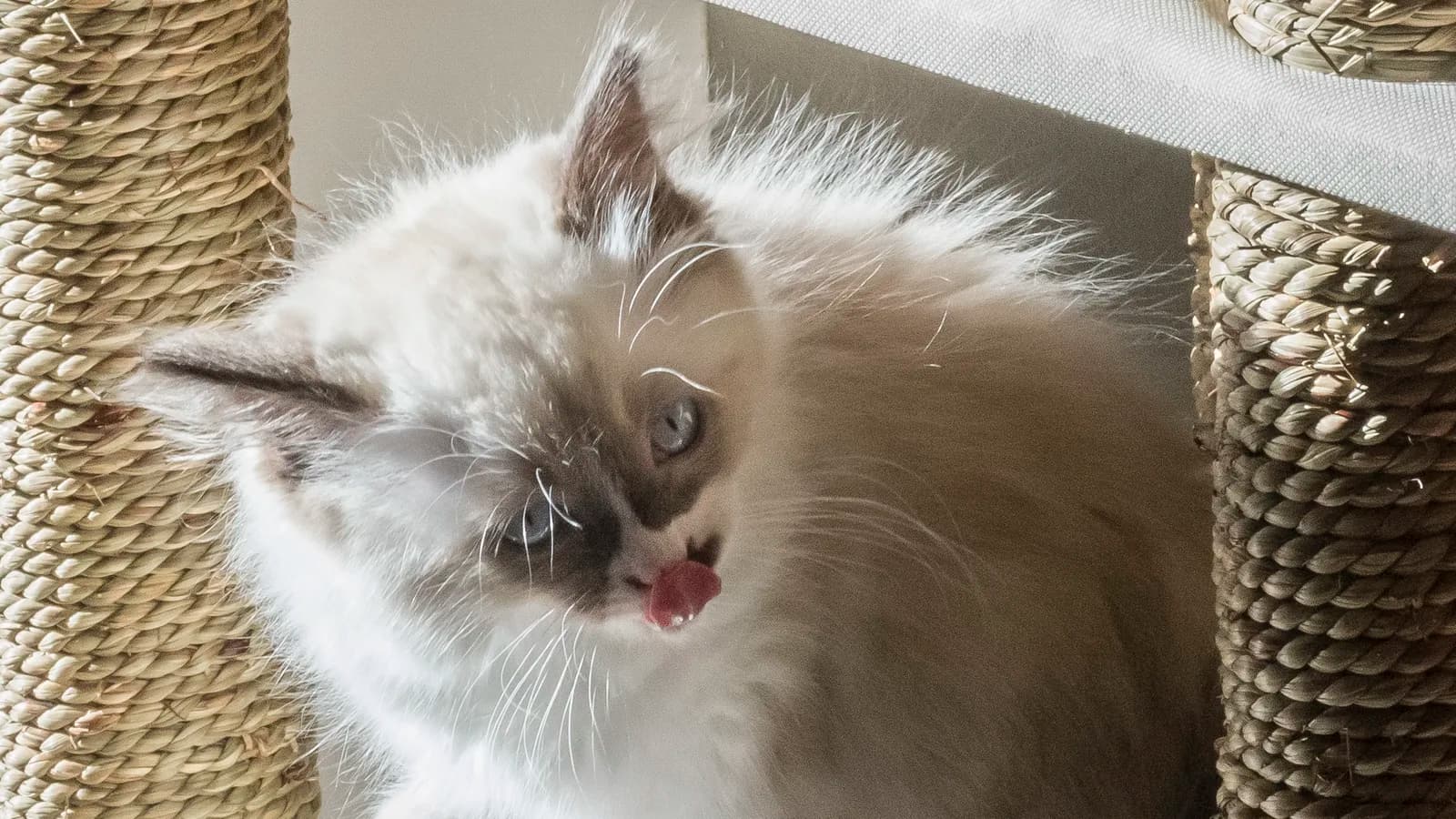
Ragdoll guide
Ragdoll Cat Price: What Buyers Actually Paid For in August 2026
What Ragdoll kittens actually cost in the US, UK, Canada and Australia, from named catteries and live marketplace samples, with deposits, bundles and the under-$2,000 red flag.
Read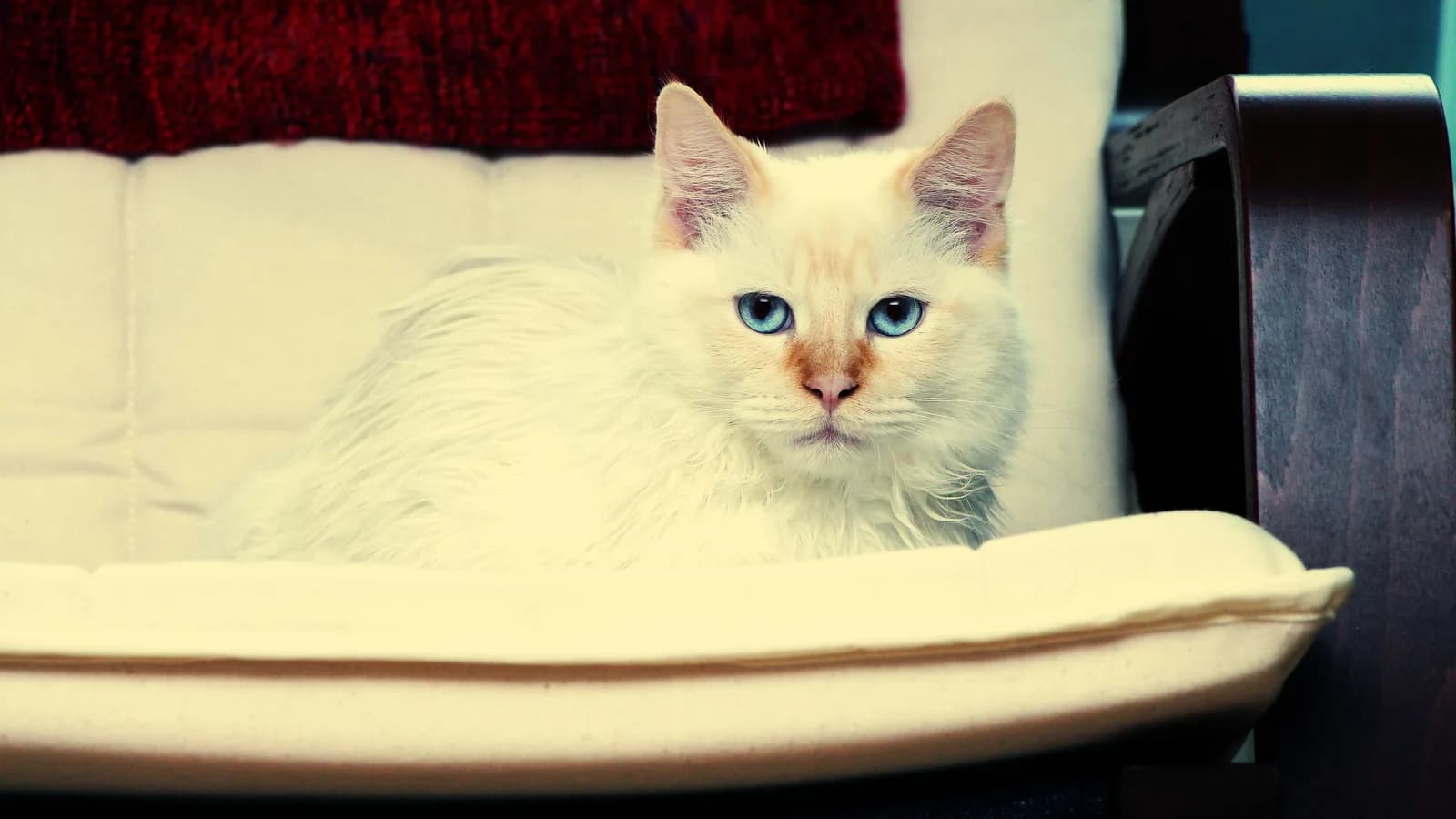
Ragdoll guide
Flame Point Ragdoll: The Orange One With Two Names
The orange Ragdoll explained: why registries write red, not flame, why most flame points are boys, and what the orange gene actually does.
Read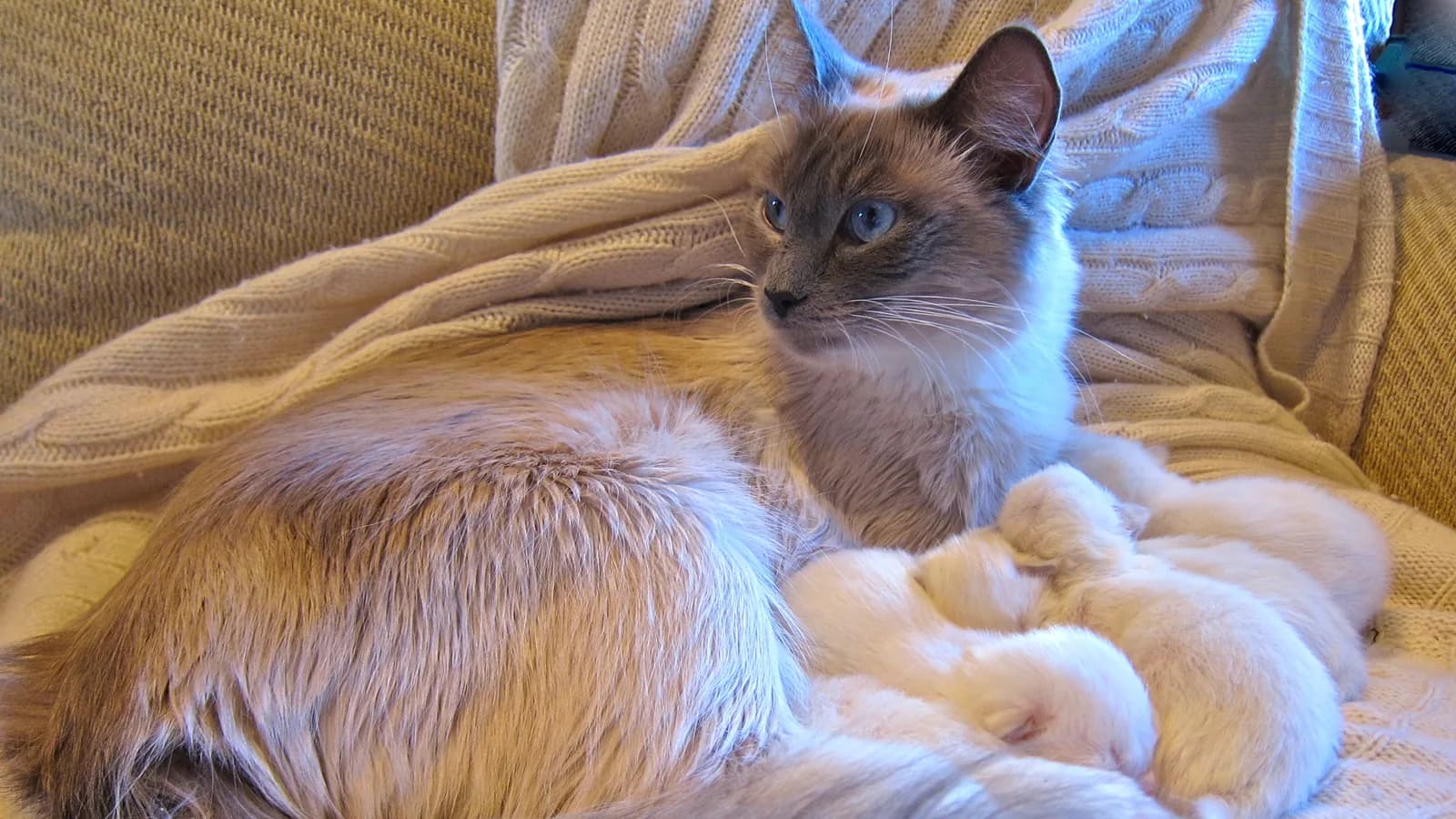
Ragdoll guide
Finding a Ragdoll Breeder: The Checks That Actually Protect You
The registry checklists that actually protect you, the UK's dated HCM-testing mandate, what "registered" means in each country, and the 6-to-8-week red flag.
Read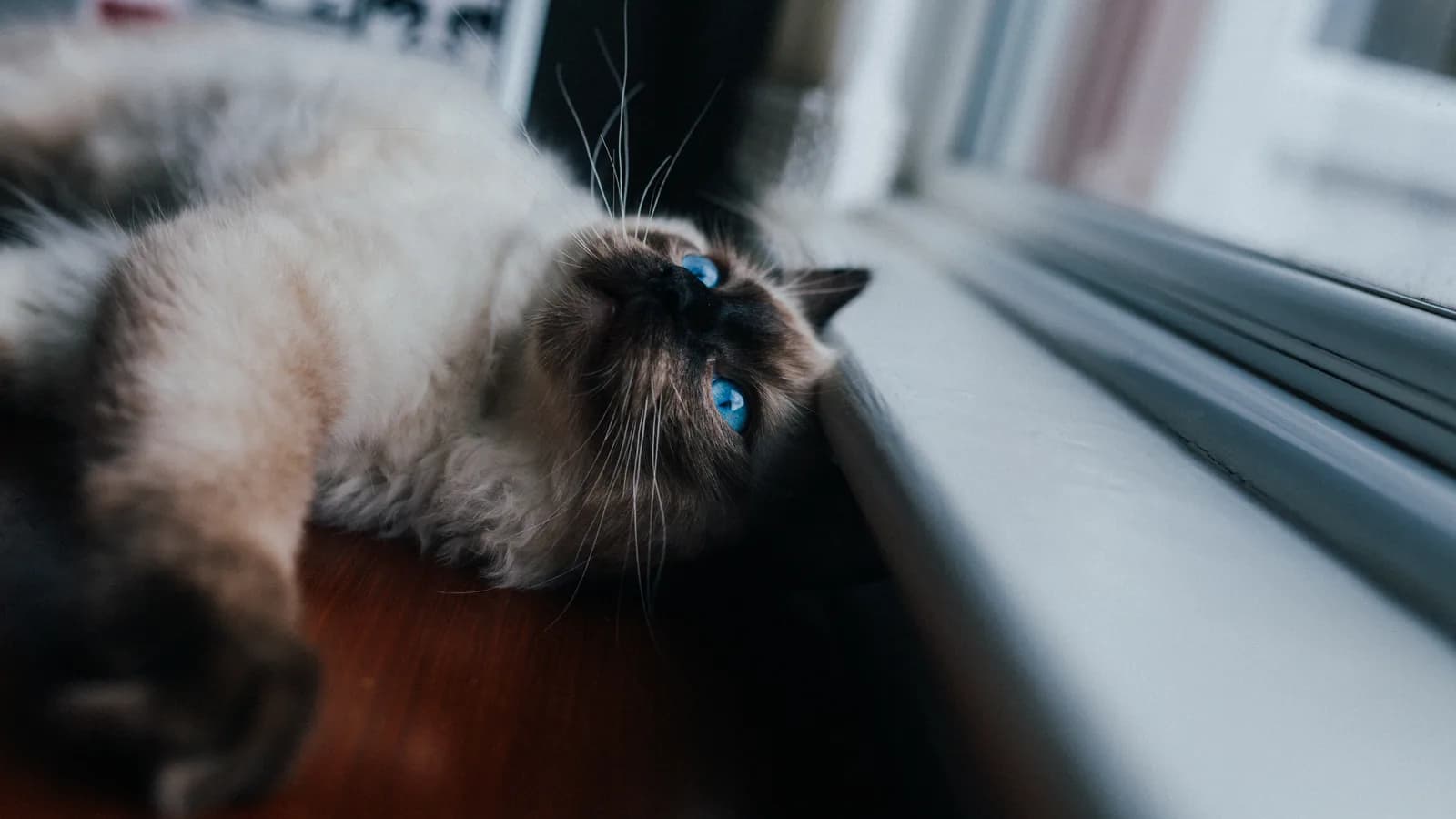
Ragdoll guide
Are Ragdoll Cats Hypoallergenic? No, and No Study Says Otherwise
No cat breed is hypoallergenic, and no study has ever measured the Ragdoll as lower-allergen. What Fel d 1 is, what the two veterinary reviews actually say, and what helps if you're allergic.
Read
Ragdoll guide
Seal Point Ragdoll: The Original Recipe
What seal point means, why the darkest Ragdolls read black in photos but never are, and the one registry that recognizes a genuinely solid black Ragdoll-type cat.
Read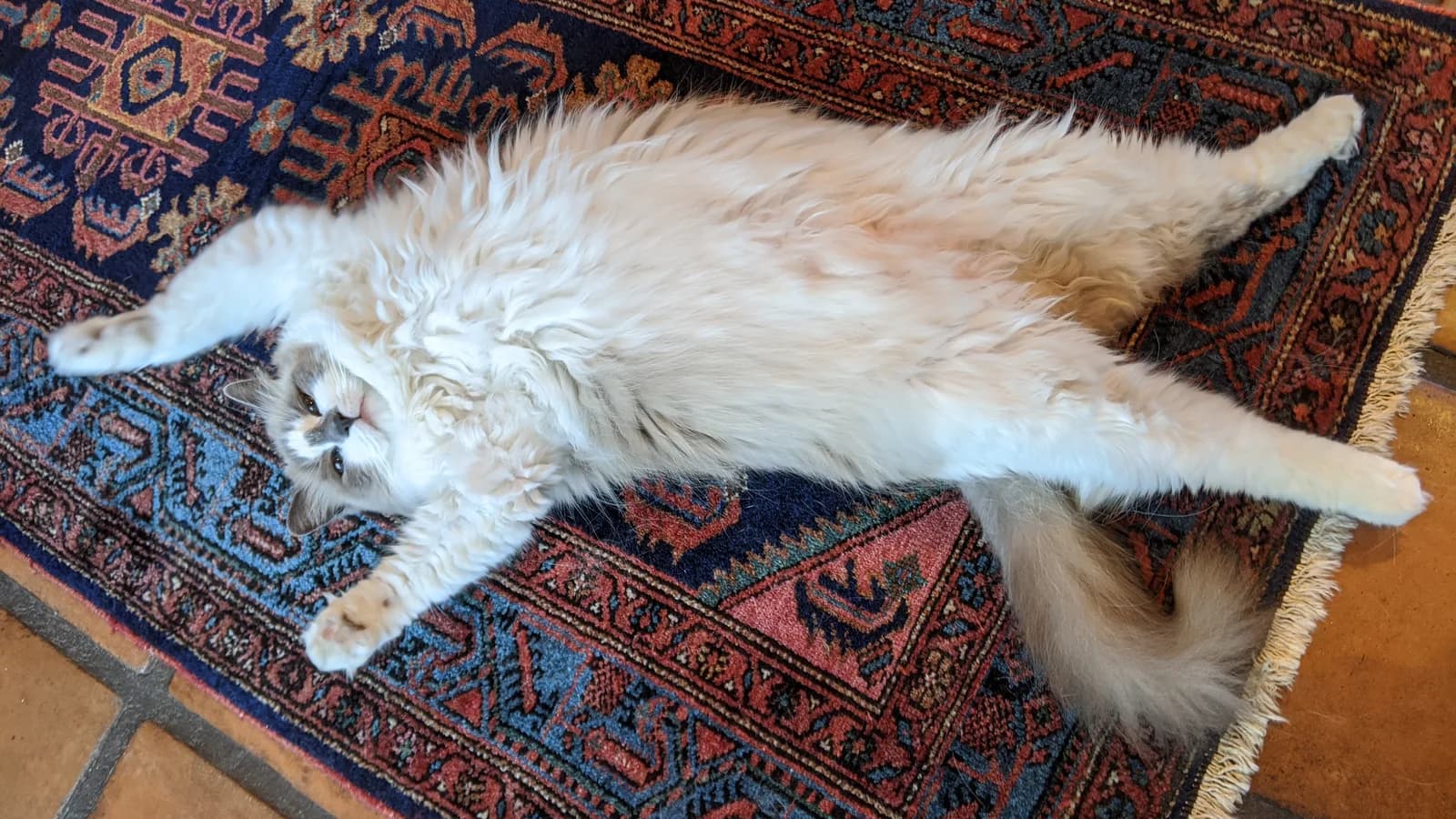
Ragdoll guide
Ragdoll Cat Size: What the Scales Say vs What the Brochures Say
What Ragdolls actually weigh (204 measured cats say less than you think), what the registries claim, and why "one of the largest breeds" is a marketing sentence, not a measurement.
Read
Ragdoll guide
Chocolate Ragdoll: The Color Everyone Calls Brown
Searching for a brown Ragdoll? No registry has one. How to tell chocolate from a dark seal, and why the UK once rebuilt this color with Siamese and Persian outcrosses.
Read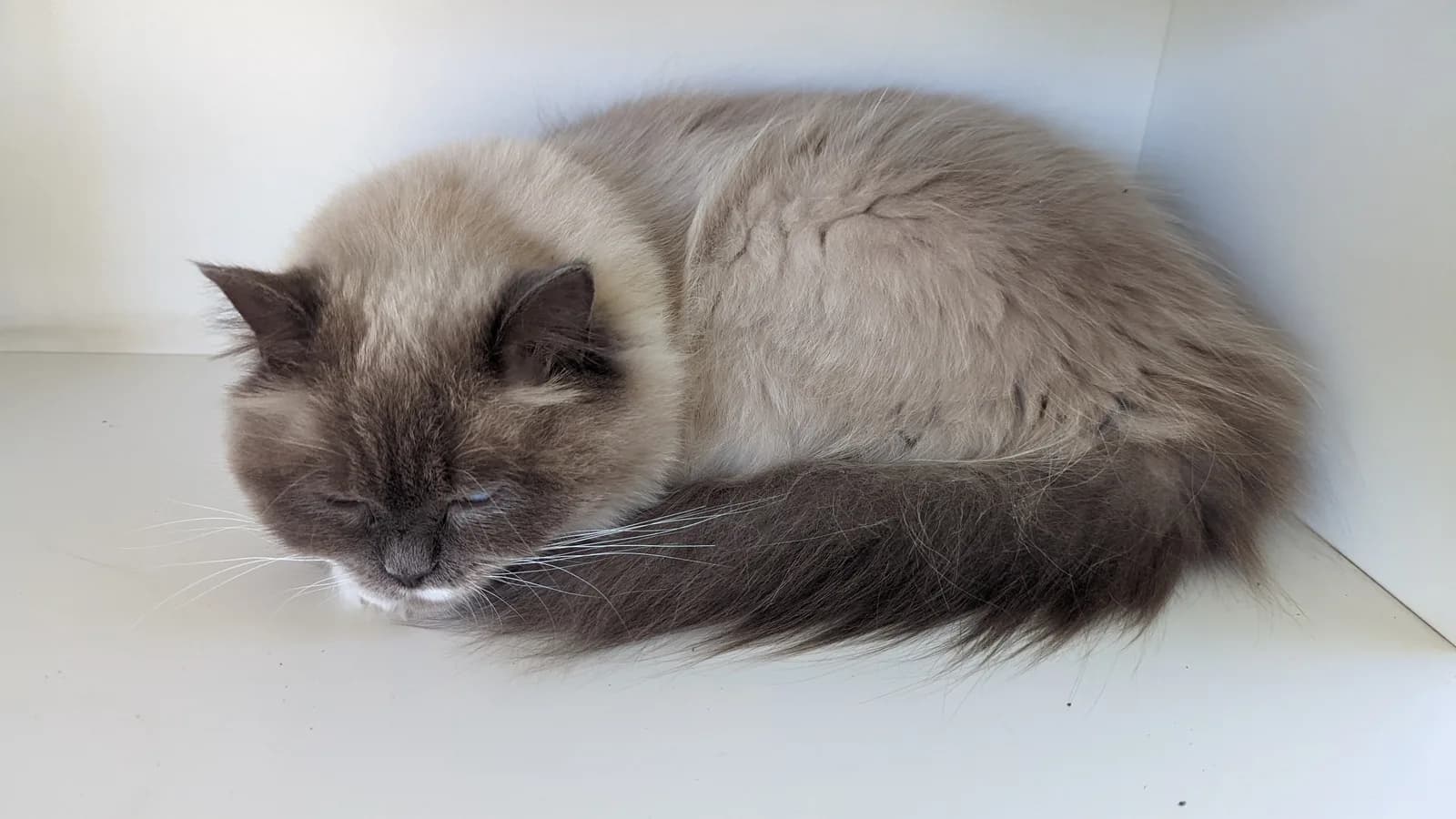
Ragdoll guide
How Long Do Ragdoll Cats Live? 12.85 Years, Measured, and Rising
The largest Ragdoll study ever run puts median age at death at 12.85 years, higher than older studies said, and the reason why is the best story in cat statistics.
Read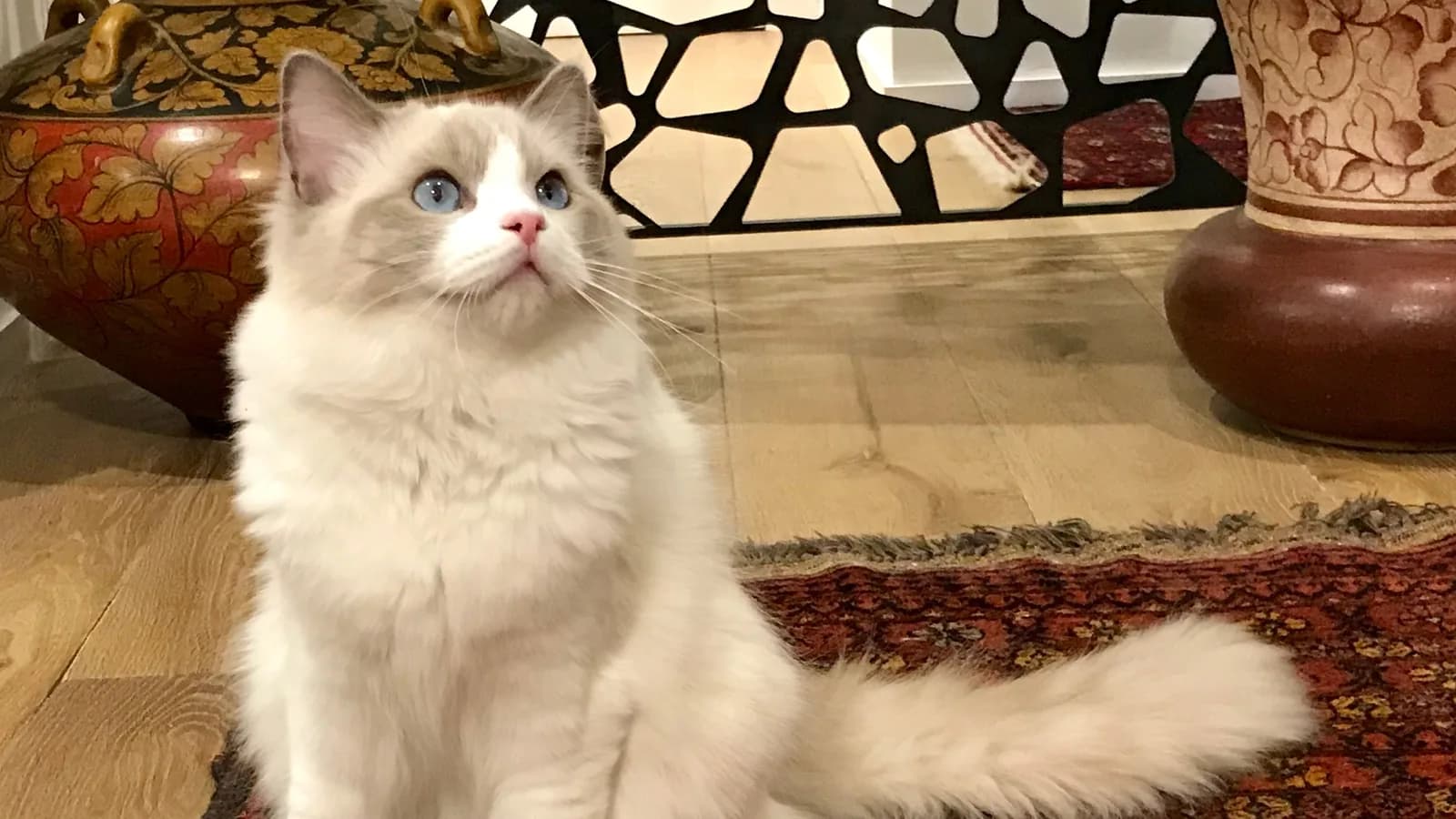
Ragdoll guide
Lilac Ragdoll: The Palest of the Four
What a lilac Ragdoll actually looks like ("frosty grey with pinkish tinge" per the standard), how dilution builds it from chocolate, and the honest word on rarity pricing.
Read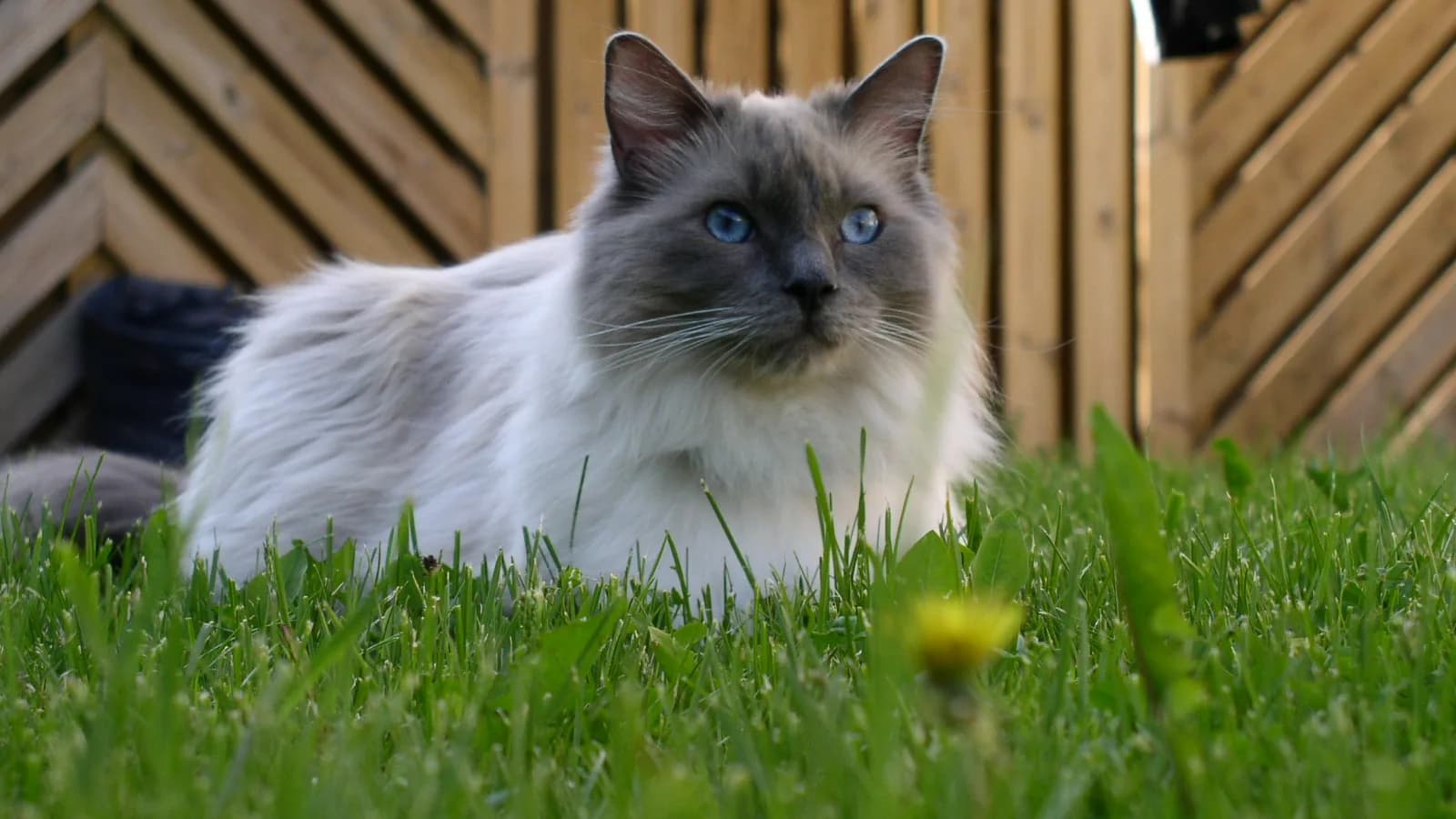
Ragdoll guide
Blue Ragdoll: One Word, Two Questions
What a blue point Ragdoll is, why it is really a softened seal, and the answer to the question everyone asks: do all Ragdolls have blue eyes?
Read
Ragdoll guide
Ragdoll Mix: What Actually Identifies One (and What Never Does)
Is your cat part Ragdoll? What actually identifies the breed (points, patterns, papers), what a DNA test can say, and the disputed answer to what Ragdolls were mixed from.
Read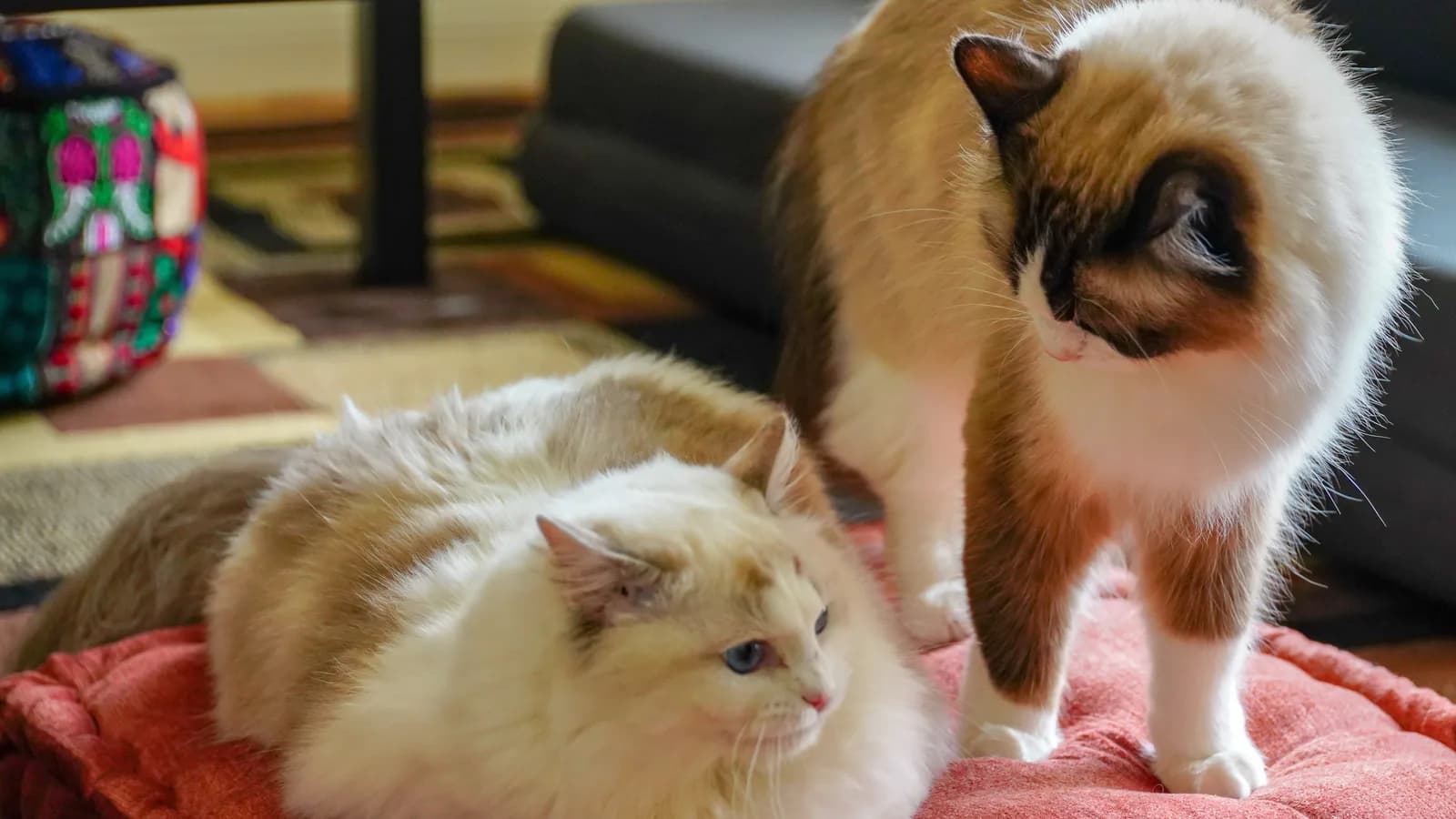
Ragdoll guide
Bicolor Ragdoll: One Gene, a White V, and a Sliding Scale
What makes a Ragdoll bicolor, how the same gene runs from a standard bicolour to an almost all-white cat, and why only one registry calls that extreme "Van".
Read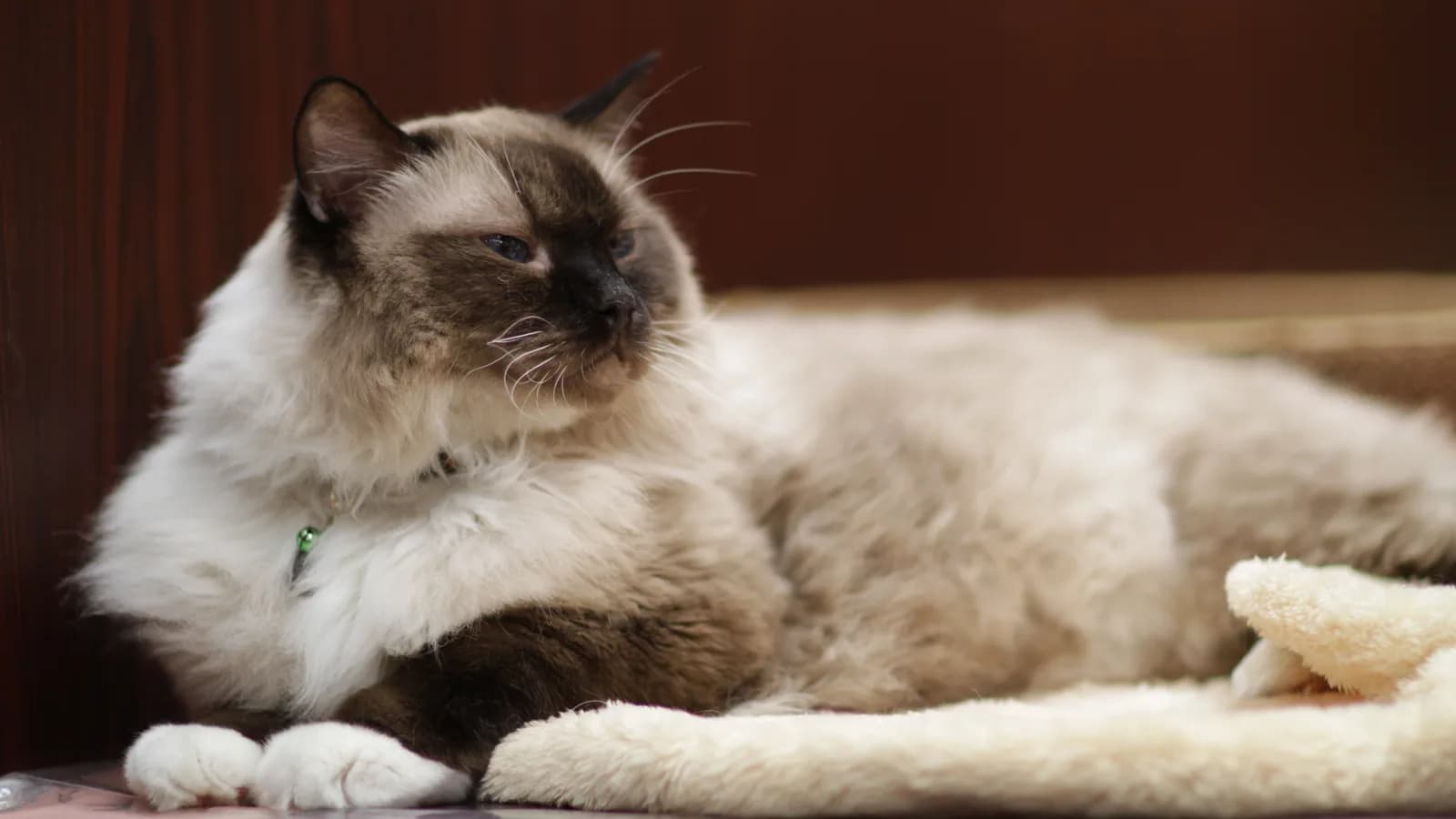
Ragdoll guide
Do Ragdoll Cats Shed? Yes. Here's What That Actually Looks Like
Ragdolls shed seasonally like every cat. What the registries actually say, the undercoat disagreement nobody mentions, and the weekly routine that keeps hair off your sofa.
Read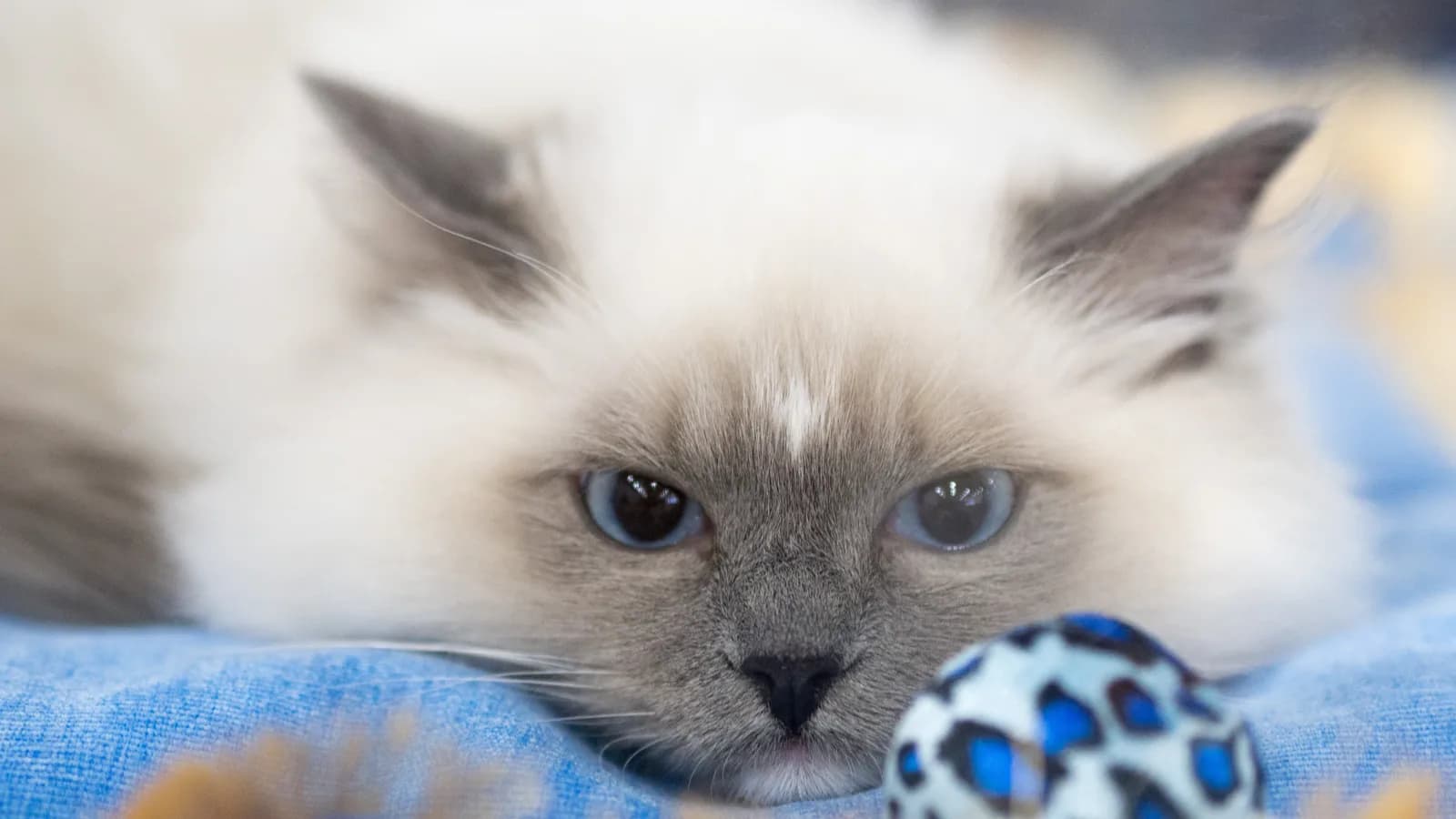
Ragdoll guide
Ragdoll Cat Names: What Owners Actually Chose, and Ideas That Fit
The only measured Ragdoll name rankings (Bella, Max and friends, 2015), the story behind the breed's own odd name, and name ideas that fit a cloud-colored, blue-eyed couch philosopher.
Read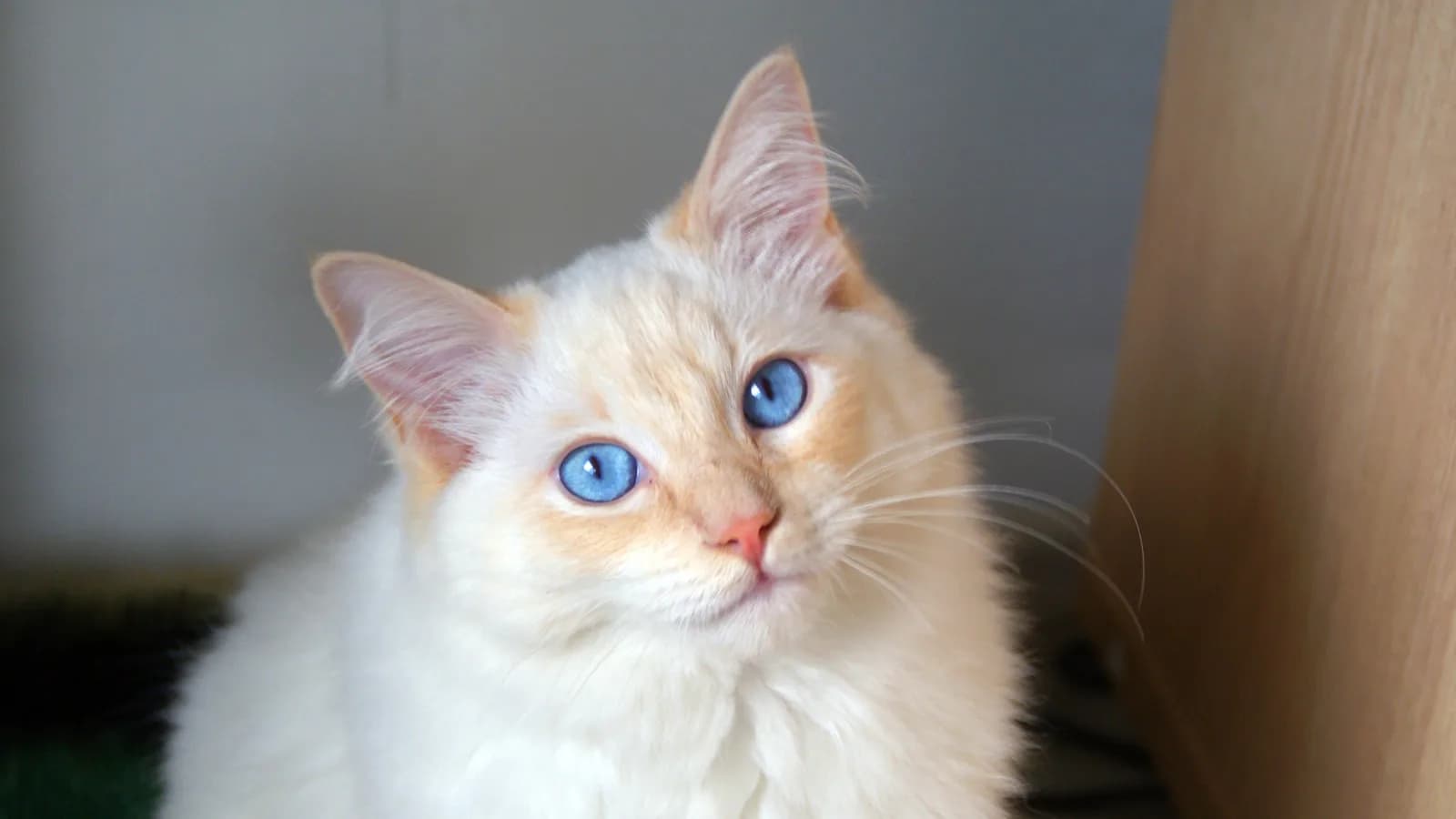
Ragdoll guide
Cream Ragdoll: The Whisper Version of Orange
What a cream point Ragdoll is, how dilution turns red into cream, how to tell one from a pale flame point, and what the standards actually require.
Read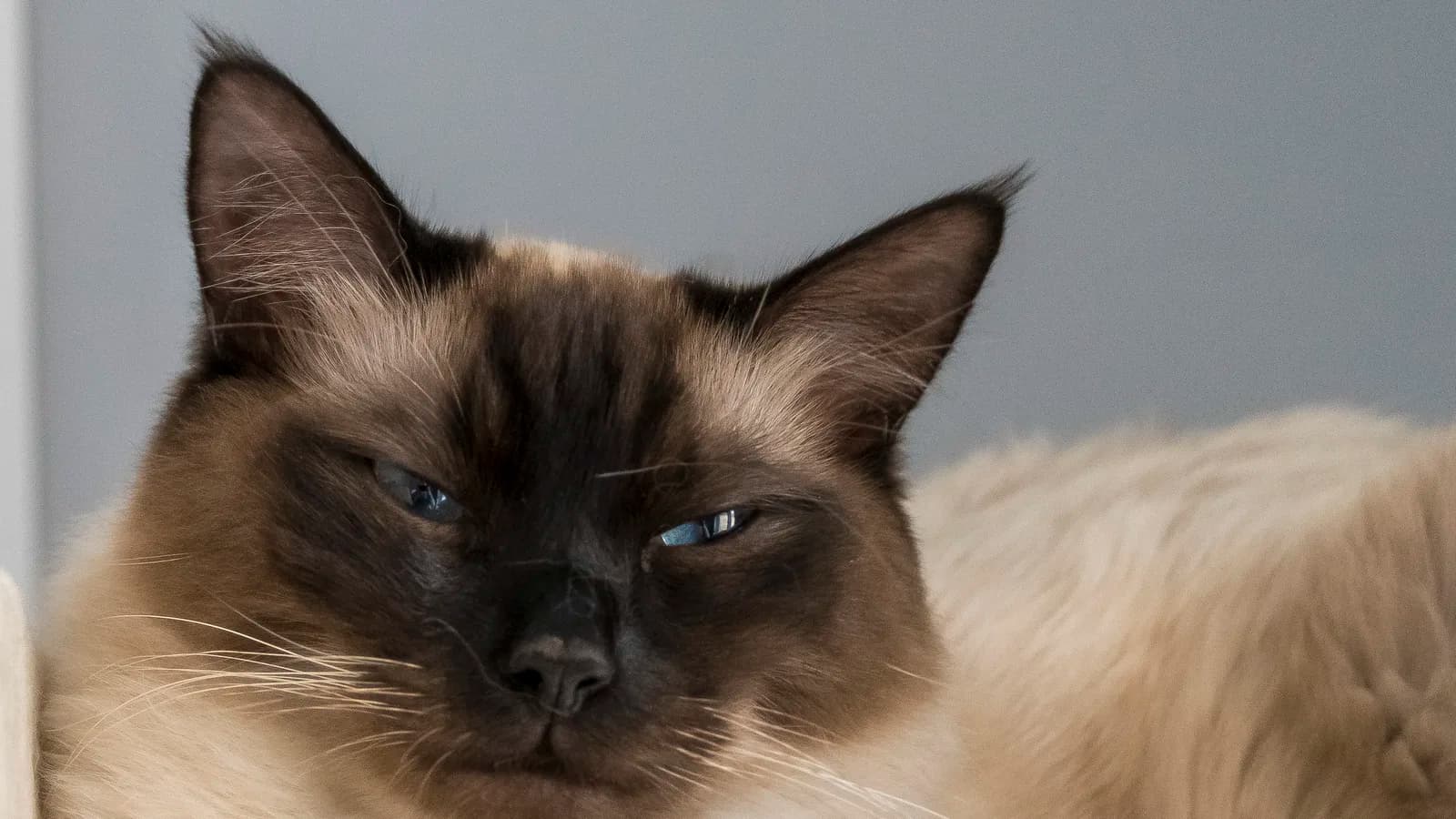
Ragdoll guide
Why Do Ragdoll Cats Go Limp? Mostly, They Don't
The famous Ragdoll flop traces to one cat, one breeder and a story from the 1960s. What the registries actually say, what research exists (none), and the child-safety correction that matters.
Read
Ragdoll guide
Maine Coon vs Ragdoll: Same Shortlist, Genuinely Different Cats
Which is bigger, which sheds more, which lives longer: the registry quotes and the measured studies, including the one sentence CFA copy-pasted between the two breeds.
Read
The floor belongs to our members. Keep it kind, links are not allowed, and images go through moderation before anyone else sees them.