

Siamese
“The Meezer”
 By Priya · The careful one
Published August 21, 2026Updated August 26, 202613 min read
Contents
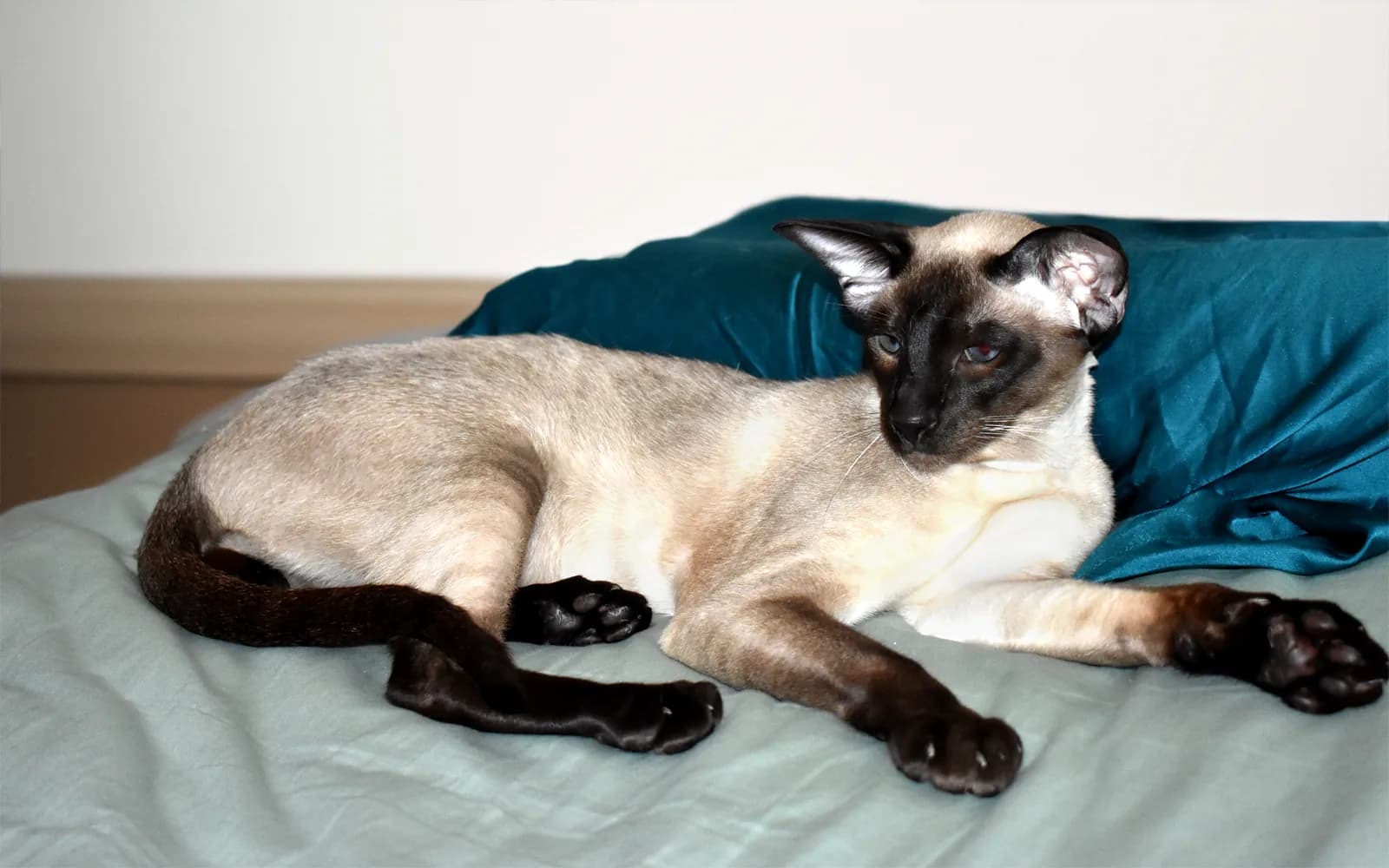
 Siamese photos
Real photos, so you can see what the breed actually looks like: coats, ear tufts, ruff and build.
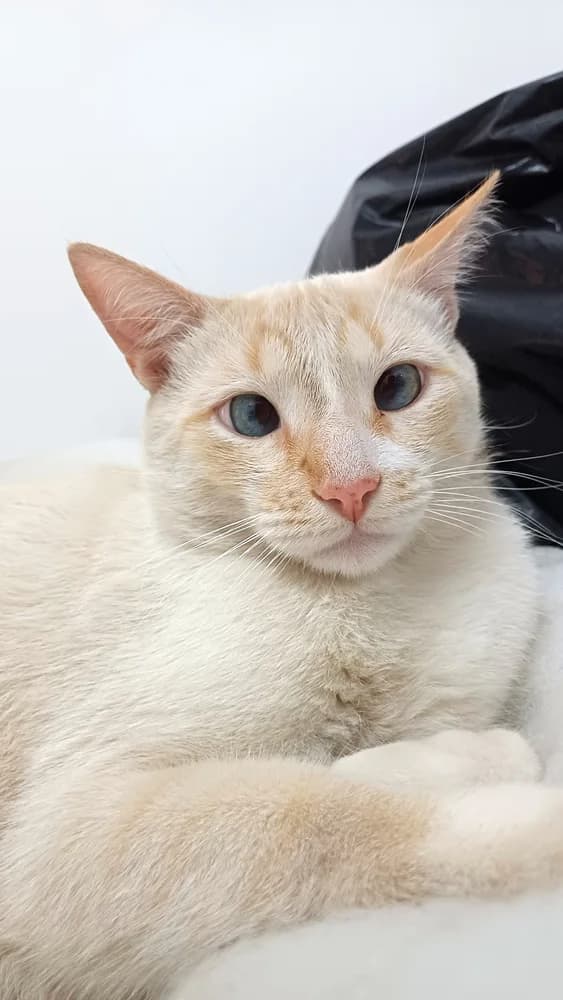
Flame point Siamese cat close up, blue eyes and pale coat, resting with paws tucked
Photo: Butterflye222 · CC0 · via Wikimedia Commons
 Vital stats
Origin
Thailand
Thailand (formerly Siam), where pointed cats are documented in the Tamra Maew manuscripts. The Western story starts at London's Crystal Palace. A Siamese was shown, described and photographed in the press as early as July 1871.
Weight
Female
5-8 lb (2.3-3.6 kg)
Male
8-12 lb (3.6-5.4 kg)
Life expectancy
The claims are unusually split. and PetMD describe a breed living into its 20s, and Purina give an ordinary 8 to 15, and none cites a study, so our band is the span of those claims. The measured story, for once, mostly SUPPORTS the long-lived reputation. Two large UK studies thirteen years apart both place the Siamese among the longer-lived UK breeds: a life expectancy at birth of 11.69 years (95% CI 10.56-12.82, 88 deaths, fourth of twelve breed groups, 2024), and a median age at death of 14.2 years (third of ten breeds, 2015).
The counterpoint is Swedish and specific. An older insured-cat study found its Siamese GROUP (which pools Balinese and Oriental Shorthair) with the highest death rate of sixteen groups, driven mainly by mammary tumors in relatively young cats, mechanism unknown per the study itself. That is a reason to discuss spay timing and lump checks with your vet, never a prediction for your cat. No US, Canadian or Australian measured figure exists.
Coats
Seal point
Chocolate point
Blue point
Lilac point
Red (flame) point
Lynx (tabby) point
Tortie point
The classic four every registry recognizes: seal, chocolate, blue and lilac point. Beyond them the registries split. and fold red, cream, and tabby () points into one Siamese breed (GCCF counts 32 colors and patterns). and Canada's register the extended colors as a separate breed, the Colorpoint Shorthair. Blue eyes, always, at every registry.
Understanding the coats (and their genetics)Size
No show standard states a weight (CFA's page gives no number at all). TICA's own boxes lead because they sit closest to the measured data: females about 5-8 lb (2.3-3.6 kg), males 8-12 lb (3.6-5.4 kg). GCCF's own UK box runs a size class heavier (8-15 lb, unsexed), and we print both rather than blending. The one measured cohort (Germany, pooled Siamese/Oriental) weighed females at 2.9 kg and males at 3.4 kg means. The Siamese is the lightest or among the lightest breeds in every registry, market and measured source we gathered. And GCCF adds the paradox in its own words: they should feel much heavier than they appear.
Did you know
In 2016 Guinness World Records named Scooter, a 30-year-old Siamese from Mansfield, Texas (born 26 March 1986), the world's oldest living cat: a dated, verifiable record from that year, not a standing title today.
 Personality
 Affection5/5
 Energy4/5
 Intelligence5/5
 Friendliness5/5
 Independence1/5
 Vocal5/5
 Shedding2/5
Compatibility
 Good with children5/5
 Good with other pets4/5
 Apartment friendly4/5
Editorial ratings on our five-point scale, anchored in the registry descriptions and the measured behaviour studies cited on this profile; individual cats vary, and our members' own ratings below are the counterweight.
Still torn between this breed and another?Compare the Siamese trait by trait, or filter every breed by what matters to you. What our members say
What our members say
Nobody has described their Siamese here yet. As soon as the first profiles come in, this is where the community averages will show up: temperament, food, lifestyle.
Describe my Siamese Pros & cons
Strong points
- The fancy's conversationalist: three registries document the voice in their own words
- Among the longest-lived breeds in both large UK studies
- The lightest or among the lightest breeds in every source we gathered
- Short easy coat: weekly combing, no special equipment (CFA's words)
- A DNA test exists for the breed's main eye disease (PRA rdAc)
Things to consider
- The voice is constant and non-negotiable: three registries say so
- Does poorly alone: the people-fixation is the whole personality
- A real, documented health file: amyloidosis and mediastinal lymphoma need informed breeders
- The Swedish data flags mammary tumors: spay timing is a vet conversation
- High energy: needs vertical territory and genuine play, not a windowsill
 Is a Siamese right for you?
Someone home a lot, who wants a running commentary and a shadow. Suits families, multi-cat homes and anyone who finds silence lonely; suits nobody who wants a quiet ornament.
Is the Siamese right for YOUR home?
Answer a few questions and we'll email you your personalized result.
Take the quiz · 2 min Getting to know the Siamese
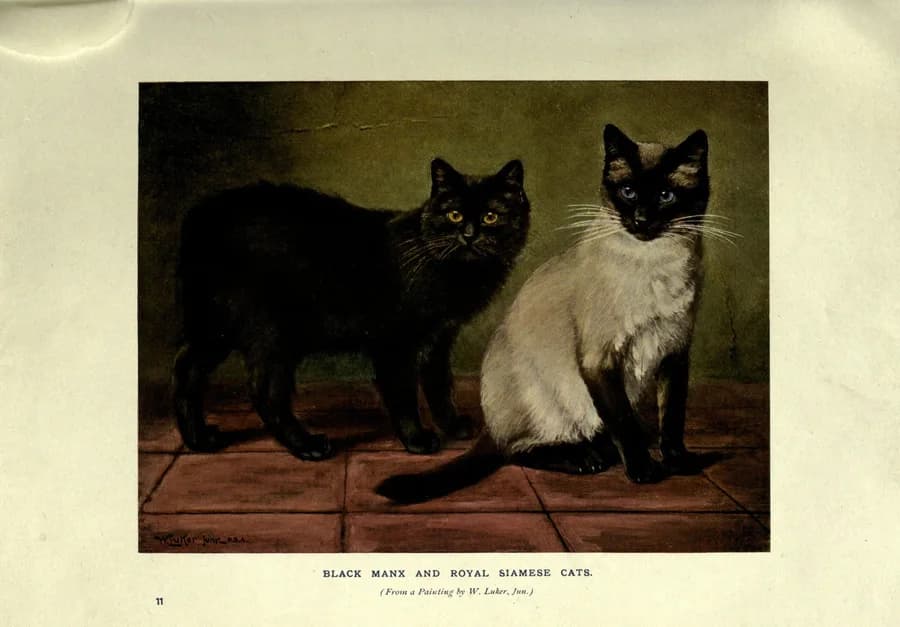
Start with the voice, because the Siamese starts with it too. Three registries describe it independently and identically in spirit. says the Meezer will 'talk' to you all day and night. calls the breed vocal, affectionate and insistent. settles for outgoing, extrovert and noisy. No study has ever MEASURED breed vocalization (we publish that absence). But no measurement is needed to know what every Siamese household knows: this is a cat with opinions, delivered on schedule.
The body under the voice is the lightest in our whole catalog. boxes females at 5-8 lb and males at 8-12, and the measured German cohort weighed them lighter still. No other breed we have profiled is consistently the smallest figure in every source. The show type is the long tapering wedge. The rounder traditional 'applehead' type carries the same papers and its own page, including where the Thai, a genuinely separate registry breed, fits.
The colors are an empire with a border dispute. Everyone agrees on the classic four: seal, chocolate, blue and lilac point. Beyond them, Britain and Australia keep red, tortie and lynx points inside the Siamese. and Canada register the identical cats as a second breed, the Colorpoint Shorthair. Our color pages carry the paperwork, the mechanism (kittens born white, points developing on the cool extremities) and the transatlantic naming split.
The health file is specific and worth reading straight. A hereditary amyloidosis that is this breed family's own signature disease. A decades-old association with mediastinal lymphoma in young cats (a proportion among diagnosed cases, never an individual risk number). The rdAc eye mutation, with a real DNA test. And the famous crossed eyes, which are not a defect of the eyes at all but the visible edge of the same gene that paints the points. The profile's health section carries each one with its scope, and the disclaimers are not decoration.
The lifespan story is the rare one that mostly CONFIRMS the legend. Two large UK studies, thirteen years apart, both place the Siamese among the longer-lived breeds (11.69 years at birth in one, a 14.2-year median in the other). An older Swedish dataset tells the opposite story through mammary tumors, and we print both with their scopes. A 30-year-old Texan Siamese named Scooter held the Guinness oldest-living-cat title in 2016. The legend has receipts, and caveats.
Buying one is a paperwork exercise first: the price page carries four markets of named catteries (flat US pricing, Britain's registered-versus-unregistered split, Canada's honest spread, Australia's single published figure). And the registration question, Siamese or Colorpoint Shorthair, matters more than any color premium, because no cattery we read charges one.
 Health: what to watch for
A few predispositions are well documented. The good news: they can be screened for or avoided by choosing a reputable breeder and keeping an eye on the right signals.
This is information, not veterinary advice, and it cannot tell you what is wrong with your cat. Our rule is a simple one: if something is wrong with your cat, call your vet, and call an emergency clinic if it is out of hours. Nothing you read here is a reason to wait.
Hereditary AA-amyloidosis
Serious, familialThe Siamese family's signature disease: amyloid protein deposited chiefly in the LIVER and THYROID (unlike the kidney-first Abyssinian form, a distinction the 2023 genetics study states explicitly), with deaths between one and seven years, most often from liver rupture. The genetics are real and recent: a heritability estimate of 0.56, and a 2023 genome-wide study pointing at SAA1, the amyloid precursor gene itself, as the strongest candidate.
What does NOT exist: a DNA test, a prevalence figure for any of our four markets, or any dietary management protocol (we checked; none is published). The honest translation: buy from breeders who know their lines' history, and know that this disease is why that question matters.
Symptoms to spot
Vague and sudden in a young adult cat: lethargy, pale gums, a swollen or painful belly, sudden collapse. Any of these is an emergency call, not a wait.
How common
No general-population figure exists anywhere; the often-quoted 6.2% is a 1987-1994 Netherlands necropsy-series figure, not a current market rate, and we do not republish it as one.
Screening & prevention
Ask the breeder directly about amyloidosis in the line's history; a breeder who knows the disease by name is the screen.
Genetic test
None exists: the SAA1 candidate finding is research, not a commercial test.
Mediastinal lymphoma
Serious, breed-associatedA decades-old, multi-country association. Across five studies from Australia, the UK and the US (1997-2014), Siamese cats are consistently over-represented among cats DIAGNOSED with lymphoma's chest-cavity form, and specifically as YOUNG cats (a distinct under-24-months subgroup in the Sydney data). Read the number right: these are proportions among diagnosed cases at referral hospitals (18.6% of one 118-cat series, for example), never a statement of any individual Siamese's odds, and no study measures what share of all Siamese develop it. One genuinely hopeful note from the same literature: young Siamese with this form responded unusually well to chemotherapy in the treatment series.
Symptoms to spot
Laboured or rapid breathing, coughing, lethargy, a young cat that stops jumping: same-day vet call. Open-mouth breathing is an emergency.
How common
Proportion-among-cases only: 18.6% of one Sydney lymphoma series, a quarter of cases with mediastinal involvement in another; no population rate exists.
Screening & prevention
No screening test exists; the value here is awareness in the first two years, when this form concentrates.
Genetic test
None.
Progressive retinal atrophy (rdAc)
Preventable by testingThe one big Siamese condition with a real DNA test. The rdAc mutation (CEP290 gene) was discovered in Abyssinians. But a 2010 survey of 41 breeds found it at roughly 33% allele frequency in North American and European Siamese populations, the paper's own words calling it a significant health risk particularly in the Siamese breed group.
Inheritance is recessive: normal vision at birth, first detectable degeneration around 7 months, blindness in most affected cats by 3 to 5 years. CFA's own page names PRA as one of the breed's two flagged issues and states the fix: carriers detected by DNA testing are removed from the gene pool or bred only to non-carriers.
Symptoms to spot
Bumping into things, dilated pupils, hesitation in dim light, reluctance to jump: a vet ophthalmology visit, not a home diagnosis.
How common
About 33% ALLELE frequency in the surveyed Siamese populations: a carriage figure, not a rate of blindness; only two-copy cats are affected.
Screening & prevention
Both parents' rdAc results before purchase: two clears cannot produce an affected kitten.
Genetic test
Yes: the PRA rdAc DNA test (UC Davis VGL and others).
Crossed eyes and nystagmus (the pointing gene's other job)
Cosmetic, breed-definingThe famous squint is not an eye defect. It is the visible edge of the same temperature-sensitive tyrosinase gene that paints the points. That enzyme is also needed while the visual pathway wires itself, and in Siamese cats a measurable excess of optic-nerve fibres crosses to the wrong side of the brain (the original 1969 tracing work made the Siamese the founding model for this anomaly across every albino mammal since, humans included).
Many Siamese compensate invisibly; some show the squint or a fine eye tremor (nystagmus). The primary literature describes cortical adaptation, and does NOT claim the crossing of the eyes is itself a proven compensation, so neither do we. Affected cats live normal cat lives.
Symptoms to spot
A steady inward squint or fine rhythmic eye movement present from kittenhood is the breed's own wiring; a NEW squint, head tilt or eye movement appearing in an adult cat is a vet visit, because that is not this.
How common
No measured share of modern show-line Siamese is published; the trait was near-universal in early lines.
Screening & prevention
None: this row exists to explain the look and to flag the new-onset exception.
Genetic test
None needed: it is the pointing gene itself.
Asthma and lower airway disease
ManageableNamed by the breed's own UK institutions: GCCF's page lists asthma among the breed's health notes, and PDSA carries the same association. No measured Siamese-specific prevalence exists in the literature we reached. So this row stays at the registries' own confidence level: a breed-associated tendency worth knowing the signs of, because feline asthma is treatable and its main danger is being mistaken for hairballs.
Symptoms to spot
Repeated coughing crouched low with an extended neck, wheeze, open-mouth breathing after play. A cough that recurs is a vet visit with a video of the episode; open-mouth breathing at rest is an emergency.
How common
No measured breed figure exists; named by GCCF and PDSA.
Screening & prevention
Know the cough posture on video; early diagnosis makes this a managed condition.
Genetic test
None.
Mammary tumors (the Swedish finding)
Serious, spay-linkedThe counterweight to the breed's good UK lifespan numbers. The large Swedish insured-cat study found its Siamese group (pooled with Balinese and Oriental Shorthair) carrying the highest death rate of sixteen breed groups, driven mainly by mammary tumors in relatively young cats, and the study itself states the mechanism is unknown. We print it exactly that scoped: one country, one era, one pooled group. The practical half is universal anyway. Spay timing has a documented protective relationship with mammary tumors in cats generally, and that conversation belongs with your vet, at kitten age, not after a lump.
Symptoms to spot
Any new lump along the belly's two mammary chains, found during ordinary petting: a vet appointment this week, not a watch-and-wait. Monthly chest-and-belly petting with intent is the screen.
How common
The elevated rate is the Swedish study's own pooled-group finding; no US, UK, Canadian or Australian Siamese-specific figure exists.
Screening & prevention
Discuss spay timing with your vet at kitten age; monthly lump checks lifelong. TICA's own materials also note a tendency to anesthesia sensitivity: raise it before any procedure, as TICA's note, not ours.
Genetic test
None.
Go deeper on health
Prevention, warning symptoms, costs and insurance: our guides, researched and sourced.
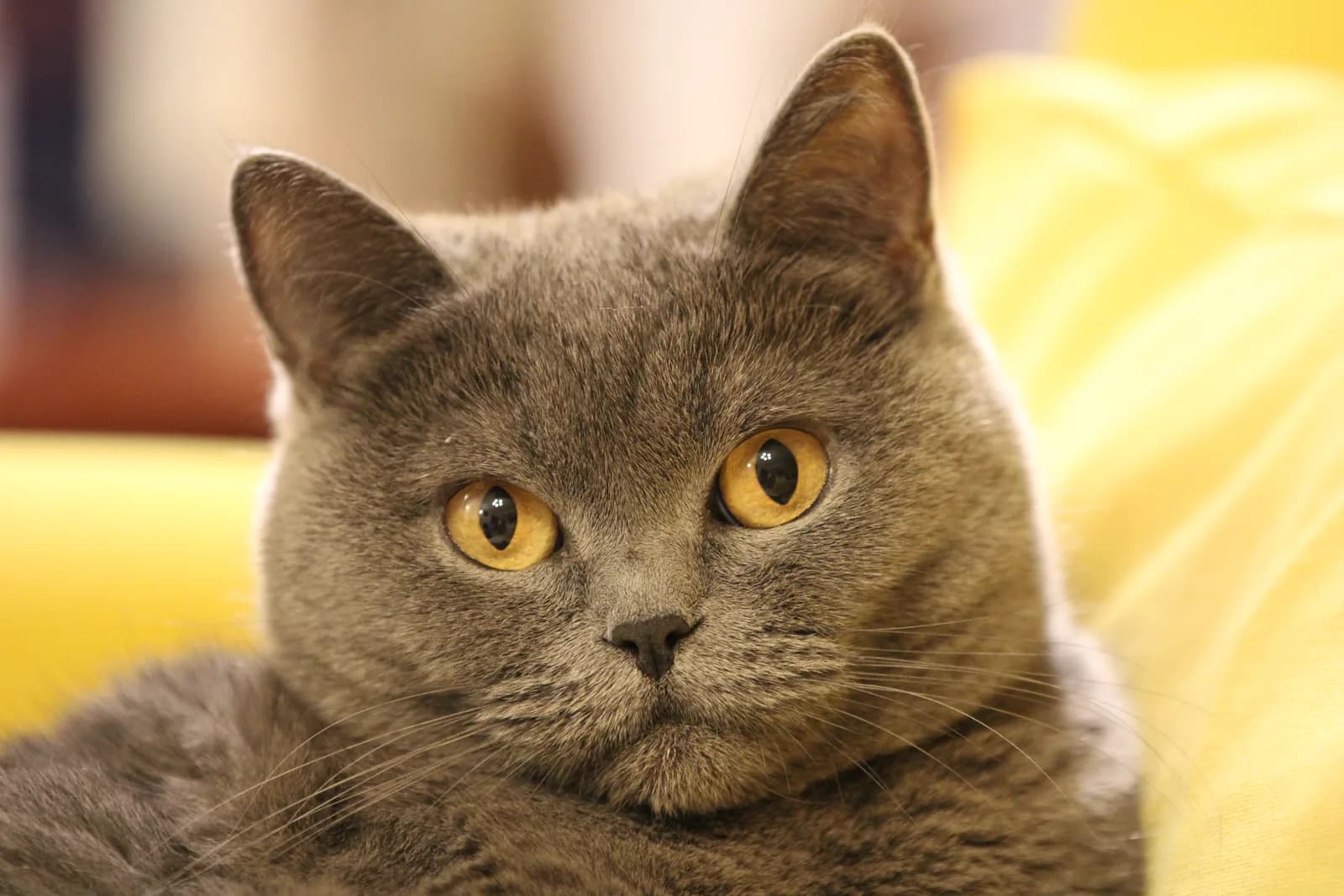
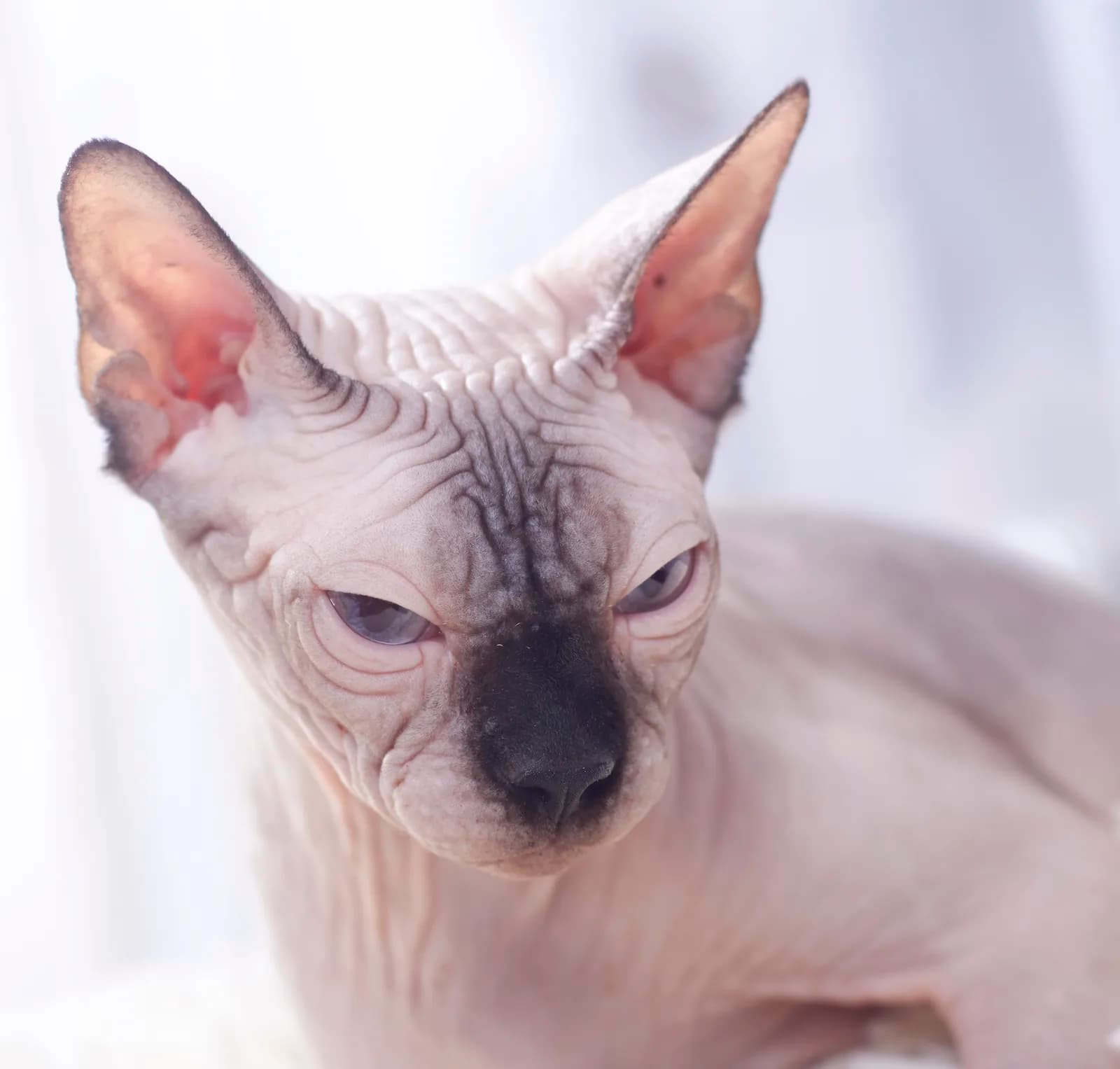
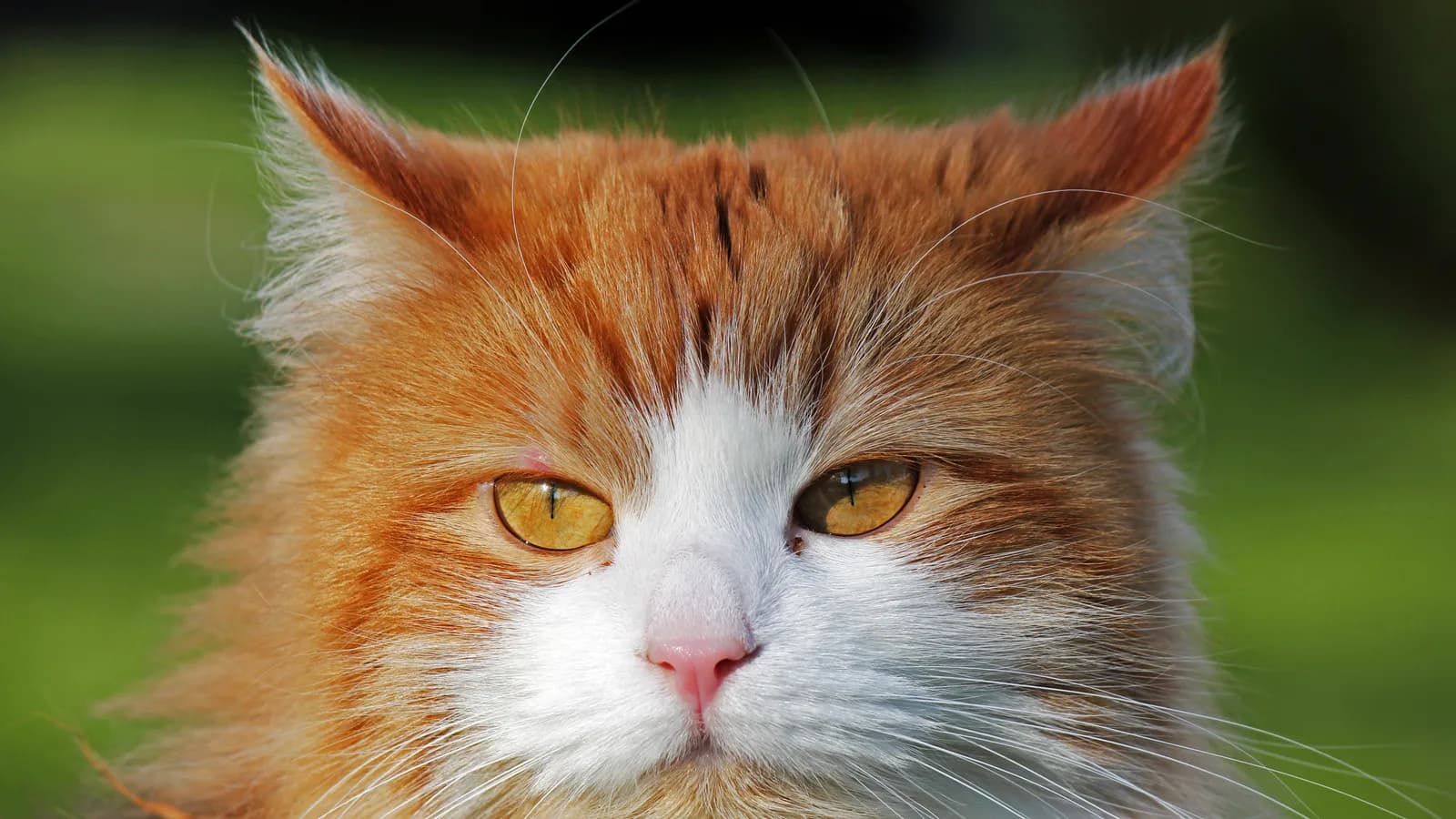
The Siamese also appears in
Our criteria-based guides, to compare this breed with the ones most like it.
 Grooming & living with one
Grooming
The easy half of the deal: a short, fine coat that says needs little care, combed weekly (TICA's own note: they tend to associate brushing with affection). adds the honesty that Siamese DO shed, just without special equipment. Weekly nail checks and ear checks per TICA's own cadence, and the usual dental attention. The registries' periodontal warnings apply to this breed as to any.
Living together
Excellent with children, cat-friendly dogs and other cats, with one condition: company. Every registry describes a cat that attaches hard to its people and narrates the relationship. A Siamese alone all day is the mismatch every rescue coordinator recognizes. 's own practical note: a CHANGE in the frequency or character of vomiting is a call to the vet, not a quirk to log.
 Food & diet
No breed-specific feeding protocol exists, including for the breed's own amyloidosis (we checked: no dietary management protocol is published anywhere). Feed the measured cat: a 2.9-3.4 kg average adult, portioned to body condition, with the usual fresh-water and wet-food arithmetic. 's own nutrition tab carries the general framework; your vet carries the individual answer.
 Price & budget
$1,000 to 3,500
Price of a kitten from a registered breeder, in the United States
This price reflects the quality of the breeding program: parents' health tests, registry pedigree, socialization. A very low price should raise a red flag. The real cost, though, plays out over the years.
Find a verified breederKitten price, by market
United States
$1,000 to 3,500
United Kingdom
£500 to 1,300
Canada
CA$450 to 1,600
Australia
A$2,500
Each figure is that country's real market price, researched separately, not a conversion of the others. The smaller line is only there so you can gauge one against your own money: European Central Bank reference rates of 2026-09-18, refreshed daily.
The Siamese in the US, UK, Canada and Australia
| Measure | United States | United Kingdom | Canada | Australia |
|---|---|---|---|---|
| Pet-quality kitten (registered breeder) | $1,000-3,500 flat at 3 named catteries | £500-1,300 registered (live listings) | CA$450-1,600 (4 named catteries) | A$2,500 (one published figure, single-source) |
| What counts as 'a Siamese' | CFA: classic four colors only; extended colors are Colorpoint Shorthair, a separate breed | GCCF: one breed, 32 colors and points patterns | CCA-AFC: classic four only; extended = Colourpoint Shorthair | ACF: one breed, extended colors included |
| Main registries | CFA, TICA | GCCF | CCA-AFC | ACF, ANCATS |
| Measured breed life expectancy | No measured figure exists | 11.69 years at birth (2024); 14.2-year median (2015) | No measured figure exists | No measured figure exists |
Four markets, four sets of rules and prices; none of these figures converts into another. Prices are August 2026 and expire with the quarter.
Work out your food budget
Type of food
Estimated monthly budget
$13
≈ 2.2 oz (63 g) per day
A ballpark figure, food only, using the same arithmetic as our portion tool (resting energy requirement × 1.2, a neutered adult). Real needs vary with age, activity level and body condition. Ask your veterinarian for advice.
 Verified catteriesThe registry-checked directory, plus a kitten alert near you. Filter it by breed.
 Should you insure a Siamese?
Our sources list several predispositions in the Siamese: Hereditary AA-amyloidosis, Mediastinal lymphoma, Progressive retinal atrophy (rdAc), among others. A predisposition is not a foregone conclusion, and many of these cats live their whole lives without ever developing anything. It does change the nature of the follow-up, though: you monitor, sometimes for life, and it's that monitoring that weighs on a budget, more than a one-off accident.
One thing to weigh before deciding: this is a cat you will live alongside for well over a decade, and that is the span the real cost is spread across, premiums and care alike. Where a breed has a measured life expectancy that differs from the figure usually quoted, we say so in the lifespan section above rather than repeating the quoted one here.
 Siamese cats in our community
No Siamese here yet
Got one? Add a photo and yours gets to open this page.
 The vet's take

Veterinary review
Are you a vet?
Your professional read belongs here: every verified practitioner can leave a note, published once our editors have reviewed it.
Sign in and get your license number verified. We check it in the public register, we never ask for or keep a copy of your diploma, and your number is never published.
 Frequently asked questions
+Are Siamese cats hypoallergenic?
No. Two peer-reviewed reviews state Fel d 1 is unaffected by hair length and no breed is allergen-free, and CFA's own page says Siamese cats do shed. No study measures this breed's allergen output at all: our hypoallergenic page carries the whole file.
+How much does a Siamese cat cost?
August 2026, from named sources: US $1,000-3,500 flat at named catteries; UK £500-1,300 for GCCF-registered kittens (unregistered listings run £100-450); Canada CA$450-1,600 across four named catteries; Australia's one published figure is A$2,500. No cattery we read prices by color.
+How long do Siamese cats live?
The two large UK studies both place the breed among the longer-lived: 11.69 years at birth (2024 life tables) and a 14.2-year median (2015). The 8-15 and into-the-20s ranges you read elsewhere are uncited conventions, and an older Swedish study tells a harder story through mammary tumors: the profile's lifespan section carries all three with their scopes.
+Why are Siamese cats so vocal?
Nobody has measured it: no vocalization study exists for any breed, and we publish that absence. What exists is three registries independently documenting the trait in their own words: TICA's Meezer that talks all day and night, CFA's insistent repertoire, GCCF's outgoing, extrovert and noisy. The voice is the breed.
+Why do Siamese cats have crossed eyes?
The pointing gene has a second job: the same temperature-sensitive enzyme that paints the points is needed while the visual pathway wires itself, and Siamese cats carry a measurable rerouting at the optic chiasm, the founding example of an anomaly since found in every albino mammal studied. A lifelong squint from kittenhood is the breed; a NEW squint in an adult is a vet visit.
+What is a lynx point Siamese?
A Siamese wearing the tabby pattern in its points: Lynx Point in TICA, CFA and Canadian vocabulary, Tabby Point in GCCF and ACF English, the same cat. CFA's own history records the rename as British tabby points crossed the Atlantic. Our lynx point page carries the whole naming and paperwork story.
+What is a Colorpoint Shorthair?
CFA's and Canada's CCA-AFC's separate breed for Siamese-type cats in the extended colors (red, cream, tortie, lynx points): identical type, its own standard and show classes. GCCF, ACF and TICA keep the same colors inside one Siamese breed. Same cat, different passport, and CFA's own page notes unshowable classic-colored kittens from those litters may sell for less.
+Are Siamese cats really from Thailand?
Yes: pointed cats are documented in Thailand's old manuscripts, and the breed reached the West in the 1870s-1880s. The registries disagree on the exact dates (TICA says Europe 1871 and US 1879, CFA says US 1878, GCCF says UK 1884), and four dated 1871 newspaper accounts corroborate a Siamese shown at London's Crystal Palace that July: the earliest checkable receipt.
+Do Siamese cats shed?
Yes: CFA's own words are that Siamese do shed and regular grooming keeps it under control, no special equipment needed. The short coat makes it less visible than a longhair's, not absent.
+How big do Siamese cats get?
The lightest or among the lightest breeds in every source we gathered: TICA boxes females at 5-8 lb (2.3-3.6 kg) and males at 8-12 lb (3.6-5.4 kg); GCCF's UK box runs heavier at 8-15 lb; the one measured cohort weighed lighter than both. GCCF's own paradox: they should feel much heavier than they appear.
+Who was the oldest Siamese cat ever?
Scooter, a Siamese from Mansfield, Texas, born 26 March 1986: Guinness World Records named him the world's oldest living cat in 2016, at 30. A dated, verifiable record from that year (Scooter died soon after), not a standing title today.
+Are the Siamese cats in Lady and the Tramp considered offensive?
We report what Disney itself has done, without taking a position: in 2019, Disney+ launched with a notice that the 1955 film may contain outdated cultural depictions; in 2020 Disney strengthened it to an advisory naming negative depictions and mistreatment of people or cultures, applied to the film's Siamese cat sequence among others; by February 2025 the wording had been shortened and moved from an unskippable card to the film's Details tab, and Disney's dedicated Stories Matter page now redirects to a general corporate page. Three changes, all dated, all Disney's own words.
 Community questions
Got a question this page doesn't cover? Ask it: the best ones get published here with their answer.
Sources & references
Data checked against reference sources (TICA and CFA standards, genetics laboratories, veterinary schools).
- TICA: Siamese breed
- TICA Siamese Breed Group standard
- CFA: Siamese breed
- CFA Siamese show standard
- CFA: Colorpoint Shorthair breed
- GCCF: Siamese breed
- GCCF Siamese Standard of Points
- GCCF Siamese Registration Policy (2025)
- GCCF Siamese Breeding Policy
- CCA-AFC Siamese breed standard
- ACF Siamese standard
- Teng et al. 2024: UK feline life tables
- O'Neill et al. 2015: longevity of cats in England
- Egenvall et al. 2009: mortality of insured Swedish cats
- Menotti-Raymond et al. 2010: the rdAc mutation across breeds
- UC Davis VGL: PRA rdAc test
- Mason & Guillery 2019: the Siamese visual pathway

Worth keeping a paw on
Pin this profile
To compare later, or to show someone still torn between two breeds. One click and it sits in your board.
Pin it on Pinterest
 Purr or Pass
Still deciding? Find the perfect breed for your home.
A quick quiz that factors in your lifestyle, your kids and your other pets.
Which breed fits my home?Keep exploring
The floor belongs to our members. Keep it kind, links are not allowed, and images go through moderation before anyone else sees them.