

Oriental Longhair: The Breed With More Names Than Undercoat
Angora, Javanese, Mandarin, Foreign Longhair, or a division of Oriental: the same green-eyed silky cat under six flags, with the honest files on weight, lifespan and coat.

Published August 21, 2026 4 min read
Contents
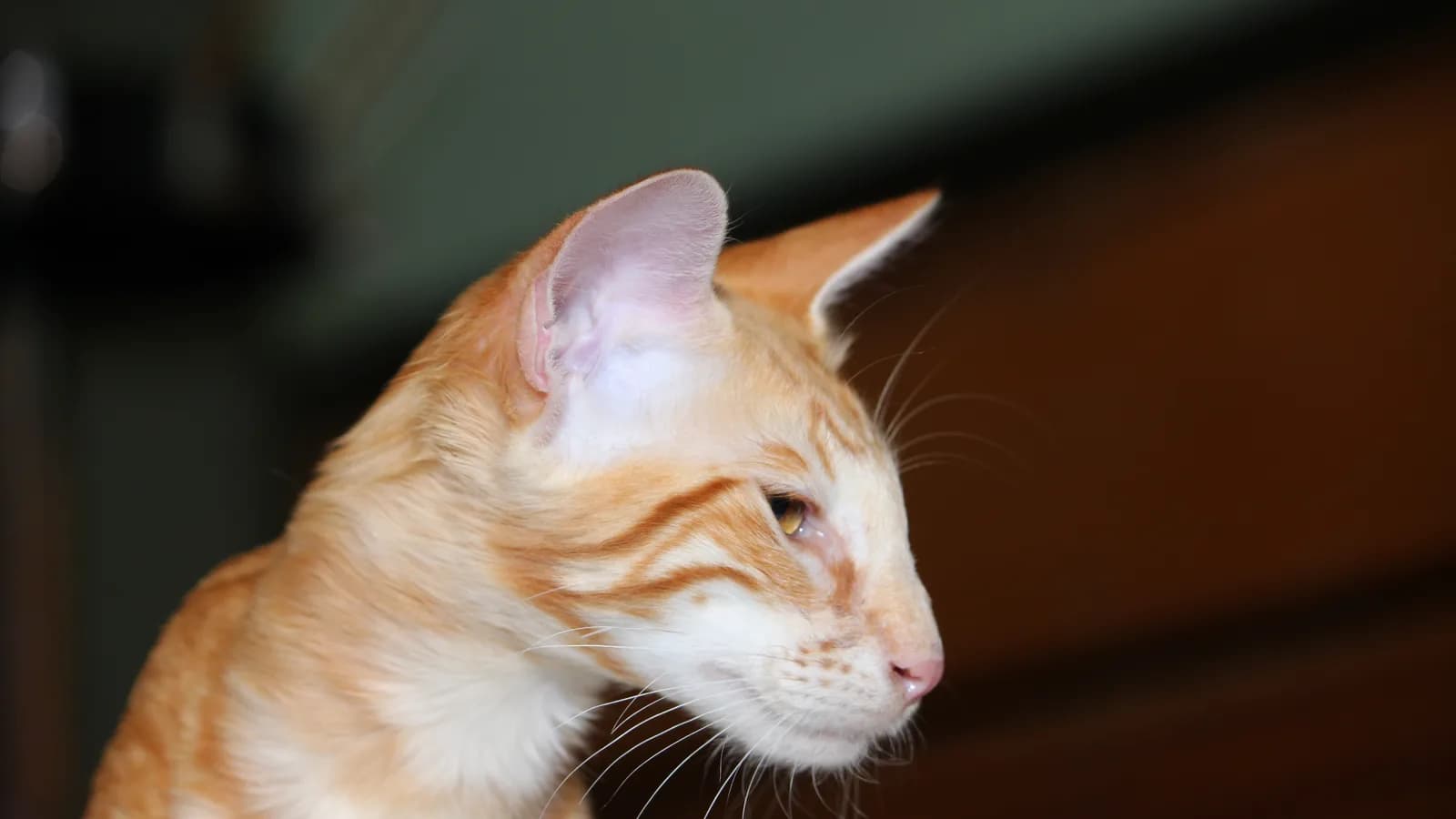
The Oriental Longhair is the silky, plume-tailed expression of the Oriental: the same wedge head, the same green eyes, the same enormous palette, wearing a longer coat with, by four registries' own accounts, no true undercoat beneath it.
What it does not have is a settled name, and the naming web is the single best guide to buying one: registers it as its own breed (sharing one standard document with Siamese, Balinese and Oriental Shorthair); folds it into ONE "Oriental" breed as a longhair division; gives it no consumer page at all, describing it inside the shared Oriental page as "formerly known as the Angora, and also known as the Javanese in some countries"; Canada's judges it as a separate breed in capital letters while breeding it freely with the shorthair; Australia's titles its standard "(OLH) (JAVANESE)" while profiles it only as "JAVANESE"; and the WCF calls it "Mandarin". Six bodies, six filing systems, one cat.
The Javanese collision, solved in one paragraph
"Javanese" means two different things on two sides of the Atlantic, and this page is where the knot unties: at , , and in the WCF's "Mandarin", Javanese means THIS breed, the green-eyed Oriental Longhair. At , "Javanese" names a pointed, blue-eyed color division of the BALINESE, a different cat entirely. If a says Javanese, the registry's flag tells you which cat you are holding.
A naming history that explains the mess
The trail is genuinely documented: the British line began with a kitten named Cuckoo in 1973; the developing breed was called the ANGORA from 1976 (a name adopted around a Turkish Angora import-quarantine problem, not a preference); the Cat Association of Britain renamed its version JAVANESE in October 1989, colliding by accident with 's unrelated usage; finally renamed the breed ORIENTAL LONGHAIR effective 1 June 2003 (its decision year is reported as 2002 by one source and the effective date by another; we print both); and the Dutch-imported line of 1987 still carries the WCF's MANDARIN. Five renames, zero new cats.
The honest files: weight, lifespan, coat
Weight: 's own consumer figure (females 5-8 lb, males 8-12 lb) leads; several sources simply reuse the Shorthair's figure, and NO registry standard, across five documents read in full, states any numeric weight at all. Lifespan: no measured study anywhere names this breed (the Shorthair's own measured anchor explicitly does not extend here, and the Swedish pooled study excludes it by name); the consumer convergence, roughly 10 to 15 years, is published as exactly that, consumer-sourced. Coat: the one section where this cat genuinely differs from its shorthaired sibling: four of five registries agree there is NO true undercoat, which is why the long coat needs a weekly comb rather than Persian-level labour; published cadences run from weekly () to more often (Purina UK), a practical range, not a rule.
Health and buying, scoped honestly
The health file is the Siamese-family file, reused with its scope stated: the amyloidosis and PRA (rdAc) literature describes the family, UK breeder guidance is largely Siamese-worded, and two genuinely breed-adjacent facts stand out: the family cluster's near-exclusive type-A blood (a 2005 Sydney study, useful and positive), and flat-chested kitten syndrome, named without a breed rate because no source supports one. Buying: the market is genuinely thin in every country (a UK content range of £500-1,500 with no breeder named, a US premium claim with no figure, a confirmed ZERO live Canadian listings in both languages), so the realistic route is the Oriental and Siamese breeder networks on the breeders page, asking for the longhair litters by name.
Six registries, one card
| Body | Files it as | Name used |
|---|---|---|
| Its own breed (shared family standard) | Oriental Longhair | |
| A division of one Oriental breed (1988 fold) | Oriental, Longhair Division | |
| Inside the shared Oriental page (no own page) | "formerly the Angora, also known as the Javanese" | |
| "JUDGED AS TWO SEPARATE BREEDS" | Oriental Longhair | |
| / (AU) | Separate standard / own profile | (OLH)(JAVANESE) / JAVANESE |
| WCF | Its own breed | Mandarin |
 The vet's take

Veterinary review
Are you a vet?
Your professional read belongs here: every verified practitioner can leave a note, published once our editors have reviewed it.
Sign in and get your license number verified. We check it in the public register, we never ask for or keep a copy of your diploma, and your number is never published.
Frequently asked questions
Is the Oriental Longhair a separate breed?
Depends on the registry: its own breed at TICA and CCA-AFC, a division of Oriental at CFA, a renamed page-share at GCCF, "Javanese" at two Australian bodies, "Mandarin" at WCF. Same cat throughout.
Is an Oriental Longhair the same as a Javanese?
In Britain and Australia, yes: Javanese is this breed's other name. At CFA, no: their Javanese is a pointed Balinese division. The registry on the paperwork decides which meaning applies.
Do Oriental Longhairs need a lot of grooming?
Less than the coat suggests: four of five registries describe no true undercoat, so weekly combing covers what a Persian coat would turn into a daily job.
How long do Oriental Longhairs live?
No measured study names the breed: the 10-15 years you read everywhere is consumer-page convergence, labeled as such here. The family's veterinary file is the Siamese-Oriental one, scoped accordingly.
 Community questions
Got a question this page doesn't cover? Ask it: the best ones get published here with their answer.
This is information, not veterinary advice, and it cannot tell you what is wrong with your cat. Our rule is a simple one: if something is wrong with your cat, call your vet, and call an emergency clinic if it is out of hours. Nothing you read here is a reason to wait.
Medical information applies to every reader. Prices, legal duties and common practice do not: unless stated otherwise, they are given for the United States, and they differ in the UK, Canada and Australia, and often between states or provinces. Check with your own vet and your own local authority.
Our sources

Worth keeping a paw on
Pin this guide
So you can find it the day you need it, and share it with someone whose cat does the same thing. One click and it sits in your board.
Pin it on Pinterest
 Purr or Pass
The cat newsletter
Our verified guides, no spam. Unsubscribe in one click.
More Oriental Shorthair guides
The Oriental Shorthair profile →
Oriental Shorthair guide
Oriental Shorthair Price: A Market of Flat Fees and Copied Tables
Four named US catteries, a UK sample against the marketplace's own wider claim, a mostly-Quebec Canadian picture, and the syndicated cost table two sites share word for word.
Read
Oriental Shorthair guide
Oriental Shorthair Breeders: Read the Registry Before the Website
How each registry files this breed (and its longhaired twin), the Havana trap, the UK's falling registration numbers, and how to adopt one instead.
Read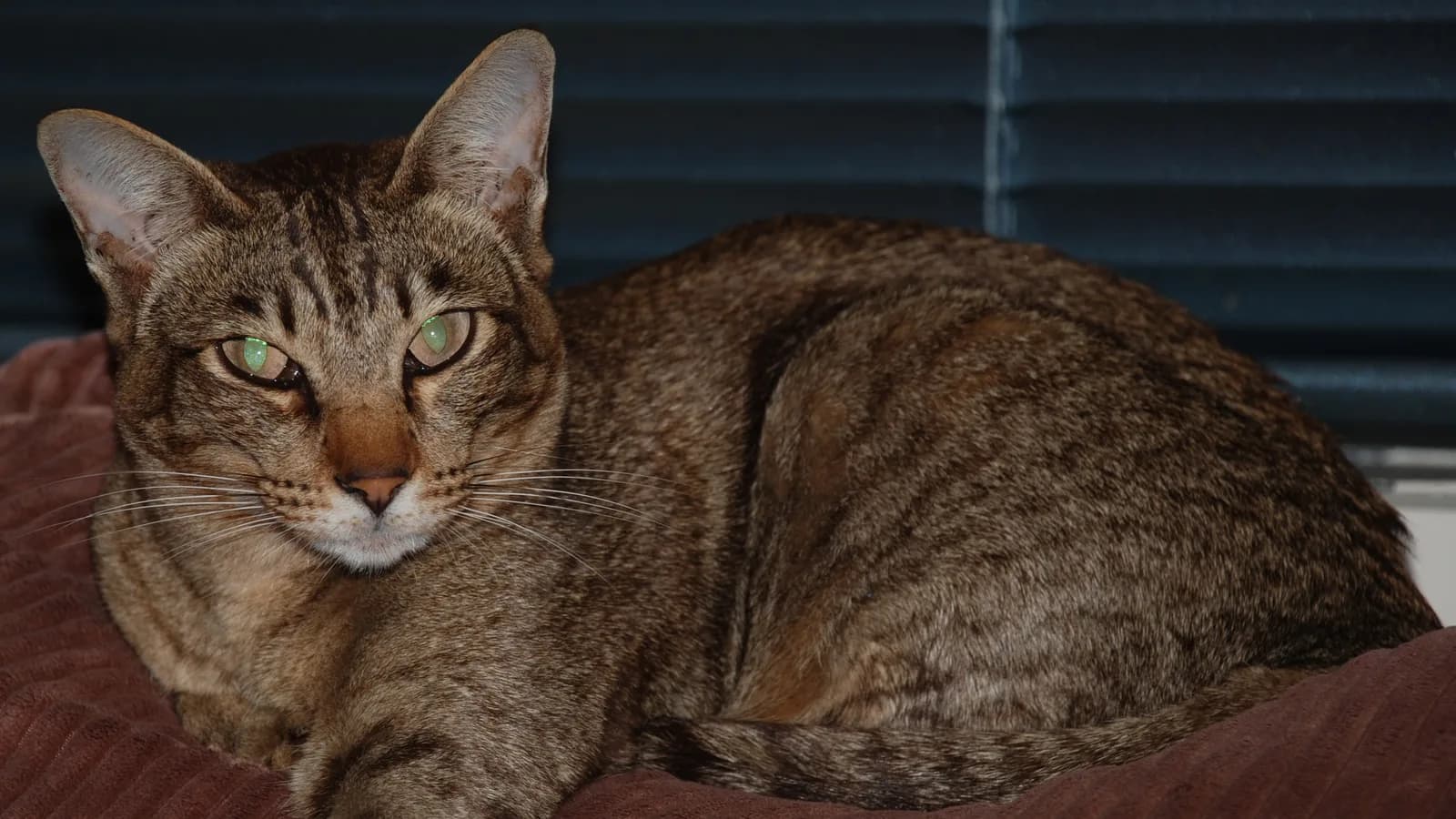
Oriental Shorthair guide
Are Oriental Shorthairs Hypoallergenic? The Two Mechanisms People Merge
The short sleek coat sheds less visible hair, and that is a different mechanism from allergen production, which nobody has measured in this breed. The honest file.
Read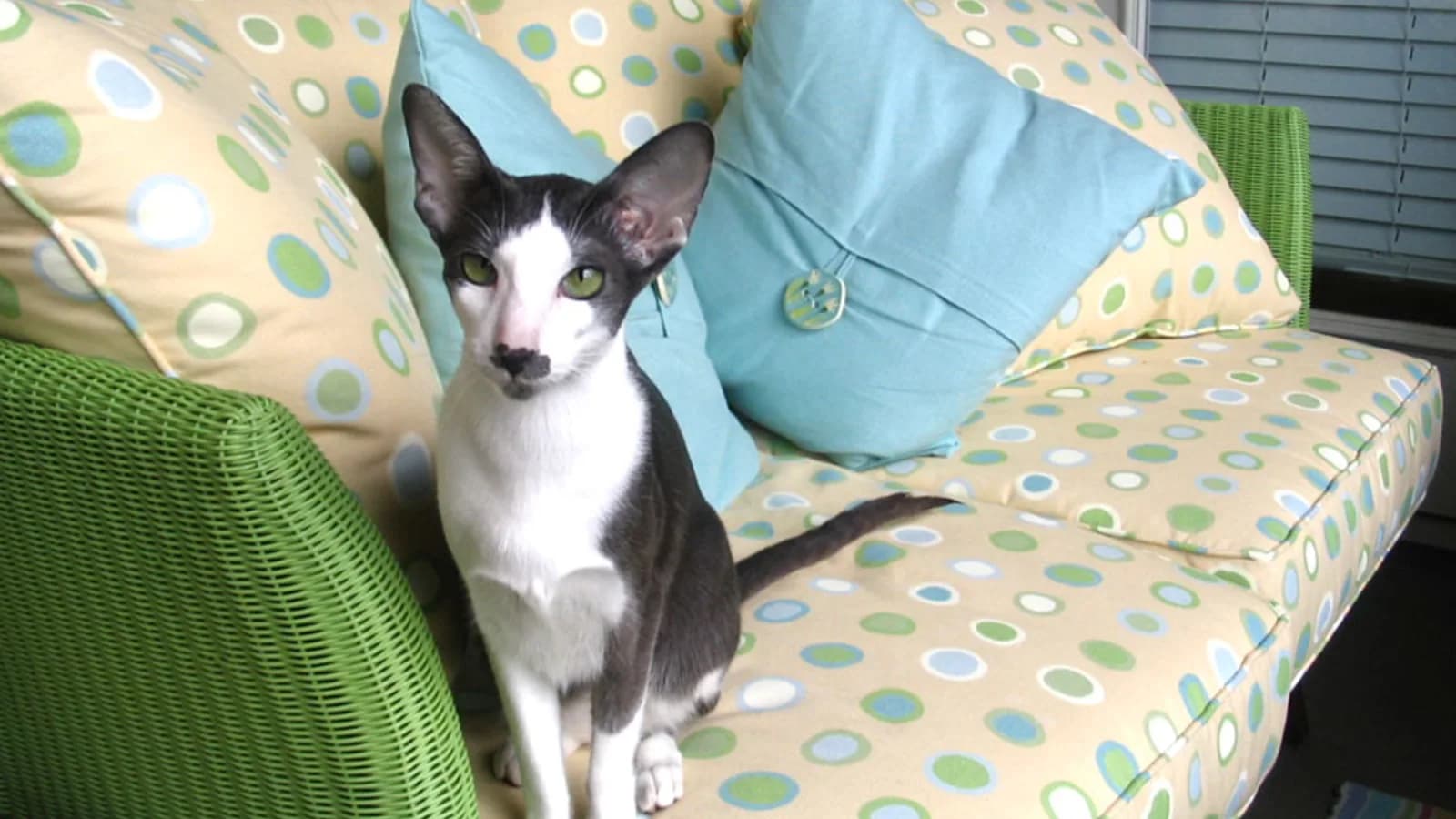
Oriental Shorthair guide
Oriental Shorthair Colors: We Traced the Number Everyone Repeats
TICA counts 281, CFA says 150 and 600 on the same page, GCCF computes 816, and the famous "over 300" traces to a retired document. The real palette, ebony first.
Read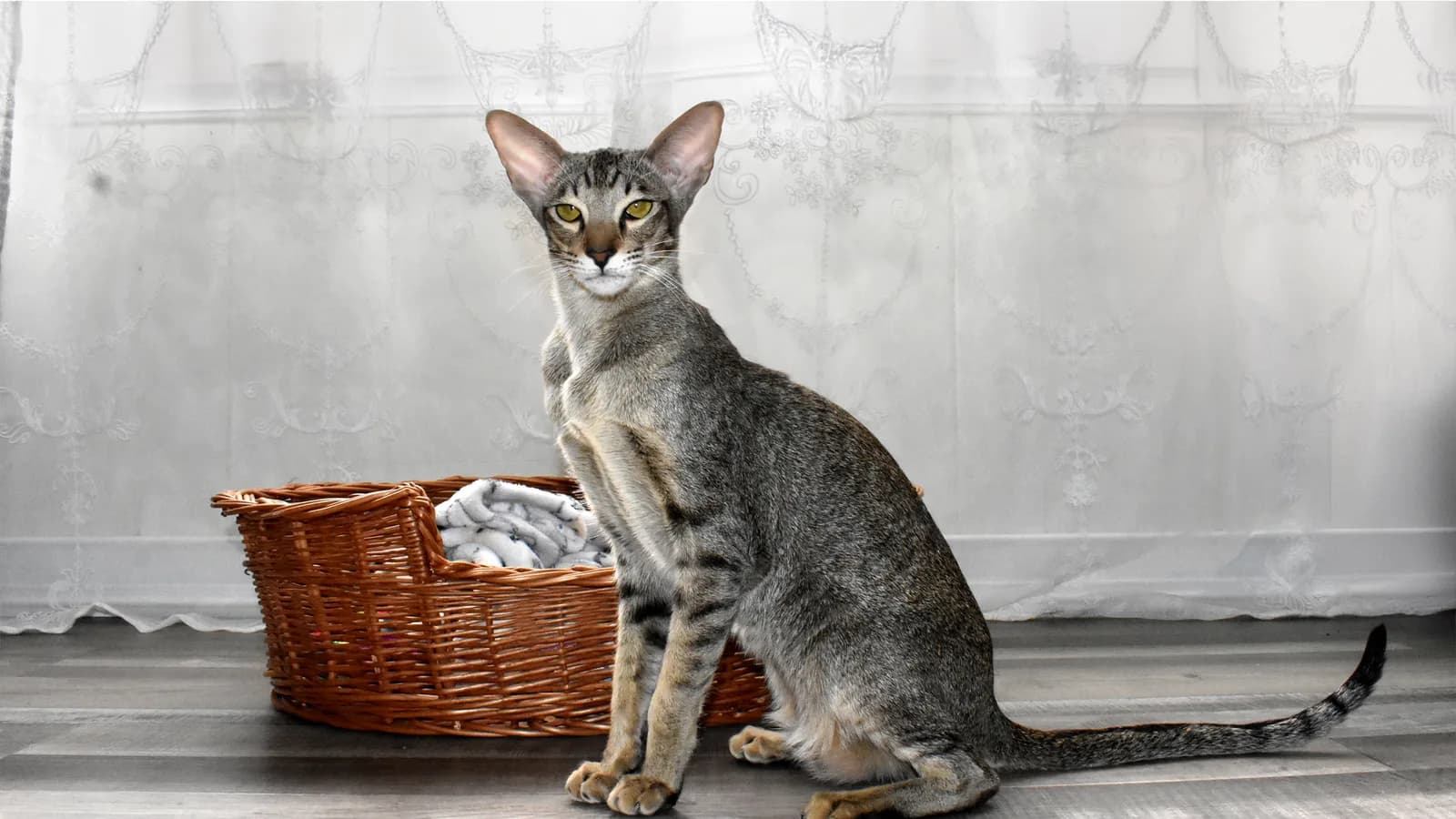
Oriental Shorthair guide
Oriental Shorthair vs Siamese: One Standard, Two Paint Jobs
The registries define these two breeds in the same document, with the same body and the same weights. The real difference is one fork: pointed or not. We read all six standards.
Read
The floor belongs to our members. Keep it kind, links are not allowed, and images go through moderation before anyone else sees them.