

Burmese vs Bombay: How to Actually Tell Them Apart
A dark Sable Burmese is not a black cat, by the standards' own words: the eye-color direction, the body length, and the Siamese connection told from the founding cat.

Published August 21, 2026 4 min read
Contents
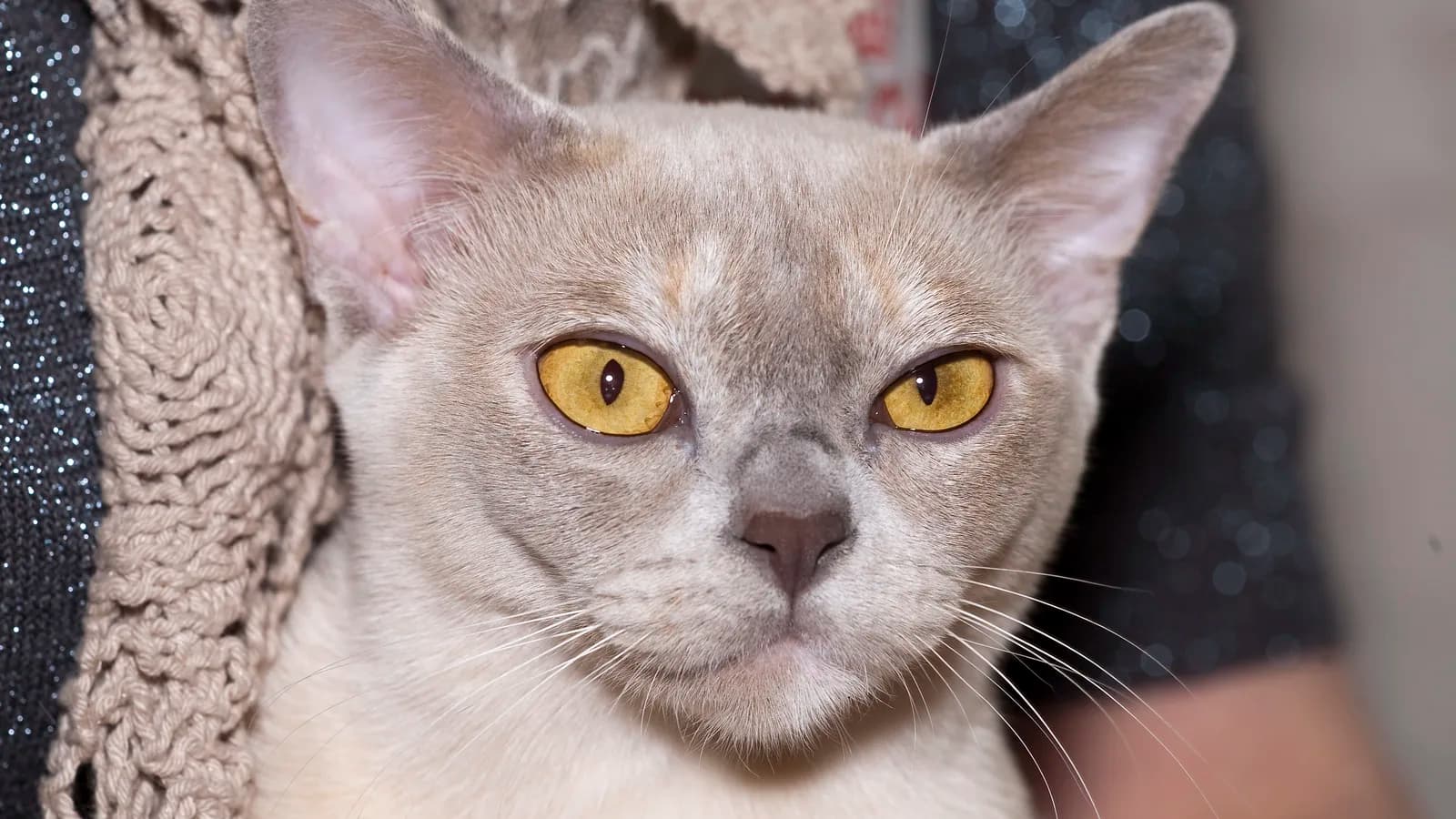
The confusion is understandable: the Bombay was deliberately built from the Burmese, and a mature Sable Burmese in poor light reads black. But the registries' own standards separate them precisely, starting with one word: neither 's nor 's Burmese standard uses "black" anywhere. A "black Burmese" is, by both registries' own texts, a very dark Sable; only the Bombay is standardised as uniformly black to the roots.
The identification table, from the standards
| Check | Burmese | Bombay |
|---|---|---|
| Eye color direction | Yellow to gold; copper never named | Toward copper; yellow never named |
| Coat | Sable to platinum sepia glow; "black" appears in no standard | Uniformly black to the roots, patent-leather |
| Body | Compact, surprisingly heavy | Torso runs longer ('s own sentence) |
| The word to remember | A very dark Sable is still a Sable | Only this breed is standardised black |
Three checks, all from primary documents. EYES: the Burmese standards run yellow to gold and never name copper; the Bombay's run to copper and never name yellow, so the eye's direction of travel is the cleanest single tell. BODY: 's shared standard states in one sentence that the Bombay's torso runs longer than the compact Burmese's. JUDGING WEIGHT: 's own point schedules weight eye color differently between the two breeds, which tells you the registries themselves consider the eyes the discriminator. Coat color alone, the check everyone reaches for first, is the least reliable of the four.
The Siamese connection: one founding cat
The Burmese and the Siamese are relatives by documented history, not vibes: the breed's founding cat, Wong Mau, brought to San Francisco in 1930, was bred to a Siamese, and her dark-brown descendants founded the Burmese. The two breeds then diverged completely on the trait people check first: eye color is a total split (Burmese yellow-to-gold, Siamese deep vivid blue), and the body types went opposite ways, which 's own Tonkinese page states best, defining that breed as "neither cobby like the Burmese nor svelte like the Siamese."
And the fact almost no page states: two registries' own current pages ('s Tonkinese page and 's Burmese page) independently describe Wong Mau herself as, in modern genetic terms, a natural mink Tonkinese rather than a purebred Burmese. The founding Burmese was not, genetically, a Burmese: it is one of the best-corroborated surprises in the breed's whole file.
The wider family, honestly gated
Two relatives deserve naming without pretending we have researched them fully. The TONKINESE is a separate - and -recognized breed deliberately bred from Burmese and Siamese, carrying its own "mink" coat pattern and an aqua eye color neither parent standard names; its full profile is on our build list. The BURMILLA is a deliberate cross between the Chinchilla Persian and the Burmese, standardised with a silver/shaded coat and a distinctive dark eye-rim lining like drawn make-up, which neither the Burmese nor Bombay standard describes; likewise on the list. One paragraph each is what our research supports today, so one paragraph each is what you get.
Choosing between Burmese and Bombay
If the decision is real rather than taxonomic: the two share the Burmese foundation's people-loving, sturdy, indoor-suited character, and our profiles carry each breed's own measured behaviour and health files. The honest differences are the look (patent-leather black with copper eyes, or the sepia glow in four-to-twenty colors), and the market: the Bombay is the rarer, thinner market of the two, which its own price page documents.
 The vet's take

Veterinary review
Are you a vet?
Your professional read belongs here: every verified practitioner can leave a note, published once our editors have reviewed it.
Sign in and get your license number verified. We check it in the public register, we never ask for or keep a copy of your diploma, and your number is never published.
Frequently asked questions
How do I tell a Burmese from a Bombay?
Eyes first: yellow-to-gold means Burmese, copper direction means Bombay; the registries' own standards never name each other's eye color. Then body: the Bombay runs longer, the Burmese more compact. Coat color is the least reliable check.
Is a black Burmese just a Bombay?
No on both ends: no registry recognizes a black Burmese (the darkest is Sable, faulted when it reads black), and a Bombay is its own breed with its own standard, not a recoloured Burmese.
Are Burmese and Siamese cats related?
Yes, by documented history: the founding cat Wong Mau was bred to a Siamese in the 1930s, and her descendants became the Burmese. The breeds have since diverged completely in eye color and body type.
What is a Tonkinese?
A separate recognized breed deliberately bred from Burmese and Siamese, with its own mink pattern and aqua eyes. Our full Tonkinese profile is still on the build list, so this page names it without pretending to have researched it.
Which is rarer, Burmese or Bombay?
The Bombay, by the registration numbers our Bombay profile documents: it is one of the most measurably rare breeds on this site.
 Community questions
Got a question this page doesn't cover? Ask it: the best ones get published here with their answer.
This is information, not veterinary advice, and it cannot tell you what is wrong with your cat. Our rule is a simple one: if something is wrong with your cat, call your vet, and call an emergency clinic if it is out of hours. Nothing you read here is a reason to wait.
Medical information applies to every reader. Prices, legal duties and common practice do not: unless stated otherwise, they are given for the United States, and they differ in the UK, Canada and Australia, and often between states or provinces. Check with your own vet and your own local authority.
Our sources

Worth keeping a paw on
Pin this guide
So you can find it the day you need it, and share it with someone whose cat does the same thing. One click and it sits in your board.
Pin it on Pinterest
 Purr or Pass
The cat newsletter
Our verified guides, no spam. Unsubscribe in one click.
More Burmese guides
The Burmese profile →
Burmese guide
Burmese Kittens for Sale: What Four Markets Actually Charge
What a Burmese kitten costs, sourced: US tiers from $600 pet-quality to $2,500 show, the UK's live-vs-evergreen gap, Canada's one named cattery, and Australia's ask-the-breeder market.
Read
Burmese guide
Burmese Cat Colors: Four in America, Ten in Britain, Twenty in Australia
The Burmese color count depends on the registry: CFA's American standard allows four, GCCF ten, Australia's ACF up to twenty. The counts, the two vocabularies, and the black-cat question.
Read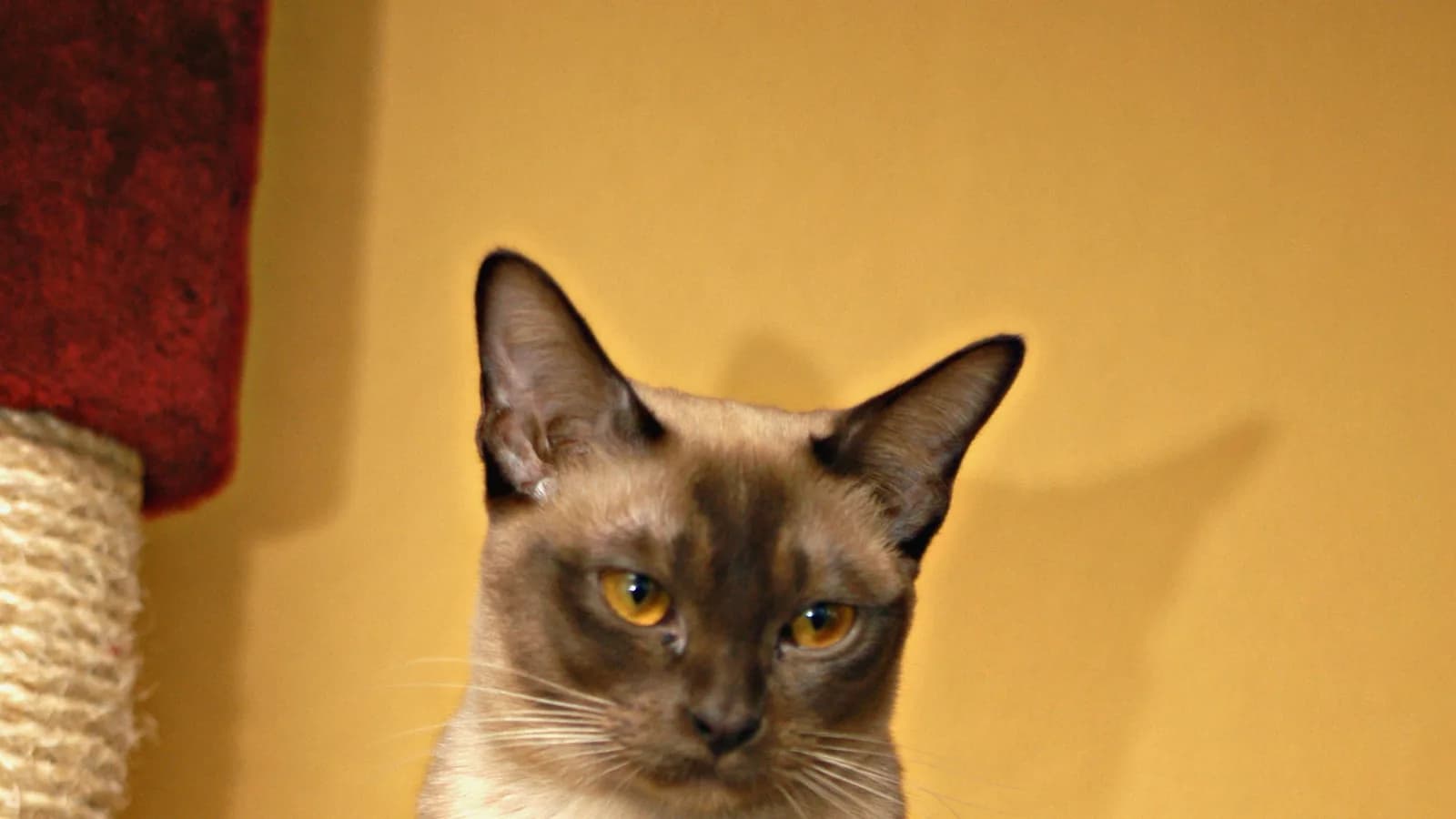
Burmese guide
European Burmese: A Real Split, Not a Naming Quirk
The European Burmese is a documented separate lineage since 1949: its own CFA standard, more colors, and a different genetic test list. What each registry decides, and why it matters.
Read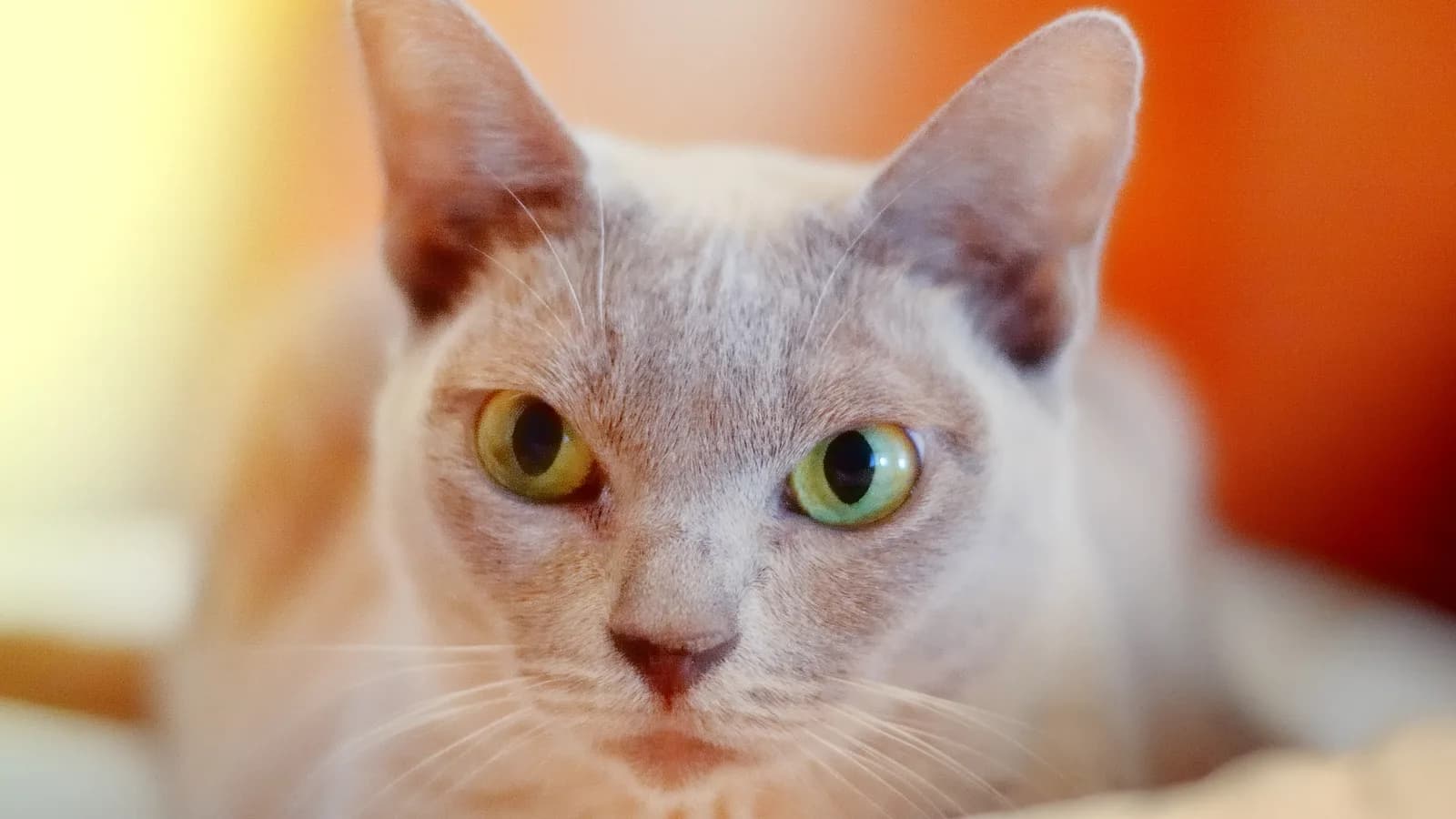
Burmese guide
Are Burmese Cats Hypoallergenic? The Honest Answer
No study has measured allergens in the Burmese, and no cat is allergen-free. What the short, low-shedding coat can and cannot do for an allergic household.
Read
The floor belongs to our members. Keep it kind, links are not allowed, and images go through moderation before anyone else sees them.