


Cat breeds by trait
Cat With No Tail? The Breeds, the Genes, and What a Missing Tail Means
A cat with no tail is either one of a handful of real breeds, a natural short-tailed mix, or a cat that lost its tail and healed. Three different stories, blended into one online. This page separates them, because the breeds themselves split into two genetic camps that share nothing but the silhouette.
The truly tailless cat is essentially one breed's signature. The rest of the tailless-looking world carries a bob, a pom or a scar. The differences are worth knowing before you name a stray or pay a breeder.
 By Nora · The storyteller
Contents
Breeds worth knowing
Tap a breed for the full profile: temperament, health, price and coat colors, all fact-checked.
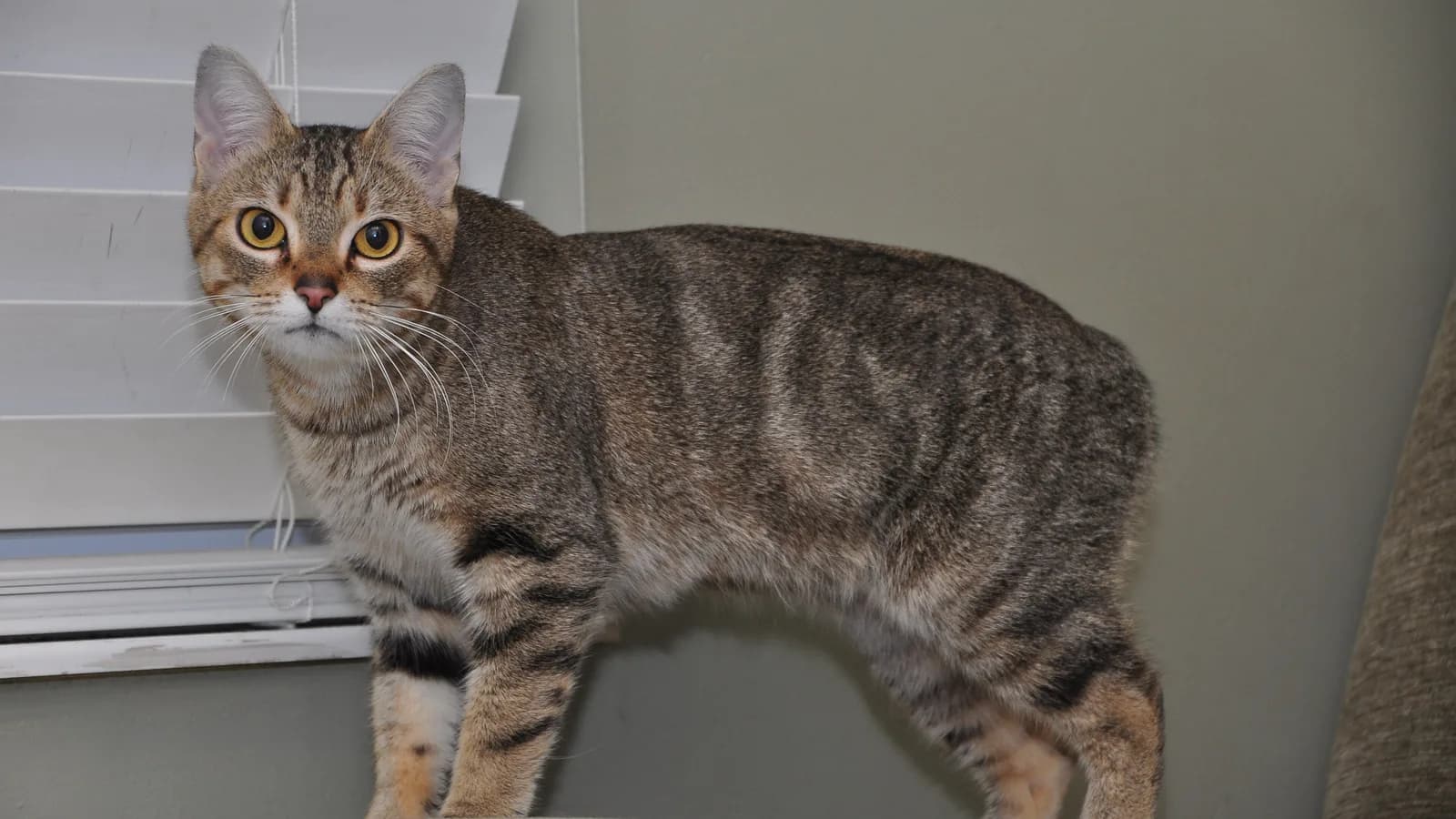
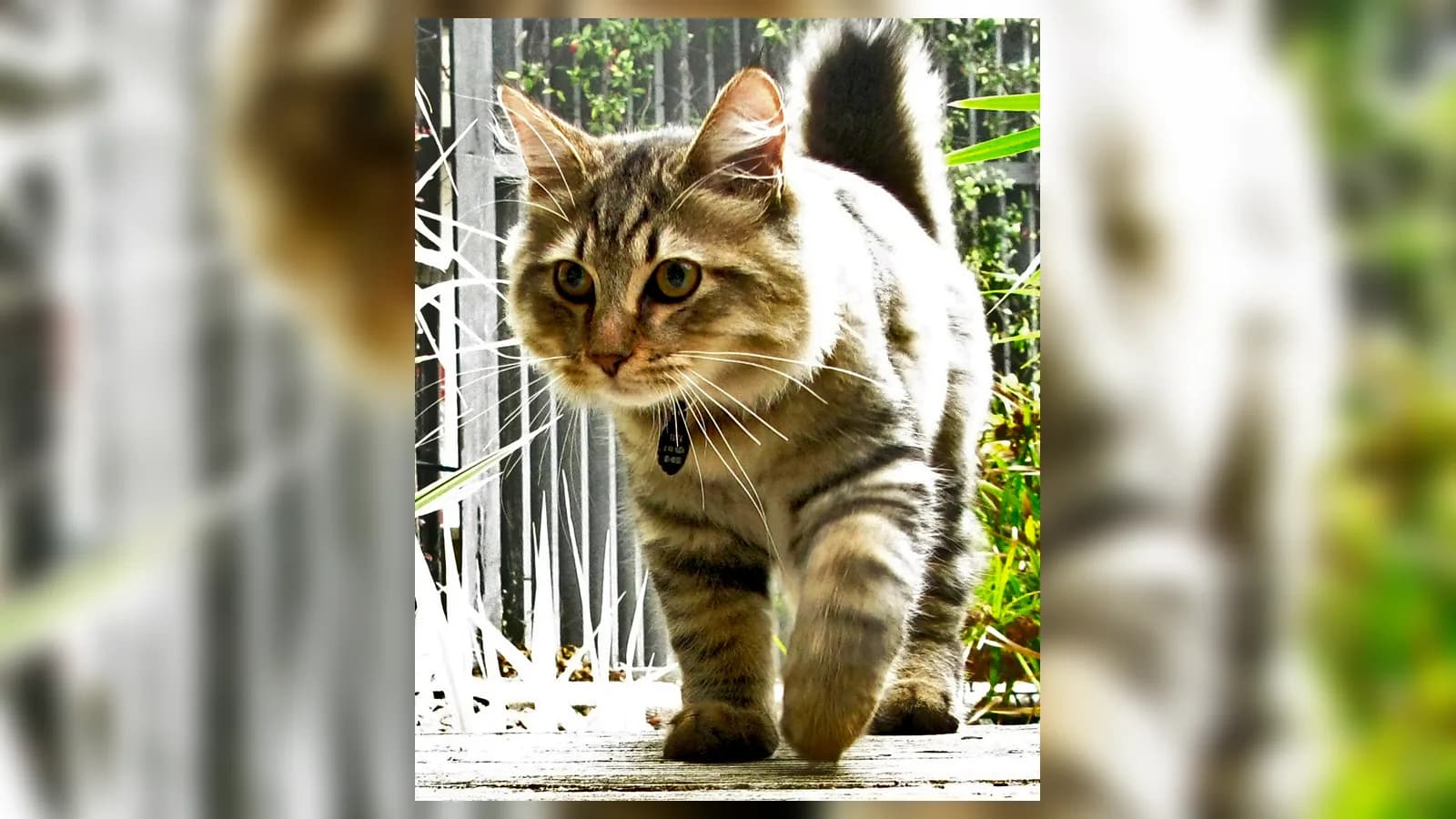
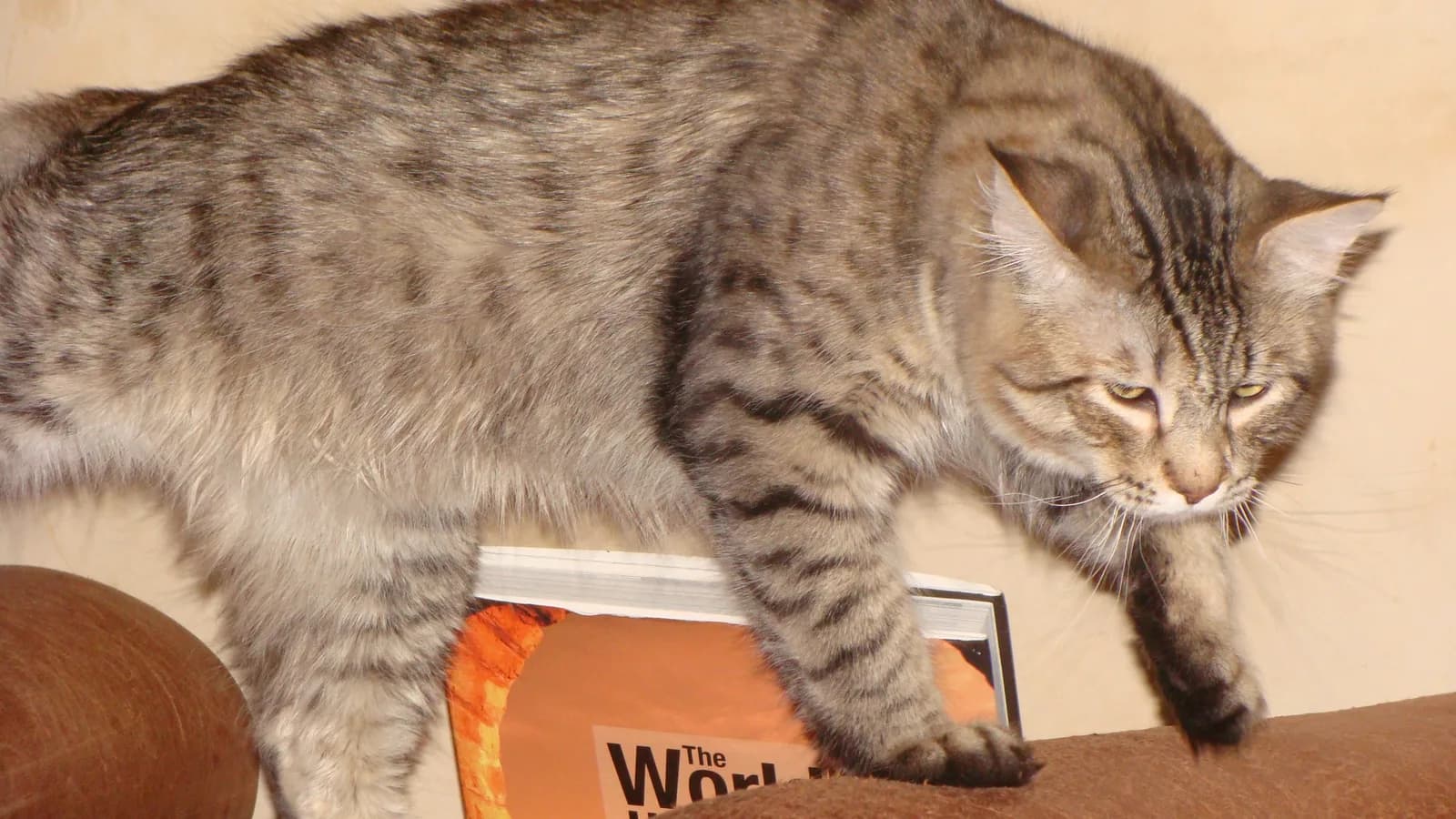
The truly tailless one: the Manx
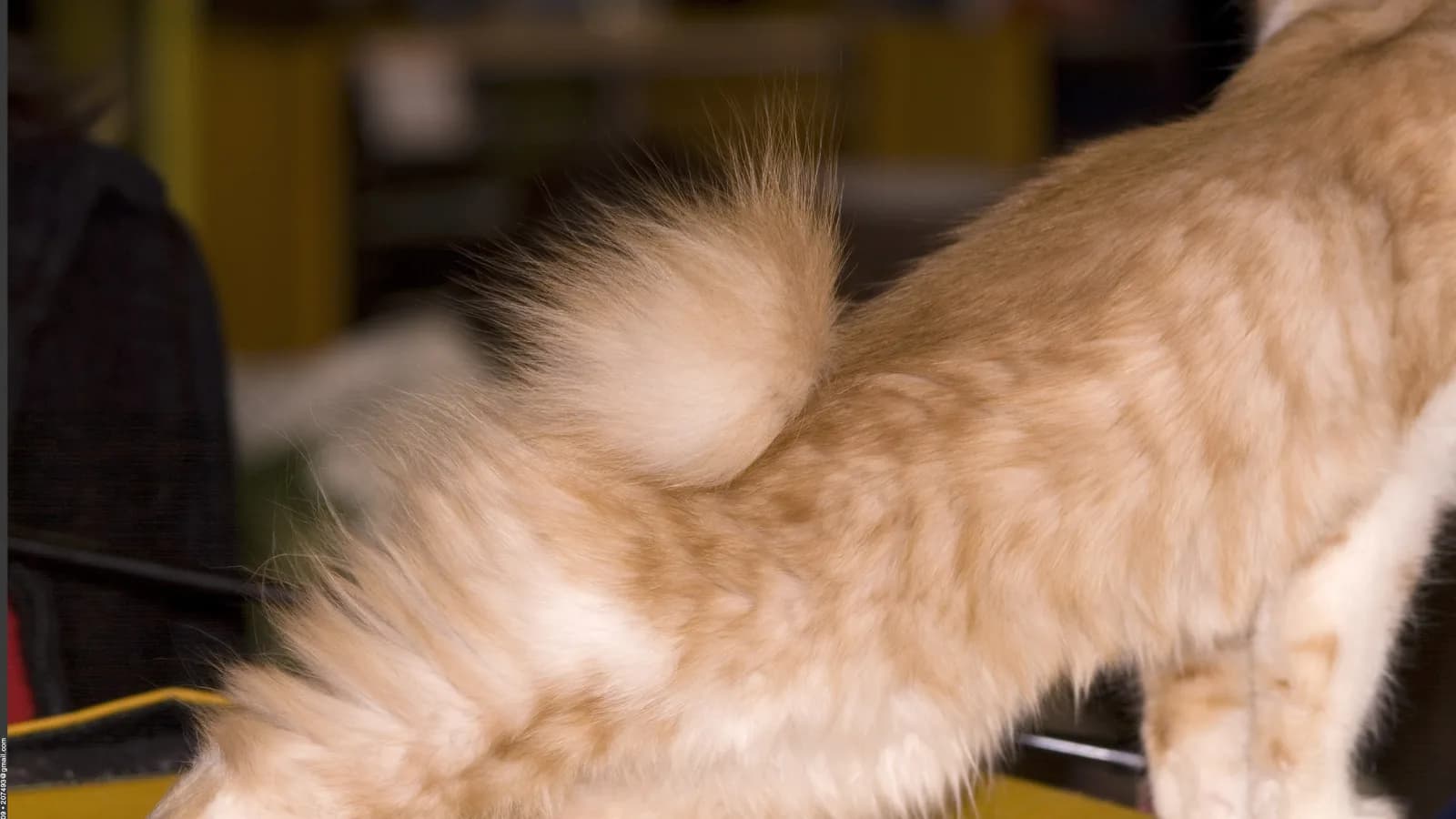
The Manx is the only major breed whose show classes are built around genuine taillessness. Its tail spectrum runs four classes, from the completely tailless rumpy through riser and stumpy to the near-normal longy, and only the tailless end competes. The gene is the T-gene (Brachyury), dominant, and homozygous-lethal. Every living Manx carries one copy, never two.
That is why tailed kittens appear in Manx litters, and why responsible breeding pairs tailless with tailed. The same gene at its tailless extreme is why the breed carries a real, documented health file (Manx syndrome, a spinal condition), which our Manx profile covers with each registry's own wording rather than a summary. The longhaired version is judged as the Cymric in some registries, and as a Manx division in others.
The bobtails: short, not absent
Four established breeds wear a short tail that is never quite absent, and they split cleanly into two genetic camps. In the T-gene camp with the Manx: the American Bobtail (a flexible 1-to-4-inch tail; 60% of sequenced short-tailed cats carry the identical Manx allele, heterozygous only, and every standard disqualifies a fully absent tail) and the Pixie-bob (8 of 14 sequenced short-tailed cats share the same allele).
In the entirely unrelated HES7 camp: the Japanese Bobtail (a kinked pompom, always present, its own confirmed dominant mutation) and the Kurilian Bobtail, whose genetics are the fancy's best open case. There, the Manx gene has been ruled out by sequencing, the Japanese Bobtail's variant is present in the breed without the final causality test, and the file stays honestly open. A fifth name you may meet, the Mekong Bobtail, is a real, distinct pointed breed recognized in other registries, not a variant of any of these.
| Breed | The tail | The gene |
|---|---|---|
| Manx | None (rumpy) to near-normal: four classes; show classes tailless | T-gene (Brachyury), dominant, homozygous-lethal |
| American Bobtail | 1-4 inches, flexible, never absent | The Manx's own allele in 60% of sequenced cats, heterozygous only |
| Pixie-bob | Short, polydactyly accepted (the only such breed here) | Same T-gene family, partial (8 of 14 sequenced) |
| Japanese Bobtail | Kinked pompom, always present | HES7, unrelated to the Manx's gene |
| Kurilian Bobtail | A unique pom per cat, 'no two alike' | Manx gene ruled OUT; HES7 present, causality untested |
Found a cat with no tail? Read this before naming a breed
Most tailless cats outside a breeder's program are not Manx. They are ordinary cats with a naturally short-tailed ancestry, or cats that lost the tail to injury and healed. Tail amputation after an accident is a common, well-tolerated surgery, and cats adapt their balance remarkably well afterwards. The marketplace version of this trap is documented on our own pages: listings tagged with a bobtail breed name have turned out, by their own descriptions, to be crosses of something else entirely. A is paperwork, not a silhouette.
One health note, stated the way the registries state it. The welfare questions around tailless breeding attach to the fully tailless extreme. That is why the bobtail breeds' standards all require a tail and disqualify its absence, and why some registries hold tail-mutation breeds at provisional recognition tiers pending welfare evidence. If a cat of yours has a tail injury, or a tailless cat shows hind-end weakness or litter-box changes, that is a vet visit, not a breed question.
No tail is either a , an ancestry or a story with a scar, and all three make complete cats. If you share your sofa with any of them, the community would love to see the silhouette.
By Nora · The storytellerFrequently asked questions
What breed is a cat with no tail?
If genuinely tailless, the Manx is the only major breed bred that way. The bobtail breeds (American, Japanese, Kurilian, Pixie-bob) all carry a short tail their standards require: a fully absent tail disqualifies. A tailless cat of unknown origin is most often a natural short-tailed mix or an amputee.
Why do Manx cats have no tail?
A dominant mutation in the T-gene (Brachyury). Every living Manx carries one copy, never two (two copies are lethal before birth), which is why Manx litters include tailed kittens and why breeders pair tailless with tailed cats.
Are cats without tails healthy?
The bobtail breeds' health files look like ordinary cats' where studied; the documented concerns attach to the fully tailless extreme, which is why every bobtail standard requires a tail and why the Manx has its own spinal file (Manx syndrome), covered on our Manx profile with the registries' own words. Any hind-end weakness or litter-box change in a tailless cat is a vet visit.
Can a cat live a normal life without a tail?
Yes. Cats that lose a tail to injury adapt their balance well after healing, and the tailless and bobtail breeds live full lives. The tail helps with balance and signalling, but it is not load-bearing for a good cat life.
Are the bobtail breeds related to each other?
Only some of them. The Manx, American Bobtail and Pixie-bob share the same gene family (the T-gene); the Japanese Bobtail's gene (HES7) is entirely unrelated, and the Kurilian Bobtail is the honest open case: Manx gene ruled out, HES7 present without the final causality test.
Sources & references
Data checked against reference bodies (breed registries, allergy research, veterinary schools).
- Buckingham et al. 2013, mutant T alleles and Brachyury haploinsufficiency (Mamm Genome, PMID 23949773)
- Xu et al. 2016, HES7 and short tails in Asian domestic cats (Sci Rep, PMID 27560986)
- Anderson et al. 2022, the 11,036-cat DNA panel (PLoS Genetics, PMID 35709088)
- TICA: Manx breed page
- GCCF UK Manx breeding policy (PDF)
This page is a starting point. Every cat is an individual: our profiles spell out the tendencies of each breed, sources included.
 Purr or Pass
Which cat breed is right for you?
Take the quiz