

Japanese Bobtail
“The pom-pom-tailed cat of Japanese art and, popularly, of the maneki-neko”
 By Priya · The careful one
Published August 21, 2026Updated August 26, 20268 min read
Contents
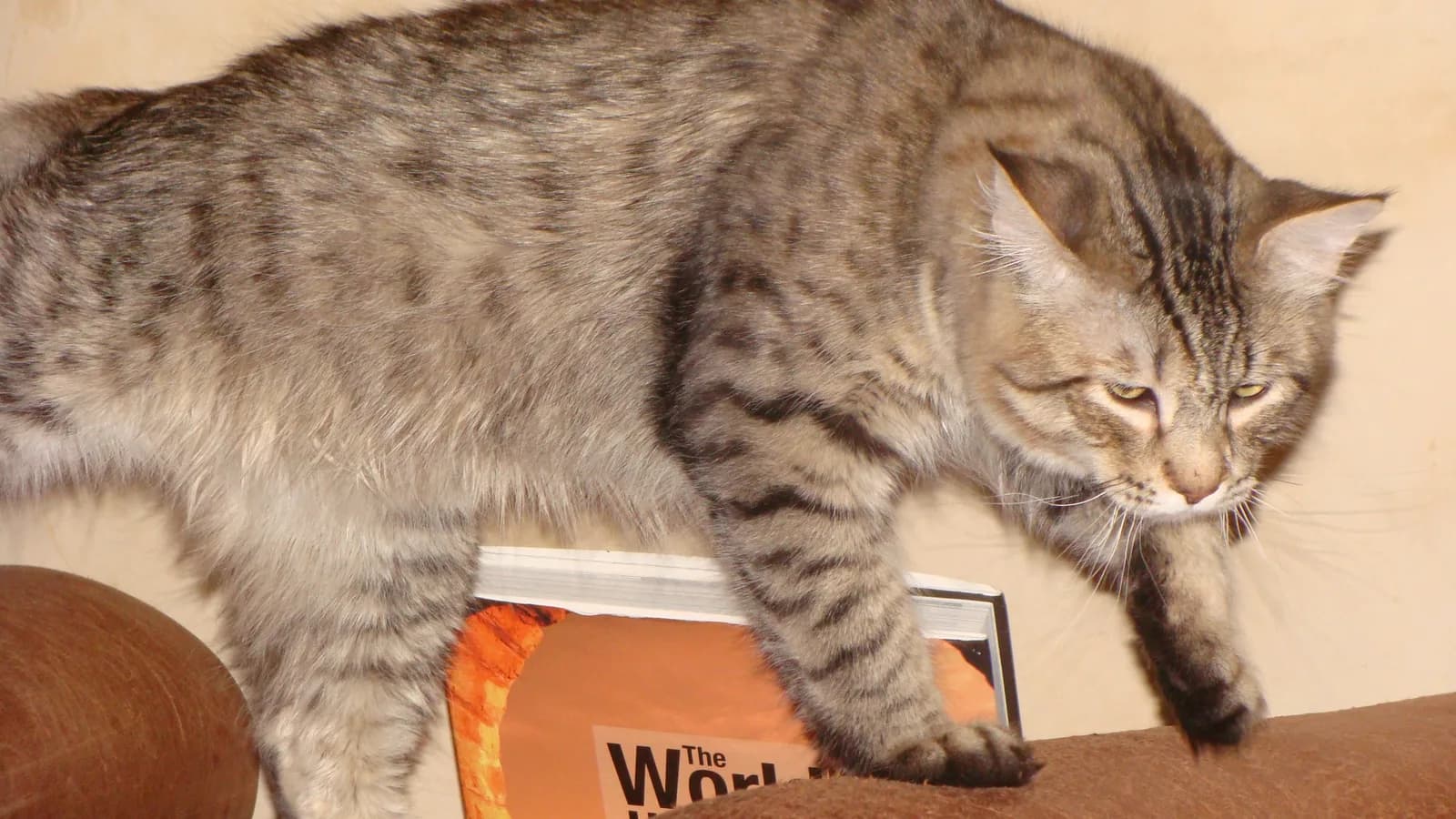
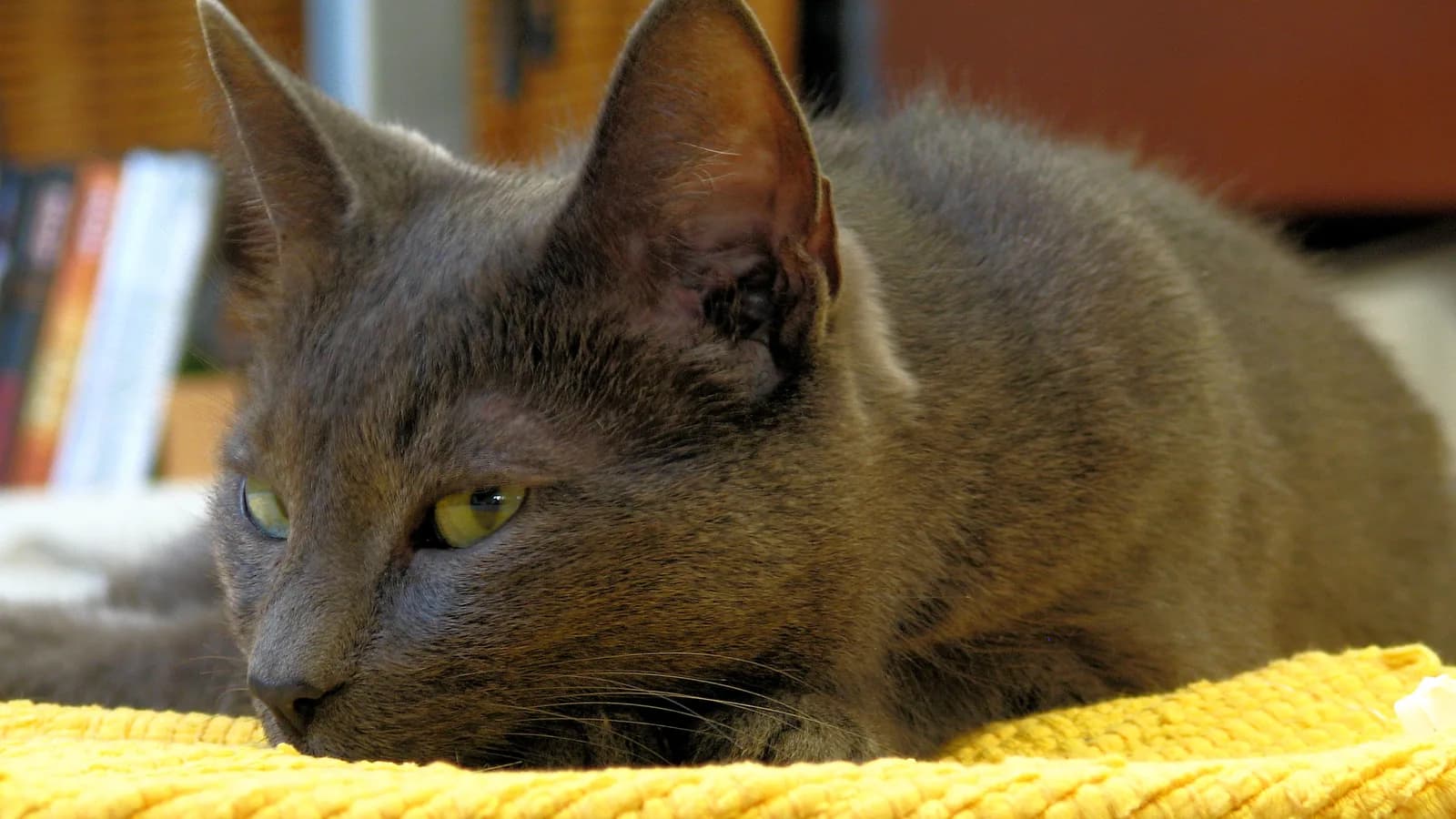
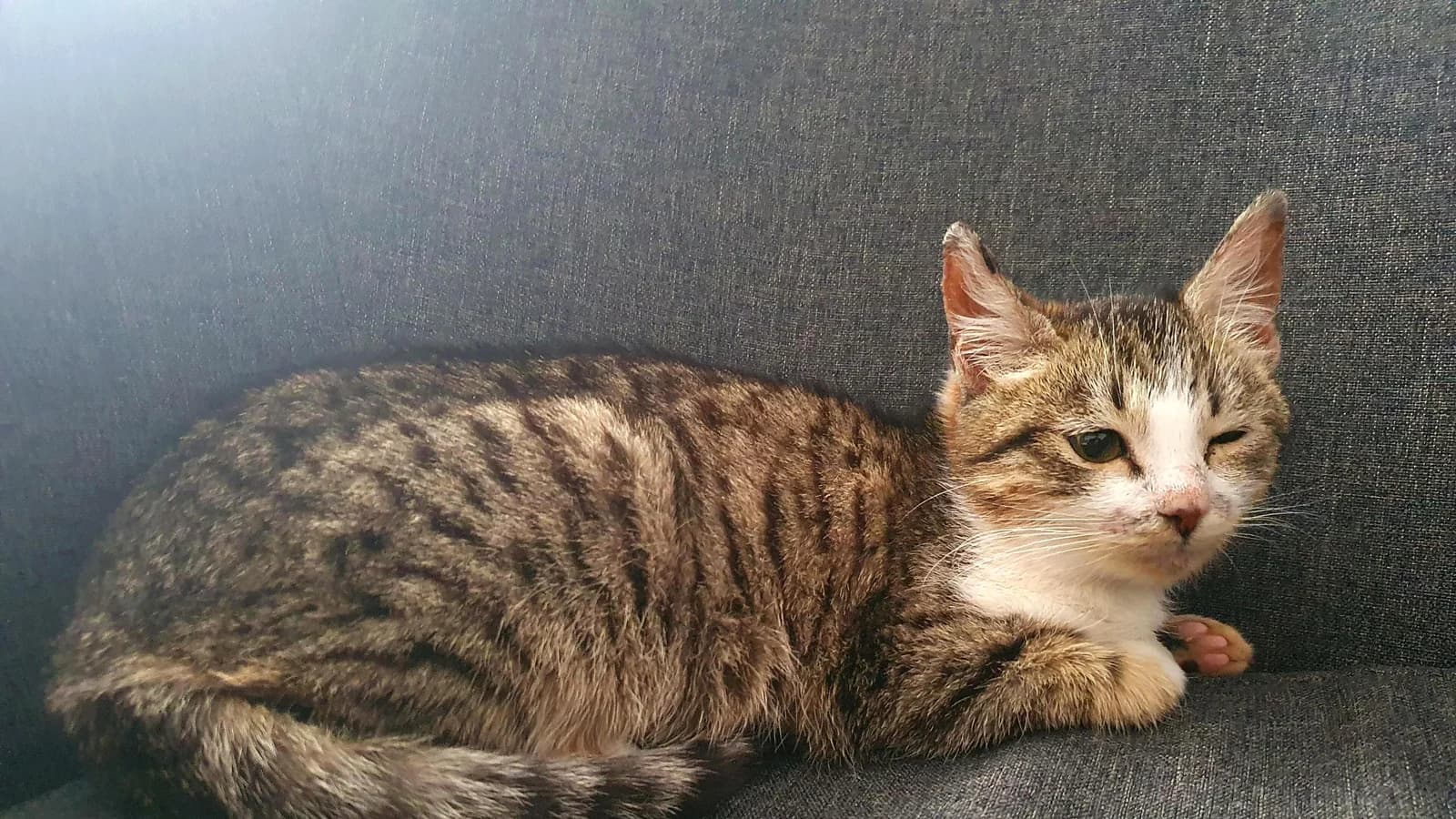
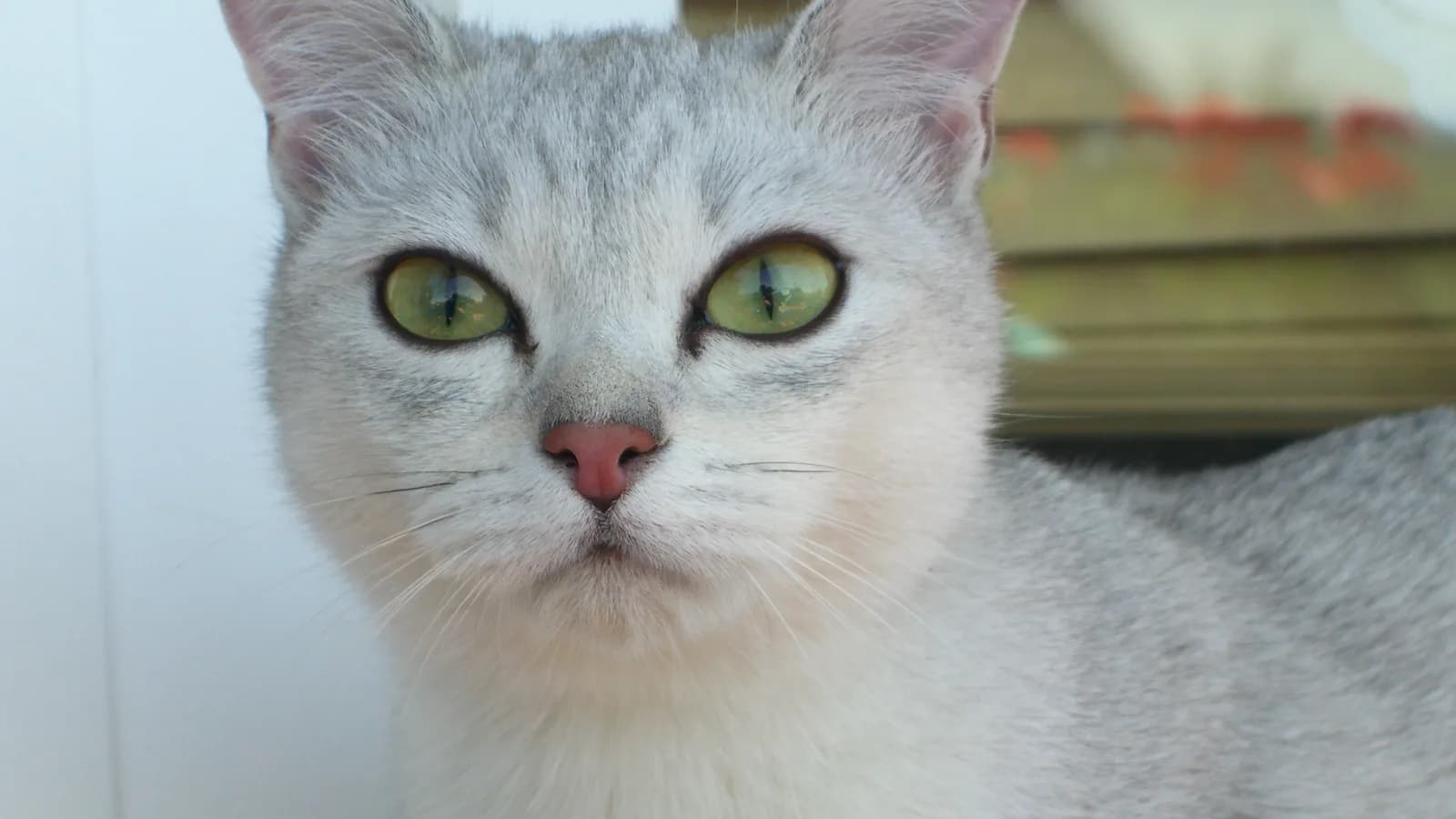
 Japanese Bobtail photos
Real photos, so you can see what the breed actually looks like: coats, ear tufts, ruff and build.
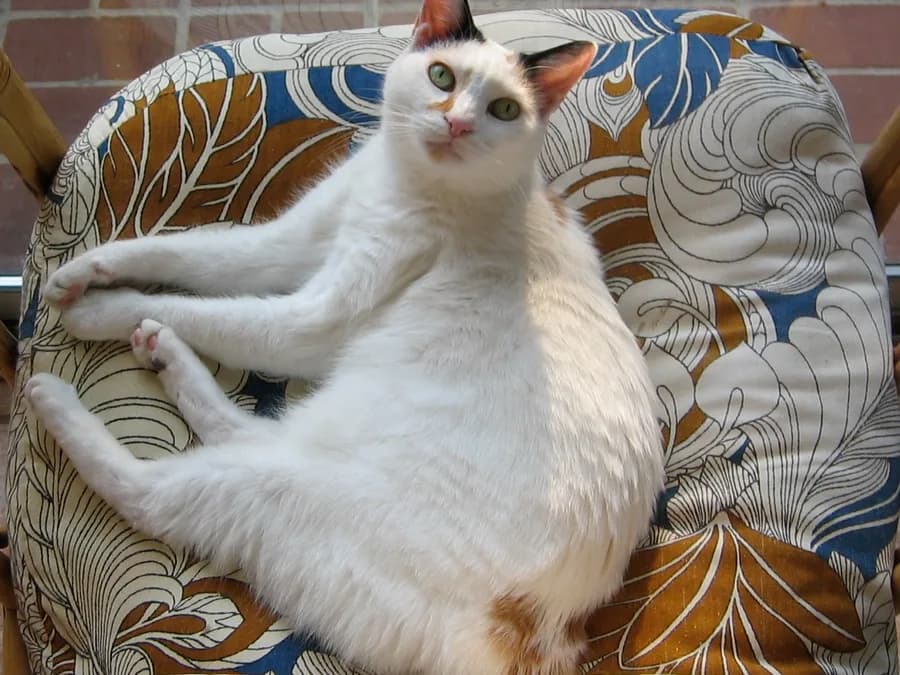
White and calico Japanese Bobtail sprawled sideways on a patterned chair, legs stretched out
Photo: jonny-mt · CC BY-SA 3.0 · via Wikimedia Commons
 Vital stats
Origin
Japan
Japan, with the best-anchored date in any of our breed files. Emperor Uda's diary describes his black cat in 889 CE, corroborated independently by two sources, and bobtailed cats appear in Japanese art across centuries. The Western breed dates from Elizabeth Freret's August 1968 import of three kittens to the United States, named in 's own article. CFA recognized the shorthair in 1976 and in 1979.
Weight
Female
5-7 lb (2.3-3.2 kg)
Male
8-10 lb (3.6-4.5 kg)
Life expectancy
states 9-13+ years. No measured cohort study anywhere gives this breed its own lifespan row, checked directly, so the range is a registry estimate and says so. Commonly cited estimate; no measured study exists.
Coats
Mi-ke (white, black, red)
Black and white bicolor
Red and white
Mi-ke, the white-black-red tri-color, is the breed's flagship in every registry. The four registries with a color position genuinely diverge, stated per registry: and exclude nothing; and exclude un-patterned . ACF alone additionally excludes chocolate, lavender and pointed, citing a 1997 CFA edition we could not independently confirm, an open question stated rather than resolved. Blue-eyed and cats are prized, especially on white.
Understanding the coats (and their genetics)Size
Neither registry's formal standard or At-a-Glance box states a weight, a checked absence. Two adjacent narrative figures exist, never averaged. TICA's text gives females 5-7 lb (2.3-3.2 kg) and males 8-10 lb (3.6-4.5 kg). A CFA-hosted article says about 6 lb for females and 8 lb for males. A slender, high-cheekboned, medium cat by both standards' own prose.
Did you know
The oldest dated cat in any of our breed files: Emperor Uda wrote about his black cat in his own diary in 889 CE. The beckoning-cat connection, though, is popularly repeated rather than documented. No primary or museum source establishes the figurine as this breed, and we say exactly that, alongside what is real: the shared tradition, and present-day statues at Gōtoku-ji temple that one outlet describes as resembling it.
 Personality
 Affection4/5
 Energy4/5
 Intelligence4/5
 Friendliness4/5
 Independence3/5
 Vocal4/5
 Shedding2/5
Compatibility
 Good with children4/5
 Good with other pets4/5
 Apartment friendly4/5
Editorial ratings on our five-point scale, anchored in the registry descriptions and the measured behaviour studies cited on this profile; individual cats vary, and our members' own ratings below are the counterweight.
Still torn between this breed and another?Compare the Japanese Bobtail trait by trait, or filter every breed by what matters to you. What our members say
What our members say
Nobody has described their Japanese Bobtail here yet. As soon as the first profiles come in, this is where the community averages will show up: temperament, food, lifestyle.
Describe my Japanese Bobtail Pros & cons
Strong points
- A tail gene that is genuinely benign in the breed's own genetics: homozygous is the breed's normal state, 26 of 26 cats across two independent studies
- The chirping, songlike voice both registries describe: vocal without being loud
- Eleven centuries of documented history, from an emperor's diary to CFA's named 1968 import kittens
- Low-maintenance coats in both lengths, with little undercoat
Things to consider
- Genuinely rare: about 15 US catteries by a breeder's own count, and confirmed-empty markets in Canada and Australia
- GCCF does not recognize the breed, which closes the mainstream UK show route
- No measured lifespan, weight or behaviour study reaches the breed: the file is registry prose, labeled
- The short tail is sensitive and must be handled gently, a real constraint with small children
 Is a Japanese Bobtail right for you?
A household that wants a talkative, people-centered, historically deep breed and can work a genuinely scarce market: waitlists, possible travel, and in Canada or Australia an import plan. Gentle-handed children and adults, because the tail is not a toy.
Is the Japanese Bobtail right for YOUR home?
Answer a few questions and we'll email you your personalized result.
Take the quiz · 2 min Getting to know the Japanese Bobtail
The tail is a different gene from the Manx's, and that sentence is the most important one on this page. The Japanese Bobtail's short, kinked pom-pom comes from a missense mutation (c.5T>C, p.V2A) in HES7, identified and independently confirmed by two separately authored research groups genotyping real cats (Xu 2016; Lyons 2016). The Manx's taillessness comes from mutations in a different gene entirely, T-box/Brachyury, and the two never mix.
Purebred Japanese Bobtails are routinely HOMOZYGOUS for their own mutation, 26 of 26 cats across the two studies, and that is the breed's normal genetic state. A Manx embryo with two mutant copies does not survive to birth. Same silhouette from a distance, opposite genetics underneath, and no Manx figure applies to this breed in any direction.
The honesty file on health: no source ties the breed's mutation to a documented spinal, bladder or bowel clinical case. The vertebral study that looked found variation without illness in its sample, a narrower and more accurate sentence than 's own 'no known abnormalities'. The UK's still declines recognition, citing the need for genetic and veterinary information. We print the registry's caution and the genetics literature's reassurance side by side, because both are real.
Eleven centuries of paper trail, one small market. From Emperor Uda's 889 CE diary to Elizabeth Freret's 1968 import kittens, the history is unusually well anchored. The market is the opposite: about 15 US catteries and two confirmed-empty Commonwealth markets, which our price page documents ladder by ladder.
 Health: what to watch for
A few predispositions are well documented. The good news: they can be screened for or avoided by choosing a reputable breeder and keeping an eye on the right signals.
This is information, not veterinary advice, and it cannot tell you what is wrong with your cat. Our rule is a simple one: if something is wrong with your cat, call your vet, and call an emergency clinic if it is out of hours. Nothing you read here is a reason to wait.
The tail gene, precisely: HES7, dominant, and homozygous-normal in this breed
LOWThe short kinked tail comes from a missense mutation (c.5T>C, p.V2A) in HES7, confirmed dominant and confirmed a DIFFERENT gene from the Manx's T-box/Brachyury by two independently authored studies genotyping cats directly. Purebred Japanese Bobtails are routinely homozygous for it: 26 of 26 registered cats across the two studies, plus 12 of 12 in a diversity panel, with zero mutant alleles found in 174 normal-tailed controls. Homozygosity is the breed's normal state, not a risk marker. That is the exact opposite of the Manx situation, and why no Manx health figure ever applies here.
What the registries and the literature do NOT say, printed on purpose
LOWNo source ties this breed's mutation to any documented spinal, bladder or bowel clinical case. The vertebral study that looked (Pollard 2015) found vertebral variation present in its sample without linking it to illness or death. That is the accurate version of CFA's rounder 'no known abnormalities' line, and the version this page uses. As always: gait changes, litter-box changes or pain in any cat mean call your vet, whatever its breed's literature says.
GCCF's caution, stated beside the reassurance
LOWThe UK's GCCF does not recognize the breed and says why in its own words: Amber status, with 'genetic and veterinary info would be required'. That is a registry precaution about tail-mutation breeds as a class. We print it accurately next to the breed's own genotyping data, rather than letting either erase the other. Practically it means no mainstream UK show path and a thinner UK breeder pool.
The sensitive tail, as daily-life guidance
LOWTICA instructs that the tail be 'handled very gently' and ACF warns handling 'may cause distress': the fused, kinked vertebrae make the pom-pom sensitive. Not a disease, but a house rule, especially with children, and any sign of tail pain is a vet visit, never something to test at home.
Go deeper on health
Prevention, warning symptoms, costs and insurance: our guides, researched and sourced.
Also worth a look
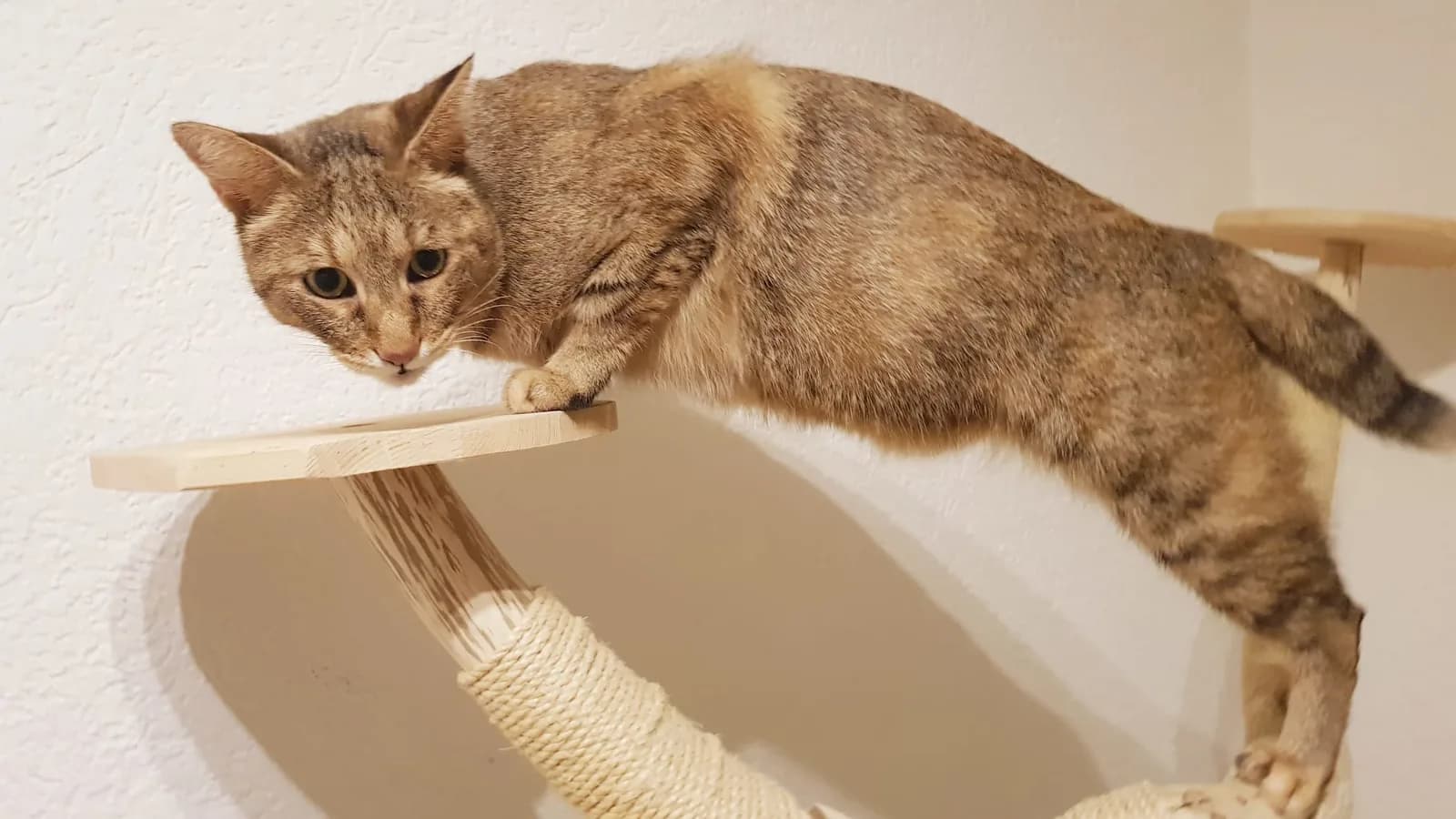
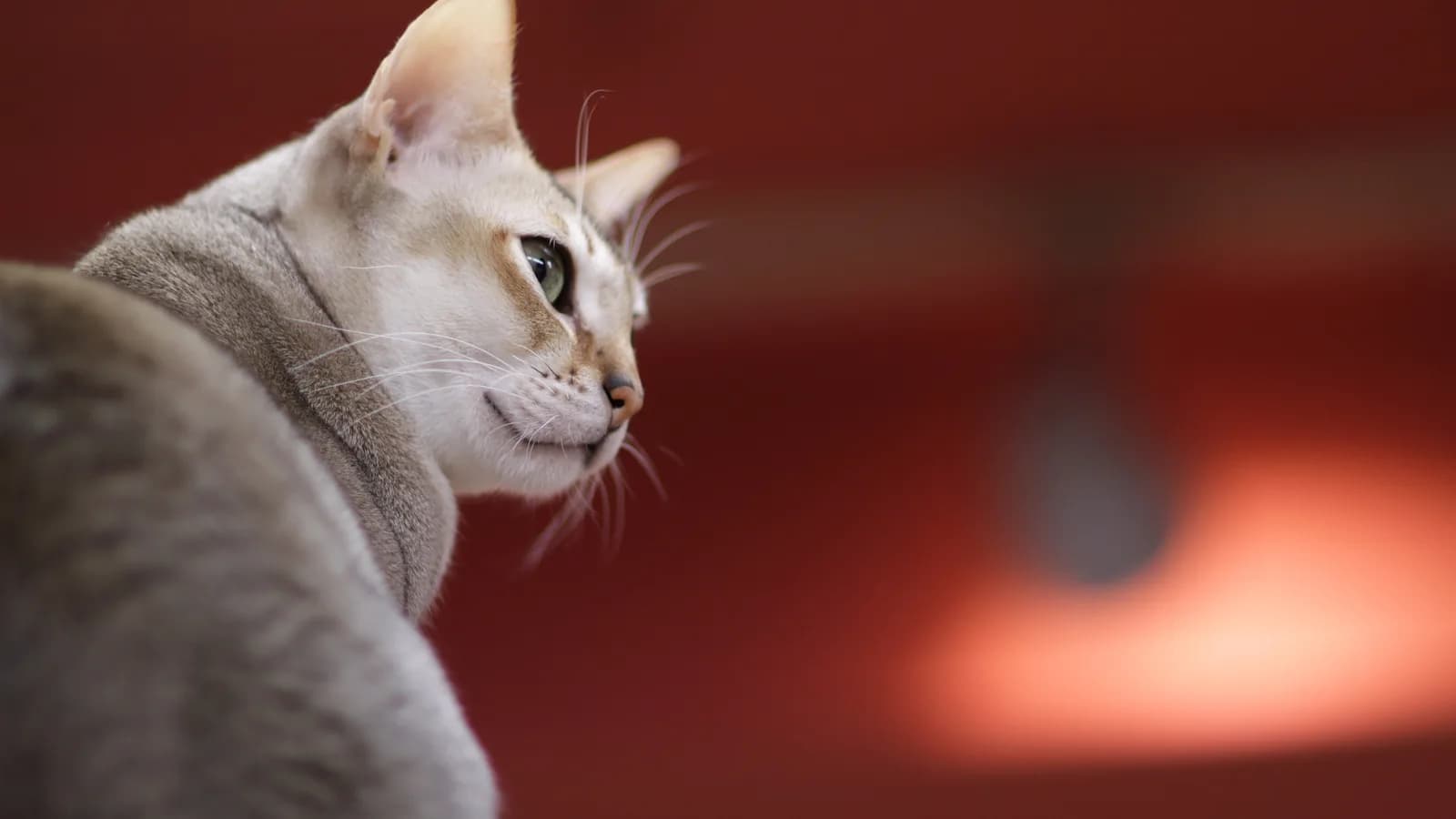
The Japanese Bobtail also appears in
Our criteria-based guides, to compare this breed with the ones most like it.
 Grooming & living with one
Grooming
's coat-length-split cadence is the primary figure: several times a month for the shorthair, more often (unquantified) for the longhair. 's twice-weekly figure stands as the named alternative. Both coats carry little undercoat and are described as low-maintenance for their look.
Living together
The registry portrait is a sociable, playful cat that does well with children, other cats and cat-friendly dogs, with the standing caveat that no measured study backs any breed-level claim here. The one firm house rule comes from the registries themselves: the tail is sensitive, and gets handled very gently or not at all.
 Food & diet
's own line, quoted because it is the registry's characterisation: Japanese Bobtails 'do not have any particular nutritional needs other than good, quality food.' No documented feeding distinctive exists, checked and confirmed absent. Portion by body condition with your vet.
 Price & budget
$800 to 2,500
Price of a kitten from a registered breeder, in the United States
This price reflects the quality of the breeding program: parents' health tests, registry pedigree, socialization. A very low price should raise a red flag. The real cost, though, plays out over the years.
Find a verified breederKitten price, by market
United States
$800 to 2,500
United Kingdom
£400 to 1,600
Each figure is that country's real market price, researched separately, not a conversion of the others. The smaller line is only there so you can gauge one against your own money: European Central Bank reference rates of 2026-09-18, refreshed daily.
Work out your food budget
Type of food
Estimated monthly budget
$11
≈ 2.0 oz (57 g) per day
A ballpark figure, food only, using the same arithmetic as our portion tool (resting energy requirement × 1.2, a neutered adult). Real needs vary with age, activity level and body condition. Ask your veterinarian for advice.
 Verified catteriesThe registry-checked directory, plus a kitten alert near you. Filter it by breed.
 Should you insure a Japanese Bobtail?
Our sources list several predispositions in the Japanese Bobtail: The tail gene, precisely: HES7, dominant, and homozygous-normal in this breed, What the registries and the literature do NOT say, printed on purpose, GCCF's caution, stated beside the reassurance, among others. A predisposition is not a foregone conclusion, and many of these cats live their whole lives without ever developing anything. It does change the nature of the follow-up, though: you monitor, sometimes for life, and it's that monitoring that weighs on a budget, more than a one-off accident.
One thing to weigh before deciding: this is a cat you will live alongside for well over a decade, and that is the span the real cost is spread across, premiums and care alike. Where a breed has a measured life expectancy that differs from the figure usually quoted, we say so in the lifespan section above rather than repeating the quoted one here.
 Japanese Bobtail cats in our community
No Japanese Bobtail here yet
Got one? Add a photo and yours gets to open this page.
 The vet's take

Veterinary review
Are you a vet?
Your professional read belongs here: every verified practitioner can leave a note, published once our editors have reviewed it.
Sign in and get your license number verified. We check it in the public register, we never ask for or keep a copy of your diploma, and your number is never published.
 Frequently asked questions
+What is a Japanese Bobtail?
A naturally short-tailed breed from Japan with a documented history back to Emperor Uda's diary in 889 CE: a slender, people-oriented, famously chirpy cat whose pom-pom tail comes from its own HES7 gene mutation, recognized by CFA since 1976 and TICA since 1979 in both coat lengths.
+Is a Japanese Bobtail the same as a Manx?
No, and the genetics are opposite: the Japanese Bobtail's tail comes from HES7, and healthy purebreds carry two copies as their normal state; the Manx's comes from a different gene (T-box/Brachyury) where two copies are lethal before birth. Two breeds, two genes, no shared health file.
+Are Japanese Bobtails healthy?
The literature is quietly reassuring: no documented clinical case ties the tail mutation to spinal, bladder or bowel disease, and the one vertebral study found variation without illness in its sample. No measured lifespan study exists; TICA estimates 9-13+ years. Anything wrong with any cat means call your vet.
+Are Japanese Bobtails rare?
Genuinely: a named breeder estimates about 15 reputable US catteries, marketplace searches routinely return zero listings, and Canada and Australia have no visible domestic market at all, confirmed by nine checks between them. Expect waitlists.
+How much does a Japanese Bobtail cost?
US: $800-2,500 across four named cattery ladders, with longhairs about $200 more and a $50-100 premium for blue or odd eyes. UK: a published £400-1,600 range with no live inventory at our check. Canada and Australia: import territory. Our price page has every ladder.
+What is a mi-ke Japanese Bobtail?
The breed's flagship tri-color: white with black and red patches, traditionally favored in Japan and at the top of most cattery price ladders, especially with blue or odd eyes.
+Is the maneki-neko a Japanese Bobtail?
Popularly said, never established: no primary or museum source documents the beckoning-cat figurine as this breed. What is documented: the shared mi-ke tradition, centuries of bobtailed cats in Japanese art, and present-day statues at Gōtoku-ji temple that one outlet describes as resembling the breed.
+Are Japanese Bobtails vocal?
Yes, distinctively: both registries describe a soft, chirping, almost songlike voice rather than loud meowing. Owners describe conversations; the measured literature, honestly, describes nothing, because no study includes the breed.
+Can you hold a Japanese Bobtail by the tail?
Never: the kinked, fused tail is sensitive, TICA says it should be handled very gently, and ACF warns handling may cause distress. Teach children the pom-pom is not a handle, and treat any tail pain as a vet visit.
+Do Japanese Bobtails come in longhair?
Yes: the longhair has been recognized by TICA since 1991 and CFA since 1993, with the same slender build and a silky, low-undercoat coat that stays lower-maintenance than it looks. Longhairs typically cost about $200 more at the catteries that price the split.
+Is my bobtailed cat a Japanese Bobtail?
Probably not, honestly: several breeds and plenty of random-bred cats bob their tails through different genes. The only identification that means anything is CFA or TICA registration paperwork tracing to breed lines; the tail alone proves nothing.
 Community questions
Got a question this page doesn't cover? Ask it: the best ones get published here with their answer.
Sources & references
Data checked against reference sources (TICA and CFA standards, genetics laboratories, veterinary schools).
- TICA: Japanese Bobtail breed page
- TICA: Japanese Bobtail Breed Standard PDF
- CFA: Japanese Bobtail breed page
- CFA: Japanese Bobtail breed standard PDF
- GCCF: cat breeds index (the breed's absence) and unrecognised-breeds policy page
- ACF: Japanese Bobtail standard PDF
- Xu et al. 2016, Sci Rep: the HES7 missense mutation (PMID 27560986)
- Lyons et al. 2016, BMC Genomics: independent HES7 confirmation, 14-cat sample (PMID 27030474)
- Pollard et al. 2015, J Feline Med Surg: vertebral morphology in the breed (PMID 25488973)
- Buckingham et al. 2013, Mamm Genome: the Manx T/Brachyury paper (the different-gene contrast only, PMID 23949773)

Worth keeping a paw on
Pin this profile
To compare later, or to show someone still torn between two breeds. One click and it sits in your board.
Pin it on Pinterest
 Purr or Pass
Still deciding? Find the perfect breed for your home.
A quick quiz that factors in your lifestyle, your kids and your other pets.
Which breed fits my home?Keep exploring
The floor belongs to our members. Keep it kind, links are not allowed, and images go through moderation before anyone else sees them.