

Colorpoint Shorthair
“A Siamese in sixteen extra colors, with its own papers in exactly two registries”
 By Priya · The careful one
Published August 21, 2026Updated August 26, 20267 min read
Contents
 Colorpoint Shorthair photos
Real photos, so you can see what the breed actually looks like: coats, ear tufts, ruff and build.
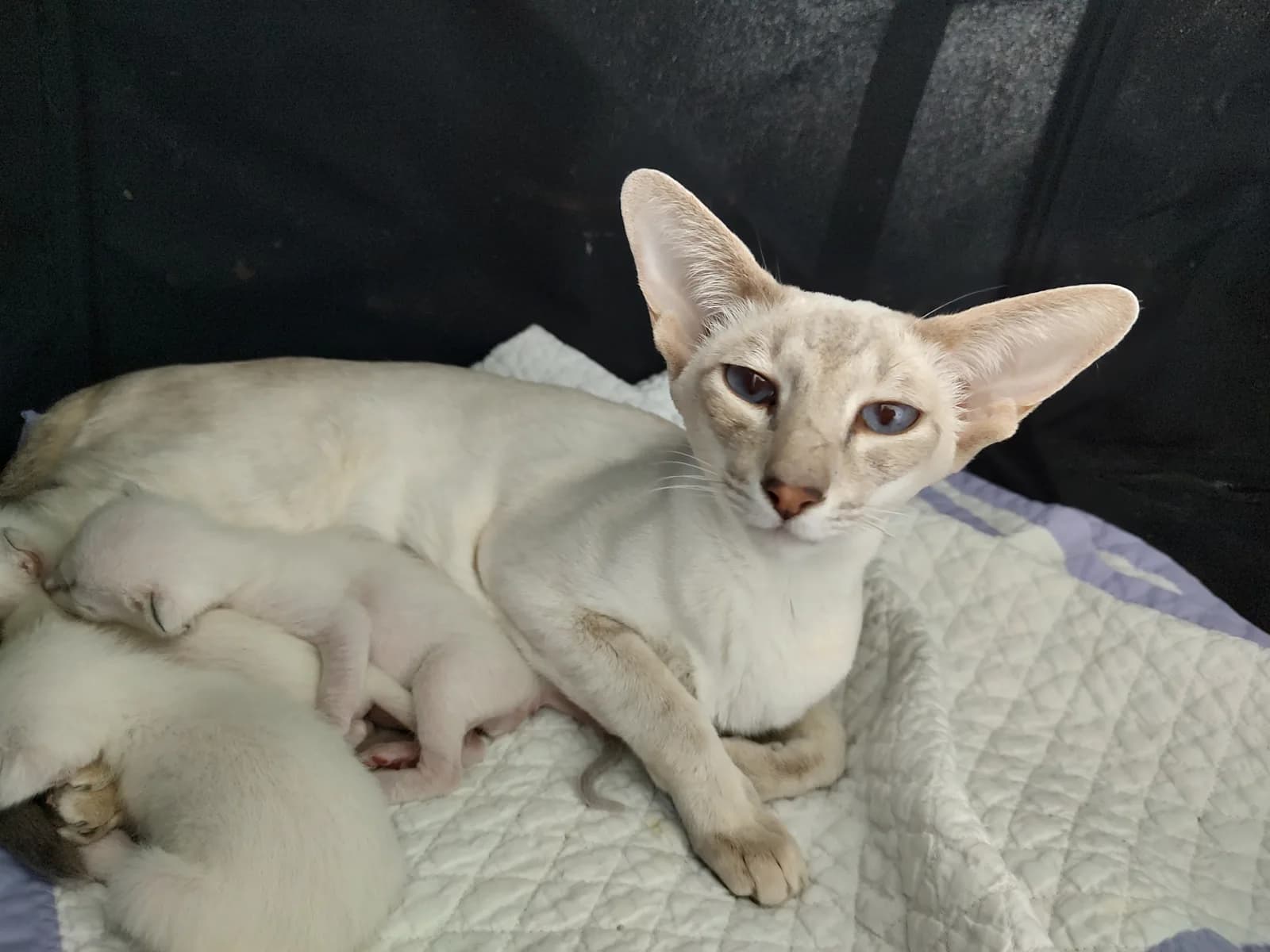
Lynx point Colorpoint Shorthair mother resting with her kittens
Photo: Kathryn Smith · CC BY 4.0 · via Wikimedia Commons
Got a Colorpoint Shorthair? Share them with the community. Photos from our members round out this page.
 Vital stats
Origin
United States
's own dated account: with the Siamese at the height of its 1950s popularity, breeders mixed the red gene into the four traditional point colors. Red, cream and points were accepted for CFA registration in the late 1950s, and reached championship status on 1 May 1964. In CFA's own words, 'the purpose of the hybridization was to establish cats identical in type to the Siamese but with separate colors'. Meanwhile English breeders were adding colors of their own, and their 'tabby points' crossed the Atlantic to be renamed ' points'.
Life expectancy
12 to 16 years is the consumer convention (five of six consumer sources converge on this band); no study or registry backs it, stated plainly. Every measured lifespan study checked pools this breed invisibly into 'Siamese'. That is a property of the evidence base, not an oversight of ours.
Coats
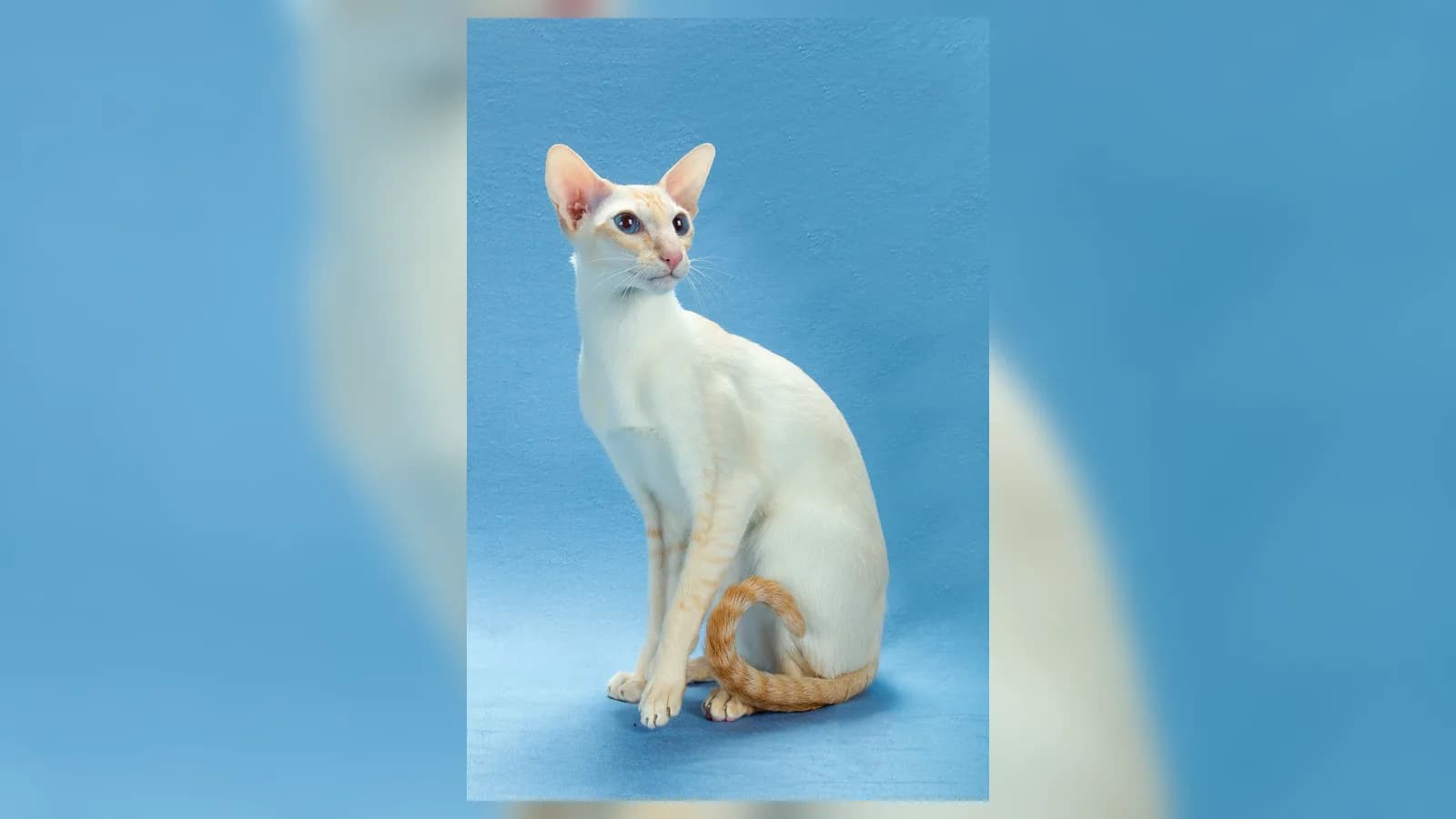
Red point (the founding color)
Cream point
Lynx point (the renamed tabby point)
Seal-tortie point
counts 16 colors and combinations, judged in three classes in its own words: solid point (red and cream), point (red, cream, seal, chocolate, blue and lilac with tabby markings, plus their particolor versions) and particolors (seal-, chocolate-tortie, and lilac-cream). Two mechanics no competitor page states.
The standard's fourth row is 'AOV' (codes 2298/2299), which lets a classic-colored kitten born in a Colorpoint litter compete under this breed's own papers. And Lynx Points are the ONLY color group the standard permits white markings on, an explicit carve-out inside a standard that otherwise disqualifies white entirely. Cinnamon and fawn are excluded. The name history is 's own: the English 'tabby points' crossed the Atlantic and were renamed ' points'.
Understanding the coats (and their genetics)Size
The honest headline: no registry standard, in any market, gives this breed a weight figure at all. The one measured, breed-isolated number our research found anywhere: one small German study (Kienzle and Moik 2011) recorded three Colourpoint females averaging 3.2 kg (7 lb), close to the wider Siamese/Oriental Shorthair figure from the same study. At n=3, that is a data point, never a range, and we publish it only with this caveat attached. The body is the Siamese's: long, svelte, tubular, fine-boned, with the same standard wording for type.
Did you know
's own website uses the word 'Colourpoint' for three different things, none of which is this breed. A UK reader searching GCCF for it lands on Persian show-club results. The breed's own papers exist in exactly two registries on Earth: and Canada's .
 Personality
 Affection5/5
 Energy5/5
 Intelligence5/5
 Friendliness5/5
 Independence2/5
 Vocal5/5
 Shedding2/5
Compatibility
 Good with children4/5
 Good with other pets4/5
 Apartment friendly4/5
Editorial ratings on our five-point scale, anchored in the registry descriptions and the measured behaviour studies cited on this profile; individual cats vary, and our members' own ratings below are the counterweight.
Still torn between this breed and another?Compare the Colorpoint Shorthair trait by trait, or filter every breed by what matters to you. What our members say
What our members say
Nobody has described their Colorpoint Shorthair here yet. As soon as the first profiles come in, this is where the community averages will show up: temperament, food, lifestyle.
Describe my Colorpoint Shorthair Pros & cons
Strong points
- Everything people love about the Siamese, in sixteen colors the Siamese standard excludes
- A genuinely interesting registration story this page tells in CFA's own words, not a smoothed summary
- Low-maintenance glossy coat with no documented difference from the Siamese's
- A rare protective health finding (reduced hyperthyroidism risk) in its family's file, scoped honestly
Things to consider
- Papered in exactly two registries (CFA, CCA-AFC): in the UK and Australia this cat is a Siamese, full stop
- The name collides with wrong breeds at the point of sale, on both sides of the Atlantic, documented live
- No breed-isolated measured data exists for weight, lifespan or temperament: every figure is family-scoped
- The thinnest satellite market we have measured: few breeders, contact-for-price common
 Is a Colorpoint Shorthair right for you?
Someone who wants a Siamese in a color the Siamese standard won't take: same voice, same velcro attachment, same athletic engine, and the patience for a cat itself describes as 'insistent'. Expect a thin, mostly-US market, and read listings carefully, because the breed's name collides with wrong breeds on both sides of the Atlantic.
Is the Colorpoint Shorthair right for YOUR home?
Answer a few questions and we'll email you your personalized result.
Take the quiz · 2 min Getting to know the Colorpoint Shorthair
This breed is a registration story, and we tell it in 's own words. CFA and Canada's paper the Colorpoint Shorthair as its own breed: 'cats identical in type to the [Siamese0 but with separate colors'. Every other registry in our four markets (, , 's members, , ) folds every point color into ONE unified Siamese breed, with no second document at all. Same cat, two filing systems. That split is the single most load-bearing fact on this page. The colors the market actually searches ( point, flame point, seal point) live under the Siamese's name in every marketplace.
That is why our color-by-color pages sit in the Siamese silo, and this page deliberately does not duplicate them. The traps are real and documented: a US cattery advertising a 'Colorpoint Exotic Shorthair' (a flat-faced Persian-type cat, a different breed entirely), Canadian marketplace searches returning British Shorthairs and Persians in every result set, and 's own site using 'Colourpoint' for Persian contexts. If you are buying, match the registry paper ( or ), not the word. Not to be confused with the Oriental Shorthair (green-eyed, non-pointed) or the Balinese (the longhaired side of the family).
 Health: what to watch for
A few predispositions are well documented. The good news: they can be screened for or avoided by choosing a reputable breeder and keeping an eye on the right signals.
This is information, not veterinary advice, and it cannot tell you what is wrong with your cat. Our rule is a simple one: if something is wrong with your cat, call your vet, and call an emergency clinic if it is out of hours. Nothing you read here is a reason to wait.
The evidence base itself, stated once
LOWEvery heavy measured health finding our research checked pools this breed invisibly into 'Siamese' or 'Siamese/Oriental': no study isolates Colorpoint Shorthairs. That is a property of the evidence. It means the Siamese profile's health section is the operative read for this cat, and nothing below claims breed isolation it does not have.
A protective finding, scoped honestly
LOWA UK risk-factor study found Siamese-category cats at markedly REDUCED hyperthyroidism risk (odds ratio 0.27), one of the few protective breed findings in feline medicine. The scope caveat travels with it. The study measures GCCF's unified 'Siamese' category, which includes this breed's colors, and is never a Colorpoint-Shorthair-isolated figure.
The albinism footnote (a curiosity, not a condition)
LOWThe paper that mapped albinism in domestic cats to a TYR mutation used a pedigree its own text describes as Colourpoint Shorthair and Oriental cats. It is a rare, non-fixed allele documented in one research pedigree: a genuine claim to a small place in genetics history, not a breed-defining health condition. No screening consequence follows from it.
Screening, inherited from the family
MEDIUMNo screening age or threshold specific to this breed exists in any source we reached. General feline life-stage guidance applies, plus whatever your vet advises for Siamese-type cats specifically. Anything wrong with your own cat is a vet call, not a page.
Go deeper on health
Prevention, warning symptoms, costs and insurance: our guides, researched and sourced.
Also worth a look
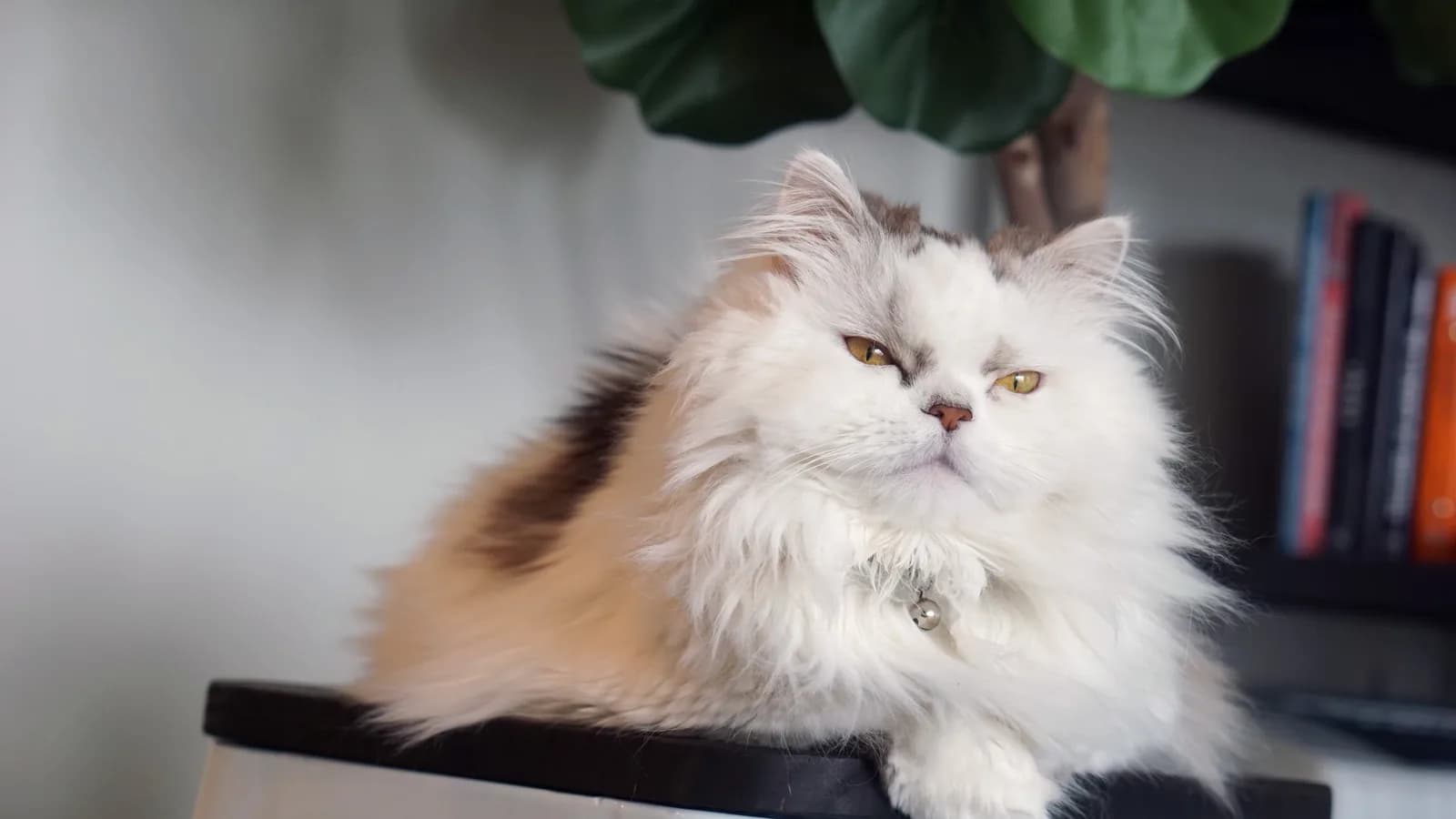
Australian Mist
“Dr Straede's people-centered indoor cat, misted in seven colors”
Minuet
“The Napoleon: a Persian's face on a Munchkin's legs, renamed but never quite”
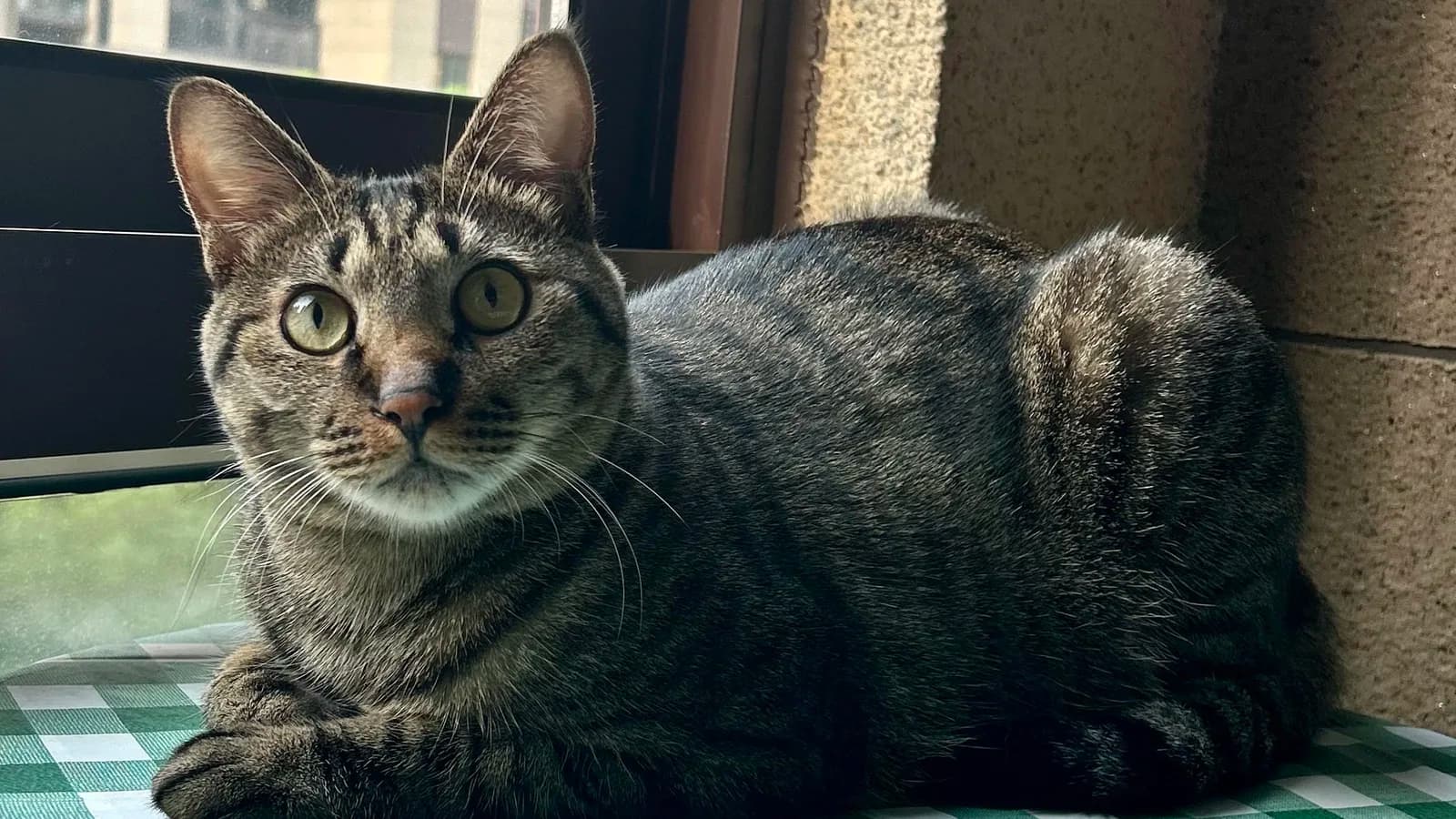
Dragon Li
“China's own landrace tabby: a real breed with no Western registry left”
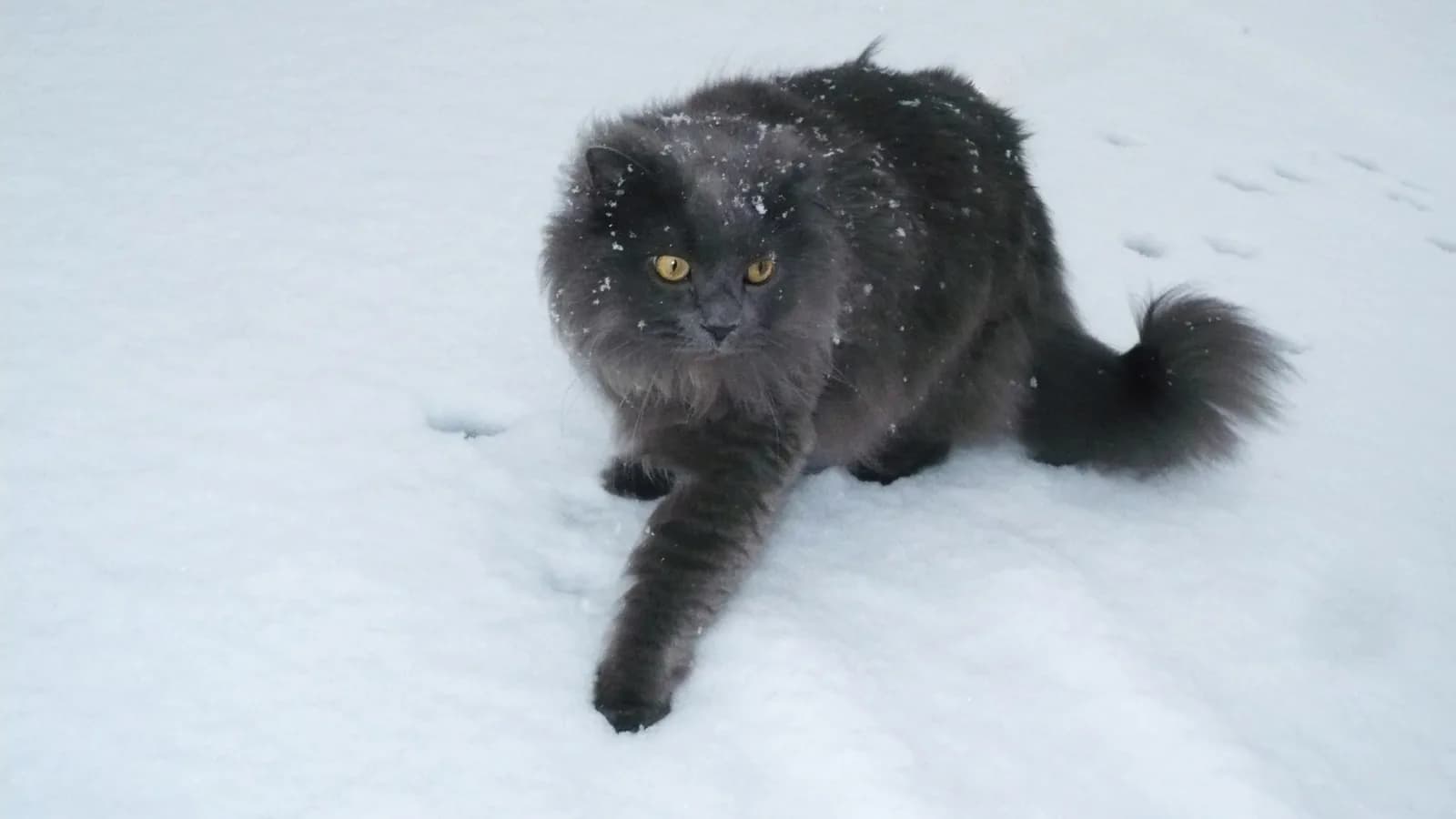
Chantilly-Tiffany
“The chocolate longhair that ran out of cats: a history, not a listing”
 Grooming & living with one
Grooming
No documented grooming, shedding or coat-care difference from the Siamese exists in any source our research reached. 's own page names 'the Siamese trick' as the shared technique: a weekly once-over, and the coat looks after itself. The flat line on allergies holds here as everywhere: no cat, including this one, is hypoallergenic.
Living together
Everything the Siamese portrait says applies, because the sources are literally the same wording: people-centered, vocal, busy, best with company and structure. No breed-isolated behaviour data exists to say otherwise, which this page states rather than hides.
 Food & diet
No breed-specific nutritional literature exists; the profile is inherited from the Siamese's own active, lean-bodied type. Portion-controlled feeding matched to life stage and body condition, set with your vet. An athletic tubular build hides weight gain badly, which is the practical reason to weigh rather than eyeball. Nothing here is a prescription for a specific cat.
 Price & budget
$2,000 to 2,200
Price of a kitten from a registered breeder, in the United States
This price reflects the quality of the breeding program: parents' health tests, registry pedigree, socialization. A very low price should raise a red flag. The real cost, though, plays out over the years.
Find a verified breederKitten price, by market
United States
$2,000 to 2,200
United Kingdom
£950 to 1,200
Canada
CA$200 to 650
Each figure is that country's real market price, researched separately, not a conversion of the others. The smaller line is only there so you can gauge one against your own money: European Central Bank reference rates of 2026-09-18, refreshed daily.
Work out your food budget
Type of food
Estimated monthly budget
$14
≈ 2.4 oz (68 g) per day
A ballpark figure, food only, using the same arithmetic as our portion tool (resting energy requirement × 1.2, a neutered adult). Real needs vary with age, activity level and body condition. Ask your veterinarian for advice.
 Verified catteriesThe registry-checked directory, plus a kitten alert near you. Filter it by breed.
 Should you insure a Colorpoint Shorthair?
Our sources list several predispositions in the Colorpoint Shorthair: The evidence base itself, stated once, A protective finding, scoped honestly, The albinism footnote (a curiosity, not a condition), among others. A predisposition is not a foregone conclusion, and many of these cats live their whole lives without ever developing anything. It does change the nature of the follow-up, though: you monitor, sometimes for life, and it's that monitoring that weighs on a budget, more than a one-off accident.
One thing to weigh before deciding: this is a cat you will live alongside for well over a decade, and that is the span the real cost is spread across, premiums and care alike. Where a breed has a measured life expectancy that differs from the figure usually quoted, we say so in the lifespan section above rather than repeating the quoted one here.
 Colorpoint Shorthair cats in our community
This breed is barely covered by free photo libraries: we only found 3 photos we could verify. Your cats are especially welcome here.
No Colorpoint Shorthair here yet
Got one? Add a photo and yours gets to open this page.
 The vet's take

Veterinary review
Are you a vet?
Your professional read belongs here: every verified practitioner can leave a note, published once our editors have reviewed it.
Sign in and get your license number verified. We check it in the public register, we never ask for or keep a copy of your diploma, and your number is never published.
 Frequently asked questions
+What is the difference between a Colorpoint Shorthair and a Siamese?
Color, and paperwork. CFA's own words: the purpose was 'cats identical in type to the Siamese but with separate colors' (red, cream, lynx and tortie points). CFA and Canada's CCA-AFC register it as its own breed; every other registry calls the same cat a Siamese.
+Is a Colorpoint Shorthair a real breed?
In two registries, yes, with its own standard and color classes (CFA since the late 1950s, championship 1 May 1964; CCA-AFC in Canada). In TICA, GCCF, FIFe, ACF and ANCATS, the same colors are simply Siamese. Both descriptions are true; they are filing systems, not facts about the cat.
+What colors do Colorpoint Shorthairs come in?
CFA counts 16, judged in three classes: solid points (red, cream), lynx points (six colors with tabby markings, plus particolor versions) and particolors (the tortie and cream combinations). Lynx points are the only group allowed white markings; cinnamon and fawn are excluded.
+How much does a Colorpoint Shorthair cost?
The one named CFA cattery publishing prices asks $2,000 for solid points and $2,200 for lynx points. UK live listings ran £950-1,200; Canada's marketplace tier ran CA$200-650; Australia publishes no prices at all. Match the registry paper, not the word, when you shop.
+Why do searches for this breed show British Shorthairs and Persians?
A documented word collision: 'colourpoint' is also a color pattern in other breeds, and marketplace filters file by word. Our Canadian checks returned British Shorthair and Persian/Himalayan kittens in every result set, and GCCF's own site uses 'Colourpoint' for Persian contexts. The fix: search by registry and breeder, not keyword.
+Are Colorpoint Shorthairs vocal?
CFA's own tagline: 'Vocal, affectionate, active; can be insistent.' The wording is shared with CFA's Siamese page, which is honest shorthand for the truth: behaviourally, the sources treat this breed and the Siamese as one cat.
+Are Colorpoint Shorthairs hypoallergenic?
No, and no cat is. No allergen data exists for this breed separately from the Siamese family, and no registry claims the label. Spend time with the individual cat before committing if allergies are in the household.
 Community questions
Got a question this page doesn't cover? Ask it: the best ones get published here with their answer.
Sources & references
Data checked against reference sources (TICA and CFA standards, genetics laboratories, veterinary schools).
- CFA: Colorpoint Shorthair breed page (the 16 colors, the three classes, the tabby-points-renamed-lynx-points history)
- CFA: Colorpoint Shorthair show standard (the AOV row, the lynx-point white-markings carve-out)
- CFA: Colorpoint Shorthair rules of registration (the hybridization purpose quote, the transfer mechanics)
- CCA-AFC: Colourpoint Shorthair standard (the one other registry that papers the breed)
- Katsmith Cattery FAQ: the published $2,000/$2,200 price tiers (the one verified US price source)
- Kienzle & Moik 2011, Br J Nutr: the n=3 Colourpoint female weight row, published with its caveat (PMID 22005404)
- Imes et al. 2006, Anim Genet: the TYR albinism paper whose pedigree was Colourpoint Shorthair and Oriental cats (PMID 16573534)
- Crossley et al. 2017, J Vet Intern Med: hyperthyroidism risk factors, the Siamese-category OR 0.27 (PMID 28612380)

Worth keeping a paw on
Pin this profile
To compare later, or to show someone still torn between two breeds. One click and it sits in your board.
Pin it on Pinterest
 Purr or Pass
Still deciding? Find the perfect breed for your home.
A quick quiz that factors in your lifestyle, your kids and your other pets.
Which breed fits my home?Keep exploring
The floor belongs to our members. Keep it kind, links are not allowed, and images go through moderation before anyone else sees them.