

Colorpoint Shorthair coat colors and patterns
CFA counts 16 colors and combinations, judged in three classes in its own words: solid point (red and cream), lynx point (red, cream, seal, chocolate, blue and lilac with tabby markings, plus their particolor versions) and particolors (seal-tortie, chocolate-tortie, blue-cream and lilac-cream). Two mechanics no competitor page states. The standard's fourth row is 'AOV' (codes 2298/2299), which lets a classic-colored kitten born in a Colorpoint litter compete under this breed's own papers. And Lynx Points are the ONLY color group the standard permits white markings on, an explicit carve-out inside a standard that otherwise disqualifies white entirely. Cinnamon and fawn are excluded. The name history is CFA's own: the English 'tabby points' crossed the Atlantic and were renamed 'lynx points'.
2 min read
The color palette
Red point (the founding color)
Cream point
Lynx point (the renamed tabby point)
Seal-tortie point
The Colorpoint Shorthair in color
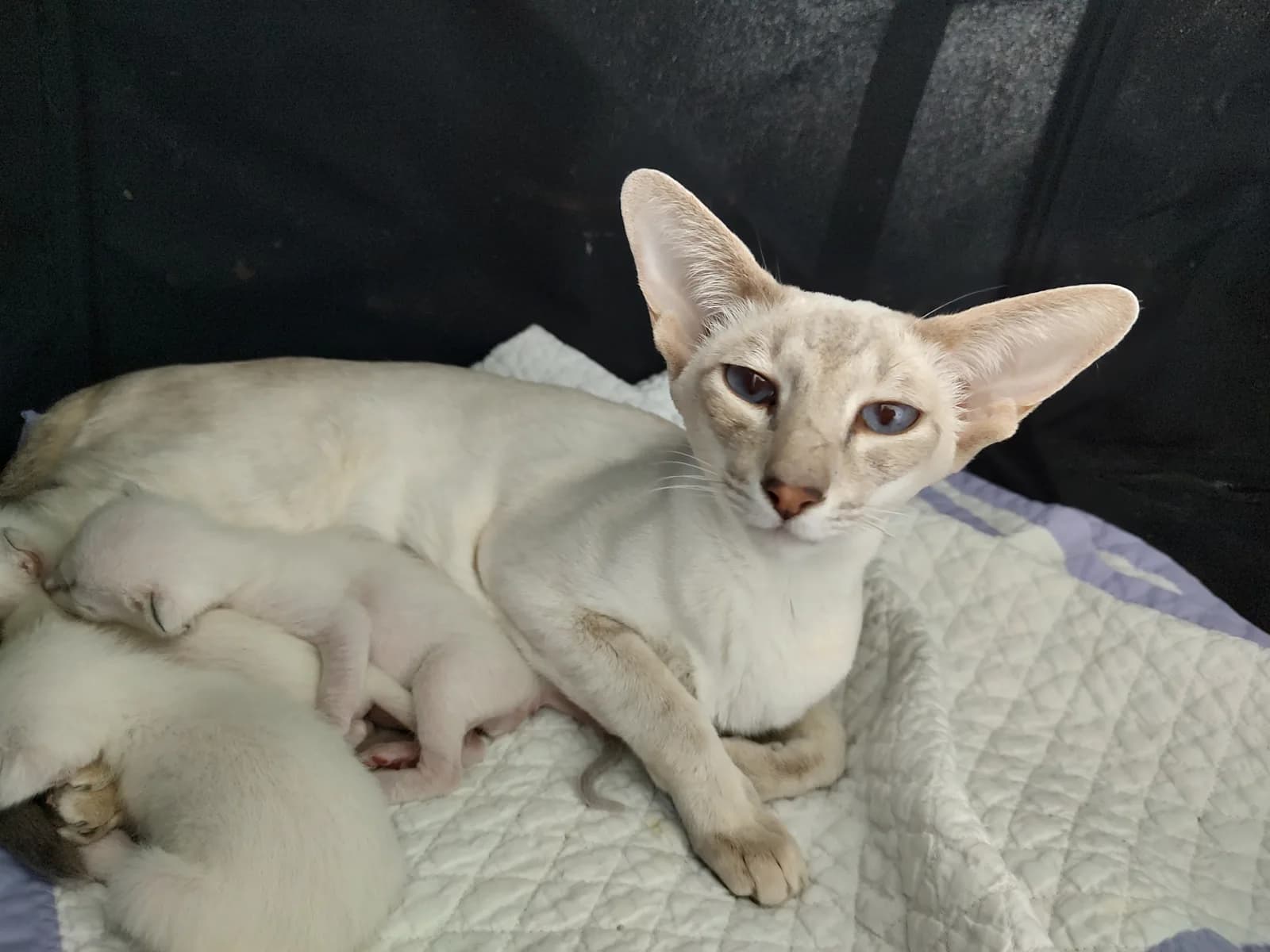
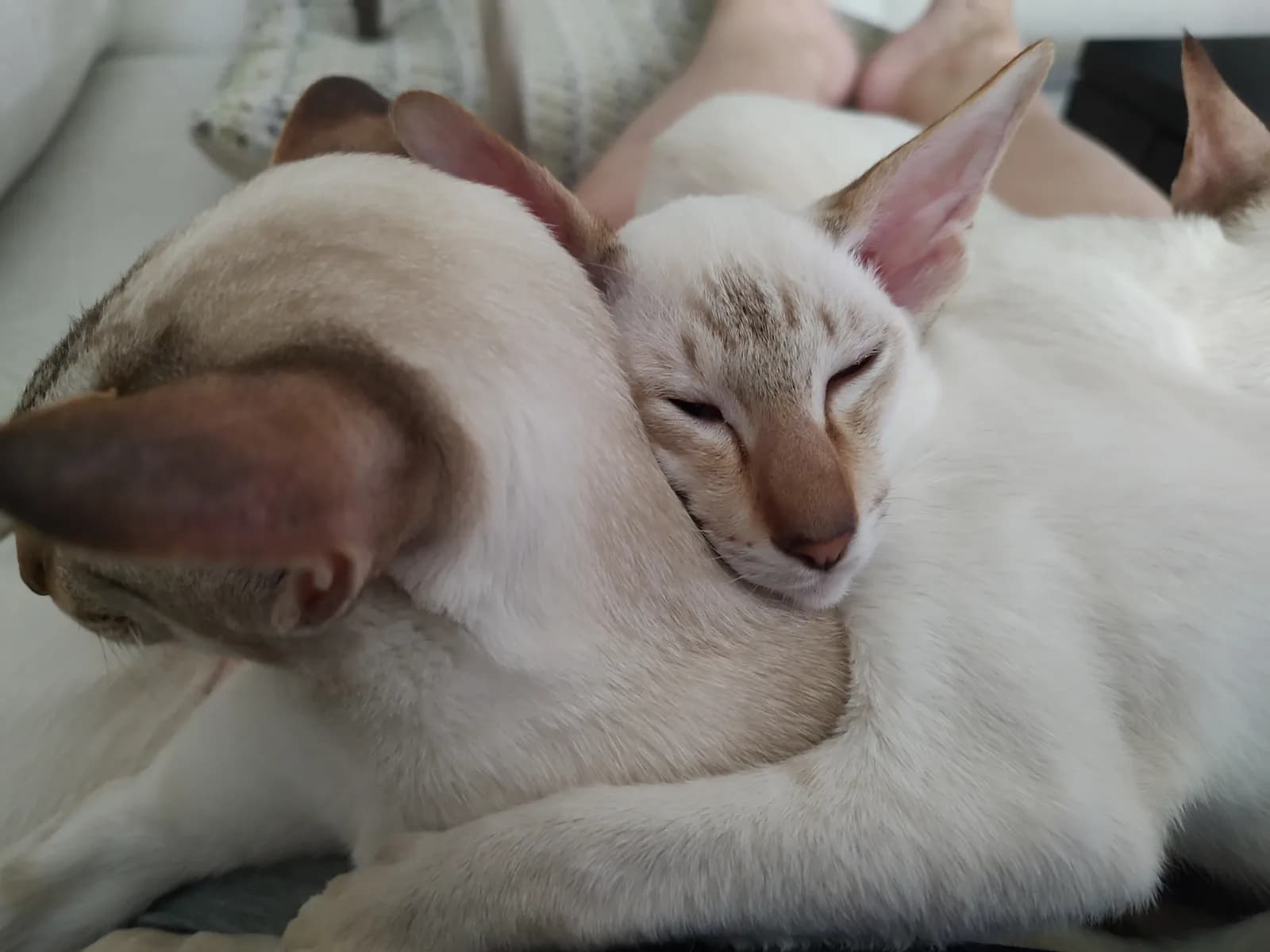
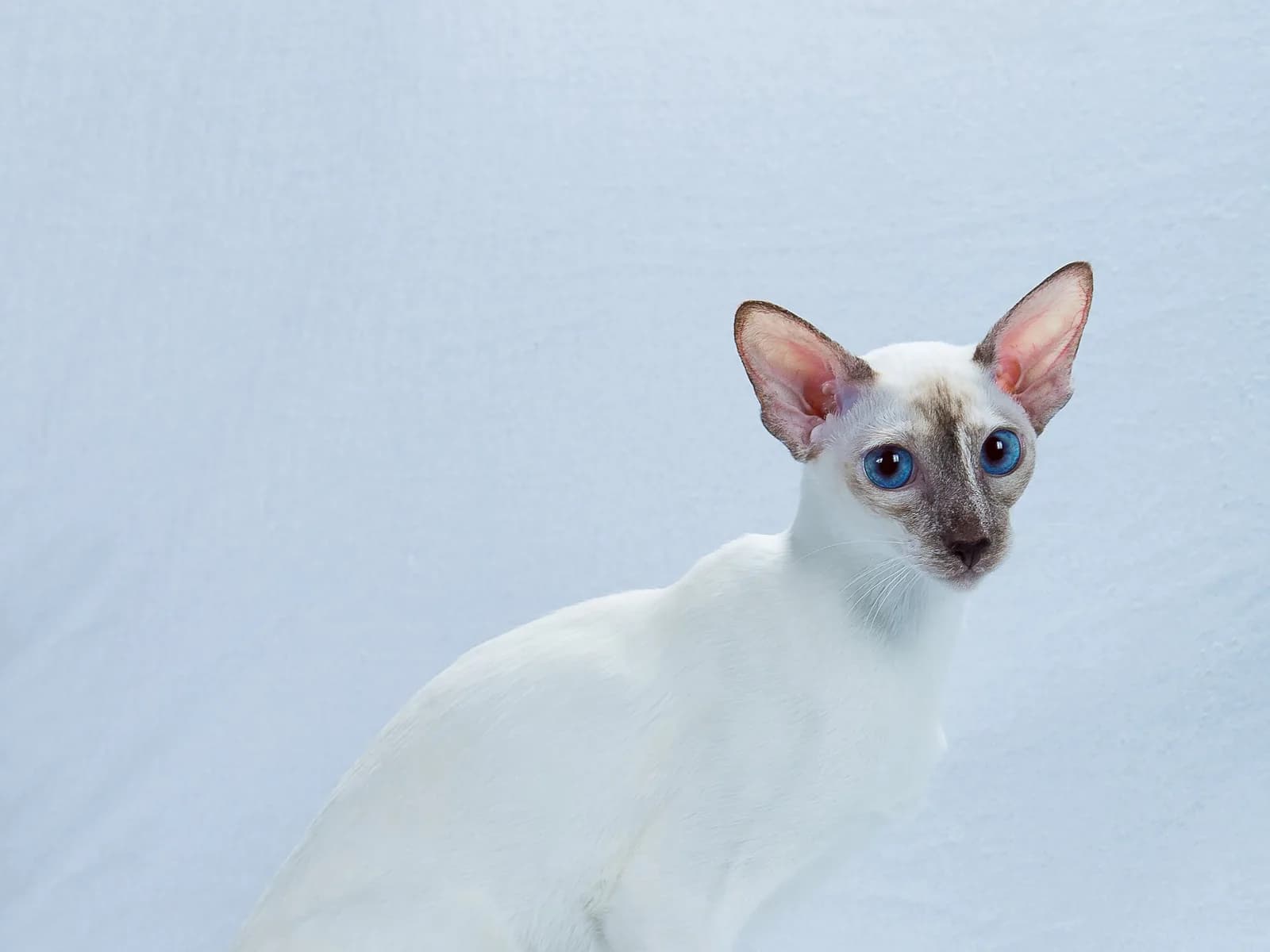
Royalty-free photos (Wikimedia Commons), full credits on the breed profile.
What the standard says
CFA counts 16 colors and combinations, judged in three classes in its own words: solid point (red and cream), lynx point (red, cream, seal, chocolate, blue and lilac with tabby markings, plus their particolor versions) and particolors (seal-tortie, chocolate-tortie, blue-cream and lilac-cream). Two mechanics no competitor page states. The standard's fourth row is 'AOV' (codes 2298/2299), which lets a classic-colored kitten born in a Colorpoint litter compete under this breed's own papers. And Lynx Points are the ONLY color group the standard permits white markings on, an explicit carve-out inside a standard that otherwise disqualifies white entirely. Cinnamon and fawn are excluded. The name history is CFA's own: the English 'tabby points' crossed the Atlantic and were renamed 'lynx points'.