

Dragon Li
“China's own landrace tabby: a real breed with no Western registry left”
 By Priya · The careful one
Published August 21, 2026Updated August 26, 20268 min read
Contents
 Dragon Li photos
Real photos, so you can see what the breed actually looks like: coats, ear tufts, ruff and build.
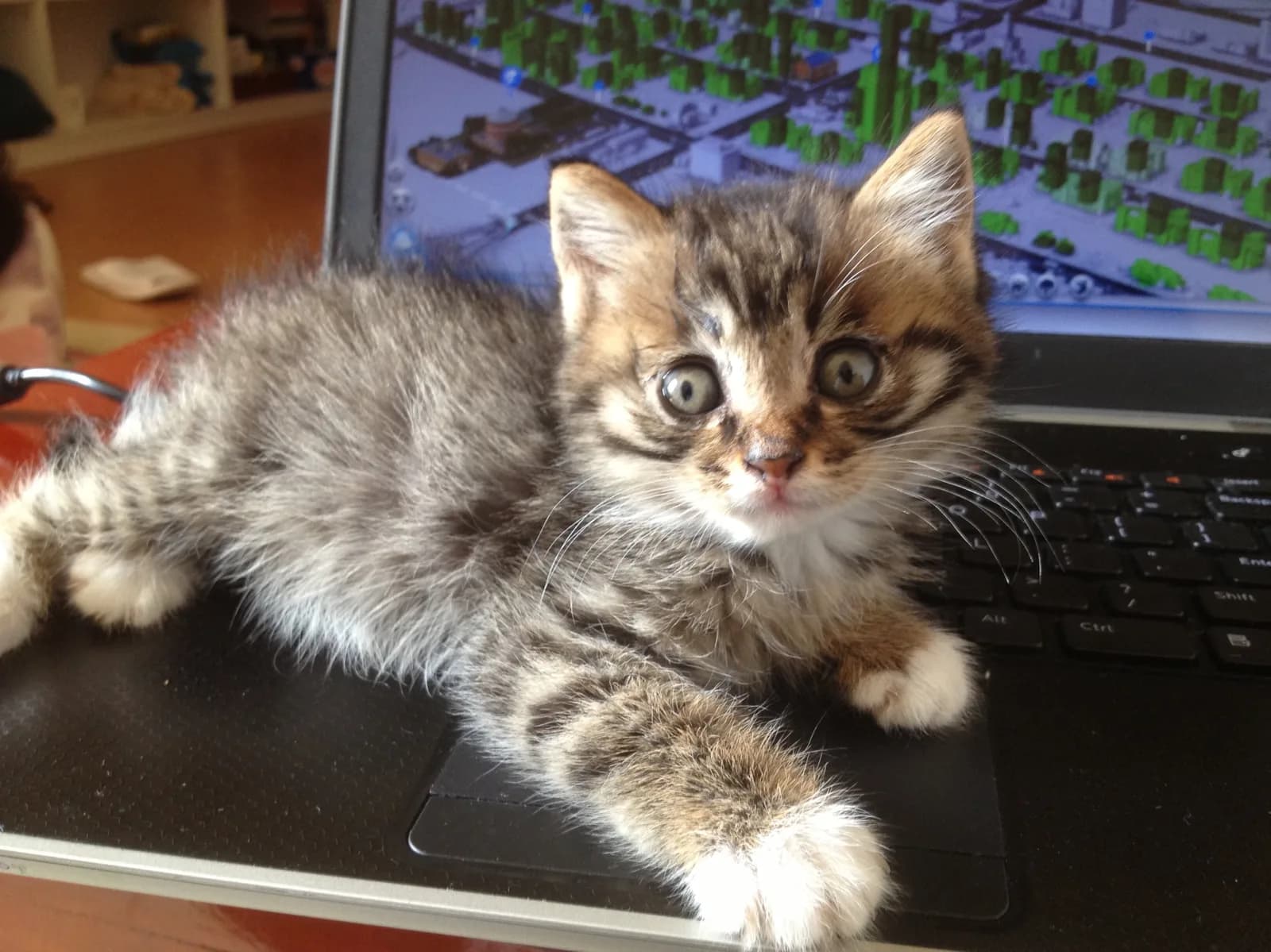
A kitten labeled Dragon Li showing the white paws and muzzle the breed standard explicitly disqualifies: our deliberate teaching example of the photo-mismatch problem
Photo: Hal 0005 · CC BY-SA 4.0 · via Wikimedia Commons
Got a Dragon Li? Share them with the community. Photos from our members round out this page.
 Vital stats
Origin
A Chinese landrace with a modern show history. It debuted at a 2004 Beijing show, championed by China's Cat Aficionado Association (CAA), the breed's only living registry, including a staged 2005 'cat wedding' a contemporary Chinese news article covered. The name's etymology carries a real ambiguity we keep visible. 'Leopard-cat-patterned cat' is the literal gloss, while the 'Fox Flower Cat' reading rests on a single flagged source. The 'Dragon' was added for international marketing. The literary legend popularly associated with the breed (the 'Cat for Crown Prince' palace conspiracy) is association, not documented ancestry.
Life expectancy
Commonly cited as around 12 to 15 years, and we label that plainly. No clinical or registry study has ever measured this breed's lifespan, in English or Chinese (both literatures searched). The circulating range is a template repeated across commercial pet sites without a source.
Coats
Brown mackerel tabby (the only recognized dress)
The 'tears of the dragon' facial lines
Ringed legs and tail
Golden eyes (the classic pairing)
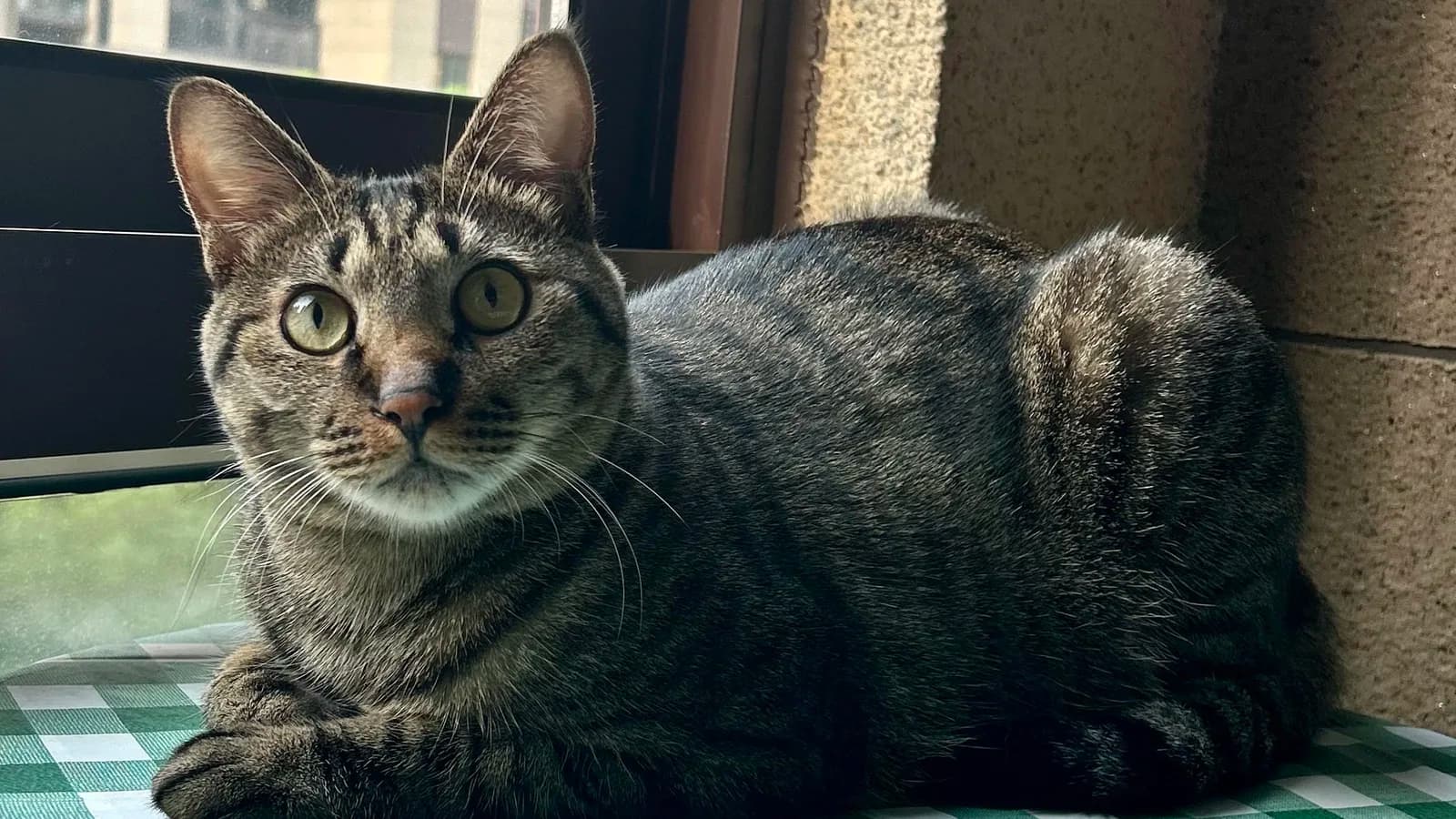
One color, and the standard is strict about it. Brown is the ONLY recognized color and pattern in 's (now-lapsed) standard, class codes 0510/0511, no AOV, no outcrosses. A DISQUALIFY clause excludes white paws, a white muzzle, and white anywhere beyond the eyes, nostrils, chin and upper throat. Which makes the breed's public image its best correction.
The most-reused public photo of this breed (Wikipedia's own infobox cat, 'Pipi', used across at least five language editions) shows a white chest and white front paws, exactly what the standard disqualifies. Our hero photo was checked against the standard's own clause before publication. Our gallery keeps one non-compliant photo deliberately, labeled, as the teaching example.
Understanding the coats (and their genetics)Size
Two tiers, told honestly. The registry tier is historical: CFA's lapsed 2010-2015 Miscellaneous-class standard gives males more than 11 lb (about 5 kg) and females no less than 8.75 lb (about 4 kg), with no upper bound for either sex. That figure has not been enforced anywhere since 2015. The measured tier is empty: zero weight studies exist in English or Chinese. The unsourced consumer convention (loosely 8.5-15 lb) circulates; we label it rather than adopt it. A rectangular, wide-chested, sturdy cat, slow to mature (as long as three years, per the standard's own text).
Did you know
Four recent Chinese research papers (as recently as 2024) use 'Chinese Li Hua' or 'Chinese Dragon-Li' as a named laboratory research population. Quiet proof the breed name is real and distinct, even while no Western registry currently carries it.
 Personality
 Affection3/5
 Energy4/5
 Intelligence5/5
 Friendliness3/5
 Independence4/5
 Vocal2/5
 Shedding3/5
Compatibility
 Good with children3/5
 Good with other pets3/5
 Apartment friendly4/5
Editorial ratings on our five-point scale, anchored in the registry descriptions and the measured behaviour studies cited on this profile; individual cats vary, and our members' own ratings below are the counterweight.
Still torn between this breed and another?Compare the Dragon Li trait by trait, or filter every breed by what matters to you. What our members say
What our members say
Nobody has described their Dragon Li here yet. As soon as the first profiles come in, this is where the community averages will show up: temperament, food, lifestyle.
Describe my Dragon Li Pros & cons
Strong points
- A genuine natural breed with a precise, checkable standard that separates it from 'just a tabby'
- A registry history this page tells from CFA's own board minutes, dated to the day
- The wildcat-ancestry myth corrected with primary genomics, not vibes
- Sturdy, clever, even-tempered by every source that describes it
Things to consider
- No Western registry currently recognizes the breed: CFA withdrew it in 2015, and Beijing's CAA is the only living registry
- Effectively unobtainable outside China: no breeder, network or price exists in any of our four markets
- No measured weight, lifespan, behaviour or health study exists in English or Chinese
- Most photos labeled 'Dragon Li' online fail the breed's own standard, this page's teaching example included (deliberately)
 Is a Dragon Li right for you?
Someone drawn to a sturdy, clever, independent natural cat and clear-eyed about the reality. Outside China there is no registry, no breeder network and no market. The honest Western route to this cat's look is a shelter brown , and the honest route to the breed is patience or Beijing.
Is the Dragon Li right for YOUR home?
Answer a few questions and we'll email you your personalized result.
Take the quiz · 2 min Getting to know the Dragon Li
What makes a Dragon Li different from any brown tabby is the page's real question, and it has a real answer. A tabby is a pattern, not a breed. The Dragon Li is a specific cat: a 'hexagonal diamond' head on a broad modified wedge, precisely set ears, a rectangular wide-chested body, a tail with no sudden tapering, and named markings ('tears of the dragon' under the eyes, an unbroken necklace, ringed legs and tail) that a random tabby is never required to show together.
The Western registry story is short and dated, in 's own minutes: accepted to Miscellaneous in February 2010, withdrawn 1 May 2015 (one active US breeder, about 50 cats in five years), 'without any prejudice to any future consideration'.
Today the breed's only living registry is Beijing's Cat Aficionado Association. The ancestry myth gets corrected here: the Dragon Li is NOT descended from the Chinese mountain cat. The genomics is unambiguous (Yu 2021; Han 2026). All domestic cats, this breed included, trace to the single Near-Eastern domestication, reaching China via the Silk Road around 730 CE.
The gene flow found between wildcat and domestic populations on the Qinghai-Tibet Plateau today is a modern, two-way exchange and a conservation concern for the wildcat, not a founding story for the breed. And the photo problem is real: the internet's favorite Dragon Li photo fails the breed's own standard, which is why ours was checked against the disqualify clause first.
 Health: what to watch for
A few predispositions are well documented. The good news: they can be screened for or avoided by choosing a reputable breeder and keeping an eye on the right signals.
This is information, not veterinary advice, and it cannot tell you what is wrong with your cat. Our rule is a simple one: if something is wrong with your cat, call your vet, and call an emergency clinic if it is out of hours. Nothing you read here is a reason to wait.
The literature: empty, and honestly so
LOWZero breed-specific health conditions, prevalence figures or screening recommendations exist in the peer-reviewed literature. A full PubMed sweep returned nine hits, all read, none a health study of the breed. The circulating hip-dysplasia line on one consumer site is uncited and not carried here. General cat preventive care applies in full.
The wildcat-ancestry correction
LOWThis breed is not a descendant of the Chinese mountain cat (Felis silvestris bieti). Genomic work (Yu et al. 2021, 270 specimens) found the wildcat 'not involved in cat domestication of China'. Ancient-DNA work (Han et al. 2026) dates the first domestic cats in China to about 730 CE, arriving via the Silk Road. The present-day gene exchange between wildcats and nearby domestic cats is real, two-way and debated. It is a wildcat-conservation issue, not a breed-health one.
A named research population, not a risk file
LOWChinese toxicology and gene-editing studies genuinely use 'Chinese Li Hua' cats as a named research population (four papers, to 2024). That confirms the name's reality. None of it is a health finding about pet cats, and we do not dress it as one.
Slow maturity, the one standard-sourced care note
MEDIUMThe lapsed CFA standard's own text has the breed maturing 'as long as three years': feed and assess body condition accordingly with your vet. Anything wrong with your own cat means your vet, out of hours an emergency clinic.
Go deeper on health
Prevention, warning symptoms, costs and insurance: our guides, researched and sourced.
 Grooming & living with one
Grooming
Short to short-medium coat with no thick undercoat. Weekly to twice-weekly brushing is the consistent range across sources: low-to-moderate maintenance overall. This section rests on cross-checked secondary sources (no live registry coat text exists anymore), and no hypoallergenic claim exists anywhere for this breed.
Living together
Gentle and even by the standard's own words, active and independent-minded by secondary consensus. The two open questions (children, small pets) stay open on this page, because no source resolves them. Introduce carefully and judge the individual cat, which was always the right advice anyway.
 Food & diet
No breed-specific feeding literature exists; general species-appropriate guidance applies (complete life-stage food, portion control, body condition with your vet). One content-farm tell worth knowing: several sites state '26% crude protein' for this breed with no source. That figure is simply 's generic adult minimum wearing a breed costume. Nothing here is a prescription for a specific cat.
 Should you insure a Dragon Li?
Our sources list several predispositions in the Dragon Li: The literature: empty, and honestly so, The wildcat-ancestry correction, A named research population, not a risk file, among others. A predisposition is not a foregone conclusion, and many of these cats live their whole lives without ever developing anything. It does change the nature of the follow-up, though: you monitor, sometimes for life, and it's that monitoring that weighs on a budget, more than a one-off accident.
One thing to weigh before deciding: this is a cat you will live alongside for well over a decade, and that is the span the real cost is spread across, premiums and care alike. Where a breed has a measured life expectancy that differs from the figure usually quoted, we say so in the lifespan section above rather than repeating the quoted one here.
 Dragon Li cats in our community
This breed is barely covered by free photo libraries: we only found 1 photos we could verify. Your cats are especially welcome here.
No Dragon Li here yet
Got one? Add a photo and yours gets to open this page.
 The vet's take

Veterinary review
Are you a vet?
Your professional read belongs here: every verified practitioner can leave a note, published once our editors have reviewed it.
Sign in and get your license number verified. We check it in the public register, we never ask for or keep a copy of your diploma, and your number is never published.
 Frequently asked questions
+What is a Dragon Li cat?
China's own natural breed, also called the Chinese Li Hua (Li Hua Mao): a sturdy brown mackerel tabby landrace with a precise show standard (hexagonal-diamond head, unbroken necklace, 'tears of the dragon' facial markings), shown in Beijing since 2004 and registered today only by China's Cat Aficionado Association.
+What is the difference between a Dragon Li and a tabby cat?
Tabby is a pattern any breed can wear; the Dragon Li is a breed with one mandatory dress. The standard requires the specific head shape, ear set, rectangular body, non-tapering tail and named markings together, and disqualifies white paws or muzzle: a random brown tabby matches none of that on purpose.
+Is the Dragon Li recognized by CFA or TICA?
Not currently, anywhere in the West. CFA accepted it into its Miscellaneous class in February 2010 and withdrew it effective 1 May 2015 (its own minutes cite one active US breeder and about 50 registered cats), 'without any prejudice to any future consideration'. TICA, GCCF, CCA-AFC, ACF and ANCATS show no recognition; GCCF alone names it at a known-of tier.
+Is the Dragon Li descended from the Chinese mountain cat?
No: primary genomics found the Chinese mountain cat was 'not involved in cat domestication of China', and ancient DNA dates China's first domestic cats to about 730 CE via the Silk Road. Today's wildcat-domestic gene exchange on the Qinghai-Tibet Plateau is modern, two-way, and a conservation issue for the wildcat, not breed ancestry.
+How much does a Dragon Li cost?
There is no price to quote: no breeder or cattery in the US, UK, Canada or Australia publishes one. The one confirmed US transaction was an informal $75-100 household-pet kitten listing (Vermont, 2025), a landrace-type sale, not a cattery price. In the West, the realistic route to the look is a shelter brown mackerel tabby.
+How big do Dragon Li cats get, and how long do they live?
The only registry figures are historical: CFA's lapsed standard set males above 11 lb (5 kg) and females at 8.75 lb (4 kg) minimum, unenforced since 2015. No measured weight or lifespan study exists; the commonly cited 12-15 years is an unsourced convention we label as such.
+Why do so many 'Dragon Li' photos look wrong?
Because the internet's favorite one is: Wikipedia's own infobox cat shows a white chest and white front paws, which the breed's own standard explicitly disqualifies. It is the sharpest example we know of a breed's public image contradicting its own paperwork, and this page keeps one such photo, labeled, as the teaching example.
+Are Dragon Li cats good pets?
By every source that describes them: gentle, even-dispositioned (the standard's own words), intelligent, active and independent-minded (secondary consensus). None of it is measured data, and two questions (children, small pets) genuinely stay open in the sources, so judge the individual cat.
 Community questions
Got a question this page doesn't cover? Ask it: the best ones get published here with their answer.
Sources & references
Data checked against reference sources (TICA and CFA standards, genetics laboratories, veterinary schools).
- CFA board minutes, 6-7 February 2010: the Chinese Li Hua accepted into Miscellaneous (the motion, verbatim)
- CFA board minutes, February 2015: the five-year review and the 1 May 2015 withdrawal, in the board's own words
- CFA: the lapsed Chinese Li Hua standard (the one-color rule, the disqualifying white, the weight minimums)
- Yu et al. 2021, Science Advances: the Chinese mountain cat genomics (not involved in domestication; modern two-way introgression) (PMID 34162544)
- Han et al. 2026, Cell Genomics: ancient DNA dates China's first domestic cats to c. 730 CE via the Silk Road (PMID 41314212)
- Yu, Xue, Li et al. 2013, Arch Toxicol: 'Chinese Dragon-Li cats' as a named research population (PMID 23471352)

Worth keeping a paw on
Pin this profile
To compare later, or to show someone still torn between two breeds. One click and it sits in your board.
Pin it on Pinterest
 Purr or Pass
Still deciding? Find the perfect breed for your home.
A quick quiz that factors in your lifestyle, your kids and your other pets.
Which breed fits my home?Keep exploring
The floor belongs to our members. Keep it kind, links are not allowed, and images go through moderation before anyone else sees them.