

Chantilly-Tiffany
“The chocolate longhair that ran out of cats: a history, not a listing”
 By Priya · The careful one
Published August 21, 2026Updated August 26, 20267 min read
Contents
 Chantilly-Tiffany photos
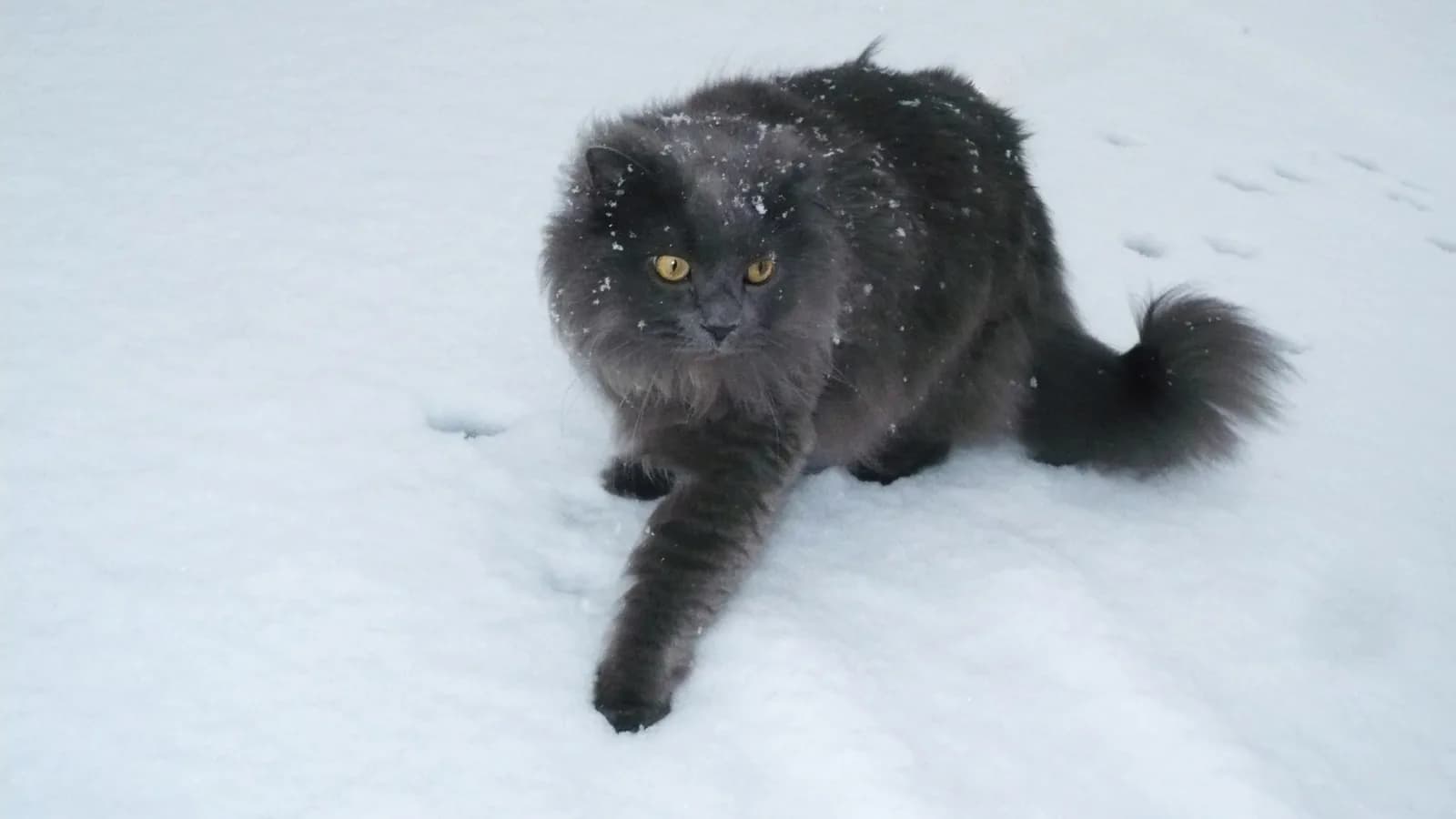
Real photos, so you can see what the breed actually looks like: coats, ear tufts, ruff and build.
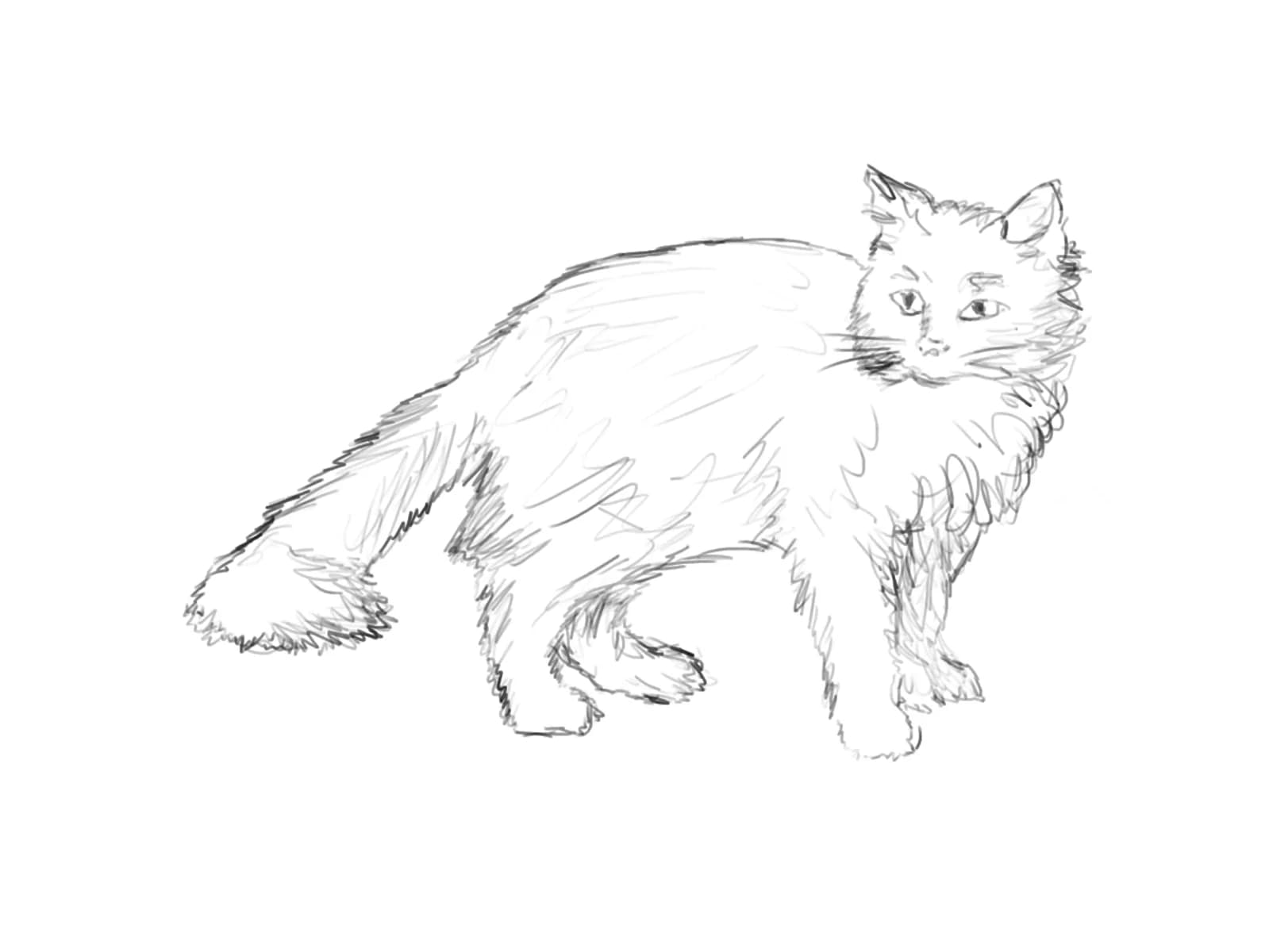
A pencil sketch of a Chantilly cat: an illustration stands in here because no rights-clean archive photograph of the breed survives
Photo: Arnaud.ramey · CC BY-SA 4.0 · via Wikimedia Commons
Got a Chantilly-Tiffany? Share them with the community. Photos from our members round out this page.
 Vital stats
Origin
United States
1967, New York: Jennie Robinson's Neotype Cattery bought two chocolate longhairs, Thomas and Shirley, at an estate sale, and the breed began. The name travelled: Foreign-Longhair to 'Tiffany' (coined by breeder Sigyn Lund), then a 1992 forced rename to 'Chantilly' after the clash with Britain's Tiffanie. A 1973 Canadian stray's unrelated lineage was folded into the 1980s Oraas/DeRegt revival. The Amorino Cattery carried the breed from 2001 until a 2012 fire destroyed its stock and archives.
The end is precisely documented. The sole surviving male, Frosty, went to a Norwegian Nebelung breeder. One kitten, Acey, was born in 2013. Frosty died of cancer in 2015, and Acey was spayed for lack of any breeding partner. The persistent 'Burmese cross' origin myth traces to a specific 1970s phone-interview citation chain and is simply wrong: this breed was never related to, or crossed with, the Burmese.
Weight
Female
6-8 lb (2.7-3.6 kg)
Male
8-10 lb (3.6-4.5 kg)
Life expectancy
Roughly 7 to 16 years is the widest defensible envelope: an unsourced estimate repeated across pet-content sites, with no study behind it. The structural reason no study exists is the page's own subject. The population was always too small, and has had no breeding program since 2015, to ever appear in a clinical dataset.
Coats
Chocolate (the defining color)
Cinnamon
Blue
Gold-to-amber eyes (never blue)
Chocolate was the original and defining color. The palette, per the breed's own 1995 founders' FAQ and an independent historian giving an identical list, was five colors: chocolate, cinnamon, blue, lilac and fawn, solid or tabby, with gold-to-amber eyes (an optional green halo, never green or blue eyes). Black is NOT on that list, and the historian states directly that black cats are a common real-world misidentification of this breed. One attributed outlier stays visible rather than folded in. 's informal breed-description page says black is included, a claim its own founders' account contradicts, reported here as the disagreement it is.
Understanding the coats (and their genetics)Size
The breed's own 1995 founders' FAQ, the closest thing to an official document it ever had, gave females 6-8 lb (2.7-3.6 kg) and males 8-10 lb (3.6-4.5 kg). A founder-authored figure from a closed population, published here with that provenance and no pretence of a measured study. A semi-foreign, medium build under a silky coat.
Did you know
Four different breeds wear nearly the same name, and only this one is gone: 's Tiffanie (a living Burmilla-family breed), ' Australian Tiffanie (a third, distinct breed), NZCF's Tiffany (a Burmese longhair) and this cat, the American Chantilly-Tiffany, whose older name 'Tiffany' caused the whole tangle. Getting that straight is most of what the internet needs about this breed.
 Personality
 Affection5/5
 Energy3/5
 Intelligence4/5
 Friendliness3/5
 Independence2/5
 Vocal3/5
 Shedding2/5
Compatibility
 Good with children4/5
 Good with other pets4/5
 Apartment friendly5/5
Editorial ratings on our five-point scale, anchored in the registry descriptions and the measured behaviour studies cited on this profile; individual cats vary, and our members' own ratings below are the counterweight.
Still torn between this breed and another?Compare the Chantilly-Tiffany trait by trait, or filter every breed by what matters to you. What our members say
What our members say
Nobody has described their Chantilly-Tiffany here yet. As soon as the first profiles come in, this is where the community averages will show up: temperament, food, lifestyle.
Describe my Chantilly-Tiffany Pros & cons
Strong points
- One of the fancy's best-documented endings: three independent sources converge on the same names, dates and 2015 endpoint
- A genuinely rich founding story (an estate sale, two cats named Thomas and Shirley, three name changes)
- The definitive untangling of four nearly-identical breed names, which is most of what searchers actually need
- A five-color palette recorded by the breed's own founders, preserved here exactly
Things to consider
- There is no kitten to buy: no registry-documented line has existed since 2015, and this page points at no seller
- The one registry paper trail left (CCA-AFC's Experimental standard) has no breeding population behind it, and the registry contradicts itself between its own documents
- Every measured dataset is empty of this breed, permanently
- Its name collides with three living breeds on three continents, which is how most misinformation about it starts
 Is a Chantilly-Tiffany right for you?
This page has no buyer to advise, by design: no registry-documented breeding line has existed since 2015. What it offers instead is the honest history, for the reader whose chocolate longhair 'looks just like one'. A resemblance, and a lovely cat, and almost certainly not this breed.
Is the Chantilly-Tiffany right for YOUR home?
Answer a few questions and we'll email you your personalized result.
Take the quiz · 2 min Getting to know the Chantilly-Tiffany
Is the Chantilly-Tiffany extinct? Effectively, yes, and the record is unusually precise. No major registry (, , , ACFA, CFF) recognizes the breed under any name today. One Canadian registry, , keeps an inactive 'Chantilly (Experimental)' standard on file, most recently corrected in 2020, while its own breeder directory offers no Chantilly option at all: paperwork without a population.
The last intact line ended in 2015. After the 2012 Amorino Cattery fire, the surviving male Frosty sired one kitten, Acey, in Norway in 2013; Frosty died in 2015 and Acey was spayed. One current Ontario seller advertises kittens under the name, with no or registry papers offered and blue eyes the historical standard never allowed.
We mention it, unnamed, only so conflicting claims a reader meets elsewhere make sense. The name is the other half of the story: this American breed is not 's living Tiffanie, not ' Australian Tiffanie, not NZCF's Tiffany, and was never a Burmese cross (a myth with a traceable 1970s citation chain). And the black cat in your house who 'looks exactly like one'? The breed's own founders listed five colors, black not among them, and its historian calls black cats the classic misidentification. A rich, well-documented, genuinely finished story, told here as history because that is what it is.
 Health: what to watch for
A few predispositions are well documented. The good news: they can be screened for or avoided by choosing a reputable breeder and keeping an eye on the right signals.
This is information, not veterinary advice, and it cannot tell you what is wrong with your cat. Our rule is a simple one: if something is wrong with your cat, call your vet, and call an emergency clinic if it is out of hours. Nothing you read here is a reason to wait.
Why there is no health file
LOWThis breed never appeared in a clinical dataset. The population was always small, and no breeding program has existed since 2015, so no measured health, lifespan or behaviour study names it. That absence is structural, not suspicious, and this page carries no health guidance because there is no population left to guide.
The founders' one note
LOWThe 1995 founders' FAQ mentioned sensitive digestion in some cats: a contemporary account from the people who knew the breed best, recorded here as exactly that. Any modern cat resembling this breed is, for veterinary purposes, the breed on its papers or a domestic longhair, and its vet is its authority.
Go deeper on health
Prevention, warning symptoms, costs and insurance: our guides, researched and sourced.
 Grooming & living with one
Grooming
Both reachable North American registry standards independently described the coat as little-shedding and easily groomed. A separate source camp (a 2018 magazine piece and a 2012 video) claimed over-grooming tendencies and every-other-day brushing. Neither camp outranks the other, so we publish the reconciliation both support: the coat itself shed comparatively little, but its fine, semi-long texture still tangled and matted without regular brushing.
Living together
Historically, by the founders' own account: gentle with children and other pets, devoted to its household, unhappy alone. Written in the past tense because the population is closed, not because the cats were unloved.
 Food & diet
The only feeding note in the breed's own record is the founders' mention of a sensitive digestion in some cats: an account, not a protocol. No breed-specific feeding literature ever existed, and this page prescribes nothing.
 Should you insure a Chantilly-Tiffany?
Our sources list several predispositions in the Chantilly-Tiffany: Why there is no health file, The founders' one note. A predisposition is not a foregone conclusion, and many of these cats live their whole lives without ever developing anything. It does change the nature of the follow-up, though: you monitor, sometimes for life, and it's that monitoring that weighs on a budget, more than a one-off accident.
One thing to weigh before deciding: this is a cat you will live alongside for well over a decade, and that is the span the real cost is spread across, premiums and care alike. Where a breed has a measured life expectancy that differs from the figure usually quoted, we say so in the lifespan section above rather than repeating the quoted one here.
 Chantilly-Tiffany cats in our community
This breed is barely covered by free photo libraries: we only found 1 photos we could verify. Your cats are especially welcome here.
No Chantilly-Tiffany here yet
Got one? Add a photo and yours gets to open this page.
 The vet's take

Veterinary review
Are you a vet?
Your professional read belongs here: every verified practitioner can leave a note, published once our editors have reviewed it.
Sign in and get your license number verified. We check it in the public register, we never ask for or keep a copy of your diploma, and your number is never published.
 Frequently asked questions
+Is the Chantilly-Tiffany cat extinct?
Effectively yes: no major registry recognizes it under any name, and the last documented line ended in 2015 (Frosty's death and Acey's spaying, after the 2012 Amorino fire). One Canadian registry keeps an inactive Experimental standard on file with no breeders behind it. The precise version and the punchy version are both on this page.
+Can I still buy a Chantilly-Tiffany kitten?
Not from any registry-documented line: none exists. One Ontario seller currently uses the name without pedigree papers and with details inconsistent with the historical standard; we mention that only so conflicting claims make sense, and this page deliberately points nowhere.
+Is my black longhair cat a Chantilly-Tiffany?
Almost certainly not, twice over: the breed's own founders listed five colors (chocolate, cinnamon, blue, lilac, fawn) with black not among them, and its historian calls black cats the classic misidentification. And with no breeding line since 2015, an undocumented lookalike is a beautiful domestic longhair.
+Is the Chantilly-Tiffany the same as the Tiffanie?
No: GCCF's Tiffanie is a different, living Burmilla-family breed, ANCATS' Australian Tiffanie a third breed, and NZCF's Tiffany a Burmese longhair. This American breed's own older name was 'Tiffany', which caused the 1992 forced rename to Chantilly, and the confusion ever since.
+Was the Chantilly-Tiffany part Burmese?
No: the persistent Burmese-cross story traces to a specific 1970s phone-interview citation chain and is contradicted by the breed's own documented history. Its actual outcross family in the revival era was Havana Brown, Nebelung and Somali (with Angora and Oriental added in CCA-AFC's own current standard: the two lists are both real and both attributed here).
+What did the Chantilly-Tiffany look like?
A semi-foreign chocolate semi-longhair with a silky, low-undercoat coat that took about two years to finish, gold-to-amber eyes (optionally green-haloed, never blue), in five colors per its founders. Our hero photo is an owner's photographed Tiffany cat, and the sketch in our gallery stands in where no free rights-clean archive photo survives.
+What was the Chantilly-Tiffany's temperament?
By its founders' 1995 account: a devoted one-household cat, reserved with strangers, gentle with children and pets, talkative in chirps and trills rather than meows, and unhappy alone. Recorded here in the past tense the subject requires.
 Community questions
Got a question this page doesn't cover? Ask it: the best ones get published here with their answer.
Sources & references
Data checked against reference sources (TICA and CFA standards, genetics laboratories, veterinary schools).
- The breed founders' 1995 FAQ (fanciers.com): the palette, weights, temperament and digestion note, from the people who kept the breed
- CCA-AFC: the Chantilly (Experimental) standard PDF, the one live registry paper trail (corrected 2020)
- CCA-AFC: the informal Chantilly breed-description page (the self-contradicting status and the disputed black claim, attributed)
- The Chantilly-Tiffany preservation project: the documented 2012-2015 ending (Amorino, Frosty, Acey)
- GCCF: the Asian group page, where the living British Tiffanie (the breed this cat is not) is filed

Worth keeping a paw on
Pin this profile
To compare later, or to show someone still torn between two breeds. One click and it sits in your board.
Pin it on Pinterest
 Purr or Pass
Still deciding? Find the perfect breed for your home.
A quick quiz that factors in your lifestyle, your kids and your other pets.
Which breed fits my home?Keep exploring
The floor belongs to our members. Keep it kind, links are not allowed, and images go through moderation before anyone else sees them.