

American Curl
“The Peter Pan of cats (TICA's own phrase), ears swept back like a wink”
 By Priya · The careful one
Published August 21, 2026Updated August 26, 20269 min read
Contents
 American Curl photos
Real photos, so you can see what the breed actually looks like: coats, ear tufts, ruff and build.
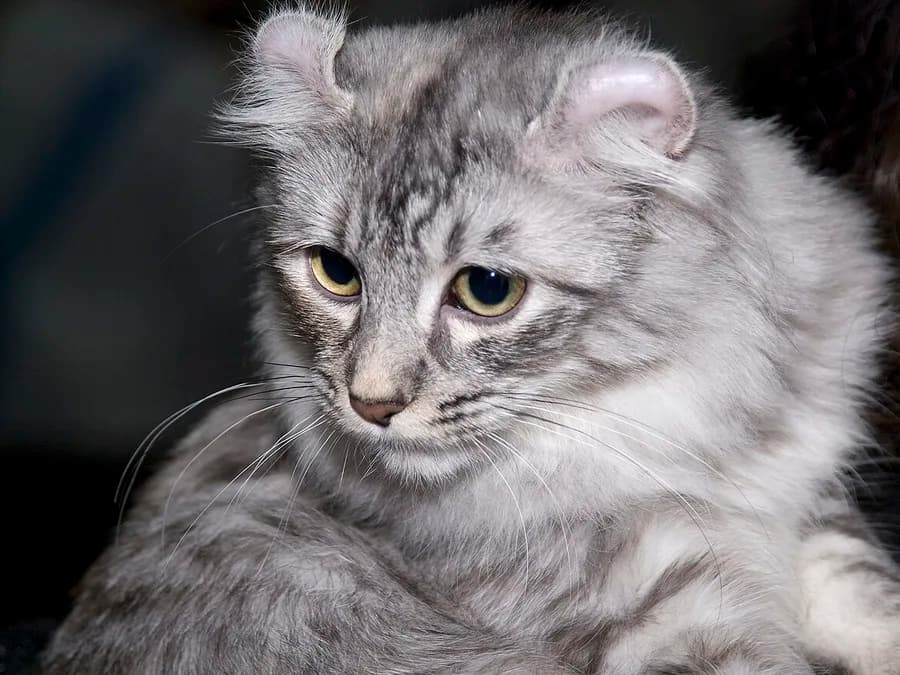
Silver tabby American Curl cat close-up, showing its backward-curled ears and fluffy coat
Photo: Nickolas Titkov from Moscow, Russian Federation · CC BY-SA 2.0 · via Wikimedia Commons
 Vital stats
Origin
United States
Lakewood, California, June 1981: a black, silky, longhaired stray with strange backward-curling ears turned up on Joe and Grace Ruga's doorstep and was named Shulamith. Every American Curl descends from her. The sources genuinely disagree on whether she arrived alone or with a sister, and we print the disagreement rather than picking. accepted the breed for registration in February 1986 and granted Championship on 1 May 1993: one of the fastest stray-to-champion runs in the fancy.
Weight
Female
5-8 lb (2.3-3.6 kg)
Male
7-10 lb (3.2-4.5 kg)
Life expectancy
's own range, 10-20 years, leads as the registry figure. No measured cohort study anywhere confirms it, and five consumer estimates disagree with each other by up to eight years, which we state as the finding. Commonly cited estimate; no measured study exists.
Coats
Every color accepted
Silver tabby
Black silky longhair (Shulamith's own)
An open palette: every color and pattern is accepted, and no registry restricts it. That is why this breed has no color-child pages; there is no per-color search or registry story to tell. The breed's whole visual identity lives in the ears: born straight, curling from 3 to 5 days, set in final shape at about 16 weeks, in an arc from casual to show-quality crescent.
Understanding the coats (and their genetics)Size
A rare three-way EXACT registry convergence, to the pound: TICA, CFA and CCA-AFC all state 5-8 lb (2.3-3.6 kg) for females and 7-10 lb (3.2-4.5 kg) for males. No measured weight cohort exists for the breed. An honest absence, beside an unusually tidy set of registry figures.
Did you know
Every American Curl on earth traces to one doorstep stray: Shulamith, Lakewood, California, June 1981. And the ears her descendants are famous for arrive on a schedule. Kittens are born straight-eared, the curl begins at 3 to 5 days old, and the final crescent is set at about sixteen weeks: the moment show breeders have been waiting for.
 Personality
 Affection4/5
 Energy3/5
 Intelligence4/5
 Friendliness4/5
 Independence3/5
 Vocal2/5
 Shedding2/5
Compatibility
 Good with children4/5
 Good with other pets4/5
 Apartment friendly4/5
Editorial ratings on our five-point scale, anchored in the registry descriptions and the measured behaviour studies cited on this profile; individual cats vary, and our members' own ratings below are the counterweight.
Still torn between this breed and another?Compare the American Curl trait by trait, or filter every breed by what matters to you. What our members say
What our members say
Nobody has described their American Curl here yet. As soon as the first profiles come in, this is where the community averages will show up: temperament, food, lifestyle.
Describe my American Curl Pros & cons
Strong points
- The measured extreme nobody quotes: lowest of 26 breeds on human-directed aggression in the one study that looked (Mikkola 2021, one Finnish sample, scoped)
- A pinna-only ear gene with no documented body-wide disease, unlike the breed it gets lumped with
- Low-shedding, minimal-undercoat coats in both lengths
- Straight-eared kittens are full members of the breed and price the same: no trait premium
Things to consider
- The health file is thin BY ABSENCE: no measured weight, lifespan or joint cohort exists, and we say so rather than calling it proven-healthy
- Curls from lines crossed with Scottish Folds can carry the Fold's disease gene: Fold-free paperwork is the buyer question
- The curled cartilage is delicate: ears are never forced or pulled, a real rule with children
- Thin supply outside the US: four UK listings at our check, a cross-dominated Canadian marketplace, an empty Australian directory
 Is an American Curl right for you?
A household that wants a gentle, playful, kitten-hearted companion with a genuinely harmless signature trait. One that will handle the ears like the delicate cartilage they are, and asks every breeder the one question that matters here: any Scottish Fold ancestry, ever?
Is the American Curl right for YOUR home?
Answer a few questions and we'll email you your personalized result.
Take the quiz · 2 min Getting to know the American Curl
The ears curve back, and that direction is the whole story. The American Curl's signature comes from the Cu gene: autosomal dominant, identified in the breed's earliest litters by two independent geneticists. It affects the ear pinna and, as far as any peer-reviewed study has ever documented, nothing else. That statement was independently restated as recently as 2025. That is an absence of evidence in a thin, lightly studied literature, and we frame it exactly that way, never as a research-backed clean bill of health.
What it is NOT is the Scottish Fold's situation, where the fold gene disorders cartilage body-wide with a documented painful disease: our full comparison takes that apart precisely, including the one published case of a registered 'Curl' whose disease DNA-traced to Fold crossbreeding, not to the Cu gene.
One stray built the whole breed. Shulamith, Lakewood 1981, to Championship by May 1993. The breed's entire gene pool descends from one California doorstep cat, and its registries still manage that narrowness (Canada's runs an outcross window to 2035). The UK sits at 'name recognition', a real intermediate tier we state in full, because most pages get it wrong in one direction or the other.
Buying one is mostly a paperwork exercise, and our price page walks the four markets: two published US rate cards, a four-listing UK market, a Canadian marketplace where most 'Curls' are crosses, and an Australian directory with zero breeders. The question to ask everywhere is the same: registration papers, and no Fold ancestry.
 Health: what to watch for
A few predispositions are well documented. The good news: they can be screened for or avoided by choosing a reputable breeder and keeping an eye on the right signals.
This is information, not veterinary advice, and it cannot tell you what is wrong with your cat. Our rule is a simple one: if something is wrong with your cat, call your vet, and call an emergency clinic if it is out of hours. Nothing you read here is a reason to wait.
The Cu ear gene: the mechanism first, the honesty next
LOWOne gene, Cu, autosomal dominant, confirmed by two independent geneticists studying the breed's earliest litters, and no molecular test exists for it even today. The central finding, stated once and precisely: no peer-reviewed study has documented a body-wide skeletal, joint or cartilage disease caused by the Cu gene itself, independently restated as recently as 2025. That is an absence of evidence in a small, lightly tested literature, never a research-backed clean bill of health, and we hold the frame at exactly that strength.
The Scottish Fold crossbreeding trap, in its own paragraph on purpose
MODERATEOne published case (Takanosu & Hattori 2020, read in full) describes osteochondrodysplasia in a cat registered as an American Curl. DNA testing showed it carried the Scottish Fold's own TRPV4 disease mutation through crossbreeding, and the paper itself states skeletal abnormalities have not been reported in the American Curl breed. The buyer lesson is real: a registration paper is not a genome, and the one question that protects you is whether the line carries any Fold ancestry. Limping, stiffness or reluctance to jump in any cat is a vet visit.
Ears: infections at their true confidence tier, and one useful normal
LOWConsumer sources repeat an ear-infection susceptibility claim. No veterinary study backs a breed-specific rate. TICA's own judging guidance trains against the exact narrow-canal conformation that would cause trouble. So we report the claim at its true consumer tier. Two genuinely useful facts instead: TICA states black ear wax is NORMAL for this breed (a trait, not a symptom), and both registries instruct that the curled cartilage is delicate, never pulled or forced. Odor, redness, discharge or head-shaking in any cat means a vet.
The iCatCare PRA mention, attributed and immediately qualified
LOWiCatCare's breed page mentions progressive retinal atrophy for the American Curl. Our own literature check found no published Curl-specific PRA study or case series behind it: an absence we state next to the attribution, rather than either repeating the claim as fact or deleting it. If eye changes ever show in any cat (night hesitancy, dilated pupils), that is an ophthalmic vet visit regardless of breed statistics.
Go deeper on health
Prevention, warning symptoms, costs and insurance: our guides, researched and sourced.
Also worth a look
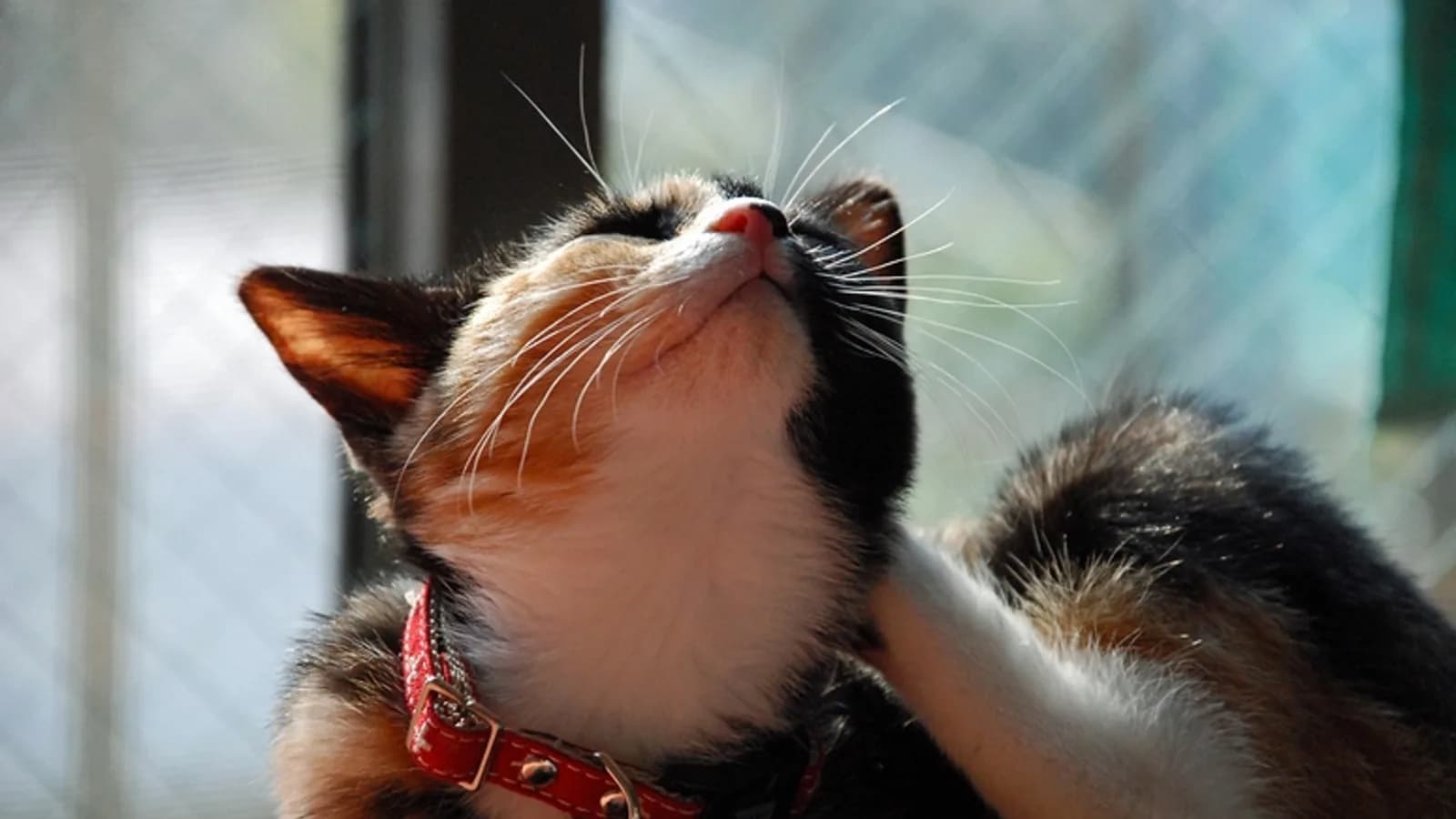
Japanese Bobtail
“The pom-pom-tailed cat of Japanese art and, popularly, of the maneki-neko”
Nebelung
“The creature of the mist: German Nebel plus the Nibelungenlied saga”
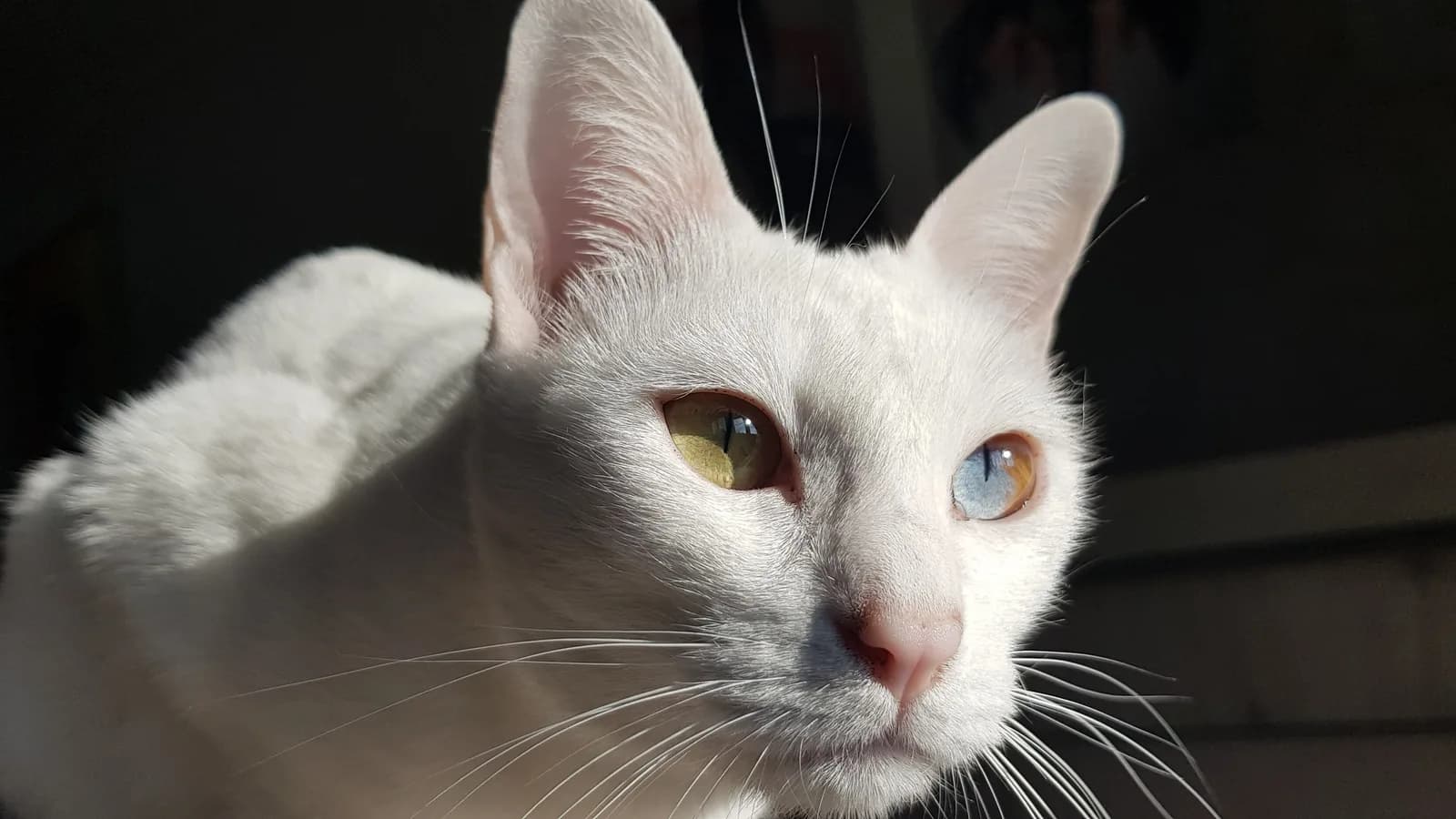
Khao Manee
“The Diamond Eye cat: Thai 'khao manee', white gem”
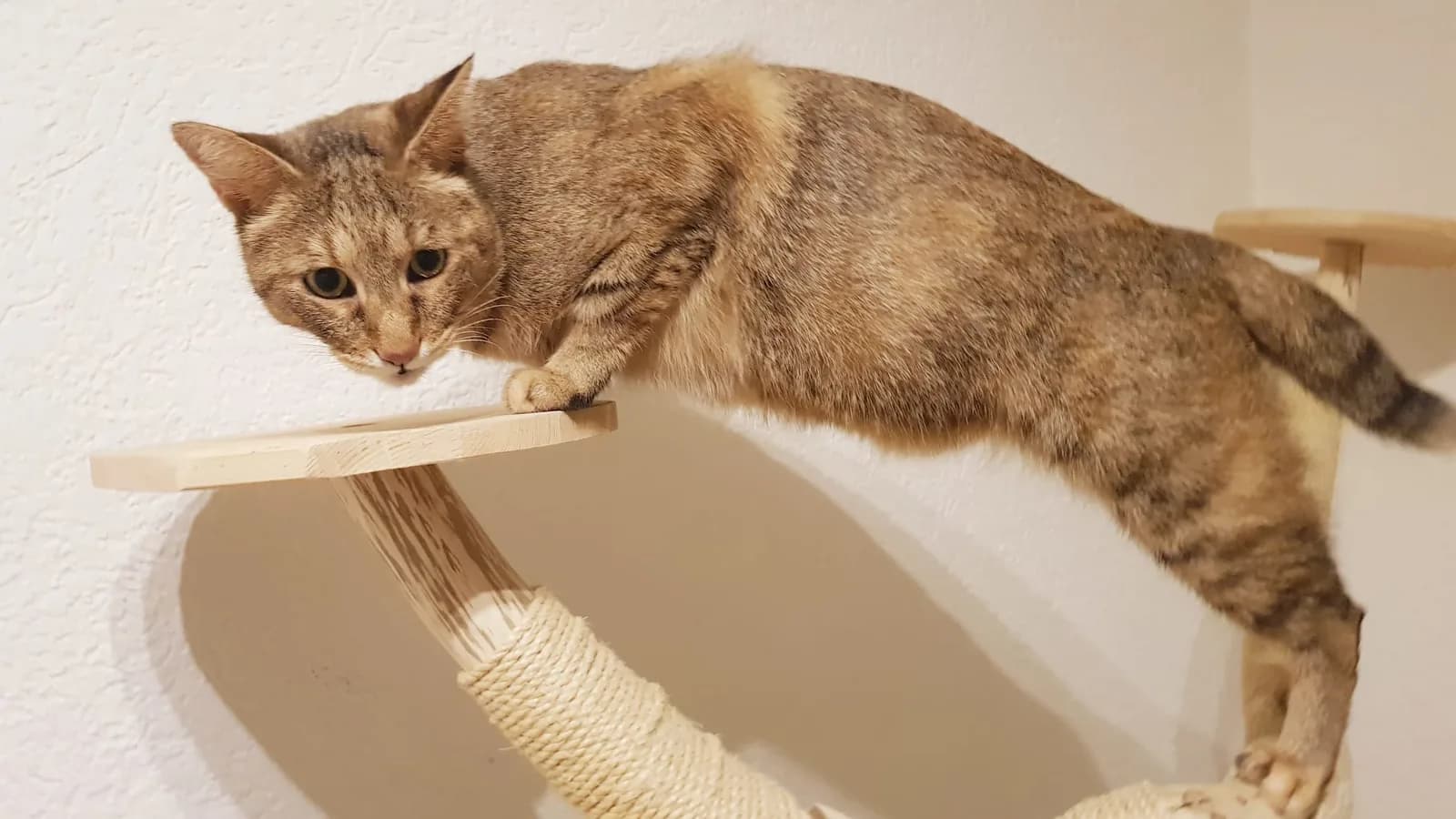
Chausie
“The jungle-cat hybrid built for the wild silhouette, not the spots”
 Grooming & living with one
Grooming
Easy by both registries' accounts: minimal undercoat in both coat lengths, low shedding, and 's two-to-three-times-a-month brushing as the registry floor (a per-length consumer routine exists for those who want more structure). The ears are the real section. Clean only what you can see, never push into the canal, and handle the curled cartilage gently, quoting the registries themselves: CFA says avoid pulling on the delicate cartilage, says the ears are never forced into unnatural positions. TICA also notes black ear wax is NORMAL for this breed, worth knowing before mistaking a trait for an infection. Ear odor, redness or head-shaking in any cat is a vet visit.
Living together
The Peter Pan portrait plus the measured gentleness above make this an easy multi-species household cat on paper, with the standing caveat that the paper is thin. The one firm rule is the ears. Children are taught that the curl is cartilage, not a handle, and that it never gets bent, straightened or tugged.
 Food & diet
No breed-specific feeding angle exists, checked and stated plainly. General feline guidance applies, portioned by body condition with your vet. We decline to invent a 'slender breed' diet the sources do not support.
 Price & budget
$1,200 to 2,500
Price of a kitten from a registered breeder, in the United States
This price reflects the quality of the breeding program: parents' health tests, registry pedigree, socialization. A very low price should raise a red flag. The real cost, though, plays out over the years.
Find a verified breederKitten price, by market
United States
$1,200 to 2,500
United Kingdom
£995 to 1,200
Each figure is that country's real market price, researched separately, not a conversion of the others. The smaller line is only there so you can gauge one against your own money: European Central Bank reference rates of 2026-09-18, refreshed daily.
Work out your food budget
Type of food
Estimated monthly budget
$11
≈ 2.0 oz (57 g) per day
A ballpark figure, food only, using the same arithmetic as our portion tool (resting energy requirement × 1.2, a neutered adult). Real needs vary with age, activity level and body condition. Ask your veterinarian for advice.
 Verified catteriesThe registry-checked directory, plus a kitten alert near you. Filter it by breed.
 Should you insure an American Curl?
Our sources list several predispositions in the American Curl: The Cu ear gene: the mechanism first, the honesty next, The Scottish Fold crossbreeding trap, in its own paragraph on purpose, Ears: infections at their true confidence tier, and one useful normal, among others. A predisposition is not a foregone conclusion, and many of these cats live their whole lives without ever developing anything. It does change the nature of the follow-up, though: you monitor, sometimes for life, and it's that monitoring that weighs on a budget, more than a one-off accident.
One thing to weigh before deciding: this is a cat you will live alongside for well over a decade, and that is the span the real cost is spread across, premiums and care alike. Where a breed has a measured life expectancy that differs from the figure usually quoted, we say so in the lifespan section above rather than repeating the quoted one here.
 American Curl cats in our community
No American Curl here yet
Got one? Add a photo and yours gets to open this page.
 The vet's take

Veterinary review
Are you a vet?
Your professional read belongs here: every verified practitioner can leave a note, published once our editors have reviewed it.
Sign in and get your license number verified. We check it in the public register, we never ask for or keep a copy of your diploma, and your number is never published.
 Frequently asked questions
+What is an American Curl?
The breed whose ears curve backward from a dominant gene that appeared in one California stray in 1981: a medium, silky-coated, famously gentle cat recognized in both coat lengths, with every color accepted. Every Curl descends from that founding cat, Shulamith.
+Are American Curls' ears painful?
Nothing in the peer-reviewed literature documents pain or disease from the breed's own ear gene, which affects the pinna only; the one published problem case DNA-traced to Scottish Fold crossbreeding. The cartilage IS delicate: ears are handled gently and never bent or straightened. Any sign of ear discomfort in any cat is a vet visit.
+What is the difference between an American Curl and a Scottish Fold?
Direction and genetics: the Curl's ears curve BACK from a pinna-only gene with no documented disease; the Fold's fold FORWARD from a cartilage-wide gene causing documented, painful osteochondrodysplasia, which is why regulators name the Fold and not the Curl. Our full comparison covers it precisely.
+When do American Curl kittens' ears curl?
On a schedule: born straight, curling begins at 3 to 5 days old, and the final shape is set at about sixteen weeks. A breeder cannot promise a show-quality crescent at birth, which is part of how the breed is priced and picked.
+How much does an American Curl cost?
US: $1,200-2,500 on the two published rate cards. UK: the one visible breeder's litters ran £995-1,200. Canada and Australia: no breeder-published prices; expect contact-first or an import. Straight-eared kittens cost the same as curled at the cattery that prices both.
+Are American Curls hypoallergenic?
No cat is, and no source claims it for this breed (we measured the question: it barely registers as a search, and no study exists). The low-shedding coat changes housework, not allergens, which are glandular.
+How long do American Curls live?
TICA states 10-20 years; no measured study confirms it, and five consumer estimates disagree by up to eight years, which tells you the honest state of the data. Treat the range as a registry estimate.
+Are American Curls gentle?
The one study that measured it says remarkably so: lowest of 26 breed groups on aggression toward humans (Mikkola 2021), with the caveat that it is one Finnish owner survey. TICA's 'Peter Pan of cats' portrait agrees, for what a nickname is worth.
+Can American Curls have straight ears?
Yes: the gene's expression varies in a litter, and straight-eared kittens are genuine, registrable Curls with the same temperament, priced the same at the cattery that prices both. Only the show ring cares about the crescent.
+Is the American Curl recognized in the UK?
At GCCF's 'name recognition' tier, stated in full: registrable and showable on exhibition or as a neutered Pedigree Pet, with no Standard of Points and no Championship status. Not refused, and no health objection attached, unlike the Scottish Fold's named welfare exclusion.
+Do American Curls have health problems?
The honest file: nothing documented from the breed's own gene, a thin literature we refuse to oversell as proof, one crossbreeding trap worth asking breeders about (Fold ancestry), and consumer-tier ear-infection lore no study backs. Anything wrong with your cat means call your vet.
 Community questions
Got a question this page doesn't cover? Ask it: the best ones get published here with their answer.
Sources & references
Data checked against reference sources (TICA and CFA standards, genetics laboratories, veterinary schools).
- TICA: American Curl breed page
- TICA: American Curl breed standard PDF
- CFA: American Curl breed page
- CFA: American Curl breed standard PDF
- GCCF: unrecognised breeds page (the 'name recognition' tier, verbatim)
- Robinson 1989, J Hered: the founding Cu genetics paper (PMID 2614061)
- Takanosu & Hattori 2020, J Vet Med Sci: the Scottish Fold cross case, read in full (PMID 33162427)
- Mikkola et al. 2021, Animals 11(7):1991: the 26-breed behaviour study, figures read directly (PMID 34359119)
- iCatCare: American Curl advice page (the attributed PRA mention, qualified)

Worth keeping a paw on
Pin this profile
To compare later, or to show someone still torn between two breeds. One click and it sits in your board.
Pin it on Pinterest
 Purr or Pass
Still deciding? Find the perfect breed for your home.
A quick quiz that factors in your lifestyle, your kids and your other pets.
Which breed fits my home?Keep exploring
The floor belongs to our members. Keep it kind, links are not allowed, and images go through moderation before anyone else sees them.