

Somali
“The fox cat: TICA's own word for it is 'nickname'”
 By Priya · The careful one
Published August 21, 2026Updated August 26, 20268 min read
Contents
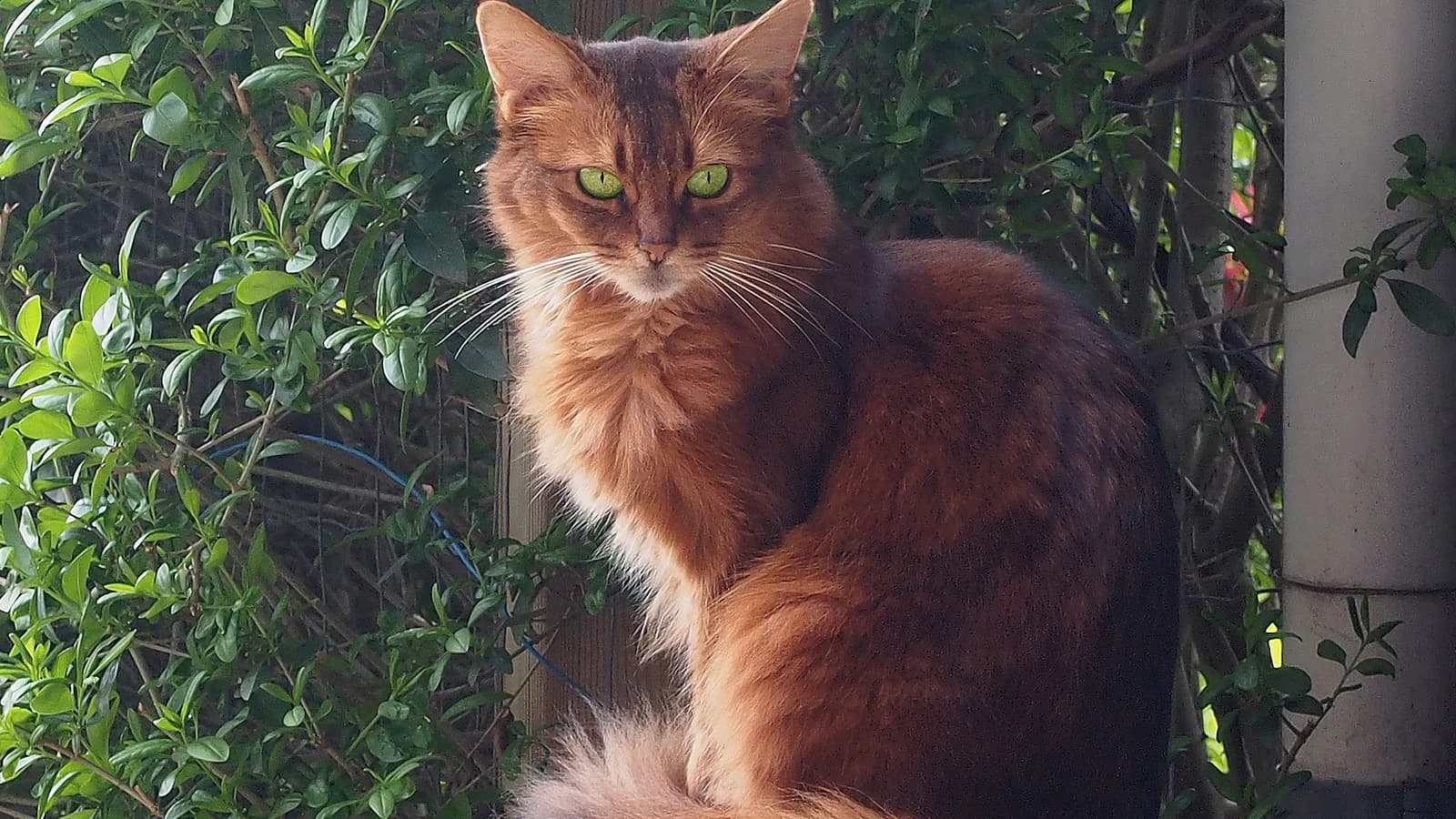
 Somali photos
Real photos, so you can see what the breed actually looks like: coats, ear tufts, ruff and build.
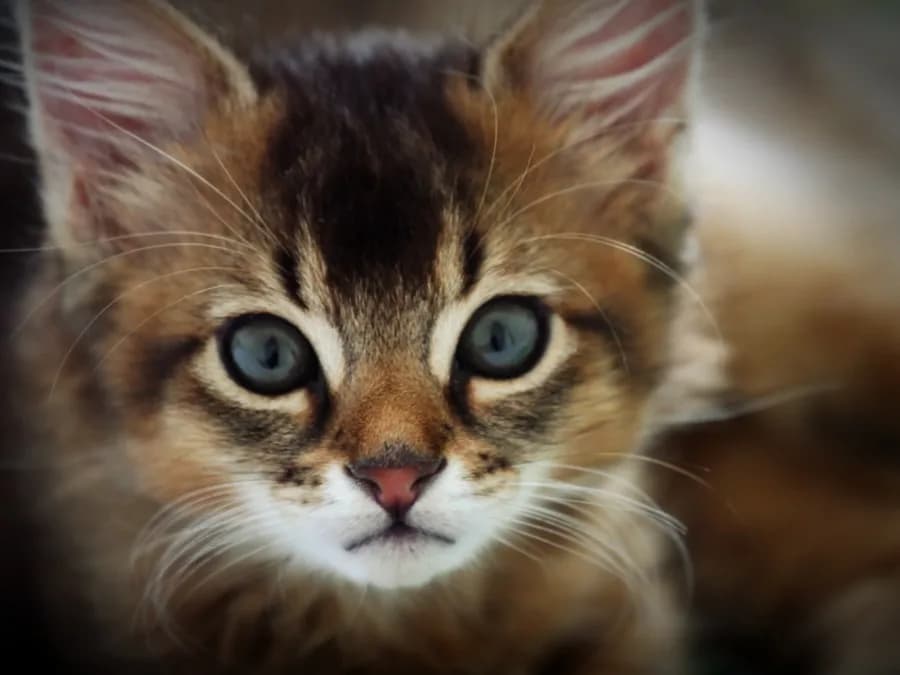
Ruddy Somali kitten close-up, blue eyes and a fluffy ticked coat
Photo: Julia Shepeleva · CC BY-SA 3.0 · via Wikimedia Commons
 Vital stats
Origin
United States
The Abyssinian's semi-longhaired variety, made a breed in the United States. The trail runs through Raby Chuffa of Selene, a 1952 import identified by a 1976 study as the traced carrier ancestor, to George, a longhaired Abyssinian-line cat Evelyn Mague found while volunteering at a New Jersey shelter in 1967. Mague named the breed after Somalia, the country bordering Abyssinia (today's Ethiopia): a deliberate nod to the parent breed, not a birthplace. First US club 1972, registration 1976, Championship 1979; UK imports 1980, Championship 1998.
Weight
Female
6-8 lb (2.7-3.6 kg)
Male
8-10 lb (3.6-4.5 kg)
Life expectancy
The honest lead: NO measured lifespan study gives the Somali its own figure anywhere. Teng 2024 and O'Neill 2015 omit the breed, and the one Swedish study merged Abyssinians and Somalis before computing its table, so even that row is not a Somali number. The three unsourced ranges, each attributed and never blended: 10-19+ years 'with proper care', 12-14, 10-15.
Coats
Ruddy / Usual / Tawny
Sorrel / Cinnamon
Blue
Fawn
Numerically identical to the Abyssinian's palette at all five registries we read: from four base colors (, , ) to six () to 's eight, building to 28 with silver and classes. The vocabulary is the trap. One copper coat is 'Sorrel' at GCCF and CCA-AFC, 'Cinnamon' at TICA and CFA. The classic golden-brown is 'Ruddy', 'Usual' or 'Tawny' by registry. Our colors page carries the five-registry table.
Understanding the coats (and their genetics)Size
No registry standard states a number; the consumer boxes do. TICA's box leads: males 8-10 lb (3.6-4.5 kg), females 6-8 lb (2.7-3.6 kg). The same page's older shared narrative gives females 6-7 lb, a one-pound self-disagreement we note rather than hide. GCCF's box says 8-12 lb (3.6-5.4 kg) unsexed: a UK judging-page range beside TICA's sex-split, scoped, never averaged. The one measured sample (Kienzle & Moik 2011, six ideal-condition females) puts the female mean at 3.1 kg (6.8 lb), sitting exactly at the boundary of TICA's two figures.
Did you know
's own page calls the Somali the 'fox cat', and uses the word nickname outright: the bushy tail, and ticked red coat earn it. And despite the name, the breed has nothing to do with Somalia. Founder Evelyn Mague chose the name because Somalia borders Abyssinia, the parent breed's own namesake country.
 Personality
 Affection4/5
 Energy4/5
 Intelligence4/5
 Friendliness4/5
 Independence3/5
 Vocal2/5
 Shedding3/5
Compatibility
 Good with children4/5
 Good with other pets4/5
 Apartment friendly3/5
Editorial ratings on our five-point scale, anchored in the registry descriptions and the measured behaviour studies cited on this profile; individual cats vary, and our members' own ratings below are the counterweight.
Still torn between this breed and another?Compare the Somali trait by trait, or filter every breed by what matters to you. What our members say
What our members say
Nobody has described their Somali here yet. As soon as the first profiles come in, this is where the community averages will show up: temperament, food, lifestyle.
Describe my Somali Pros & cons
Strong points
- The Abyssinian's ticked coat at semi-long length, low-maintenance for what it looks like
- A palette identical to the Abyssinian's at every registry, silver versions included at most
- Measured temperament data suggests a SOFTER version of the Abyssinian's extremes, not a copy
- The breed family's three DNA tests (PK deficiency, rdAc, Rdy) are cheap, bundled, and worth asking every breeder for
Things to consider
- PK deficiency is measured and real in this breed, with carrier rates that justify the DNA question in every market
- No measured lifespan figure exists anywhere: the ranges are registry estimates and say so
- Thin supply outside the US: one visible listing in Canada, none in Australia
- An active, engaged cat that does poorly as furniture: plan for play and company
 Is a Somali right for you?
A household drawn to the Abyssinian's energy but wanting it in a semi-long coat and, per the measured data, possibly a notch softer. One ready to groom weekly, ask breeders for the PK and PRA paperwork by name, and wait out a market that runs thin everywhere outside the US.
Is the Somali right for YOUR home?
Answer a few questions and we'll email you your personalized result.
Take the quiz · 2 min Getting to know the Somali
The Somali is the [Abyssinian](/breeds/abyssinian)'s semi-longhaired variety, and every registry handles that fact differently, which is the single most useful thing to know about the breed's paperwork. judges both breeds from one shared standard. gives the Somali its own standard, and registers a shorthair-coated Somali kitten as an AOV Somali. Canada's routes shorthaired Somalis back onto the Abyssinian standard for judging. Australia's registers them AS Abyssinians. And alone runs a fully independent Somali Standard of Points covering both coat lengths. Four different administrative answers to one genetic fact, and none of them is 'the' answer.
The look is the Abyssinian's ticked coat grown out: every hair banded with color, a fox-brush tail, and breeches, in a palette that is numerically identical to the Abyssinian's at all five registries, down to the registries' own words for the same colors. The temperament, though, is not a photocopy. The measured studies place the Somali nearer the population middle where the Abyssinian sits at the extremes, even as one paper's cluster analysis still groups the two together. We print both findings.
Health has one headline and it is testable: pyruvate kinase deficiency is measured in this breed in four countries, and the breed family's own three-test DNA bundle (PK, rdAc PRA, Rdy PRA) exists precisely so buyers can ask for paperwork. Our price page carries the four-market figures, the $5,300-ceiling explanation, and the mislabelled-marketplace trap we hit while researching it.
 Health: what to watch for
A few predispositions are well documented. The good news: they can be screened for or avoided by choosing a reputable breeder and keeping an eye on the right signals.
This is information, not veterinary advice, and it cannot tell you what is wrong with your cat. Our rule is a simple one: if something is wrong with your cat, call your vet, and call an emergency clinic if it is out of hours. Nothing you read here is a reason to wait.
Pyruvate kinase (PK) deficiency: measured in this breed, testable before you buy
MODERATEThe breed's one headline condition, with genuinely Somali-specific figures re-extracted from the primary tables, never borrowed from the Abyssinian. Allele frequency: 3.08% in an unbiased US sample (n=227), 11.8% in a US testing-biased sample (n=400), 14% in the UK (n=65), 22.9% in Japan (n=48), and 29% in an Australian sample. These are population carrier figures, never a verdict on any one cat. The DNA test is commercial and cheap (UC Davis VGL sells it in the Abyssinian/Somali bundle): ask any breeder for both parents' results. A tired, pale or off-color cat of any breed means call your vet.
Progressive retinal atrophy: two different genes, never merged
MODERATETwo distinct PRA tests exist for this breed family, and this page keeps them apart on purpose. rdAc: recessive, blindness typically by 3-5 years, offered across 20+ breeds. No Somali-specific allele frequency is published anywhere, an absence we state rather than borrowing the Abyssinian's figure. Rdy: dominant, blindness by around 7 weeks, offered by VGL ONLY for the Abyssinian and Somali, with zero Somali-specific clinical case in the reachable literature. That test reflects shared ancestry, not a documented Somali case. Both tests come in the same bundle as PK.
Renal amyloidosis: a family question with no Somali-specific number
MODERATEEvery source pools 'Abyssinian/Somali' on this disease, and the one whole-genome study sampled ZERO Somali cats. So no Somali-specific rate exists, and this page will not invent one. What is real: the disease is documented in the shared lineage, and increased drinking, weight loss or lethargy in any cat is a vet visit. Ask breeders what kidney history their lines carry; an honest answer beats a borrowed statistic.
A separate, PK-negative hemolytic anemia, kept distinct on purpose
LOWA joint Abyssinian/Somali case series (Kohn 2000; 5 of its 18 cats were Somalis) characterised an increased erythrocyte osmotic fragility anemia that is mechanistically DISTINCT from PK deficiency. A PK-clear DNA result does not cover it. It is rare, and this is a history note, not a screening instruction. The practical version is simply that anemia signs (pale gums, lethargy) always mean a vet, whatever the DNA paperwork says.
Go deeper on health
Prevention, warning symptoms, costs and insurance: our guides, researched and sourced.
Also worth a look
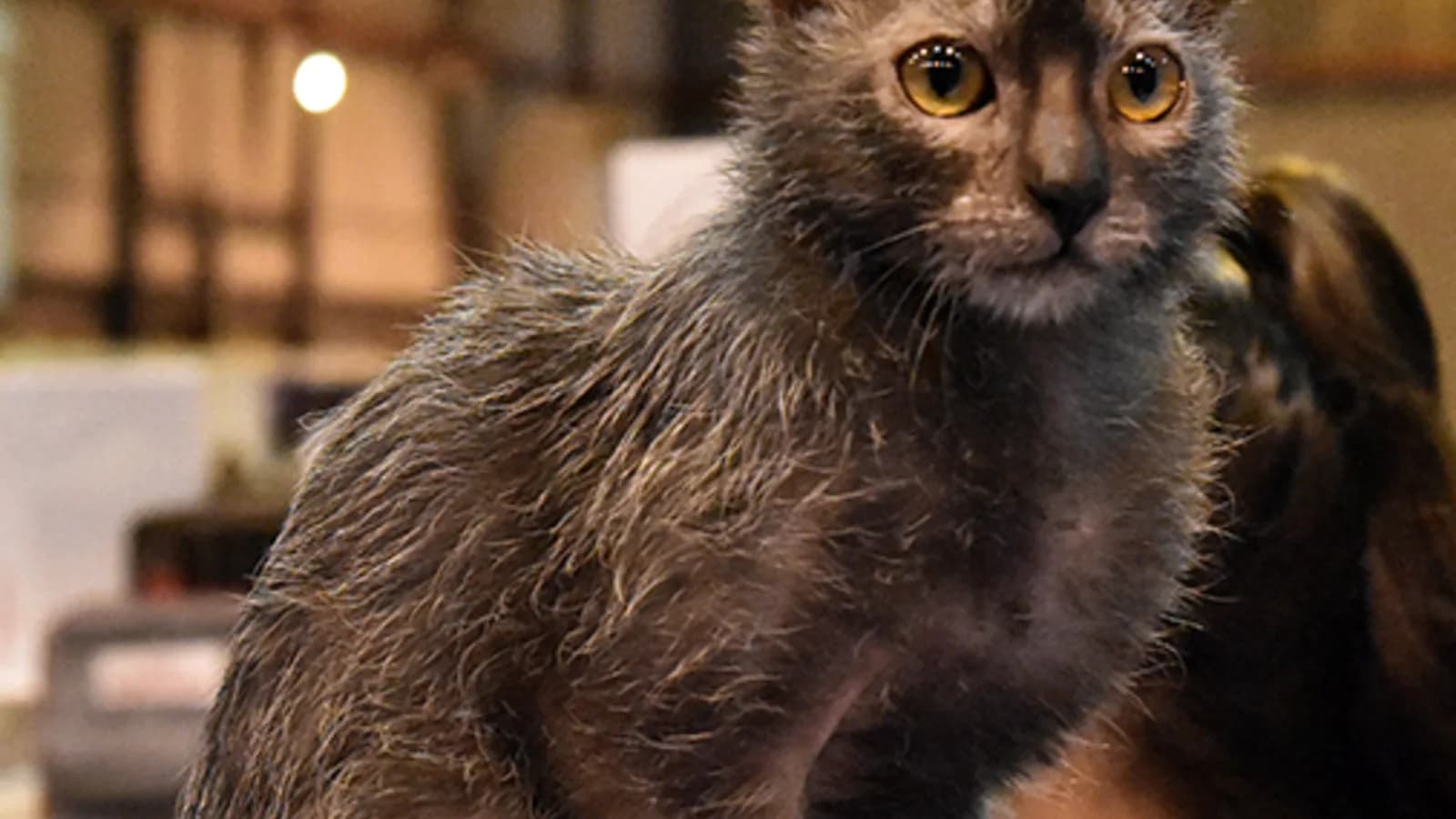
Lykoi
“The werewolf cat (also wolf cat, lycan cat): Greek 'lykos', wolf”
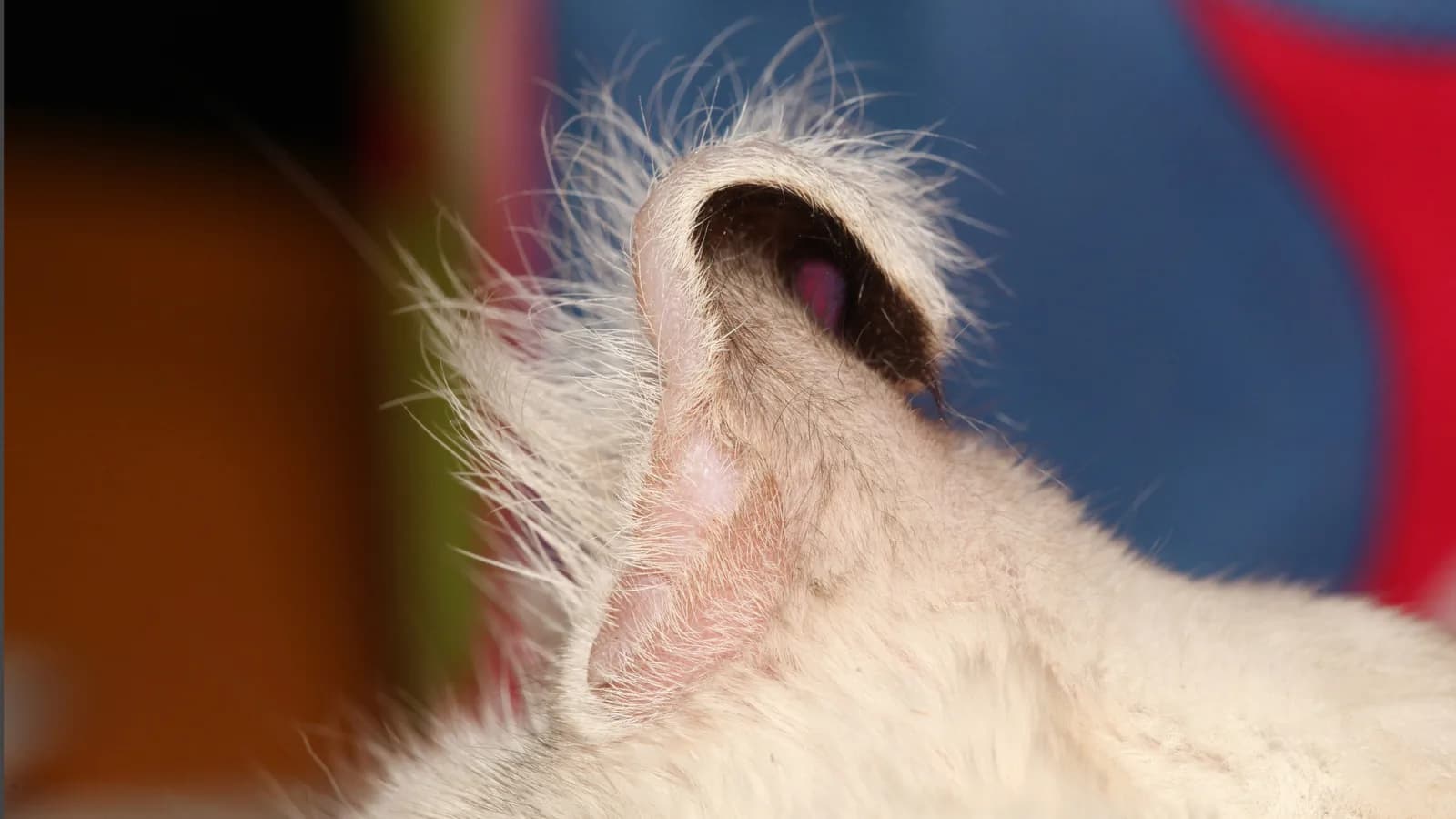
American Curl
“The Peter Pan of cats (TICA's own phrase), ears swept back like a wink”
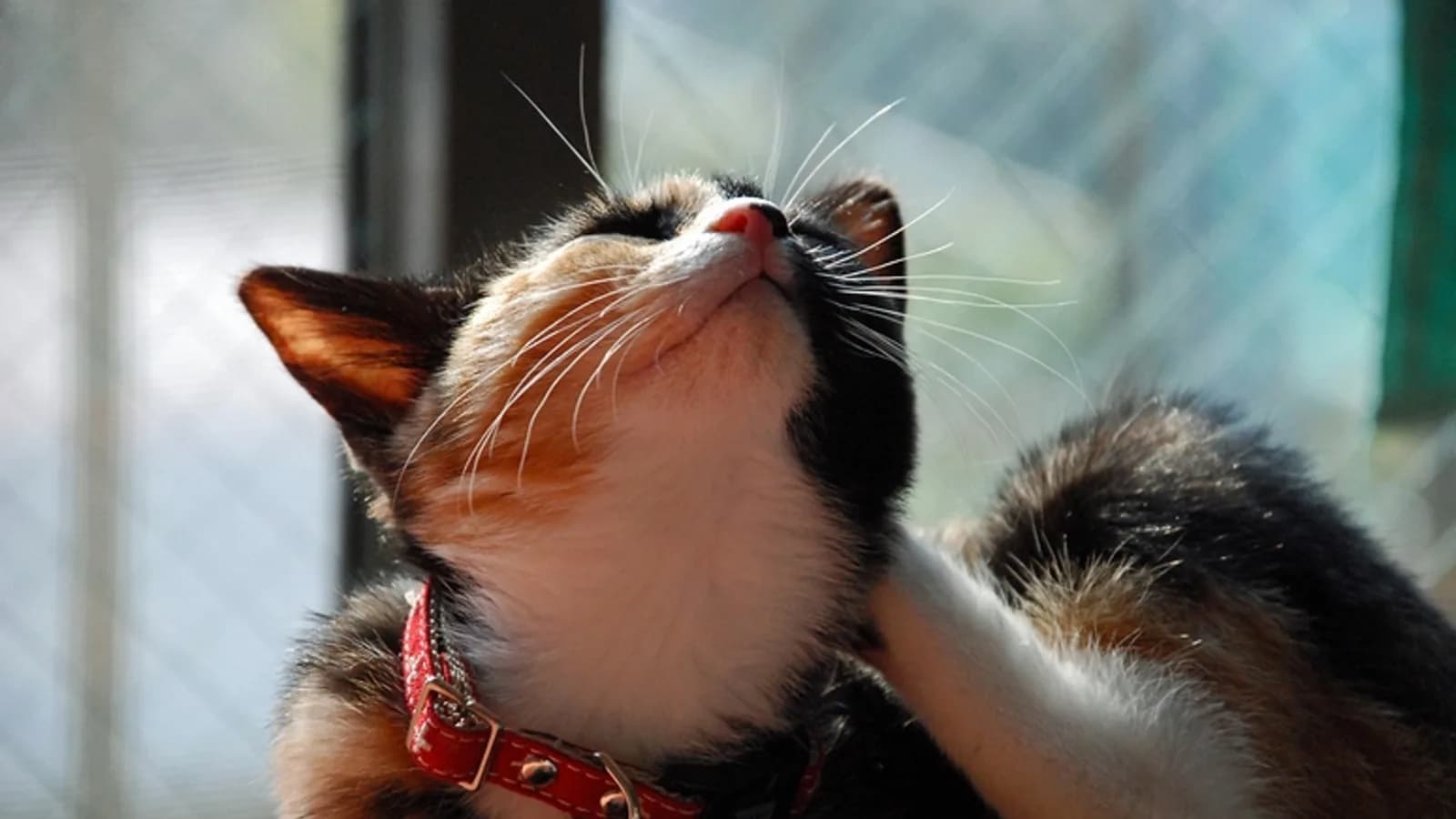
Japanese Bobtail
“The pom-pom-tailed cat of Japanese art and, popularly, of the maneki-neko”
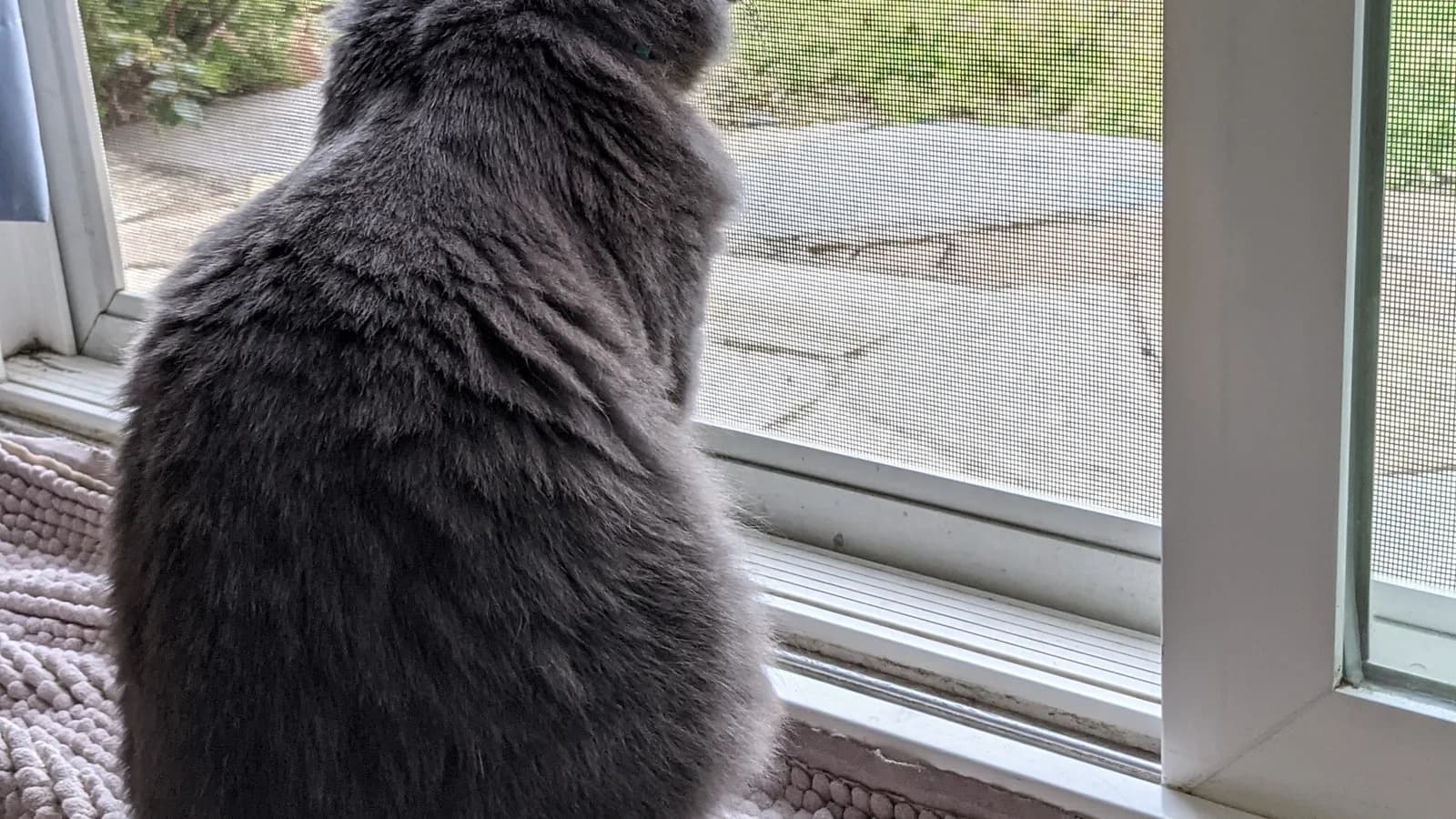
Nebelung
“The creature of the mist: German Nebel plus the Nibelungenlied saga”
 Grooming & living with one
Grooming
Low-maintenance despite the length, on which and agree in direction: the ticked semi-long coat resists tangling, and CFA's cadence is weekly combing (TICA gives none). Expect the and breeches, the two zones three standards independently reward, to need the longest attention. CFA also names an oilier coat variant with its own bathing implication, found in no other document. Generic longhair-cat advice (daily brushing) does not map onto this breed, and we say so rather than borrow it.
Living together
The family portrait: active, curious, sociable with people, other cats and cat-friendly dogs, with the usual early-integration caveat. The measured mid-pack temperament scores suggest a cat less extreme than its parent breed on fearfulness and problem behaviours. In a home, that reads as the Abyssinian's engagement with slightly rounder edges. No Somali-specific measured claim is pushed further than the two studies allow.
 Food & diet
The one section where the Somali is NOT the Abyssinian's silent twin. 's own Nutrition tab carries a genuinely Somali-specific paragraph: an overeating tendency if free-fed, twice-daily feeding recommended, and some individuals needing more calories than average. We quote it here because every other registry is confirmed silent. Portion by body condition with your vet; the usual obligate-carnivore baseline applies.
 Price & budget
$1,600 to 2,500
Price of a kitten from a registered breeder, in the United States
This price reflects the quality of the breeding program: parents' health tests, registry pedigree, socialization. A very low price should raise a red flag. The real cost, though, plays out over the years.
Find a verified breederKitten price, by market
United States
$1,600 to 2,500
United Kingdom
£400 to 1,200
Canada
CA$2,500
Each figure is that country's real market price, researched separately, not a conversion of the others. The smaller line is only there so you can gauge one against your own money: European Central Bank reference rates of 2026-09-18, refreshed daily.
Work out your food budget
Type of food
Estimated monthly budget
$11
≈ 2.0 oz (57 g) per day
A ballpark figure, food only, using the same arithmetic as our portion tool (resting energy requirement × 1.2, a neutered adult). Real needs vary with age, activity level and body condition. Ask your veterinarian for advice.
 Verified catteriesThe registry-checked directory, plus a kitten alert near you. Filter it by breed.
 Should you insure a Somali?
Our sources list several predispositions in the Somali: Pyruvate kinase (PK) deficiency: measured in this breed, testable before you buy, Progressive retinal atrophy: two different genes, never merged, Renal amyloidosis: a family question with no Somali-specific number, among others. A predisposition is not a foregone conclusion, and many of these cats live their whole lives without ever developing anything. It does change the nature of the follow-up, though: you monitor, sometimes for life, and it's that monitoring that weighs on a budget, more than a one-off accident.
One thing to weigh before deciding: this is a cat you will live alongside for well over a decade, and that is the span the real cost is spread across, premiums and care alike. Where a breed has a measured life expectancy that differs from the figure usually quoted, we say so in the lifespan section above rather than repeating the quoted one here.
 Somali cats in our community
No Somali here yet
Got one? Add a photo and yours gets to open this page.
 The vet's take
Veterinary review
Are you a vet?
Your professional read belongs here: every verified practitioner can leave a note, published once our editors have reviewed it.
Sign in and get your license number verified. We check it in the public register, we never ask for or keep a copy of your diploma, and your number is never published.
 Frequently asked questions
+What is a Somali cat?
The Abyssinian's semi-longhaired variety, recognized as its own breed: the same ticked coat grown to semi-long length, with a fox-brush tail, ruff and breeches. CFA registered it in 1976 and every major registry recognizes it today, each administering the Abyssinian relationship differently.
+Are Somali cats from Somalia?
No. Founder Evelyn Mague chose the name because Somalia borders Abyssinia (today's Ethiopia), the parent breed's own namesake country: a naming nod, not a birthplace. The breed was developed in the United States from Abyssinian lines.
+What is the difference between a Somali and an Abyssinian?
One recessive coat-length gene, administratively handled five different ways: TICA shares one standard, CFA runs separate standards, Canada judges shorthaired Somalis as Abyssinians, Australia's ANCATS registers them as Abyssinians, and GCCF alone runs a fully independent Somali standard. Temperament-wise the measured data places the Somali nearer the middle where the Abyssinian sits at the extremes.
+How long do Somali cats live?
Honestly: no measured study gives the Somali its own figure, and even the one study with an 'Abyssinian group' number merged the two breeds before computing it. The attributed registry estimates: TICA 10-19+ years, GCCF 12-14, ASPCA 10-15.
+How much does a Somali cat cost?
US: $1,600-2,500 from named catteries (show lines to $5,300). UK: a £400-1,200 band. Canada: one visible listing at CA$2,500. Australia: no published price exists. Our price page carries every source and the traps.
+Do Somali cats shed?
Moderately: the ticked semi-long coat is famously tangle-resistant and lower-maintenance than it looks, with weekly combing as CFA's stated cadence. The ruff and breeches carry the most coat and need the most attention.
+Are Somali cats hypoallergenic?
No cat is, and no registry or study makes an allergy claim for this breed: a checked absence. Allergen production is glandular, not coat-length-based. Spend time with the specific cat and involve your allergist before deciding.
+Why are Somali cats called fox cats?
TICA's own page uses the nickname outright: the bushy tail, the ruff and the warm ticked coat read as fox. It is a nickname, not a registry name, and it has nothing to do with actual fox ancestry.
+What colors do Somali cats come in?
The Abyssinian's exact palette at every registry: four to eight base colors depending on who you ask, plus silver versions at most. The same copper coat is 'Sorrel' in the UK and 'Cinnamon' in the US, which our colors page untangles registry by registry.
+What DNA tests should Somali breeders show?
Three, sold as one bundle for exactly this breed family: PK deficiency (measured carrier rates in this breed justify it everywhere), rdAc PRA, and Rdy PRA. Population figures never diagnose an individual cat; the paperwork question is simply what responsible breeding looks like here.
 Community questions
Got a question this page doesn't cover? Ask it: the best ones get published here with their answer.
Sources & references
Data checked against reference sources (TICA and CFA standards, genetics laboratories, veterinary schools).
- TICA: Somali breed page
- TICA: Somali Breed Introduction PDF
- CFA: Somali breed page
- CFA: Somali breed standard PDF
- GCCF: Somali breed page
- GCCF: Somali Registration Policy PDF (the register tiers)
- CCA-AFC: Somali breed standard PDF
- ACF: Somali standard PDF
- Kienzle & Moik 2011, Br J Nutr: the one measured Somali weight sample (PMID 22005404)
- Grahn et al. 2012, BMC Vet Res 8:207: PK-deficiency allele frequencies (PMID 23110753)
- Kohn & Fumi 2008, J Feline Med Surg: PK results on 263 Somalis (PMID 18077199)
- Kohn et al. 2000, JAVMA: the PK-negative osmotic-fragility anemia case series (PMID 11128538)
- UC Davis VGL: PK deficiency, PRA-rdAc and PRA-Rdy test pages

Worth keeping a paw on
Pin this profile
To compare later, or to show someone still torn between two breeds. One click and it sits in your board.
Pin it on Pinterest
 Purr or Pass
Still deciding? Find the perfect breed for your home.
A quick quiz that factors in your lifestyle, your kids and your other pets.
Which breed fits my home?Keep exploring
The floor belongs to our members. Keep it kind, links are not allowed, and images go through moderation before anyone else sees them.