


Cat breeds by trait
Curly Haired Cat Breeds: Real, Rare, and Three Separate Accidents
The questions people bring to this page are existential: are curly haired cats REAL? Do they exist? They are, and they do, and the story is better than the photos. Feline curls arose several separate times, as independent natural mutations in different decades and counties. The fancy kept the best of them as the rex breeds.
Here is the map: which breeds are genuinely curly, which single gene connects a curly cat to a hairless one, and what living with a rex coat actually involves.
 By Nora · The storyteller
Contents
Breeds worth knowing
Tap a breed for the full profile: temperament, health, price and coat colors, all fact-checked.
Yes, they exist: the rex breeds
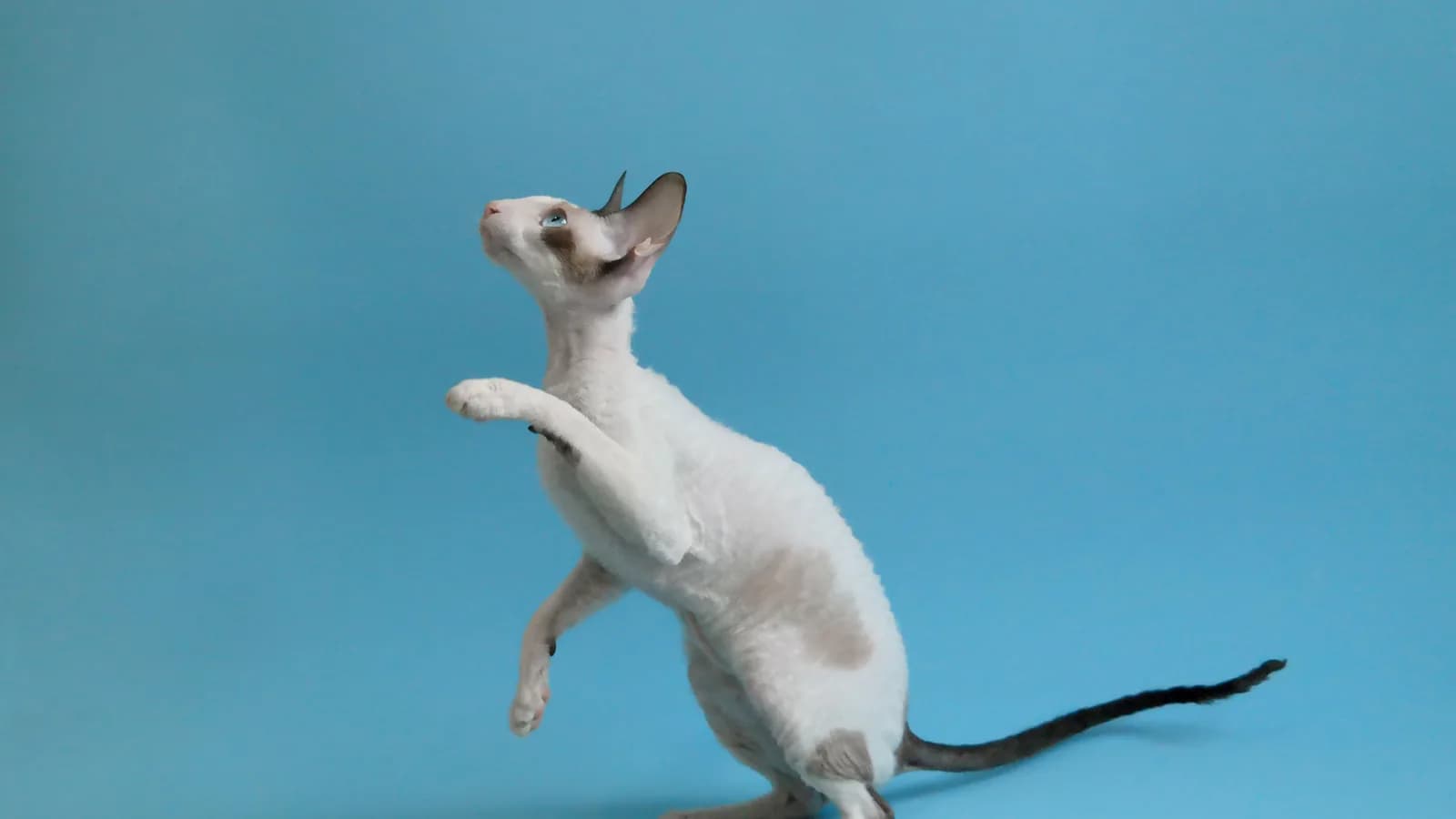
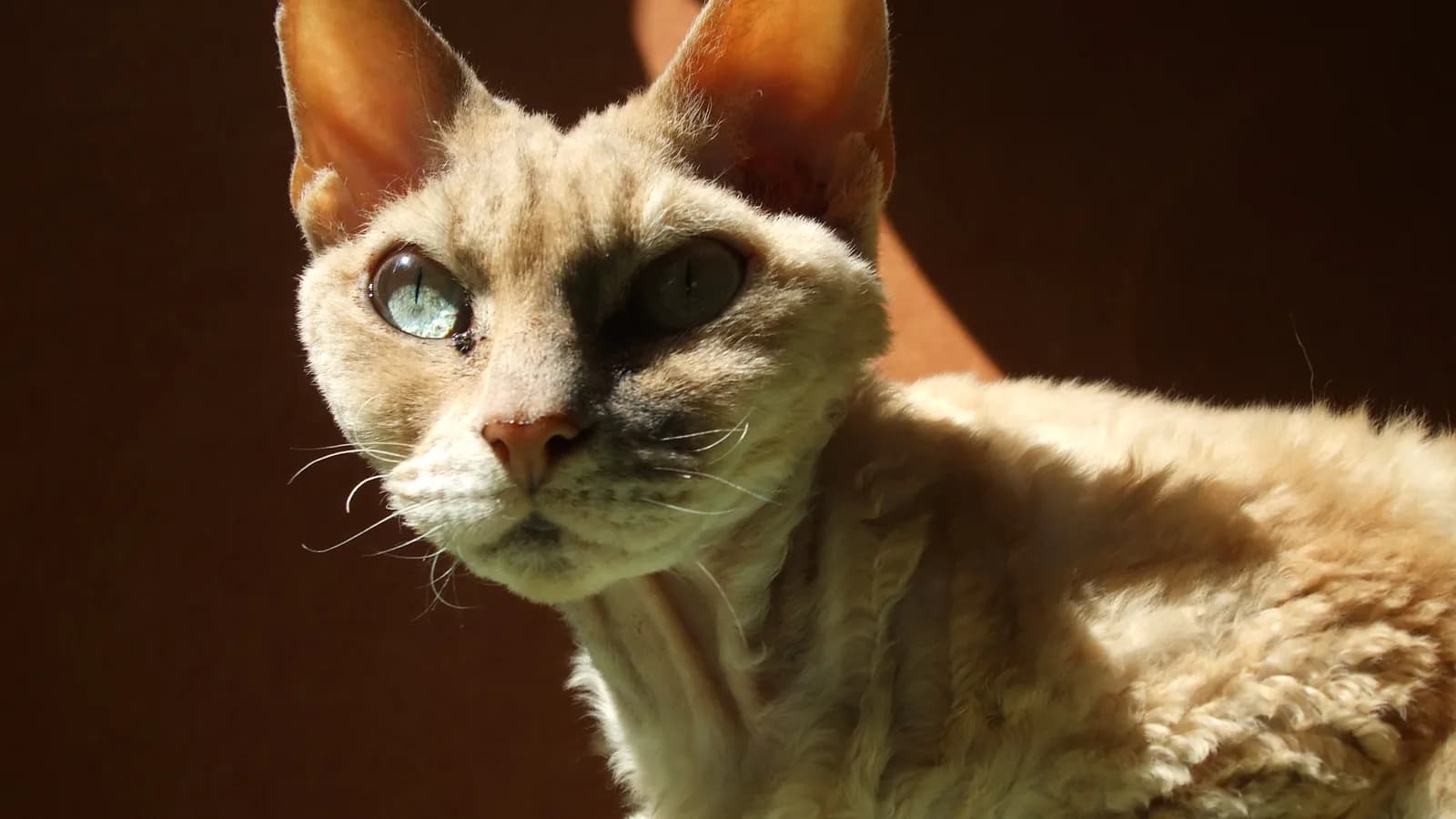
The [Cornish Rex](/breeds/cornish-rex) started it: a curly-coated kitten born in Cornwall in 1950, whose coat became a breed built entirely around the wave. The Cornish coat has NO guard hairs at all, just soft down lying in tight, even marcel waves. The breed under it is a greyhound-built acrobat. A decade later and one county over, the [Devon Rex](/breeds/devon-rex) appeared in Devon: a different, looser wave on a pixie-faced, huge-eared frame, genetically unrelated to its Cornish neighbor. The early breeders proved that the direct way, when crosses between the two produced straight-coated kittens.
Two more curls exist beyond our built profiles, reported here honestly. The Selkirk Rex (Montana, 1987) wears a plush, tousled curl on a heavier frame, and the LaPerm (Oregon, 1980s) a light, airy curl. Their full profiles are still on our build list, so this page names them without the deep files.
Cornish Rex, 1950
The marcel wave: no guard hairs, all down, on a whippet frame. The founding curl.
Devon Rex, 1960
The looser wave with the pixie face and satellite-dish ears. A separate mutation entirely.
Selkirk Rex and LaPerm
The plush curl and the airy curl: real breeds, profiles to come.
The genetics: one gene family, different breaks
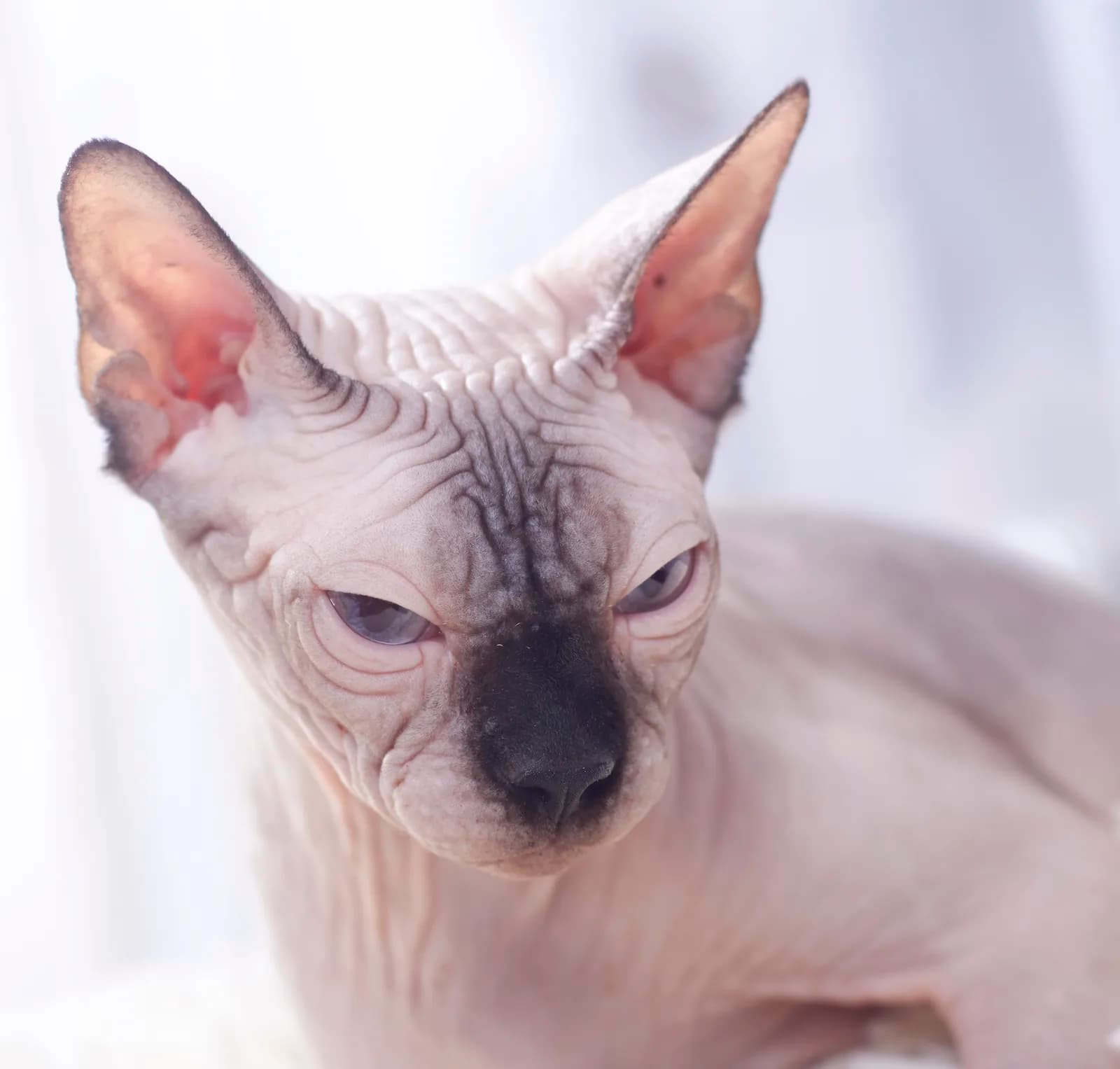
The Devon Rex's curl lives in KRT71, a hair- gene, and here is the twist worth the page. The SAME 2010 study that proved it also showed the hairless Sphynx's mutation sits in the same gene, with a strict pecking order between the variants (normal coat beats hairless, hairless beats curl). A curly Devon and a naked Sphynx are, genetically, neighbors on one gene. The Cornish Rex's wave maps to a different gene entirely (LPAR6, the curl gene our hairless cat page meets again in an unreplicated Peterbald finding). That is why the two rex breeds never interbred into one.
The practical genetics: both rex coats are recessive, so two curly parents breed true. A rex-coated kitten from mixed ancestry means the curl arrived from both sides.
Living with a rex coat
A rex coat is delicate equipment. With guard hairs reduced (Devon) or absent (Cornish), there is less coat to shed, less to groom, and less protection. Hard brushing can genuinely damage the wave and even bare patches. So grooming means a soft mitt or bare-hand pass, not a slicker brush. The thin coat also runs warm-seeking, which is why rex cats are shoulder cats, lap cats, and duvet infiltrators of the first rank.
Two honest caveats. Less shedding does not mean allergy-safe: the major allergen is glandular, and the registries' own words on rex-and-allergy claims are collected on our hypoallergenic cats page. And a delicate coat deserves an observant owner. Thinning beyond the breed's normal, or irritated skin under the wave, is vet-visit material, not a grooming project.
- Soft mitt or bare hands: never a hard slicker on a rex wave.
- Expect a heat-seeking missile: the thin coat has opinions about your lap.
- Less shedding, yes; hypoallergenic, no: the allergen is glandular.
- Coat thinning beyond the breed's norm is a vet conversation.
Three separate accidents, two counties and a genetics paper later, the curly cat is one of the fancy's best true stories. If a wave-coated acrobat runs your household, the community wants to know: marcel or tousle, and how warm is your lap right now?
By Nora · The storytellerFrequently asked questions
Can cats have curly hair?
Yes: the rex breeds carry natural mutations that wave or curl the coat. The Cornish Rex (1950) and Devon Rex (1960) are the established curly breeds, with the Selkirk Rex and LaPerm as later, rarer curls.
Are curly haired cats real?
Completely: curly coats arose as spontaneous natural mutations several separate times, and breeders built the rex breeds around them. The Cornish and Devon Rex have registry standards, health files and decades of pedigree records.
What breed of cat has curly hair?
The Cornish Rex (tight marcel waves), the Devon Rex (a looser wave), and beyond our built profiles the Selkirk Rex (plush curl) and LaPerm (airy curl). Each descends from a different founding mutation.
Are curly haired cats hypoallergenic?
No: rex coats shed less visibly, but the major cat allergen is produced in glands, not decided by coat shape. Our hypoallergenic cats page maps each breed's claim against the registries' own words.
Do curly haired cats shed?
Less than most: with guard hairs reduced or absent there is simply less coat. What they trade for it is delicacy: the wave damages under hard brushing, so grooming is a soft-mitt affair.
Is the curly coat delicate?
Yes: rex waves can break or thin under rough grooming, and the thin coat gives less protection from sun and cold, which is part of why rex cats run heat-seeking. Gentle handling keeps the wave intact.
Sources & references
Data checked against reference bodies (breed registries, allergy research, veterinary schools).
- CFA Cornish Rex Profile article (the 1950 origin and bottleneck account)
- TICA: Cornish Rex breed page
- TICA: Devon Rex breed page
- TICA Devon Rex breed standard (2024)
- Gandolfi et al. 2010, Sphynx and Devon Rex mutations in KRT71 (Mamm Genome)
- Rodney et al. 2021, the single-cat Peterbald LPAR6 finding (Sci Rep)
- GCCF: Cornish Rex breed page
- GCCF: Devon Rex breed page
This page is a starting point. Every cat is an individual: our profiles spell out the tendencies of each breed, sources included.
 Purr or Pass
Which cat breed is right for you?
Take the quiz