

Chausie Colors: The Smallest Palette in the Hybrid World, On Purpose
The Chausie's three TICA colors, the black grizzled ticked tabby no other domestic breed carries, the white-locket disqualification, and why color matters less here than anywhere.

Published August 21, 2026 3 min read
Contents
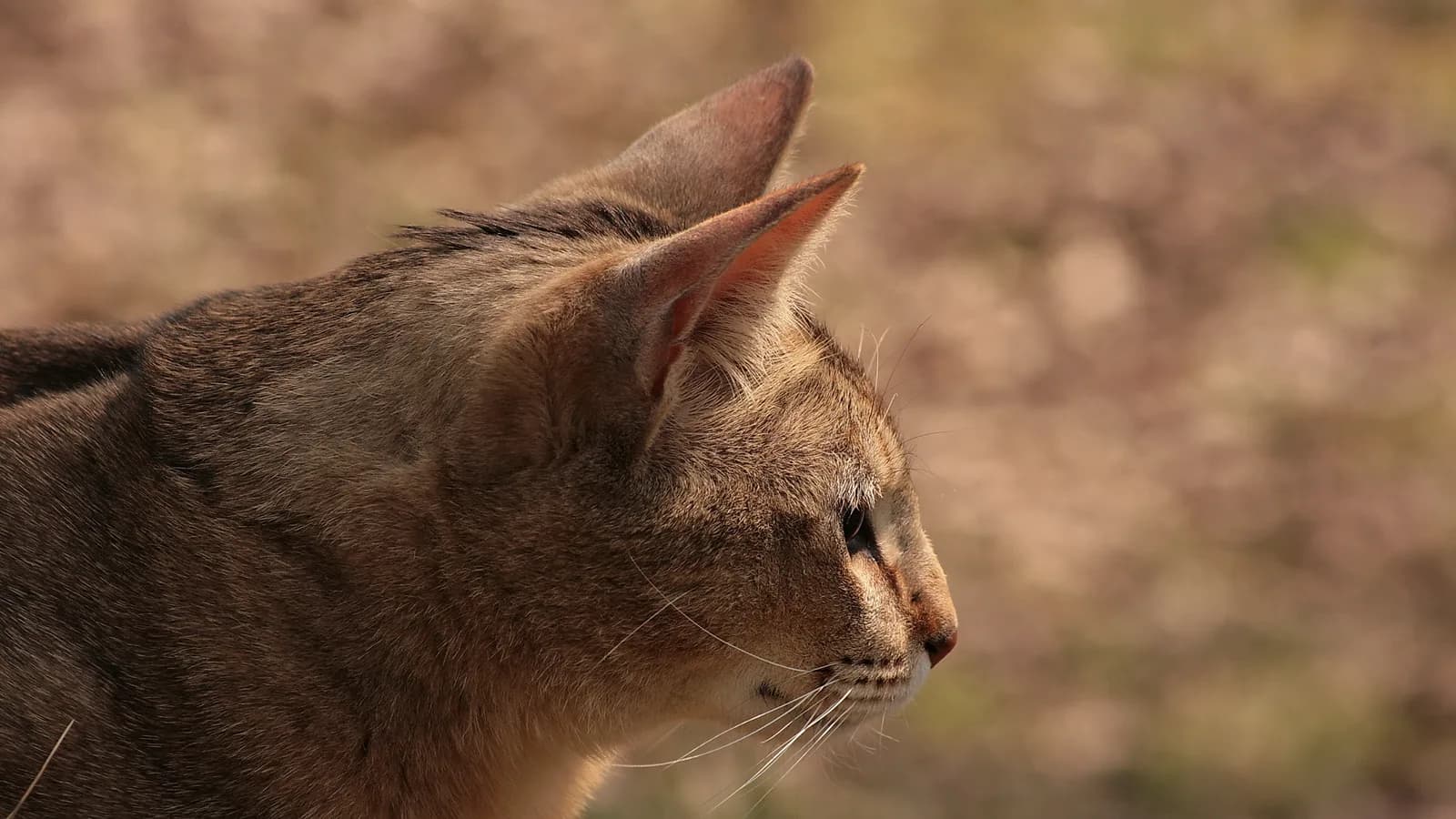
The Chausie's color list is three entries long, and that is the story. This breed's standard spends its points on BUILD, not coat, because the whole breeding goal is a cat shaped like the jungle cat (Felis chaus) it descends from. One of the three colors exists in no other domestic breed. And one detail of 's own paperwork needs untangling first.
The three colors, from the governing standard
's governing breed standard names THREE colors: solid Black, Brown Ticked Tabby, and Black Grizzled Ticked Tabby. One sentence of housekeeping our research caught: TICA's own consumer-facing summary box currently shows only two, omitting solid black. That is a same-source discrepancy we resolve in the standard's favour, because the standard is the governing document, and every independent source we checked (Wikipedia, cats.com, the Rare and Exotic Feline Registry) corroborates the three-color list. So yes, a black Chausie is real and standard.
The grizzled pattern: this breed's own invention
The black grizzled exists in no other domestic cat: a jungle-cat inheritance in which individual hairs band dark and light up the shaft, laying a silvered frost over a black coat. Even 's own standard hedges the pattern's exact genetic mechanism rather than asserting a settled one. We repeat the hedge rather than upgrading it. If you want the one visual that says "Chausie" and nothing else, this is it.
What the standard punishes, and what it barely scores
Two structural facts most color pages never mention. First, white is OUT. The standard disqualifies white lockets outright, with no white-spotting allowance anywhere in the text, the opposite of breeds that tolerate a chest spot. (Kittens' coats mature; buying on adult color is a breeder conversation.) Second, color barely scores. Coat, color and pattern together carry 20 of 100 judging points, against 40 each for head and body, because the standard's own emphasis is a build resembling Felis chaus, never spotting or shine. For a visual cousin, 's own alternative-breed suggestion for Chausie enquirers is instructive: the Abyssinian and Somali, the other ticked-tabby cats.
Does color drive price here?
No, and the absence is real. No registry or source anywhere ranks these three colors by rarity or price, unlike the Bengal and Savannah markets a hybrid shopper may know. What drives a Chausie's price is generation, not coat. A breeder charging a premium "for the rare colour" is inventing a market that does not exist in any document we found.
 The vet's take

Veterinary review
Are you a vet?
Your professional read belongs here: every verified practitioner can leave a note, published once our editors have reviewed it.
Sign in and get your license number verified. We check it in the public register, we never ask for or keep a copy of your diploma, and your number is never published.
Frequently asked questions
What colors do Chausie cats come in?
Three, per TICA's governing standard: solid black, brown ticked tabby, and black grizzled ticked tabby. TICA's own summary box currently shows two, an omission the standard and every independent source contradict.
What is a grizzled Chausie?
The breed's unique pattern: dark-and-light banding up each hair over a black coat, inherited from the jungle cat and found in no other domestic breed. TICA's own standard hedges the genetic mechanism, and so do we.
Are black Chausies rare or more expensive?
Real and standard, and no source anywhere prices the three colors differently: generation, not coat, drives this breed's price. Treat any color premium as a seller's invention.
Can a Chausie have white markings?
Not on the show bench: the standard disqualifies white lockets outright, with no allowance clause. A pet with a white spot is still a fine companion; it is simply outside the standard.
Why does the Chausie have so few colors?
Because the standard's priority is build: coat, color and pattern together score 20 of 100 points against 80 for head and body. The breed is judged as a jungle-cat silhouette first, a coat second.
 Community questions
Got a question this page doesn't cover? Ask it: the best ones get published here with their answer.
This is information, not veterinary advice, and it cannot tell you what is wrong with your cat. Our rule is a simple one: if something is wrong with your cat, call your vet, and call an emergency clinic if it is out of hours. Nothing you read here is a reason to wait.
Medical information applies to every reader. Prices, legal duties and common practice do not: unless stated otherwise, they are given for the United States, and they differ in the UK, Canada and Australia, and often between states or provinces. Check with your own vet and your own local authority.
Our sources
- TICA: Chausie breed standard PDF (three colors; white lockets DQ; the 20/100 coat weighting)
- TICA: Chausie breed page (the two-color summary box, the discrepancy named)
- Luana Cattery: Chausie cat colors (breeder corroboration of the three-color list)
- Rare and Exotic Feline Registry: Chausie page (independent corroboration)
- GCCF: unrecognised breeds page (Red Status; the Abyssinian/Somali alternative suggestion)

Worth keeping a paw on
Pin this guide
So you can find it the day you need it, and share it with someone whose cat does the same thing. One click and it sits in your board.
Pin it on Pinterest
 Purr or Pass
The cat newsletter
Our verified guides, no spam. Unsubscribe in one click.
More Chausie guides
The Chausie profile →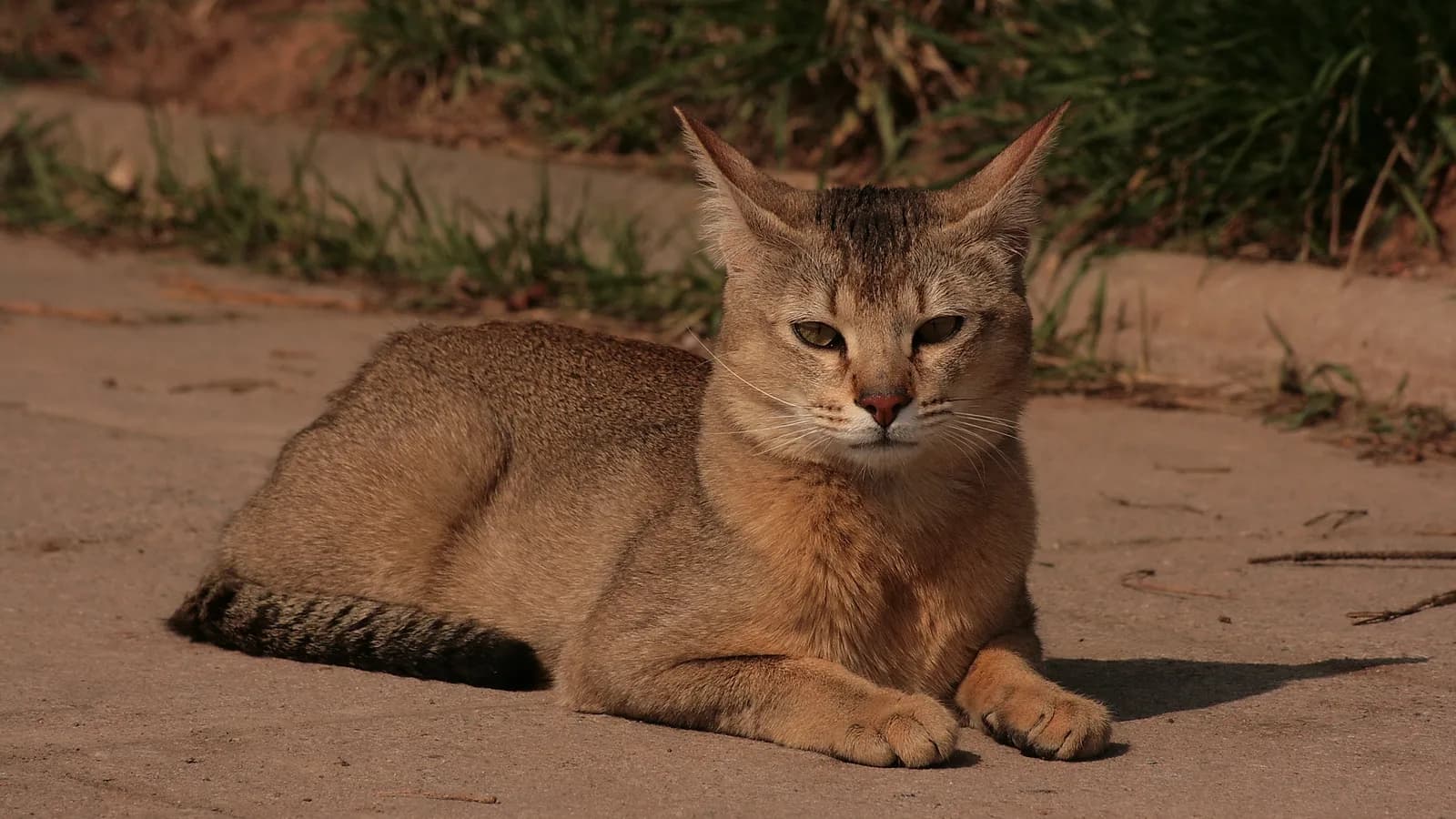
Chausie guide
Chausie Price: A Generation Ladder, a Dedicated Rescue, and One Empty Continent
Real Chausie prices by generation: F1 from $8,000 to F5 near $2,000, the breed's own dedicated rescue at $150, the UK's single-domain market, and why Australia has no price at all.
Read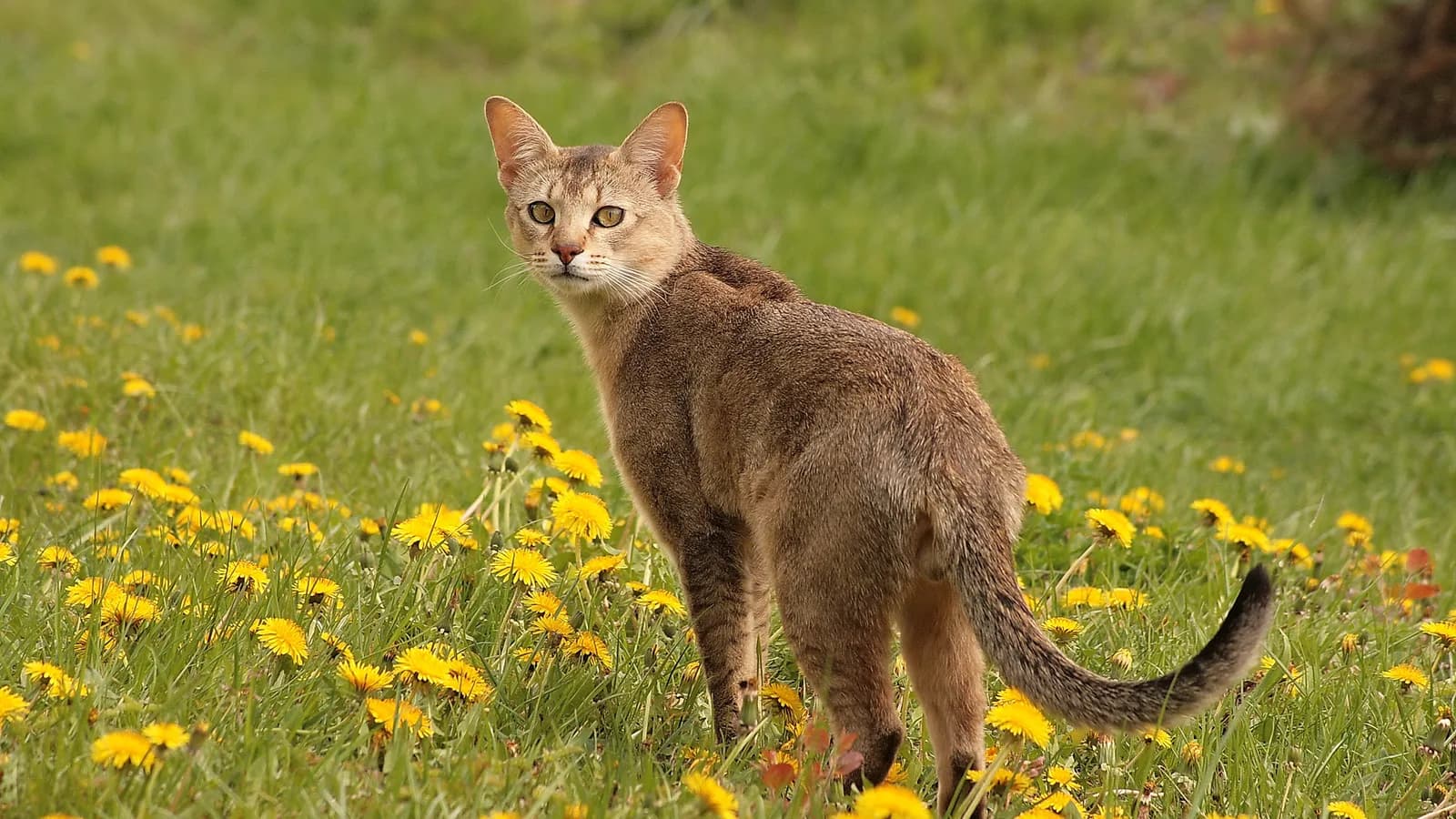
Chausie guide
Are Chausie Cats Legal? A Real Map, Jurisdiction by Jurisdiction
Chausie legality mapped: no federal US ban, the Texas-vs-Iowa opposite verdicts, Alaska's real rule (no breed named), the UK's F1 licence line, and Australia's total exclusion.
Read
The floor belongs to our members. Keep it kind, links are not allowed, and images go through moderation before anyone else sees them.