

Van Cats in Turkey: The Real Story of the Lake Van Cats
The white, odd-eyed Van cats of Lake Van are a protected Turkish landrace with a university conservation center, counted in the hundreds, and they are not the pedigree breed sold abroad.

Published August 21, 2026 5 min read
Contents
Two sentences before anything else, because the confusion is universal: this page is about the Van cat, the white, often landrace living in and around Lake Van in eastern Turkey, protected by a Turkish university conservation program. It is NOT the "Turkish Van," the internationally pedigreed breed sold by Western catteries, whose own price page sits in this silo and whose auburn-and-white pattern looks nothing like the famous all-white cats of Van. Wikipedia runs two separate articles for exactly this reason, and so do we.
Two cats, one name
Van cat: the white, landrace at Lake Van, protected, counted in the hundreds. Turkish Van: the auburn-and-white breed sold abroad, founded from cats that never lived at the lake. This page is about the first.
What the Van cat is
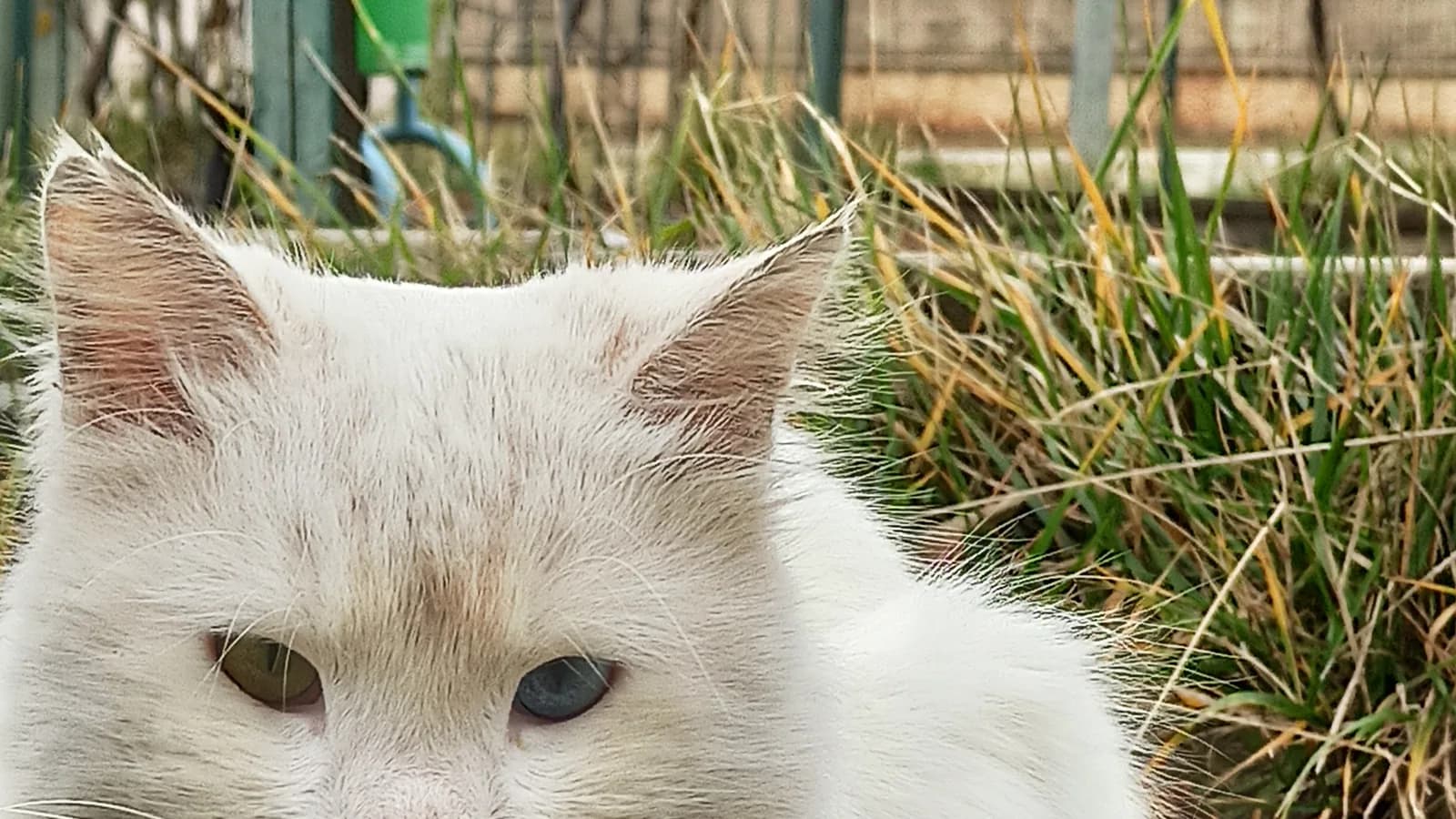
The Van cat is a landrace: a naturally occurring regional population, not a standardised breed registered anywhere. The classic type is all white, with a silky semi-long coat and eyes that come amber, blue, or famously one of each. A 1992 survey found only 92 pure Van cats in their native area, the number that set the conservation story in motion. Turkey's Ministry of Culture and Tourism describes the landrace with body weights of 2.9 kg for females and 3.6 kg for males, roughly 1.25 to 2.5 times lighter than the Western breed's own registry ranges: same region of origin, visibly different cats.
The conservation center, and the numbers with their dates
pure Van cats found by the 1992 survey
92
the number that started the conservation story
population counts, 2018 and 2024
~350 / ~300
each published with its own date and source, never blended
export controls begin
2021
Ministry of Agriculture authorization required since
The Van Cat Research and Application Center at Van Yüzüncü Yıl University is real, active, and unusually well corroborated: beyond its own portal and Turkish government sources, roughly a dozen unrelated veterinary papers our research used for size, health and eye-color data come from its work. Population counts vary by source and date, and we publish them that way rather than blending them into one fake current figure: about 350 cats as of 2018 (Wikipedia's sourced figure), about 300 as of April 2024 (Al-Monitor), and roughly 50 resident at the center's public Van Cat Villa as of April 2026 (NPR's visit). One undated search-tier figure of 132 circulates at lower confidence.
Recent reporting gives the story genuine currency: the center now operates a sperm bank enabling selective breeding (Daily Sabah), birthrates have surged in recent seasons (Al-Monitor, April 2024), and export rules changed in 2021: before then no control existed, and since then taking a Van cat out of Turkey requires Ministry of Agriculture authorization. The Van Cat Mansion, the center's visitor house, draws thousands of tourists a year.
The swimming, the eyes, and the legends
The "swimming cat" reputation attaches to this landrace and its lakeside life, and it is the rare piece of cat folklore with a geographic address: Lake Van is the region's defining feature, and the cats' comfort around water is part of their local identity. The odd eyes (one amber, one blue) are the landrace's signature, celebrated in Turkish statuary and souvenirs. Cultural ownership of the cats is itself a story with several tellers: Turkish, Armenian and Kurdish communities each carry their own tradition around the region's white cats, and this page reports those as attributed claims rather than adjudicating between them.
How the pedigree breed connects, and how it does not
Here is the part almost no page states plainly: the Western pedigreed "Turkish Van" descends from cats exported from TURKEY in 1955, but none of the four founding cats came from the Van area itself, a correction sourced from the breed's own founding accounts. The breed went on to be selected for the auburn-and-white "van pattern" that now carries the region's name worldwide, while the landrace at the actual lake remained mostly white. So the cat named after Van and the cat living at Van are relatives with different wardrobes and different passports, and any page or breeder blending their figures, populations or prices is mixing two real things into one wrong one.
Visiting, and what not to expect
The Van Cat Villa at Van Yüzüncü Yıl University welcomes visitors, and eastern Turkey's tourism boards feature the cats prominently. What you should not expect is to buy one: the landrace is a conservation population under export control, not a retail market. If the look has won you over, the pedigreed breed's market page and the all-white Vankedisi variant are the routes that exist.
 The vet's take

Veterinary review
Are you a vet?
Your professional read belongs here: every verified practitioner can leave a note, published once our editors have reviewed it.
Sign in and get your license number verified. We check it in the public register, we never ask for or keep a copy of your diploma, and your number is never published.
Frequently asked questions
What is a Van cat?
The white, often odd-eyed landrace of the Lake Van region in eastern Turkey: a natural regional population, not a registered breed, protected by a university conservation center and counted in the low hundreds.
Are Van cats and Turkish Vans the same?
No: the Van cat is the Turkish landrace; the Turkish Van is the Western pedigree breed, mostly auburn-and-white, founded from 1955 exports whose four founding cats did not come from the Van area at all. Two articles, two cats, on Wikipedia and here alike.
How many Van cats are left?
Depends when and who counted: about 350 in 2018, about 300 in April 2024, with roughly 50 living at the university's public villa as of April 2026. We publish each count with its date rather than inventing a single current number.
Do Van cats really swim?
Comfort around water is part of the landrace's lakeside identity and its most famous folklore. The Western pedigree breed shares a water fascination, which its own registries describe.
Can I buy a Van cat from Turkey?
Not as a normal purchase: export has required Ministry of Agriculture authorization since 2021, and the population is managed for conservation. The pedigreed Turkish Van is the buyable relative.
Why do Van cats have two different colored eyes?
Odd eyes ride with the landrace's white coat genetics; one amber and one blue is the celebrated signature. Our Vankedisi page covers the same trait, and its hearing implications, in the pedigree context.
 Community questions
Got a question this page doesn't cover? Ask it: the best ones get published here with their answer.
This is information, not veterinary advice, and it cannot tell you what is wrong with your cat. Our rule is a simple one: if something is wrong with your cat, call your vet, and call an emergency clinic if it is out of hours. Nothing you read here is a reason to wait.
Medical information applies to every reader. Prices, legal duties and common practice do not: unless stated otherwise, they are given for the United States, and they differ in the UK, Canada and Australia, and often between states or provinces. Check with your own vet and your own local authority.
Our sources
- Wikipedia: Van cat (the landrace article)
- Wikipedia: Turkish Van (the separate pedigree-breed article)
- Turkey Ministry of Culture and Tourism: Van Cat
- Van Yüzüncü Yıl University: Van Cat portal
- NPR (April 2026): the Van Cat Villa visit
- Al-Monitor (April 2024): Van cat birthrates surge
- Daily Sabah: the breeding program and sperm bank
- Daily Sabah: the Van Cat Mansion

Worth keeping a paw on
Pin this guide
So you can find it the day you need it, and share it with someone whose cat does the same thing. One click and it sits in your board.
Pin it on Pinterest
 Purr or Pass
The cat newsletter
Our verified guides, no spam. Unsubscribe in one click.
More Turkish Van guides
The Turkish Van profile →
Turkish Van guide
Turkish Van Price: A Thin Market, Counted Honestly
The Turkish Van market is thin enough to itemise: two live US listings, five UK listings at £150-500, three Canadian ads and zero Australian listings. Every figure named and dated.
Read
Turkish Van guide
Turkish Van Mix: Is My Cat Part Van?
True Turkish Van crosses barely exist: the Western breeding stock is tiny and deliberate crossbreeding is nearly unheard of. What a van-patterned coat really tells you about your cat.
Read
Turkish Van guide
Turkish Angora vs Turkish Van: Two Breeds, One Country, Zero Interchangeability
The ballerina and the swimmer: how Turkey's two famous breeds differ in build, coat rules and registry status, and the deafness sentence that must be said precisely.
Read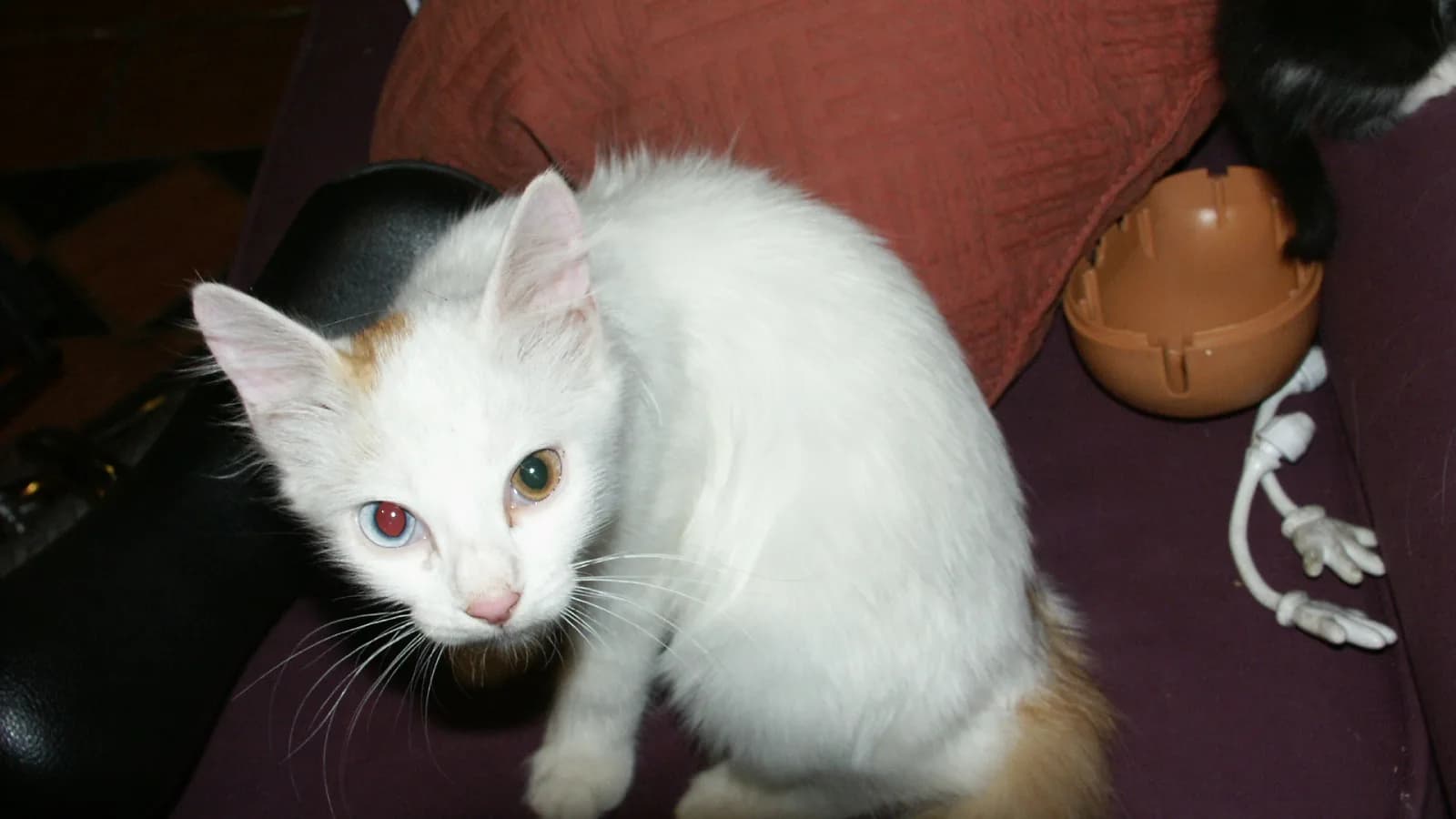
Turkish Van guide
Turkish Vankedisi: The All-White Van, Explained Precisely
The Vankedisi is the all-white variant of the registered Turkish Van breed, with three GCCF eye-color classes and a mandatory hearing test before breeding registration. The precise file.
Read
The floor belongs to our members. Keep it kind, links are not allowed, and images go through moderation before anyone else sees them.