

Why Do Cats Drool? Bliss, Mostly. Sometimes a Message
Some cats drool when they are blissed out on your lap, and that is harmless. New, heavy or constant drooling is a symptom with named causes. The full sorting guide, tier by tier.
Published August 28, 2026Updated September 8, 2026 6 min read
Contents
Let me, Cookie, editor-in-chief and the only staff member with personal expertise in this subject, settle something humans find confusing. Dogs drool at the sight of a sandwich. Anyone can do that. I have done it. When a cat drools, it is almost never about your sandwich: it is either a five-star review of the moment, or a message worth reading. Your job is telling the two apart, and it is easier than you think. The happy version comes with purring, kneading, and a cat melted across your lap. The message version is new, heavy, or constant, and it comes with company: a mouth that hurts, a stomach that churns, or a very bad afternoon. This page sorts them, with the serious people from my staff stepping in where the medicine starts.
The happy drool: bliss with a leak
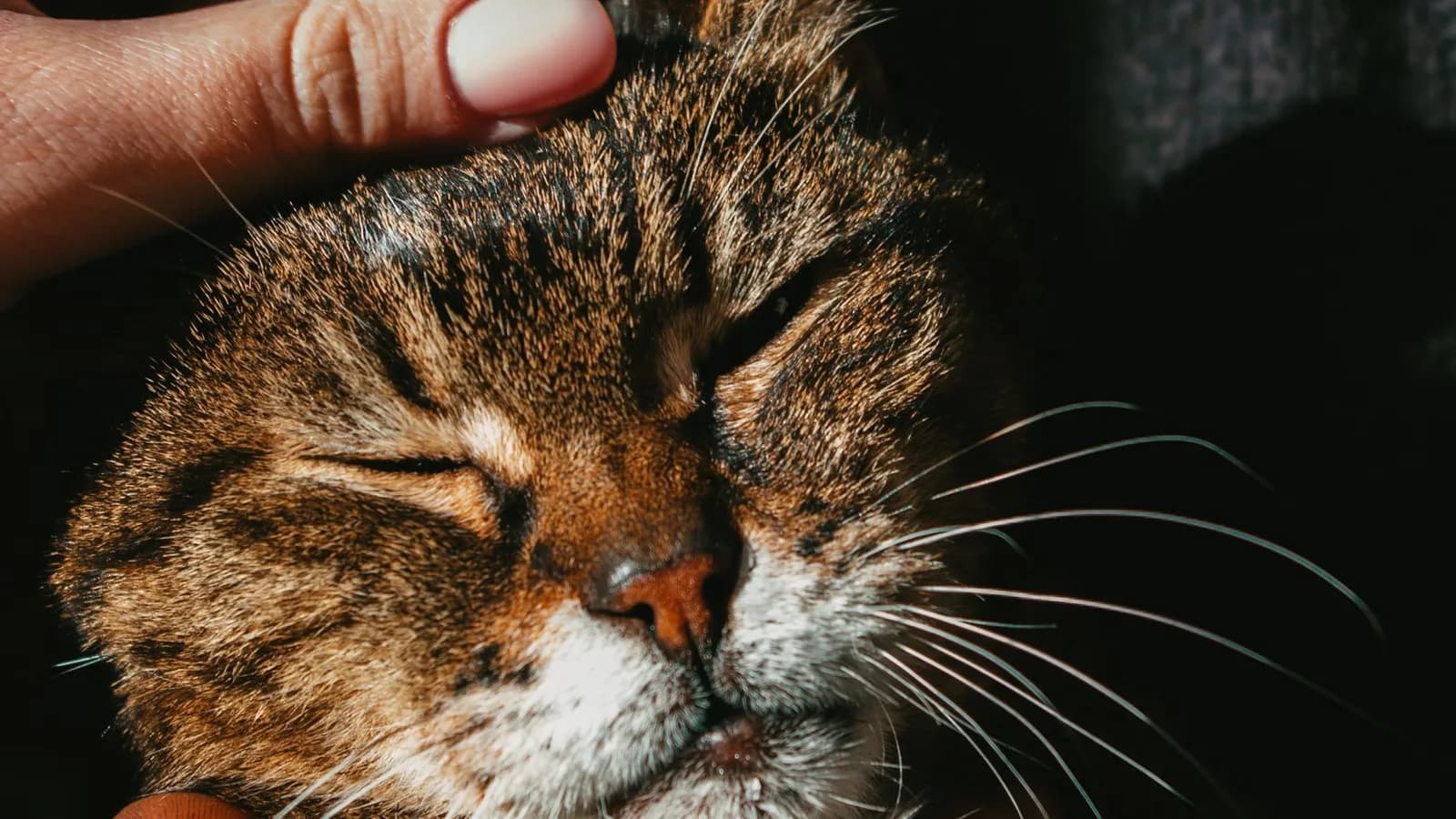
Here is the charming half. Some cats, on a lap, mid-purr, mid-knead, eyes closed, spring a small leak. Veterinarians note that a cat drooling while purring or sleeping may simply be relaxed, and that endorphins released during purring or kneading may tell the salivary glands to produce more saliva. In other words: the machinery of contentment, running so well it drips. If your cat has always done this, in exactly these moments, and stops when the cuddle stops, you are not looking at a problem. You are looking at a compliment with poor manners.
You will also read everywhere that this is a callback to kittenhood, the nursing memory of kneading and milk. It is a lovely story, often repeated and rarely sourced: none of the veterinary institutions we checked state it in their own words, so we pass it along as folklore, not physiology. The purring and kneading themselves have real science behind them, and our kneading guide and our purring guide carry it.
One useful contrast to hold onto before the serious half: a small leak in a blissful moment is one thing, but the veterinary baseline, in VCA's words, is that it is not normal for a healthy cat to have excessive salivation. Happy drool is small, situational, and old news to you. Everything else gets read as a message.
Priya · Health desk
Small sourcing note for the record: the endorphin explanation comes from vet-reviewed clinical writing, not from a university study, and the nursing-callback story is not confirmed by any veterinary institution we checked. What is solid: relaxed cats can drool, and a happy drool that is old news for your cat is not a medical sign.
Cookie · Editor-in-chief
What Priya is trying to say is that science has not yet caught up with my saliva. I drool on a strictly artistic basis, exclusively on cashmere. Payment for this level of vulnerability is accepted in tuna.
The mouth itself: the headline cause
When drool is a symptom, the first place a vet looks is the mouth, and the numbers-free honest summary is: dental and oral pain lead the list. VCA's dental page describes the drooling cat precisely: chewing with obvious discomfort, dropping food, swallowing with difficulty, drooling excessively, sometimes blood in the saliva, and the bad breath that rides along. Cornell's pages on severe mouth disease say the same in stronger terms: brings extreme oral pain, ulcerated bleeding gums, excessive salivation, and a cat that seems eager to eat but cannot. Oral tumors, rarer and mostly a concern in older cats, announce themselves with drooling, difficulty swallowing, bad breath, and facial swelling.
The pattern to notice is that mouth-pain drool almost never travels alone. It brings bad breath, dropped kibble, one-sided chewing, a face that no longer wants touching. Our dental care guide covers the whole subject, including why a cat hides oral pain until it cannot.
The stomach, the nerves, and the ulcers
Nausea makes cats salivate, the same as it does you. The cleanest documented case is the car: VCA's motion-sickness page lists excessive drooling right beside loud meowing, lip licking, restlessness and vomiting, and a cat that drools on the way to the vet and stops in the parking lot has told you the whole story. Fear does it too, by its own route: International Cat Care lists swallowing and drooling among the body-language signs of an acutely stressed cat, along with flattened ears and dilated pupils. Same puddle, different engine: one is the inner ear protesting motion, the other is fear running the show. A chronically worried cat deserves the anxiety guide more than a towel.
Ongoing nausea from illness belongs in this bucket too. Advanced kidney disease, for instance, makes cats feel sick enough that vets routinely treat the nausea itself; the drool, when it appears, is the nausea talking. The kidney story, thirst, appetite, and all, lives in our kidney disease guide.
And one infection earns a special mention: , a common respiratory virus, often ulcerates the tongue and gums, and VCA notes those cats usually drool excessively because the ulcers are very painful. A drooling cat that is also sneezy, feverish and off its food fits that picture.
Heat is the last entry here, and the least forgiving one. International Cat Care lists drooling among the signs of heatstroke, with excessive panting, lethargy, vomiting and collapse, and its instruction is one sentence: if you suspect heatstroke, contact your veterinary team immediately.
String, plants, and one warning about flea products
Cats eat ribbon, thread, tinsel and yarn, and a string caught under the tongue is, per VCA, one of the classic anchor points. That is the string scenario that produces visible drooling and gagging at the mouth. A string already swallowed deeper presents differently, with vomiting, refusal to eat, lethargy and a painful belly. Either way, the rule both VCA and the state plainly: never pull on a string hanging from any part of your cat. The hidden end may be anchored, and pulling can tear the intestine. That one goes to the vet as-is.
Plants: chewing an irritating plant can start the faucet. The names peace lilies as a cause of oral pain, drooling and vomiting. True lilies, the Lilium and daylily kinds, are a different and far worse story: severe kidney injury, often fatal if treatment waits past 18 hours. So the household rule is simpler than plant botany: a cat plus any lily equals a call now, drool or no drool.
Flea products: the one to know by name is , common in dog spot-ons and a serious poison to cats. The headline signs are neurological, trembling, twitching, staggering, seizures; the UK government's veterinary agency also lists dribbling and drooling among the early signs. A drooling cat that was recently near a dog's flea treatment is an emergency, and our flea guide explains the whole permethrin problem in detail.
The Vet's Take · Veterinary review
The line I need every reader to keep: a healthy cat does not drool excessively. New, heavy or constant drooling is an appointment. Drooling with vomiting, hiding or not eating is urgent. Drooling with breathing trouble, lethargy, suspected poisoning or overheating is an emergency, now. And never pull a visible string: pulling can tear the intestine.
Cookie · Editor-in-chief
The Vet gets the final word on emergencies. That is our arrangement: I sign the fun paragraphs, they sign the serious ones, and nobody pulls the string. My consultation fee for agreeing this quickly is three treats, invoice attached.
The three-tier sorting table
Here is the triage, condensed from the veterinary sources above into the ladder PetMD's clinicians use:
| What you see | What it means | What to do |
|---|---|---|
| Drooling only during purring, kneading, lap bliss; same as always | The happy leak | Enjoy it. Maybe a towel |
| Drooling that is new, heavy, or frequent | A symptom worth naming, mouth first | Book a vet appointment |
| Drooling plus not eating, hiding, vomiting, or acting wrong | The message got urgent | Vet promptly, days matter |
| Drooling plus breathing trouble or lethargy, or any suspected toxin, string, or overheating | Emergency territory | Emergency vet, now |
The one-line version, and the site's standing rule: if something seems wrong with your cat, call your vet; out of hours, an emergency clinic.
What to take away
- A cat drooling while purring, kneading or dozing on a lap is usually just deeply relaxed; veterinarians note endorphins during purring and kneading may increase saliva production.
- Excessive salivation in a healthy cat is not normal by veterinary standards: drooling that is new, heavy or constant earns a vet appointment.
- Mouth pain is the headline cause of symptom drooling: dental disease, and oral tumors all list drooling with bad breath and difficulty eating.
- Drooling with vomiting, hiding or refusal to eat is urgent; drooling with breathing trouble, lethargy, suspected poisoning or overheating is an emergency-vet-now situation.
- Never pull a string, ribbon or thread hanging from a cat's mouth or rear: the hidden end may be anchored, and pulling can tear the intestine (VCA and both warn against it).
- Any contact between a cat and a lily, or a dog's flea product, is a call to the vet regardless of whether drooling has started.
 The vet's take
Veterinary review
Are you a vet?
Your professional read belongs here: every verified practitioner can leave a note, published once our editors have reviewed it.
Sign in and get your license number verified. We check it in the public register, we never ask for or keep a copy of your diploma, and your number is never published.
Frequently asked questions
Why does my cat drool when I pet him?
Almost certainly bliss. Veterinarians note that relaxed cats can drool during purring and kneading, possibly because endorphins nudge the salivary glands. If it only happens during affection, has always happened, and stops when the cuddle ends, it is normal for your cat.
Why does my cat drool when purring or kneading?
Purring and kneading are contentment behaviors, and the drool rides along with deep relaxation. The popular explanation that it is a leftover nursing reflex from kittenhood is widely repeated but not confirmed by veterinary institutions, so treat that part as folklore with good marketing.
Is it normal for a cat to drool?
A little, in moments of bliss, in a cat that has always done it: yes. Outside those moments the veterinary baseline is that healthy cats do not drool excessively. New, heavy or constant drooling is a symptom, and the mouth is the first suspect.
When is cat drooling an emergency?
When it comes with breathing trouble or lethargy, after any suspected poisoning (lilies and dog flea products containing permethrin are the classics), with a string visible in the mouth, or alongside signs of overheating like heavy panting and collapse. Those situations go to an emergency vet immediately.
Why does my cat drool in the car?
Motion sickness or fear, and often both. Veterinary sign lists for motion sickness put excessive drooling next to yowling, lip licking, restlessness and vomiting, and stressed cats also drool as a fear response. If car rides are routinely miserable, your vet can help with both the nausea and the anxiety.
My cat is drooling and not eating. What does that mean?
That pairing points hard at mouth pain: dental disease, ulcers or something worse, and it can also signal nausea from illness. It sits on the urgent rung of the ladder: a cat that stops eating needs a vet promptly, whatever the cause turns out to be.
 Community questions
Got a question this page doesn't cover? Ask it: the best ones get published here with their answer.
This is information, not veterinary advice, and it cannot tell you what is wrong with your cat. Our rule is a simple one: if something is wrong with your cat, call your vet, and call an emergency clinic if it is out of hours. Nothing you read here is a reason to wait.
Medical information applies to every reader. Prices, legal duties and common practice do not: unless stated otherwise, they are given for the United States, and they differ in the UK, Canada and Australia, and often between states or provinces. Check with your own vet and your own local authority.
Our sources
- VCA Animal Hospitals, dental disease in cats (the drooling and oral-pain sign list)
- Cornell Feline Health Center, gingivostomatitis (extreme oral pain and excessive salivation)
- Cornell Feline Health Center, oral cavity tumors (drooling among the presenting signs)
- VCA Animal Hospitals, recognizing the signs of illness in cats (excessive salivation is not normal in a healthy cat)
- VCA Animal Hospitals, motion sickness in cats (the drooling sign list)
- VCA Animal Hospitals, feline calicivirus infection (painful mouth ulcers and excessive drooling)
- VCA Animal Hospitals, linear foreign body in cats (string at the base of the tongue; the do-not-pull warning)
- International Cat Care, hazardous weather and your cat (drooling on the heatstroke sign list)
- International Cat Care, stress in cats (swallowing and drooling among acute stress signs)
- ASPCA, which lilies are toxic to pets (peace lily drooling; the 18-hour true-lily treatment window)
- ASPCA, Chimi's close call with holiday ribbon (never pull exposed string)
- UK Veterinary Medicines Directorate, permethrin spot-ons (dribbling/drooling on the consumer sign list)
- Cornell Feline Health Center, chronic kidney disease (nausea as a treated CKD symptom)
- PetMD (vet-reviewed), why is my cat drooling (the relaxation and endorphin note; the three-tier triage ladder)

Worth keeping a paw on
Pin this guide
So you can find it the day you need it, and share it with someone whose cat does the same thing. One click and it sits in your board.
Pin it on PinterestAlso worth reading
All behavior →
Article
Why Do Cats Eat Grass? The Salad Course, Explained
Two UC Davis surveys found grass eating is normal cat behavior, rarely about illness, and probably inherited from wild ancestors. The science, the myths that lost, and the one real danger.
Read
Article
Why Do Cats Knock Things Over? A Professional Explains His Art
Hunting practice, a paw that asks questions, boredom, and you arriving on cue: the four documented reasons cats knock things over, from an editor-in-chief who calls it art.
Read
Article
Why Does My Cat Stare at Me? A Staring Professional Explains
You are being watched, and it is mostly a compliment. Cookie explains the science of cat staring: hunger o'clock, the peer-reviewed slow blink, hard stares, and the stare that needs a vet.
Read
The floor belongs to our members. Keep it kind, links are not allowed, and images go through moderation before anyone else sees them.