

Why Do Cats Eat Grass? The Salad Course, Explained
Two UC Davis surveys found grass eating is normal cat behavior, rarely about illness, and probably inherited from wild ancestors. The science, the myths that lost, and the one real danger.
Published August 28, 2026Updated September 8, 2026 7 min read
Contents
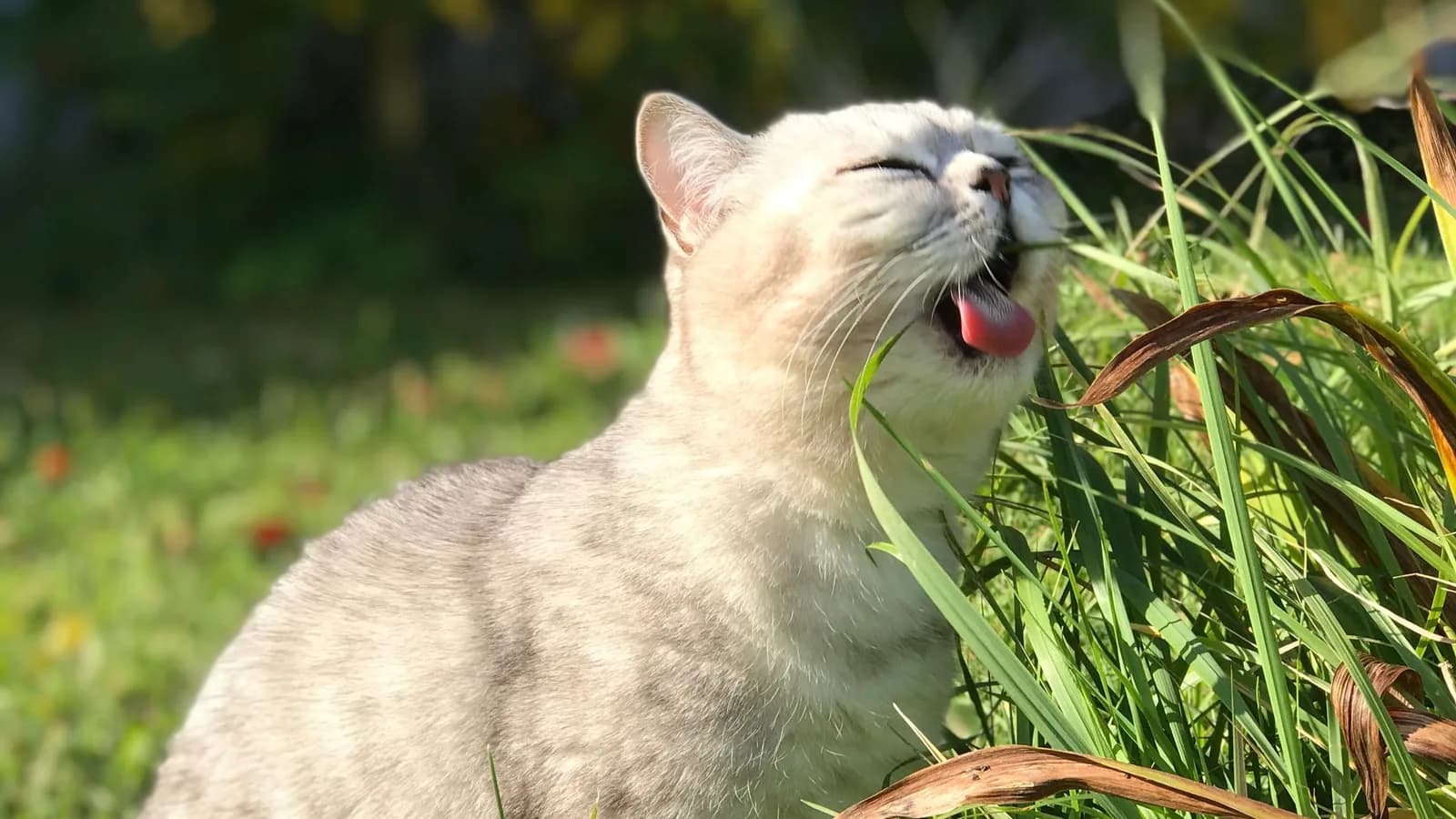
Cookie here, editor-in-chief. The humans asked me to explain why cats eat grass, presumably because they have watched me enjoy the garden buffet and then, on selected occasions, return it to them as a gift. Let me give you the short version first: grass eating is normal, extremely common, and the best scientific explanation is that it came with the species. It is not, in most cats, a sign that anything is wrong.
The long version involves two surveys, thousands of cat owners, a rejected hairball theory, wolves, and one flower that this magazine takes deadly seriously. Bring snacks. I will.
What 3,000 cat owners told the scientists
The backbone of everything we know here is a research program from a team at the University of California, Davis, led by Benjamin Hart. They first presented the work at an animal behavior conference in Bergen, Norway in 2019, then published it in 2021 in the journal Animals. Two separate owner surveys, run a decade apart, with the second one disguised among general behavior questions so plant-obsessed owners would not skew the sample. Clever. Sneaky, even. I approve.
The numbers, by survey, because they measured slightly different things:
| Survey 1 (about 1,900 cats) | Survey 2 (1,021 cats) | |
|---|---|---|
| Ate plants | 65% ate plants weekly | 71% seen eating plants at least 6 times, 61% more than 10 times |
| Never seen eating plants | not the survey's framing | 11% |
| Looked ill beforehand | 6% | 9% |
| Frequently vomited after | 37% of plant eaters | 27% |
Translation from the scientific: nearly everyone does it, nearly nobody looks sick first. The youngest cats are the most committed: under one year old, 93.4 percent ate plants weekly, and among cats three or younger, 39 percent did it daily against 27 percent of their elders. Kittens also branch out beyond grass, while adults settle on it like regulars at a favorite bistro. Sensible animals.
Priya · Health desk
The numbers deserve one precision, because the internet keeps repeating that cats eat grass in order to vomit. The surveys point the other way: only 6 to 9 percent of cats looked ill beforehand, and most cats, roughly two-thirds or more depending on the survey, did not vomit afterward at all. The one real pattern is age: among frequent plant eaters over nine years old, 57 percent were seen vomiting often. So it is not the reason most cats do it, and in an older cat a new grass-then-vomit habit is worth attention.
Cookie · Editor-in-chief
I said exactly that, only with more charisma. A gentleman enjoys his salad course and keeps it down. The occasional dramatic exception is called performance art, and the carpet was chosen for a reason.

The leading theory: a dewormer inherited from wild ancestors
So why do we do it? The Hart team's answer, and they are honest that the survey method cannot prove it, is that grass eating is an instinct inherited from wild ancestors, where fibrous plants helped carry intestinal parasites out of the body. A review they cite found plant eating documented across 124 wild carnivore species, cats' wild cousins included. Back in 1944, the biologist Adolph Murie examined wolf droppings in Alaska and found blades of grass wrapped around intestinal worms, and suggested grass physically scours them out.
The logic fits the age pattern too: in the wild, young animals carry the heaviest parasite loads and would benefit most from a regular fiber sweep, and in the surveys, young cats ate plants the most. Your modern indoor cat almost certainly has no worms to sweep. The instinct never got the memo, and honestly, why would it. It is a beautifully engineered system and I will not hear it criticized.
The researchers are explicit that the true confirming experiment has never been done and is not really feasible. So the correct phrasing is: best remaining explanation, not proven fact. We say it exactly that way on purpose. Rigor is a house specialty, like biscuits.
The theories that lost, and the one that just shrugs
The hairball theory, that cats eat grass to purge swallowed fur, got tested directly and failed. If it were true, long-haired cats should eat more grass than short-haired cats. They do not: 83 percent of short-haired domestic cats and 85 percent of long-haired ones had been seen eating plants more than ten times, with similar illness and vomiting rates around it. The paper's own conclusion is that the data do not support the hairball-purging hypothesis. A theory walked in confident and left in a doggy bag.
The vitamin theory, that cats eat grass to top up folic acid or trace nutrients, is often repeated and rarely sourced. Even the veterinary sites that mention it flag it as unconfirmed, and the Hart paper lists a nutrient deficiency only as an untested possibility. It might be true. Nobody has shown it.
And then there is the explanation that requires no laboratory: some cats simply like it. Cornell's feline health experts describe plant chewing as part of normal investigation and play, and in Survey 2, 35 percent of owners who kept a grass bed for a committed plant eater said the cat enjoyed eating grass. Enjoyed. Imagine needing a survey for that. I could have confirmed it for a modest fee, payable in tuna.
The real dangers grow next to the grass
Now the serious course, because the grass itself is rarely the problem. What surrounds it can be.
A treated lawn is not a salad bar. Veterinary guidance is consistent that cats should not chew grass treated with pesticides, herbicides or fertilizers: cats groom residue off their own fur, which turns a walk into a meal. Offer untreated grass or keep the outdoor grazing supervised.
Houseplants and bouquets deserve a full inspection, and one family is in its own category of dangerous. According to the US Food and Drug Administration, in true lilies and daylilies the entire plant is toxic to cats: stem, leaves, flowers, pollen, even the vase water. Eating a small piece of a leaf, licking a few pollen grains off fur, or drinking from the vase can cause fatal kidney failure in less than three days. Early signs such as low energy, drooling, vomiting and loss of appetite start within 0 to 12 hours. Our guide to plants toxic to cats covers the rest of the household jungle, lilies included.
One more physical hazard, small but documented: a grass blade can lodge in the passage behind the nose. A 1993 case series in the Journal of the American Veterinary Medical Association described eight cats with a grass blade stuck in the , each removed by a veterinarian under sedation. Sudden violent sneezing fits after a garden session, especially from one side, are covered in our cat sneezing guide, and they are a vet visit, not a wait.

The Vet's Take · Veterinary review
One part of this page is not funny, so I am taking it. True lilies and daylilies can kill a cat: a chewed leaf, a few pollen grains groomed off the fur, or a drink from the vase can cause fatal kidney failure, and the FDA notes that treatment delayed past about 18 hours generally means irreversible kidney damage. If a cat may have touched a lily, call your veterinarian or a poison control center immediately. Do not wait for symptoms.
Cookie · Editor-in-chief
For once, no counterargument. Lilies are banned from my building. Flowers that attack the kitchen staff have no place in a civilized home.
Cat grass: the indoor salad bar
If your cat has opinions about greenery and no safe garden, the answer is sold in trays: cat grass, which is simply young wheat, oat, barley or rye grass grown indoors, untreated and out of reach of anyone's weedkiller. Cornell's feline health center suggests offering oat grass, catnip or catmint to cats that crave vegetable matter, and even mixing a little lettuce or parsley into meals. A pot on the windowsill, sprouted in a week, and the houseplants get diplomatic immunity.
I maintain a personal tray. It is mine. The ficus was a negotiation; the wheatgrass is a treaty.
When grass plus vomiting becomes a vet question
Most grass eaters do not vomit most of the time, so a cat that eats grass and then throws up regularly is telling you something. The most specific published threshold we found comes from a board-certified veterinary behaviorist, Dr. Wailani Sung: throwing up more than twice a month after eating grass warrants a veterinary conversation. Veterinary sites frame it the same way qualitatively: a frequent or newly frequent pattern of grass then vomit can point at gastrointestinal disease or parasites, and earns an exam rather than a shrug.
The wider rules about vomiting apply here unchanged, and our cat throwing up guide carries them: repeated vomiting, blood, lethargy, refusing food, or a cat that just seems wrong are vet-now territory, grass or no grass. In the surveys, older cats vomited after plants far more often than young ones, 57 percent of frequent plant eaters over age nine, so a senior cat's new grass-and-vomit habit deserves particular attention.
What to take away
- Grass eating is normal, common cat behavior: in two UC Davis surveys, 65 percent of cats ate plants weekly (Survey 1) and 71 percent had been seen eating plants repeatedly (Survey 2).
- Cats are rarely sick beforehand: only 6 to 9 percent of cats appeared ill before eating plants, and most did not vomit afterward.
- The best-supported explanation is an inherited instinct from wild ancestors, where fibrous plants helped expel intestinal parasites; researchers class it as the strongest remaining hypothesis, not a proven mechanism.
- The hairball-purging theory was tested and rejected: short-haired and long-haired cats eat plants at nearly identical rates (83 vs 85 percent).
- True lilies and daylilies are the emergency case: per the FDA, a few pollen grains or a sip of vase water can cause fatal kidney failure in a cat, and treatment delayed past about 18 hours generally leaves irreversible damage.
- A cat that vomits more than twice a month after eating grass, per veterinary behaviorist guidance, should see a vet; so should any cat with sudden one-sided sneezing fits after a garden visit.
 The vet's take

Veterinary review
Are you a vet?
Your professional read belongs here: every verified practitioner can leave a note, published once our editors have reviewed it.
Sign in and get your license number verified. We check it in the public register, we never ask for or keep a copy of your diploma, and your number is never published.
Frequently asked questions
Why do cats eat grass?
The best-supported explanation is that it is an inherited instinct from wild ancestors, in which fibrous plants helped carry intestinal parasites through the gut. Two large owner surveys found grass eating is extremely common, done mostly by cats that show no sign of illness first, and most frequent in young cats, which fits the parasite-defense logic. Enjoyment is also a legitimate answer: many owners simply report their cat likes it.
Do cats eat grass to make themselves vomit?
Mostly no. In the UC Davis surveys, only 6 to 9 percent of cats appeared ill before eating plants, and most cats did not vomit afterward, 63 to 73 percent depending on the survey. Vomiting after grass is real in a subset, and it climbs with age, but the data do not support vomiting as the purpose of the behavior for most cats.
Is grass safe for cats to eat?
Untreated grass, yes, in modest amounts. The dangers are around it: lawns treated with pesticides or herbicides, toxic garden and house plants nearby, and the occasional grass blade lodging behind the nose, which shows up as sudden violent sneezing and needs a vet. True lilies and daylilies are so dangerous to cats that keeping them out of the house entirely is the standard advice.
What is cat grass?
Young wheat, oat, barley or rye grass grown indoors in a tray or pot, untreated, specifically so indoor cats have a safe plant to chew. Cornell's feline health experts suggest oat grass, catnip or catmint for cats that crave vegetable matter. Sprouted at home, it is cheap, fast and keeps the chewing away from your houseplants.
When should I worry about my cat eating grass?
When vomiting becomes a pattern: a board-certified veterinary behaviorist puts the line at throwing up more than twice a month after eating grass. Also when the habit changes suddenly in an older cat, when vomiting comes with lethargy, blood or refusing food, or when a cat may have chewed a treated lawn or any lily. Those last two are immediate calls, not observations.
Do kittens eat more grass than adult cats?
Yes, measurably. In the surveys, 93.4 percent of cats under one year ate plants weekly, the highest of any age group, and cats aged three or under were the most likely daily plant eaters. Kittens also chew non-grass plants more than adults do, which makes checking the toxicity of every plant in the house more urgent while they are young.
 Community questions
Got a question this page doesn't cover? Ask it: the best ones get published here with their answer.
This is information, not veterinary advice, and it cannot tell you what is wrong with your cat. Our rule is a simple one: if something is wrong with your cat, call your vet, and call an emergency clinic if it is out of hours. Nothing you read here is a reason to wait.
Medical information applies to every reader. Prices, legal duties and common practice do not: unless stated otherwise, they are given for the United States, and they differ in the UK, Canada and Australia, and often between states or provinces. Check with your own vet and your own local authority.
Our sources
- Hart et al 2021, Characteristics of Plant Eating in Domestic Cats (Animals 11:1853, the two UC Davis surveys; full text read at the UC repository)
- FDA, Lovely Lilies and Curious Cats: A Dangerous Combination (lily toxicity signs, onset windows and the 18-hour treatment window)
- Cornell Feline Health Center, Feline Behavior Problems: Destructive Behavior (plant chewing as normal investigation; safe alternatives)
- ASPCA toxic plants database, Lily entry (toxic to cats, kidney failure)
- Riley 1993, Nasopharyngeal grass foreign body in eight cats (JAVMA 202:299-300)
- PetMD (Dr. Jamie Lovejoy DVM), Why Do Cats Eat Grass? (theories overview and when to see a vet)
- Chewy, Why Do Cats Eat Grass? (reviewed by Dr. Wailani Sung DVM DACVB; the more-than-twice-a-month threshold)
- Smithsonian Magazine 2019, Researchers Think They Know Why Cats Eat Grass (the ISAE Bergen presentation)

Worth keeping a paw on
Pin this guide
So you can find it the day you need it, and share it with someone whose cat does the same thing. One click and it sits in your board.
Pin it on PinterestAlso worth reading
All behavior →
Article
Why Do Cats Knock Things Over? A Professional Explains His Art
Hunting practice, a paw that asks questions, boredom, and you arriving on cue: the four documented reasons cats knock things over, from an editor-in-chief who calls it art.
Read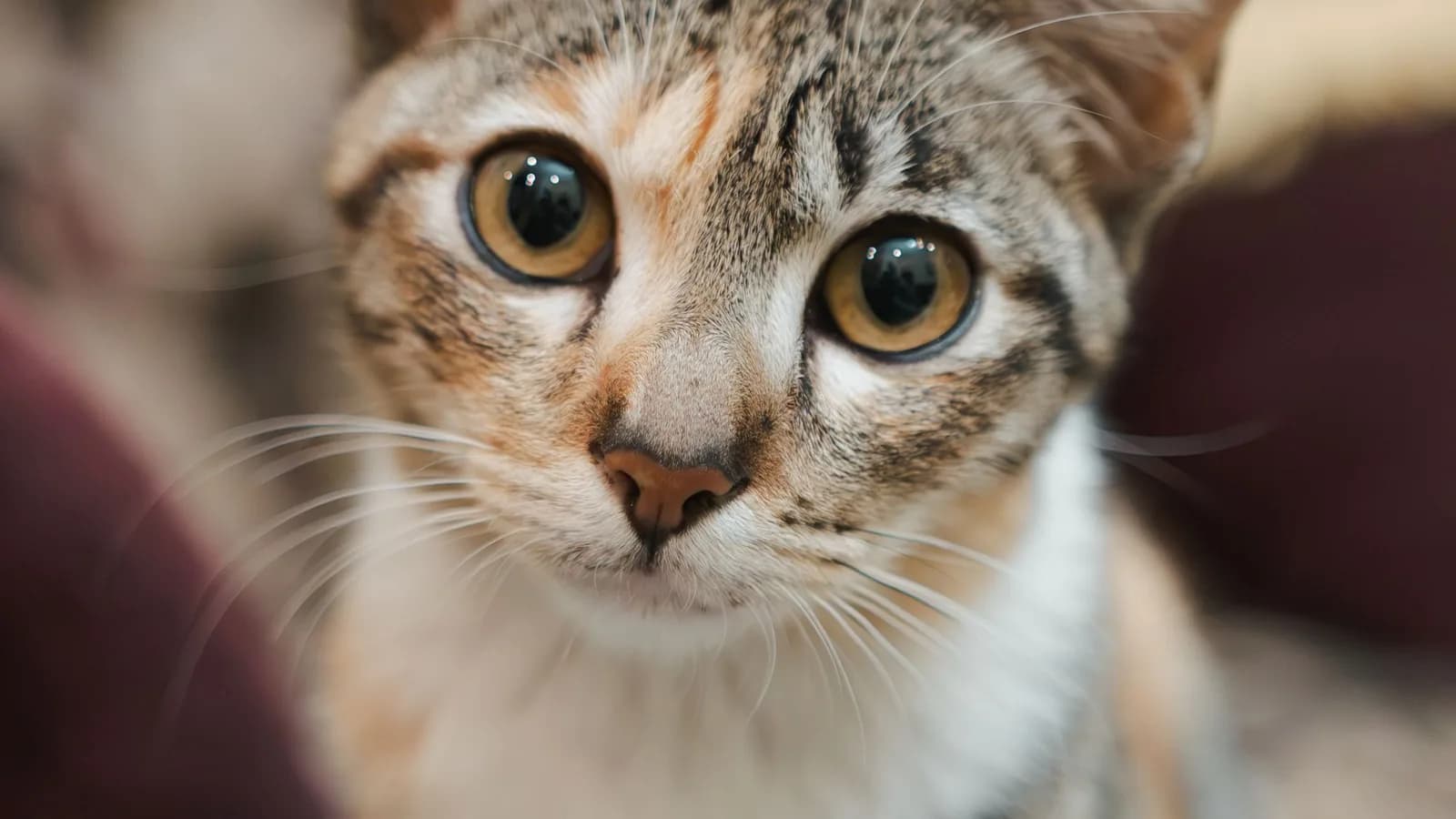
Article
Why Does My Cat Stare at Me? A Staring Professional Explains
You are being watched, and it is mostly a compliment. Cookie explains the science of cat staring: hunger o'clock, the peer-reviewed slow blink, hard stares, and the stare that needs a vet.
Read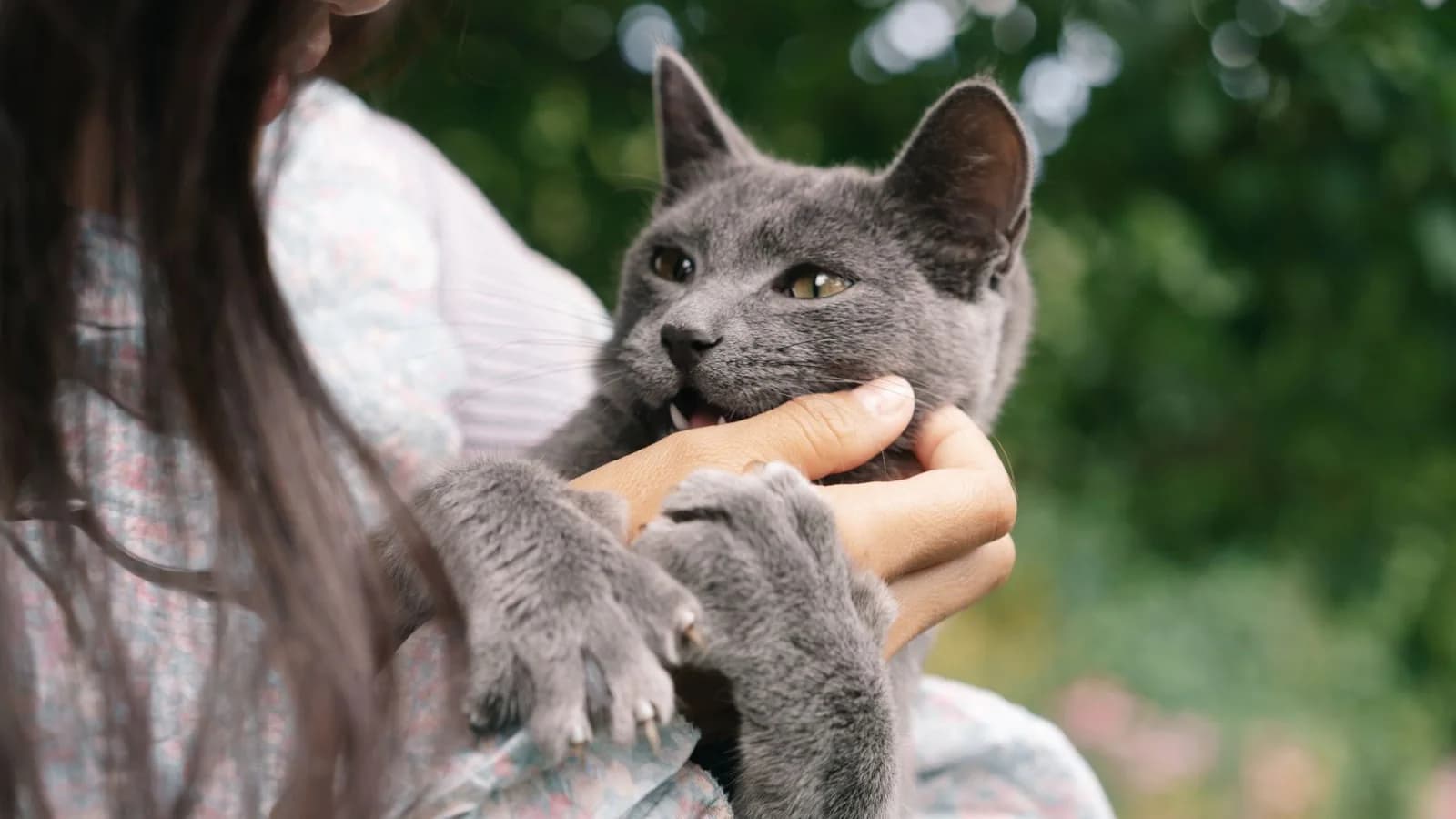
Article
Why Does My Cat Bite Me? The Five Different Reasons
A play bite, a fear bite and a pain bite need three different responses, and the wrong one makes it worse. How to tell them apart, and when it is a vet visit rather than a training problem.
Read
The floor belongs to our members. Keep it kind, links are not allowed, and images go through moderation before anyone else sees them.