

Why Do Cats Knock Things Over? A Professional Explains His Art
Hunting practice, a paw that asks questions, boredom, and you arriving on cue: the four documented reasons cats knock things over, from an editor-in-chief who calls it art.
Published August 28, 2026Updated September 8, 2026 7 min read

Contents
Your glass did not fall. It was dismissed. As the editor-in-chief of this magazine and a four-time regional champion in the tabletop discipline, I can finally explain what you people keep calling a problem. My writers insisted this page carry actual science, which is insulting but contractual, so here it is: cats knock things over for four documented reasons. Hunting practice, because your pen moved like prey money. Investigation, because the paw is how we ask questions. Attention, because you sprint over every single time, which is adorable. And boredom, because somebody bought a decorative mouse zero times this month.
One honest note before the artistry resumes, because this magazine is contractually fact-checked: nobody has ever run a dedicated, peer-reviewed study on cats knocking objects off surfaces. Catster's vet-reviewed piece on the topic admits it straight out: no serious studies exist, only well-supported explanations from veterinarians and behavior specialists. What follows is the well-supported part, with the guesswork labeled as guesswork. You are welcome. Snacks accepted.
The four reasons at a glance
| The reason | What it looks like | What actually helps |
|---|---|---|
| Hunting practice | A slow paw-pat, then the swat; the eyes track the fall | Daily play with toys that move like prey |
| Investigation | A light tap first, sniffing, whiskers forward | Nothing; this is a cat reading an object |
| Your attention | Eye contact with you, THEN the push | Stop rewarding it; reward calm instead |
| Boredom | Repeat performances, usually when the house is dull | More to do: play sessions, climbing space |
It moved once. That was legally binding
Everything on your shelf is prey that has not confessed yet. The behavior specialists my staff interviewed agree with me, in their own dialect. Stephen Quandt, a certified feline training and behavior specialist in New York City, puts it this way for Chewy: motion triggers a cat's predatory instincts, so setting something in motion appeals to that predatory nature. Dr. Sam Gilbert, a veterinarian writing for Zoetis, calls tabletop objects practice targets for natural hunting skills, with the movement delivering the rush.
The paw-pat itself has a . Describing how cats handle prey and prey-like toys, feline behavior specialist LeeAnna Buis notes that when the thing stops moving, a cat may bop it a few times to get it moving again. That is the move your coaster receives. Is it alive? No? Make it be alive. Off the edge it goes, and gravity, my favorite assistant, finishes the job. Cat behaviorist Mieshelle Nagelschneider compares the whole genre to a toddler dropping items from a high chair for the thrill of it, which I resent and cannot refute.
There is real, peer-reviewed science next door to this. Cats respond to toys with prey characteristics, small, fast-moving, complex in texture, and a 1998 study in Applied Animal Behaviour Science by Hall and Bradshaw found that hunger cranks object play up: hungrier cats played more intensely with objects, exactly as they would hunt more urgently. Play and hunting run on shared wiring. Your desk is simply where the wiring meets your stapler. Zoomies run on a cousin of the same circuit, if you want the full energy audit.
The paw is how he asks questions
Cats do their close reading by touch. Veterinary sources commonly describe cats as farsighted at close range, with the fine detail work handed off to whiskers and paws: whisker follicles are packed with nerve endings that register the slightest contact and air movement, and a paw pat reports back on weight, texture, and whether the object intends to fight. So the first tap on your figurine is not violence. It is scholarship, the same close-range toolkit our body language guide decodes at the other end of the cat.
Sometimes the scholarship concludes that the object should be on the floor. Peer review is harsh. I said what I said.
You looked. That counts as payment
Tess · Behavior desk
House rule before this section runs away: it is not spite. Every credentialed source we reviewed says the same thing, cats run on instinct and reinforcement, not revenge, and they do not connect your reaction to any idea of wrongdoing. What really happened is simpler. The crash made you appear, negative attention is still attention, and the lesson stuck.
Cookie · Editor-in-chief
She says reinforcement, I say curriculum. It took me three days to train my human to leave the sofa on the first crash. Three days. Some editors ship a magazine. I ship trained humans.
Here is the part my lawyers advised me to skip. Cats learn fast, and what we learn fastest is what works on you. Chewy's behavior piece describes cats who deliberately knock items off counters to gain attention, sometimes holding eye contact while they do it, because previous performances earned a quick response. Dr. Hannah Godfrey, a veterinarian writing for Cats.com, closes the loop: negative attention is still attention, so rushing over to scold and tidy up may actually have rewarded the behavior. You thought you were the audience. You were the vending machine.
Cat behavior author Pam Johnson-Bennett files knocking things off tables in the same drawer as meowing at you, pawing at you, and figure-eight leg weaving: attention-seeking behaviors, often fed by inconsistent schedules or too much time alone, with a rule-out first if anything else about the cat has changed. A cat whose habits shift suddenly is a vet question before it is a training question. Her anti-punishment line is blunt: punishment creates fear and confusion and damages the bond, and even scolding counts as attention.
A bored hunter invents a job
An indoor cat with nothing to hunt does not stop being a hunter. It gets creative, which is my polite word for your missing chess pieces. Quandt again: cats are easily bored, and knocking things over becomes a type of play, with the fix being something better to do. Dr. Gilbert points at environments without dedicated vertical territory, a cat tree, climbing shelves, as the ones where tabletop percussion thrives. The profession's reference document agrees in principle: the 2013 environmental-needs guidelines from the feline veterinary associations and ISFM, as summarized in the veterinary literature, rank play and predatory outlets as needs, not luxuries, and link unmet needs to problem behavior in indoor cats.
Science even measured how fast we get bored of one toy. In a 2002 follow-up study, as reported in its published summary, cats offered the same toy over three sessions nearly stopped playing with it, then erupted back into action when a different toy appeared in session four. The urge to play had never left. The toy had simply stopped being interesting. Rotate the toys, humans. We are not difficult. We are curators.
How to end the tabletop era, politely
Zoe · Community desk
Reader mail says half of you have a cat that waits for eye contact before the push, and the other half hold their shelves together with museum putty. Keep the stories coming; the tabletop hall of fame is filling up nicely.
Cookie · Editor-in-chief
I do not compete in amateur brackets. But fine, publish their little stories. My personal best is a full pen cup in one motion, six pens, one eraser, zero admissible witnesses. Trophies may be submitted with snacks attached, or not at all.
- Step 1: Feed the hunter properly. One or two real play sessions a day with a wand toy that darts and hides like prey, ending in a catch. A satisfied hunter files fewer field reports from your shelves.
- Step 2: Fire yourself as the prize. If the crash summons you, the show gets renewed. Stay boring when gravity wins, then hand out attention when the cat is calm and off the counter. Our training guide walks the same ignore-and-redirect logic through every classic scenario.
- Step 3: Give the paw a better job. Rotating toys, puzzle feeders, a cat tree by the window, climbing room. The guidelines call this meeting environmental needs. I call it basic tribute.
- Step 4: Move the irreplaceable. Museum putty exists, shelves have backs, and your grandmother's vase has no business on the runway. Managing the environment is not defeat. It is insurance.
- Step 5: Never punish. No yelling, no squirt bottle. It teaches fear, not physics, and the behavior specialists are unanimous that it damages the relationship without fixing the shelf. The same rule holds when teeth get involved instead of paws.
What to take away
- Cats knock things over for four documented reasons: hunting practice triggered by motion, close-range investigation by paw, learned attention-seeking, and boredom in under-stimulated indoor cats.
- No dedicated peer-reviewed study exists on cats knocking objects off surfaces; the explanations come from veterinarians and certified behavior specialists, and the closest real science is object-play research.
- Motion is the trigger: a 1998 Applied Animal Behaviour Science study found hungrier cats play harder with objects, evidence that play and hunting share wiring.
- Reacting to the crash, even to scold, rewards the behavior; negative attention is still attention, so reward calm moments instead and let the performance go unreviewed.
- The fix stack is daily prey-style play, rotated toys, vertical space like a cat tree, valuables moved or secured, and zero punishment.
- A cat that suddenly starts knocking things over alongside other changes in appetite, energy, or habits is a vet question first.
 The vet's take
Veterinary review
Are you a vet?
Your professional read belongs here: every verified practitioner can leave a note, published once our editors have reviewed it.
Sign in and get your license number verified. We check it in the public register, we never ask for or keep a copy of your diploma, and your number is never published.
Frequently asked questions
Why do cats knock things off tables?
Four documented reasons: practicing hunting moves on objects that move like prey, investigating things by paw the way cats read anything at close range, getting your attention because the crash reliably summons you, and boredom when an indoor cat has too little to do. Several reasons can stack in the same cat, and no single study has tested the behavior directly.
Is my cat knocking things over out of spite?
No. Every behavior specialist and veterinary source reviewed for this page rejects the spite reading: cats act on instinct and reinforcement, not moral judgment, and they do not connect your reaction to an idea of wrongdoing. What looks like spite is usually a cat that has learned the crash works: you appear, food sometimes appears, the room gets interesting.
How do I stop my cat from knocking things over?
Remove the payoff and meet the need. Do not react when something falls; give attention when the cat is calm instead. Add one or two daily play sessions with a moving wand toy, rotate toys so they stay novel, and add climbing space. Move or secure objects you cannot afford to lose. Punishment is the one tool the specialists unanimously reject.
Why does my cat look at me while pushing things off the table?
Because you are part of the experiment. Behavior sources describe cats holding eye contact mid-push as a learned attention move: earlier performances taught the cat that this act produces a fast human response. The look is not defiance; it is checking whether the button still works.
Should I punish my cat for knocking things over?
No. Behavior specialists are unanimous that punishment, including yelling and squirt bottles, creates fear and stress, damages your bond, and does not address why the cat does it. Even scolding counts as attention, which can reward the behavior. Boring reactions plus better outlets work; drama does not.
 Community questions
Got a question this page doesn't cover? Ask it: the best ones get published here with their answer.
This is information, not veterinary advice, and it cannot tell you what is wrong with your cat. Our rule is a simple one: if something is wrong with your cat, call your vet, and call an emergency clinic if it is out of hours. Nothing you read here is a reason to wait.
Medical information applies to every reader. Prices, legal duties and common practice do not: unless stated otherwise, they are given for the United States, and they differ in the UK, Canada and Australia, and often between states or provinces. Check with your own vet and your own local authority.
Our sources
- Catster, why do cats knock things over (vet-reviewed by Dr. Paola Cuevas MVZ; the explicit no-dedicated-study admission)
- Cats.com, why do cats knock things off tables (Dr. Hannah Godfrey BVetMed MRCVS; negative attention is still attention)
- Chewy, why do cats knock things over (Stephen Quandt CFTBS on motion and boredom; Mieshelle Nagelschneider's high-chair comparison)
- Zoetis Petcare, why cats knock things over (Dr. Sam Gilbert VMD; hunting practice and vertical-space enrichment)
- Cat Behavior Associates, attention-seeking behavior in cats (Pam Johnson-Bennett; the attention list and the anti-punishment rule)
- Preventive Vet, cat play sessions using the prey sequence (LeeAnna Buis CFTBS FFCP; the bop-to-restart-movement pattern)
- Hall and Bradshaw 1998, the influence of hunger on object play by adult domestic cats (Applied Animal Behaviour Science; abstract)
- Hall, Bradshaw and Robinson 2002, object play in adult domestic cats: habituation and disinhibition (published summary)
- Ellis et al 2013, AAFP and ISFM feline environmental needs guidelines (JFMS; paraphrase-level)
- VCA Animal Hospitals, why do cats have whiskers (close-range sensing; paraphrase-level)

Worth keeping a paw on
Pin this guide
So you can find it the day you need it, and share it with someone whose cat does the same thing. One click and it sits in your board.
Pin it on PinterestAlso worth reading
All behavior →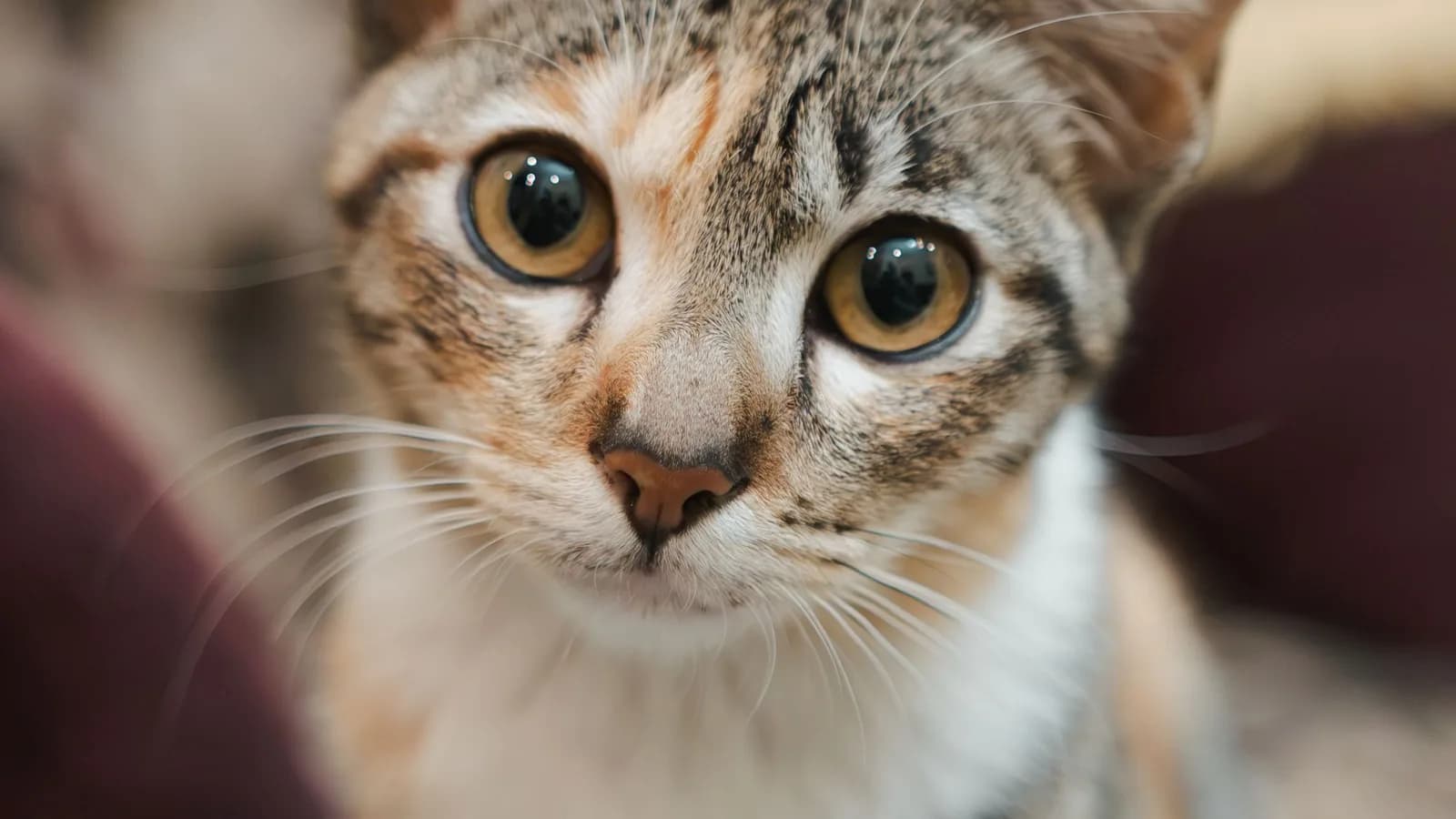
Article
Why Does My Cat Stare at Me? A Staring Professional Explains
You are being watched, and it is mostly a compliment. Cookie explains the science of cat staring: hunger o'clock, the peer-reviewed slow blink, hard stares, and the stare that needs a vet.
Read
Article
Why Does My Cat Bite Me? The Five Different Reasons
A play bite, a fear bite and a pain bite need three different responses, and the wrong one makes it worse. How to tell them apart, and when it is a vet visit rather than a training problem.
Read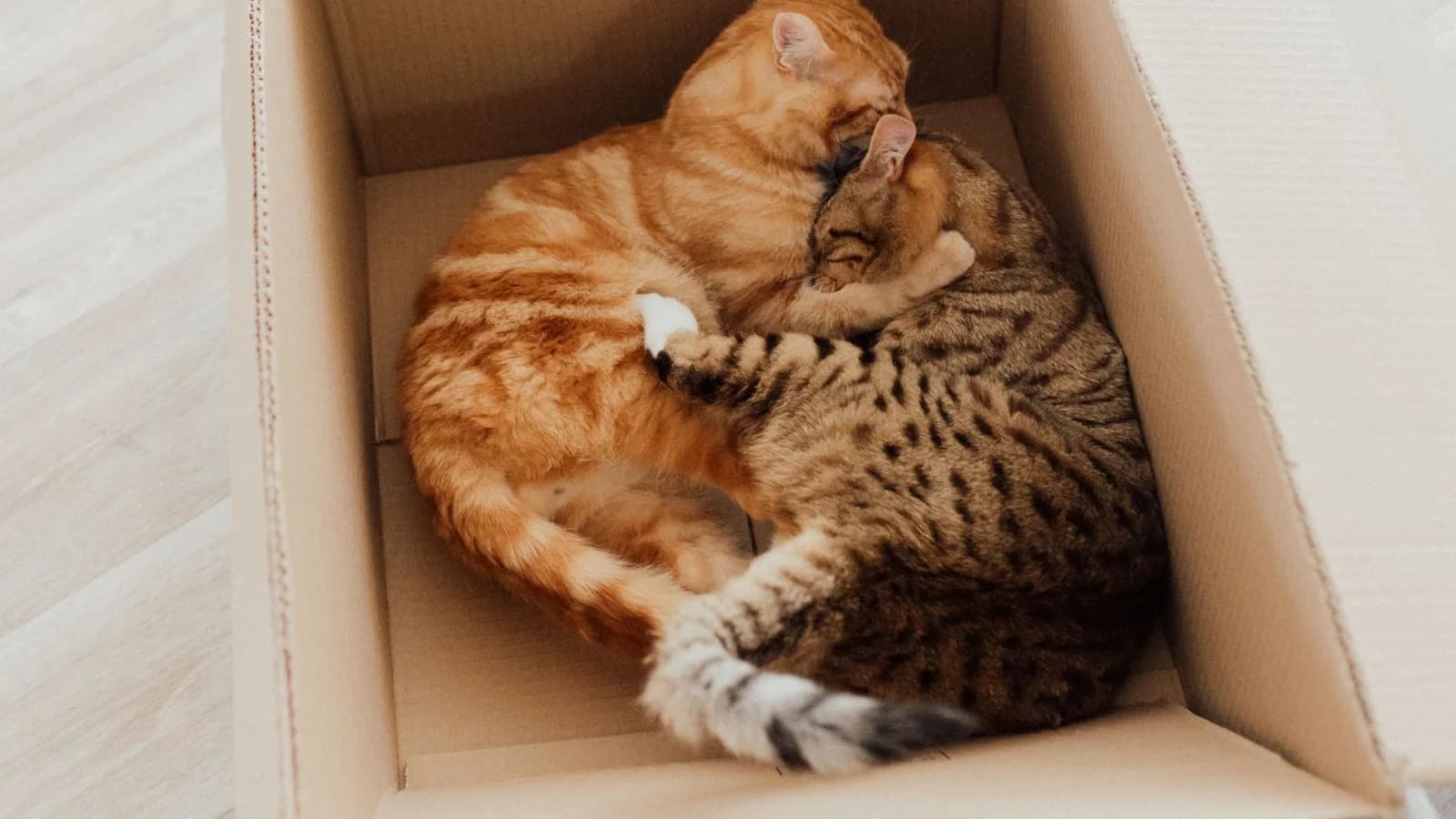
Article
How to Introduce Cats: The Staged Protocol That Works
Two cats do not work it out. The 2024 veterinary guidelines give a staged process with one governing rule: at the first sign of tension, go back a step.
Read
The floor belongs to our members. Keep it kind, links are not allowed, and images go through moderation before anyone else sees them.