

Why Does My Cat Bite Me? The Five Different Reasons
A play bite, a fear bite and a pain bite need three different responses, and the wrong one makes it worse. How to tell them apart, and when it is a vet visit rather than a training problem.

Published August 25, 2026Updated September 8, 2026 7 min read

Contents
Your cat is not being spiteful. Cats do not do spite.
What they do is bite for five genuinely different reasons, and that is the whole problem, because the right answer to one is close to the wrong answer to another. Redirect a play bite with a toy (our training guide shows how) and you have solved it. Try the same thing with a fear bite and you have made it worse. And if it is a pain bite, no amount of training helps, because the cat needs a vet.
So this page is not a list of tips. It is a way of telling the five apart.
The rule that comes before all five
A cat that starts biting when it never used to is a medical question first.
Any cat in pain can bite, including one that has never bitten anyone. Dental disease and arthritis are the usual suspects, and neither is visible from across the room. International Cat Care puts it as a standing instruction rather than a suggestion: a cat showing defensive behaviour it did not show before, or showing it persistently, means contacting your vet.
Get that ruled out before you spend a month on a training plan. Anything that worries you about your cat is a reason to call your vet, and out of hours, an emergency clinic. Nothing here is a reason to wait.
1. Play and predatory biting
The most common kind aimed at owners, and the easiest to fix.
It looks like hunting because it is hunting: stalking, waiting behind furniture, then a pounce at a hand or an ankle that is moving. Tail thrashing and ears pinned just before the strike.
It is commonest in cats under two, and notably common in cats that were orphaned, weaned early, or grew up without littermates, because littermates are where a kitten learns how hard is too hard.
The fix is not to punish it, it is to move the target. If your hands and feet have ever been the toy, they are on the list of toys. Take them off it, and give the cat something at the end of a stick instead, so there is a wand's length between its teeth and your skin. The same motion-triggered circuit, aimed at objects instead of ankles, is why cats knock things off tables.
2. Petting-induced biting, and the warning you are missing
This is the one people describe as "he turned on me for no reason", and it is almost never for no reason. The reason is that the stroking became too much, and the cat said so several times before it used teeth.
Repetitive touch can turn aversive with repetition. The bite is usually an attempt to end the interaction, not to hurt you.
It also matters enormously where you are stroking. International Cat Care's model splits a cat into three zones:
| Zone | Where | Most cats |
|---|---|---|
| Green | Cheeks, chin, base of the ears, head | Welcome |
| Amber | Body, along the back, tail | Tolerated by some, not all |
| Red | Legs, belly, base of the tail | Usually not welcome |
And before the bite, watch for this sequence. It is short, and it is the part owners miss:
- A sudden head turn towards your hand.
- The tail starting to twitch or flip.
- Ears rotating backwards, or flattening.
- The skin along the back rippling.
- Restlessness, a shift of weight, pupils widening.
Stop at the first sign, every time. Not at the third, and not after checking whether the cat settles. A controlled study in 2021 found that owners taught a simple protocol built on giving the cat choice and watching its attention produced a statistically significant drop in aggressive and conflict behaviour compared with the same cats handled the usual way. The technique is not complicated. Doing it consistently is what works.
3. Fear biting
A frightened cat that believes it cannot escape will hiss, spit, swat, and bite if cornered. The posture reads differently from play: crouched low, ears flattened sideways rather than pinned back, tail tucked, pupils fully dilated.
The response is distance and time. Not consolation, which rewards the state rather than calming it, and not looming over the cat to reassure it.
4. Redirected biting, which looks like nothing at all
The most alarming category, because from the outside it appears completely unprovoked.
A cat gets worked up by something it cannot reach: a cat outside the window, a noise, a fight it has just had. It cannot get at the thing, so it turns on whoever is nearest. Sometimes hours later, when everyone has forgotten there was a trigger at all.
These bites are not inhibited. They can be full force.
The fix is upstream: block or remove the trigger, and do not physically intervene with a cat that is still aroused. Give it a room and a closed door and let the adrenaline drain.
5. Kitten teething, which is not aggression at all
Baby teeth come in from about three weeks and are all present by six to eight weeks. Then the second act: from roughly three to four months old, adult teeth push the baby teeth out, and that runs for another two to three months, with all 30 adult teeth in by five or six months.
During that window kittens mouth and chew more than usual, may go off hard food, and may object to having their face handled. None of it is aggression, and all of it passes.
What about "love bites"?
The gentle nip that comes with purring, kneading and slow blinking is real. Owners report it constantly. Both halves of that package have their own pages: why cats knead and why cats lick you decode the affection the nip interrupts.
We looked for an institutional veterinary source that names and defines it, and found none: not the American Association of Feline Practitioners, not Cornell, not the , not International Cat Care. Every source we found for the term is a consumer pet site.
So we will say what it probably is, and label it as our reading rather than a finding: an overlap of play behaviour with the grooming-style contact cats use on each other. If it does not break skin and the cat is relaxed throughout, it is not the same event as anything above.
The half nobody writes about: a cat bite is a medical matter for you too
Cat teeth are needles. They make a small hole that closes over, and they push bacteria deep into tissue while leaving almost nothing to see on the surface. That is precisely why cat bites are managed differently from dog bites in human medicine.
| Fact | Figure |
|---|---|
| Cat bites that become infected | About 30% |
| Most common bacterium in infected cat bites | Pasteurella multocida |
| Typical time to infection showing | 12 to 18 hours |
Australia's public health service puts the local figure as high as 8 in 10.
The point of those numbers is that the wound looking fine is not reassurance. Infection does not track how bad the puncture looks on the day. A cat bite that breaks the skin, especially on a hand, a joint, or the face, is worth a call, and a bite in someone with a weakened immune system, diabetes, or a joint replacement is worth one straight away.
Where to call, by market:
| Who to contact | |
|---|---|
| United States | Your doctor or an urgent care clinic; the CDC advises seeking care for any bite that breaks skin |
| United Kingdom | NHS 111, or A&E for a deep wound, heavy bleeding, or a bite to the face or hand |
| Canada | Your family doctor, a walk-in clinic, or the provincial health line |
| Australia | Your GP, or triple zero for a severe bite |
None of that is medical advice about your particular wound. It is a reason to ask someone qualified rather than watch and hope.
What not to do, whichever reason it is
- No punishment. It does not teach a cat what you want; it teaches the cat that hands are unpredictable, which produces more biting, not less.
- No scruffing. The feline-friendly handling guidelines from the American Association of Feline Practitioners are explicit about this: it is a restraint that increases fear.
- No squirt bottle. You become the thing that sprays, and the cat learns to avoid you rather than to stop biting.
- Do not pull your hand away fast. A moving hand is prey. Go still, then withdraw slowly.
What to take away
- A new biter is a vet question before it is a training question.
- Play biting is fixed by moving the target off your hands, not by punishing the cat.
- Petting bites come after several warnings. Learn the five signs and stop at the first.
- A fear bite needs distance. A redirected bite needs the trigger removed, not a confrontation.
- Kitten teething is not aggression and it ends.
- Your own bite wound matters more than it looks. About a third get infected, and hands are worse.
More on what your cat is telling you before it gets to teeth: our guide to a cat's whiskers covers one of the signals people misread.
 The vet's take

Veterinary review
Are you a vet?
Your professional read belongs here: every verified practitioner can leave a note, published once our editors have reviewed it.
Sign in and get your license number verified. We check it in the public register, we never ask for or keep a copy of your diploma, and your number is never published.
Frequently asked questions
Why does my cat bite me for no reason?
There is almost always a reason and it usually arrived before the bite. The two most common are petting-induced biting, where the cat gave you several signals to stop and you did not read them, and redirected aggression, where something else wound the cat up and you were simply nearest. A bite from a cat that never used to bite is a reason to see a vet, because pain is a common cause.
Why does my cat bite me when I pet him?
Because the stroking became too much, or you moved into a zone the cat does not want touched. Most cats welcome the cheeks, chin and head, tolerate the back with reservations, and object to the belly, legs and base of the tail. Watch for the head turn, the tail flick and the ears going back, and stop at the first one.
Do cats bite out of affection?
Owners describe a gentle nip alongside purring and kneading, and it does seem to be a real thing. We could not find any institutional veterinary source that names it as a category, so treat it as an overlap of play and grooming-type contact rather than a documented behaviour. If it never breaks skin and the cat is relaxed, it is not the same as the reasons above.
Should I punish my cat for biting?
No. Punishment, scruffing and squirt bottles all make biting more likely, not less, because they teach a cat that human hands are unpredictable. The feline-friendly handling guidelines from the American Association of Feline Practitioners are explicit about scruffing in particular.
Is a cat bite dangerous to humans?
More than it looks. Cat teeth make deep punctures that close over, so bacteria go in and stay in. About 30% of cat bites become infected, the most common culprit is Pasteurella multocida, and infection typically shows within 12 to 18 hours. A bite that breaks skin, especially on a hand or the face, is worth a call to a doctor.
Why does my kitten bite so much?
Partly teething, which runs from about three to six months as adult teeth push the baby teeth out, and partly because kittens learn bite pressure from their littermates. A kitten raised without siblings, orphaned, or weaned early often never learned it, and needs a wand toy rather than a hand to practice on.
 Community questions
Got a question this page doesn't cover? Ask it: the best ones get published here with their answer.
This is information, not veterinary advice, and it cannot tell you what is wrong with your cat. Our rule is a simple one: if something is wrong with your cat, call your vet, and call an emergency clinic if it is out of hours. Nothing you read here is a reason to wait.
Medical information applies to every reader. Prices, legal duties and common practice do not: unless stated otherwise, they are given for the United States, and they differ in the UK, Canada and Australia, and often between states or provinces. Check with your own vet and your own local authority.
Our sources
- Rodan et al 2011, AAFP and ISFM feline-friendly handling guidelines (on restraint and scruffing), J Feline Med Surg
- Haywood et al 2021, providing humans with practical best-practice handling guidelines during human-cat interactions (the controlled trial), Frontiers in Veterinary Science
- Cornell Feline Health Center, feline behavior problems: aggression
- ASPCA, aggression in cats
- International Cat Care, cat-friendly interaction (the green, amber and red touch zones)
- International Cat Care, problem behaviour in cats (pain as a driver of new defensive behaviour)
- AVSAB position statement on the use of punishment for behavior modification in animals
- CFA, odontiasis and kitten teething (the eruption timetable)
- Indramohan, Marietta, Collier, Animal Bites, StatPearls (infection rates, Pasteurella carriage, the 12 to 18 hour window)
- Ortiz, Lezcano 2023, dog and cat bites: rapid evidence review, American Family Physician 108(5)
- CDC, cats (Healthy Pets, Healthy People): the US infection-rate range and when to seek care
- NHS, animal and human bites (the UK 111 and A&E thresholds)
- healthdirect Australia, dog, cat, bat and human bites (the Australian figure and the triple zero threshold)
- Nova Scotia 811, cat and dog bites (the Canadian provincial health-line route)

Worth keeping a paw on
Pin this guide
So you can find it the day you need it, and share it with someone whose cat does the same thing. One click and it sits in your board.
Pin it on PinterestAlso worth reading
All behavior →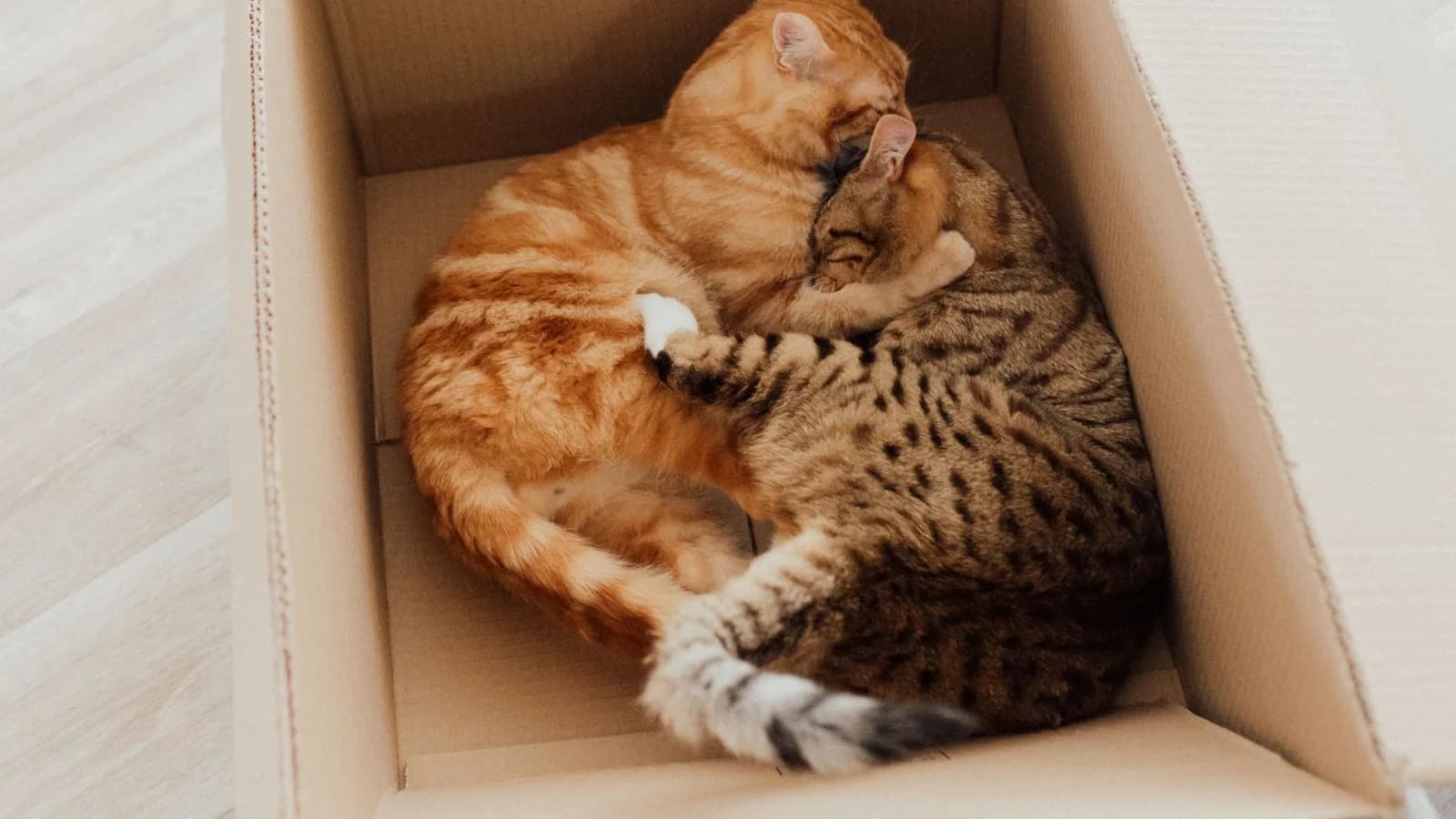
Article
How to Introduce Cats: The Staged Protocol That Works
Two cats do not work it out. The 2024 veterinary guidelines give a staged process with one governing rule: at the first sign of tension, go back a step.
Read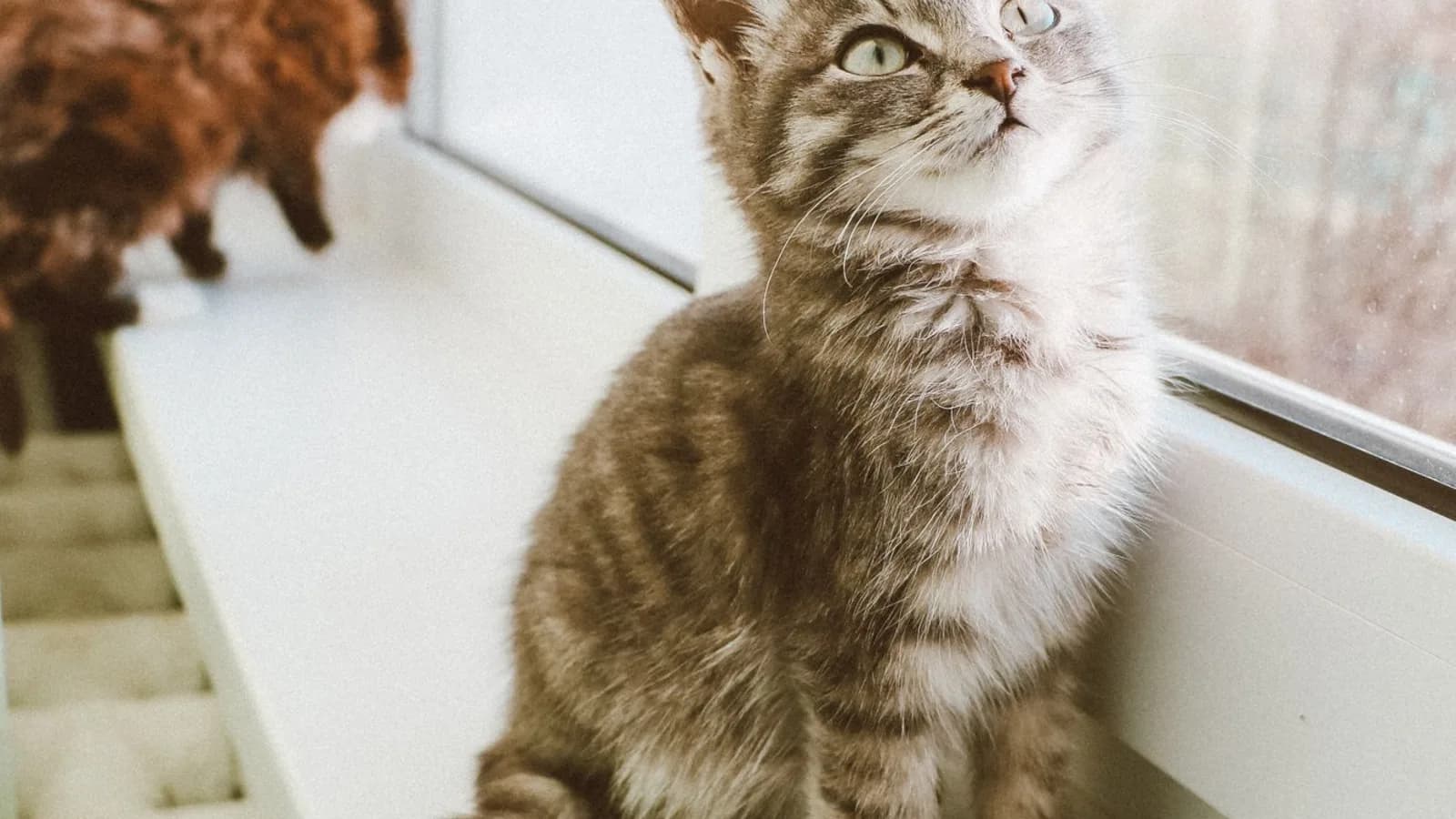
Article
Cat Spraying: What the Puddle on the Wall Is Trying to Say
Yes, female cats spray too. How to tell marking from a medical problem in one look, what the spot on the wall tells you, and the fixes with data behind them.
Read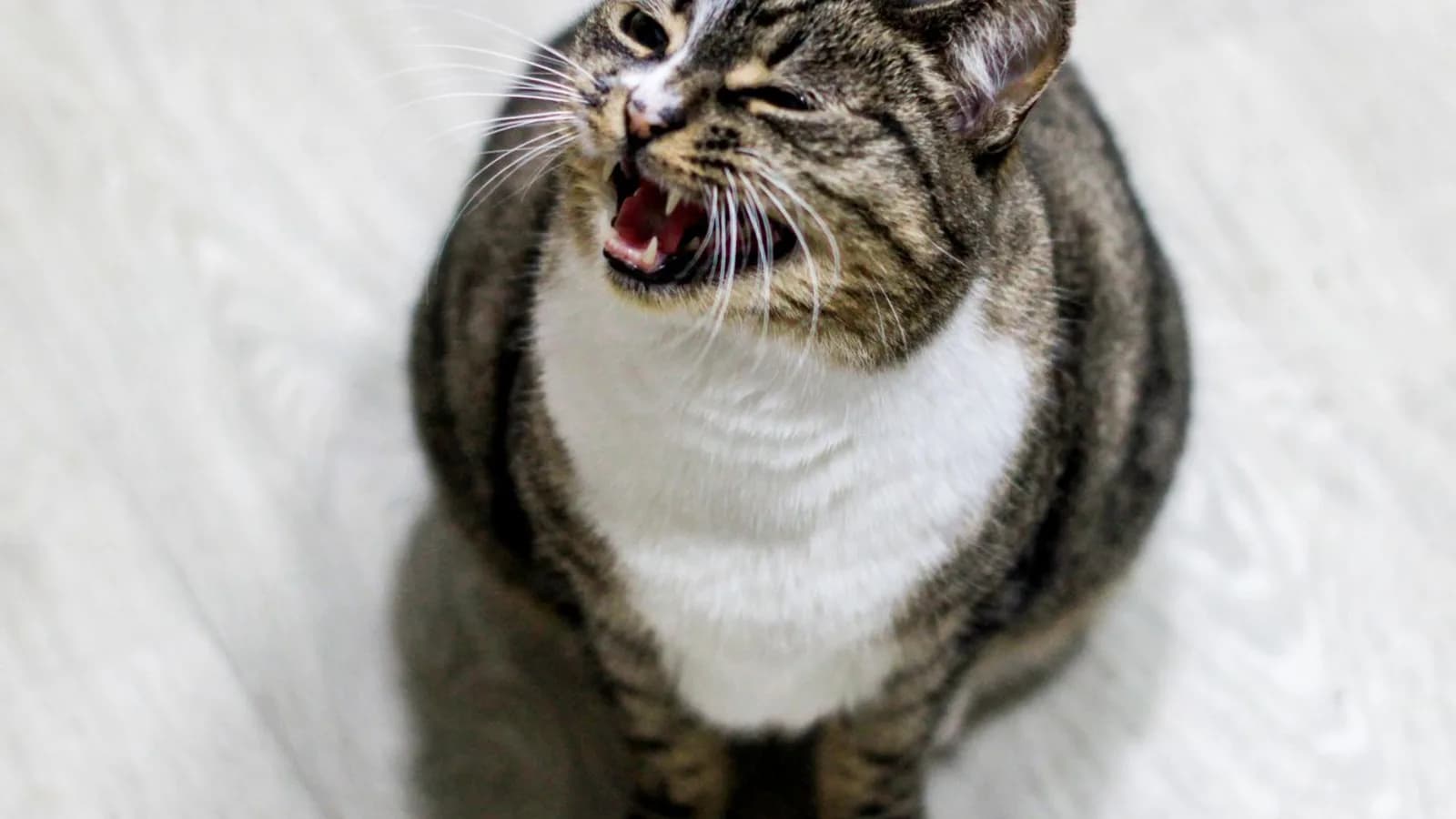
Article
Cat Meowing at Night: The Age of the Cat Decides Which Page You Are On
A young cat crying at night is usually training you. An older cat starting is a symptom until checked: six named causes, most treatable. The honest fork.
Read
The floor belongs to our members. Keep it kind, links are not allowed, and images go through moderation before anyone else sees them.