

Cat Meowing at Night: The Age of the Cat Decides Which Page You Are On
A young cat crying at night is usually training you. An older cat starting is a symptom until checked: six named causes, most treatable. The honest fork.

Published August 27, 2026Updated September 8, 2026 8 min read
Contents
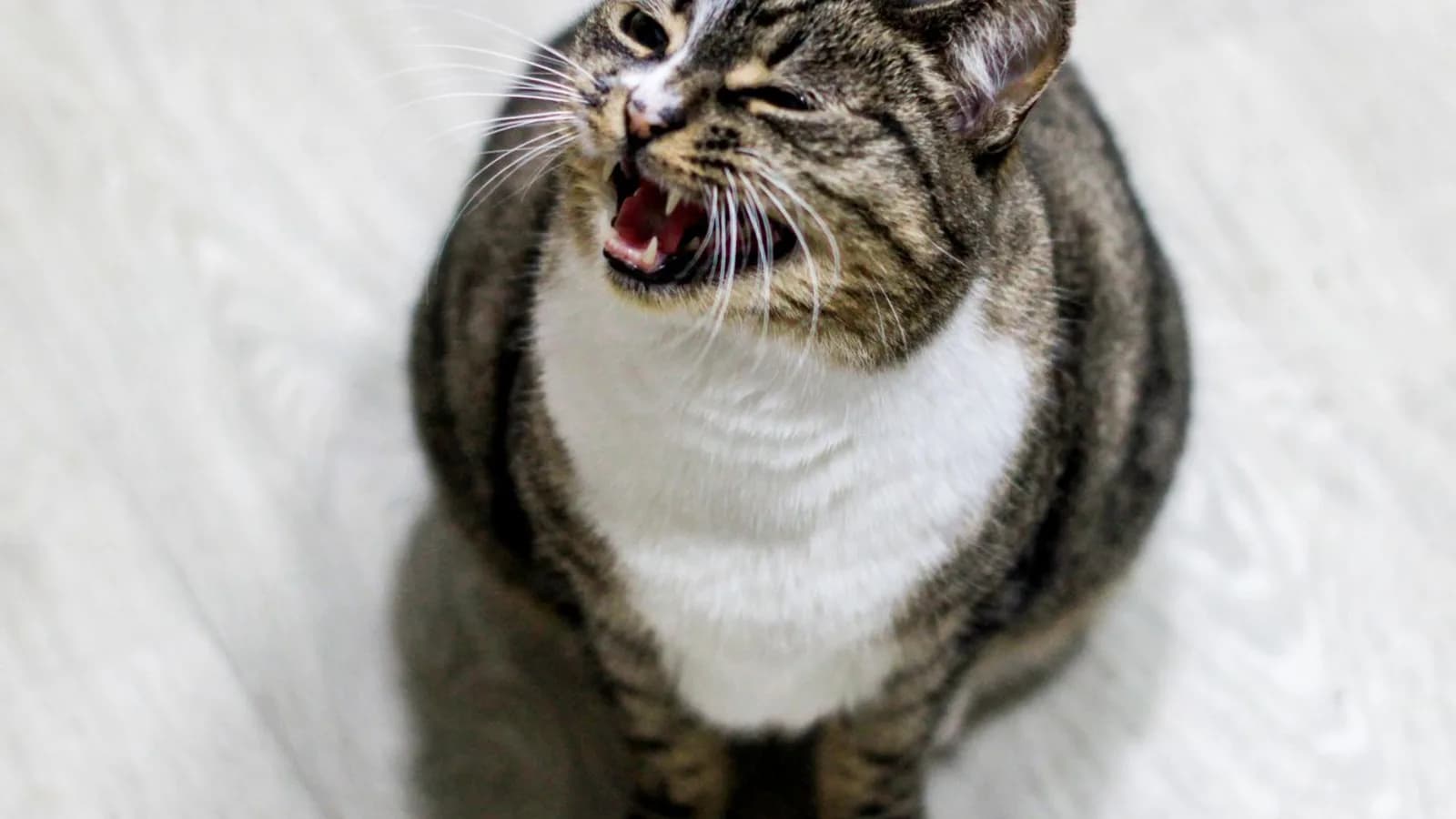
A cat crying at 3 a.m. is one search query and two entirely different problems. A young, healthy cat serenading the hallway is almost always some blend of biology and successful training, yours, by the cat. An older cat that starts crying at night is a different story, and a veterinary review says it in one sentence we will spend half this page unpacking: the most common causes are cognitive dysfunction, osteoarthritis, high blood pressure, hyperthyroidism, deafness and brain tumors, and these conditions frequently overlap. Most of them are treatable. So read the age first, and this page forks accordingly.
One emergency outranks the fork entirely, at any age: a cat crying while straining in or near the litter box, with little or nothing coming out, can have a urinary blockage. That kills in as little as 24 to 48 hours untreated, it is most common in males, and it is a now emergency, not a morning one. Our cat UTI guide carries the full picture.
The young, healthy night singer
Start with biology. Cats are : their activity peaks ride dawn and dusk, the working hours of the rodents and birds they evolved to hunt. A 2022 tracking study confirmed the twilight activity peaks in both indoor and outdoor cats, and added a detail that matters for your bedroom door: indoor cats' feeding rhythms were shaped more by human interaction than outdoor cats' were. Your indoor cat's schedule is, measurably, partly built around you. Where the other 16 hours go, and why nobody has actually measured them, is our guide to why cats sleep so much.
Then add learning. Cats are experts at shaping their sounds to move humans; in one famous study, cats embedded a high-pitched, cry-like component inside their food-solicitation purrs, and listeners, cat owners or not, rated those purrs as more urgent and harder to ignore. The night version is simpler: the cat cried, you got up, the cat filed the result. Every response, even a scolding, is a payout. The purr half of that trick, and everything else the sound can mean, lives in our guide to why cats purr.
The 's playbook for the demanding-but-healthy vocalist, condensed:
- Attention goes to the quiet cat. Respond when she is silent, not mid-aria.
- Feed at fixed times, so asking at other hours becomes visibly futile, or let an automatic feeder take the 5 a.m. shift and the blame.
- Fill the evening: a proper play session and a meal before bed stack the biology in your favor.
- Never scold or hit a cat for meowing. It adds stress and teaches nothing useful.
And one classic special case: an unspayed female in heat yowls, long and loud and mostly at night, by design. Spaying ends that particular concert.
A young cat whose night crying is genuinely new and unusual still earns the 's blanket rule, which is also ours: a cat that meows a lot should be checked by a vet before anyone calls it behavioral.
The older cat: new night crying is a symptom until proven otherwise
Here the data gets specific. In two large owner surveys of cats aged 11 and up, run years apart by the same research group, over a third of senior cats were reported crying at night, 32% in the first cohort and 43.6% in the second, and the mean age when the crying increased was 13. The same veterinary literature names night crying as one of the two most frequent behavior complaints about old cats, alongside litter box lapses. This is a common problem, and the least useful response to it is the most common one. In the words of the review that anchors this section: owners and vets often mistake these changes for normal aging, so many treatable conditions go untreated.
Run the six causes, with where each leads:
- Hyperthyroidism: night-time vocalizing is relatively common in hyperthyroid cats, per Cornell, riding along with weight loss despite a big appetite, thirst, and restlessness. A blood test answers it, and four treatments exist. Our hyperthyroidism guide covers all of it.
- High blood pressure: often secondary to kidney disease or the thyroid itself, and named right beside them in the vocalization literature. Blood pressure is a standard senior-cat check; the kidney half lives in our kidney disease guide.
- Arthritis: the quiet one. In a radiographic study, roughly three in four cats screened had degenerative joint disease, and owners had noticed lameness in two cats out of 101. Cats hide joint pain almost perfectly, which cuts both ways at night: a crying cat is not necessarily in pain, and a not-limping cat is not necessarily pain-free. Our arthritis guide takes it from there.
- Deafness: a documented member of the six-cause list. The common description, that a cat losing its hearing calls louder and longer, especially in a dark quiet house, is a pattern behaviorists describe rather than a measured finding, and we label it as exactly that.
- Brain tumors: rare, on the list for completeness, and covered by the same instruction as everything else here: new behavior in an old cat goes to the vet.
- Cognitive dysfunction syndrome: the big one, and the one this site had not yet covered. It gets its own section.
Cognitive dysfunction: feline dementia, honestly told
CDS is the cat's version of age-related cognitive decline, and the brain research behind it is real: studies of affected geriatric cats describe beta-amyloid deposits and vascular changes, the same molecular neighborhood as human dementia research. Cornell's sign list is the practical one: spatial disorientation, altered sleep-wake cycles, staring blankly at walls, litter box lapses, indifference to food, and seemingly unprompted episodes of loud vocalizing, frequently in the middle of the night. Researchers compress the signs into the acronym VISHDAAL: vocalization, interaction changes, sleep changes, house soiling, disorientation, activity changes, anxiety, learning deficits.
How common is it? Honest answer: the most-quoted figures, cited by the field's leading researchers, are that around 28% of cats aged 11 to 14 show at least one geriatric-onset behavior problem, rising past 50% from age 15; a separate owner survey found rates from 36% in early seniors to 88% in cats aged 16 to 19. We flag that the first pair of figures traces back to a conference-era source rather than a fully indexed study, which is why we attribute it rather than carve it in stone. The direction is not in doubt: this is common, and it climbs steeply with age.
Why does a disoriented cat cry at night? The only study to ask owners directly, a small survey of 37 households with diagnosed CDS cats, median age nearly 16, found disorientation and attention-seeking tied as the leading perceived causes at 40.5% each, with hunger at 16.2% and pain named by just 2.7%. Two honest caveats ride along: two-thirds of those owners believed more than one cause was at work, and given how invisibly cats carry pain, that 2.7% may say more about what owners can see than about what cats feel. The same small study measured the human cost plainly: 62% of owners were being woken at night.
What helps, from the same literature: a night light for a disoriented cat, a radio playing low, synthetic pheromone diffusers, and above all an old-cat-proofed map: food, water, beds and litter boxes easy to reach, low-sided boxes, no need to take stairs in the dark. Cornell adds a diet rich in vitamin E and antioxidants, keeping routines stable, and thinking hard before adding a new pet to an old cat's world. Medication exists on the vet's side of the desk, Cornell notes anti-anxiety options, and several drugs in the research literature are off-label conversations, not shopping-list items.
What the vet visit looks like
For a senior cat with new night crying, the work-up is refreshingly concrete: a physical exam, bloodwork including thyroid hormone, blood pressure measurement, and a look at the joints. That short list covers most of the six causes in one appointment, and turns "just getting old" into either a treatment plan or genuine reassurance. Bring specifics: when the crying happens, what it sounds like, what else has changed, appetite, thirst, weight, sleep, litter habits.
What to take away
- In a young healthy cat, night meowing is biology plus learned success: the cat cried, someone got up, and the lesson stuck.
- The fix for a young night singer is structure: an evening play session ending in a meal, scheduled or automatic feeding, and attention paid only to a silent cat (the playbook).
- New night crying in a cat aged 11 or older is a symptom until proven otherwise: over a third of senior cats are reported crying at night, with a mean onset age of 13.
- The six documented causes in older cats are cognitive dysfunction, arthritis, high blood pressure, hyperthyroidism, deafness and, rarely, brain tumors; most of them are treatable.
- A cat crying while straining in the litter box with little or nothing coming out may have a urinary blockage, which can kill within 24 to 48 hours: go now, not in the morning.
- One senior work-up (bloodwork with thyroid, blood pressure, joints) covers most of the six causes in a single vet appointment.
 The vet's take

Veterinary review
Are you a vet?
Your professional read belongs here: every verified practitioner can leave a note, published once our editors have reviewed it.
Sign in and get your license number verified. We check it in the public register, we never ask for or keep a copy of your diploma, and your number is never published.
Frequently asked questions
Why does my cat meow at night?
For a young, healthy cat: crepuscular biology plus learned success, you got up, the lesson stuck. For a cat aged roughly 11 and up, especially if the crying is new: hyperthyroidism, high blood pressure, arthritis, deafness, cognitive dysfunction and, rarely, brain tumors are the documented causes, most of them treatable, and a vet visit sorts them.
My old cat suddenly yowls at night. Is it dementia?
It might be, and it might be several other things first: over a third of senior cats are reported crying at night, and the causes overlap. Cognitive dysfunction is common in cats past 15, but hyperthyroidism and high blood pressure produce the same night concert and answer to a blood test and a cuff. Check the treatable ones before settling on dementia.
Should I just ignore the meowing?
For a healthy young cat, structured ignoring works: reward silence, never mid-meow, and let a scheduled or automatic feeder absorb the food demands. For an older cat with new night crying, no: ignoring a symptom is how the review's warning comes true, treatable conditions going untreated as "just aging."
Does feeding my cat before bed stop night meowing?
It stacks the odds. A play session that ends in a meal before your bedtime works with the cat's hunting rhythm, and an automatic feeder can cover the dawn shift so you stop being the vending machine. Fixed times matter more than amounts: the point is making night requests visibly futile.
When is night crying an emergency?
When it comes with straining in or near the litter box and little or no urine, especially in a male cat: that picture fits urinary blockage, which can be fatal within 24 to 48 hours. Go now, not in the morning. Our cat UTI guide explains why.
What is feline cognitive dysfunction?
An age-related decline of brain function, with real neuropathology behind it, showing as disorientation, changed sleep cycles, house soiling, staring, anxiety and night vocalization. It is common past 15, it is a recognized diagnosis rather than a joke about senility, and while it is not curable, environment changes and vet-guided options genuinely soften it.
 Community questions
Got a question this page doesn't cover? Ask it: the best ones get published here with their answer.
This is information, not veterinary advice, and it cannot tell you what is wrong with your cat. Our rule is a simple one: if something is wrong with your cat, call your vet, and call an emergency clinic if it is out of hours. Nothing you read here is a reason to wait.
Medical information applies to every reader. Prices, legal duties and common practice do not: unless stated otherwise, they are given for the United States, and they differ in the UK, Canada and Australia, and often between states or provinces. Check with your own vet and your own local authority.
Our sources
- Sordo et al 2020, prevalence of disease and age-related behavioural changes in cats: past and present (Veterinary Sciences)
- Gunn-Moore 2011, cognitive dysfunction in cats: clinical assessment and management (the six-cause review)
- Cerna et al 2020, potential causes of increased vocalisation in elderly cats with cognitive dysfunction syndrome (the 37-owner survey)
- Parker et al 2022, comparison of locomotor and feeding rhythms between indoor and outdoor cats (the crepuscular tracking study)
- McComb et al 2009, the cry embedded within the purr (Current Biology)
- Gunn-Moore et al, cognitive dysfunction and the neurobiology of ageing in cats (the brain-pathology review)
- Cornell Feline Health Center, cognitive dysfunction (the sign list and management advice)
- ASPCA, meowing and yowling (the operant playbook)
- PetMD, urinary tract blockage in cats (the 24-48 hour emergency window)

Worth keeping a paw on
Pin this guide
So you can find it the day you need it, and share it with someone whose cat does the same thing. One click and it sits in your board.
Pin it on PinterestAlso worth reading
All behavior →
Article
Why Your Cat Is Peeing Outside the Litter Box
A cat straining with nothing coming out is an emergency, not a habit. The medical checks that come first, then the four real causes, then the box.
Read
Article
Cat Anxiety: The Signs Cats Hide, and the Checklist That Actually Helps
Cats bury their stress. The sign lists two charities publish, the five-pillar checklist vets actually use, and the honest evidence on pheromone diffusers.
Read
Article
How to Train a Cat: Yes, It Works, and Here Are the Numbers
The 100-cat study behind "yes, cats train", the three-minute session rule, the sit method, and why punishment fails on cats every time.
Read
The floor belongs to our members. Keep it kind, links are not allowed, and images go through moderation before anyone else sees them.